
StepbyStep Guide to Baking a Showstopping St. Honoré Cake

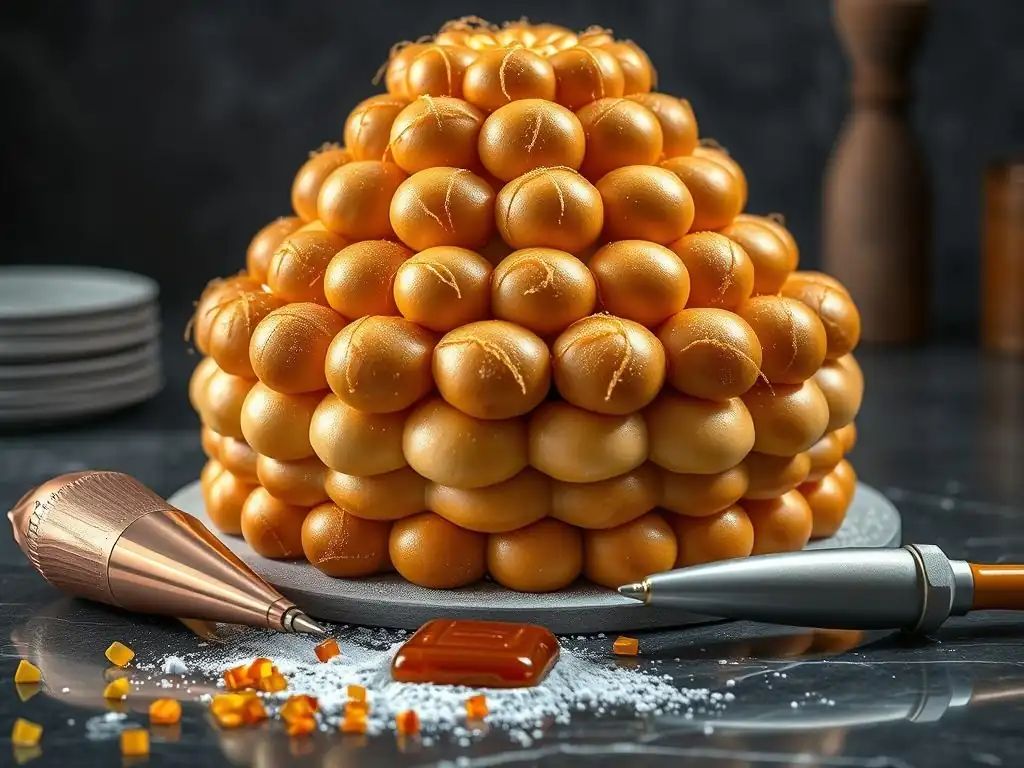
Welcome to BakeWithEase, your haven for baking success! Ever dreamt of creating a pastry masterpiece that rivals those in Parisian patisseries? Get ready to turn that dream into reality with our step-by-step guide to the exquisite St. Honoré cake. This isn't just a recipe; it's an adventure in pastry, filled with secrets and techniques that will elevate your baking skills. Intrigued? Dive in and discover how to bake a showstopping St. Honoré cake recipe that will wow your friends and family!
- Introduction: Mastering the St. Honoré Cake Recipe
- Understanding the St. Honoré: A Classic French Pastry
- St. Honoré Cake Recipe: Ingredients and Equipment Checklist
- Step 1: Making the Pâte à Choux (Choux Pastry) for St. Honoré
- Step 2: Preparing the Crème Pâtissière (Pastry Cream)
- Step 3: Assembling the St. Honoré Cake Base
- Step 4: Caramelizing the Choux Buns
- Step 5: Assembling the St. Honoré Cake: A Layer-by-Layer Approach
- Step 6: Decorating and Finishing Touches for your St. Honoré
- St. Honoré Cake Recipe: Tips and Tricks for Success
- Variations and Adaptations of the Classic St. Honoré Cake
- Conclusion: Enjoying Your Homemade St. Honoré Masterpiece
-
Frequently Asked Questions
- What exactly is a St. Honoré cake?
- Is the St. Honoré cake recipe difficult to follow for a beginner baker?
- What are the key ingredients required for making the St. Honoré cake?
- Can I substitute any ingredients in the St. Honoré cake recipe?
- How long does it take to bake a St. Honoré cake from start to finish?
- Final Reflection: The Enduring Allure of the St. Honoré
- Unleash Your Inner Pâtissier: Bake Your Own St. Honoré!
Introduction: Mastering the St. Honoré Cake Recipe
Welcome to the delightful world of French patisserie! Today, we're embarking on a culinary journey to create one of the most elegant and impressive classic French desserts: the St. Honoré cake. Often seen as a centerpiece in Parisian bakeries, this cake is a true masterpiece combining several fundamental baking techniques – puff pastry, pâte à choux, crème pâtissière, and caramel. While it might seem intimidating at first glance, breaking down the St. Honoré cake recipe into manageable steps makes it achievable for any passionate home baker.
This comprehensive guide will walk you through each component of the St. Honoré, from making the delicate choux pastry and rich pastry cream to mastering the art of caramelizing the choux buns and assembling the final showstopper. We'll share tips and tricks to ensure your success, transforming potentially tricky steps into enjoyable challenges. By the end of this guide, you'll have the confidence and knowledge to bake your very own exquisite St. Honoré cake, ready to impress your friends and family with this iconic French pastry. Let's gather our ingredients and begin this rewarding baking adventure!
Understanding the St. Honoré: A Classic French Pastry
What is St. Honoré Cake? History and Origins
The St. Honoré cake, or Gâteau St-Honoré, is a celebration of textures and flavors deeply rooted in French culinary history. It's named after Saint Honoré, the patron saint of bakers and pastry chefs. Legend has it that this iconic dessert was created in 1847 by Chef Chiboust at the Maison Chiboust bakery on Rue Saint-Honoré in Paris. The original version featured a base of pâte brisée (shortcrust pastry) and was filled with a special crème Chiboust, a lightened pastry cream.
Over time, the classic St. Honoré cake recipe evolved into the version we know and love today. The pâte brisée base was replaced by puff pastry ( pâte feuilletée) for a lighter, flakier foundation, and the crème Chiboust is often substituted or complemented by classic crème pâtissière and generous swirls of whipped cream or crème Chantilly. Despite these variations, the core elements – the puff pastry base, the ring of caramel-dipped choux puffs, and the creamy filling – remain the hallmarks of this magnificent French pastry.
Key Components of a Traditional St. Honoré
A traditional St. Honoré cake is a symphony of distinct yet harmonious elements, each requiring precision and care to execute. The foundation is typically a disc of flaky puff pastry, which provides a crisp contrast to the softer components. Around the edge of this puff pastry base, a ring of pâte à choux is piped and baked, creating a sturdy border.
The most distinctive feature of the St. Honoré are the small, perfect choux buns ( profiteroles). These are baked separately, filled with a rich crème pâtissière, and then dipped in glorious, golden caramel before being attached to the choux ring on the base. The center of the cake is then generously filled, often with more crème pâtissière or, more commonly today, piped high with light and airy whipped cream or crème Chantilly, creating the signature dome shape.
St. Honoré Cake Recipe: Ingredients and Equipment Checklist
To create a stunning St. Honoré cake, you'll need specific ingredients for each component and a few essential tools. This section breaks down everything required for this classic St. Honoré cake recipe.
Ingredients Breakdown for the Perfect St. Honoré
Gathering all your ingredients before you start is crucial for a smooth baking process, especially with a multi-component recipe like the St. Honoré. Ensure everything is measured accurately and at the correct temperature where specified.
Pâte à Choux (Choux Pastry) Ingredients
- 150 ml water
- 60 g unsalted butter, cubed
- 1 tsp granulated sugar
- A pinch of salt
- 90 g all-purpose flour, sifted
- 2-3 large eggs, beaten (you may not use all of it)
Crème Pâtissière (Pastry Cream) Ingredients
- 500 ml whole milk
- 1 vanilla bean, split and scraped, or 1 tsp vanilla extract
- 100 g granulated sugar
- 4 large egg yolks
- 40 g cornstarch
Caramel Ingredients for the Croquembouche Effect
- 200 g granulated sugar
- 50 ml water
- Optional: a squeeze of lemon juice or a pinch of cream of tartar to prevent crystallization
Whipped Cream or Chantilly Cream Ingredients
- 500 ml heavy cream (at least 35% fat), chilled
- 50-70 g powdered sugar (adjust to taste)
- 1 tsp vanilla extract (optional)
Essential Baking Equipment for St. Honoré Success
Having the right tools makes the process significantly easier and helps ensure professional results. You don't need a professional kitchen setup, but these items are highly recommended for this St. Honoré cake recipe.
- Heavy-bottomed saucepan
- Wooden spoon or sturdy spatula
- Large mixing bowl
- Whisk
- Fine-mesh sieve
- Piping bags (at least two)
- Piping tips (round tip for choux, star tip for whipped cream)
- Baking sheets (at least two)
- Parchment paper or silicone baking mats
- Sharp knife
- Wire rack
- Stand mixer or hand mixer (for whipped cream)
- Candy thermometer (helpful for caramel)
Step 1: Making the Pâte à Choux (Choux Pastry) for St. Honoré
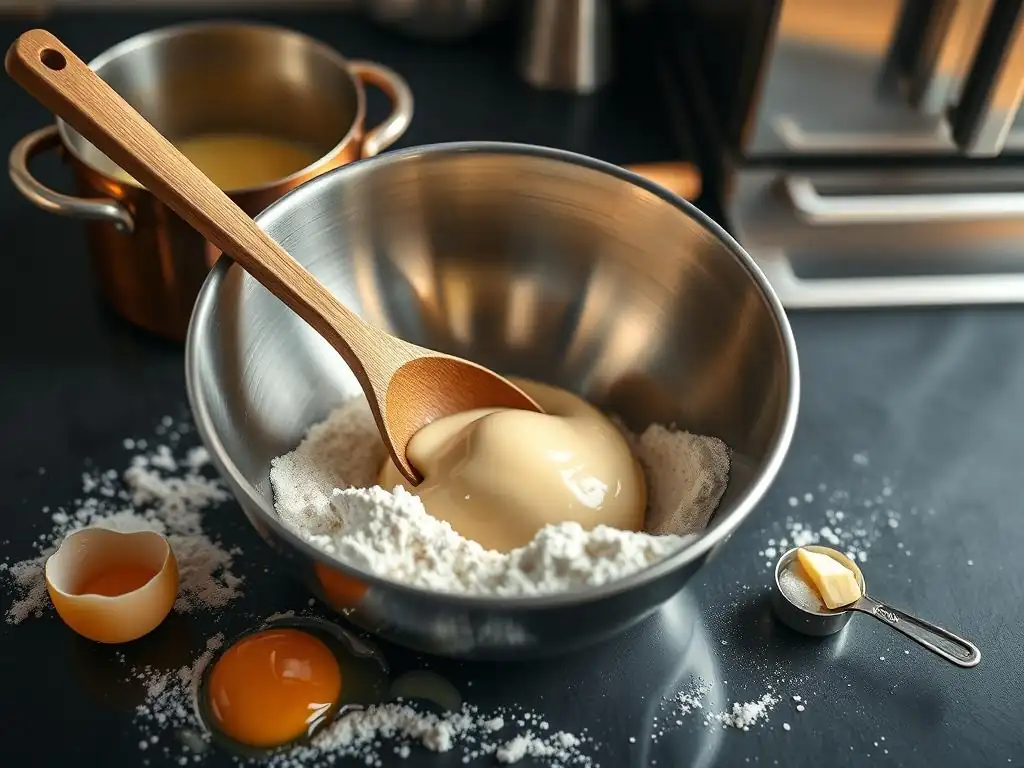
Pâte à choux is the foundation for the choux ring and the mini profiteroles. It's a versatile dough that relies on steam to puff up, creating hollow centers perfect for filling. Getting the consistency right is key to a successful St. Honoré cake recipe.
Detailed Pâte à Choux Recipe Instructions
Begin by combining the water, butter, sugar, and salt in a heavy-bottomed saucepan over medium heat. Stir occasionally until the butter is completely melted and the mixture comes to a rolling boil. Once boiling, remove the pan from the heat and quickly add the sifted flour all at once. Stir vigorously with a wooden spoon or sturdy spatula until the mixture comes together and forms a cohesive ball of dough that pulls away cleanly from the sides of the pan.
Return the pan to low heat and continue to cook the dough, stirring constantly, for 1-2 minutes. This step, known as dessécher, helps to dry out the dough slightly, which is crucial for achieving a good rise. The dough should coat the bottom of the pan with a thin film.
Remove the pan from the heat and transfer the dough to a clean bowl or the bowl of a stand mixer. Let it cool for a few minutes until it's warm but not hot – you should be able to comfortably touch it. Gradually add the beaten eggs, a little at a time, mixing thoroughly after each addition.
The dough will initially look like it's separating, but keep mixing until it becomes a smooth, thick, and glossy paste. The correct consistency is when the dough falls off a spoon in a thick 'V' shape. This usually requires about 2 to 3 large eggs, but it's vital to add the last egg gradually, checking the consistency.
Tips for Achieving Perfect Choux Pastry
Temperature control is paramount when making pâte à choux for your St. Honoré cake recipe. Ensure the water/butter mixture comes to a full boil before adding the flour, and cook the dough on the stove for the specified time to properly dry it out. When adding the eggs, they should be at room temperature, and you must incorporate them gradually. Adding too much egg too quickly can result in a dough that is too wet and won't hold its shape or rise properly.
Baking temperature is also critical. Choux pastry is often baked at a relatively high temperature initially (e.g., 200°C or 400°F) for about 15 minutes to create a strong shell, then the temperature is reduced (e.g., 180°C or 350°F) for another 10-15 minutes to cook the inside and dry them out completely. Crucially, do not open the oven door during the first 15-20 minutes of baking, as the sudden drop in temperature can cause the choux to collapse. They should be golden brown and feel light and hollow when done.
Troubleshooting Common Pâte à Choux Issues
One common issue is choux that doesn't rise or collapses after baking. This is often due to insufficient drying of the dough on the stove ( dessécher), adding too much egg, or opening the oven door too early. Ensure your dough is cooked on the stove until a film forms, add eggs gradually to the correct consistency, and resist peeking during the initial high-heat baking phase. If your choux are pale or seem undercooked inside, they likely needed more time at the lower temperature to dry out.
Another problem can be uneven puffing. This might happen if your piping isn't consistent or if your oven has hot spots. Try rotating your baking sheet halfway through the baking time. If the dough is too stiff after adding eggs, your eggs might have been too small, or you didn't add enough; a tiny bit more egg can sometimes fix this, but be cautious not to add too much. Practice makes perfect with pâte à choux, and mastering it is a rewarding step in creating your St. Honoré cake recipe.
Step 2: Preparing the Crème Pâtissière (Pastry Cream)
Crème pâtissière is a rich, smooth custard that serves as the primary filling for the mini choux buns and often for the base of the St. Honoré cake itself. Its velvety texture and classic vanilla flavor are essential to the overall experience of this French pastry.
Crème Pâtissière Recipe: A Step-by-Step Guide
Start by heating the milk in a saucepan over medium heat. If using a vanilla bean, add it to the milk now and let it infuse as the milk warms; if using extract, add it later. In a separate bowl, whisk together the sugar and egg yolks until pale and creamy. Whisk in the cornstarch until no lumps remain, creating a smooth paste.
Once the milk is hot (just before boiling), temper the egg yolk mixture by slowly pouring about half of the hot milk into the bowl with the yolks, whisking constantly. This gradually warms the yolks and prevents them from scrambling. Pour the tempered mixture back into the saucepan with the remaining milk.
Return the pan to medium heat and cook, whisking continuously, especially scraping the bottom and edges, until the cream thickens considerably and comes to a gentle boil. Let it boil for about 1 minute while still whisking; this ensures the cornstarch is fully cooked and the cream won't thin out later. Remove from the heat, stir in vanilla extract if using, and pass the cream through a fine-mesh sieve into a clean bowl to remove any potential lumps or cooked egg bits and the vanilla bean pod.
Cover the surface of the cream directly with plastic wrap to prevent a skin from forming as it cools. Chill thoroughly in the refrigerator for at least 2-3 hours, or until completely cold and set.
Flavor Variations for Your Pastry Cream
While classic vanilla is traditional for a St. Honoré cake recipe, you can easily adapt the crème pâtissière to introduce different flavors. For a chocolate pastry cream, whisk in 50-100g of finely chopped dark chocolate into the hot cream after it's cooked and off the heat, stirring until melted and smooth. A coffee-flavored cream can be made by dissolving 1-2 tablespoons of instant coffee granules in the hot milk before adding it to the egg yolks, or by adding a shot of espresso to the finished cream.
Other popular variations include lemon zest infused into the milk, or even a touch of liqueur like Grand Marnier or rum stirred in after the cream has cooled slightly. Just be mindful that adding too much liquid or alcohol can affect the consistency. Experimenting with flavors can add a unique twist to your homemade St. Honoré while still respecting the spirit of the classic French pastry.
Ensuring a Smooth and Silky Crème Pâtissière
The key to a perfectly smooth and silky crème pâtissière lies in careful cooking and proper cooling. Whisking constantly while the cream is on the heat is essential to prevent scorching and lumps. Make sure to scrape the bottom and sides of the pan diligently. Using a fine-mesh sieve after cooking is a crucial step to catch any small lumps that might have formed, ensuring a perfectly smooth texture for filling your choux buns.
Rapid cooling is also important. Once sieved, spread the cream slightly in the bowl or transfer it to a shallow dish to help it cool faster. Covering the surface directly with plastic wrap prevents condensation from dripping back into the cream and creating a watery layer, and also stops a rubbery skin from forming. Ensure it is completely chilled before using; warm pastry cream will be too soft to hold its shape when piped into the choux or onto the cake.
Step 3: Assembling the St. Honoré Cake Base
The base of the St. Honoré cake provides structure and a delightful flaky texture. It consists of a puff pastry disc and a ring of baked pâte à choux.
Baking the Puff Pastry Base
Start with a sheet of store-bought or homemade puff pastry. Roll it out slightly if needed to a thickness of about 3-4mm. Using a plate or cake ring as a guide (around 20-22 cm or 8-9 inches in diameter), cut out a circle from the puff pastry. Place the puff pastry circle on a baking sheet lined with parchment paper. Prick the base all over with a fork to prevent it from puffing up too much in the center during baking.
Bake the puff pastry in a preheated oven at about 180°C (350°F) for approximately 15-20 minutes, or until it is golden brown and flaky. The pricking should help keep the center relatively flat, but the edges will rise beautifully. Once baked, remove from the oven and let it cool completely on the baking sheet. This crisp base is vital for supporting the weight of the finished St. Honoré cake and provides a lovely textural contrast.
Creating the Choux Paste Ring
While the puff pastry base is cooling, you will use some of your prepared pâte à choux to create a ring around its edge. Fit a piping bag with a medium round piping tip (about 1 cm or 3/8 inch opening). Fill the piping bag with the pâte à choux. Carefully pipe a continuous ring of choux paste around the outer edge of the cooled puff pastry base, right on the edge.
You can pipe one thick ring or two thinner rings side-by-side for added height. Ensure the ring is even in thickness so it bakes uniformly. Bake the puff pastry base with the choux ring in a preheated oven (again, around 180°C or 350°F) for about 20-25 minutes, or until the choux ring is golden brown, puffed, and firm. This step essentially bakes the choux ring onto the puff pastry base, creating the frame for your St. Honoré cake recipe structure. Let the entire base cool completely on a wire rack.
Step 4: Caramelizing the Choux Buns
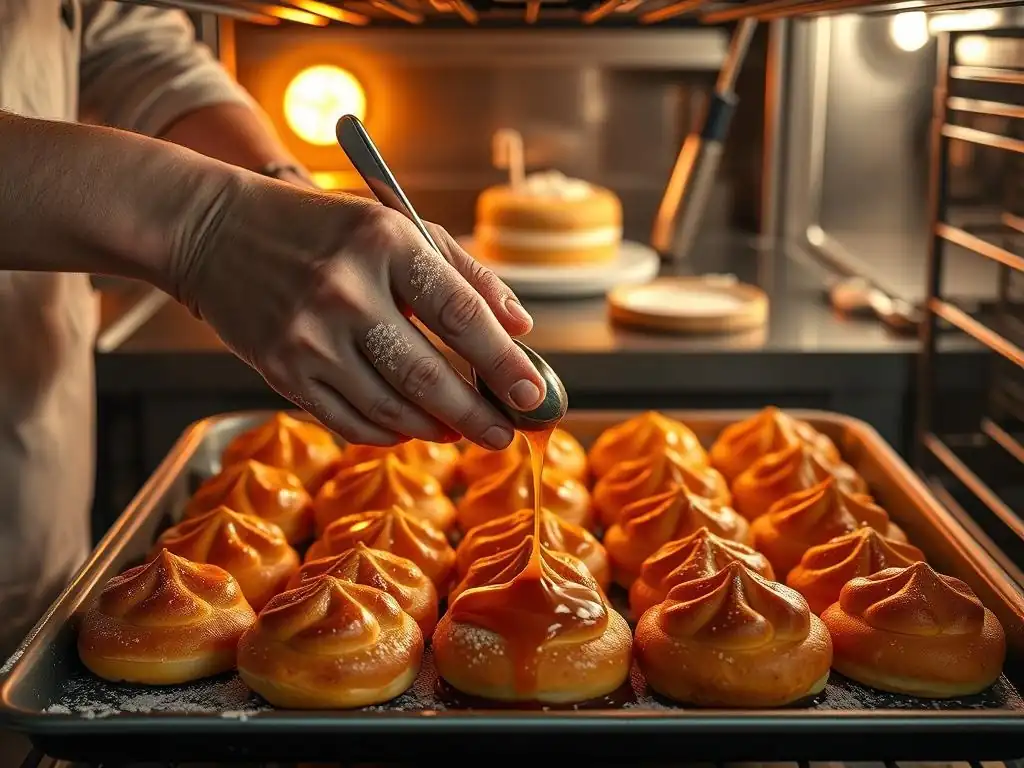
The caramel-dipped choux buns are arguably the most iconic feature of the St. Honoré cake. Mastering the caramel requires attention and speed.
Mastering the Art of Caramel Making for St. Honoré
Caramelizing sugar involves heating it until it melts and turns a rich, golden-amber color. For dipping choux buns, you need a 'dry' caramel (sugar heated alone) or a 'wet' caramel (sugar heated with water). A wet caramel, made with 200g sugar and 50ml water as listed in our St. Honoré cake recipe ingredients, is often easier to control as the water prevents the sugar from burning too quickly. Combine the sugar and water in a clean, heavy-bottomed saucepan. Heat over medium heat, stirring gently until the sugar dissolves. Once it boils, stop stirring.
Allow the mixture to simmer. You can brush down the sides of the pan with a wet pastry brush to prevent sugar crystals from forming on the edges. Watch the color carefully; it will progress from clear syrup to pale yellow, then golden, and finally a deep amber. This process usually takes 5-10 minutes depending on the heat.
For dipping, you want a good amber color, not too dark or it will taste bitter. If using a candy thermometer, aim for around 160-170°C (320-338°F). Have your filled choux buns ready before you start making the caramel, as it hardens quickly.
Dipping the Choux Buns in Caramel
Once the caramel reaches the desired color, remove the pan from the heat immediately. You can rest the bottom of the pan in a shallow bowl of ice water for a few seconds to stop the cooking process. Working quickly, take each filled choux bun and dip the top surface into the hot caramel, twisting slightly to coat. Allow any excess caramel to drip off briefly.
Place the dipped choux buns caramel-side up on a piece of parchment paper or a silicone mat to cool and set. Be extremely cautious as hot caramel causes severe burns. You will need to reheat the caramel gently on low heat if it starts to harden in the pan during the dipping process. Aim to dip about 12-15 choux buns for a standard St. Honoré cake recipe.
Preventing Caramel from Crystallizing
Crystallization is a common issue when making caramel. It happens when sugar crystals form and spread throughout the mixture, turning it grainy instead of smooth. To prevent this when making the caramel for your St. Honoré, ensure your saucepan is impeccably clean before you start.
When heating the sugar and water, stir only until the sugar dissolves. Once it boils, avoid stirring or agitating the syrup, as this can cause dissolved sugar to crystalize on the sides of the pan. Using a wet pastry brush to wash down any sugar crystals that form on the sides above the liquid level is a classic technique. Adding a tiny amount of an acidic ingredient, like a squeeze of lemon juice or a pinch of cream of tartar (as suggested in the ingredients), can also help prevent crystallization by breaking down some of the sucrose molecules.
Step 5: Assembling the St. Honoré Cake: A Layer-by-Layer Approach
Now for the exciting part – bringing all the components together to form the magnificent St. Honoré cake! This step requires a steady hand and a sense of artistry.
Filling the Choux Buns with Crème Pâtissière
Before dipping them in caramel, the mini choux buns need to be filled with the chilled crème pâtissière. There are a couple of ways to do this. You can poke a small hole in the bottom of each choux bun using a skewer or the tip of a piping tip.
Fit a piping bag with a small round tip (or just use the bag with the tip snipped off) and fill it with the cold crème pâtissière. Insert the tip into the hole in each choux bun and gently squeeze until the bun feels full and slightly heavy. Alternatively, you can slice the choux buns horizontally and spoon or pipe the cream inside, then replace the top. Filling them before caramelizing is generally easier, as the caramel can make the buns fragile.
Arranging the Caramelized Buns on the Base
Take your cooled puff pastry base with the baked choux ring. The caramelized choux buns will be attached to this choux ring. Dip the bottom of each filled, caramel-topped choux bun into the hot caramel (you may need to briefly reheat the caramel) and immediately press it onto the baked choux ring around the edge of the base.
Work your way around the ring, placing the buns close together, slightly overlapping if desired, to create a beautiful crown. The caramel will act like glue, holding the buns in place as it cools and hardens. This step requires working relatively quickly while the caramel is still liquid enough to adhere. If the caramel in the pan hardens, gently warm it again.
Piping the Whipped Cream or Chantilly Cream
The center of the St. Honoré cake is traditionally filled with a generous amount of whipped cream or crème Chantilly. Whip the chilled heavy cream with powdered sugar and vanilla extract (if using) until stiff peaks form. Be careful not to over-whip, or it will become grainy.
Fit a piping bag with a large open star tip ( douille Saint-Honoré is traditional, but any large star tip works) and fill it with the whipped cream. Pipe large, decorative swirls of cream into the center of the cake, filling the space within the choux ring. You can pipe swirls building upwards to create height and volume, giving the cake its impressive, showstopping appearance. Some extra cream can also be piped between the choux buns on the ring for added decoration.
Step 6: Decorating and Finishing Touches for your St. Honoré
With the main structure assembled, it's time to add the final decorative elements that elevate your St. Honoré cake from delicious pastry to edible art.
Creative Decoration Ideas for a Showstopping Cake
Beyond the classic piped whipped cream center and caramel-dipped choux, there are many ways to add personal flair to your St. Honoré cake recipe. You can dust the finished cake lightly with powdered sugar just before serving for a delicate, snowy effect. Shaved or tempered chocolate can be sprinkled over the whipped cream or around the base.
Fresh berries, such as raspberries or strawberries, pair wonderfully with the creamy and caramel flavors and add a vibrant pop of color. Glazed fruits or candied citrus peel can also be used. For a more elaborate look, you can create delicate caramel threads or spirals by flicking thin strands of hot caramel from a fork or whisk onto parchment paper, then using these hardened threads to adorn the top of the cake.
Adding Final Touches for Visual Appeal
Attention to detail in the final touches can make a significant difference in the presentation of your St. Honoré cake. Ensure the piped whipped cream is neat and well-formed. If any caramel drips are messy, you can carefully trim them once hardened (though a little rustic charm is also fine! ).
Consider the serving platter – a beautiful cake deserves a beautiful presentation. Place the finished cake on a clean cake stand or serving plate. If you used the douille Saint-Honoré piping tip, practice the characteristic wave motion to create its specific pattern in the whipped cream, which is a classic finishing touch for this specific French pastry. A final glance to ensure all components look their best before serving is always a good idea.
St. Honoré Cake Recipe: Tips and Tricks for Success
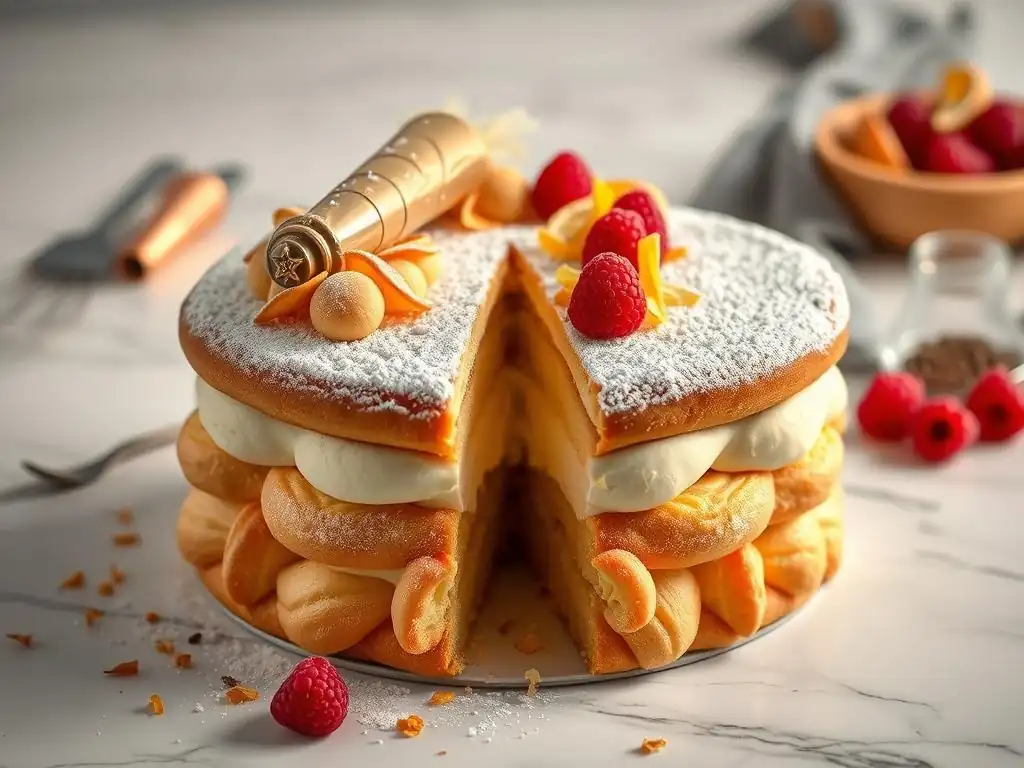
Baking a St. Honoré is a rewarding challenge. Keeping these tips in mind will help you navigate potential pitfalls and achieve a fantastic result with your homemade St. Honoré cake recipe.
Common Mistakes to Avoid When Baking St. Honoré
- Underbaking Choux: Choux pastry must be baked until golden brown and dry inside, or it will collapse. They should feel very light.
- Opening the Oven Too Soon: Don't open the oven door during the first 15-20 minutes of baking choux or the puff pastry base with the choux ring, as the sudden temperature change can cause them to deflate.
- Not Cooling Crème Pâtissière Properly: Pastry cream needs to be completely chilled and set before filling; otherwise, it will be runny and won't hold its shape.
- Burning the Caramel: Watch the caramel constantly! It can go from perfect to burnt in seconds. Have everything ready for dipping before you start making it.
- Over-whipping Cream: Whipped cream can quickly turn into butter if over-whipped. Stop as soon as stiff peaks form.
Storage Instructions for Your St. Honoré Cake
The St. Honoré cake is best enjoyed fresh, ideally assembled no more than a few hours before serving. The caramel on the choux buns can soften and become sticky over time, and the puff pastry base can absorb moisture from the fillings, losing its crispness.
If you must store it, any leftovers should be kept in an airtight container in the refrigerator. It will remain edible for 1-2 days, but the textures will change. The individual components (baked choux shells, un-filled puff pastry base, and chilled crème pâtissière) can be made in advance and stored separately. Baked choux shells can be kept in an airtight container at room temperature for a day or two, or frozen. Pastry cream can be refrigerated for up to 3 days. Assemble the cake closer to serving time for the best texture and flavor experience.
Variations and Adaptations of the Classic St. Honoré Cake
While the classic St. Honoré cake recipe is a beloved standard, its structure allows for creative variations in flavor and even dietary adaptations.
Exploring Different Flavors and Fillings
Beyond the vanilla crème pâtissière, consider other filling options. Chocolate pastry cream is a popular alternative, offering a richer profile. Coffee, praline, or even fruit-flavored pastry creams (using fruit purées incorporated into the cream) can add exciting twists. Instead of plain whipped cream, you could use a flavored crème Chantilly, perhaps infused with orange zest, a hint of almond extract, or even a touch of liqueur.
The caramel itself can sometimes be flavored; for example, a salted caramel could be used for dipping the choux buns, adding a sophisticated contrast. The decoration offers further opportunities – chocolate ganache drizzles, toasted nuts, or different fresh fruits can dramatically change the character of your homemade St. Honoré.
Gluten-Free St. Honoré Cake Recipe Adaptations
Adapting a classic French pastry like the St. Honoré for a gluten-free diet presents a challenge, primarily with the puff pastry and pâte à choux. Gluten-free puff pastry is available commercially or can be made using gluten-free flour blends and techniques that mimic lamination. The key is finding a blend that yields a flaky result.
For the pâte à choux, a gluten-free version typically uses a blend of gluten-free flours (like rice flour, tapioca starch, or potato starch) and often a binder like xanthan gum to replicate the structure-building properties of gluten. Achieving the correct consistency and rise requires careful testing with different flour blends. The crème pâtissière and caramel components are naturally gluten-free, assuming no cross-contamination. While a gluten-free St. Honoré cake recipe requires more effort to perfect the pastry elements, it is certainly possible with dedicated gluten-free ingredients and technique adjustments.
Conclusion: Enjoying Your Homemade St. Honoré Masterpiece
You've done it! You've navigated the steps, mastered the techniques, and created your very own showstopping St. Honoré cake. This classic French pastry is a testament to the beauty and complexity of baking, combining multiple elements into a harmonious whole. From the crisp puff pastry base and delicate choux puffs to the rich crème pâtissière and shimmering caramel, every bite is a celebration of flavor and texture.
Making a St. Honoré cake recipe from scratch is a truly rewarding experience, offering not just a delicious dessert but a deep sense of accomplishment. Gather your loved ones, slice into your magnificent creation, and savor the moment. Whether you stuck strictly to the classic version or added your own creative twist, we hope this guide has empowered you to tackle this iconic challenge. Happy baking, and enjoy your exquisite homemade St. Honoré!
Frequently Asked Questions
What exactly is a St. Honoré cake?
The St. Honoré cake is a classic French pastry. It typically features a base of puff pastry or pâte sablée, topped with choux pastry cream puffs, and is decorated with caramel and crème chiboust.
Is the St. Honoré cake recipe difficult to follow for a beginner baker?
While it involves several components, our Step-by-Step Guide breaks it down. Careful adherence to the instructions and pre-planning will help beginners achieve success.
What are the key ingredients required for making the St. Honoré cake?
The recipe requires ingredients for puff pastry, choux pastry, crème pâtissière (pastry cream), crème chiboust, and caramel. Be sure to check the recipe list for specific quantities.
Can I substitute any ingredients in the St. Honoré cake recipe?
While substitutions are possible, they may affect the final result. We recommend sticking to the recipe for the best and most authentic outcome, especially for critical components like the puff pastry and pastry cream.
How long does it take to bake a St. Honoré cake from start to finish?
The total time varies, but allow for at least 4-6 hours, including preparation, baking, and cooling time. The puff pastry and pastry cream require time to chill properly.
Final Reflection: The Enduring Allure of the St. Honoré
The art of pastry, and specifically the creation of a showstopping St. Honoré cake, transcends mere culinary skill; it's a testament to patience, precision, and the enduring power of classic techniques. This detailed guide aimed to demystify the process, providing a step-by-step approach to crafting this elegant masterpiece. But beyond the recipe itself, we've explored the rich history and enduring appeal of this iconic French dessert.
The St. Honoré cake, with its delicate puffs, creamy pastry cream, and glistening caramel, represents more than just a sweet treat; it symbolizes a dedication to craftsmanship and the pursuit of perfection. It's a dish that evokes a sense of occasion, a celebration of both skill and artistry. The most beautiful thing we can experience is the mysterious. It is the source of all true art and science.
- Albert Einstein. This quote, while not directly about baking, speaks to the inherent mystery and wonder involved in mastering a complex recipe like this one, and the profound satisfaction that comes from achieving it.
Now, it's your turn. Don't be intimidated by the seemingly intricate steps. Take your time, embrace the process, and allow yourself to be captivated by the transformation of simple ingredients into something truly extraordinary. The journey of creating a St. Honoré cake is as rewarding as the final result. So, gather your ingredients, put on your apron, and embark on this delicious adventure. The sweet taste of success, and the pride in your accomplishment, awaits.
Unleash Your Inner Pâtissier: Bake Your Own St. Honoré!
Thanks for joining us on this delicious journey into the world of St. Honoré cakes! We hope you’ve gained the confidence to tackle this seemingly complex masterpiece. Now it’s time to put your newfound skills to the test.
- Bake your own St. Honoré: Gather your ingredients, revisit the recipe steps, and create your own showstopping cake. This is your chance to shine! Don’t be afraid to experiment with flavors and decorations.
- Share your creation: Post a picture of your finished cake on social media and tag us – we'd love to see your baking brilliance! Use #BakeWithEaseStHonore.
- Explore more advanced techniques: Check out our other tutorials on choux pastry and crème patissière for even more baking adventures.
Ready to take on the challenge and create your own culinary masterpiece? What unique twist will you add to your St. Honoré cake?