
Applesauce, Yogurt, and Beyond: 7 Fruit and DairyBased Egg Replacements

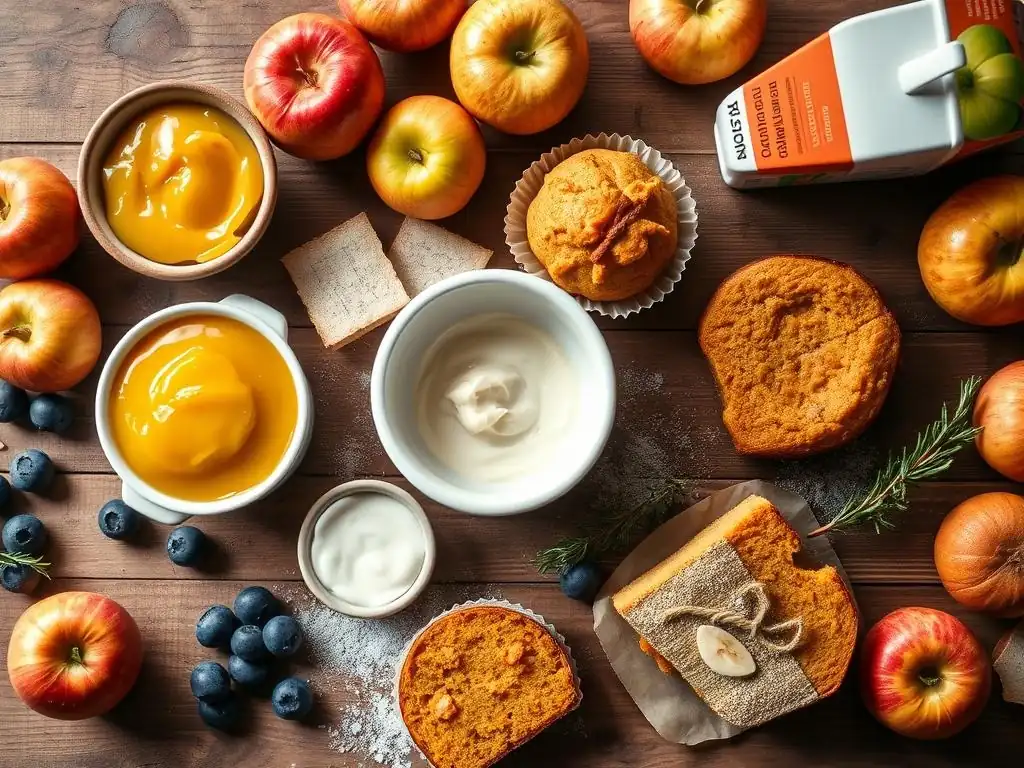
Welcome to BakeWithEase, your partner in creating delectable baked goods! Ever wondered if you could easily swap out eggs in your favorite recipes? This week, we're diving into the surprisingly simple world of fruit, dairy and egg replacements recipes. Discover how ingredients like applesauce and yogurt can transform your baking, opening up a world of possibilities, especially for those with dietary needs. Intrigued? Let's explore these clever substitutions together!
- Applesauce, Yogurt, and Beyond: 7 Fruit and Dairy-Based Egg Replacements for Baking
- Introduction to Egg-Free Baking with Fruit and Dairy
-
7 Delicious Fruit and Dairy Egg Replacements for Your Baking Recipes
- 1. Applesauce: A Classic Egg Substitute
- 2. Mashed Banana: Adding Sweetness and Moisture
- 3. Yogurt: A Tangy and Versatile Option
- 4. Pumpkin Puree: A Fall Baking Favorite
- 5. Prune Puree: A Secret Ingredient for Moistness
- 6. Avocado: Creaminess and Healthy Fats in Egg-Free Baking
- 7. Dairy-Free Yogurt Alternatives: Expanding Your Egg-Free Options
- Tips for Successful Fruit and Dairy Egg Replacements
- Mastering Fruit and Dairy-Based Egg-Free Baking: A Conclusion
-
Frequently Asked Questions
- What are some common fruit-based egg replacements recommended by BakeWithEase?
- Can dairy-based egg replacements be used in vegan recipes, according to BakeWithEase?
- How does using yogurt as an egg replacement affect the texture of baked goods, according to BakeWithEase?
- Does BakeWithEase offer recipes specifically designed for using "fruit dairy egg replacements recipes"?
- What are the key benefits of using fruit and dairy-based egg replacements, as highlighted by BakeWithEase?
- Final Reflection: The Deliciously Versatile World of Egg Alternatives
- Unlock Your Baking Potential: Discover More Egg-Free Wonders!
Applesauce, Yogurt, and Beyond: 7 Fruit and Dairy-Based Egg Replacements for Baking
Introduction to Egg-Free Baking with Fruit and Dairy
Why Explore Fruit and Dairy Egg Substitutes?
Baking without eggs opens up a world of possibilities, whether you're navigating dietary restrictions, managing allergies, or simply ran out of eggs mid-recipe. Fruit and dairy-based egg replacements offer fantastic alternatives, bringing unique flavors, textures, and moisture to your baked goods. These ingredients are often readily available in your kitchen, making spontaneous baking easier and more accessible for creating delicious fruit dairy egg replacements recipes.
Beyond necessity, experimenting with fruit and dairy as egg substitutes can lead to surprisingly delightful results. Applesauce, for example, imparts a subtle sweetness and incredible moisture, while yogurt can add a pleasant tang and richness, mimicking some of the structural benefits of eggs. Exploring these options allows bakers to understand the nuances of different ingredients and tailor their egg-free creations to achieve specific desired outcomes, from chewy cookies to moist muffins.
Understanding Egg's Role in Baking: Binding, Leavening, and Moisture
Eggs are truly workhorses in baking, performing several critical functions simultaneously. They act as binders, holding ingredients together to give structure to cakes, cookies, and breads. Without a proper binder, your baked goods might crumble apart.
Additionally, eggs contribute to leavening, especially when whipped, incorporating air that helps batters and doughs rise. They also add essential moisture and richness, contributing to the final texture and mouthfeel of the baked item. When choosing fruit dairy egg replacements for your recipes, it's important to consider which of these roles the egg is primarily playing in that specific recipe and select a substitute that can best replicate that function, often focusing on binding and moisture retention.
7 Delicious Fruit and Dairy Egg Replacements for Your Baking Recipes
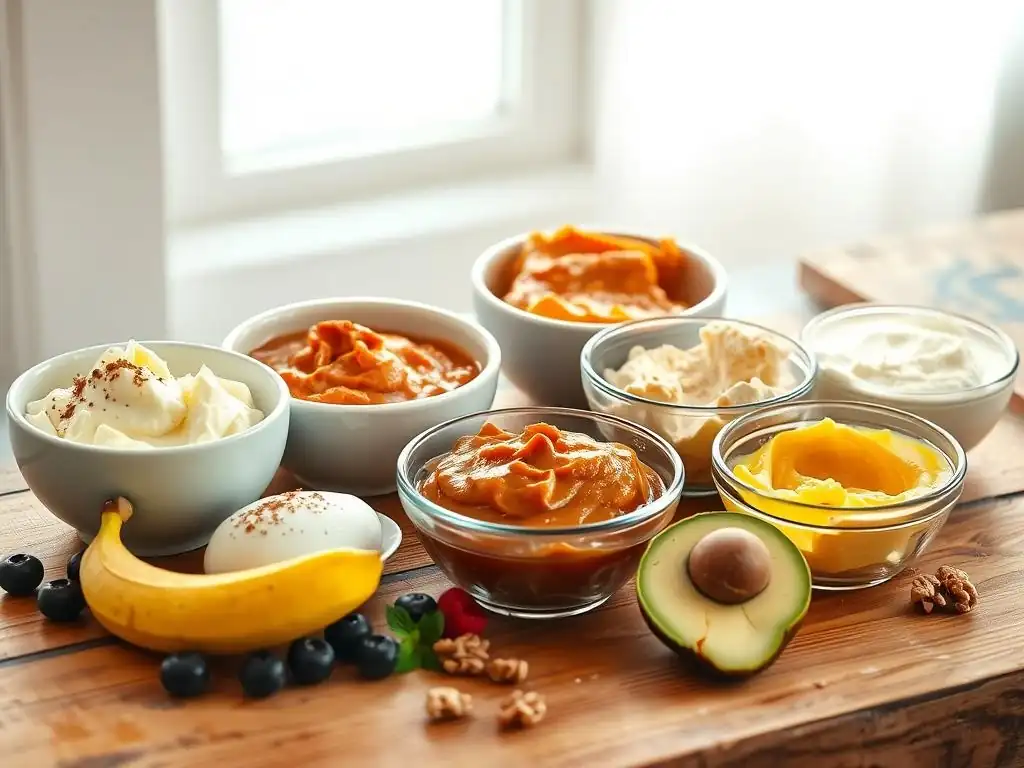
1. Applesauce: A Classic Egg Substitute
Applesauce is perhaps one of the most widely known and used fruit dairy egg replacements in baking, particularly in muffins, cakes, and quick breads. Its smooth texture and natural sweetness make it a seamless addition to many batters, especially those that are already moist or spiced. Using unsweetened applesauce is generally recommended to avoid making your baked goods overly sweet, allowing you to control the sugar content separately.
This humble fruit puree brings significant moisture to baked goods, often resulting in a denser, softer crumb structure compared to using eggs. While it provides excellent binding capabilities due to its pectin content, it doesn't offer any leavening power. Therefore, recipes relying heavily on eggs for rise (like airy sponge cakes) may require additional leavening agents or be less suited for a direct applesauce swap unless other ingredients contribute to lift.
How Applesauce Works as an Egg Replacement
Applesauce works primarily by providing moisture and acting as a binder. Its high water content keeps baked goods from drying out, while the natural starches and fibers help hold the batter or dough together during baking.
Best Uses for Applesauce in Baking: Muffins, Cakes, Quick Breads
Applesauce excels in moist, dense baked goods like muffins, loaf cakes, spice cakes, brownies, and quick breads (like banana bread or zucchini bread). It can also work in some cookie recipes, though it often results in a softer, chewier cookie rather than a crisp one.
Applesauce Egg Replacement Ratio: 1/4 cup applesauce per egg
A standard ratio for replacing one large egg is 1/4 cup (approximately 60g) of unsweetened applesauce.
2. Mashed Banana: Adding Sweetness and Moisture
Mashed banana is another popular fruit dairy egg replacement, particularly favored for its natural sweetness and ability to add significant moisture. Using very ripe bananas is key, as they are sweeter, softer, and easier to mash smoothly, integrating better into batters. The distinct flavor of banana will be noticeable in the final product, which is a delightful bonus in some recipes but may be undesirable in others.
Like applesauce, mashed banana contributes excellent binding and moisture but doesn't help with leavening. It tends to produce a dense, moist crumb. This makes it ideal for recipes where a slightly heavier texture is expected or welcome, such as certain breads and pancakes. The natural sugars in ripe bananas also contribute to browning, giving baked goods a lovely golden hue.
Banana as an Egg Replacer: Flavor Considerations
Be mindful that mashed banana imparts its characteristic flavor. This is wonderful in banana bread, muffins, or pancakes but might clash with delicate flavors in other recipes.
Ideal Recipes for Banana Egg Substitutions: Breads, Pancakes, Brownies
Mashed banana is a perfect fit for recipes like banana bread, pancakes, muffins, waffles, and some types of brownies or cookies where the banana flavor is complementary or desired.
Mashed Banana Egg Replacement Ratio: 1/2 mashed banana per egg
For replacing one large egg, use about 1/2 of a medium, very ripe mashed banana (roughly 1/4 cup or 60-70g).
3. Yogurt: A Tangy and Versatile Option
Yogurt, a dairy-based egg replacement (unless using a dairy-free alternative), brings a unique combination of moisture, richness, and a slight tang to baked goods. Its creamy texture helps create a tender crumb, and the acidity can even interact with baking soda to aid in leavening. This makes it a more versatile substitute than some fruit purees, capable of contributing to both moisture and structure.
The type of yogurt used can significantly impact the outcome. Full-fat plain yogurt provides the most richness and moisture, while Greek yogurt, being thicker, offers excellent binding properties but may require a slight adjustment to the liquid in the recipe. Avoid flavored or sweetened yogurts unless their specific taste profile aligns with your recipe, as they can introduce unwanted sugars, artificial flavors, or colors. Using plain yogurt ensures you maintain control over the recipe's intended flavor profile.
Yogurt's Role as an Egg Substitute: Moisture and Binding
Yogurt provides moisture and helps bind ingredients. Its acidity can also react with baking soda, contributing some lift. It adds a pleasant richness and often results in a tender crumb.
Types of Yogurt for Egg Replacement: Greek, Plain, Full-Fat
Plain, full-fat yogurt is generally best. Greek yogurt works well due to its thickness, offering strong binding, but might require thinning slightly or reducing other liquids. Low-fat or non-fat yogurts can work but may yield less rich results.
Yogurt Egg Replacement Ratio: 1/4 cup yogurt per egg
Substitute 1/4 cup (approximately 60g) of plain yogurt for one large egg. For Greek yogurt, you might use slightly less or add a splash of milk to thin it slightly, though 1/4 cup often works directly.
4. Pumpkin Puree: A Fall Baking Favorite
Pumpkin puree, a vibrant fruit (yes, botanically a fruit! ), serves as an excellent fruit dairy egg replacement, especially beloved during autumn baking season. It brings moisture, a subtle earthy sweetness, and that characteristic orange hue to baked goods. Its texture is similar to applesauce, making it effective as a binder and moisturizer. Using plain, unsweetened pumpkin puree is crucial, not pumpkin pie filling, which contains added sugars and spices.
Like other fruit purees, pumpkin puree adds density and moisture but doesn't contribute to leavening. It pairs particularly well with warm spices like cinnamon, nutmeg, cloves, and ginger, which are often found in recipes already suited for pumpkin. This makes it a natural fit for spiced cakes, muffins, and certain types of cookies where its flavor and color are welcome additions, creating delightful fruit dairy egg replacements recipes.
Pumpkin Puree as an Egg Alternative: Flavor and Texture
Pumpkin puree adds moisture, acts as a binder, and contributes a mild, sweet flavor and orange color. It results in a dense, moist texture similar to using applesauce.
Recipes Perfect for Pumpkin Puree Egg Swaps: Spiced Cakes, Muffins, Cookies
Pumpkin puree is ideal for spiced cakes, muffins, quick breads, and cookies, particularly those featuring autumn flavors.
Pumpkin Puree Egg Replacement Ratio: 1/4 cup pumpkin puree per egg
Use 1/4 cup (approximately 60g) of unsweetened pumpkin puree to replace one large egg.
5. Prune Puree: A Secret Ingredient for Moistness

Prune puree might sound unconventional, but it's a surprisingly effective fruit dairy egg replacement, particularly valued for its ability to create incredibly moist and tender baked goods. Prunes have natural sorbitol, a sugar alcohol that attracts and holds onto moisture, preventing cakes and brownies from drying out. This makes it a secret weapon for achieving that coveted fudgy or moist texture, especially in darker baked goods where its color blends in.
While prune puree provides excellent moisture and binding, its dark color and distinct flavor mean it's not suitable for every recipe. It's best used in chocolate cakes, brownies, gingerbread, or dark-colored muffins where its flavor is either masked by stronger ingredients or complements the overall profile. It adds density and richness but, like other fruit purees, doesn't aid in leavening, so ensure your recipe has sufficient baking powder or soda.
Using Prune Puree as an Egg Replacement: A Deeper Dive
Prune puree is a potent moisturizer and binder. Its natural sugar profile helps retain moisture exceptionally well, leading to very tender and often fudgy results.
Best Applications for Prune Puree in Baking: Brownies, Chocolate Cake, Dark Breads
Prune puree is fantastic in chocolate baked goods like brownies, chocolate cakes, and dark muffins or quick breads where its color and slight fruitiness enhance the flavor profile.
Prune Puree Egg Replacement Ratio: 1/4 cup prune puree per egg
Substitute 1/4 cup (approximately 60g) of prune puree (often found pre-made or easily made by pureeing stewed prunes) for one large egg.
6. Avocado: Creaminess and Healthy Fats in Egg-Free Baking
Avocado as a fruit dairy egg replacement might raise eyebrows, but its creamy texture and healthy fat content make it a fascinating option for adding richness and binding power to baked goods. Like other purees, mashed avocado contributes significant moisture and density. It's particularly useful in recipes where you want to incorporate healthy fats and achieve a very tender, almost fudgy texture.
While avocado is technically a fruit, its savory association might make you hesitate. However, in baked goods, especially those with strong flavors like chocolate or spices, the avocado's flavor is often undetectable, leaving behind only its wonderful texture and moisture contribution. It also adds a slight green tint, which can be fun in some contexts or easily hidden in chocolate recipes. Experimenting with avocado in your fruit dairy egg replacements recipes can lead to surprisingly successful outcomes.
Avocado as an Egg Substitute: Unexpected Benefits
Mashed avocado provides moisture, binding, and healthy monounsaturated fats. It contributes to a rich, creamy texture and can make baked goods incredibly moist and tender.
Recipes Where Avocado Shines as an Egg Replacer: Dense Cakes, Cookies, Breads
Avocado works well in dense cakes (like chocolate cake), brownies, some cookies, and quick breads where its richness and moisture are beneficial.
Avocado Egg Replacement Ratio: 1/4 mashed avocado per egg
Use about 1/4 cup (approximately 60g) of ripe, finely mashed avocado to replace one large egg. Ensure it's mashed very smoothly.
7. Dairy-Free Yogurt Alternatives: Expanding Your Egg-Free Options
For those following vegan diets or managing dairy allergies, dairy-free yogurt alternatives provide an excellent way to utilize the benefits of yogurt as a fruit dairy egg replacement. These plant-based yogurts, made from soy, coconut, almond, or oat bases, mimic the texture and acidity of dairy yogurt, offering similar binding and moisture-adding properties. This expands the possibilities for creating entirely plant-based fruit dairy egg replacements recipes.
When choosing a dairy-free yogurt, opt for plain, unsweetened varieties for the best results, just as with dairy yogurt. Their performance can vary slightly depending on the base ingredient (soy tends to be thicker and more neutral than coconut or almond), but they generally function well as a direct substitute for dairy yogurt in egg replacement ratios. They add tenderness and moisture and can interact with leavening agents similarly to dairy yogurt.
Exploring Dairy-Free Yogurt for Vegan Baking
Dairy-free yogurts allow bakers to achieve the benefits of yogurt (moisture, binding, tang) in entirely vegan or dairy-free recipes, serving as effective fruit dairy egg replacements.
Popular Dairy-Free Yogurt Options for Egg Replacement: Soy, Coconut, Almond Yogurt
Plain, unsweetened soy yogurt, coconut yogurt, almond yogurt, and oat yogurt are all viable options. Soy and coconut yogurts often have a thicker consistency similar to dairy yogurt, making them reliable substitutes.
Dairy-Free Yogurt Egg Replacement Ratio: Similar to dairy yogurt, 1/4 cup per egg
Generally, you can use 1/4 cup (approximately 60g) of plain, unsweetened dairy-free yogurt per egg, following the same guidelines as for dairy yogurt.
Tips for Successful Fruit and Dairy Egg Replacements
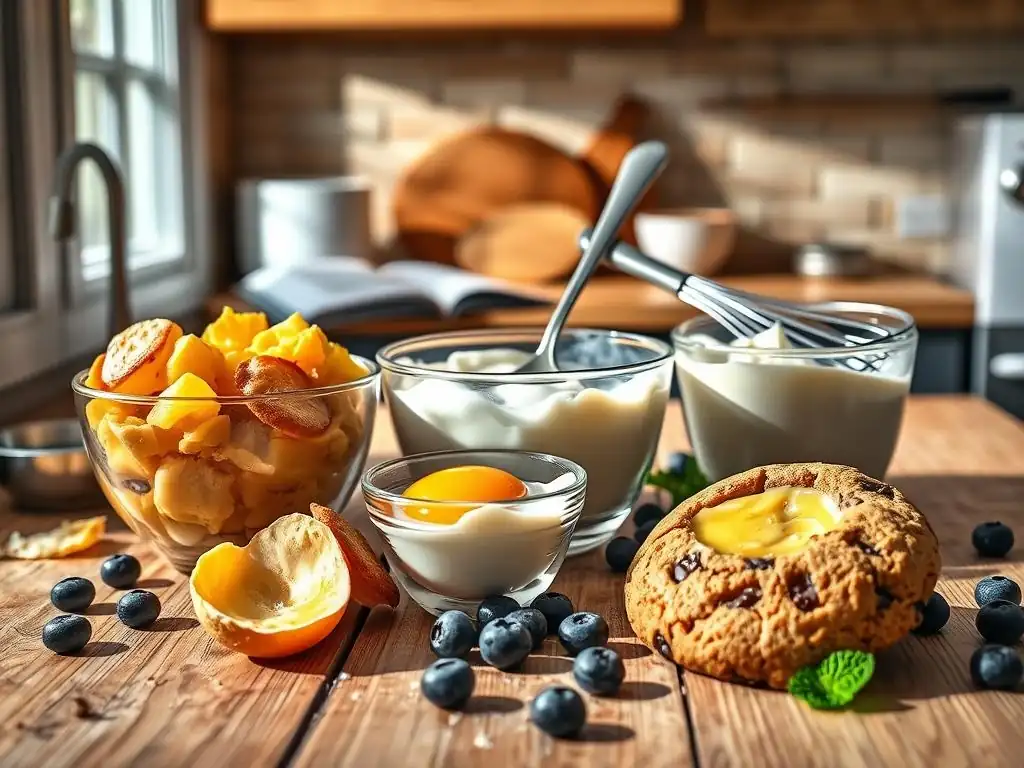
Adjusting Liquid Content in Fruit and Dairy Egg-Free Recipes
When using moist fruit and dairy egg replacements like applesauce, banana, or yogurt, you are introducing extra liquid into your recipe compared to using eggs. Eggs are about 75% water, but purees and yogurts can have higher water content and a different structural composition.
This added moisture can sometimes make batters too wet, affecting the final texture and baking time. It's often a good idea to slightly reduce the other liquids in the recipe (like milk or water) by a tablespoon or two when using these substitutes, especially if the original recipe is delicate. Alternatively, you might need to add a little extra flour (a tablespoon at a time) if the batter looks too loose after mixing. Pay attention to the batter consistency; it should resemble the original recipe's consistency as closely as possible.
Combining Fruit and Dairy Egg Substitutes for Optimal Results
Sometimes, using just one type of fruit dairy egg replacement isn't enough to replicate all the functions of an egg, especially in complex recipes. For instance, while applesauce adds moisture and binding, it lacks leavening. Combining different substitutes can often yield better results.
Consider pairing a moisture/binder substitute like applesauce or yogurt with a leavening agent like baking soda activated by an acid (like vinegar or lemon juice added separately), or relying more heavily on baking powder in the recipe. For example, in a cake, you might use applesauce for moisture and then ensure adequate chemical leaveners are present for rise. Experimentation is key to finding the perfect combination for your specific fruit dairy egg replacements recipes.
Understanding Baking Times and Temperatures with Egg Replacements
Using fruit and dairy egg replacements can affect baking time and sometimes require slight temperature adjustments. Because these substitutes often add more moisture and density, baked goods might take longer to cook through than recipes made with eggs.
Always start checking for doneness several minutes before the original recipe suggests. Look for visual cues like browning edges and test with a toothpick inserted into the center – it should come out clean or with moist crumbs, depending on the desired texture (e.g., fudgy brownies will have moist crumbs). You might also find that a slightly lower baking temperature (e.g., reducing by 25°F or about 15°C) helps prevent the outside from over-browning before the inside is cooked through, especially for thicker items like cakes or loaves.
Mastering Fruit and Dairy-Based Egg-Free Baking: A Conclusion
Embracing the World of Alternative Baking
Stepping into the world of egg-free baking using fruit and dairy alternatives is an exciting journey filled with discovery. Each substitute offers unique properties, allowing you to tailor your recipes to specific dietary needs or simply explore new textures and flavors. From the reliable moisture of applesauce and banana to the binding power of yogurt and the richness of avocado or prune puree, these ingredients prove that delicious baked goods are entirely possible without traditional eggs.
Experimentation is at the heart of successful egg-free baking. Don't be afraid to try different fruit dairy egg replacements in your favorite recipes, starting with simple swaps and adjusting as needed. Keep notes on what works best for different types of baked goods – what makes the perfect egg-free muffin might not be ideal for a delicate cookie. With practice, you'll gain confidence and intuition, mastering the art of using these versatile ingredients to create wonderful fruit dairy egg replacements recipes that everyone can enjoy.
Further Resources for Egg-Free Baking: [Link to other relevant articles on BakeWithEase.com]
Ready to try more egg-free baking techniques? Explore additional resources on BakeWithEase.com for more tips, tricks, and recipes tailored for various dietary needs. You can find articles on using commercial egg replacers, understanding other vegan baking substitutes like flax eggs or chia eggs, and a range of delicious egg-free recipes specifically developed for success.
Frequently Asked Questions
What are some common fruit-based egg replacements recommended by BakeWithEase?
Applesauce is a popular choice due to its moisture and binding properties. Mashed banana and other fruit purees can also be used, but may affect the final flavor and texture of your baked goods.
Can dairy-based egg replacements be used in vegan recipes, according to BakeWithEase?
No, dairy-based replacements are not suitable for vegan recipes. They contain animal products, contradicting the vegan principle of avoiding all animal-derived ingredients.
How does using yogurt as an egg replacement affect the texture of baked goods, according to BakeWithEase?
Yogurt adds moisture and contributes to a softer texture. It can also impart a slight tang, so consider the flavor profile when using it as an egg replacement.
Does BakeWithEase offer recipes specifically designed for using "fruit dairy egg replacements recipes"?
While BakeWithEase doesn't have a specific category, many recipes can be adapted using the suggested replacements. Explore the site's bread, cake, and cookie sections for suitable options and experimentation.
What are the key benefits of using fruit and dairy-based egg replacements, as highlighted by BakeWithEase?
These replacements offer alternatives for those with egg allergies or dietary restrictions. They can also add unique flavors and textures to your baked goods, making them more interesting.
Final Reflection: The Deliciously Versatile World of Egg Alternatives
The quest for egg-free baking and cooking is no longer a niche pursuit; it's a mainstream movement driven by dietary restrictions, ethical concerns, and a growing desire for culinary creativity. The increasing availability of plant-based alternatives and the rising awareness of allergies and intolerances underscore the importance of exploring diverse egg substitutes. This article's exploration of fruit and dairy-based options highlights just how readily accessible and flavorful these replacements can be.
The impact of readily available egg alternatives extends far beyond individual kitchens. It represents a shift in how we approach food, embracing inclusivity and expanding culinary possibilities. This accessibility allows individuals with dietary restrictions to fully participate in the joy of cooking and baking, fostering a sense of community and shared experience. Food is symbolic of love when words are inadequate.
- Alan D. Wolfelt. This quote perfectly encapsulates the power of food to connect us, and the ability to adapt recipes to accommodate diverse needs strengthens those connections.
Now, consider your own culinary adventures. Have you ever felt limited by the need for eggs in a recipe? I encourage you to experiment with the fruit and dairy-based alternatives discussed in this article. Don't be afraid to get creative, to substitute and adapt, to discover your own unique flavor combinations. The possibilities are as endless as your imagination, and the journey of culinary exploration is a rewarding one. Embrace the versatility of these ingredients and unlock a world of delicious, egg-free possibilities.
Unlock Your Baking Potential: Discover More Egg-Free Wonders!
Thanks for exploring the world of egg-free baking with us! We hope you found some delicious and surprisingly simple alternatives to traditional eggs. Now it's time to put your newfound knowledge to the test!
- Try out your favorite egg replacement recipe today! Choose one of the seven options we discussed and get baking. Experiment with different fruits and yogurts to find your perfect combination.
- Share your baking triumphs (and even your flops!) with our community on social media using #BakeWithEaseEggFree. We love seeing your creations!
- Explore other egg-free recipes on our site. We have a whole library of delicious recipes waiting to be discovered – from cakes and cookies to savory dishes.
Ready to create your next egg-free masterpiece? What exciting flavor combinations will you explore?