
Invest Smart: Essential Baking Tools Worth Every Penny for New Bakers

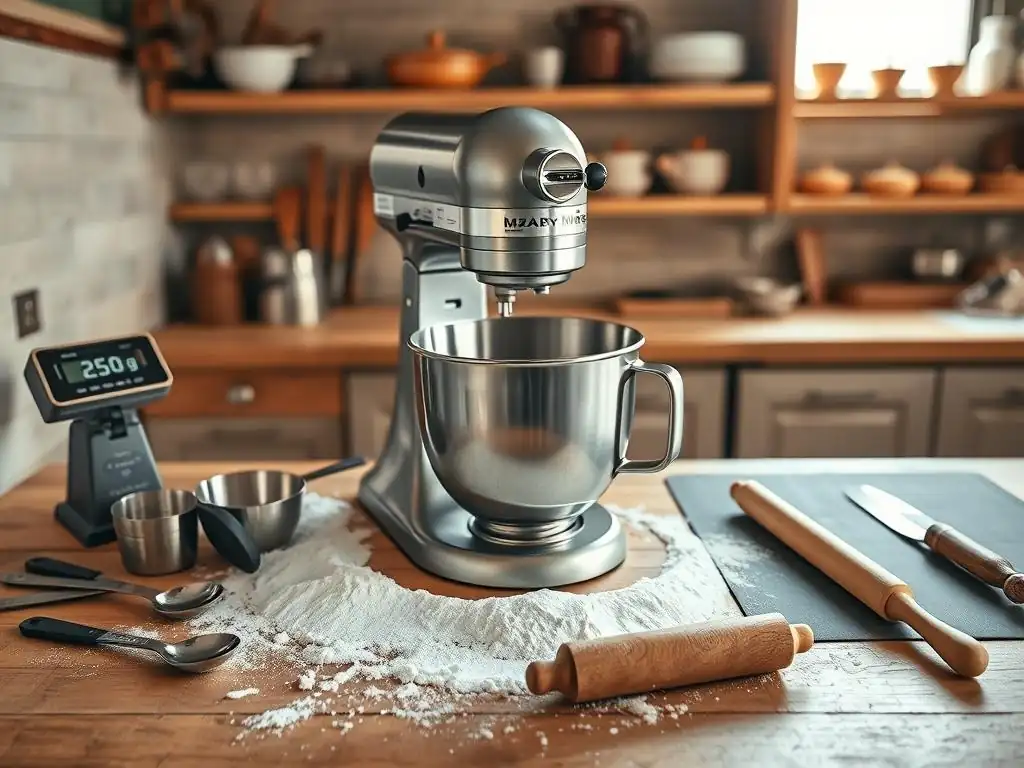
Welcome to BakeWithEase, your trusted companion on your baking journey! Are you ready to transform your kitchen into a haven of delicious creations? Discover how the right tools can make all the difference – especially when starting out. Dive into our guide on the best baking tools for beginners and unlock the secrets to effortless and successful baking. What essential gadgets will truly elevate your creations, and which can you skip? Let's find out!
- Introduction: Setting Up Your Beginner Baking Toolkit
- Must-Have Measuring Tools for Baking Accuracy
- Essential Mixing Bowls and Utensils for Smooth Baking
- Baking Pans: Selecting the Right Shapes and Sizes for Your Recipes
- Key Baking Tools for Shaping and Decorating
- Investing in Durability: Choosing Long-Lasting Baking Equipment
- Where to Buy Your Essential Baking Tools for Beginners
- Conclusion: Building Your Dream Baking Toolkit with Confidence
-
Frequently Asked Questions
- What are the absolute must-have baking tools for someone just starting out?
- I'm on a tight budget. Which tool should I prioritize buying first?
- Are electric mixers really necessary for beginner bakers?
- What type of baking sheet is best for preventing cookies from burning?
- Where can I find affordable, yet reliable, baking tool sets?
- Final Reflection: The Sweet Rewards of Investing in Quality Baking Tools
- Unleash Your Inner Baker: Elevate Your Baking Game!
Introduction: Setting Up Your Beginner Baking Toolkit
Baking is a rewarding journey, and like any journey, having the right equipment makes the path smoother and more enjoyable. For new bakers, the sheer number of tools available can seem overwhelming. The good news is you don't need everything at once! Starting with a carefully selected set of essential baking tools will not only make your initial attempts more successful but also build a solid foundation for tackling more complex recipes down the line. Think of it as building your personal baking arsenal, piece by piece, focusing on quality over quantity.
This guide will walk you through the best baking tools for beginners, focusing on items that offer versatility, accuracy, and durability. We'll explore why certain tools are crucial for specific tasks and how a smart investment upfront can save you frustration and improve your results. Whether you dream of baking perfect chocolate chip cookies, fluffy cakes, or crusty bread, having the right basic kit is your first step towards achieving those delicious goals with ease and confidence.
Why Investing in Quality Baking Tools Matters for New Bakers
Investing in quality baking tools is more than just buying expensive items; it's about choosing tools that are reliable, accurate, and built to last. For new bakers, consistency is key to learning. Using a cheap, inaccurate scale, for example, can lead to recipes failing, making it hard to pinpoint whether the issue was the technique or the measurements. Quality tools provide consistent results, helping you learn faster by ensuring your ingredients are measured and mixed correctly every time.
Furthermore, durable tools mean you won't have to replace them frequently, saving you money in the long run. A sturdy baking sheet that doesn't warp in the oven, or a well-made whisk that doesn't rust, are investments that pay off over many baking sessions. When starting out, having reliable tools that perform their job well reduces potential points of failure in a recipe, allowing you to focus on mastering techniques like creaming butter and sugar or folding flour into batter without being hindered by subpar equipment. This makes the learning process less frustrating and more rewarding.
Must-Have Measuring Tools for Baking Accuracy
Digital Kitchen Scale: The Cornerstone of Precise Baking
For any baker serious about consistent results, a digital kitchen scale is arguably the single most important tool. Baking is a science, and precise measurements, especially by weight, are far more accurate than volume measurements (cups and spoons). For instance, a cup of flour can vary in weight by as much as 20% depending on how it's scooped and leveled. Using a scale ensures you're using the exact amount specified in a recipe, leading to better outcomes. Many professional recipes are written using grams or ounces for this very reason.
A good digital scale should measure in grams and ounces, have a tare function (to zero out the weight of the container), and be easy to clean. Prices for reliable scales typically range from $15 to $40. While a basic scale measuring up to 5kg (about 11 lbs) is sufficient for most home baking, some bakers prefer scales that can handle heavier loads for large batches or bread doughs.
Using a scale is especially crucial for recipes that are sensitive to ingredient ratios, like macarons or delicate pastries. It's a fundamental tool that elevates your baking accuracy significantly, making it one of the best baking tools for beginners to acquire early on.
Measuring Cups and Spoons: Mastering Dry and Liquid Ingredients
While a digital scale is preferred for dry ingredients like flour and sugar, measuring cups and spoons are still essential for ingredients like leaveners (baking powder, baking soda), spices, extracts, and small amounts of liquids. It's important to have separate sets for dry and liquid measurements for best accuracy. Dry measuring cups should be leveled off with a straight edge, while liquid measuring cups have a spout and markings that allow you to read the volume at eye level.
A standard set of dry measuring cups usually includes 1/4 cup, 1/3 cup, 1/2 cup, and 1 cup. Measuring spoons typically range from 1/8 teaspoon to 1 tablespoon. Look for sets made of durable material like stainless steel, which won't stain or retain odors like some plastics might. Accurate measuring spoons are particularly critical for leaveners; using slightly too much or too little baking powder can significantly affect the rise and texture of baked goods. Having a reliable set is a key part of the best baking tools for beginners kit.
Liquid Measuring Cups: Why They Differ from Dry Measuring Cups
Liquid measuring cups are specifically designed to measure liquids accurately. They are typically made of clear glass or plastic, have a handle, a spout for easy pouring, and volume markings up the side. The key difference is that liquid measurements are read at eye level (the meniscus, or the curve at the surface of the liquid, should be at the desired mark) while the cup sits flat on the counter. This method ensures the volume is precise, unlike trying to level off a liquid in a dry measuring cup, which would be inaccurate and messy.
Common sizes for liquid measuring cups include 1 cup, 2 cup (pint), and 4 cup (quart). Having at least a 2-cup size is very useful for measuring larger amounts of milk, water, or oil needed for cakes, breads, or batters. The spout is crucial for cleanly pouring ingredients without spills, which is particularly helpful when adding liquids gradually to a mixture. Using the correct type of measuring cup for the job is a simple but vital step towards baking success.
Essential Mixing Bowls and Utensils for Smooth Baking
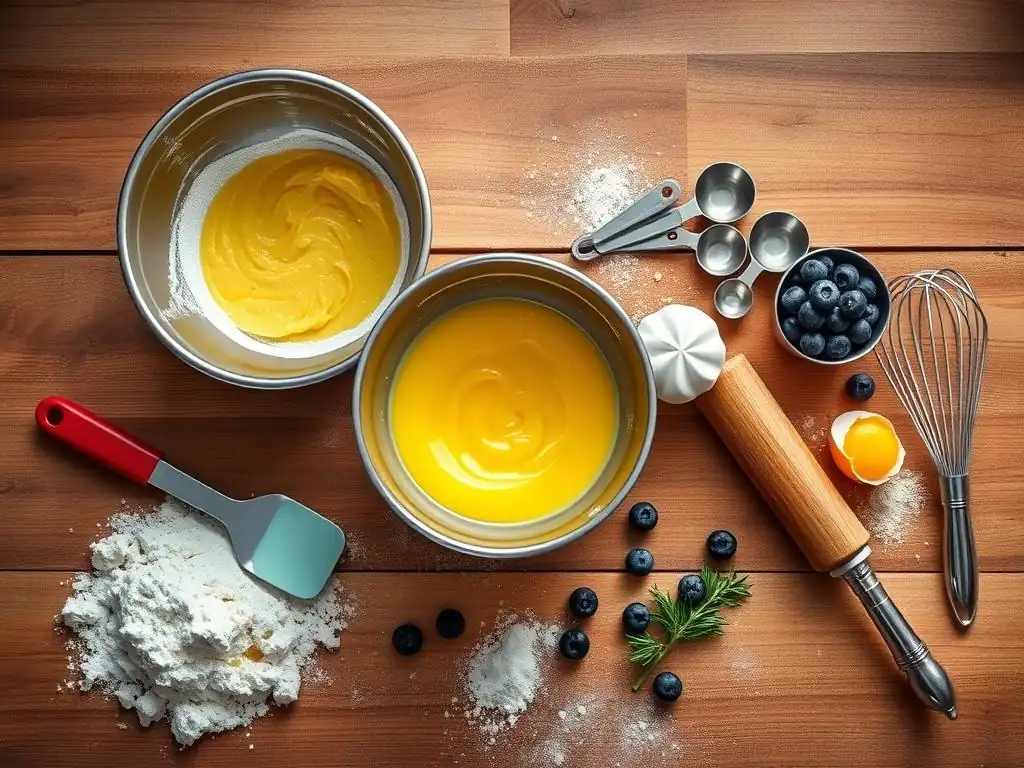
Mixing Bowls: Choosing the Right Size and Material
Mixing bowls are the workhorses of any baking kitchen. You'll need a variety of sizes for everything from whisking a couple of eggs to mixing large batches of cookie dough or bread dough. Having at least three sizes – small (1-2 quarts), medium (3-4 quarts), and large (5-8 quarts) – provides versatility. Materials commonly include glass, stainless steel, and plastic. Glass bowls are heavy and stable but can break. Stainless steel is lightweight, durable, and non-reactive, making it great for all tasks. Plastic is affordable and lightweight but can scratch and retain odors or stains.
For beginners, a set of stainless steel bowls is often recommended due to their durability, ease of cleaning, and relatively low cost. They are also ideal for setting over a pot of simmering water for a double boiler method (like melting chocolate). Choosing bowls with non-slip bottoms can be a great feature, preventing them from sliding around while you're vigorously mixing. Having nested bowls is also a space-saving solution for smaller kitchens.
Spatulas and Scrapers: Ensuring Thorough Mixing
Spatulas and scrapers are indispensable for combining ingredients, scraping down the sides of bowls, and folding delicate mixtures. A good set should include at least one rubber or silicone spatula with a flexible head and a sturdy handle. Silicone spatulas are heat-resistant and non-reactive, making them suitable for use with hot mixtures or while cooking. Look for spatulas with a single-piece design or heads that detach easily for thorough cleaning, preventing food particles from getting trapped.
Beyond spatulas, a bowl scraper (often a flexible piece of plastic or silicone) is incredibly useful for scraping batter or dough cleanly out of a bowl. A bench scraper (a flat, rigid piece of metal or plastic with a handle) is excellent for dividing dough, scraping sticky remnants from your work surface, and transferring chopped ingredients. These simple tools ensure you incorporate all ingredients properly and minimize waste, making them essential parts of the best baking tools for beginners.
Whisks: Achieving Light and Airy Textures
Whisks are crucial for incorporating air into ingredients and smoothing out batters or sauces. A standard balloon whisk is the most common type and is great for whisking eggs, cream, or light batters. The wires are spaced to maximize air incorporation. A smaller whisk, sometimes called a flat or roux whisk, is useful for getting into the corners of pans or for making gravies and sauces on the stovetop.
For new bakers, having at least one good-quality balloon whisk, preferably with stainless steel wires and a comfortable handle, is sufficient. Look for whisks where the wires are securely attached to the handle to prevent them from loosening over time. Whisking is a fundamental technique for achieving light textures in everything from meringues to whipped cream, and a good whisk makes the process much easier and more effective.
Baking Pans: Selecting the Right Shapes and Sizes for Your Recipes
Cake Pans: Round, Square, and Bundt – Which to Choose?
Cake pans come in various shapes and sizes, and the type you need often depends on the recipe. For beginners, having a couple of standard round cake pans (typically 8 or 9 inches in diameter) is a great starting point, as many layer cake recipes use these. Square pans (often 8x8 or 9x13 inches) are versatile for brownies, bar cookies, and sheet cakes. A 9x13 inch rectangular pan is particularly useful for family-sized desserts.
Bundt pans, with their decorative fluted shapes, are specific for Bundt cakes and offer a beautiful presentation with minimal effort. While not strictly essential for a beginner's first pans, they are a popular addition later on. Look for pans made from aluminum or aluminized steel, which conduct heat evenly. Non-stick coatings can be helpful but still benefit from greasing and flouring for best results. Investing in sturdy pans that don't warp in the oven is key to evenly baked cakes.
Cookie sheets and baking sheets (often called rimmed baking sheets) are workhorses used for much more than just cookies. They are essential for roasting vegetables, baking bread, and, of course, baking perfectly golden cookies. Baking sheets typically have a lip on all four sides, which prevents liquids from spilling and makes them more rigid. Cookie sheets may have only one or two lips or none at all, allowing cookies to slide off easily.
For even baking, choose heavy-gauge aluminum baking sheets. Avoid dark-colored or non-stick sheets initially, as they can cause the bottoms of baked goods to brown too quickly. A standard half-sheet size (approximately 18x13 inches) is the most versatile and fits most home ovens. Having two allows you to bake in batches, saving time. Using parchment paper or silicone baking mats on your sheets further promotes even baking and makes cleanup a breeze.
Muffin Tins: Creating Perfectly Portioned Treats
Muffin tins are necessary for baking muffins, cupcakes, and even mini quiches or savory egg bites. Standard muffin tins usually have 12 cups, each holding about 1/3 to 1/2 cup of batter. There are also mini muffin tins and jumbo muffin tins for different portion sizes. A standard 12-cup muffin tin is the most versatile for a beginner.
Look for muffin tins made from aluminized steel for good heat conduction. Non-stick coatings are particularly helpful for muffins and cupcakes, though using paper liners is also common and aids in easy removal and cleanup. Ensure the tin is sturdy and doesn't bend easily. A reliable muffin tin ensures your baked goods rise evenly and release cleanly from the pan.
Key Baking Tools for Shaping and Decorating
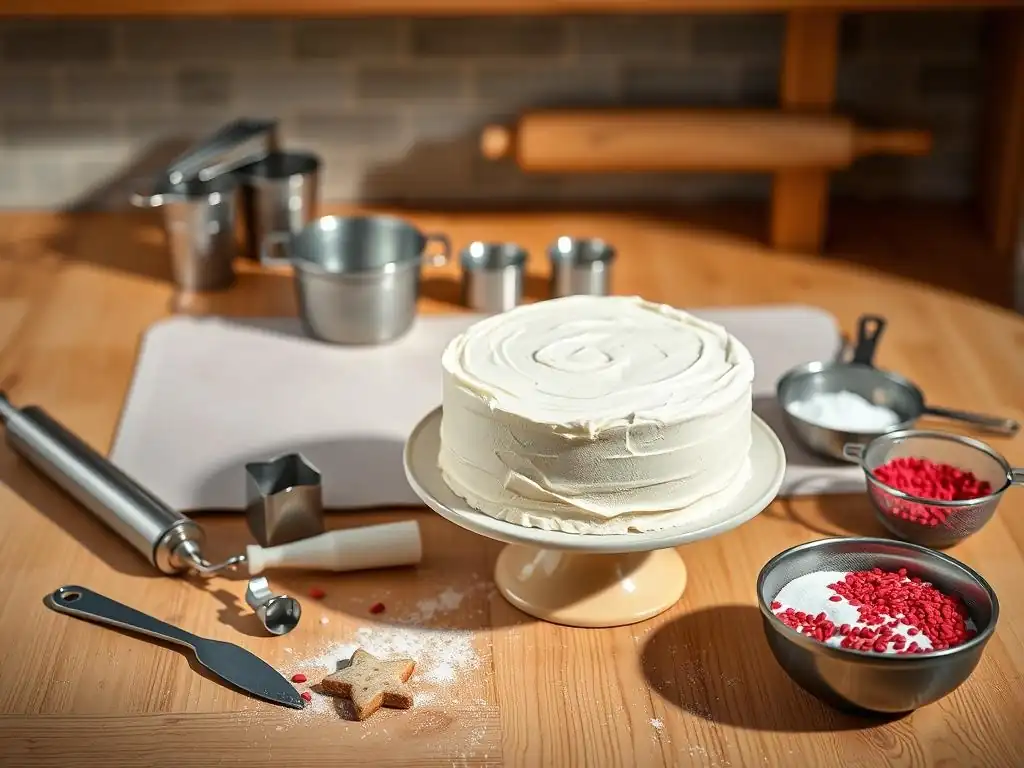
Rolling Pin: Achieving Uniform Dough Thickness
A rolling pin is essential for flattening and shaping dough for pies, tarts, cookies, biscuits, and more. The goal is to achieve uniform thickness so the dough bakes evenly. Rolling pins come in various styles: the American-style with handles and a rotating barrel, the French-style which is a simple tapered dowel, and others. For beginners, either an American-style or a French-style pin works well.
Choose a rolling pin made of wood or stainless steel. Wood is traditional and effective, while stainless steel can be chilled, which is beneficial when working with temperature-sensitive doughs like pastry or pie crust. A medium-sized pin (around 10-12 inches for the barrel/working area) is versatile for most tasks. Using a rolling pin correctly is a key skill for many baking projects, ensuring your crusts are flaky and your cookies are uniform.
Pastry Blender or Cutter: Working with Butter for Flaky Crusts
A pastry blender, also known as a pastry cutter, is a tool with several curved metal wires or blades attached to a handle. Its primary use is cutting cold butter or other solid fats into flour when making pastries, biscuits, or scones. This process creates small pockets of fat coated in flour, which melt during baking to produce a flaky texture. Using your hands can warm the butter too much, resulting in a tougher crust.
A good pastry blender is made of sturdy stainless steel and has a comfortable handle. The wires should be rigid enough to cut through cold butter without bending excessively. While you can use two knives or your fingertips, a pastry blender is far more efficient and effective at achieving the desired pea-sized or crumb-like consistency of fat and flour, making it a valuable tool for anyone wanting to master flaky baked goods.
Piping Bags and Tips: Adding the Finishing Touches
While not strictly essential for every beginner, piping bags and tips are key for decorating cakes, cupcakes, and cookies, or for piping doughs like choux pastry or meringues. Piping bags can be reusable (silicone or canvas) or disposable plastic. Disposable bags are convenient for cleanup, while reusable bags are more eco-friendly.
A basic set of piping tips usually includes a few common shapes like round tips (for lines and dots), star tips (for rosettes and borders), and perhaps a leaf tip. Starting with a few versatile tips and a set of disposable bags is an easy way to add a professional touch to your baked goods. Piping isn't just for decoration; it's also useful for portioning batter evenly, like filling muffin cups or creating uniform cookies.
Investing in Durability: Choosing Long-Lasting Baking Equipment
Stainless Steel vs. Silicone: Understanding Material Benefits
When building your collection of best baking tools for beginners, considering the material is important for durability and performance. Stainless steel is a popular choice for measuring tools, mixing bowls, and some pans because it's non-reactive, durable, rust-resistant, and easy to clean. It conducts heat well (though perhaps not as evenly as aluminum for pans) and doesn't retain odors. It's a workhorse material for items that see frequent use and washing.
Silicone has become increasingly popular for spatulas, baking mats, and even some bakeware. Silicone spatulas are flexible, heat-resistant, and non-stick, making them ideal for scraping bowls and working with sticky ingredients. Silicone baking mats provide a non-stick surface for cookies and pastries, promote even browning, and are reusable alternatives to parchment paper. While silicone bakeware is flexible and non-stick, it doesn't always conduct heat as well as metal, which can affect browning. Often, a combination of materials works best – stainless steel for durability and mixing, silicone for flexibility and non-stick properties.
Proper Cleaning and Maintenance for Longevity
Even the highest quality baking tools require proper care to last. Most metal tools like stainless steel measuring cups, spoons, and mixing bowls are dishwasher safe, but hand washing is often recommended to maintain their finish and prevent potential spotting from harsh dishwasher detergents. Wooden rolling pins should be wiped clean with a damp cloth and dried immediately; never soak them, as this can cause cracking.
Silicone tools and mats are generally easy to clean with soap and water, and many are dishwasher safe. Baking sheets and pans, even non-stick ones, benefit from gentle cleaning without abrasive scrubbers that can damage the surface. For stubborn baked-on bits, soaking is often more effective than aggressive scrubbing. Regularly cleaning and properly storing your tools, like stacking bowls carefully and hanging spatulas, ensures they remain in good condition and are ready for your next baking adventure.
Where to Buy Your Essential Baking Tools for Beginners
Online Retailers
Online retailers like Amazon, King Arthur Baking, Sur La Table, or specialized kitchen supply websites offer a vast selection of baking tools from various brands. Shopping online provides convenience, allows you to easily compare prices and read customer reviews, and often gives you access to a wider range of specialty items that might not be available locally.
When buying online, pay attention to product descriptions, materials, and dimensions to ensure the tool meets your needs. Look for reputable brands known for quality baking equipment. While shipping costs are a factor, buying online can often be cost-effective, especially when purchasing multiple items or during sales events. Reading reviews from other bakers can provide valuable insights into the real-world performance and durability of the best baking tools for beginners.
Local Kitchen Supply Stores
Visiting a local kitchen supply store or even the kitchenware section of a department store allows you to see and feel the tools before purchasing. You can assess the weight of a mixing bowl, the sturdiness of a whisk handle, or the quality of a baking pan firsthand. This tactile experience can be very helpful in choosing tools that feel comfortable and well-made.
Local stores also offer the benefit of expert advice from staff who can answer your questions and recommend specific products based on your needs. While prices might occasionally be slightly higher than online, you save on shipping and support local businesses. Plus, if you need a tool right away for a specific recipe, you can walk out with it immediately. Exploring local options is a great way to find some of the best baking tools for beginners and get personalized recommendations.
Conclusion: Building Your Dream Baking Toolkit with Confidence
Prioritizing Your Baking Tool Investments Based on Your Baking Goals
Building a comprehensive baking toolkit doesn't have to happen overnight. For new bakers, the smartest approach is to prioritize investments based on the types of baking you are most interested in. If you love making cookies and cakes, focus on getting good measuring tools, mixing bowls, spatulas, baking sheets, and cake pans first. If bread baking is your passion, a digital scale, sturdy mixing bowls, and perhaps a Dutch oven or loaf pans would be higher priorities.
Start with the absolute essentials – a reliable scale, measuring cups/spoons, a few mixing bowls, spatulas, and a versatile baking sheet. As you gain confidence and explore new recipes, you can gradually add more specialized tools like a rolling pin, pastry blender, or piping supplies. By investing wisely in quality tools that match your baking aspirations, you set yourself up for success and enjoyment in the kitchen. Building your collection thoughtfully ensures you have the best baking tools for beginners tailored to your evolving skills and interests.
Frequently Asked Questions
What are the absolute must-have baking tools for someone just starting out?
The most important tools are a good mixing bowl, a set of measuring cups and spoons, and a reliable baking sheet. These foundational items will allow you to tackle most basic recipes.
I'm on a tight budget. Which tool should I prioritize buying first?
Prioritize a good quality oven thermometer. Accurate temperature is crucial for baking success, and this tool will ensure your oven is properly calibrated, leading to better results even with basic equipment.
Are electric mixers really necessary for beginner bakers?
While helpful, electric mixers aren't essential at first. You can achieve great results with hand mixing and a whisk. Consider investing later if you find yourself baking frequently.
Choose a light-colored baking sheet made of aluminum. Darker sheets absorb more heat, increasing the risk of burnt bottoms. Using parchment paper also helps.
Where can I find affordable, yet reliable, baking tool sets?
Look for sets at department stores or online retailers. Read reviews carefully to ensure the set includes essential items and has decent quality, even if it's not the highest-end brand.
Final Reflection: The Sweet Rewards of Investing in Quality Baking Tools
The initial investment in quality baking tools is not an expense, but rather a foundational step towards a lifetime of baking joy. Mastering the art of baking isn't just about following recipes; it's about understanding the nuances of ingredients and techniques, and the right tools are crucial for that understanding. This journey, as explored in this article, is about building a solid base for culinary creativity and delicious results.
The impact of readily available, high-quality tools on the baking experience cannot be overstated. It's more than just convenience; it's about fostering a love for the craft. A well-made whisk, for example, makes the simple act of incorporating air into batter a pleasure, not a chore. This translates to a more positive baking experience, encouraging experimentation and ultimately, a deeper appreciation for the process. As Julia Child wisely said, Find something you're passionate about and keep tremendously interested in it.
This applies perfectly to the joy of baking with the right tools.
Now, consider your own baking journey. What tools are you missing that might elevate your experience? Perhaps it's a sturdy mixing bowl, a reliable thermometer, or a well-made spatula. I encourage you to reflect on your current equipment and identify those key pieces that will make the biggest difference in your baking success. Investing in even one or two high-quality tools can transform your baking, unlocking new levels of creativity and satisfaction. Embrace the journey, one perfectly baked treat at a time.
Unleash Your Inner Baker: Elevate Your Baking Game!
Thanks for taking the time to explore the world of essential baking tools! We hope you’ve gained valuable insights into creating delicious, professional-quality baked goods. Now, it's time to put your newfound knowledge into action.
- Invest in your top-priority tool: Based on your baking style and the recipes you're most excited to try, purchase that one crucial piece of equipment you identified in the article. (Think stand mixer, quality baking sheets, or a precise kitchen scale).
- Share your baking journey: Inspire others! Tell us (and your friends!) about your baking adventures using the tools you've selected—we'd love to hear about your experiences!
- Explore new recipes: Using your newly acquired knowledge and tools, try a challenging recipe you might have avoided before—we're confident you'll be amazed by the results!
What incredible baked masterpiece will you create first? Let us know in the comments!