
Cake Decorating Tips for Absolute Beginners

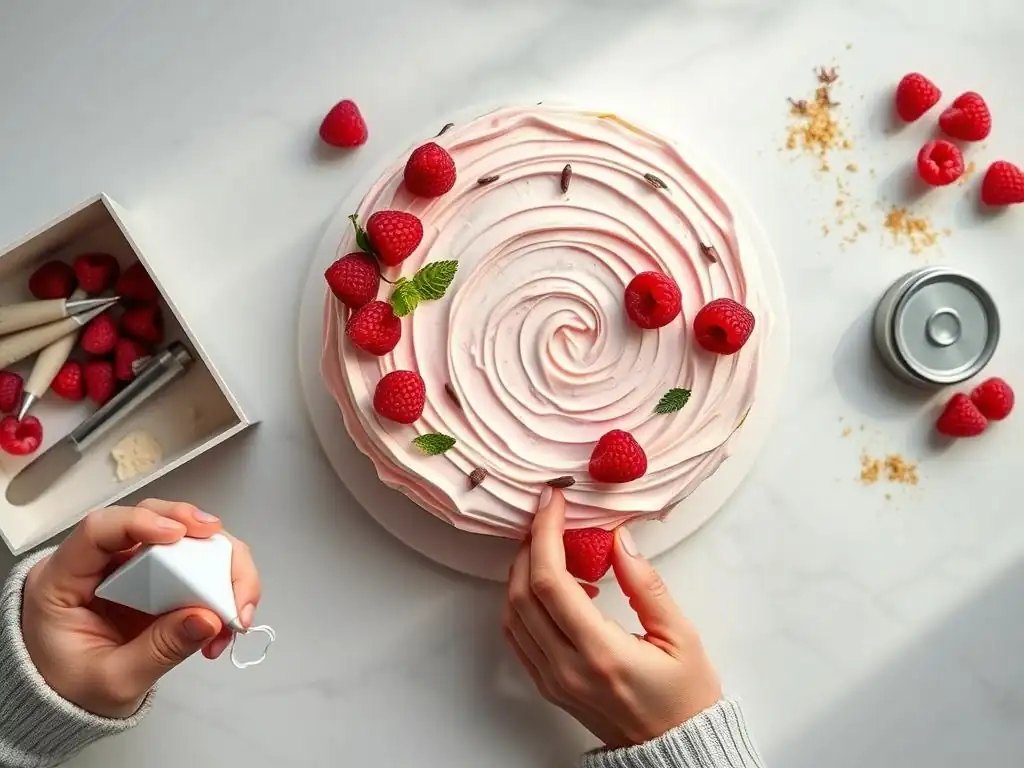
Welcome to BakeWithEase, your ultimate guide to unlocking the secrets of delicious desserts! Ever dreamed of creating stunning cakes without the stress? You're in the right place. Dive into our comprehensive guide on easy cake decorating for beginners and discover how to transform simple bakes into edible masterpieces. Ready to sprinkle some magic? Let's get started!
- Cake Decorating Tips for Absolute Beginners: Bake With Ease
- Introduction to Easy Cake Decorating for Beginners
- Essential Cake Decorating Tools for Beginners
- Preparing Your Cake for Decoration: The Foundation for Success
- Simple Cake Decorating Techniques for Beginners
- Easy Buttercream Recipes for Cake Decorating Beginners
- Common Cake Decorating Mistakes to Avoid (and How to Fix Them)
- Easy Cake Decorating Ideas for Different Occasions
- Practicing and Improving Your Cake Decorating Skills
- Conclusion: You've Got This! Easy Cake Decorating Awaits
-
Frequently Asked Questions
- What are some essential tools for easy cake decorating for beginners?
- Where can I find easy cake decorating recipes suitable for someone just starting out?
- What is the easiest type of frosting to work with when learning cake decorating?
- What are some simple cake decorating techniques that even a beginner can master?
- How can I avoid common mistakes made by beginners when decorating cakes?
- Final Reflection: The Sweet Simplicity of Cake Decorating
- Unleash Your Inner Cake Artist!
Cake Decorating Tips for Absolute Beginners: Bake With Ease
Introduction to Easy Cake Decorating for Beginners
Welcome to the World of Cake Decorating!
Stepping into the world of cake decorating can feel a bit daunting at first, with visions of elaborate tiered cakes and intricate sugar flowers dancing in your head. However, the truth is, anyone can learn to decorate a cake beautifully, even with zero prior experience. It's a creative outlet that adds a personal touch to any celebration, turning a simple baked good into a centerpiece.
Think of it as adding the final flourish to your delicious creation – and with the right approach, it's much more accessible than you might think. This guide is designed specifically for you, the absolute beginner, focusing on easy cake decorating techniques that yield impressive results.
Our goal at BakeWithEase.com is to demystify baking and decorating, making it fun and achievable for everyone. We believe that the joy of baking extends to the presentation, and learning simple cake decorating skills is a fantastic way to enhance that joy. You don't need a professional kitchen or a huge budget to get started. With a few basic tools and a willingness to try, you'll be creating lovely cakes in no time. Let's dive into making easy cake decorating for beginners a reality for you!
Why Cake Decorating is Easier Than You Think
Many people believe cake decorating is a skill reserved for seasoned professionals, requiring years of practice and a steady hand. This simply isn't true, especially when focusing on beginner-friendly techniques. The fundamental skills, like achieving a smooth frosting finish or piping a simple border, are quite straightforward and can be mastered with a little patience and practice. It's about building confidence step-by-step, starting with the basics and gradually adding more complexity as you feel comfortable.
Focusing on easy cake decorating for beginners means starting with techniques that are forgiving and don't require extreme precision. Techniques like crumb coating, simple swirls, sprinkle application, and basic piping tips can transform a cake dramatically with minimal effort. For example, a well-executed crumb coat (more on that later) is perhaps the most crucial step for a smooth final layer, and it's surprisingly simple. Embracing the learning process and not expecting perfection on your first try is key – every cake you decorate will teach you something new.
Essential Cake Decorating Tools for Beginners
Must-Have Tools: Your Starter Kit for Decorating Cakes
To begin your easy cake decorating journey, you don't need to fill your kitchen with expensive gadgets. A few essential tools will get you started and allow you to practice fundamental techniques. First and foremost, a reliable offset spatula (both small and large) is indispensable for spreading frosting smoothly. A rotating cake stand is also incredibly helpful, making it much easier to frost and decorate all sides of the cake evenly without awkward stretching. Many beginner stands are made of plastic and can be found for under $20.
Another crucial item is a set of piping bags and a few basic piping tips. Reusable silicone or plastic piping bags are economical in the long run, while disposable bags offer convenience. For tips, start with a large round tip (like Wilton 1A) for filling and frosting, a star tip (like Wilton 1M) for swirls and borders, and perhaps a small round tip (like Wilton 3) for dots or writing. These few tips cover a wide range of easy cake decorating techniques. Expect to spend roughly $30-$50 on a solid starter kit including spatulas, a stand, bags, and tips.
Affordable Cake Decorating Tools for Beginners: Budget-Friendly Options
Getting started with easy cake decorating for beginners doesn't have to break the bank. Many essential tools have affordable alternatives or can be purchased individually over time. Instead of a professional-grade metal rotating stand, a basic plastic turntable works perfectly well for beginners and typically costs under $20. For spreading frosting, while offset spatulas are ideal, a standard kitchen knife or even the back of a spoon can be used in a pinch when you're just practicing.
Piping bags can be substituted with sturdy zip-top plastic bags – simply snip off a corner to create an opening. While not as sturdy or easy to fill as dedicated piping bags, they are a great way to experiment with piping before investing. Basic piping tips can often be bought individually for just a few dollars each, rather than in large, expensive sets. Look for beginner sets at craft stores or online retailers, which often bundle the most popular tips and bags for a reasonable price, often in the $15-$30 range.
Preparing Your Cake for Decoration: The Foundation for Success
Leveling Your Cake Layers: Achieving a Flat Surface
Before you even think about frosting, your cake layers need to be cool and level. Uneven layers can make stacking difficult and result in a lopsided cake, which is much harder to frost smoothly. The simplest way to level a cake layer is to use a large serrated knife. Once the cake is completely cooled (ideally chilled slightly), place it on a flat surface and hold the knife parallel to the counter. Use a gentle sawing motion to carefully slice off the domed top, creating a flat surface.
Alternatively, you can use a cake leveler tool, which is essentially an adjustable wire saw that ensures a perfectly even cut. These tools are relatively inexpensive, often costing between $10 and $25, and can make the process much faster and more precise, especially if you're leveling multiple layers. Regardless of the method, aim for a flat, stable surface on each layer. Any small inconsistencies can often be corrected during the frosting process, but starting flat makes the job significantly easier.
Crumb Coating: The Secret to a Smooth Cake Finish
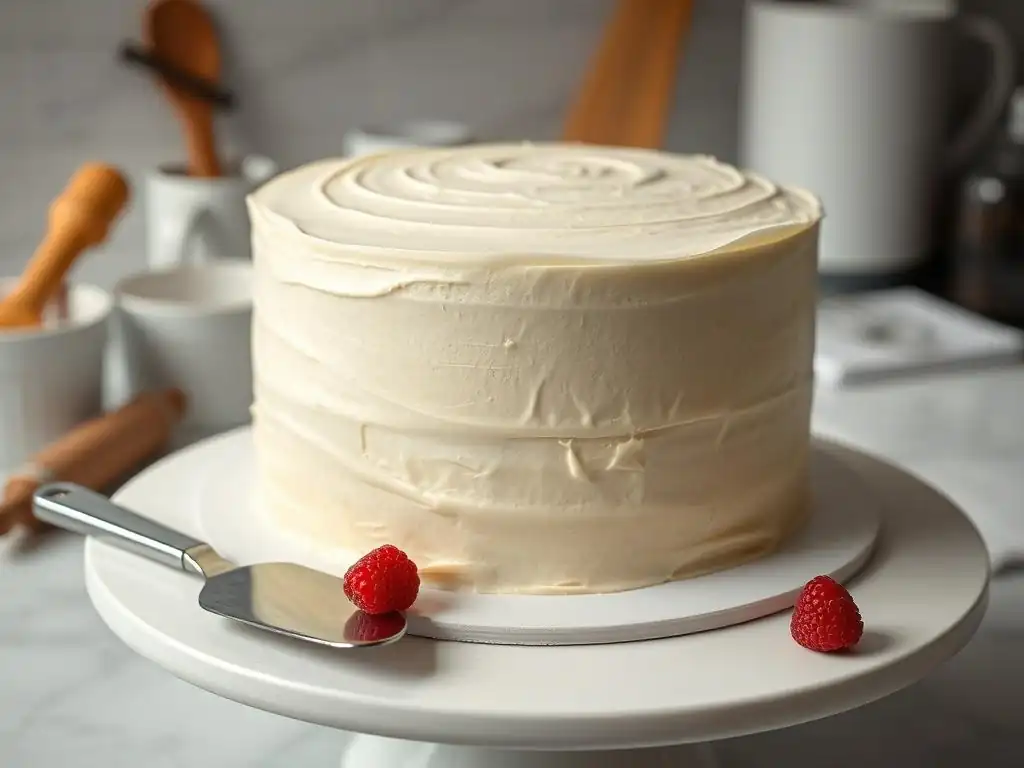
The crumb coat is arguably the most critical step for achieving a smooth, professional-looking final layer of frosting, particularly when focusing on easy cake decorating for beginners. It's a thin layer of frosting applied to the cake to trap any loose crumbs. Without a crumb coat, these crumbs will inevitably mix into your final layer of frosting, creating an unappealing, bumpy texture. Think of it as priming a wall before painting – it creates a clean, stable base.
To apply a crumb coat, use an offset spatula to spread a very thin layer of frosting all over the cake, top and sides. Don't worry about getting it perfectly smooth; the goal is just to cover the cake completely and seal in the crumbs. Use a light touch to avoid lifting more crumbs.
Once covered, chill the cake in the refrigerator for at least 20-30 minutes, or until the crumb coat is firm to the touch. This allows the frosting to set and lock those pesky crumbs in place, preparing the cake for the final, thicker layer of frosting.
Chilling the Cake: Setting the Stage for Easy Decorating
Chilling your cake layers, both before leveling and after the crumb coat, is a game-changer for easy cake decorating, especially for beginners. Cold cake layers are much firmer and less prone to breaking or crumbling when you're handling them, stacking them, or applying frosting. Chilling a cake for at least 30 minutes after baking and cooling can make leveling significantly easier and cleaner.
After applying the crumb coat, chilling the cake for another 20-30 minutes (or even longer, up to an hour or two) allows that thin layer of frosting to firm up. This creates a stable surface for your final frosting layer. A chilled, crumb-coated cake is much easier to apply a smooth, even layer of frosting to because the base is firm and you won't pull up crumbs. This step is non-negotiable if you're aiming for a smooth finish without frustration. Many experienced decorators even chill their cakes for several hours or overnight for optimal results.
Simple Cake Decorating Techniques for Beginners
Mastering the Buttercream Swirl: A Classic and Easy Technique
The buttercream swirl is one of the most classic and forgiving decorating techniques, perfect for easy cake decorating for beginners. It instantly adds a touch of elegance and hides a multitude of imperfections on the cake's surface. The most common tip used for this is the large open star tip (like Wilton 1M) or a closed star tip. Simply fill a piping bag fitted with your tip about two-thirds full of buttercream.
To create swirls on top of cupcakes or a cake, hold the bag perpendicular to the surface, about half an inch above. Start piping in the center and move outwards in a circular motion, gradually decreasing pressure as you reach the edge to create a peak. For covering a whole cake top, you can pipe individual swirls side-by-side until the surface is covered. This technique is quick, requires minimal precision, and looks fantastic, making it a staple for beginner cake decorators.
Decorating with Sprinkles: A Fun and Festive Option
Using sprinkles is perhaps the simplest and most fun way to decorate a cake, making it ideal for easy cake decorating for beginners. Sprinkles come in countless colors, shapes, and sizes, offering endless possibilities for adding color and texture with virtually no skill required. They are particularly effective for covering the sides of a frosted cake or adding a festive border around the top edge.
To apply sprinkles to the sides of a frosted cake, place the cake on a plate or tray to catch excess sprinkles. Hold a handful of sprinkles against the side of the cake, gently pressing them into the frosting. Rotate the cake as you go, working your way around. For the top, simply scatter them over the frosting or apply them more precisely along edges or within piped borders. A 1/4 cup of sprinkles is often enough to generously cover the sides and top of an 8-inch round cake. It's quick, easy, and always adds a celebratory feel.
Easy Piping Techniques: Creating Borders and Simple Designs
Beyond the swirl, a few basic piping techniques can significantly elevate your easy cake decorating game. Simple borders are a great starting point. Using a star tip (like 1M or 21), you can pipe simple stars, rosettes, or shell borders around the base or top edge of the cake. To pipe a star, hold the bag perpendicular and apply pressure briefly before releasing. For a shell border, start with pressure, move forward slightly while decreasing pressure, and then stop, creating a tapered tail.
Another easy technique is piping dots or simple lines using a small round tip (like Wilton 3 or 5). Dots can be placed around the cake or used to create patterns. Lines can form grids or simple outlines. Practice these basic movements on a piece of parchment paper before attempting them on your cake. You'll quickly get a feel for the pressure needed and the movement required for each simple design, building confidence for more complex patterns later on.
Using Stencils for Cake Decorating: Achieve Professional-Looking Designs
Stencils offer a fantastic shortcut for easy cake decorating for beginners, allowing you to create intricate patterns or messages without needing advanced piping skills. Cake stencils are typically made of plastic or acetate and come in various designs, from geometric patterns to floral motifs and letters. They work best on cakes with a smooth, firm frosting surface, ideally chilled.
To use a stencil, hold it firmly against the side or top of the cake. Apply a thin layer of frosting, royal icing, or even edible glitter or cocoa powder over the stencil using an offset spatula or a pastry scraper. Ensure even coverage. Carefully peel the stencil away to reveal the design transferred onto the cake. This technique is simple, quick, and produces sharp, clean results that can look surprisingly professional, perfect for enhancing your easy cake decorating projects.
Easy Buttercream Recipes for Cake Decorating Beginners
Classic Vanilla Buttercream: A Versatile Base
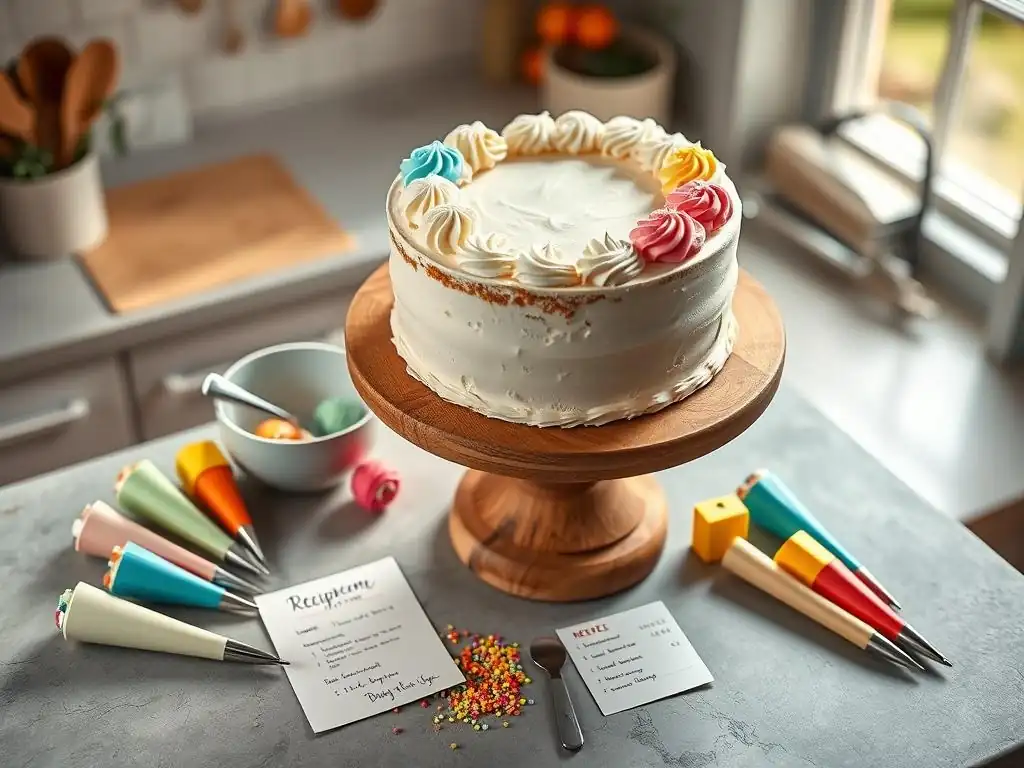
A reliable classic vanilla buttercream is the cornerstone of easy cake decorating for beginners. It's simple to make, holds its shape well for piping, and tastes delicious. A basic recipe typically involves creaming together 1 cup (around 2 sticks or 225g) of unsalted butter (at room temperature) until pale and fluffy, which takes about 3-5 minutes with a mixer. Then, gradually add 4-5 cups (around 450-570g) of sifted powdered sugar, alternating with 2-4 tablespoons of milk or cream, until the desired consistency is reached.
Finish by beating in 1-2 teaspoons of vanilla extract. The key is to beat the mixture thoroughly after adding all ingredients to make it light and airy, often for an additional 3-5 minutes. If it's too thick for piping, add a little more liquid (milk, cream, or even water) a teaspoon at a time. If it's too thin, beat in a little more sifted powdered sugar. This versatile recipe yields enough frosting for a two-layer 8-inch cake and is perfect for practicing all your easy cake decorating techniques.
Chocolate Buttercream: Rich and Decadent
For chocolate lovers, a rich chocolate buttercream is an essential recipe for easy cake decorating. It's just as simple to make as vanilla and adds a decadent flavor. Start with the same base: 1 cup (225g) unsalted butter, creamed until fluffy. Then, gradually beat in 3-4 cups (340-450g) of sifted powdered sugar, alternating with about 1/2 cup (45g) of unsifted cocoa powder.
Once the dry ingredients are partially incorporated, add 1/4 cup (60ml) of milk or cream and 1 teaspoon of vanilla extract. Beat everything together until smooth and creamy, adding more liquid or powdered sugar as needed to reach the desired consistency for frosting or piping. Ensure the cocoa powder is well mixed in to avoid any grainy texture. This recipe provides a rich, flavorful frosting that pairs wonderfully with vanilla or chocolate cakes and is stable enough for various easy cake decorating methods.
Cream Cheese Frosting: Tangy and Delicious
Cream cheese frosting offers a delightful tangy contrast to sweet cakes, especially red velvet or carrot cake. While slightly softer than traditional buttercream, it can still be used for many easy cake decorating techniques, particularly spreading smoothly and simple piping. You'll need 8 ounces (225g) of block-style cream cheese, softened, and 1/2 cup (115g) of unsalted butter, softened. Beat these together until very smooth and no lumps remain, which takes about 2-3 minutes.
Gradually beat in 3-4 cups (340-450g) of sifted powdered sugar until fully incorporated. Add 1 teaspoon of vanilla extract and a pinch of salt if desired. Beat until the frosting is smooth and creamy. Cream cheese frosting is best used at cool room temperature; if it gets too warm, it can become too soft for piping. If this happens, pop it in the fridge for 15-20 minutes to firm up slightly. This frosting is less ideal for intricate details but perfect for a rustic spread or simple swirls, fitting well within the scope of easy cake decorating for beginners.
Common Cake Decorating Mistakes to Avoid (and How to Fix Them)
Avoiding Crumb Contamination in Your Frosting
One of the most common frustrations for beginners is getting cake crumbs mixed into their beautiful frosting. This happens when you skip the crumb coat or are too heavy-handed when applying the final layer of frosting. As mentioned earlier, the crumb coat is your primary defense. Applying that thin layer and chilling the cake solidifies the crumbs.
When applying your final layer of frosting, use a generous amount and try to spread it without lifting the spatula too much from the cake surface. Use the frosting to push itself around rather than scraping. If you do pick up a crumb, simply wipe it off your spatula onto a clean cloth or paper towel before dipping back into your frosting bowl.
If your entire bowl of frosting becomes contaminated, you can carefully scrape the top layer of frosting off the cake, chill the cake again, and use fresh frosting for the final coat. Many beginners find this process takes practice, but a good crumb coat prevents about 90% of potential crumb issues.
Preventing Air Bubbles in Your Buttercream
Air bubbles can appear in buttercream after mixing, especially if it's been beaten at high speed. These bubbles can mar the smooth finish of your frosting. While a few small bubbles are usually fine, large ones can be frustrating when you're aiming for a pristine surface. The best way to minimize air bubbles is to mix your buttercream on medium-low speed for the final few minutes after all ingredients are incorporated. This slower speed helps push air out.
If you still have bubbles, particularly in a batch intended for smooth frosting, you can "smoosh" the buttercream against the side of the bowl with your spatula. This technique, sometimes called "smoothing" or "de-aerating" the frosting, helps to force the air bubbles out. For piping, gently massaging the filled piping bag towards the tip can also help push out trapped air before you start piping. With practice, you'll learn to recognize when your buttercream needs a little extra smoothing.
Fixing Uneven Frosting: Tips and Tricks
Achieving a perfectly smooth, even layer of frosting is a common goal in easy cake decorating, but it can be tricky for beginners. Unevenness often occurs due to inconsistent frosting application or not using a rotating cake stand effectively. If your frosting is lumpy or uneven, don't despair! You can often fix it. Ensure your buttercream is the right consistency – too thick is hard to spread evenly, and too thin won't build up properly.
Use your offset spatula and rotating stand to your advantage. Apply more frosting to the areas that are too thin. Then, hold your spatula or a bench scraper against the side of the cake at a slight angle while slowly rotating the stand. This helps to shave off excess frosting and fill in dips, creating a smoother surface. For the top, use the offset spatula, starting from the edge and pulling towards the center in one smooth motion. Remember, a completely flawless finish takes practice, but aiming for "smooth enough" is perfectly fine for easy cake decorating for beginners.
Easy Cake Decorating Ideas for Different Occasions
Birthday Cake Decorating Ideas for Beginners
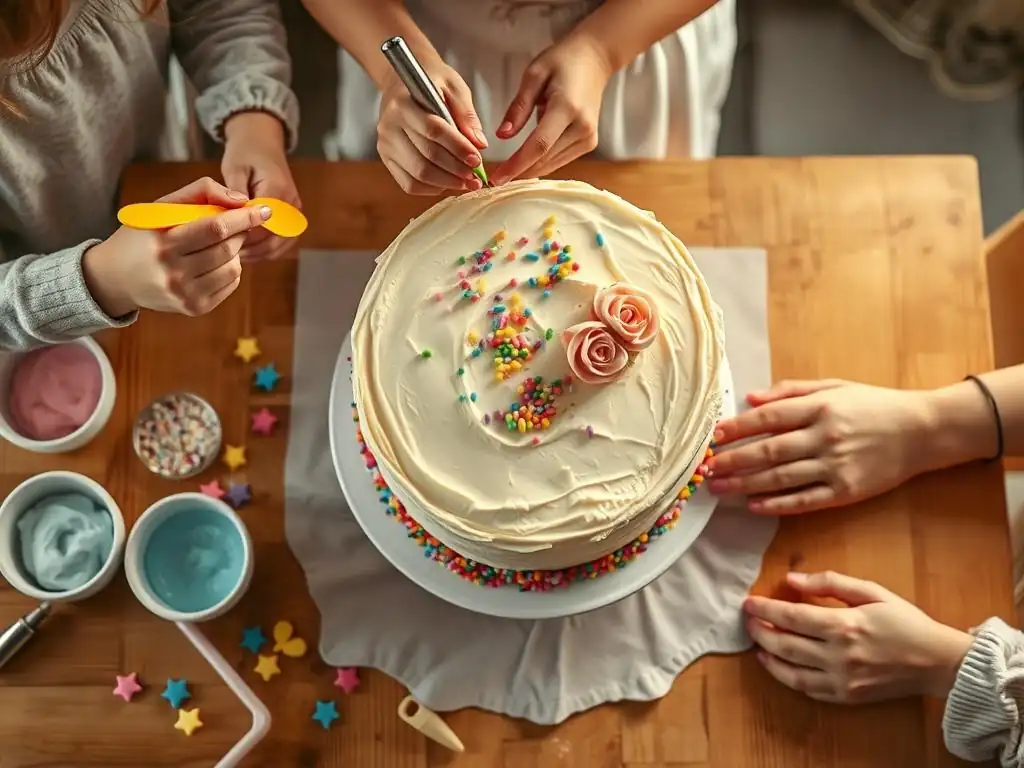
Birthdays are perfect occasions to practice easy cake decorating! For a simple yet festive birthday cake, start with a smooth or swirled buttercream finish. Use a star tip (like 1M) to pipe simple rosettes or stars around the top and bottom borders. Then, generously cover the sides or the top surface with colorful sprinkles – jimmies, nonpareils, or confetti sprinkles all work wonderfully and are super easy to apply.
Another beginner-friendly idea is to write a simple "Happy Birthday" message on top. Use a small round tip (like Wilton 3) and melted chocolate or thinned buttercream. Practice writing on parchment paper first! For an even easier approach, use edible glitter or colored sugar sprinkled over a stencil of a number or letter. These simple techniques transform a plain cake into a cheerful birthday treat without requiring complex skills, making birthday cake decorating fun and easy for beginners.
Holiday Cake Decorating: Simple Festive Designs
Holidays offer fantastic inspiration for easy cake decorating using simple color palettes and motifs. For Christmas, try a white buttercream cake decorated with green sprinkles or red and green nonpareils around the base. Use a star tip to pipe simple green buttercream trees or red dots (berries) on top. For Halloween, an orange or purple buttercream cake can be decorated with chocolate sprinkles (dirt) and simple piped white ghosts (using a round tip and swirling upwards).
Easter calls for pastel colors. Frost a cake in a soft yellow, pink, or blue buttercream. Decorate the top with green buttercream "grass" piped with a multi-opening tip or a fork dragged through soft frosting. Add edible candy eggs or sprinkle pastel nonpareils. These holiday ideas rely on color, simple shapes, and easy-to-apply elements like sprinkles or candies, making festive cake decorating accessible and enjoyable for beginners.
Simple Cake Decorating for Special Events
Even for special events like anniversaries or baby showers, you can use easy cake decorating techniques to create a beautiful cake. For an anniversary, a smooth white or ivory buttercream cake can be elegant. Use a star tip to pipe a simple shell border around the top and bottom. Add edible pearls or dragees scattered on top for a touch of sophistication.
For a baby shower, pastel colors are popular. Frost the cake in a soft color like light blue or pink. Use a large round tip to pipe simple dots or swirls. Add themed sprinkles like tiny feet or bottles, or use a stencil to add a simple pattern like polka dots or stripes with a contrasting frosting color. These ideas demonstrate that elegant or themed cakes are achievable for beginners by focusing on clean finishes, simple piping, and easy embellishments.
Practicing and Improving Your Cake Decorating Skills
Start Simple: Don't Be Afraid to Experiment
The best way to get good at easy cake decorating for beginners is simply to start! Don't feel pressured to create a masterpiece on your first attempt. Begin with simple techniques on cupcakes or a small test cake. Practice frosting a smooth surface, piping basic stars or swirls, or applying sprinkles evenly. Use inexpensive ingredients for practice batches of frosting.
Experimenting is key. Try slightly different consistencies of buttercream to see how they affect piping. Practice different tips to see what patterns they make. Don't be afraid to scrape off frosting and try again – that's how you learn! Most importantly, have fun with it. Easy cake decorating is a skill that improves with repetition, and every cake you decorate, even if it's not perfect, is a valuable learning experience.
Watch Tutorials: Learn from the Experts
Watching others decorate can be incredibly helpful when you're learning easy cake decorating for beginners. There are countless video tutorials available online that demonstrate techniques step-by-step. Seeing how someone holds a piping bag, applies pressure, or smooths frosting can clarify written instructions. Look for videos specifically tailored to beginners, focusing on basic skills.
Many baking websites and channels offer free tutorials on fundamental techniques like crumb coating, frosting a smooth cake, and basic piping with common tips. Watching these can give you visual guidance and confidence before you try a technique yourself. Aim to watch a tutorial for a specific technique you want to learn, then pause and try to replicate it yourself immediately afterward.
Celebrate Your Progress: Every Cake is a Learning Opportunity
Learning any new skill takes time and practice, and easy cake decorating is no different. It's important to acknowledge and celebrate your progress, no matter how small. Did your crumb coat look better this time? Did your piped swirls have more definition? Did you manage to get the sprinkles on the sides without too much mess? These are all victories!
Don't compare your beginner cakes to professional ones you see online. Compare your current cake to your last one. Recognize what you did well and identify one or two things you want to improve on for the next cake. Every cake you bake and decorate, whether it's a multi-layer masterpiece or a simple single-layer cake with sprinkles, is a step forward in your easy cake decorating journey. Embrace the learning process and enjoy the delicious (and increasingly beautiful) results!
Conclusion: You've Got This! Easy Cake Decorating Awaits
Embracing the Fun of Cake Decorating
You've taken the first step by learning about the basics, tools, and simple techniques for easy cake decorating. Now it's time to put that knowledge into practice and embrace the fun! Cake decorating is a wonderful way to express creativity, relieve stress, and add a personal touch to celebrations. It's about enjoying the process as much as the final delicious outcome.
Remember that perfection isn't the goal when you're starting out. Fun, experimentation, and learning are the true objectives. Don't be afraid to try a new technique, even if it seems a little intimidating at first. Most easy cake decorating methods are quite forgiving, and even "mistakes" can often be turned into unique design elements. So gather your tools, whip up some buttercream, and get ready to experience the joy of transforming a simple cake into something special.
Continuing Your Cake Decorating Journey with BakeWithEase.com
This guide has provided you with a solid foundation for easy cake decorating for beginners. But your journey doesn't have to stop here! BakeWithEase.com is filled with resources to help you continue learning and growing your skills. Explore our collection of beginner-friendly cake recipes, different types of frosting, and tutorials for more advanced techniques when you're ready.
Whether you want to master the perfectly smooth finish, learn how to pipe more complex flowers, or experiment with different decorating mediums, we have guides and tips to support you. Keep practicing the techniques you've learned, try new ones, and don't hesitate to revisit this guide whenever you need a refresher. We're here to help you bake and decorate with ease every step of the way!
Frequently Asked Questions
What are some essential tools for easy cake decorating for beginners?
Beginners should start with a basic set including a turntable, offset spatula, piping bags, and a few simple piping tips. These foundational tools will allow you to achieve a variety of simple decorations.
Where can I find easy cake decorating recipes suitable for someone just starting out?
BakeWithEase.com offers a range of beginner-friendly recipes with step-by-step instructions and easy-to-find ingredients. Look for cakes with minimal frosting techniques.
What is the easiest type of frosting to work with when learning cake decorating?
American buttercream is often recommended for beginners because it's easy to make and relatively forgiving. It's also stable and holds its shape well.
What are some simple cake decorating techniques that even a beginner can master?
Try simple swirls using an offset spatula, creating borders with a star tip, or adding sprinkles for a fun and easy decoration. Don't be afraid to experiment!
How can I avoid common mistakes made by beginners when decorating cakes?
Focus on smooth frosting for a clean base, practice your piping techniques on parchment paper first, and don't over-decorate. Keep it simple and elegant to start.
Final Reflection: The Sweet Simplicity of Cake Decorating
The accessibility of cake decorating, once perceived as an elite skill, is now within everyone's reach. With a little patience and the right techniques, even the most hesitant beginner can create stunningly beautiful cakes. This article aimed to demystify the process, proving that impressive results don't require years of professional training.
The joy of creating something beautiful with your own hands is profoundly satisfying, a feeling amplified when sharing that creation with loved ones. It's more than just frosting a cake; it's about expressing creativity, fostering connection, and celebrating life's special moments. The best things in life are the people we love, the places we've been, and the memories we've made along the way.
This sentiment perfectly encapsulates the spirit of cake decorating – a tangible way to create lasting memories and share joy.
Now, it's your turn. Don't be intimidated by the seemingly complex world of cake decorating. Pick up a piping bag, gather your favorite frosting, and let your imagination run wild. Experiment with different techniques, don't be afraid to make mistakes (they're often the most delicious part of the learning process! ), and most importantly, have fun! The beauty of a homemade cake lies not just in its appearance, but in the love and effort poured into its creation. So, go ahead – bake a cake, decorate it, and share the sweetness.
Unleash Your Inner Cake Artist!
Thanks for taking the time to explore the world of cake decorating with us! We hope you gained some valuable insights and feel inspired to create your own delicious masterpieces. Now it's time to put your newfound knowledge into practice.
- Start with a simple design: Choose one of the techniques we covered and try it out on a small cake. Don't be afraid to experiment – even small successes are rewarding!
- Share your creation: Post a picture of your decorated cake on social media and tag us! We'd love to see your baking journey.
- Join our online community: Connect with fellow bakers in our friendly forum (link removed as per instructions) and share tips, ask questions, and find even more inspiration.
What exciting cake design will you tackle first? Let us know in the comments below!