
Don't Start Baking Without These: Essential Tools for Newbie Bakers

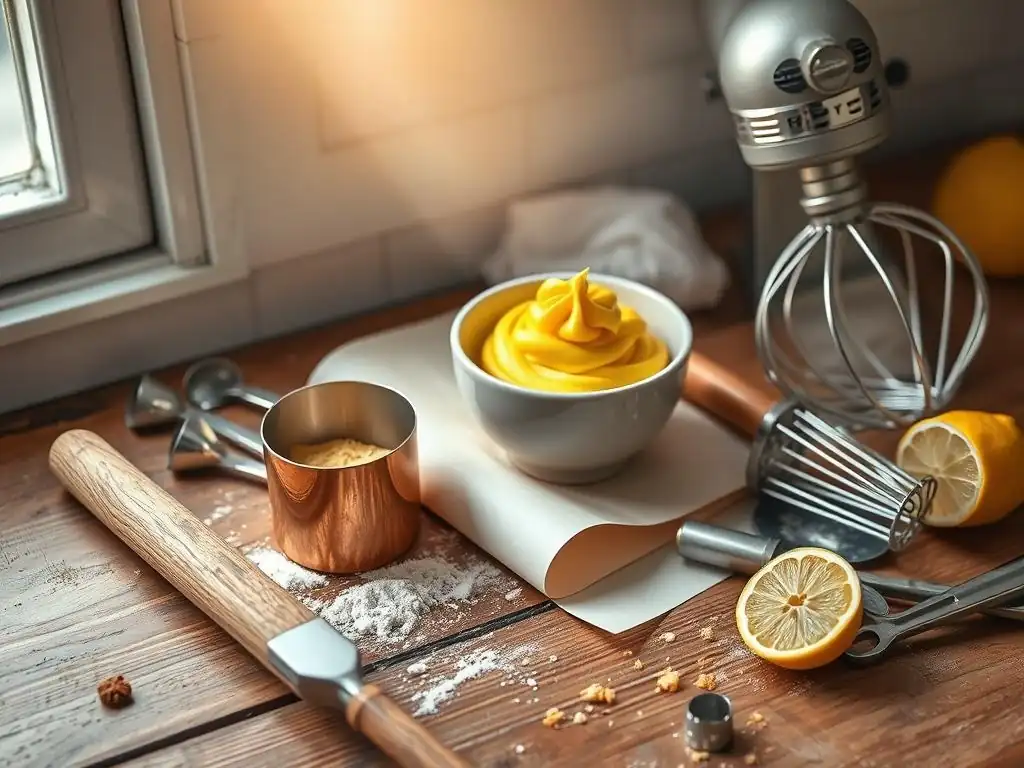
Welcome to BakeWithEase, where turning flour and sugar into delicious masterpieces is simpler than you think! Are you ready to embark on your baking journey but feeling overwhelmed by all the gadgets and gizmos? Fear not! This guide to essential baking tools for beginner bakers will demystify the world of baking equipment. Discover the absolute must-haves that will set you up for success without breaking the bank. What are the few key items that will unlock a world of culinary creations? Let's find out and get you baking!
- Essential Baking Tools for Aspiring Home Bakers
- Getting Started: Essential Tools for Baking Success
- Core Baking Equipment
- Expanding Your Toolkit: Helpful Tools
- Investing in Quality and Longevity
- Mastering Baking: Tips and Techniques
- Essential Baking Tools: A Summary
-
Frequently Asked Questions
- What are the essential baking tools a beginner baker should invest in first?
- Why is having accurate measuring tools so important in baking?
- What type of mixing bowl is best for a beginner baker?
- Can I substitute parchment paper with something else on my baking sheet?
- How important is an oven thermometer for beginner bakers?
- Final Reflection: The Sweet Symphony of Essential Baking Tools
- Unlock Your Inner Baker: Get Baking Today!
Essential Baking Tools for Aspiring Home Bakers
Getting Started: Essential Tools for Baking Success
Why the Right Tools Matter for Home Baking
Embarking on your baking journey is exciting, and having the right essential baking tools for beginner bakers can make all the difference between a successful batch of cookies and a kitchen mishap. Just as a painter needs brushes and a carpenter needs saws, a baker relies on specific implements to accurately measure, mix, and transform ingredients. Using the correct tools ensures that recipes are followed precisely, leading to consistent and predictable results.
For example, using a standard dinner spoon instead of a proper measuring spoon for a teaspoon of baking powder can drastically alter the le leavening of your cake, potentially causing it to fall flat. Precision is paramount in baking, where chemical reactions depend on specific ratios.
Furthermore, using the right tools can significantly improve efficiency and reduce frustration. Imagine trying to cream butter and sugar by hand instead of using a sturdy whisk or mixer – it would be incredibly time-consuming and unlikely to achieve the light, airy texture required for many recipes. Essential baking tools for beginner bakers are designed to perform specific tasks effectively, from scraping down the sides of a bowl to evenly distributing heat.
Investing in a few quality basics will not only make the process smoother but also build confidence as you consistently achieve desirable outcomes. This foundational set of tools is the bedrock upon which all your future baking adventures will be built.
Setting Up Your Baking Space: A Basic Checklist
Before you even turn on your oven, setting up a functional baking space is key for any aspiring home baker. Start by designating a clear, clutter-free area on your countertop for mixing and preparation. Ensure you have easy access to your oven and a nearby cooling area. Good lighting is also crucial so you can accurately assess textures and colors. Think about workflow: where will you measure ingredients, where will you mix, and where will you place hot pans? Having a logical setup minimizes movement and potential spills.
Your basic checklist for setting up your baking space should include ensuring you have enough counter space (ideally at least 2-3 feet wide for comfortable work), proximity to a sink for easy cleanup, and readily available power outlets for any electric mixers you might use. Also, consider storage for your essential baking tools beginner bakers will rely on – drawers for smaller items like measuring spoons and spatulas, and cabinets for larger items like mixing bowls and baking sheets. Organizing your space logically before you begin baking saves time and stress, allowing you to focus on the creative process.
Core Baking Equipment
Measuring Cups and Spoons: Precision for Consistent Results
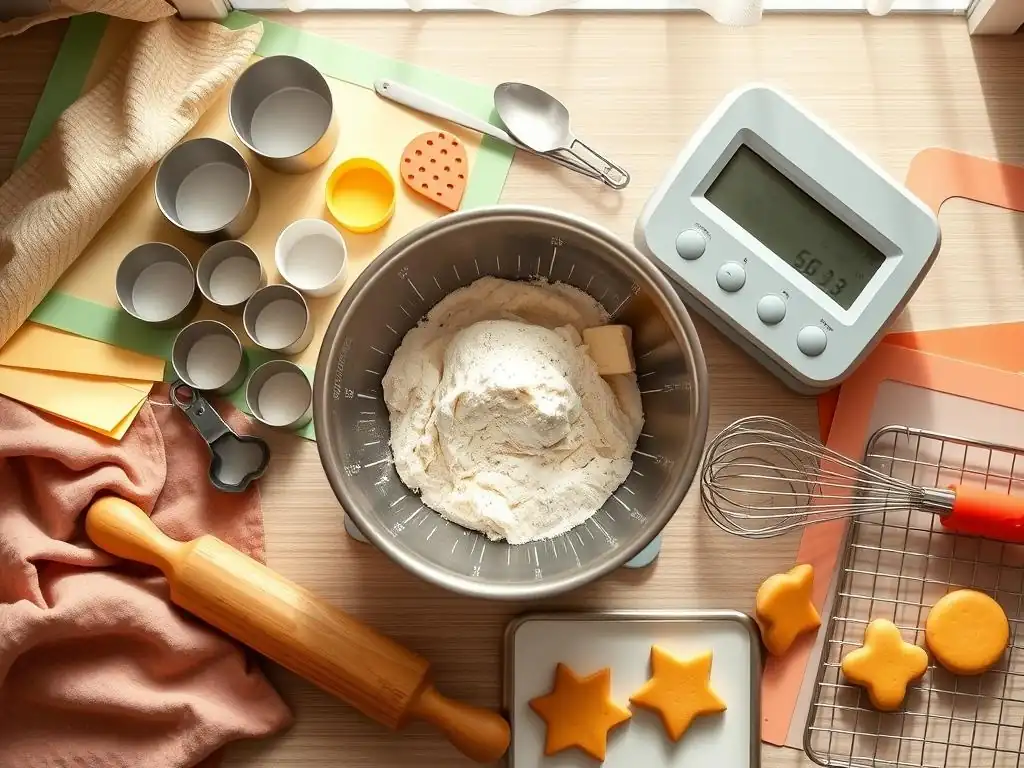
Accurate measurement is arguably the most critical step in baking, making measuring cups and spoons absolutely essential baking tools for beginner bakers. Dry measuring cups (like those for flour, sugar, and oats) should be leveled off with a straight edge after scooping, ensuring you have the exact volume specified in the recipe. Using too much flour, for instance, is a common beginner mistake that can result in dry, dense baked goods. A set typically includes cups ranging from 1/4 cup to 1 cup.
Liquid measuring cups, on the other hand, are usually clear with a spout for pouring and markings on the side. They should be placed on a flat surface, and you should read the measurement at eye level to ensure accuracy (this is called reading the meniscus). Measuring spoons, used for smaller quantities like baking powder, baking soda, salt, and extracts, are equally vital for precise flavoring and leavening. A standard set includes measures from 1/4 teaspoon up to 1 tablespoon. Using these tools correctly is fundamental to replicating recipes successfully every time.
Mixing Bowls: Glass, Stainless Steel, and Ceramic Options
Mixing bowls are the workhorses of any baking kitchen, used for everything from whisking eggs to combining dry and wet ingredients. Essential baking tools for beginner bakers should include a set of sturdy mixing bowls in various sizes. Materials commonly used are glass, stainless steel, and ceramic. Glass bowls are great because you can see the ingredients mixing, and they don't react with acidic ingredients, but they can be heavy and breakable. A typical set might include bowls ranging from 1 quart to 4 quarts.
Stainless steel bowls are lightweight, durable, and easy to clean. They also help keep ingredients cool, which can be beneficial when working with dough or butter. Ceramic bowls are often aesthetically pleasing and can retain heat or cold well, but like glass, they can be heavy and prone to chipping or breaking if dropped. Having at least three bowls of different sizes (e.g., small for whisking eggs, medium for combining dry ingredients, large for mixing batter) provides flexibility for most recipes.
Spatulas and Scrapers: Rubber, Silicone, and Offset Options
Spatulas and scrapers are indispensable for mixing, folding, and ensuring you get every last bit of batter or dough out of your bowl. For essential baking tools beginner bakers should prioritize, a good set of spatulas is a must. Silicone spatulas are particularly popular because they are heat-resistant, flexible yet firm, and non-reactive. They come in various sizes and shapes, including spoon spatulas which are handy for both mixing and scooping. Using a spatula to gently fold ingredients, like whipped egg whites into batter, helps maintain airiness crucial for light cakes.
Offset spatulas, which have a blade that is "offset" from the handle, are specifically designed for spreading frosting, ganache, or glazes smoothly and evenly over cakes and cookies. A small offset spatula (around 4-6 inches) and a larger one (around 8-10 inches) are versatile additions to your toolkit. Having a variety of rubber or silicone spatulas in different sizes allows you to efficiently scrape down the sides of bowls, fold ingredients, and handle hot mixtures, making cleanup easier and reducing waste.
Baking Sheets and Pans: Understanding Material and Usage
Baking sheets and pans are fundamental for baking cookies, roasting vegetables, and baking cakes, brownies, and breads. For essential baking tools beginner bakers will use constantly, investing in quality baking sheets is wise. Standard half-sheet pans (approx. 18x13 inches) are incredibly versatile and fit most home ovens. Material matters: aluminum is popular for its even heat distribution and rust resistance, leading to uniform baking. Non-stick surfaces are convenient for easy release but can wear over time and may not promote browning as effectively as uncoated pans.
Baking Sheet Materials: Aluminum, Stainless Steel, and Non-Stick
Aluminum baking sheets are lightweight and conduct heat efficiently, resulting in consistent browning. They are often the go-to for cookies, scones, and sheet pan dinners. While some prefer to line them with parchment paper or silicone mats for easy cleanup and non-stick properties, bare aluminum provides excellent heat transfer. A common issue with aluminum is potential warping at high temperatures, though heavier gauge pans are less susceptible.
Stainless steel baking sheets are very durable and resistant to warping and corrosion. However, they don't conduct heat as evenly as aluminum, which can sometimes lead to uneven baking. They are often used for roasting or baking items where perfect, even browning isn't the primary concern. Non-stick baking sheets feature a coating that prevents food from sticking, making them ideal for delicate items or when you want to avoid using parchment paper. However, the non-stick coating can degrade over time, especially if scratched or exposed to very high heat (often above 400-450°F or 200-230°C).
Cake Pan Shapes: Round, Square, Loaf, and Bundt
Cake pans come in a wide array of shapes and sizes, each suited for different types of cakes. Essential baking tools beginner bakers should start with typically include a few basic shapes. Round cake pans (often 8 or 9 inches in diameter) are standard for layer cakes. Square pans (like 8x8 or 9x13 inches) are perfect for brownies, bar cookies, and sheet cakes. Loaf pans are essential for quick breads like banana bread or pound cake.
Bundt pans, with their decorative fluted designs, are used for specific types of cakes like pound cake and coffee cake, offering an impressive presentation with minimal effort. Having at least one 8-inch round, one 9x13-inch rectangular, and one loaf pan provides a solid foundation for baking a variety of cakes and quick breads. Material is also important here, with aluminum and non-stick options being common choices, influencing how evenly the cake bakes and how easily it releases from the pan.
Whisks: Balloon, French, and Flat Whisks
Whisks are crucial for incorporating air into ingredients, emulsifying liquids, and breaking up lumps. They are definitely among the essential baking tools beginner bakers will reach for frequently. The most common type is the balloon whisk, characterized by its many wires that are wide at the base and narrow at the tip. This design is excellent for whisking air into eggs or cream, creating volume for meringues or whipped cream.
Other types include the French whisk, which has fewer, straighter wires, making it better for mixing thinner batters or sauces, and the flat whisk (or roux whisk), which is ideal for scraping the bottom of pans when making gravies or sauces, ensuring no bits are left behind to burn. For most beginner baking tasks, a medium-sized balloon whisk (around 10-12 inches) is sufficient for whisking batters, eggs, and creams, providing versatility for many recipes.
Expanding Your Toolkit: Helpful Tools
Rolling Pin: Wood, Marble, and Adjustable Options
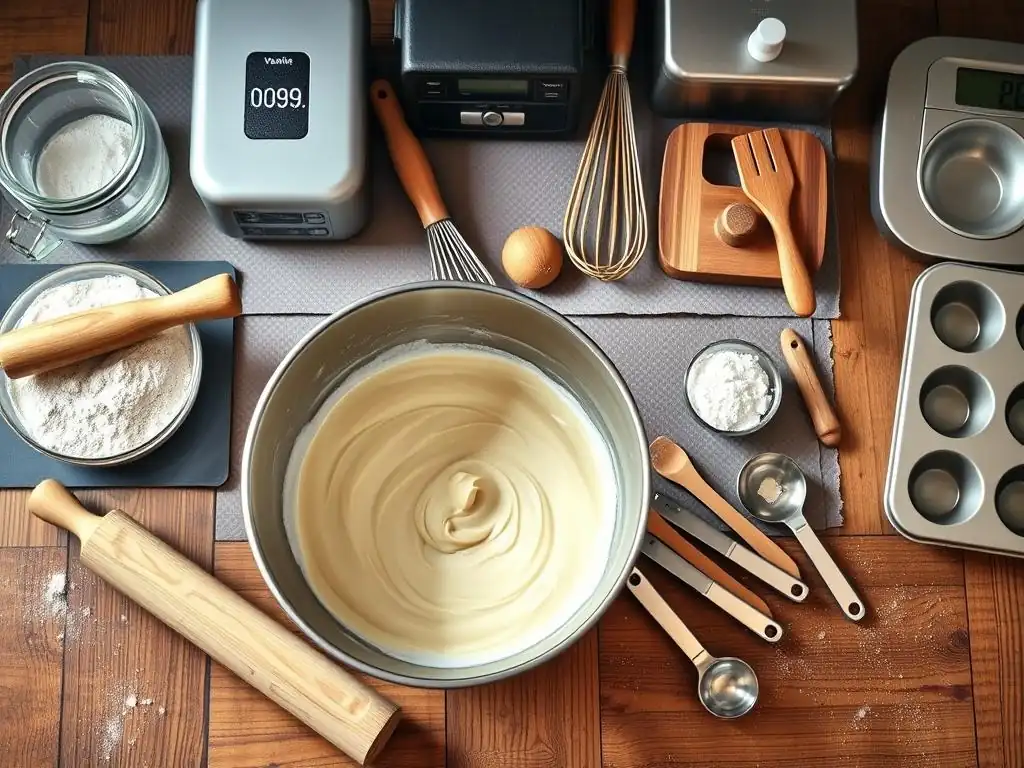
Once you venture into making pies, tarts, biscuits, or cutout cookies, a rolling pin becomes one of the essential baking tools beginner bakers will find incredibly useful. Rolling pins are used to flatten dough to a uniform thickness. Traditional wooden rolling pins are popular and come in various styles, including the American style with handles and a rotating barrel, and the French style, which is a simple tapered cylinder. Wooden pins require flouring to prevent sticking and can absorb oils over time, needing proper cleaning.
Marble rolling pins are heavier and naturally stay cooler, which is excellent for working with pastry dough as it helps keep the butter cold, resulting in flakier crusts. They are heavier than wood, requiring less effort to roll dough thin. Adjustable rolling pins feature removable rings on the ends that allow you to easily roll dough to a specific, consistent thickness (e.g., 1/8 inch, 1/4 inch). While not strictly necessary for every recipe, a rolling pin is invaluable for any recipe requiring rolled dough.
Cooling Rack: Wire Racks for Even Cooling
A cooling rack might seem simple, but it's a vital piece of equipment for achieving the best texture in your baked goods. After taking cookies, cakes, or breads out of the oven, they continue to cook slightly from residual heat. Placing them directly on a solid surface traps steam, which can make the bottom soggy. A wire cooling rack allows air to circulate around the entire item, promoting even cooling and preventing condensation.
Essential baking tools beginner bakers should acquire include at least one sturdy wire cooling rack. Look for one with closely spaced wires so smaller items like cookies don't fall through. A standard size is around 10x15 inches, which can accommodate a batch of cookies or a standard cake. Some racks are stackable, which is great if you bake in large batches or have limited counter space. Proper cooling on a rack is crucial for setting the structure of your baked goods and ensuring a desirable texture.
Parchment Paper and Silicone Mats: Preventing Sticking
Parchment paper and silicone baking mats are lifesavers when it comes to preventing baked goods from sticking to pans and making cleanup significantly easier. Parchment paper is disposable paper treated with silicone, creating a non-stick, heat-resistant surface. It's great for lining baking sheets for cookies, cakes, and scones. It also prevents delicate items from breaking when transferred and can be used to line cake pans for easy removal.
Silicone baking mats, like Silpat, are reusable alternatives to parchment paper. Made from food-grade silicone reinforced with fiberglass, they provide an excellent non-stick surface and distribute heat evenly. They are durable and can withstand high temperatures, typically up to 480°F (250°C). While a bit more of an initial investment, they pay for themselves over time compared to buying rolls of parchment paper. Both are highly recommended essential baking tools beginner bakers will appreciate for their convenience and effectiveness.
Kitchen Scale: Accuracy for Better Baking
While measuring cups and spoons are standard, a kitchen scale offers the highest level of accuracy in baking. Many professional bakers and serious amateurs prefer to measure ingredients, especially flour, sugar, and liquids, by weight rather than volume. This is because volume measurements can vary depending on how ingredients are scooped or packed (e.g., a cup of flour can weigh differently depending on how it's measured). Measuring by weight ensures you have the exact amount specified in the recipe every time.
For instance, a "cup" of all-purpose flour can weigh anywhere from 4 to 5 ounces (approx. 113 to 142 grams) depending on how compacted it is. Using a scale eliminates this variability. Many recipes, especially those from European sources or professional bakers, provide ingredient weights in grams or ounces. A digital kitchen scale is relatively inexpensive and is one of the essential baking tools beginner bakers should consider adding to their collection for consistent and precise results, particularly as they tackle more complex recipes.
Investing in Quality and Longevity
Choosing Durable and Reliable Tools
When building your collection of essential baking tools beginner bakers should focus on durability and reliability over acquiring a vast number of cheap gadgets. Tools made from sturdy materials like stainless steel, heavy-gauge aluminum, or high-quality silicone will last longer and perform better than flimsy alternatives. For example, a cheap, thin baking sheet might warp significantly at high temperatures, leading to unevenly baked cookies. A quality, heavier-gauge pan will maintain its shape and distribute heat more evenly.
Investing a little more upfront in key items like measuring tools, mixing bowls, and baking sheets can save you money and frustration in the long run. Look for spatulas that are heat-resistant and have a solid core so the head doesn't detach. Choose whisks with firmly set wires that won't bend easily. While you don't need the most expensive professional-grade equipment to start, selecting tools known for their durability ensures they will be reliable companions throughout your baking journey.
Tool Maintenance: Cleaning and Storage Tips
Proper maintenance is key to keeping your essential baking tools beginner bakers rely on in good condition and extending their lifespan. Always clean your tools promptly after use. Residue from batter or dough can harden, making cleanup more difficult and potentially harboring bacteria. Most baking tools are best washed by hand with warm, soapy water. Avoid abrasive scrubbers on non-stick surfaces or delicate materials like wood or some types of silicone.
Ensure tools are thoroughly dried before storing to prevent rust (on metal items) or mold (on wooden items or within crevices). Store baking sheets and pans vertically using dividers or racks to save space and prevent scratching non-stick surfaces. Store smaller items like measuring cups and spoons together, perhaps nested or on a hook, so they are easy to find. Keeping your tools clean and organized not only preserves them but also makes your baking process more efficient and enjoyable.
Mastering Baking: Tips and Techniques
Baking Tip #1: Understand Ingredient Functions
One of the best ways to improve your baking skills, even with the essential baking tools beginner bakers use, is to understand why each ingredient is in the recipe. Flour provides structure, sugar adds sweetness and tenderness and aids in browning, fats (like butter or oil) add moisture and richness and affect texture, eggs bind ingredients and provide leavening, and leavening agents (baking soda, baking powder, yeast) make baked goods rise. Understanding these basic functions helps you troubleshoot when things go wrong or even adapt recipes.
For example, if a cake is too dense, it might be due to too much flour, not enough leavening, or overmixing the batter after adding flour. Knowing the role of flour (structure) and leavening (rise) helps diagnose the issue. Similarly, understanding that butter contributes flavor and flakiness while oil contributes moisture helps you decide which fat is appropriate for a desired outcome. This foundational knowledge, combined with your essential baking tools beginner bakers have, empowers you to become a more intuitive and successful baker.
Baking Tip #2: Temperature Control and Oven Calibration
Precise temperature control is vital in baking, affecting everything from how quickly leavening agents react to how evenly your baked goods brown. Always preheat your oven fully before putting anything inside. Ovens can take 15-20 minutes or even longer to reach and stabilize at the set temperature. Using an oven thermometer is highly recommended, as many home ovens can be off by as much as 25-50°F (approx. 15-30°C) from the dial setting.
If your oven consistently runs hot or cold, you can often adjust the baking time or temperature slightly. For instance, if your oven is 25°F too hot, you might reduce the baking temperature by that amount or check for doneness a few minutes earlier than the recipe suggests. Consistent oven temperature is crucial for recipes that rely on specific reactions at certain heat levels, like meringue or soufflé. Mastering this aspect, alongside using your essential baking tools beginner bakers need, significantly boosts your chances of success.
Baking Tip #3: Learn Basic Baking Techniques
Beyond having the right essential baking tools beginner bakers need, learning fundamental techniques will elevate your baking. Techniques like creaming butter and sugar (beating them together until light and fluffy to incorporate air), cutting in butter (mixing cold fat into flour until pea-sized crumbs form for flaky pastries), folding (gently combining ingredients to avoid deflating air), and kneading (developing gluten in bread dough) are foundational.
Practice these techniques with simple recipes. For example, make a basic butter cookie dough to practice creaming, or biscuits to practice cutting in butter. There are countless online tutorials and videos that demonstrate these techniques visually. Mastering these basic skills, combined with using your essential baking tools beginner bakers have, will allow you to tackle a wider range of recipes with confidence and achieve better textures and results.
Essential Baking Tools: A Summary
Getting started in baking is an enjoyable and rewarding pursuit, and equipping yourself with the right essential baking tools beginner bakers need is the first step towards success. From accurate measuring cups and spoons to versatile mixing bowls and reliable baking sheets, each tool plays a specific role in ensuring your ingredients come together correctly and bake evenly. Don't feel overwhelmed; start with the core equipment and gradually expand your collection as you explore new recipes and techniques.
Investing in quality tools that are durable and easy to maintain will serve you well as you develop your skills. Remember that baking is a science, and precision in measurement and temperature is key. Combine your essential baking tools beginner bakers rely on with an understanding of ingredient functions and basic techniques, and you'll be well on your way to creating delicious baked goods right in your own kitchen. Happy baking!
Frequently Asked Questions
What are the essential baking tools a beginner baker should invest in first?
The most crucial tools are a good mixing bowl, measuring cups and spoons, and a sturdy baking sheet. These form the foundation for most recipes.
Why is having accurate measuring tools so important in baking?
Baking is a science, so precise measurements are vital for consistent results. Inaccurate measurements can significantly impact the texture and outcome of your baked goods.
What type of mixing bowl is best for a beginner baker?
A set of stainless steel mixing bowls of various sizes is ideal due to their durability and versatility. They are also easy to clean and won't react with acidic ingredients.
Can I substitute parchment paper with something else on my baking sheet?
While parchment paper is best, you can use silicone baking mats as a reusable alternative. Greasing the baking sheet is also an option, but can lead to uneven baking.
How important is an oven thermometer for beginner bakers?
An oven thermometer is extremely helpful. Many ovens are inaccurate, and an oven thermometer ensures your oven is at the correct temperature, which is critical for baking success.
Final Reflection: The Sweet Symphony of Essential Baking Tools
The pursuit of baking mastery begins not with a recipe, but with the right tools. A well-equipped kitchen is the foundation upon which delicious memories and perfectly risen loaves are built. Without the proper instruments, even the simplest recipe can become a frustrating, and potentially inedible, experience.
The impact of having the right tools extends far beyond mere convenience. It fosters a sense of confidence and control in the kitchen, allowing beginner bakers to experiment and grow without feeling overwhelmed. The joy of baking lies not just in the finished product, but in the process itself.
This quote perfectly encapsulates the transformative power of having the right tools; they empower you to fully engage with the creative process, fostering a deeper appreciation for the art of baking. The initial investment in quality tools pays dividends in countless hours of baking satisfaction.
Now, it's your turn. Consider your own baking journey. What tools have you found indispensable? What challenges have you faced due to a lack of proper equipment? Don't be afraid to invest in a few key pieces—a good stand mixer, reliable measuring cups, and a sturdy baking sheet—to unlock your full baking potential. The delicious rewards await, and the journey of culinary exploration is just beginning.
Unlock Your Inner Baker: Get Baking Today!
Thanks for diving into the world of baking with us! We hope you've gained the confidence to tackle any recipe. Ready to transform your kitchen into a sweet haven?
- Start with your must-have tool: Choose one essential tool from the list (like that stand mixer you've been eyeing!) and order it today. Imagine the delicious possibilities!
- Share your baking journey: Tag us on social media with your first baking project using #BakeWithEase – let's inspire each other!
- Explore our recipe library: Dive deeper into our collection for more inspiration and expand your baking skills.
What delicious creation will you bake first? Let us know in the comments below!