
Essential Equipment for Easy GlutenFree Bread Baking

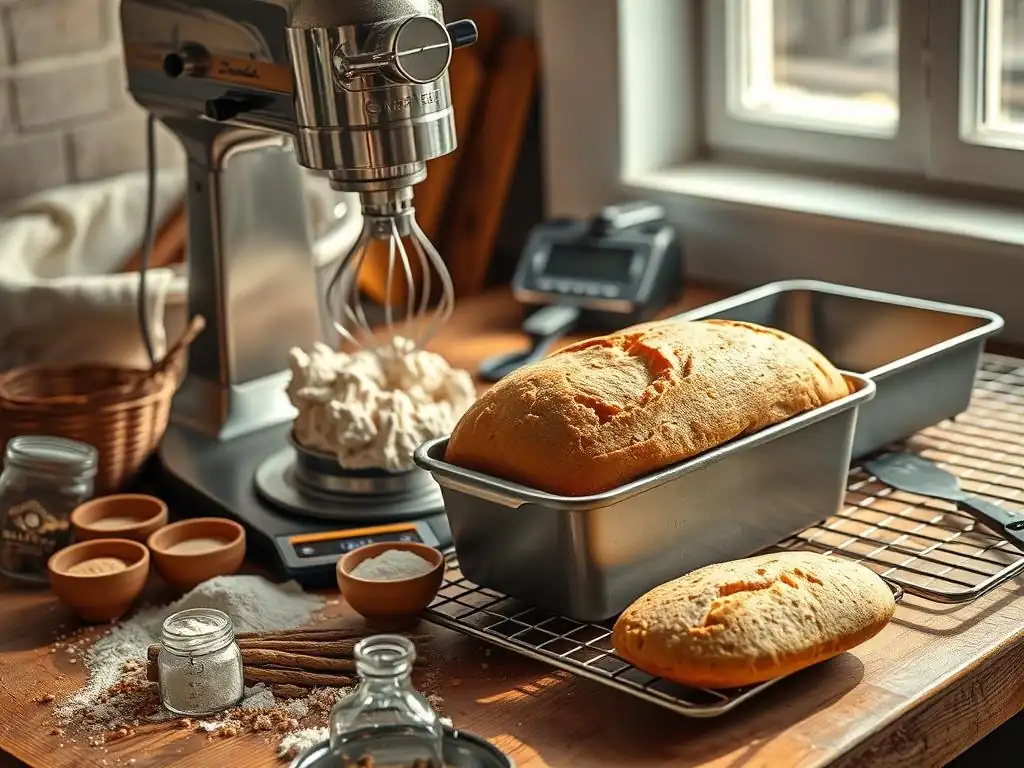
Welcome to BakeWithEase, your trusted guide to unleashing your inner baker! Are you ready to conquer the world of gluten-free bread? Discover the essential equipment that transforms even the most challenging gluten-free recipes into simple, satisfying success. Intrigued? Read on to discover the tools that will revolutionize your gluten-free baking journey!
- Essential Equipment for Gluten-Free Bread Baking Success
- Bake Perfect Gluten-Free Bread with the Right Tools
- Must-Have Gluten-Free Bread Baking Equipment: An Overview
- Measuring Tools for Consistent Gluten-Free Bread
- Mixing Bowls: Optimizing Gluten-Free Dough Development
- Essential Gluten-Free Bread Pans
- Mixing and Kneading Tools for Gluten-Free Bread
- Proofing Equipment for Gluten-Free Bread
- Baking Stones and Dutch Ovens for Superior Gluten-Free Crust
- Temperature Control: Ensuring Perfectly Baked Gluten-Free Bread
- Optional, but Helpful Gluten-Free Bread Baking Tools
- Cleaning and Maintenance of Gluten-Free Bread Baking Equipment
- Mastering Gluten-Free Bread Baking: Equipment and Techniques
-
Frequently Asked Questions
- What are the most essential pieces of equipment for starting gluten-free bread baking?
- Are there specific types of bread pans that work best for gluten-free bread?
- Do I need any special measuring tools for gluten-free bread baking?
- What kind of mixing equipment is best for gluten-free bread dough?
- Is there any specific equipment needed for proofing gluten-free bread?
- Final Reflection: The Joy of Gluten-Free Baking, Within Reach
- Unleash Your Inner Gluten-Free Baker!
Essential Equipment for Gluten-Free Bread Baking Success
Bake Perfect Gluten-Free Bread with the Right Tools
Embarking on the journey of baking delicious gluten-free bread can be incredibly rewarding. Unlike traditional wheat-based bread, gluten-free dough often has a different texture and requires specific handling. Having the right glutenfree bread baking equipment is not just helpful; it's often essential for achieving consistently good results. The tools you use can significantly impact everything from the texture of your crumb to the crispness of your crust and the overall success of your loaf.
Investing in quality equipment for gluten-free bread baking can elevate your results from dense, crumbly loaves to light, airy, and perfectly structured bread. This guide will walk you through the must-have tools, explaining why each piece is important and how it contributes to successful gluten-free baking. Whether you're just starting or looking to improve your techniques, understanding your glutenfree bread baking equipment is the first step to mastering the craft.
Must-Have Gluten-Free Bread Baking Equipment: An Overview
Why Specific Equipment Matters for Gluten-Free Bread Texture
Gluten-free doughs lack the elastic network that gluten provides, which means they behave very differently from wheat dough. They are often wetter, stickier, and don't develop structure in the same way. This inherent difference necessitates specific glutenfree bread baking equipment designed to handle these unique characteristics. For example, gentle mixing tools are often preferred over aggressive kneading, and equipment that helps support the structure during proofing and baking is crucial.
The right glutenfree bread baking equipment helps compensate for the lack of gluten. Tools like stand mixers with paddle attachments can gently combine ingredients without overworking the delicate dough structure. Specific pans and proofing tools provide the necessary support to prevent the dough from spreading out, encouraging it to rise upwards. Furthermore, tools that control temperature and humidity during proofing and baking are vital for achieving the desired rise and texture in gluten-free bread, which can be particularly sensitive to environmental conditions.
Setting Up Your Dedicated Gluten-Free Baking Space
To prevent cross-contamination, a critical concern for anyone with celiac disease or gluten sensitivity, setting up a dedicated space or process for gluten-free baking is highly recommended. This doesn't necessarily mean a whole new kitchen, but it does involve designating certain glutenfree bread baking equipment and ensuring surfaces are thoroughly cleaned. Ideally, you would have separate cutting boards, mixing bowls, and even measuring cups that are used exclusively for gluten-free ingredients.
If a completely separate space isn't possible, establish strict cleaning protocols. Wipe down all surfaces, including counters and equipment, thoroughly before starting. Store gluten-free flours and ingredients separately from gluten-containing ones, preferably in airtight containers. Having dedicated glutenfree bread baking equipment significantly reduces the risk of accidental exposure and provides peace of mind, ensuring that your delicious homemade bread is truly safe to eat.
Measuring Tools for Consistent Gluten-Free Bread
Digital Kitchen Scale: Ensuring Precise Measurements
Precision is paramount in gluten-free baking, arguably even more so than in traditional baking. Gluten-free flours and starches vary significantly in weight and density, making volume measurements less reliable. A digital kitchen scale allows you to measure ingredients by weight, providing the accuracy needed for consistent results. For instance, 1 cup of rice flour might weigh differently than 1 cup of sorghum flour, but measuring both by grams ensures you're using the exact quantity specified in a recipe.
Most gluten-free bread recipes provide measurements in grams or ounces for key ingredients like flours, starches, and liquids. Using a digital scale eliminates the variability associated with scooping techniques and guarantees that your ingredient ratios are correct. This level of precision with your glutenfree bread baking equipment is crucial for achieving the correct dough hydration and structure, which directly impacts the final texture and rise of your loaf. A scale that can measure in increments of 1 gram is ideal.
Measuring Cups and Spoons: For Smaller Ingredient Quantities
While a digital scale is essential for dry ingredients and larger liquid quantities, standard measuring cups and spoons are still valuable glutenfree bread baking equipment for smaller amounts of liquids, leaveners, salt, and other additions. It's important to use a proper set of dry measuring cups (scoop and level) and liquid measuring cups (pour and read at eye level) for accuracy.
Measuring spoons are indispensable for precise amounts of baking powder, baking soda, yeast, salt, and spices. Even small variations in these ingredients can significantly affect the outcome of your gluten-free bread. Ensure your measuring cups and spoons are a good quality set with clearly marked measurements. When using them as part of your glutenfree bread baking equipment, remember to level dry ingredients carefully for consistent results.
Mixing Bowls: Optimizing Gluten-Free Dough Development
Stainless Steel Bowls: Durable and Non-Reactive
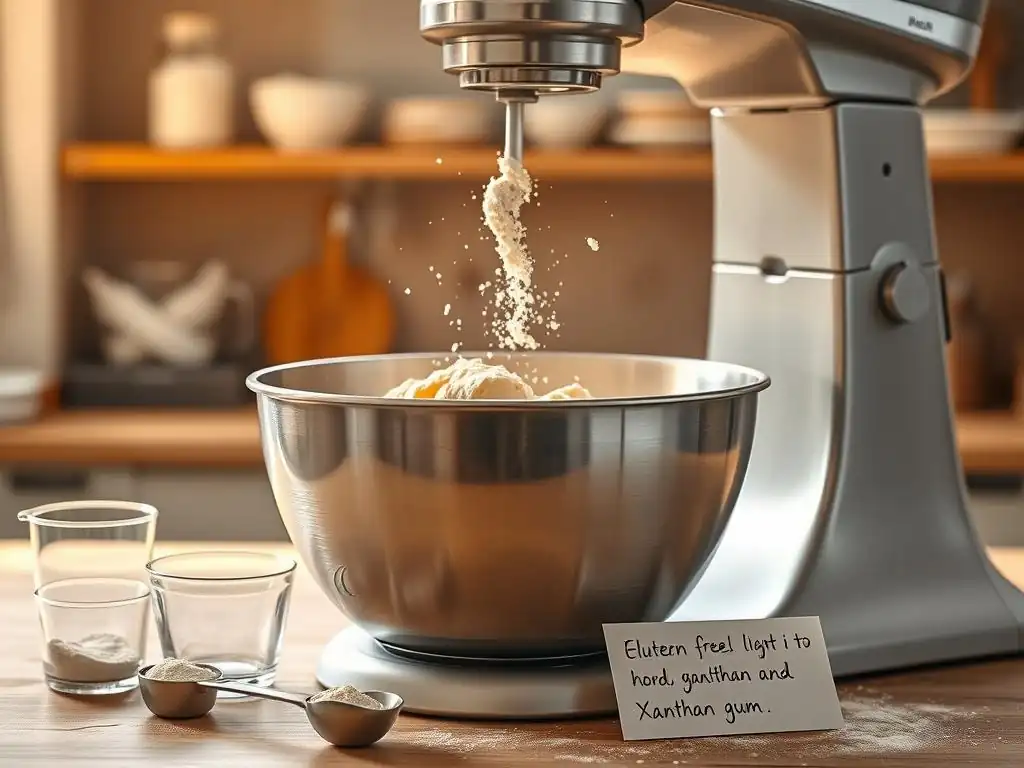
Stainless steel mixing bowls are a staple in any kitchen and excellent glutenfree bread baking equipment. They are durable, lightweight, and non-reactive, meaning they won't interact with ingredients like acidic buttermilk or lemon juice. Their smooth surface makes them easy to clean, which is important when dealing with often sticky gluten-free doughs.
Stainless steel bowls come in various sizes, making them versatile for mixing different batch sizes. They also conduct temperature relatively well, which can be useful if a recipe calls for warming or cooling ingredients slightly. Having a set of nesting stainless steel bowls is a space-saving way to ensure you have the right size for mixing, resting, or proofing your gluten-free bread dough.
Glass Bowls: Easy Monitoring and Temperature Resistance
Glass mixing bowls are another valuable piece of glutenfree bread baking equipment. Their transparency allows you to easily monitor the mixing process and observe the dough as it develops or proofs. This visual feedback can be particularly helpful when you're getting accustomed to the unique characteristics of different gluten-free doughs.
Glass is also non-reactive and retains heat well, making it suitable for tasks like dissolving yeast in warm water or creating a warm environment for proofing. However, glass can be heavier and more prone to breakage than stainless steel. Choose sturdy glass bowls from a reputable brand to ensure they can withstand the rigors of baking.
Essential Gluten-Free Bread Pans
Loaf Pans: Achieving the Desired Bread Shape and Size
Loaf pans are fundamental glutenfree bread baking equipment for shaping and baking standard sandwich loaves. Gluten-free dough often lacks the structural integrity to hold a freeform shape as well as wheat dough, so a loaf pan provides essential support during the rise and bake. Standard 9x5-inch loaf pans are common, but recipes may specify other sizes.
Using the correct size loaf pan is important; too large, and the bread might spread out too much and be flat; too small, and it might overflow. Greasing and flouring (with gluten-free flour) or lining the pan with parchment paper is often necessary to prevent the sticky dough from adhering to the sides, ensuring an easy release after baking.
Metal Loaf Pans: Promoting Even Baking and Crust Development
Metal loaf pans are widely used glutenfree bread baking equipment because they conduct heat efficiently and promote even baking. Darker metal pans tend to absorb more heat, potentially resulting in a darker, crisper crust. Lighter metal pans reflect more heat, leading to a lighter crust. Many bakers prefer non-stick metal pans for easier removal, though parchment paper is still a good practice for gluten-free dough.
Aluminum or aluminized steel pans are popular choices due to their durability and heat distribution properties. Using metal pans correctly, perhaps adjusting oven temperature slightly based on whether they are dark or light colored, is key to achieving the desired crust texture and bake on your gluten-free bread.
Ceramic Loaf Pans: Excellent Heat Retention
Ceramic loaf pans are also effective glutenfree bread baking equipment. They retain heat exceptionally well and distribute it gently, which can be beneficial for achieving an even bake and a tender crumb. Ceramic pans often result in a slightly softer crust compared to metal, as they don't transfer heat as aggressively.
One advantage of ceramic is its non-reactive surface. They are also often aesthetically pleasing and can go straight from the oven to the table (with proper heat protection). Like metal pans, proper greasing and flouring or using parchment paper is recommended for easy release of gluten-free loaves from ceramic pans.
Baking Sheets: For Gluten-Free Rolls and Pizza Crusts
Beyond loaves, glutenfree bread baking equipment includes baking sheets, essential for baking rolls, buns, focaccia, and pizza crusts. A sturdy, flat baking sheet provides a stable surface for these freeform or flatter bread types. Full-size (18x26 inches) or half-size (18x13 inches) sheets are standard.
Using parchment paper or a silicone baking mat on your baking sheet is highly recommended when baking gluten-free doughs. These surfaces are non-stick and prevent the often-sticky dough from sticking to the pan, making transfer and cleanup much easier. A good quality, flat baking sheet ensures even heat distribution across the bottom of your rolls or crusts.
Mixing and Kneading Tools for Gluten-Free Bread
Stand Mixer: Efficiently Combining and Kneading Dough
A stand mixer is a significant piece of glutenfree bread baking equipment that can greatly simplify the mixing process. Gluten-free doughs don't require the extensive kneading that wheat doughs do to develop gluten. Instead, they often benefit from thorough mixing to hydrate the flours and starches and develop structure through other means, like psyllium husk or xanthan gum.
A stand mixer with a paddle attachment (often preferred over the dough hook for many gluten-free recipes) efficiently combines ingredients and can help develop the necessary structure without overworking the delicate dough. This saves considerable effort compared to hand mixing, especially with stickier doughs. Models with powerful motors are beneficial for handling denser doughs.
Dough Whisk: Gently Incorporating Ingredients
A Danish dough whisk, or similar style whisk, is a simple but effective piece of glutenfree bread baking equipment for initial mixing. Its open coil design allows it to cut through thick doughs and batters easily, incorporating ingredients without over-developing them. It's excellent for bringing together the initial wet and dry ingredients before switching to a stand mixer or finishing by hand.
This tool is particularly useful for no-knead or low-knead gluten-free bread recipes. It minimizes the need for touching the sticky dough with your hands early in the process and helps ensure all the dry ingredients are evenly hydrated. Its ease of use and cleaning make it a favored tool for many gluten-free bakers.
Spatulas and Dough Scrapers: Handling Sticky Gluten-Free Dough
Gluten-free doughs are notoriously sticky, making spatulas and dough scrapers indispensable glutenfree bread baking equipment. Flexible silicone spatulas are perfect for scraping down the sides of mixing bowls, ensuring all ingredients are incorporated, and for gently folding in additions. Their flexibility allows them to get into every curve of the bowl.
Bench scrapers, or dough scrapers, are rigid tools, often with a metal or plastic blade and a handle. They are invaluable for portioning dough, lifting sticky dough off a counter or board, and cleaning up surfaces after handling dough. A good bench scraper makes working with sticky gluten-free dough much less frustrating and keeps your workspace tidy.
Proofing Equipment for Gluten-Free Bread
Proofing Basket (Banneton): Shaping and Developing Flavor
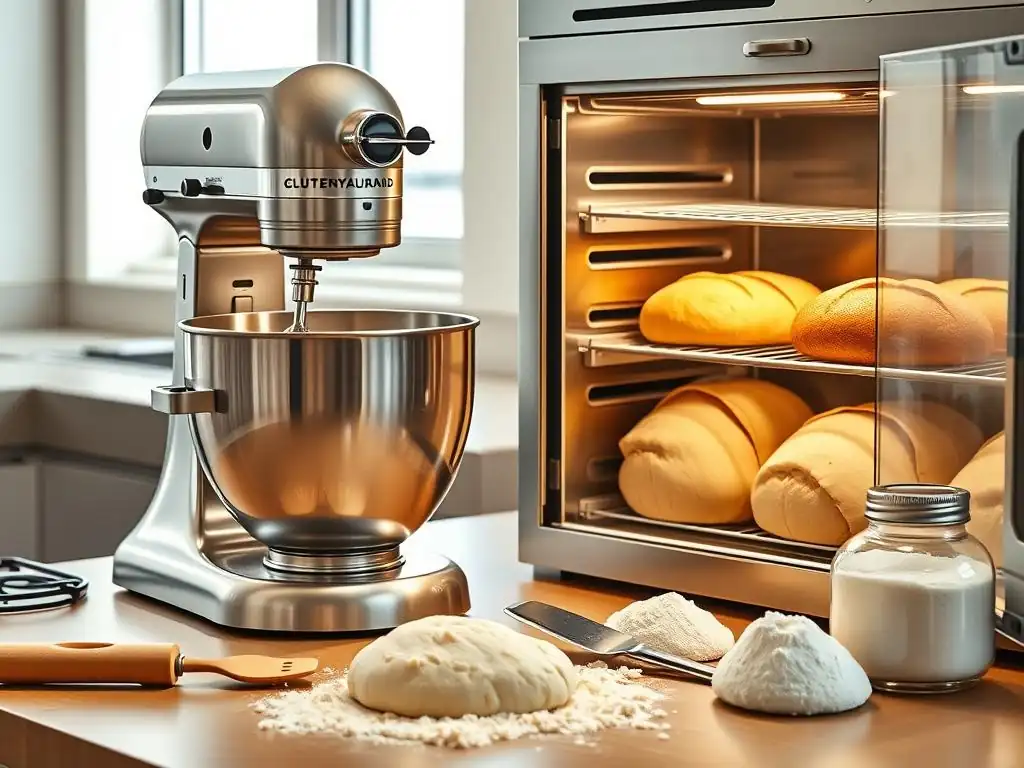
Proofing baskets, or bannetons, are traditionally used to support wheat dough during its final rise, helping it hold its shape and imparting a rustic pattern. They can also be useful glutenfree bread baking equipment, particularly for recipes designed for freeform baking. While gluten-free dough doesn't build tension like wheat dough, the basket still provides support to prevent it from spreading and encourages an upward rise.
Lining the banneton with a floured cloth (using rice flour or another gluten-free flour) is essential to prevent the sticky dough from adhering to the basket. The basket helps the dough maintain a round or oval shape, which is beneficial when baking in a Dutch oven or on a baking stone.
Dough Rising Bucket: Maintaining Consistent Temperature and Humidity
A dough rising bucket, typically a clear plastic container with measurement markings and a lid, is excellent glutenfree bread baking equipment for monitoring the first rise (bulk fermentation). The clear sides allow you to easily see how much the dough has risen, and the lid helps maintain a consistent temperature and humidity level, crucial for gluten-free dough which can dry out easily.
Using a rising bucket minimizes temperature fluctuations and keeps the dough from forming a skin. Some buckets even have a built-in thermometer. They are particularly useful in kitchens where ambient temperature varies. Ensure the bucket is large enough to accommodate the dough's rise, typically at least double the initial volume.
Plastic Wrap or Damp Towel: Preventing Dough from Drying Out
Whether proofing in a bowl or a rising bucket, preventing the surface of the gluten-free dough from drying out is critical. A dry skin inhibits the dough's ability to rise properly. Plastic wrap or a damp, clean kitchen towel are simple but essential pieces of glutenfree bread baking equipment for this purpose.
Covering the bowl or bucket tightly with plastic wrap creates a humid environment that keeps the dough surface moist. If using a towel, ensure it is genuinely damp (not soaking wet) and covers the container completely. Some bakers prefer a damp towel as it is reusable, but plastic wrap often provides a tighter seal.
Baking Stones and Dutch Ovens for Superior Gluten-Free Crust
Baking Stone: Creating a Crispier Crust
A baking stone, made of ceramic or cordierite, is a valuable piece of glutenfree bread baking equipment for achieving a crisp crust and good oven spring. Placed in the oven during preheating, the stone gets very hot and provides a radiant heat source from the bottom. When the dough is placed on the hot stone, the immediate burst of heat helps the dough rise quickly and sets the bottom crust.
Baking stones are particularly effective when combined with steam, which is another key factor in developing a good crust on gluten-free bread. They absorb and retain heat well, providing a stable baking temperature even when the oven door is opened. Ensure your stone is fully preheated, typically for 30-60 minutes, before baking.
Dutch Oven: Trapping Steam for Optimal Oven Spring
A Dutch oven, a heavy pot with a tight-fitting lid (often cast iron or enameled cast iron), is arguably one of the most transformative pieces of glutenfree bread baking equipment for achieving bakery-quality results. Baking bread in a preheated Dutch oven traps the steam released by the dough as it bakes. This humid environment keeps the crust soft and pliable initially, allowing the loaf to expand fully (oven spring) before the crust hardens.
After the initial rise period in the Dutch oven with the lid on, removing the lid allows the crust to brown and crisp up beautifully. This method is incredibly effective for gluten-free doughs, which benefit significantly from the trapped steam to achieve maximum rise and a desirable crust texture. Ensure your Dutch oven is oven-safe up to the required baking temperature, often 450-500°F (230-260°C).
Temperature Control: Ensuring Perfectly Baked Gluten-Free Bread
Oven Thermometer: Monitoring Accurate Oven Temperature
Many home ovens are not calibrated precisely, and the actual temperature inside can vary significantly from the setting on the dial – sometimes by as much as 25-50°F (15-30°C). An oven thermometer is a simple, inexpensive, yet crucial piece of glutenfree bread baking equipment to verify your oven's true temperature.
Baking gluten-free bread requires specific temperatures for optimal rise and baking through. Knowing the actual temperature allows you to adjust your oven setting accordingly. For example, if your oven reads 375°F when set to 400°F, you know to set it higher. Consistent, accurate oven temperature is vital for successful gluten-free bread baking.
Instant-Read Thermometer: Verifying Bread Doneness
Guessing if your gluten-free bread is fully baked can lead to disappointing results – either undercooked and gummy or overcooked and dry. An instant-read thermometer is essential glutenfree bread baking equipment for accurately checking the internal temperature of your loaf. Most gluten-free bread is considered fully baked when the internal temperature reaches around 205-210°F (96-99°C).
Insert the thermometer into the center of the loaf, avoiding any large air pockets. This provides an objective measure of doneness, ensuring your bread is cooked all the way through. Relying on sight or tapping the bottom can be misleading with gluten-free varieties.
Optional, but Helpful Gluten-Free Bread Baking Tools
Rice Flour Sifter: For Finer Flour Texture
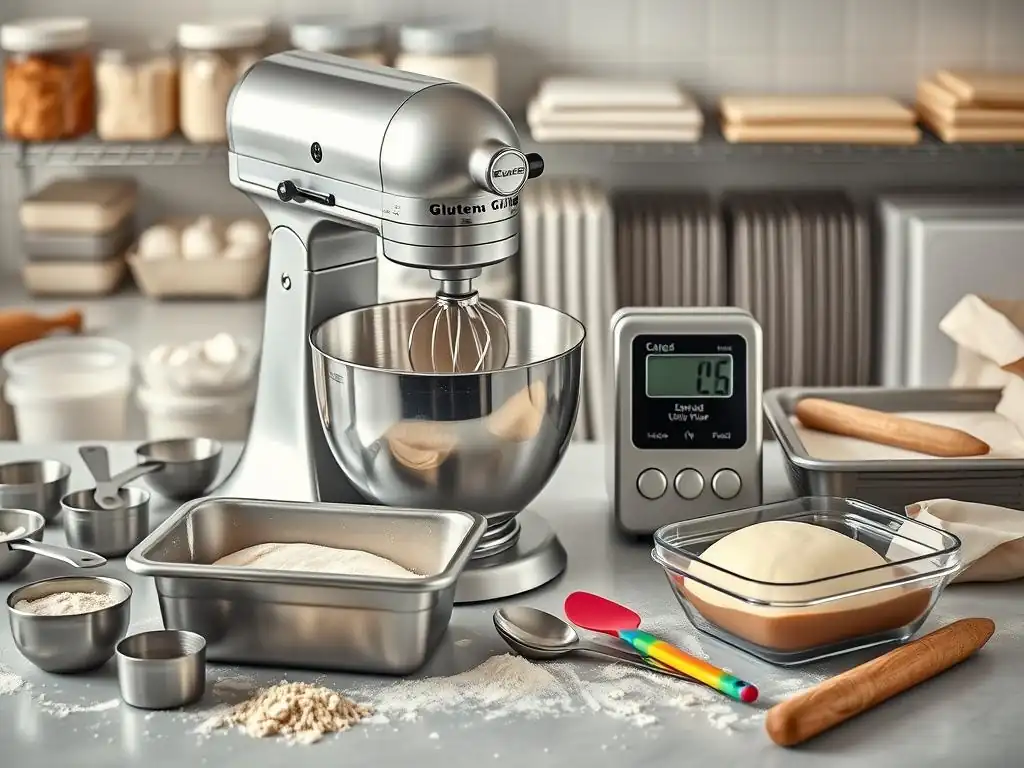
While not strictly essential, a rice flour sifter can be useful glutenfree bread baking equipment. Gluten-free flour blends, especially those containing rice flour, can sometimes be a bit gritty. Sifting can help aerate the flour and remove any clumps, potentially leading to a finer, less gritty crumb texture in your finished bread.
A standard fine-mesh sieve can also serve this purpose. While some argue that sifting doesn't significantly change the outcome for all gluten-free flours, it can be a technique worth experimenting with if you're seeking the smoothest possible texture.
Bread Lame/Scoring Knife: Creating Decorative Slits
A bread lame (pronounced "lahm"), or scoring knife, is a tool with a sharp blade used to score the surface of bread dough before baking. While not always necessary for the rise of gluten-free bread (which often relies more on structure from gums/psyllium than controlled expansion through scoring), it is valuable glutenfree bread baking equipment for decorative purposes.
Scoring creates intentional cuts that allow the dough to expand in specific places as it bakes, resulting in attractive patterns. For gluten-free dough, which can be sticky, a very sharp blade is needed for clean cuts. Dipping the blade in water or oil can also help prevent sticking.
Wire Cooling Rack: Allowing Bread to Cool Evenly
A wire cooling rack is simple but crucial glutenfree bread baking equipment. Once your gluten-free bread comes out of the oven, it needs to cool properly. Placing it on a wire rack allows air to circulate around the entire loaf, preventing the bottom crust from becoming soggy from trapped steam.
Allowing the bread to cool completely on the rack is also vital for the internal structure to set. Slicing into warm gluten-free bread can result in a gummy texture. Patience during the cooling process, facilitated by a wire rack, is key to enjoying the fruits of your gluten-free bread baking efforts.
Cleaning and Maintenance of Gluten-Free Bread Baking Equipment
Preventing Cross-Contamination with Gluten
Maintaining dedicated glutenfree bread baking equipment is the most effective way to prevent cross-contamination. If you must use equipment that also touches gluten, thorough cleaning is paramount. Wash all tools and surfaces with hot, soapy water, ensuring no residue from gluten-containing flours or doughs remains.
Pay special attention to porous materials like wooden spoons or proofing baskets, which can harbor gluten particles. Consider having separate sets of these items. Storing your gluten-free flours and equipment in designated bins or shelves away from gluten ingredients further minimizes risk, ensuring the integrity of your gluten-free bread baking.
Proper Cleaning Techniques for Different Materials
Different glutenfree bread baking equipment materials require specific cleaning techniques. Metal and glass bowls, pans, and utensils are generally easy to clean with hot, soapy water and a sponge. For sticky dough residue, a bench scraper can help remove the bulk before washing.
For baking stones, avoid soap as it can be absorbed and affect future bakes. Scrape off any baked-on residue and wipe clean with a damp cloth. For stubborn spots, a stiff brush or scraper designed for baking stones can be used. Ensure all glutenfree bread baking equipment is thoroughly dried before storing to prevent rust or mildew.
Mastering Gluten-Free Bread Baking: Equipment and Techniques
Equipping yourself with the right glutenfree bread baking equipment is a fundamental step towards consistently baking delicious and well-structured gluten-free bread. From accurate measuring tools like digital scales and precise measuring cups to essential baking vessels like loaf pans and Dutch ovens, each piece plays a role in overcoming the unique challenges of working with gluten-free dough.
Understanding how to use this equipment for gluten-free bread in conjunction with proper techniques – like gentle mixing, adequate proofing, and achieving the right baking temperature – will significantly improve your results. Don't be afraid to experiment with different tools and methods to find what works best for your specific recipes and oven.
[Link to Gluten-Free Bread Recipes]
Frequently Asked Questions
What are the most essential pieces of equipment for starting gluten-free bread baking?
The most essential items are a good quality stand mixer or hand mixer, a reliable digital kitchen scale, and a suitable bread baking pan, preferably non-stick.
Are there specific types of bread pans that work best for gluten-free bread?
Yes, loaf pans made of glass, silicone, or non-stick metal are highly recommended. These materials help prevent sticking, which is crucial for gluten-free bread due to its often delicate structure.
Do I need any special measuring tools for gluten-free bread baking?
Accurate measurements are vital. A digital kitchen scale is highly recommended for precise measurements of flour and other ingredients. Measuring cups and spoons can be used, but scales are more consistent.
What kind of mixing equipment is best for gluten-free bread dough?
A stand mixer with a paddle attachment is ideal for kneading the dough effectively. Alternatively, a hand mixer can be used, or you can mix by hand if you're prepared for a bit more work.
Is there any specific equipment needed for proofing gluten-free bread?
While not strictly necessary, a proofing basket (banneton) can help the bread hold its shape during the final rise. A warm, draft-free environment is also important, achievable with a proofing box or even a warm oven.
Final Reflection: The Joy of Gluten-Free Baking, Within Reach
Mastering gluten-free bread baking doesn't require a professional kitchen; it requires the right tools. This article highlighted the essential equipment that can transform the often-daunting process into a manageable and even enjoyable experience. The accessibility of gluten-free baking is significantly increased with the right equipment, opening up a world of delicious possibilities for those with dietary restrictions or preferences.
The journey of gluten-free baking is a testament to the power of adaptation and innovation. It's a journey I've personally embraced, and witnessing the evolution of tools designed specifically for gluten-free baking has been inspiring. The greatest discovery of all time is that a person can change his future by merely changing his attitude.
– Oprah Winfrey. This quote resonates deeply, as the right attitude, coupled with the right equipment, can truly change the experience of gluten-free baking from frustrating to fulfilling.
Now, it's your turn. Consider the equipment discussed in this article – the stand mixer, the scale, the specific pans – and how they can simplify your own gluten-free baking journey. Don't be intimidated by the perceived complexity; embrace the challenge, equip yourself with the right tools, and discover the joy of creating delicious, homemade gluten-free bread. The reward? The satisfaction of crafting something truly special, tailored to your needs and tastes.
Unleash Your Inner Gluten-Free Baker!
Thanks for taking the time to explore the world of effortless gluten-free bread baking! We hope you now feel confident and equipped to tackle those delicious, fluffy loaves you've always dreamed of. Ready to get started?
- Dive into your first gluten-free bread recipe today! Choose a simple recipe (like the one we featured!) and get baking. This is your chance to put your newfound knowledge into practice.
- Share your baking journey! Post a picture of your creation on social media using #BakeWithEaseGlutenFree and inspire others.
- Explore additional resources: Visit our comprehensive gluten-free baking guides on bakewithease.com for more tips, tricks and recipes.
What delicious gluten-free bread will you create first?