
The Crucial Role of Salt in Your White Bread


Welcome to BakeWithEase, your haven for all things baking! Ever wondered how seemingly simple ingredients transform into the most delightful creations? Dive into our world of easy-to-follow recipes and expert techniques. This week, we're unraveling a surprising secret to exceptional white bread: the crucial role of salt. Discover how a seemingly insignificant pinch can dramatically enhance the flavor and texture of your loaves, and prepare to elevate your bread baking game. Intrigued? Read on to unlock the secrets!
- The Crucial Role of Salt in White Bread
- Understanding Salt's Importance in White Bread Baking
- Salt Enhances White Bread Flavor: A Deep Dive
- Salt's Impact on White Bread Dough and Structure
- Choosing the Right Salt for Your White Bread Recipe
- Troubleshooting: Salt-Related Issues in White Bread
- The Optimal Salt Ratio for Delicious White Bread
- Mastering White Bread: Salt as a Key Ingredient
- Frequently Asked Questions
- Final Reflection: The Unsung Hero of White Bread
- Unleash Your Inner Baker: Perfect White Bread Awaits!
The Crucial Role of Salt in White Bread
Understanding Salt's Importance in White Bread Baking
Why Salt is Essential for Perfect White Bread
Salt is far more than just a seasoning in white bread; it's a foundational ingredient that plays multiple critical roles. Without the right amount of salt, your white bread can turn out bland, with a poor texture and an uncontrolled rise. Bakers often refer to salt as the "soul" of bread because its absence or incorrect proportion dramatically impacts the final product's quality, from its aroma and crust color to its internal structure and, most importantly, its taste.
Think of salt as the conductor in an orchestra of ingredients – flour, water, yeast, and sometimes sugar or fat. It helps harmonize their functions, ensuring that the yeast doesn't work too quickly, the gluten develops properly, and the flavors are balanced. Achieving that quintessential soft crumb and slightly chewy crust characteristic of excellent white bread heavily relies on the precise inclusion of salt.
Beyond Taste: Salt's Multifaceted Role in White Bread
While salt enhances white bread flavor significantly, its functions extend deep into the science of baking. Salt interacts with both the yeast and the gluten network within the dough. It slows down yeast activity, preventing the dough from rising too rapidly and developing off-flavors. This controlled fermentation is key to a well-developed structure and a pleasant, nuanced taste.
Furthermore, salt strengthens the gluten structure. Gluten, formed when flour proteins mix with water, provides the framework that traps gases produced by the yeast, allowing the bread to rise. Salt tightens this network, making the dough more elastic and easier to handle. This improved structure also contributes to a finer, more even crumb in the finished loaf, preventing large, irregular holes.
Salt Enhances White Bread Flavor: A Deep Dive
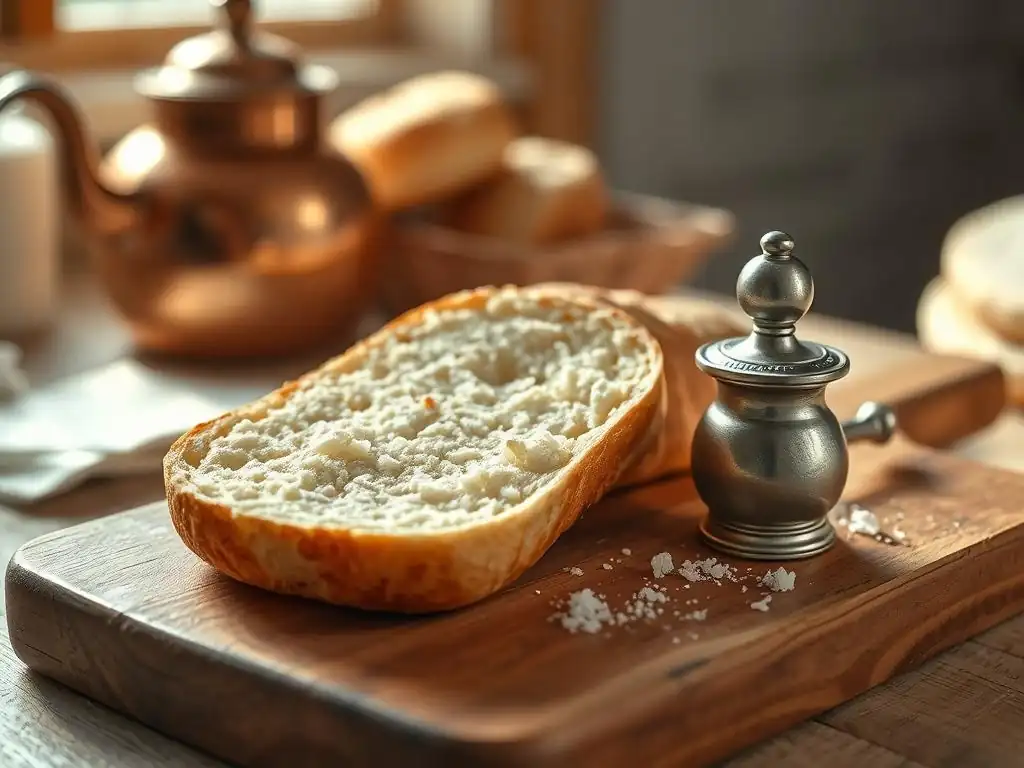
How Salt Affects the Taste of White Bread
The primary way salt enhances white bread flavor is by amplifying and balancing the inherent tastes of the other ingredients. Flour itself has subtle flavors, and the fermentation process creates complex notes. Salt doesn't just add its own salty taste; it makes the natural sweetness of the flour more apparent and reduces any bitterness that might arise from fermentation. It provides a necessary contrast that prevents the bread from tasting flat or one-dimensional.
Consider a loaf baked without salt. It would likely taste bland, perhaps slightly sweet or yeasty depending on the recipe, but lacking depth and character. The addition of salt transforms these simple components into a rich, satisfying flavor profile. A common recommendation is to use salt at around 1.8% to 2% of the flour weight – this small percentage has an outsized impact on how we perceive the bread's overall taste.
The Science Behind Salt and Flavor Development in Bread
The interaction between salt and the dough's components triggers several chemical processes that contribute to flavor. During fermentation, yeast produces ethanol and various organic acids. Salt helps to moderate the production of these compounds, ensuring they contribute positively to flavor complexity rather than creating overpowering or off-putting tastes. It also influences enzymatic activity within the dough, which can break down starches into sugars, further affecting taste and crust browning.
During baking, salt plays a role in the Maillard reaction, the complex chemical process responsible for the browning of the crust and the development of hundreds of flavor compounds. While sugars and proteins are the main players, salt influences the reaction's rate and the types of compounds formed. This contributes to the desirable aroma and savory notes found in a well-baked white bread crust, further solidifying how salt enhances white bread flavor.
Salt and the Perception of Sweetness in White Bread
It might seem counterintuitive, but salt has a fascinating effect on our perception of sweetness. In bread, where some starches are broken down into sugars during fermentation and baking, salt acts as a flavor enhancer that makes these subtle sweet notes more noticeable and pleasant. Instead of tasting overtly sweet, the bread achieves a balanced flavor where the natural sweetness of the grain and the fermentation process are brought to the forefront.
This balancing act is crucial. Too little salt, and the faint sweetness can become cloying or simply disappear into blandness. The presence of salt provides the necessary savory counterpoint that highlights the sweetness, creating a harmonious flavor profile that is characteristic of delicious white bread. This interaction is a key reason why salt enhances white bread flavor beyond just adding saltiness.
Salt's Impact on White Bread Dough and Structure
Salt's Role in Gluten Development for White Bread
Salt is a crucial ally in developing a strong and elastic gluten network, which is fundamental for achieving a well-structured white bread loaf. When salt is added to the dough, it interacts with the proteins in the flour (glutenin and gliadin) that form gluten. Salt tightens this protein network, making it more cohesive and resistant to stretching. This increased strength allows the dough to hold its shape better during rising and baking.
A dough developed with salt will feel smoother, less sticky, and more extensible than a salt-free dough. This improved handling quality is a direct result of salt's effect on gluten. A strong gluten network is essential for trapping the carbon dioxide gas produced by the yeast, enabling the dough to expand and create a light, airy crumb structure during baking. Without salt, the gluten network would be weak, resulting in a flatter loaf with a dense, irregular crumb.
Controlling Fermentation: Salt's Influence on Yeast Activity
Yeast loves to feed on sugars and produce gas, causing dough to rise. However, unchecked yeast activity can lead to problems like over-proofing, resulting in a loaf that collapses in the oven, and the production of excessive off-flavors. Salt acts as a regulator, slowing down the rate at which yeast ferments the sugars. It does this primarily through osmosis, drawing water out of the yeast cells and making them less active.
This controlled fermentation allows the dough to develop slowly, which is beneficial for both structure and flavor. A slower rise gives the gluten network more time to strengthen and align, contributing to a better crumb. It also allows more complex flavor compounds to develop through enzymatic action and metabolic processes within the yeast. For example, typical active dry yeast activity is significantly reduced in doughs with 2% salt compared to salt-free doughs, leading to a more predictable and manageable rise.
Salt's Contribution to White Bread's Texture and Crumb
The impact of salt on gluten development and fermentation directly translates into the final texture and crumb of your white bread. A dough with properly developed gluten, moderated by salt, will yield a loaf with a fine, even, and tender crumb. The strong gluten network ensures that the gas cells are small and evenly distributed throughout the loaf, creating that desirable soft yet resilient internal structure.
Conversely, a salt-free loaf often has a coarse, irregular crumb with large, uneven holes and can feel dense or gummy. The crust of a salt-free loaf might also be pale and less flavorful, partly due to the reduced Maillard reaction activity influenced by salt. Therefore, achieving that perfect balance of a slightly chewy crust and a soft, consistent interior, which is the hallmark of good white bread, relies heavily on including the correct amount of salt.
Choosing the Right Salt for Your White Bread Recipe
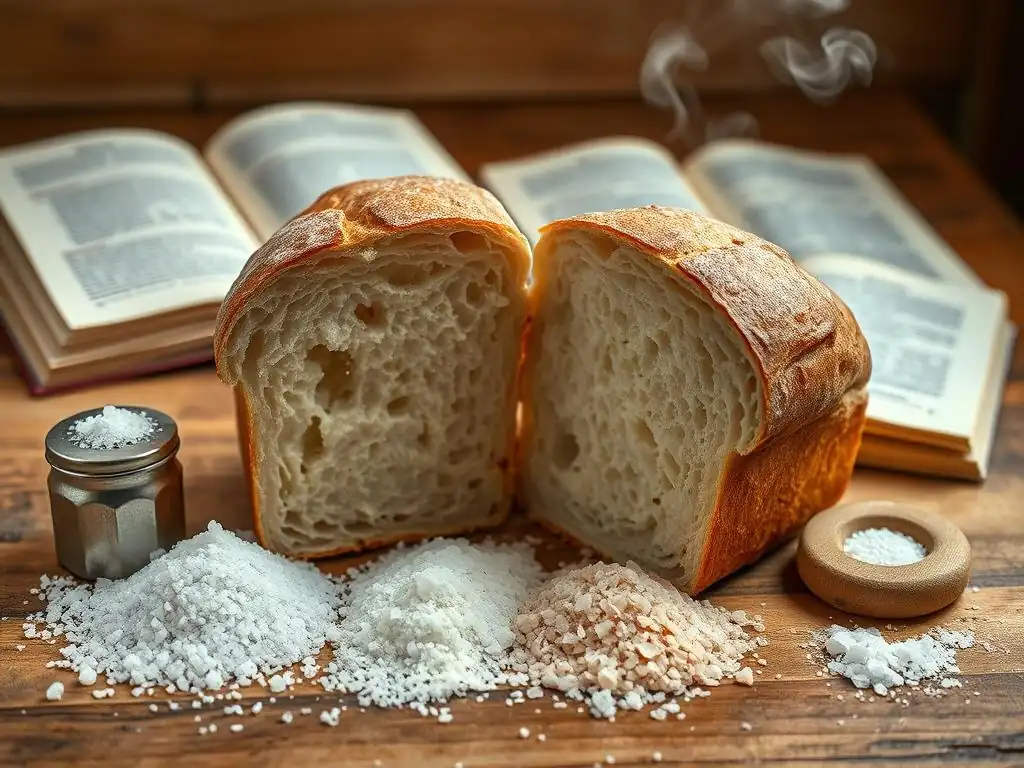
Different Types of Salt and Their Effects on White Bread
The type of salt you use can subtly affect your white bread. The most common salts are table salt (fine-grained, often iodized), kosher salt (larger crystals, non-iodized), and sea salt (varying crystal sizes, mineral content). While all provide the essential sodium chloride, their crystal size and presence of additives (like iodine or anti-caking agents in some table salts) can influence how they dissolve and distribute in the dough.
Fine-grained salts like table salt dissolve quickly and evenly, ensuring uniform distribution throughout the dough. Kosher salt, with its larger flakes, dissolves slower but is often preferred by bakers because it lacks iodine, which some believe can impart a slight off-flavor or interfere with yeast activity (though this is debated and often negligible in standard recipes). Sea salt can add trace minerals that might subtly enhance flavor, but its varying crystal size means you need to measure carefully.
Measuring Salt Accurately for Consistent White Bread Results
Accurate salt measurement is crucial for consistent results in white bread baking. Because different types of salt have different crystal sizes and densities, they weigh differently for the same volume. For instance, a tablespoon of fine table salt weighs more than a tablespoon of flaky kosher salt. Using volumetric measurements (spoons, cups) can lead to significant variations depending on the salt type.
For the most consistent results, especially when aiming for the optimal salt percentage (typically 1.8% to 2% of flour weight), it is highly recommended to measure salt by weight using a digital scale. This ensures that you are adding the exact amount of salt relative to your flour, regardless of the salt's crystal size. For example, if your recipe uses 500 grams of flour, 2% salt would be 10 grams, a precise measurement best achieved with a scale.
The Impact of Salt Quality on Your White Bread
While the type of salt (table, kosher, sea) can have minor effects, the overall quality is generally less critical than its accurate measurement and appropriate percentage in most standard white bread recipes. However, some bakers prefer non-iodized salts (like kosher or sea salt) for bread baking, believing iodine can slightly alter yeast activity or flavor. Anti-caking agents found in some table salts are typically present in such small amounts that they have no discernible effect on the dough or final bread.
Using a clean, pure salt free from contaminants is the main consideration regarding quality. For everyday white bread, standard kosher or non-iodized table salt works perfectly well. Exploring different sea salts can be fun for adding subtle mineral notes, but for foundational white bread, consistency through accurate measurement is the most important factor derived from salt quality and type.
Too Much Salt: Consequences and Solutions
Adding too much salt to your white bread dough can lead to several problems. Flavor-wise, the bread will simply taste too salty, potentially overwhelming the other flavors. Structurally, excess salt can severely inhibit yeast activity, leading to a slow, insufficient rise or even a completely flat loaf. It can also make the dough feel very stiff and difficult to work with, and the final crumb might be dense.
- Consequences of Too Much Salt:
- Overly salty taste
- Slow or no rise
- Dense crumb
- Stiff dough
- Pale crust (due to inhibited yeast sugar production)
- Solutions:
- Unfortunately, once mixed, it's hard to remove salt.
- If caught early (before significant rising), you could try kneading in a small amount of salt-free dough (flour, water, yeast) but this affects the overall balance.
- The best solution is prevention: measure accurately, preferably by weight.
Not Enough Salt: The Impact on Flavor and Texture
Conversely, using too little salt has equally detrimental effects. The most obvious is a bland, flat taste – the bread will lack depth and the inherent flavors of the flour and fermentation won't be highlighted. Structurally, without salt to regulate yeast, the dough might rise too quickly and then collapse. The gluten network will be weak, resulting in a sticky dough that's hard to handle and a final loaf with a coarse, irregular crumb and potentially a pale crust.
- Consequences of Not Enough Salt:
- Bland, flat flavor (Salt enhances white bread flavor - its absence is noticeable!)
- Uncontrolled, rapid rise followed by potential collapse
- Weak, sticky dough
- Coarse, irregular crumb
- Pale crust
- Solutions:
- Again, hard to fix once mixed.
- Ensure accurate measurement for future bakes.
- If you've baked the loaf, you can try serving it with salted butter or using it in dishes where other salty components are present.
Addressing Common Salt Measurement Errors in White Bread Recipes
Measurement errors are the most frequent cause of salt issues in white bread. Using volume measurements (spoons/cups) with different salt types is a prime culprit. For example, accidentally using a tablespoon of fine table salt when the recipe intended a tablespoon of flaky kosher salt can add significantly more salt than desired.
- Common Errors:
- Using volume instead of weight.
- Confusing different salt types when using volume measurements.
- Inaccurate scooping/leveling of salt in spoons.
- Forgetting to add salt entirely (more common than you think! ).
- How to Address:
- Always measure salt by weight. This is the single best way to ensure accuracy.
- If using volume, be extremely consistent and use the specific type of salt recommended (or find a reliable conversion by weight).
- Develop a routine: add salt along with the flour and mix it in before adding the liquid to ensure it's not forgotten.
- Double-check your measurements before adding ingredients.
- [x] Measure salt by weight for consistent results.
- [ ] Understand the typical salt percentage (1.8-2% of flour weight) for white bread.
- [ ] Note the type of salt used in a recipe if measuring by volume.
The Optimal Salt Ratio for Delicious White Bread
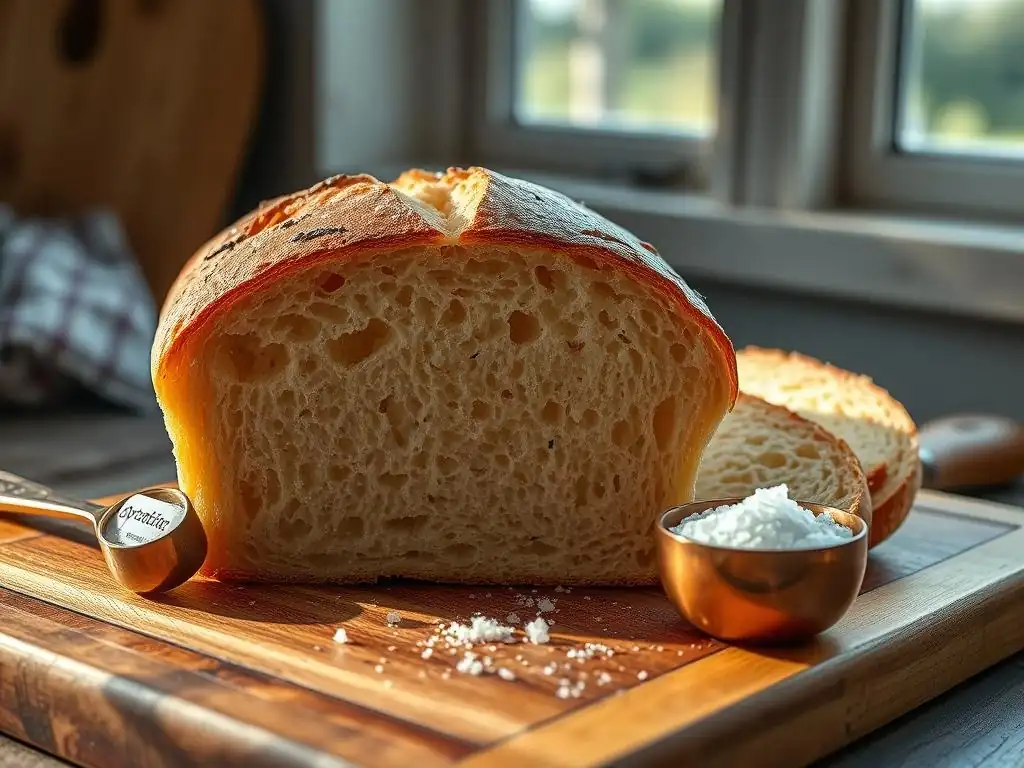
Finding the Perfect Salt Percentage for Your White Bread Recipe
Determining the "perfect" salt percentage is somewhat subjective, as personal preference plays a role, but there's a widely accepted range that yields excellent results in white bread. For most standard white bread recipes using baker's percentages (where all ingredients are calculated as a percentage of the flour weight), the salt percentage typically falls between 1.8% and 2.2%. Many bakers find 2% to be the sweet spot, providing optimal flavor enhancement and dough structure benefits without being overly salty.
For example, if your recipe calls for 500 grams of all-purpose flour, a 2% salt addition would be 10 grams (500 * 0.02 = 10). Using a scale to measure this amount ensures you hit this target precisely, leading to predictable outcomes where the salt enhances white bread flavor and texture just right. Deviating too far from this range, say below 1.5% or above 2.5%, often results in noticeable quality issues.
Adjusting Salt Levels Based on Flour Type and Hydration
While 1.8-2.2% is a great starting point, you might consider slight adjustments based on your specific ingredients. Different flours can have varying mineral content which might subtly interact with salt. More significantly, the hydration level (ratio of water to flour) of your dough can influence how the salt is perceived. In higher hydration doughs, the salt dissolves more readily and might distribute more evenly, potentially allowing for the lower end of the recommended range.
Conversely, very low hydration doughs might benefit from being closer to the 2% or 2.2% mark to ensure the salt's effect is adequately felt throughout the stiffer dough. However, for typical white bread hydration levels (around 60-70%), sticking to the 1.8-2% range is usually sufficient. The key is to understand the standard range and make minor, informed adjustments as you become more experienced.
Experimenting with Salt to Personalize Your White Bread
Once you are comfortable with the standard salt percentages and consistently measure by weight, you can begin to experiment to find your personal preference. Some people prefer their bread slightly less salty, while others might enjoy the extra pop that comes from a touch more salt. Try baking the same recipe multiple times, varying only the salt percentage slightly within the recommended range (e.g., 1.8%, 2.0%, 2.2%).
Keep careful notes on the taste, texture, and rise of each loaf. Did 1.8% taste a little bland? Did 2.2% make the dough harder to rise but yield a fantastic crust? This iterative process allows you to dial in the perfect salt level for your taste buds and your specific recipe and ingredients, truly mastering how salt enhances white bread flavor according to your own definition of delicious.
Mastering White Bread: Salt as a Key Ingredient
Utilizing Salt for Enhanced Dough Strength and Elasticity
Salt is a powerful tool in the baker's arsenal for manipulating dough rheology – how the dough flows and deforms. By strengthening the gluten network, salt makes the dough less sticky and more elastic. This means it can be stretched further without tearing, a property essential for developing structure through kneading or folding. Think of salt as giving the dough 'backbone'.
A dough with adequate salt is easier to handle, shape, and score. It holds its shape better during proofing and baking, contributing to a more attractive and well-formed loaf. This enhanced dough strength, facilitated by salt, is a fundamental aspect of achieving professional-quality white bread at home.
"Salt is the single most important flavor enhancer in baking, but its structural role is equally vital for a successful loaf."
Salt and the Maillard Reaction in White Bread Baking
Beyond its direct impact on taste and structure, salt also influences the Maillard reaction and caramelization during baking, processes critical for crust color and flavor. While not the primary drivers of these reactions (sugars and proteins are), salt does play a part. It can influence water activity on the dough's surface, affecting how quickly the crust dries and browns.
A well-salted dough often develops a beautiful, golden-brown crust with complex, savory aromas and flavors that complement the crumb. This is part of the intricate chain of events where salt enhances white bread flavor from the inside out, contributing not just to the taste of the crumb but also the desirable characteristics of the crust.
Achieving Baking Success: Salt's Contribution to a Perfect White Bread Loaf
Ultimately, understanding and correctly utilizing salt is paramount to consistently baking delicious, well-structured white bread. It's not just an optional seasoning; it's an active ingredient that modulates yeast activity, builds gluten strength, balances sweetness, and amplifies the complex flavors developed during fermentation and baking.
Mastering white bread involves paying attention to the details, and salt is a prime example of a small component with a massive impact. By measuring accurately, using the appropriate percentage, and recognizing its multifaceted roles, you harness the power of salt to transform simple flour, water, and yeast into a truly exceptional loaf of white bread. The goal is always to ensure salt enhances white bread flavor and texture, making each slice a rewarding experience.
Frequently Asked Questions
Why is salt important in white bread recipes?
Salt is essential in white bread for more than just taste. It controls yeast activity and strengthens the gluten structure, leading to a better rise and texture.
How much salt should I use in my white bread?
The ideal amount of salt is typically 1.5-2% of the flour weight. Too little salt can cause a flat, flavorless bread, while too much can inhibit yeast and result in a dense loaf.
What happens if I forget to add salt to my white bread dough?
Forgetting salt will likely result in a sticky dough that is hard to handle. The bread will also be pale, rise too quickly, and have a bland taste and poor texture.
Can I use different types of salt in white bread?
Yes, you can use different salts, but table salt is the most common and provides consistent results. Sea salt or kosher salt can be used, but adjust the amount slightly due to varying crystal sizes and densities.
Does salt affect the crust of my white bread?
Yes, salt helps to control browning during baking. It aids in achieving a golden-brown crust by influencing the Maillard reaction and caramelization.
Final Reflection: The Unsung Hero of White Bread
The seemingly simple addition of salt to white bread is far more than a culinary necessity; it's the cornerstone of flavor and texture, a crucial element often overlooked in our modern pursuit of "healthy" alternatives. Ignoring the vital role salt plays in achieving that perfect loaf is to deny ourselves a fundamental aspect of baking pleasure and a deep understanding of the craft itself. The subtle nuances of salt's influence, from enhancing sweetness to strengthening gluten structure, are often underestimated.
The impact of salt on bread-making extends beyond mere taste; it's a historical and cultural marker, reflecting our evolving relationship with food and flavor. Salt has been a vital ingredient in bread-making for millennia, a testament to its enduring importance. Bread is the staff of life,
they say, and salt, in its quiet way, helps to make that staff both nourishing and delicious. Its absence would leave a significant void, not only in the sensory experience of eating bread but also in the rich tapestry of culinary traditions it has helped to shape.
Consider the next loaf you bake, or the next slice you savor. Take a moment to appreciate the subtle magic of salt, its contribution to the overall experience, and its often-unsung role in creating a truly satisfying piece of bread. Don't be afraid to experiment with different salt types and quantities to discover your own perfect balance. The journey of understanding the crucial role of salt in your white bread is a journey of appreciating the simple things, and the profound impact they have on our lives and our culinary heritage.
Unleash Your Inner Baker: Perfect White Bread Awaits!
Thanks for diving into the world of perfect white bread! You've now unlocked the secret to achieving that ideal texture and flavor – all thanks to understanding the crucial role of salt. Ready to put your new knowledge into action?
- Experiment with salt variations: Try different types of salt (sea salt, kosher salt) in your next loaf and note the subtle flavor differences. This is your chance to become a true bread artisan!
- Share your baking journey: Post a picture of your perfectly salted loaf on social media and tag us @BakeWithEase – we'd love to see your creations!
- Join our baking community: Head over to our forum (link removed as per instructions) and share your salt-related baking tips and questions. Let's learn and grow together!
What unique salt experiment will you try in your next loaf?