
Convection vs. Conventional: Which Oven Reigns Supreme for Baking?

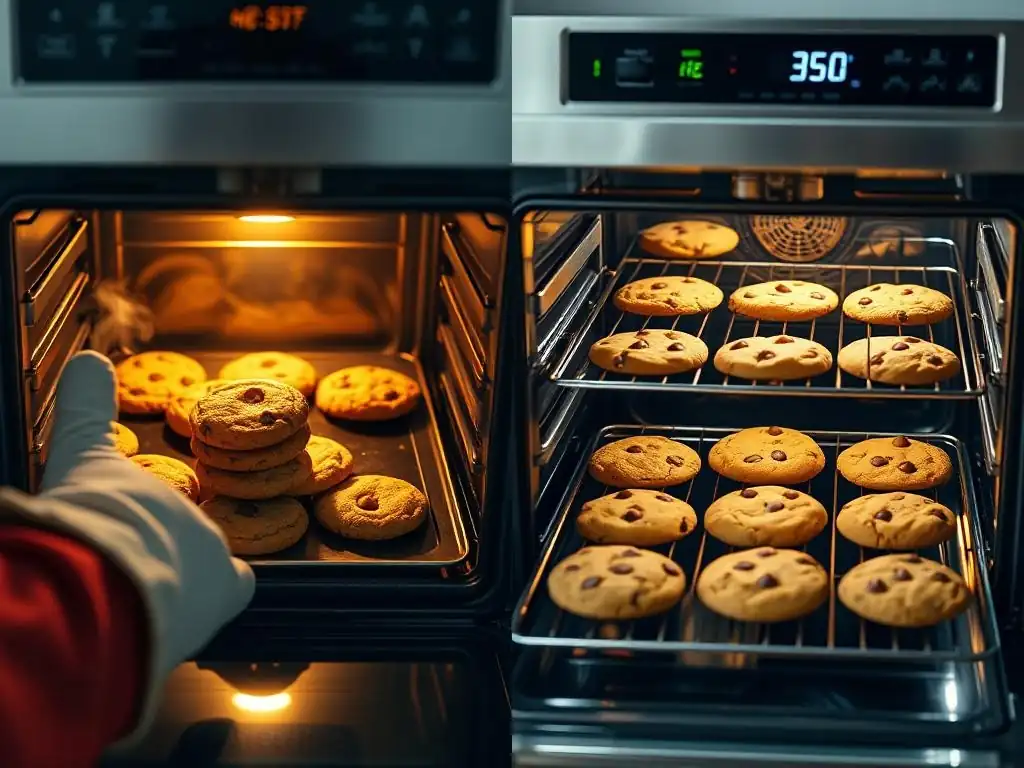
Welcome to BakeWithEase, your trusted guide to baking bliss! Ever wondered if your oven is truly working its hardest for you? Dive into our latest article and unlock the secrets to Convection Oven Baking Tips. Discover how to harness the power of convection and transform your baked goods from ordinary to extraordinary. Prepare to revolutionize your baking game – the answers await!
- Introduction: Elevating Your Baking with the Right Oven
- Convection Oven Baking Tips: Unlocking Enhanced Baking Performance
- Conventional Oven Baking: The Traditional Approach
- Convection vs. Conventional: A Head-to-Head Baking Comparison
- Mastering Convection Oven Techniques: Baking Tips for Success
- Choosing the Right Oven for Your Baking Needs: Recommendations and Reviews
- Conclusion: Unleashing Your Baking Potential with the Perfect Oven
-
Frequently Asked Questions
- What is the main difference between a convection oven and a conventional oven when baking?
- Does a convection oven typically require a lower baking temperature compared to a conventional oven?
- What types of baked goods benefit most from being baked in a convection oven?
- Are there any baked goods that are not recommended for convection oven baking?
- What's the most important convection oven baking tip for beginners?
- Final Reflection: The Delicious Debate: Convection vs. Conventional
- Unlock Your Baking Potential: Master Oven Techniques!
Introduction: Elevating Your Baking with the Right Oven
Choosing the right oven is a pivotal step in mastering the art of baking. Whether you're whipping up delicate pastries, crafting rustic loaves of bread, or simply baking a batch of your favorite cookies, the environment inside your oven significantly impacts the final result. Understanding how different oven types heat and circulate air is essential for achieving consistent, delicious outcomes. This article delves into the world of conventional and convection ovens, comparing their mechanisms, advantages, and disadvantages to help you decide which reigns supreme for your baking endeavors.
For many home bakers, the oven is the heart of the kitchen. It's where ingredients transform through heat into edible delights. But not all ovens are created equal. The traditional conventional oven relies on radiant heat, while the modern convection oven adds a fan to circulate hot air. This fundamental difference leads to varied performance across different baked goods. By exploring the nuances of each type, along with practical convection oven baking tips, you can unlock new levels of precision and success in your kitchen.
Understanding the Baking Basics: Conventional vs. Convection Ovens
At its core, baking is a science that relies on precise temperature and time. The oven's role is to deliver consistent heat to the food. A conventional oven does this primarily through heating elements (either at the bottom, top, or both), which radiate heat onto the food and the oven cavity walls. This creates a relatively static environment where the air nearest the heating elements is hotter than the air further away, potentially leading to uneven baking.
In contrast, a convection oven introduces dynamic air movement. It uses a fan, typically located at the back of the oven cavity, to blow the hot air around. This circulation helps to equalize the temperature throughout the oven, reducing hot spots and ensuring that heat reaches all surfaces of the food more efficiently. This forced airflow changes how heat interacts with your baked goods, often resulting in faster cooking times and different textures compared to conventional baking. Understanding this basic difference is the first step toward applying effective convection oven baking tips.
Convection Oven Baking Tips: Unlocking Enhanced Baking Performance
What is a Convection Oven and How Does it Work?
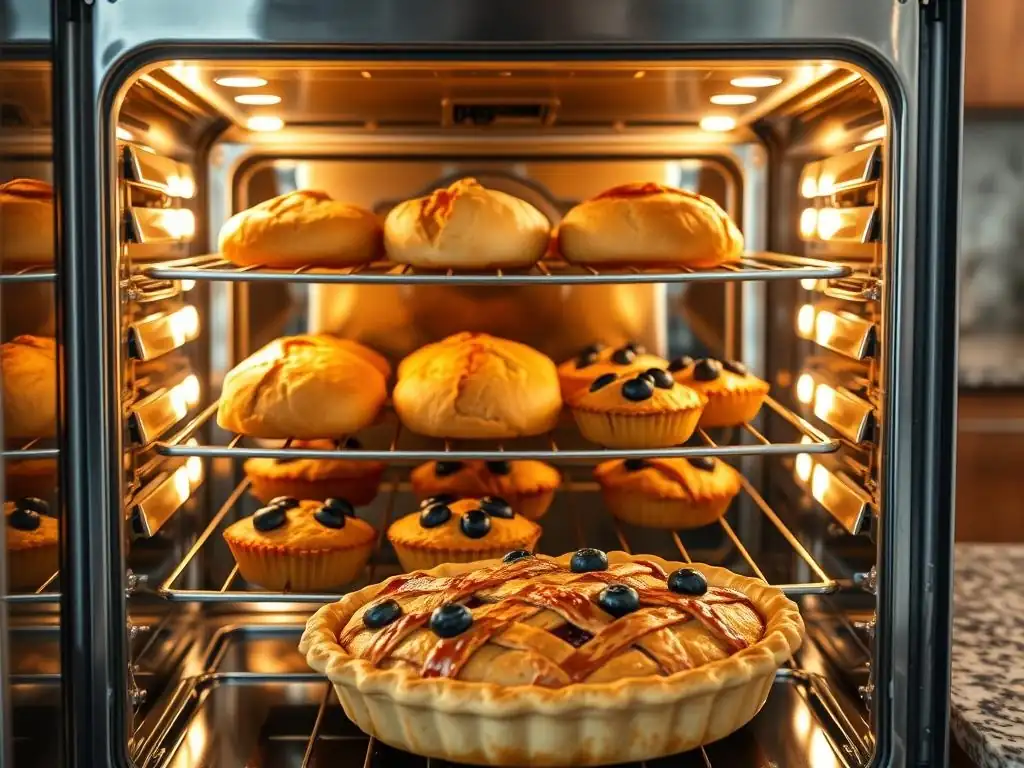
A convection oven is distinguished by the inclusion of a fan and exhaust system. The heating element (which may be the same as a conventional oven's or a dedicated element around the fan) heats the air inside the cavity. The fan then actively circulates this hot air, moving it uniformly around the food. This continuous movement prevents layers of cool air from forming directly around the food, which can happen in a conventional oven as moisture evaporates and creates a slight cooling effect near the surface.
The active circulation of hot air in a convection oven means that heat is transferred to the food more quickly and efficiently. This leads to several key differences in baking performance. For instance, surfaces brown and crisp faster because the moving air helps evaporate surface moisture rapidly. The even temperature distribution also allows for baking multiple trays of items, like cookies or pastries, simultaneously on different racks with less need for rotation, which is a valuable convection oven baking tip for efficiency.
Advantages of Convection Oven Baking: Why Choose Convection?
One of the primary advantages of baking with a convection oven is improved evenness. Because the fan circulates air, hot spots are significantly minimized, leading to more uniform baking and browning across the entire surface of your food. This is particularly beneficial when baking multiple items at once, such as several sheets of cookies or trays of roasted vegetables, where every piece tends to cook at the same rate regardless of its position in the oven.
Furthermore, convection ovens often cook food faster and at lower temperatures than conventional ovens. The circulating air accelerates the heat transfer process, meaning you can typically reduce the recommended temperature from a conventional recipe by about 25°F (around 15°C) and potentially reduce the baking time by up to 25%. This efficiency can save energy and time. The enhanced air flow also contributes to better browning and crisping, which is ideal for achieving a perfect crust on bread, crisp edges on cookies, or beautifully roasted meats and vegetables. These are crucial convection oven baking tips for optimizing results.
Disadvantages of Convection Oven Baking: Potential Challenges
Despite its many benefits, using a convection oven does present some potential challenges. The increased airflow can sometimes be too intense for delicate baked goods, such as soufflés, custards, or certain types of cakes, which require a more stable, gentle heat to rise properly without developing a tough exterior or baking unevenly internally. The strong air current can potentially cause these items to lean or bake unevenly if not positioned carefully or if the fan speed is too high.
Another challenge is the potential for food to dry out more quickly due to the constant movement of hot air stripping away surface moisture. Items that rely on moisture for tenderness, like certain cakes or lean meats, might require adjustments such as covering them partway through baking or adding a water bath. Learning to adapt recipes and techniques, such as reducing temperature and cooking time, is a key aspect of mastering convection oven baking tips to mitigate these potential drawbacks.
Conventional Oven Baking: The Traditional Approach
What is a Conventional Oven and How Does it Work?
A conventional oven operates using static heat, primarily from heating elements located at the bottom and/or top of the oven cavity. These elements heat the air inside, and heat is transferred to the food through radiation and natural convection (hot air rising, cool air falling). There is no fan to force air movement, so the air remains relatively still. This creates distinct temperature zones within the oven; typically, the top rack is hotter than the bottom rack, and areas directly above or below the heating elements can be particularly warm.
This traditional heating method is what most classic baking recipes are written for. The gentle, radiant heat is often preferred for delicate items that could be disturbed by forced air. While it may result in hot spots and require rotating pans for even baking, its predictable, albeit uneven, heating pattern has been the standard for generations of bakers. Understanding its mechanism helps explain why results differ when using convection and highlights the value of specific convection oven baking tips for conversion.
Advantages of Conventional Oven Baking: Simplicity and Familiarity
One of the greatest advantages of a conventional oven is its simplicity and familiarity. Most home bakers grew up using conventional ovens, and the vast majority of older or basic recipes are developed based on their performance. This means you can follow countless recipes precisely as written without needing to make adjustments for temperature or time. For beginners, this straightforward approach can be less intimidating than learning to adapt to a convection setting.
Conventional ovens are also often preferred for delicate items that require a stable baking environment. Soufflés, cheesecakes baked in a water bath, and certain types of meringues can benefit from the gentler, less turbulent air. The radiant heat can help achieve a specific type of rise and texture in these items that might be negatively affected by the forced air of a convection oven. While they may require more attention to pan rotation, their predictable performance with traditional recipes is a significant plus.
Disadvantages of Conventional Oven Baking: Limitations in Performance
The main disadvantage of a conventional oven is the presence of uneven heating and hot spots. Because heat rises and is radiated from specific points, temperatures can vary significantly within the oven cavity. This often necessitates rotating baking sheets or pans halfway through the cooking time to ensure that items bake and brown evenly. Failing to do so can result in cookies that are burnt on one side and underbaked on the other, or cakes that dome excessively and crack.
Baking multiple trays of items simultaneously is also less effective in a conventional oven. Placing multiple items can obstruct the radiant heat, exacerbating unevenness and requiring extensive pan rotation and potential increases in baking time. The lack of forced air circulation also means that browning and crisping may take longer and might not be as uniform compared to a convection oven. These limitations are precisely what convection oven baking tips aim to overcome.
Convection vs. Conventional: A Head-to-Head Baking Comparison
Baking Cakes: Which Oven Delivers the Perfect Rise?
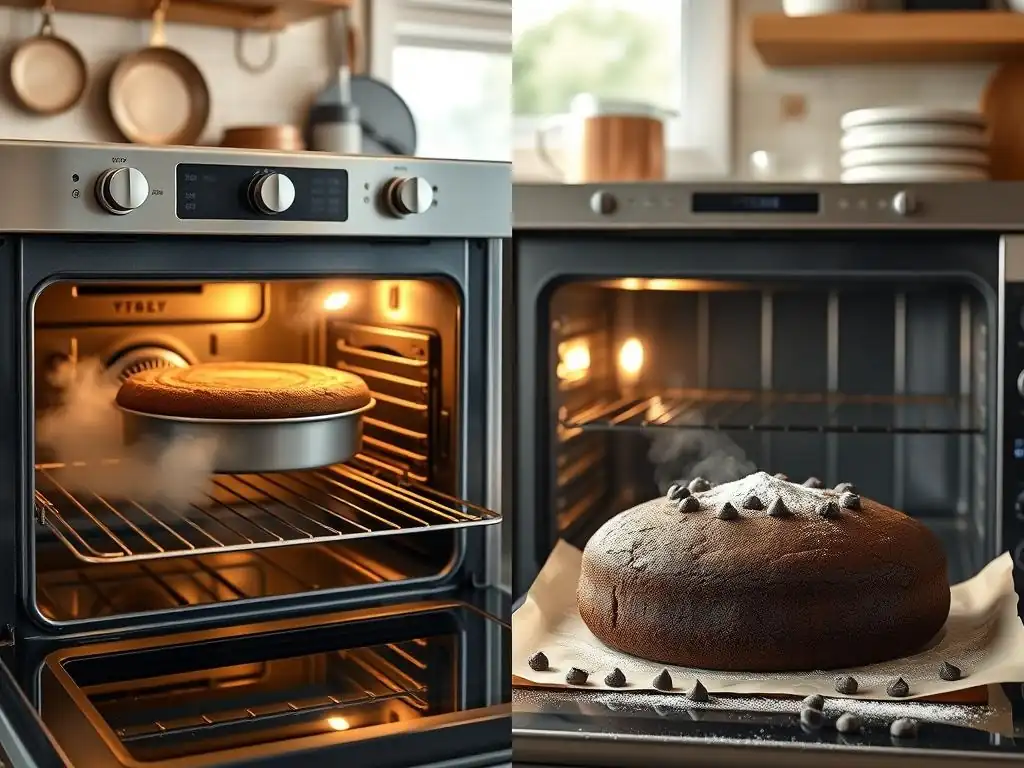
When baking cakes, the choice between convection and conventional can significantly impact the rise, texture, and crust. Conventional ovens, with their gentler, static heat, are often favored for delicate layer cakes, cheesecakes, and soufflés. The radiant heat encourages a gradual, even rise from the edges towards the center, reducing the likelihood of a large dome or cracks. While rotation is often needed to prevent uneven browning, the stable environment is less likely to disrupt the delicate structure of batters.
Convection ovens can bake cakes faster and potentially more evenly in terms of color, but the circulating air can sometimes cause issues. The rapid heat transfer can lead to the outside of the cake setting before the inside has fully risen, potentially causing a dome or cracked top.
For standard cakes, reducing the temperature by 25°F (15°C) and checking for doneness earlier is a common convection oven baking tip. However, for very delicate cakes, many bakers still prefer the conventional setting or using a "true convection" mode (where the fan has its own heating element) at a lower speed, if available.
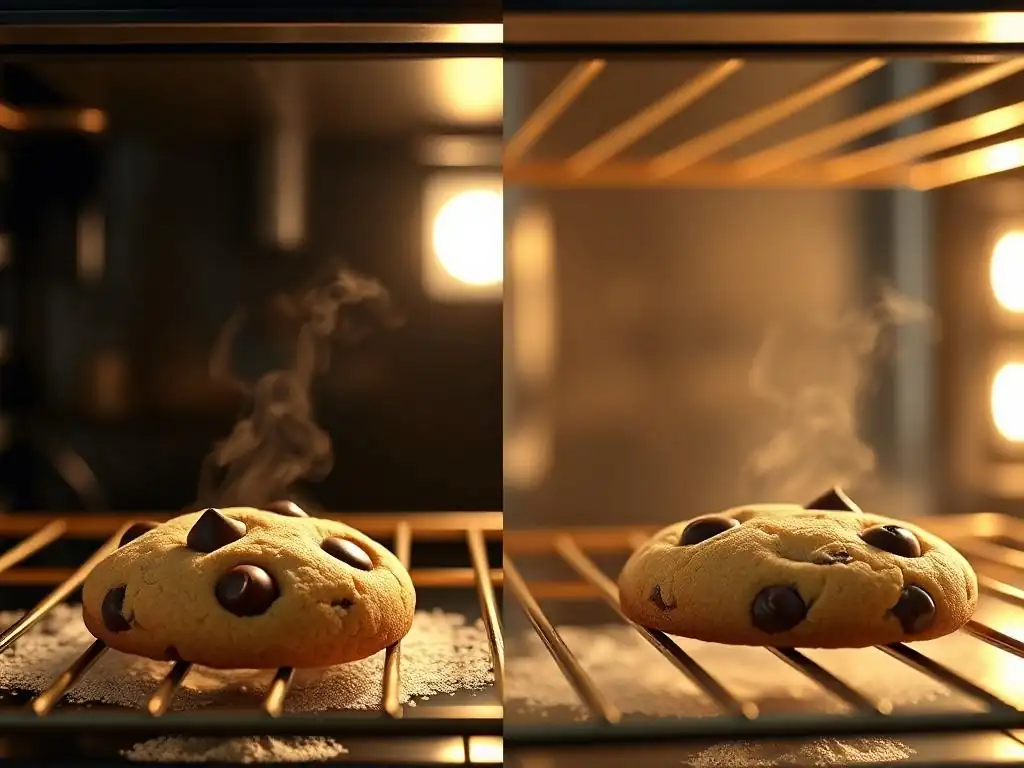
Cookies are one area where convection ovens often shine, making convection oven baking tips particularly valuable. The circulating air ensures that heat reaches every cookie on the sheet evenly, leading to uniform browning and consistent texture from edge to edge and across multiple sheets. This means you can bake several trays of cookies at once on different racks without needing to rotate them, saving considerable time and effort, a major advantage for batch baking.
In a conventional oven, cookies on the edge of the baking sheet might brown faster than those in the center, and cookies on the top rack might cook differently than those on the bottom. This requires rotating the sheets midway through baking to achieve even results. While conventional ovens still produce delicious cookies, the consistency and efficiency offered by convection, especially when following specific convection oven baking tips for temperature and time adjustments, often make it the preferred choice for cookie enthusiasts aiming for perfect, uniform batches.
Baking Bread: Mastering the Art of the Perfect Crust
For many types of bread, especially those aiming for a crisp, well-developed crust, a convection oven can be a powerful tool. The circulating hot air helps to quickly set the crust and promotes excellent browning. The rapid heat transfer can also contribute to a good oven spring, where the dough expands rapidly in the initial stages of baking. Using a convection setting, possibly in conjunction with steam (if your oven supports it or using a method like a Dutch oven), can help achieve that coveted crackly crust.
Conventional ovens can also bake excellent bread, particularly if techniques like using a baking stone or introducing steam are employed to mimic the conditions of a professional oven. However, achieving a uniformly dark and crisp crust can sometimes be more challenging due to the lack of forced air circulation. While traditional methods work, convection offers an advantage in efficiently developing crust color and texture, making convection oven baking tips for bread baking highly sought after by serious bakers.
Mastering Convection Oven Techniques: Baking Tips for Success
Converting Conventional Recipes to Convection: A Practical Guide
Adapting recipes written for conventional ovens is one of the most important convection oven baking tips to learn. The general rule of thumb is to reduce the temperature by 25°F (around 15°C) and check for doneness earlier, typically starting around 75% of the original baking time. For example, if a conventional recipe calls for baking at 350°F for 30 minutes, you would set your convection oven to 325°F and start checking around 22-23 minutes.
Here's a simple task list for converting:
- [ ] Reduce the recipe's recommended temperature by 25°F (15°C).
- [ ] Place food in the center of the oven or on multiple racks for even cooking.
- [ ] Start checking for doneness about 25% earlier than the recipe suggests.
- [ ] Be mindful that some delicate items might still perform better on a conventional setting.
- [ ] Adjust cooking time further based on observation – convection cooking can be up to 25% faster.
Remember that these are guidelines, and slight adjustments might be needed based on your specific oven and the type of food you are baking. Practicing with simple recipes first can help you get a feel for how your oven performs.
Understanding Convection Settings: Standard vs. True Convection
Not all ovens with a convection fan are the same. It's important to understand the difference between standard convection and true (or European) convection, as this affects how you apply convection oven baking tips. A standard convection oven uses the oven's existing heating elements (top and/or bottom) to heat the air, and the fan simply circulates this air. The air temperature might still vary slightly depending on the location of the main heating elements.
True convection, on the other hand, features a third heating element located around the fan itself, typically at the back of the oven. This setup ensures that the air being circulated is already heated to the target temperature before it enters the cavity, resulting in even more consistent and uniform heat distribution throughout the oven. True convection is generally considered superior for multi-rack baking and achieving consistent results, offering maximum benefit from convection oven baking tips.
Essential Baking Equipment for Convection Ovens: Maximize Your Results
While convection ovens offer enhanced performance, certain baking equipment can help you maximize their benefits and implement convection oven baking tips effectively. Using light-colored metal baking sheets is often recommended, as darker pans can absorb more radiant heat (even in a convection oven) and lead to over-browning, especially on the bottom. Lighter pans promote more even cooking.
Parchment paper is another invaluable tool when using a convection oven. It prevents sticking, makes cleanup easy, and also provides a slight barrier that can help prevent the bottoms of baked goods from browning too quickly due to the intense circulating heat. For bread baking, a baking stone or steel can still be beneficial in a convection oven, providing a burst of initial heat from below, which aids in oven spring, while the convection air circulates around the loaf to develop the crust.
Choosing the Right Oven for Your Baking Needs: Recommendations and Reviews
Best Convection Ovens for Home Bakers: Our Top Picks
When considering a convection oven for your home baking, look for models that offer consistent performance and useful features. For serious bakers, a "true convection" system with a third heating element around the fan is highly recommended for superior evenness, particularly for multi-rack baking. Look for ovens with intuitive controls that allow you to easily switch between convection and conventional modes and adjust fan speed if possible.
Consider capacity based on your typical baking volume – do you often bake multiple sheets of cookies or large roasts? Features like multiple rack positions, gliding racks, and self-cleaning cycles can also enhance usability. While specific model recommendations vary based on current market availability and budget, prioritizing even heating, reliable fan performance, and user-friendly controls based on convection oven baking tips is key to finding a great convection oven that will elevate your baking.
Best Conventional Ovens for Budget-Conscious Bakers: Affordable Options
For bakers on a budget or those who primarily bake items that benefit from static heat, a reliable conventional oven can be an excellent choice. While they may lack the fan of a convection model, many modern conventional ovens offer improved insulation and heating element design compared to older models, leading to better, though still not perfectly uniform, heat distribution.
When choosing a conventional oven, look for models with heating elements at both the top and bottom for more versatile heating. Multiple rack positions are essential for managing hot spots and allowing flexibility in baking different items. While you'll need to remember to rotate your pans, a good conventional oven can still produce fantastic results for cakes, casseroles, and many other dishes. They are typically less expensive than convection models, making them an accessible option for getting started or continuing your baking journey without complex convection oven baking tips to learn initially.
Conclusion: Unleashing Your Baking Potential with the Perfect Oven
Recap of Key Differences and Recommendations
The core difference between convection and conventional ovens lies in air movement. Conventional ovens use static, radiant heat, leading to potential hot spots but offering a gentle environment suitable for delicate items. Convection ovens use a fan to circulate hot air, providing faster, more even cooking and better browning, ideal for cookies, pastries, and certain breads, but requiring temperature and time adjustments and careful application of convection oven baking tips.
For bakers who prioritize efficiency, evenness across multiple racks, and achieving crisp exteriors, a convection oven, especially one with true convection, is often the preferred choice. However, for those who primarily bake delicate items, are on a tighter budget, or prefer the simplicity of traditional recipes, a conventional oven remains a perfectly capable tool. Many modern ovens offer both settings, providing the best of both worlds and allowing you to choose the optimal environment for each specific bake.
Final Thoughts: Enhancing Your Baking Journey with BakeWithEase
Ultimately, the "best" oven depends on your individual baking style, the types of goods you bake most frequently, and your budget. Both conventional and convection ovens are capable of producing delicious results with the right techniques and understanding. Learning how your specific oven behaves, whether it's convection or conventional, is key. For convection users, mastering convection oven baking tips for temperature conversion and understanding airflow is crucial.
At BakeWithEase, we encourage you to experiment and learn your oven's quirks. Whether you're using a tried-and-true conventional model or embracing the speed and efficiency of convection, the journey of baking is one of continuous learning and delicious discovery. Use the knowledge gained here to make informed choices and adapt your techniques, and you'll be well on your way to unleashing your full baking potential, one perfect bake at a time.
Frequently Asked Questions
What is the main difference between a convection oven and a conventional oven when baking?
A convection oven utilizes a fan to circulate hot air, resulting in more even heat distribution. A conventional oven relies solely on radiant heat, which can lead to hot spots.
Does a convection oven typically require a lower baking temperature compared to a conventional oven?
Yes, generally you should reduce the temperature by 25°F (15°C) when using a convection oven. This is because the circulated air cooks food faster and more efficiently.
What types of baked goods benefit most from being baked in a convection oven?
Baked goods that benefit most are those needing even browning and crisping, such as cookies, roasted vegetables, and pastries. Items like bread can also benefit, but require careful monitoring to avoid over-browning.
Are there any baked goods that are not recommended for convection oven baking?
Delicate items like soufflés and custards are often better suited for conventional ovens. The circulating air of a convection oven can cause them to rise unevenly or collapse.
What's the most important convection oven baking tip for beginners?
The most important tip is to experiment and adjust. Start with the recommended temperature reduction and time adjustments, but always monitor your baked goods closely.
Final Reflection: The Delicious Debate: Convection vs. Conventional
The quest for the perfect bake continues, and understanding the nuances of convection versus conventional ovens is key to unlocking consistently delicious results. Choosing the right method isn't just about technical specifications; it's about mastering the art of baking and achieving that golden-brown crust and perfectly moist interior we all crave. The differences, as explored in this article, are significant and directly impact the final product.
This exploration into the world of oven technology has highlighted the ongoing evolution of kitchen appliances and their impact on our culinary practices. The shift towards convection ovens, with their enhanced heat circulation, reflects a broader trend towards efficiency and precision in cooking. It's a testament to how technology can elevate even the simplest of tasks, transforming a routine activity into a more refined and enjoyable experience. The best baker is the one who understands their tools.
This quote, though not directly about ovens, speaks to the core of this article: understanding your equipment is paramount to success.
Now, armed with this knowledge, I encourage you to experiment! Don't be afraid to try both methods, adjusting your baking times and temperatures accordingly. Observe the differences, note your preferences, and discover which technique best suits your baking style and desired outcome. The journey to baking mastery is a personal one, and this article is simply a stepping stone on your path to creating truly exceptional baked goods. Embrace the challenge, and happy baking!
Unlock Your Baking Potential: Master Oven Techniques!
Thanks for taking the time to explore the world of convection and conventional ovens! You've now gained valuable insights into choosing the right oven for your baking needs. Ready to put your newfound knowledge to the test?
- Bake a test batch using your preferred oven: Choose your favorite recipe and try it out in your convection or conventional oven, noting any differences in texture and timing. This is the best way to solidify your understanding!
- Share your baking triumphs (or challenges!): Let’s build a community of baking enthusiasts. Share your experiences and photos on social media using #BakeWithEaseOven.
- Explore more advanced techniques: Dive deeper into our other baking guides on BakeWithEase.com to unlock even more baking secrets.
Which oven style will become your new baking best friend? Let us know your results in the comments below!