
Using Preferments (Biga, Poolish) in Your Baguette Recipe

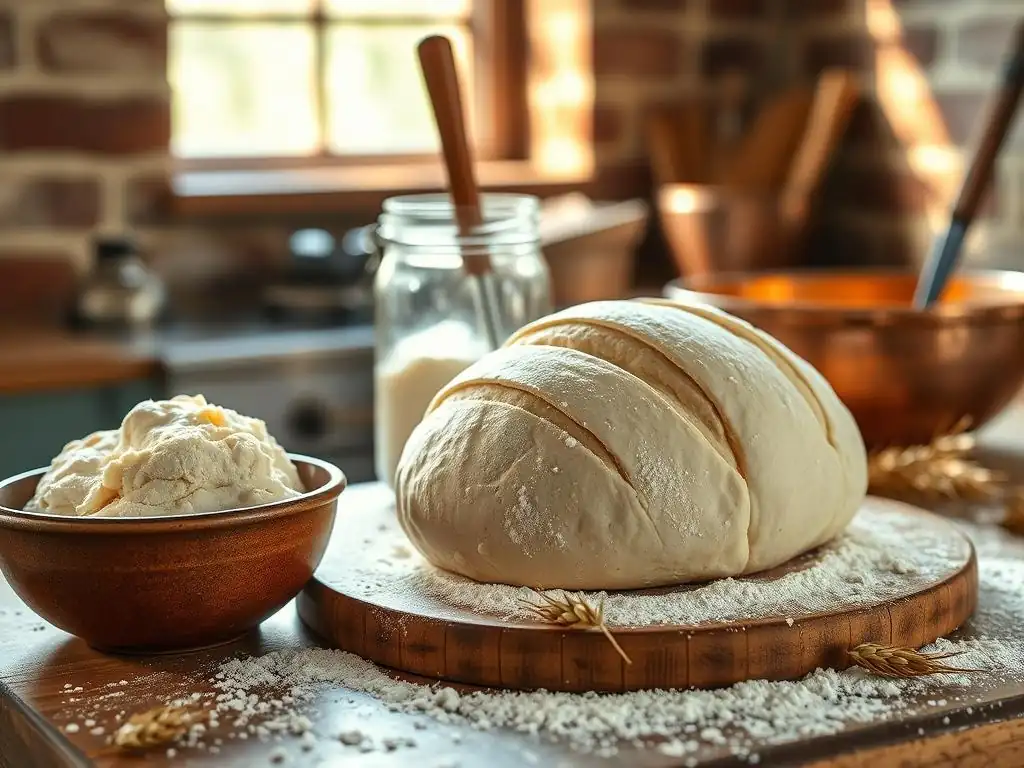
Welcome to BakeWithEase, your partner in turning baking dreams into delicious realities! Ever wondered how to achieve that perfectly airy and flavorful baguette, the kind that crunches just right and melts in your mouth? Our guide unveils the secrets behind using preferments – biga and poolish – in your baguette recipe. Discover how these simple techniques elevate your baking, adding depth and complexity you never thought possible. Intrigued? Let's unlock the magic of preferments and bake the baguette of your dreams!
- BakeWithEase: Mastering the Baguette Recipe with Preferments (Biga & Poolish)
- Artisan Baguette Techniques: Elevating Your Bake With Preferments
- Understanding Preferments: Biga and Poolish Explained
-
The Ultimate Baguette Recipe with Preferments: Step-by-Step Guide
- Choosing Your Preferment: Biga or Poolish for Your Baguette?
- Ingredients for the Baguette Recipe with Preferment
- Equipment Needed for Baking the Perfect Baguette
- Preparing the Preferment: Biga and Poolish Instructions
- Mixing the Baguette Dough with the Preferment
- Bulk Fermentation: Developing Flavor and Strength
- Dividing and Shaping the Baguettes
- Proofing the Baguettes: Achieving the Perfect Rise
- Baking the Baguettes: Creating a Crispy Crust
- Cooling and Enjoying Your Homemade Baguette
- Troubleshooting Common Issues When Using Preferments in Baguette Recipes
- Advanced Techniques for Baguette Recipes with Preferments
- Conclusion: Bake With Ease and Master the Art of Baguette Making
-
Frequently Asked Questions
- What exactly is a preferment and why use it in a baguette recipe?
- What's the difference between a biga and a poolish, and which is better for baguettes?
- How does using a preferment impact the final proofing time of my baguette dough?
- Can I substitute regular yeast for the yeast called for in the preferment?
- Where can I find the best ingredients for making baguettes with preferments?
- Final Reflection: The Transformative Power of Patience in Baking
- Unleash the Power of Preferments: Bake a Better Baguette Today!
BakeWithEase: Mastering the Baguette Recipe with Preferments (Biga & Poolish)
Artisan Baguette Techniques: Elevating Your Bake With Preferments
Creating the perfect baguette is a baking achievement many aspire to. That characteristic crispy crust, the airy, open crumb, and the complex flavor are hallmarks of a truly artisan loaf. While a simple straight dough can yield good results, incorporating preferments like biga or poolish is a time-tested technique used by master bakers to elevate their bread, particularly when crafting a superb baguette recipe with preferments. This method adds layers of flavor and improves the structure and texture significantly.
Using preferments involves mixing a portion of the flour, water, and a tiny amount of yeast hours or even days before mixing the main dough. This initial fermentation step allows beneficial microorganisms to develop, breaking down starches and proteins, and producing organic acids and aromatic compounds. These processes are crucial for developing the deep, nuanced flavors and robust structure that define a truly exceptional baguette, setting it apart from loaves made with a quick, straight dough method.
Understanding Preferments: Biga and Poolish Explained
What is a Preferment in Bread Baking?
A preferment, also known as a pre-ferment, is a mixture of flour, water, and a leavening agent (typically commercial yeast, but sometimes sourdough starter) that is prepared in advance of the main dough mix. This allows a portion of the dough's total ingredients to undergo a lengthy fermentation period before being combined with the remaining ingredients. The purpose is to kickstart microbial activity, giving yeast and bacteria a head start in developing complex flavors and contributing to dough strength and structure.
The magic of a preferment lies in this extended, separate fermentation. During this time, enzymatic activity breaks down complex carbohydrates into simpler sugars, making them readily available for the yeast. Simultaneously, yeast and lactic acid bacteria produce organic acids, such as lactic and acetic acid, which contribute significantly to the bread's aroma, flavor profile, and also help improve the dough's handling characteristics and the final loaf's keeping quality. Using a preferment is a cornerstone technique for developing artisan-quality bread.
Biga vs. Poolish: Key Differences and Usage
Biga and poolish are two of the most common types of preferments, distinguished primarily by their hydration levels and the characteristics they impart to the final bread. A biga is a relatively stiff preferment, typically mixed with a hydration level between 50% and 60% (meaning 50g-60g of water per 100g of flour).
It has a dough-like consistency and is usually fermented for a longer period, often 12 to 18 hours at room temperature, or even longer in the refrigerator. Biga contributes strength, structure, and a slightly nutty flavor to the final dough, making it excellent for breads that require good volume and an open crumb, like many baguette recipes with preferments.
In contrast, a poolish is a very wet preferment, mixed with equal parts flour and water, resulting in 100% hydration. It has a batter-like consistency and ferments more quickly than a biga, typically maturing in 8 to 16 hours at room temperature.
Poolish contributes extensibility (stretchiness) to the dough, a more pronounced tangy flavor due to its higher water content favoring lactic acid bacteria, and promotes a thin, crispy crust. Both preferments significantly enhance flavor and texture, but the choice between biga and poolish for your baguette recipe with preferments depends on the specific characteristics you want in your finished loaf – structure and depth from a biga, or tang and crispness from a poolish.
The Benefits of Using Preferments in Baguette Recipes
Incorporating a preferment into your baguette recipe with preferments offers a multitude of advantages that elevate the bread from good to truly exceptional. These benefits stem directly from the extended fermentation period the preferment undergoes, allowing complex biochemical reactions to occur that are not possible in a short, straight dough process. The impact is noticeable in every aspect of the final baguette, from its aroma to its texture and even how long it stays fresh.
Ultimately, using a preferment is a relatively simple step that adds complexity and quality far beyond the extra time it requires. It's a hallmark of artisan baking and a technique that will significantly improve your homemade baguette, giving it the character and depth found in loaves from renowned bakeries. Experimenting with preferments is a rewarding step in mastering your baguette recipe with preferments.
Enhanced Flavor Development in Baguettes
One of the most significant benefits of using a preferment in a baguette recipe with preferments is the dramatic improvement in flavor. During the long fermentation of the preferment, wild yeasts and lactic acid bacteria present in the flour become more active and produce a wider range of aromatic compounds than is possible in a quick dough. These compounds include various alcohols, esters, and organic acids like lactic and acetic acid, which contribute complex, nuanced flavors often described as nutty, sweet, or slightly tangy.
This slow, controlled fermentation allows enzymes to break down complex starches into simpler sugars, which not only provides more food for the yeast but also contributes to better browning and caramelization of the crust during baking, adding another layer of flavor. The acidity developed in the preferment also subtly alters the dough environment, further influencing the flavor profile.
Compared to a straight dough baguette which might taste simply of flour and yeast, a baguette made with a preferment offers a depth and complexity that truly sings on the palate, making the effort well worth it for any baguette recipe with preferments.
Improved Texture and Crust in Baguettes
Preferments play a crucial role in developing the ideal texture and crust for a baguette. The acidity produced during prefermentation helps to strengthen the gluten network in the flour. This stronger network allows the dough to hold gas better during proofing and baking, leading to improved oven spring – that final burst of expansion in the hot oven – which is essential for achieving a light, airy crumb structure with irregular, open holes characteristic of artisan baguettes. A well-developed gluten structure also makes the dough easier to handle and shape.
Furthermore, the breakdown of starches into simpler sugars by enzymes in the preferment not only aids flavor but also contributes to a thinner, crispier crust. These sugars caramelize more effectively at high baking temperatures, resulting in a beautiful golden-brown color and a satisfyingly brittle crust. The acidity also impacts starch gelatinization during baking, contributing to the overall texture. The combination of a strong gluten network, excellent oven spring, and optimal starch breakdown results in the coveted combination of a delicate, open interior and a robust, crackly exterior in your baguette recipe with preferments.
Increased Shelf Life of Your Homemade Baguette
While baguettes are traditionally best enjoyed fresh from the oven, incorporating a preferment can noticeably extend their relatively short shelf life. The organic acids, primarily lactic and acetic acid, produced during the preferment's long fermentation act as natural preservatives. These acids help to inhibit the growth of mold and certain bacteria that cause spoilage and contribute to staling.
Beyond preventing spoilage, the acidity and altered starch structure also slow down the retrogradation of starch, the process by which starch molecules realign and cause bread to become firm and stale. While a straight dough baguette might feel significantly stale within hours, a baguette made with a preferment can often maintain a more pleasant texture and flavor for 24-48 hours, sometimes even longer, depending on storage. This makes the effort of using a preferment not just about flavor and texture, but also about enjoying your delicious homemade baguette recipe with preferments for a little longer.
The Ultimate Baguette Recipe with Preferments: Step-by-Step Guide
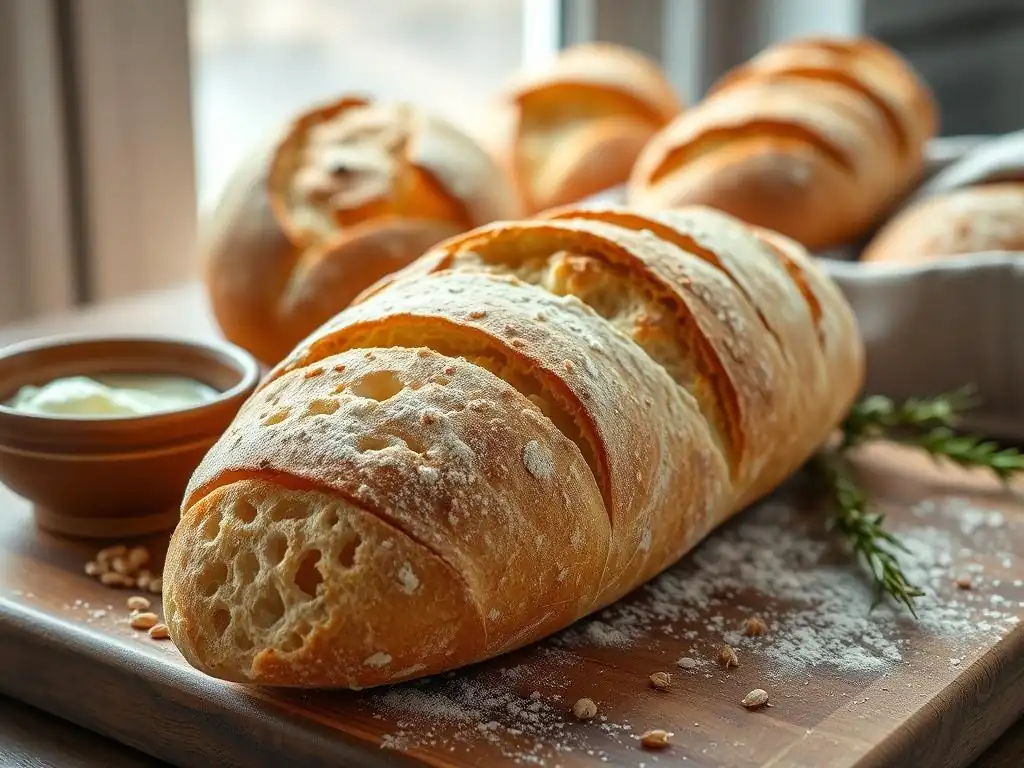
Crafting a perfect baguette at home using preferments is a rewarding journey. While the process involves multiple steps over a longer period than a simple straight dough, each stage contributes to the final masterpiece. This guide outlines the steps for a classic baguette recipe with preferments, incorporating either a biga or a poolish to build flavor and structure.
Remember that baking is both science and art. Pay attention to the feel of the dough, the temperature of your kitchen, and the activity of your preferment. Adjusting timings slightly based on your environment is part of the process. With practice, you'll develop an intuition for handling dough made with preferments and consistently bake delicious baguettes.
Choosing Your Preferment: Biga or Poolish for Your Baguette?
Deciding between a biga and a poolish for your baguette recipe with preferments depends on the specific characteristics you prioritize in the final loaf. A biga, being stiffer, contributes significant strength and structure to the dough. This can result in excellent oven spring and a robust, chewy crumb. It tends to impart a slightly sweeter, nutty flavor profile and is often favored for baguettes where a sturdy structure and moderate tang are desired. Think of it as building a strong foundation for your bread.
A poolish, with its higher hydration, promotes greater extensibility and a more open, airy crumb structure. It also tends to yield a thinner, crisper crust and can develop a more pronounced tangy flavor due to the conditions favoring lactic acid production. If your goal is a baguette with a very open crumb and a distinct tang, a poolish might be your preferred choice. Many bakers experiment with both over time to see which type of preferment best suits their personal taste and baking environment for their ideal baguette recipe with preferments.
Ingredients for the Baguette Recipe with Preferment
Here are the typical ingredients you'll need for a standard baguette recipe with preferments, yielding roughly three standard-sized baguettes. The specific quantities will vary slightly depending on your chosen preferment and desired final hydration, but these provide a solid starting point. Using high-quality bread flour is recommended for best results.
Ensure all your ingredients are measured accurately, preferably by weight using a digital scale, as this is crucial for consistent baking results, especially when working with specific hydration levels in a baguette recipe with preferments. Water temperature can influence fermentation speed, so aim for cool water (around 18-20°C or 65-68°F) for the main dough if fermenting at room temperature.
Preferment Ingredients (Biga or Poolish)
- For the Biga (50% Hydration Example):
- 150g Strong Bread Flour
- 75g Cool Water (50% of flour weight)
- 0.5g Instant Dry Yeast (or a tiny pinch)
- For the Poolish (100% Hydration Example):
- 150g Strong Bread Flour
- 150g Cool Water (100% of flour weight)
- 0.2g Instant Dry Yeast (an even tinier pinch)
Note that the amount of yeast is very small, as the preferment will ferment for many hours. Using too much yeast will cause it to over-ferment before you're ready to mix the main dough for your baguette recipe with preferments.
Dough Ingredients
- 400g Strong Bread Flour (total flour will be 400g + flour from preferment)
- 225g - 275g Cool Water (adjust based on desired hydration and flour absorption; total water will be this amount + water from preferment)
- All of the prepared Biga OR Poolish
- 10g Fine Sea Salt
- 2g Instant Dry Yeast (if using Biga, might need slightly more; if using Poolish, might use slightly less or none depending on fermentation time)
The total hydration for this baguette recipe with preferments will typically fall between 70% and 78% (total water weight / total flour weight * 100), which is standard for baguette dough. This hydration level contributes to the open crumb structure.
Equipment Needed for Baking the Perfect Baguette
Having the right tools can make a significant difference in your baguette baking success. While you can get by with minimal equipment, certain items greatly simplify the process and improve the final result of your baguette recipe with preferments.
- Digital kitchen scale for accurate ingredient measurements.
- Large mixing bowl (or stand mixer with dough hook).
- Bench scraper for dividing and handling dough.
- Dough scraper or spatula for working with wet dough.
- Proofing couche (linen cloth) or proofing baskets for supporting the shaped baguettes during proofing.
- Lame or very sharp razor blade for scoring the dough before baking.
- Baking stone or steel (highly recommended for even heat transfer).
- Peel or flat baking sheet to transfer baguettes to the hot stone/steel.
- Method for creating steam in the oven (e.g., steam tray with water, cast iron pan with ice cubes, or a Dutch oven/combo cooker).
- Wire cooling rack.
These tools, especially the scale, couche, and baking stone/steel with a steam setup, are key to achieving the classic shape, texture, and crust of an artisan baguette made with a baguette recipe with preferments.
Preparing the Preferment: Biga and Poolish Instructions
The first step in your baguette recipe with preferments journey is preparing your chosen preferment. This needs to be done well in advance of when you plan to mix the main dough. The fermentation time will depend on the amount of yeast used and the ambient temperature.
Aim for a room temperature of around 20-22°C (68-72°F) for typical fermentation times. If your kitchen is cooler, it will take longer; warmer, it will be faster. Watch the preferment, not just the clock. It should be bubbly and fragrant when ready, sometimes showing signs of starting to collapse slightly in the center.
Making the Biga: A Stiff Preferment
To make the biga, combine the flour, water, and yeast in a bowl. Mix with your hands or a spoon until all the flour is hydrated and you have a shaggy, stiff dough. There's no need to knead extensively; just ensure everything is incorporated. It will look like a rough ball of dough.
Cover the bowl tightly with plastic wrap to prevent a skin from forming. Let it ferment at room temperature (20-22°C / 68-72°F) for 12 to 18 hours. Alternatively, you can let it ferment at room temperature for 2-3 hours and then place it in the refrigerator for 24-72 hours. When ready, it should have expanded slightly, look bubbly on the surface, and smell pleasantly fermented, slightly sweet and alcoholic. It might not double in size like a typical dough due to its stiffness. This is the foundation of your baguette recipe with preferments using a biga.
Making the Poolish: A Wet Preferment
To make the poolish, combine the flour, water, and the tiny amount of yeast in a bowl. Whisk together until you have a smooth, lump-free batter. It will have the consistency of a thick pancake batter. Ensure all the dry flour is mixed in from the sides and bottom of the bowl.
Cover the bowl tightly with plastic wrap. Let it ferment at room temperature (20-22°C / 68-72°F) for 8 to 16 hours. When ready, the surface should be covered in bubbles, and it should have expanded significantly. The center might show signs of starting to collapse or become slightly concave. It should smell pleasantly yeasty and slightly tangy. This bubbly mixture is your poolish, ready to bring wonderful flavor to your baguette recipe with preferments.
Mixing the Baguette Dough with the Preferment
Once your preferment is mature and ready, it's time to mix the main dough for your baguette recipe with preferments. This process involves hydrating the flour, incorporating the preferment, adding salt and yeast (if needed), and developing the gluten structure through kneading and folding.
Precision in weighing ingredients is important here. Ensure you have your preferment ready, your remaining flour and water measured, and your salt and yeast (if using) on hand. The temperature of your water can influence the final dough temperature, which affects fermentation speed; cool water is generally preferred for longer fermentation times.
Autolyse: The First Step to Great Baguette Dough
Autolyse is a simple, yet powerful technique used in many artisan bread recipes, including this baguette recipe with preferments. It involves mixing just the flour and water (minus the salt and leavening) and letting the mixture rest. For this recipe, you'll mix the remaining flour and the remaining water (the amounts listed under "Dough Ingredients") together until no dry flour remains.
Cover the bowl and let this mixture rest for 20 to 30 minutes. During this rest period, the flour absorbs the water fully, and enzymes naturally present in the flour (protease) begin to break down proteins, making gluten development easier later on. This step results in a more extensible dough that requires less kneading to achieve a strong gluten network, a crucial factor for the open crumb of a great baguette recipe with preferments.
Incorporating the Preferment into the Dough
After the autolyse period, add the mature preferment (either the biga or the poolish, depending on which you chose), the salt, and the remaining yeast (if your recipe calls for additional yeast in the main dough) to the autolysed flour and water mixture. If using a stand mixer, add the preferment in chunks if it's a stiff biga, or pour it in if it's a wet poolish.
Mix on low speed (or by hand) until all the new ingredients are fully incorporated into the dough. It might look messy at first, especially incorporating the stiff biga, but continue mixing until it comes together. Scrape down the sides of the bowl as needed. This initial mixing phase is about combining everything before you begin the main kneading or folding process for your baguette recipe with preferments.
Kneading Techniques for a Smooth and Elastic Dough
Developing sufficient gluten is essential for a light, airy baguette crumb. You can knead the dough by hand or using a stand mixer. In a stand mixer, knead on medium speed (typically speed 2 or 3) for 8 to 12 minutes. The dough should eventually pull away from the sides of the bowl and become smooth, elastic, and pass the windowpane test (stretching a small piece thin enough to see light through without tearing).
If kneading by hand, use a technique like the slap and fold or stretch and fold method. Kneading by hand will take longer, potentially 15 to 20 minutes or more, until the dough is smooth and elastic. The goal is to develop a strong gluten network capable of trapping the gases produced during fermentation, leading to excellent volume and crumb structure in your baguette recipe with preferments.
Bulk Fermentation: Developing Flavor and Strength
Bulk fermentation, also known as the first rise, is a critical phase where the dough develops flavor, volume, and strength. After kneading, place the dough in a lightly oiled bowl, cover it, and let it ferment at room temperature. The ideal temperature is typically 24-26°C (75-79°F), which might require placing the bowl in a slightly warmer spot in your kitchen or using a proofing box.
The duration of bulk fermentation for a baguette recipe with preferments can range from 2 to 4 hours, depending on the dough temperature, the amount of yeast used (if any, beyond the preferment), and the activity of the preferment itself. The dough should increase significantly in volume, though it may not fully double. You're looking for signs of fermentation: bubbles on the surface, a slightly domed top, and a wobbly texture when the bowl is gently shaken.
The Importance of Folding the Dough
During bulk fermentation, performing a series of folds is crucial for developing dough strength and structure, especially with higher hydration doughs common in a baguette recipe with preferments. Folding involves gently stretching and folding the dough over itself in the bowl. This redistributes yeast and nutrients, equalizes dough temperature, and builds tension in the gluten network.
Typically, you'll perform 3 to 4 sets of folds during bulk fermentation, spaced every 30 to 45 minutes. To fold, wet your hand slightly, gently lift one side of the dough, stretch it upwards, and fold it over the center. Repeat this process for all four sides (north, south, east, west). This process significantly improves the dough's ability to hold its shape and achieve excellent oven spring later.
Dividing and Shaping the Baguettes
Once bulk fermentation is complete, the dough is ready to be divided and shaped into the classic baguette form. This process requires gentle handling to preserve the gas developed during fermentation while building enough surface tension to create a beautiful loaf.
Work on a lightly floured surface. Avoid using too much flour, as this can create a dry crust on the outside of the baguette and prevent the seams from sealing properly. A bench scraper is invaluable for handling the dough at this stage of your baguette recipe with preferments.
Dividing the Dough Evenly
Gently turn the dough out onto your lightly floured work surface. Be careful not to deflate it too much. Using your bench scraper, divide the dough into equal portions. For standard baguettes, aim for pieces weighing between 250g and 300g each. This recipe typically yields 3 baguettes of this size.
Weighing the pieces ensures your baguettes bake evenly and are of a consistent size. Work relatively quickly but gently during this step to minimize handling and preserve the airy structure developed during bulk fermentation for your baguette recipe with preferments.
Pre-Shaping: Preparing the Dough for its Final Form
Pre-shaping helps to build initial tension in the dough and makes the final shaping easier. For baguettes, the common pre-shape is a rough log or rectangle. Take each divided piece of dough and gently pat it into a rough rectangle. Then, fold one side over about two-thirds of the way and press down gently to seal. Fold the other side over the first fold and seal again. Finally, gently roll the dough into a loose log.
Place the pre-shaped logs seam-side down on your work surface. Cover them loosely with plastic wrap or a clean kitchen towel and let them rest for 15 to 20 minutes. This short rest period, called the bench rest, allows the gluten to relax, making the dough pliable enough for the final shaping without tearing.
Final Shaping: Creating the Classic Baguette Shape
Final shaping is where you create the characteristic long, slender form of the baguette and build significant surface tension. Take one pre-shaped log and gently flatten it into a rectangle again. Fold the top edge down to the center and press to seal. Fold the dough in half lengthwise, bringing the top edge down to meet the bottom edge, and firmly seal the seam with the heel of your hand.
Now, gently roll the dough back and forth with your hands, starting from the center and working outwards, to lengthen the baguette to your desired length (typically 14-16 inches for a standard home oven). Apply gentle pressure to create tension on the surface while rolling. The goal is a tight, even cylinder with a sealed seam underneath. This careful shaping is key to achieving the perfect look and structure for your baguette recipe with preferments.
Proofing the Baguettes: Achieving the Perfect Rise
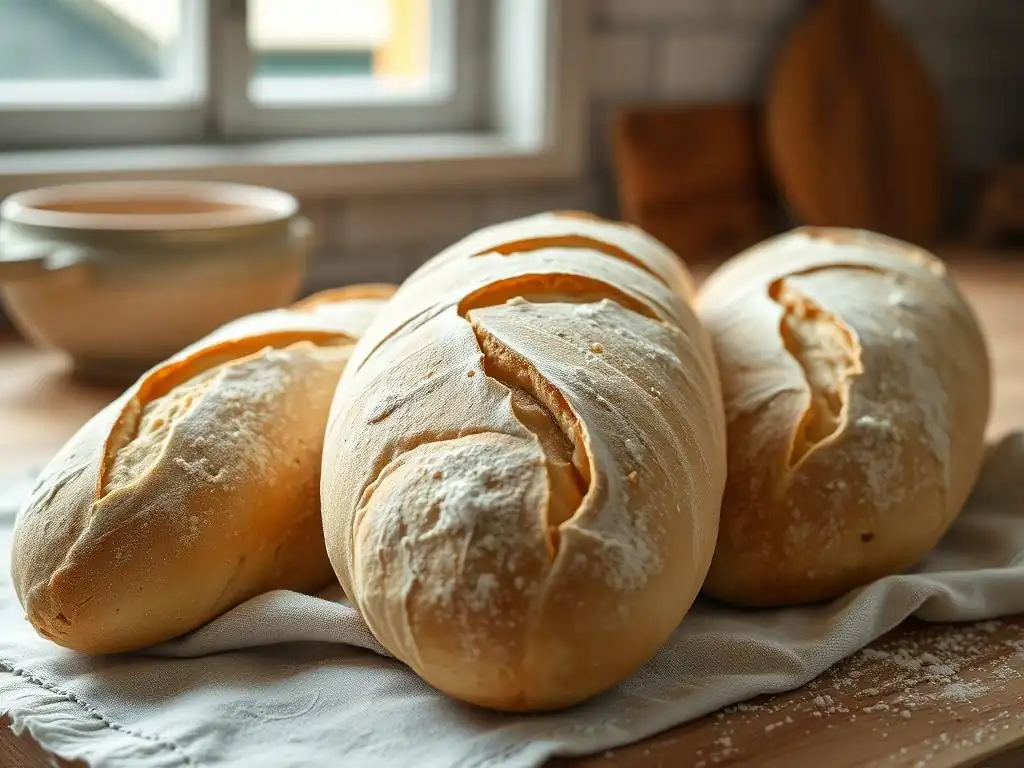
Proofing, or the final rise, is the stage where the shaped baguettes increase in volume before baking. Proper proofing is crucial – under-proofed baguettes won't have good oven spring, while over-proofed ones can collapse or spread flat. Baguettes are typically proofed on a baker's couche (a piece of linen or canvas) dusted generously with flour (rice flour works well as it doesn't absorb into the dough).
Place the shaped baguettes seam-side up onto the floured couche, creating folds in the cloth between each loaf to support their shape. Cover the baguettes loosely with plastic wrap or another cloth. Proofing time varies greatly depending on temperature, but typically takes 45 to 75 minutes at room temperature (around 22-24°C or 72-75°F).
The baguettes should look puffy and slightly increased in size, but they should not have fully doubled. A good test is the 'poke test': gently poke the dough; if the indentation springs back slowly but not completely, it's ready. This stage is vital for the final appearance and crumb of your baguette recipe with preferments.
Baking the Baguettes: Creating a Crispy Crust
Baking is the grand finale of your baguette recipe with preferments. High heat and steam are essential for achieving the signature thin, crispy crust and maximizing oven spring. Preheat your oven with your baking stone or steel inside for at least 45-60 minutes at a high temperature, typically 230-250°C (450-480°F).
Prepare your steam setup before placing the bread in the oven. This could involve preheating a cast iron pan on the bottom rack or having a tray ready to add hot water or ice cubes just as the baguettes go in. Getting the oven and steam ready is key to success.
Scoring the Baguettes: Releasing Steam and Controlling Expansion
Just before transferring the baguettes to the oven, they need to be scored. Scoring involves making shallow cuts on the surface of the dough using a lame or a very sharp razor blade. These cuts are not just for aesthetics; they control where the bread expands during oven spring, allowing it to rise properly without bursting unpredictably.
For baguettes, the traditional scoring pattern is a series of overlapping diagonal cuts along the top of the loaf. Use a swift, confident motion at a slight angle (around 30 degrees) to the surface of the dough. Aim for cuts about 1-1.5 cm deep. For a standard-sized baguette, 3 to 5 overlapping cuts are typical. Properly scoring helps ensure a beautiful shape and maximum volume for your baguette recipe with preferments.
Baking Temperature and Time for Optimal Results
Baguettes require a hot oven to achieve maximum oven spring and a crispy crust. Preheat your oven with the baking stone/steel to 230-250°C (450-480°F). Once the oven is preheated and you've created steam, carefully slide the scored baguettes onto the hot stone or steel using a peel.
Bake for a total of 20 to 25 minutes. The first 10-15 minutes are critical for oven spring and crust development with steam. After this initial period, you can open the oven briefly to vent the steam (carefully!) to allow the crust to dry out and become crisp. Continue baking for the remaining time until the baguettes are a deep golden brown and sound hollow when tapped on the bottom. This high-temperature bake is essential for the characteristic texture of a baguette recipe with preferments.
Creating Steam in Your Oven for a Crusty Baguette
Steam in the oven during the initial phase of baking is arguably the most important factor for achieving a thin, crispy crust on your baguette. The steam keeps the surface of the dough moist, allowing it to expand fully during oven spring without forming a hard crust too early. Once the dough has reached its maximum volume, the steam dissipates, and the crust can then set and crisp up.
There are several ways to create steam in a home oven. One common method is to place a cast iron pan or broiler tray on the bottom rack while preheating the oven. Just before loading the baguettes, carefully pour a cup of hot water or a handful of ice cubes into the hot pan – this will instantly create a burst of steam.
Another effective method is baking the baguettes inside a preheated Dutch oven or combo cooker, which traps the dough's own moisture to create steam. Using steam correctly is a key technique for mastering your baguette recipe with preferments.
Cooling and Enjoying Your Homemade Baguette
Once your beautiful baguettes emerge from the oven, golden brown and fragrant, the hardest part is waiting to slice into them! It is crucial to let the baguettes cool completely on a wire rack for at least 30 to 60 minutes before cutting. During this cooling period, the internal structure of the bread sets, and moisture trapped inside dissipates evenly.
Cutting into a hot baguette too early will result in a gummy, dense crumb, even if the crust looks perfect. Allowing it to cool ensures the steam escapes properly and the starches fully set, resulting in the desired light, airy texture of your baguette recipe with preferments. Savor the moment as you slice into your homemade creation and enjoy the fruits of your labor!
Troubleshooting Common Issues When Using Preferments in Baguette Recipes
Working with preferments introduces a few variables compared to a simple straight dough. While the benefits are immense, you might encounter some common challenges. Don't be discouraged; troubleshooting is a normal part of the baking process. Understanding potential issues helps you refine your technique for your baguette recipe with preferments.
Most problems related to preferments involve their activity or the dough's subsequent handling. Pinpointing the cause often requires considering the temperature, time, and the initial state of your ingredients. Let's look at some frequent issues.
My Preferment Didn't Rise: Possible Causes and Solutions
If your biga or poolish shows little to no activity after the expected fermentation time, several factors could be at play. The most common culprits are inactive or expired yeast, a temperature that is too cold for fermentation, or simply not enough time. Instant dry yeast is generally reliable, but check the expiration date. If using active dry yeast, ensure it was properly proofed in warm water before mixing.
To troubleshoot, first, check your yeast. Try proofing a small amount separately in warm water with a pinch of sugar to see if it becomes foamy. If it doesn't, your yeast may be dead, and you'll need a fresh packet. Second, assess the ambient temperature. If your kitchen is cold (below 18°C or 65°F), fermentation will be very slow.
Try moving the preferment to a warmer spot, like near a warm appliance or in a turned-off oven with the light on. If the temperature is adequate, it might just need more time. Give it another few hours and check for signs of life. Patience is often key with a baguette recipe with preferments using tiny amounts of yeast.
My Baguette Dough is Too Sticky: Adjusting Hydration
Dough for a baguette recipe with preferments is typically high hydration (often 70-78%), which means it will naturally be sticky compared to lower hydration doughs like pizza or sandwich bread. Some stickiness is expected and desirable for an open crumb. However, if the dough is excessively sticky and difficult to handle even with wet hands or a scraper, the hydration might be too high for the flour used or your handling technique.
Flour absorption varies; humidity also plays a role. If the dough is unmanageably sticky after mixing and initial folds, you can try adding a tablespoon or two of flour during the first set of folds. For future bakes of this baguette recipe with preferments, consider slightly reducing the water quantity (by 10-20g) or ensuring you are developing sufficient gluten through kneading and folds, as a strong gluten network helps manage hydration. Practice with wet dough handling techniques, like using a wet bench scraper or wetting your hands, also helps.
My Baguette is Flat: Improving Dough Strength
A flat baguette after proofing or during baking can be disappointing. This is often a sign that the dough lacked sufficient strength to hold its shape and support oven spring. Causes include insufficient gluten development during kneading, not enough folds during bulk fermentation, or over-proofing.
To improve dough strength in your baguette recipe with preferments, ensure you are kneading until the dough passes the windowpane test. Be diligent with your sets of folds during bulk fermentation; these folds are crucial for building tension and structure. Also, avoid over-proofing; if the dough proofs for too long, the gluten structure can weaken and collapse. A perfectly proofed baguette should look puffy but still have some resilience when gently poked, not deflate easily.
My Baguette Crust is Too Pale: Maximizing Oven Spring
A pale crust on a baguette can result from several factors, including insufficient oven temperature, lack of steam during the initial bake, or over-proofing. A pale crust often indicates poor oven spring and potentially a dense crumb.
Ensure your oven is fully preheated with the stone/steel at the target high temperature (230-250°C or 450-480°F) for at least 45-60 minutes before baking. Creating ample steam during the first 10-15 minutes is critical; this keeps the crust pliable, allowing for maximum expansion and better browning later. If the baguettes were over-proofed, they might not have the energy left for good oven spring, leading to less expansion and paler crust.
Ensure you are proofing for the correct time and temperature. Using a preferment already contributes to better browning due to enzymatic activity breaking down sugars, so addressing these other factors should help you achieve a beautiful, golden crust on your baguette recipe with preferments.
Advanced Techniques for Baguette Recipes with Preferments
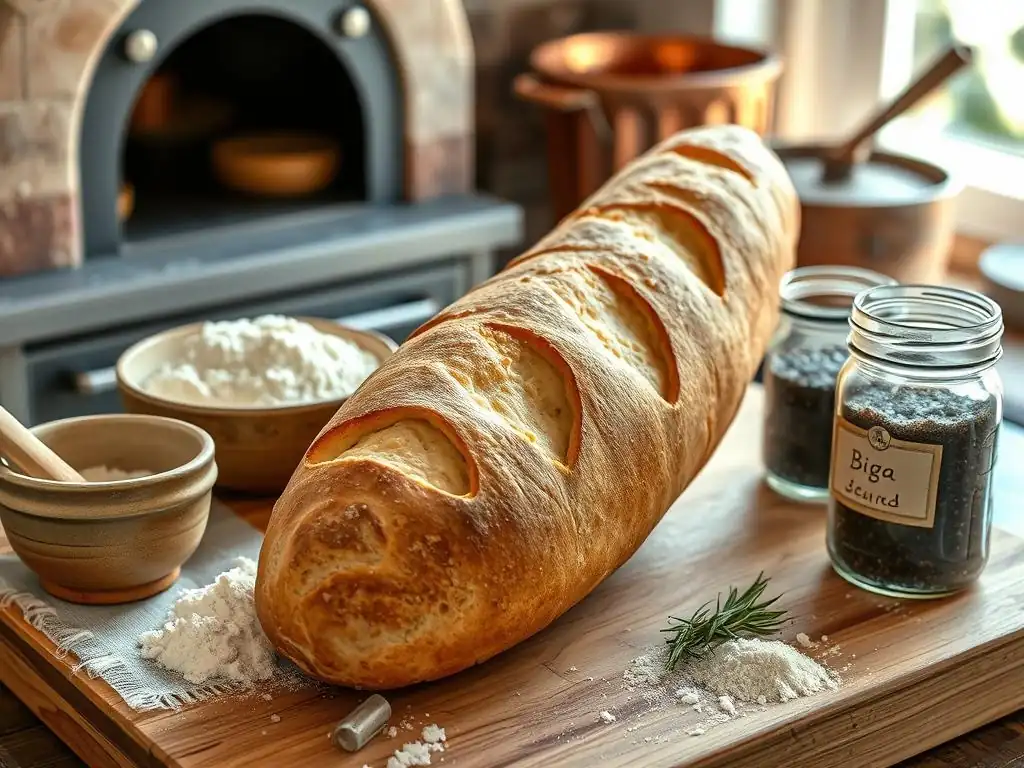
Once you're comfortable with a basic baguette recipe with preferments using biga or poolish, you might want to explore variations to further customize your loaves. These advanced techniques can add new dimensions of flavor, texture, and character to your homemade baguettes.
Experimenting with flour types, preferment ratios, and additions like seeds allows you to put your own spin on this classic bread. Start with small changes and observe their impact on the final baguette.
Exploring Different Flour Combinations for Unique Flavors
While classic baguettes are typically made with white bread flour, incorporating a small percentage of other flours can add complexity and nutritional value. Try substituting 5-10% of the total flour weight with whole wheat flour or rye flour in your baguette recipe with preferments. This can be done either in the preferment itself or in the main dough.
Adding whole grain flours, even in small amounts, introduces different flavors (nutty from whole wheat, tangy/earthy from rye) and can affect dough hydration and handling. Be aware that whole grain flours absorb more water, so you might need to slightly increase the total hydration. Start with a low percentage and gradually increase in future bakes as you get comfortable with the dough's feel. This simple change can transform the character of your baguette recipe with preferments.
Adjusting Preferment Ratios for Varying Acidity Levels
The percentage of total flour that is pre-fermented significantly impacts the final bread's flavor and fermentation speed. A standard baguette recipe with preferments might use 15-25% of the total flour in the preferment. Using a higher percentage, say 30-50% of the total flour in your biga or poolish, will result in a dough that ferments faster and a final baguette with a more pronounced tangy flavor due to increased acid production.
Conversely, using a lower percentage (e.g., 10-15%) will slow down fermentation and yield a milder flavor profile. Experimenting with these ratios allows you to fine-tune the tanginess and overall fermentation characteristics of your baguette recipe with preferments. It's a great way to understand the power of preferments and how they influence the final loaf.
Incorporating Seeds and Grains into Your Baguette Dough
Adding seeds or cooked grains can provide wonderful texture and flavor contrasts in a baguette. Toasted sesame seeds, poppy seeds, or a mix of seeds can be incorporated into the dough during the final stages of kneading, or rolled onto the surface of the shaped baguettes before proofing. For a more integrated texture, consider adding a small percentage (e.g., 5-10%) of cooked grains like quinoa or farro to the main dough.
If adding grains, ensure they are fully cooked and cooled before incorporating them into the dough, as they absorb water. Adding seeds or grains will affect the dough's hydration and handling slightly. This technique adds a rustic element and nutritional boost to your baguette recipe with preferments, creating interesting variations on the classic.
Conclusion: Bake With Ease and Master the Art of Baguette Making
Crafting artisan baguettes at home using preferments is a truly rewarding experience. While it requires patience and attention to detail across multiple stages – from preparing the preferment hours in advance to careful shaping and high-heat baking – the result is a loaf far superior in flavor, texture, and keeping quality to a simple straight dough baguette. You've learned about the distinct characteristics of biga and poolish, the profound benefits they bring to a baguette recipe with preferments, and walked through the step-by-step process from mixing to baking.
Troubleshooting is a natural part of the learning curve, and each bake provides valuable insights into how time, temperature, and technique influence your bread. Don't be afraid to experiment with advanced techniques like adjusting preferment ratios or adding different flours and seeds to personalize your baguette recipe with preferments. With practice and passion, you can consistently bake beautiful, delicious baguettes that rival those from your favorite bakery.
Embrace the Power of Preferments for Exceptional Baguettes
Using preferments is a foundational technique in artisan bread baking that unlocks incredible flavor potential and structural integrity. By incorporating a biga or a poolish into your baguette recipe with preferments, you're allowing time and microbial activity to work their magic, transforming simple flour, water, and yeast into a dough capable of producing a loaf with a complex aroma, a perfectly crisp crust, and an open, airy crumb.
This journey into baking with preferments is a significant step in mastering the art of bread making. The skills you develop here will transfer to many other types of bread. So, embrace the process, enjoy the journey, and delight in the incredible results of your homemade baguette recipe with preferments. Happy Baking!
Frequently Asked Questions
What exactly is a preferment and why use it in a baguette recipe?
A preferment is a fermented dough that is made before the main dough. Using preferments like biga or poolish enhances flavor and improves the texture of the baguette.
What's the difference between a biga and a poolish, and which is better for baguettes?
Both are preferments, but a biga is typically drier (lower hydration) while a poolish is wetter. The best choice depends on desired flavor; both work well for baguettes.
How does using a preferment impact the final proofing time of my baguette dough?
Generally, using a preferment will shorten the final proofing time because the yeast activity is already established. Monitor the dough closely.
Can I substitute regular yeast for the yeast called for in the preferment?
Yes, but adjust the amount. The recipe is designed for a specific amount of instant or active dry yeast. Using too much or too little can significantly affect the outcome.
Where can I find the best ingredients for making baguettes with preferments?
BakeWithEase emphasizes using easy-to-find ingredients. Most major grocery stores will stock bread flour, yeast, and salt which are the main ingredients.
Final Reflection: The Transformative Power of Patience in Baking
The art of crafting the perfect baguette lies not just in technique, but in the embrace of time. A seemingly simple loaf becomes a testament to patience and precision when preferments like biga and poolish are incorporated. The subtle nuances of flavor and texture they impart are a reward for those willing to invest in the process.
The journey of working with preferments has profoundly impacted my understanding of baking, shifting my perspective from a focus on speed to one of mindful creation. It's a journey of anticipation, watching the subtle changes in the dough, a testament to the power of slow fermentation. The best things in life are worth waiting for,
a sentiment that rings truer than ever when it comes to baking with preferments. The improved crumb structure, the enhanced flavor complexity, and the overall satisfaction of a perfectly risen baguette are all a direct result of this patient approach.
Now, it's your turn. Consider the lessons learned here – the importance of planning, the beauty of slow fermentation, and the profound impact of patience. Don't be afraid to experiment with biga and poolish in your own baguette recipes. Embrace the process, savor the anticipation, and experience the transformative power of time in creating something truly exceptional. The reward, a crusty, airy, and flavorful baguette, will be well worth the wait.
Unleash the Power of Preferments: Bake a Better Baguette Today!
Thanks for taking the time to explore the world of preferments and their impact on your baguette baking! You've now learned how these simple additions can dramatically improve your bread's flavor, texture, and overall quality. Ready to put your newfound knowledge into practice?
- Bake your best baguette yet: Try incorporating a biga or poolish into your next recipe and experience the difference firsthand. Note the improved crumb structure and enhanced flavor profile!
- Share your baking journey: Snap a photo of your preferment-powered baguette and share it on social media using #BakeWithEasePreferments – let's inspire each other!
- Dive deeper into sourdough: Explore the fascinating world of sourdough starters – the ultimate preferment! Learn more about nurturing your own starter and using it to elevate your baking even further.
What unique flavor or texture will you strive for in your next preferment experiment?