
Which Pricing Strategy Suits Your Home Bakery Best?


Welcome to BakeWithEase, your trusted guide in the delightful world of baking! Ever wondered if you're truly maximizing your profits while keeping your customers happy? This week, we're diving deep into the crucial topic of pricing strategies for home bakeries, specifically exploring Costplus pricing and how it can either make or break your business. Intrigued to discover if it's the right fit for your delectable creations? Let's unravel the secrets to smart pricing and ensure your baking passion translates into sweet success!
- Pricing Strategies for Your Home Bakery
- Exploring Different Pricing Strategies
- A Deep Dive Into Cost-Plus Pricing
- Choosing the Right Pricing Strategy: A Summary
- Optimizing Profitability Through Smart Pricing
- Conclusion: Mastering Pricing for Your Home Bakery
-
Frequently Asked Questions
- What is Costplus Pricing for bakeries and how does it work?
- Is Costplus Pricing a good option for a beginner home bakery?
- What are the benefits of using Costplus Pricing in a bakery business?
- What are the drawbacks of using Costplus Pricing for baked goods?
- How does Costplus Pricing compare to other pricing strategies, like value-based pricing, for bakeries?
- Final Reflection: Baking Success: The Sweet Spot Between Cost and Customer
- Unlock Your Bakery's Pricing Power!
Pricing Strategies for Your Home Bakery
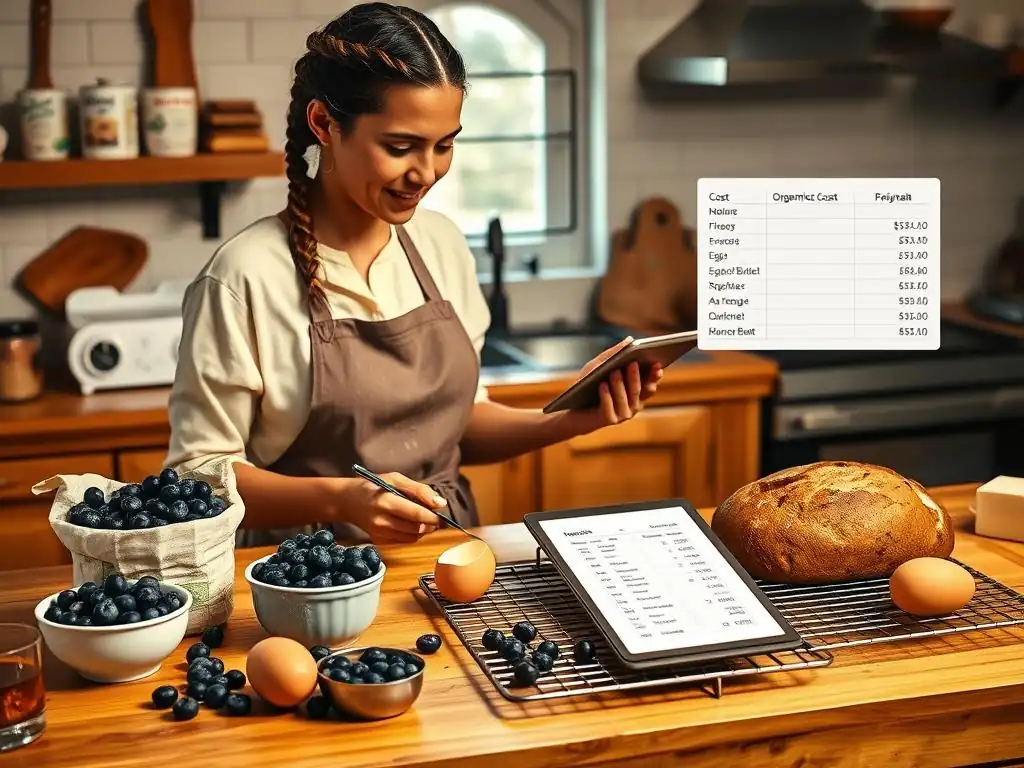
Why Effective Pricing Matters
Setting the right price for your baked goods is one of the most critical decisions you'sll make for your home bakery business. It's not just about covering costs; effective pricing determines your profitability, influences customer perception, and impacts the sustainability and growth of your venture. Undervaluing your products can lead to significant financial strain, making it difficult to afford quality ingredients or invest in necessary equipment, potentially leading to burnout. On the other hand, overpricing without clear justification can deter potential customers, causing slow sales and wasted inventory.
Moreover, your pricing strategy communicates the value of your baked goods to your customers. A thoughtfully determined price reflects the quality of your ingredients, the skill and time invested in baking, and the overall experience you provide. For a home bakery, where personal touch and quality are often key selling points, aligning price with perceived value is essential. Getting pricing right ensures you're fairly compensated for your hard work while offering value that resonates with your target market, paving the way for a thriving business.
Factors to Consider Before Choosing a Pricing Model
Before you even think about specific pricing strategies, several foundational factors specific to your home bakery need careful consideration. The most obvious is your cost of goods sold – the direct expenses tied to producing each item, such as the price of flour, sugar, butter, eggs, and packaging materials like boxes and ribbons. Accurately tracking these fluctuating costs is paramount.
Beyond direct costs, you must account for indirect expenses, often called overheads. These include utilities (electricity for ovens, water), a portion of your home's rent or mortgage if you use dedicated space, equipment maintenance, marketing materials, and even your time spent baking, decorating, and managing the business.
Your target market also plays a significant role. Who are you selling to? Are they looking for budget-friendly treats, artisanal creations made with premium ingredients, or custom-designed celebration cakes? Understanding their expectations and willingness to pay is crucial.
Furthermore, researching what your competitors are charging for similar products in your local area or online provides valuable market context. Finally, define your business goals: Are you aiming for maximum profit margin, building a large customer base quickly, or establishing a reputation for high-end, exclusive products? Your objectives will heavily influence which pricing model aligns best with your vision for your home bakery.
Exploring Different Pricing Strategies
Cost-Plus Pricing: Calculate Your Profit
Cost-plus pricing for bakeries is a straightforward method where you calculate the total cost of producing a baked good and then add a desired profit margin on top. This ensures that every item sold contributes directly to covering expenses and generating profit. It's a foundational approach, particularly useful for home bakers who need a clear understanding of their minimum viable price point.
How to Calculate Cost-Plus Pricing
The basic formula for cost-plus pricing is: Total Cost per Item + Desired Profit per Item = Selling Price. The 'Total Cost per Item' includes both the direct costs (ingredients, packaging) and an allocated portion of your indirect costs (overheads like utilities, labor). Once you have the total cost, you decide on a profit margin, often expressed as a percentage of the cost. For example, if the total cost of a dozen cookies is $6.00 and you want a 50% profit margin based on cost, you'd add $3.00 profit, resulting in a $9.00 selling price.
Advantages of Cost-Plus Pricing
One of the primary advantages of cost-plus pricing for bakeries is its simplicity and transparency. It's relatively easy to calculate once you have a good handle on your expenses, making it accessible even for new home bakery owners. This method guarantees that your costs are covered and ensures you make a profit on every single item sold, provided your cost calculations are accurate and customers are willing to pay the resulting price. It provides a clear, data-driven basis for setting prices, reducing guesswork.
Disadvantages of Cost-Plus Pricing
While simple, cost-plus pricing has significant drawbacks. It is internally focused, meaning it doesn't take into account external factors like what competitors are charging or how much customers perceive your product to be worth. This can lead to setting prices that are either too high (if your costs are inefficient) or too low (if your product is highly valued but inexpensive to make). It also doesn't account for demand fluctuations; you charge the same price regardless of how popular an item is.
Value-Based Pricing: Appealing to Customer Perception
Value-based pricing centers on what the customer believes your baked goods are worth, rather than solely focusing on your production costs. This strategy allows you to potentially charge higher prices if customers perceive a high value in your unique recipes, premium ingredients, artisanal techniques, beautiful presentation, or the convenience you offer. It requires a deep understanding of your target market and what they truly value.
Identifying Perceived Value
Determining perceived value involves understanding why customers choose your baked goods over others. Is it the use of organic flour and European butter? The intricate sugar cookie designs? The convenience of local delivery? The nostalgic taste of a family recipe? Gathering feedback through surveys, conversations, and observing customer behavior helps uncover these drivers of value. A customer willing to pay $40 for a custom-decorated cake likely values the artistry, personalization, and the memory it helps create, far beyond the cost of the ingredients.
Setting Prices Based on Perceived Value
With value-based pricing, you set prices based on this identified perceived value, which may be significantly higher than your cost-plus calculation. This often involves market research to see what customers pay for similar high-value products and understanding the benefits your product provides (e.g., saving the customer time, providing a unique gift, creating a memorable experience). The price is set to capture a portion of the value the customer receives, rather than just covering your costs and adding a fixed margin.
Benefits and Drawbacks of Value-Based Pricing
The main benefit of value-based pricing is the potential for higher profit margins, especially if your products are unique, high-quality, or offer significant benefits to the customer. It aligns your pricing with market demand and customer willingness to pay, reflecting the true worth of your offerings. However, accurately identifying and quantifying perceived value can be challenging. It requires strong market research and a clear understanding of your ideal customer. There's also the risk that customers won't see the value you believe is there, leading to resistance to higher prices if not properly communicated through branding and product quality.
Competitive Pricing: Analyzing the Market
Competitive pricing involves setting your prices primarily based on what your competitors are charging for similar baked goods. This strategy is market-driven and often used in highly saturated markets where customers have many options and price comparison is easy.
Researching Competitor Pricing
Effective competitive pricing starts with thorough research. Identify your direct competitors – other home bakeries, local bakeries, or even grocery stores selling similar items. Look at their websites, social media, or visit their locations if possible to find out their pricing for products comparable to yours (e.g., a dozen standard cupcakes, a loaf of sourdough bread, a batch of chocolate chip cookies). Note not just the price, but also the quality they seem to offer, their ingredients, and any unique selling propositions.
Setting Prices Based on Competitor Analysis
Once you have a picture of competitor pricing, you can decide where to position yourself. You might choose to price slightly below competitors to attract price-sensitive customers, match their prices to remain competitive, or price slightly above if you believe you offer superior quality or service that justifies it. For instance, if most local bakeries charge $25 for a standard 8-inch round cake, you might start around that price point, perhaps adjusting slightly based on your costs and perceived value.
Risks and Rewards of Competitive Pricing
The reward of competitive pricing is that it helps you stay relevant within your market and can attract customers who are comparing prices. It's relatively easy to implement once you have competitor data. However, the risks are significant.
Pricing too low can erode your profit margins, especially if your costs are higher than competitors'. It can also lead to price wars, where businesses continuously lower prices, hurting everyone's profitability. Furthermore, focusing solely on competitor pricing might cause you to neglect your own costs and the unique value you offer, potentially leaving money on the table or selling at a loss.
Premium pricing involves setting prices significantly higher than average for your market, positioning your home bakery as offering exclusive, high-quality, or luxurious baked goods. This strategy is about creating an image of exclusivity and superior value that justifies the higher price point.
Creating a Premium Brand Image
Implementing premium pricing requires building a strong brand identity that communicates luxury, quality, and uniqueness. This goes beyond just the product; it includes high-quality packaging, professional branding, exceptional customer service, a compelling brand story, and potentially limited availability or unique offerings. Everything from the ingredients you use to the way you handle inquiries and deliver orders must reinforce the premium positioning. For example, using imported vanilla beans, artisanal chocolate, and elegant custom boxes contributes to a premium feel.
Justifying Higher Prices Through Quality
The higher prices in a premium strategy must be genuinely justified by superior quality and value. This means consistently using the finest ingredients, employing advanced techniques, offering unique or complex designs, providing exceptional flavor profiles, and ensuring flawless execution. Customers paying premium prices expect an extraordinary product and experience that they cannot get from standard bakeries. Highlighting these factors – mentioning the source of your high-quality cocoa or the hours spent perfecting a sourdough starter – helps validate the price.
When Premium Pricing Works
Premium pricing works best when you have a truly unique selling proposition, exceptional quality that consistently wows customers, and a target market willing and able to pay more for luxury or exclusivity. It's effective if your brand resonates with customers seeking the "best" or something special, such as for significant celebrations or gifts. It requires strong confidence in your product and the ability to effectively communicate its superior value. It's less suitable for commodity-type baked goods in a price-sensitive market.
A Deep Dive Into Cost-Plus Pricing

Cost-plus pricing for bakeries, while simple, is a fundamental method that provides a baseline understanding of profitability. It's especially useful when starting out or when developing recipes, ensuring you don't inadvertently price below your expenses. Let's break down the steps involved in calculating this model for your home bakery.
Step-by-Step Guide to Implementing Cost-Plus Pricing
Implementing cost-plus pricing requires meticulous tracking of all your expenses, both direct and indirect. This systematic approach ensures accuracy and provides a clear picture of the true cost of producing each item, which is the foundation of this pricing strategy.
Calculating Direct Costs: Ingredients and Packaging
Start by listing every ingredient and piece of packaging used for a specific recipe or batch size. Weigh or measure the exact amount of each ingredient used and multiply it by the cost per unit (e.g., cost per gram of flour, per egg, per ounce of chocolate). For example, if a batch of 24 cookies uses 1 lb of butter costing $4.00, the butter cost per cookie is $4.00 / 24 = ~$0.17.
Do this for all ingredients. Then, add the cost of packaging per unit (e.g., the cost of one cookie bag or the prorated cost of a box for a dozen). Summing these gives you the total direct cost per item or batch.
Determining Indirect Costs: Utilities, Rent, and Marketing
Indirect costs are trickier as they aren't tied to a single product. You need to allocate a portion of these monthly or weekly overheads to each item. A common method is to estimate the percentage of your time or kitchen space used for baking or allocate based on total sales.
For instance, if your monthly utility bill is $150 and baking accounts for 30% of your home's utility usage, that's $45 in baking utilities. If you bake 100 dozen cookies that month, you might allocate $45 / 100 = $0.45 per dozen for utilities. Do this for utilities, allocated rent/mortgage, equipment depreciation, insurance, marketing costs, etc., and add these allocated amounts to the direct costs per item or batch.
Adding Your Desired Profit Margin
Once you have the total cost per item (direct + allocated indirect), you add your desired profit margin. This margin can be a fixed amount or, more commonly, a percentage of the total cost. For example, if the total cost of a cupcake is calculated at $2.00, and you desire a 30% profit margin based on cost, you add $2.00 * 30% = $0.60 profit.
The selling price would then be $2.00 + $0.60 = $2.60 per cupcake. Your desired margin should reflect your goals and market expectations, but typically home bakeries aim for at least a 20-50% margin on cost to be sustainable.
Let's calculate the cost-plus pricing for a dozen standard chocolate chip cookies. Assume the following costs for one dozen:
- Flour: $0.50
- Sugar (brown and white): $0.40
- Butter (1/2 lb): $2.00
- Eggs (2 large): $0.60
- Chocolate Chips (1 cup): $1.50
- Vanilla, Salt, Baking Soda: $0.20
- Total Ingredient Cost: $5.20
Now, let's add packaging (a box and parchment paper):
- Box cost per dozen: $1.00
- Parchment paper per dozen: $0.20
- Total Direct Cost (Ingredients + Packaging): $5.20 + $1.20 = $6.40
Next, allocate indirect costs. Let's estimate based on a typical month:
- Monthly Utilities allocated to baking: $50
- Monthly Kitchen Use (Rent/Mortgage allocation): $30
- Monthly Marketing/Supplies allocation: $20
- Total Monthly Overheads allocated: $100
- If you bake 50 dozen cookies in a month, Overhead per dozen: $100 / 50 = $2.00
- Total Cost per Dozen (Direct + Indirect): $6.40 + $2.00 = $8.40
Finally, add your desired profit margin. Let's aim for a 40% profit margin on the total cost:
- Desired Profit per Dozen: $8.40 * 40% = $3.36
- Selling Price per Dozen: $8.40 + $3.36 = $11.76
Based on this cost-plus pricing for bakeries example, a reasonable selling price for a dozen chocolate chip cookies would be around $11.75 to $12.00, rounded up for simplicity. This calculation shows you exactly how much you need to charge to cover all expenses and make a specific profit.
**Cost-Plus Pricing Example: One Dozen Chocolate Chip Cookies**

*   Ingredient Costs: $5.20
*   Packaging Costs: $1.20
*   Allocated Overhead Costs: $2.00
    ---
*   **Total Cost per Dozen:** $8.40

*   Desired Profit (40% of Total Cost): $3.36
    ---
*   **Calculated Selling Price:** $11.76
Choosing the Right Pricing Strategy: A Summary
Deciding on the best pricing strategy for your home bakery isn't a one-size-fits-all decision. It often involves considering aspects of multiple strategies and sometimes even using different methods for different product lines. Understanding the core principles of cost-plus, value-based, competitive, and premium pricing allows you to make informed choices that align with your business goals and market reality.
Comparing and Contrasting Pricing Models
- Cost-Plus Pricing: Focuses internally on your costs. Simple, ensures costs are covered. Ignores market and value. Best for: Ensuring minimum profitability, understanding baseline costs.
- Value-Based Pricing: Focuses externally on customer perception of value. Can yield higher profits. Requires understanding your market deeply. Best for: Unique, high-quality, or specialty items where your value proposition is strong.
- Competitive Pricing: Focuses externally on competitor prices. Helps stay competitive. Can lead to price wars or ignoring your own costs. Best for: Standard items in a competitive market, when trying to gain market share.
- Premium Pricing: Focuses on positioning as high-end. Requires exceptional quality and strong branding. Targets affluent customers. Best for: Luxury goods, custom orders, establishing a high-end brand identity.
Often, a hybrid approach works best. You might use cost-plus pricing for bakeries as a baseline to ensure profitability, then adjust based on competitive analysis and the perceived value of specific products.
Matching Pricing Strategy to Goals
Your business goals should heavily influence your pricing model. If your primary goal is simply to cover costs and make a modest income from a hobby, a straightforward cost-plus pricing for bakeries approach might suffice. If you aim to build a premium brand known for artisanal quality, a value-based or premium pricing strategy would be more appropriate.
If you're trying to quickly build a customer base in a new area, competitive pricing might be a starting point, perhaps offering introductory prices. Consider what you want your bakery to achieve and choose the strategy (or combination) that best supports that vision.
Tips for Regularly Reviewing and Adjusting Prices
Pricing isn't static; it needs to be reviewed and adjusted periodically. Ingredient costs fluctuate – the price of butter or eggs can change significantly throughout the year. Your indirect costs might also change over time.
- Review Costs Quarterly: Re-calculate your ingredient and overhead costs every few months.
- Monitor Competitors: Keep an eye on what other local bakeries are charging.
- Gather Customer Feedback: Are customers commenting on your prices? Are sales consistently strong or weak at current price points?
- Consider Your Time: As you become more efficient or your skills improve, you might adjust how you value your labor.
Don't be afraid to adjust prices when necessary. Transparent communication with your customers about price changes, perhaps explaining that it allows you to maintain quality, can help manage expectations.
Optimizing Profitability Through Smart Pricing

Beyond choosing a core strategy like cost-plus pricing for bakeries or value-based pricing, there are ongoing practices that can help optimize your home bakery's profitability. Smart pricing is an active process that involves more than just setting a number; it's about understanding your business's financial health and finding ways to increase revenue and efficiency.
The Importance of Tracking Costs and Sales
Accurate financial records are non-negotiable for profitability. You must track every dollar spent on ingredients, packaging, utilities, and other overheads. Similarly, meticulously record every sale. This data is essential for calculating the true cost of your goods (vital for cost-plus pricing), understanding which products are most profitable, identifying cost-saving opportunities, and analyzing sales trends.
- [ ] Track ingredient purchases and costs.
- [ ] Record packaging expenses.
- [ ] Log utility bills and other overheads.
- [ ] Document every sale, including item and price.
- [ ] Calculate actual costs per batch/item regularly.
Without this data, any pricing strategy, including cost-plus pricing for bakeries, is just an educated guess.
Utilizing Tools for Pricing Calculations
While you can certainly use a pen and paper or a simple spreadsheet to calculate costs and prices, various tools can streamline this process. Spreadsheet software (like Excel or Google Sheets) allows you to create detailed cost breakdown templates that automatically calculate costs per serving or batch. Some bakers use dedicated recipe costing software or apps designed specifically for food businesses. While I cannot recommend specific products, exploring available tools can save time and improve accuracy in your cost-plus pricing or other calculations.
Bundling Strategies to Increase Order Value
Bundling involves offering groups of complementary baked goods together as a package, often at a slight discount compared to buying each item individually. This can increase the average value of each customer order, boosting overall revenue and profitability. Examples include selling a "Tea Time Treat Box" with a scone, a mini loaf, and two cookies, or offering a "Cupcake & Brownie Duo."
Bundling can also help move slower-selling items by pairing them with popular ones. When pricing bundles, ensure the combined price still covers the costs of all included items plus a healthy profit margin, using your cost-plus calculations as a guide.
Conclusion: Mastering Pricing for Your Home Bakery
Mastering pricing is an ongoing journey for any home bakery owner. Whether you lean towards a cost-plus pricing for bakeries model for its clarity, a value-based approach for its potential profitability, or a hybrid of strategies, the key is to be informed, intentional, and adaptable. Understand your costs intimately, know your market, and be prepared to review and adjust your prices as your business grows and the market changes. By combining careful cost tracking with a strategic approach to setting prices, you can ensure your passion for baking translates into a sustainable and profitable home business.
Frequently Asked Questions
What is Costplus Pricing for bakeries and how does it work?
Costplus pricing involves calculating the total cost of creating a baked good (ingredients, labor, overhead) and then adding a fixed percentage markup to determine the selling price. This ensures you cover all expenses and make a profit.
Is Costplus Pricing a good option for a beginner home bakery?
Costplus pricing can be a good starting point as it's relatively simple to implement. However, it's crucial to accurately track all costs, which can be challenging for beginners. It also doesn't factor in market demand or competitor pricing.
What are the benefits of using Costplus Pricing in a bakery business?
The primary benefit is guaranteed profit on each item sold, assuming costs are accurately calculated. It also offers transparency in pricing, allowing you to justify prices to customers and easily adjust prices based on fluctuations in ingredient costs.
What are the drawbacks of using Costplus Pricing for baked goods?
It can be time-consuming to calculate the cost of each item, especially with complex recipes. Furthermore, it may lead to overpricing if your costs are higher than competitors, potentially deterring customers.
How does Costplus Pricing compare to other pricing strategies, like value-based pricing, for bakeries?
Costplus focuses on internal costs, while value-based pricing considers the perceived value of your baked goods to customers. Value-based pricing can allow for higher profit margins, but requires a strong understanding of your target market and brand positioning.
Final Reflection: Baking Success: The Sweet Spot Between Cost and Customer
Understanding your pricing strategy isn't just about making a profit; it's about building a sustainable and thriving home bakery. The right approach can mean the difference between struggling to stay afloat and experiencing consistent growth, allowing you to share your passion for baking with a wider audience. This article explored several pricing models, highlighting the importance of cost-plus pricing as a foundational strategy for bakers.
Cost-plus pricing, while seemingly simple, offers a powerful framework for understanding your true costs and ensuring profitability. It's more than just adding a markup; it's about meticulously tracking every ingredient, labor hour, and overhead expense to accurately determine a price that reflects your dedication and the quality of your products. This process fosters a deeper appreciation for the value of your craft. The price is what you ask. Value is what the customer gets.
This quote underscores the importance of not just calculating costs, but also understanding the perceived value your baked goods offer your customers.
Now, it's your turn. Take the time to analyze your own costs, experiment with different pricing strategies, and most importantly, listen to your customers. Don't be afraid to adjust your prices as you learn and grow. Remember, pricing is a dynamic process, and finding the sweet spot between profitability and customer satisfaction is key to building a successful and fulfilling home bakery business. Embrace the journey, and watch your passion blossom into a thriving enterprise.
Unlock Your Bakery's Pricing Power!
Thanks for taking the time to learn about pricing strategies for your home bakery! We hope you now feel more confident in setting prices that reflect your hard work and delicious creations. Ready to put this knowledge into action?
- Craft your perfect price list: Take the key takeaways from this article and build a pricing structure that works best for your unique bakery and target market. This is the most important step towards profitable baking!
- Share your pricing journey: Tell us (and other bakers!) about your experience! What challenges did you face, and what strategies worked best? We love hearing from our community.
- Explore our free resources: We have additional guides to help you grow your home bakery business – check them out on BakeWithEase.com!
What pricing strategy are you most excited to implement, and why?