
The Baker's Pricing Formula: A Simple Way to Set Your Prices

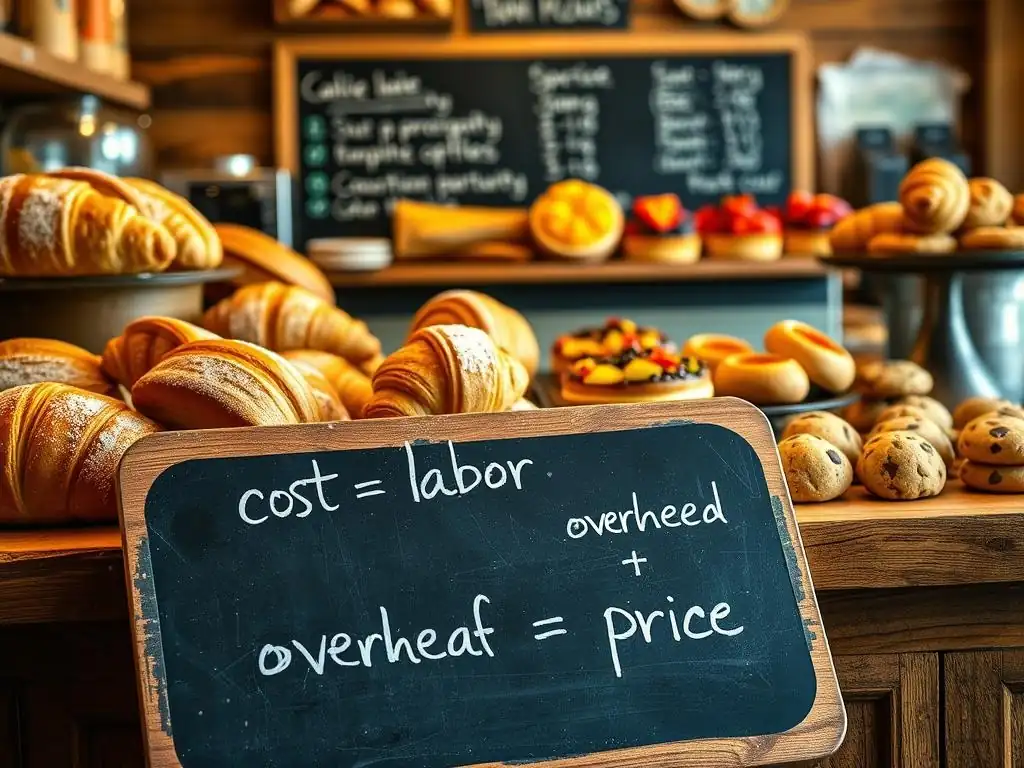
Welcome to BakeWithEase, your trusted guide to the delightful world of baking! Ever wondered exactly how much you should charge for your delectable creations? This article unveils a simple, effective formula designed to help bakers, whether you're selling to friends, family, or building a home baking business, confidently set prices that reflect your skill and ingredients. Dive in and discover the secrets to profitable baking!
- Pricing Baked Goods for Profitability
- Introduction: The Importance of Accurate Pricing
- Understanding Your Bakery's Costs
- The Pricing Formula: A Step-by-Step Guide
- External Factors Influencing Pricing
- Pricing Strategies for Different Product Categories
- Real-World Pricing Examples
- Tools and Resources for Efficient Pricing
- Conclusion: Achieving Optimal Pricing for Your Bakery
- Frequently Asked Questions
- Final Reflection: The Enduring Sweetness of Fair Pricing
- Unlock Your Baking Business's Profit Potential!
Pricing Baked Goods for Profitability
Introduction: The Importance of Accurate Pricing
Why Proper Pricing is Essential for Bakery Success
Setting the right price for your baked goods is arguably one of the most critical steps in running a successful home baking business. It goes far beyond simply covering the cost of ingredients. Accurate pricing ensures that your business is not just a hobby, but a sustainable and profitable venture.
Without proper pricing, you risk undercharging for your time, skill, and resources, leading to burnout and financial strain. It's the foundation that allows you to reinvest in your business, purchase better equipment, explore new recipes, and ultimately, grow your passion into a thriving enterprise. Understanding how much should bakers charge is fundamental to longevity in the market.
Beyond mere survival, strategic pricing impacts how customers perceive your brand. Pricing too low can signal lower quality, while pricing too high without justification can deter potential buyers. Finding that sweet spot requires careful consideration of your costs, your value proposition, and the market you operate in. A well-priced product attracts the right customers who appreciate the quality and effort you put into every item, ensuring repeat business and positive word-of-mouth.
Common Pricing Errors and How to Avoid Them
One of the most frequent errors home bakers make is underestimating their costs, often only accounting for ingredients. They might forget to factor in packaging, utilities, labor, or even marketing expenses. This leads to selling goods at prices that barely cover material costs, leaving no room for profit or growth. To avoid this, meticulously track all expenses, both direct and indirect, associated with running your baking operation.
Another pitfall is pricing based solely on what competitors charge without understanding your own unique costs and value. While market research is important, your cost structure might be different, or you might be using premium ingredients that justify a higher price. Avoid guesswork; base your pricing on a solid formula derived from your actual expenses. Furthermore, don't be afraid to charge for your time and skill – your expertise in creating beautiful, delicious baked goods is a valuable asset that must be compensated.
Understanding Your Bakery's Costs
Calculating Direct Costs: Ingredients and Packaging Materials
Direct costs are the expenses directly tied to producing a specific item. For a baker, the primary direct costs are ingredients. To accurately calculate this, you need to know the cost of each ingredient per unit used in a recipe, not just the cost of the entire bag or carton.
For example, if a 5lb bag of flour costs $4.00, the cost per pound is $0.80. If your recipe calls for 1.5 lbs of flour, that specific ingredient cost is $1.20. You must do this for every ingredient in the recipe, from sugar and butter to sprinkles and food coloring.
Packaging materials are also significant direct costs. This includes cake boxes, cupcake liners, cookie bags, labels, ribbons, and even the cost of parchment paper used during baking if it's specific to a batch. If a box for a dozen cupcakes costs $1.50 and you sell them by the dozen, that $1.50 is a direct cost for that sale. Keep meticulous records of the cost of these items and how many items you get from a bulk purchase to calculate the cost per unit of packaging.
Factoring in Indirect Costs: Rent, Utilities, and Marketing
Indirect costs, often called overhead, are expenses necessary to run your business but aren't tied to a single product. These include things like rent (if you have a dedicated space), electricity, gas, water, internet, phone, insurance, and marketing efforts like website hosting or social media ads. While you can't assign the full monthly utility bill to one cake, these costs must be covered by your sales.
To factor overhead into your pricing, you need to allocate a portion of the total monthly overhead to each item or batch. A common method is to calculate your total monthly overhead and divide it by the average number of batches or items you produce in a month. For instance, if your total monthly overhead is $500 and you typically produce 100 batches of various goods, you might allocate $5.00 of overhead cost to each batch. This ensures that your selling price contributes to covering these essential operating expenses.
Valuing Your Labor: Incorporating Time and Skill
Your time and skill are valuable assets, and they must be included in your pricing. Many home bakers fail to pay themselves for the hours spent planning, shopping, baking, decorating, packaging, and communicating with customers. This labor cost is just as real as the cost of butter or sugar. Think about what you would need to earn hourly to make this a viable job. A common starting point might be minimum wage or slightly above, perhaps $15-$25 per hour depending on your skill level and location.
To calculate labor cost per item or batch, track the time it takes to create the product from start to finish. If a batch of cookies takes 45 minutes of active work (mixing, scooping, baking, cooling, packaging), and you value your time at $20 per hour, the labor cost for that batch is $15 (0.75 hours * $20/hour). Adding this labor cost ensures that your pricing accounts for the expertise and effort you invest in every delicious creation.
The Pricing Formula: A Step-by-Step Guide
Step 1: Determine the Total Cost Per Item
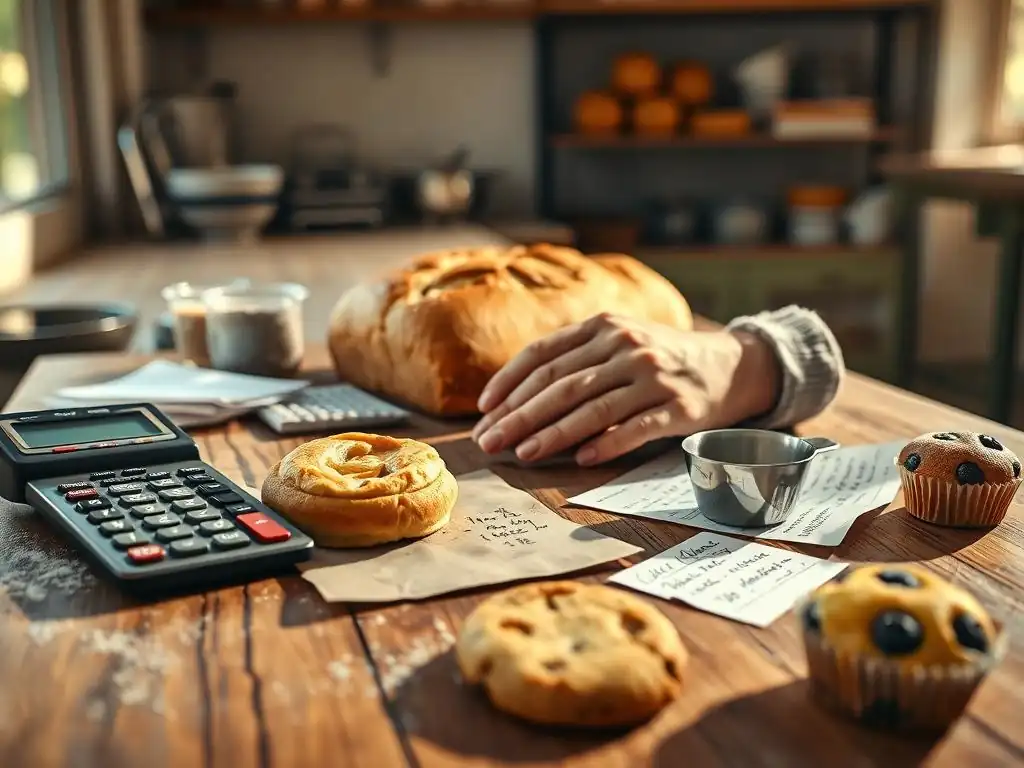
The first crucial step in setting your prices is to calculate the true total cost of producing a single item. This figure encompasses all the expenses we've discussed: direct costs (ingredients, packaging), allocated indirect costs (overhead), and your labor cost. Summing these up gives you a clear picture of the minimum amount you need to charge just to break even on that specific product.
Understanding this total cost is foundational. It prevents you from unknowingly selling items at a loss. This figure will be the base upon which you build your profit margin. By meticulously calculating this cost for each product you offer, you gain insight into which items are more expensive to produce and how that impacts their potential selling price and profitability.
Cost Calculation: Example using Chocolate Chip Cookies
Let's calculate the cost for a batch of 24 standard chocolate chip cookies.
- Ingredients:
- Flour (1.5 lbs @ $0.80/lb): $1.20
- Butter (1 cup @ $4.00/lb, approx 0.5 lb): $2.00
- Sugar (granulated + brown, approx 1 lb total @ $0.70/lb): $0.70
- Eggs (2 large @ $3.00/dozen): $0.50
- Chocolate Chips (1 cup @ $5.00/lb, approx 0.6 lb): $3.00
- Vanilla, Baking Soda, Salt: $0.30
- Total Ingredient Cost: $7.70
- Packaging: Bags, labels for 24 cookies ($0.10 per cookie): $2.40
- Allocated Overhead: (Based on monthly average, e.g., $500 overhead / 100 batches): $5.00
- Labor: (45 minutes @ $20/hour): $15.00
- Total Cost per Batch (24 cookies): $7.70 + $2.40 + $5.00 + $15.00 = $30.10
- Total Cost per Cookie: $30.10 / 24 cookies = ~$1.25 per cookie
Step 2: Establish Your Target Profit Margin
Once you know your total cost per item, the next step is to determine how much profit you want to make on top of that cost. Profit is the money left over after all expenses are paid. This profit is what allows your business to grow, allows you to pay yourself a sustainable wage beyond just the labor cost calculated per item, and provides a cushion for unexpected expenses.
Your target profit margin should be a percentage of your costs that makes your business financially viable. This percentage can vary widely depending on your business goals, market, and product type. A common range for food businesses might be anywhere from 15% to 40% or even higher for highly customized or premium items. It's crucial to aim for a margin that reflects the value of your product and your business aspirations.
Determining a Sustainable Profit Margin for Your Bakery
Setting a profit margin isn't arbitrary; it should be informed by several factors. Consider industry averages for similar baking businesses, but also look at your own financial needs. How much do you need to earn to make this worthwhile? What are your goals for reinvestment? A higher profit margin might be necessary if you plan to purchase expensive equipment soon or expand your product line significantly.
Think about the perceived value of your baked goods. Are you using premium, organic ingredients? Do you offer intricate, custom decorations? These factors can justify a higher profit margin because customers are often willing to pay more for quality, uniqueness, and artistry. Researching how much should bakers charge for comparable high-quality items in your area can provide valuable insight into what profit margin the market can support.
Step 3: Calculate Your Selling Price
With your total cost per item determined and your target profit margin established, you can now calculate your selling price. This is the price you will charge customers for your baked good. The most straightforward way to do this is using a basic formula that adds your desired profit to your total cost.
There are a couple of ways to apply the profit margin – as a percentage of cost or as a percentage of the final selling price. Calculating it as a percentage of cost is often simpler for home bakers starting out. If your cost per item is $X and your target profit margin is Y%, your profit is X * Y/100, and your selling price is X + (X * Y/100).
The Basic Formula: Cost + Profit = Price
Let's use the chocolate chip cookie example from Step 1, where the total cost per cookie was approximately $1.25. Suppose you decide on a target profit margin of 30% of your cost.
- Total Cost per Cookie: $1.25
- Target Profit: 30% of $1.25 = $1.25 * 0.30 = $0.38 (approximately)
- Calculated Selling Price per Cookie: $1.25 (Cost) + $0.38 (Profit) = $1.63
So, based on this formula and a 30% profit margin on cost, you might price your individual chocolate chip cookies at around $1.65 or perhaps round up to $1.75 to simplify pricing and slightly increase profit. This calculation provides a solid starting point for determining how much should bakers charge for this specific item.
External Factors Influencing Pricing
Market Analysis: Understanding Competitor Pricing
While your costs form the base of your pricing, you can't ignore the external market. Researching what other bakeries, especially those similar to yours in size, quality, and offerings, are charging is a vital step. This isn't about copying their prices exactly, but understanding the general price range customers expect for specific items in your area. Are similar cupcakes selling for $3, $4, or $5? This market data helps you gauge if your calculated price is competitive or if you might need to adjust your profit margin or find ways to reduce costs.
Consider the type of bakeries you're comparing yourself to. A high-end custom cake shop will naturally have higher prices than a local home baker specializing in simple cookies. Benchmark against businesses that offer comparable quality and service. If your calculated price is significantly higher or lower than the market average, it warrants further investigation. Is your cost structure unusually high? Or are you offering something unique that justifies a premium price?
Brand Perception: The Impact of Branding on Pricing
Your brand is more than just a logo; it's the overall impression customers have of your business, encompassing the quality of your products, your customer service, your packaging, and your online presence. A strong, positive brand perception allows you to command higher prices. Customers are often willing to pay a premium for goods from a bakery they trust, admire, and associate with quality and reliability. Think of well-known local bakeries that have built a reputation over time – they can often charge more than newer businesses.
Investing in quality ingredients, appealing packaging, professional photos, and excellent customer service all contribute to building a strong brand. As your reputation grows, you may find that customers perceive higher value in your products, making them more accepting of prices that reflect your true costs and desired profit margin. Your brand helps answer the question of how much should bakers charge, not just based on numbers, but on perceived value.
Not all ingredients are created equal, and not all orders are standard. If you use premium ingredients like organic flour, European butter, single-origin chocolate, or fresh seasonal fruits, these higher direct costs naturally lead to a higher base cost per item. It's important to highlight the use of these quality ingredients to your customers, justifying the higher price point. Customers who value quality are often willing to pay more for it.
Similarly, custom orders, intricate decorations, dietary modifications (like gluten-free or vegan), or complex designs require additional time, skill, and sometimes more expensive or specialized ingredients. These factors significantly increase your labor cost and potentially ingredient cost for that specific order. Your pricing for custom work should reflect this increased complexity and time investment, often moving away from a simple per-item price to a project-based quote that accounts for all the unique elements.
Pricing Strategies for Different Product Categories
Pricing Cakes: Considering Complexity and Time Investment
Cakes are often one of the most complex items to price due to the wide variation in size, layers, fillings, frosting types, and decoration. A basic single-layer cake is vastly different in cost and labor from a tiered wedding cake with intricate sugar flowers. Many bakers price cakes based on a starting price per serving, which increases depending on the complexity of decoration. For example, a basic buttercream cake might start at $5-$7 per serving, while a fondant-covered cake with detailed work could be $8-$12+ per serving.
Alternatively, you can price cakes based on size (e.g., a 6-inch cake feeds 8-10 and costs $40-$60) and then add charges for specific design elements (e.g., +$10 for ganache drip, +$20 for specific piping work, +$50+ for complex sculpted figures). Always ensure your base price covers the cost of ingredients, baking labor, and basic frosting/assembly, with additional charges reflecting the increased time and skill required for decoration.
Cookies, cupcakes, brownies, and other small treats are often sold individually or in larger quantities like by the dozen or in gift boxes. When pricing these items, calculate the cost per individual item first, as outlined in the formula section. Then, decide if you will offer a slight discount for bulk purchases (e.g., a dozen cookies cost slightly less than buying 12 individually) to encourage larger orders.
Presentation is key for small treats, especially if sold as gifts or at events. The cost of attractive packaging, ribbons, and labels should be factored into the price, particularly for curated boxes or platters. While the individual item cost might be low, the volume and the presentation value contribute to the final selling price. Consider offering tiered pricing for different quantities (e.g., price per cookie, price per half dozen, price per dozen).
Pricing Breads: Reflecting Ingredient Quality and Baking Process
Bread pricing is often influenced by the type of flour used (all-purpose vs. specialty grains), added ingredients (nuts, seeds, cheese, olives), and the baking process itself (e.g., sourdough requires long fermentation times, increasing labor/time cost). A simple white loaf will have a different cost structure than a complex multi-grain sourdough with expensive seeds.
Price bread per loaf, taking into account its weight and ingredients. Artisanal or specialty breads typically command higher prices than standard loaves due to the quality of ingredients and the time-intensive nature of their preparation. Research prices for similar types of bread at local bakeries or farmers' markets to ensure your pricing is competitive yet profitable, reflecting the value of a handcrafted loaf.
Real-World Pricing Examples
Example 1: Pricing a Classic Vanilla Cake
Let's price a standard 8-inch round vanilla cake with buttercream frosting, serving about 12 people.
- Estimated Total Cost (Ingredients, Labor, Overhead, Basic Packaging): Approximately $25.00. This covers the cost of quality ingredients, about 1.5-2 hours of labor for baking and frosting at $20/hour ($30-$40 labor allocated across a few items made that day), plus a portion of monthly overhead and the cake box.
- Target Profit Margin: Let's aim for a 30% profit on cost. $25.00 * 0.30 = $7.50.
- Calculated Selling Price: $25.00 + $7.50 = $32.50.
- Market Check: Similar cakes from local home bakers might range from $30 to $45. Our calculated price of $32.50 falls comfortably within this range, suggesting it's a reasonable starting point. We might round up to $35 for simpler pricing. This price would cover our costs and provide a healthy profit margin.
Example 2: Pricing Decorated Cupcakes
Consider pricing a dozen standard-sized vanilla cupcakes with buttercream swirl and simple sprinkles.
- Estimated Total Cost per Dozen (Ingredients, Labor, Overhead, Packaging): Approximately $18.00. This includes ingredients for the batch (flour, sugar, eggs, butter, milk, vanilla), about 1 hour of labor for mixing, baking, cooling, frosting, and packaging at $20/hour ($20 labor allocated), plus overhead and the cost of the cupcake box and liners. Cost per cupcake is $18.00 / 12 = $1.50.
- Target Profit Margin: Let's aim for a 40% profit on cost for cupcakes, as they are often impulse buys or sold in volume. $18.00 * 0.40 = $7.20 profit per dozen.
- Calculated Selling Price per Dozen: $18.00 (Cost) + $7.20 (Profit) = $25.20.
- Market Check: Decorated cupcakes often sell for $25-$35 per dozen, or $2.50-$3.50 individually. Our calculated price of $25.20 per dozen (approx $2.10 per cupcake) is competitive. We might price them at $26 or $28 per dozen to simplify. If sold individually, pricing them at $2.50-$3.00 each would yield a higher profit margin than selling by the dozen, which is typical.
Example 3: Pricing a Multi-Grain Bread Loaf
Let's price a large (approx 1.5 lb) multi-grain loaf using specialty flours and seeds, involving a long fermentation process.
- Estimated Total Cost per Loaf (Ingredients, Labor, Overhead, Packaging): Approximately $4.50. This includes the higher cost of specialty flours and seeds, plus significant labor allocated for mixing, multiple folds, long proofing time (even if not active labor, it's time the product occupies space/resources), baking, and packaging.
- Target Profit Margin: Let's aim for a 25% profit on cost for bread. $4.50 * 0.25 = $1.13 profit per loaf.
- Calculated Selling Price per Loaf: $4.50 (Cost) + $1.13 (Profit) = $5.63.
- Market Check: Artisanal multi-grain loaves often sell for $5-$8 or more depending on location and ingredients. A price of $5.50 or $6.00 per loaf aligns well with the market for high-quality, handcrafted bread and covers our costs and desired profit.
Tools and Resources for Efficient Pricing

Utilizing Spreadsheets for Cost Tracking and Pricing Analysis
For many home bakers, a simple spreadsheet program like Microsoft Excel, Google Sheets, or Apple Numbers is an invaluable tool for managing costs and pricing. You can create a tab for ingredients, listing each item, its unit of purchase (e.g., 5lb bag), the cost of that unit, and then calculate the cost per smaller unit (e.g., cost per ounce or gram).
Another tab can be dedicated to recipes. For each recipe, list the required ingredients and their quantity, using formulas to pull the cost-per-unit from your ingredient list and calculate the total ingredient cost for the batch. You can add rows for packaging costs, allocated overhead, and calculated labor cost per batch to arrive at the total cost per batch, and finally, cost per item. This allows you to easily see how ingredient price changes affect your costs and experiment with different profit margins to determine selling prices.
Accounting Software for Bakeries
As your business grows, general small business accounting software can significantly streamline financial management, including aspects related to pricing. While not specifically designed just for bakeries, these programs help you track all income and expenses, categorize spending (ingredients, utilities, marketing), and generate reports.
By accurately tracking all your business expenses through accounting software, you gain a clearer picture of your total overhead. This makes the process of allocating indirect costs to your products more accurate and reliable. While they may not calculate recipe costs down to the gram, they provide the overall financial health data needed to validate your pricing strategy and ensure overall profitability.
[Recommended Bakery Management Software]
Beyond general accounting, specialized bakery management tools exist that can integrate recipe management, inventory tracking, order management, and detailed cost analysis. These systems are designed to handle the unique needs of a baking business, such as calculating precise costs based on ingredient usage per recipe and managing fluctuating inventory levels for perishable goods.
Such software can automate the calculation of your total cost per item, factoring in ingredient price changes and labor. They can also help you manage orders, track customer preferences, and even assist with scheduling production. While potentially a larger investment than a simple spreadsheet, these tools can significantly improve efficiency and accuracy in costing and pricing for a growing bakery business.
Conclusion: Achieving Optimal Pricing for Your Bakery
Balancing Profitability with Customer Value
Finding the perfect price for your baked goods is a balance. Your price must be high enough to cover all your costs – ingredients, packaging, overhead, and your labor – while also ensuring a healthy profit margin for business growth and sustainability. Simultaneously, your price must be perceived as fair and valuable by your target customers. If your price is too high relative to the perceived value or market alternatives, you won't make sales, regardless of your costs.
The key is transparency (internal, regarding your costs) and communicating value (external, to your customers). Understand your numbers inside and out using the pricing formula. Then, ensure your product quality, presentation, and service justify the price you are asking. When customers understand the quality of your ingredients, the skill involved, and the care you put into each item, they are more likely to see the value and be willing to pay a price that makes your business profitable. This is the essence of figuring out how much should bakers charge for their unique creations.
Regularly Evaluating and Adapting Your Pricing Strategy
Pricing is not a set-it-and-forget-it task. The cost of ingredients fluctuates, your overhead might change, your efficiency improves (or decreases), and the market evolves. It's crucial to regularly review and potentially adjust your pricing strategy. Make it a practice to recalculate your costs for key items periodically, perhaps every six months or annually, or whenever there's a significant change in ingredient prices.
Stay aware of what competitors are doing and gather feedback from your customers. Are they consistently saying your prices are too high? Or are you getting comments that you should be charging more? Use this information to inform your decisions. As your skills improve and your brand strengthens, you may find that you can command higher prices. Conversely, if ingredient costs drop or you find efficiencies, you might adjust prices or increase your profit margin. Continuous evaluation ensures your pricing remains optimal for both profitability and market competitiveness.
Frequently Asked Questions
How can I determine a fair price for my baked goods?
A fair price considers your cost of ingredients, labor, and a reasonable profit margin. Calculate these factors carefully to ensure profitability.
What are some common mistakes bakers make when pricing their products?
Underestimating the cost of ingredients, failing to account for labor time, and not factoring in a desired profit are common mistakes.
How do I factor in my skill level and experience when pricing?
Experienced bakers can often charge a premium due to their higher quality and consistent results. Beginners might start with lower prices to build a client base.
Should I charge the same for all types of baked goods?
No, different baked goods require varying amounts of ingredients, time, and skill. Price accordingly based on these factors.
How do I handle customers who complain about my prices?
Clearly explain the quality of your ingredients, the time and effort involved, and the value you provide. Be confident in your pricing.
Final Reflection: The Enduring Sweetness of Fair Pricing
The art of baking is not just about creating delicious treats; it's also about the crucial business of pricing them fairly. Ignoring this fundamental aspect can lead to financial instability, hindering a baker's passion and potentially silencing their unique voice in the culinary world. This article explored a simple yet effective pricing formula, empowering bakers to confidently set prices that reflect their skills, costs, and market value.
The impact of fair pricing extends far beyond the individual baker. It shapes the entire landscape of artisan food, influencing the sustainability of small businesses and the availability of high-quality, handcrafted goods. The struggle to balance passion with profit is a common thread among creatives, and finding a sustainable pricing model is crucial for their longevity. The price of anything is the amount of life you exchange for it.
– Henry David Thoreau. This quote highlights the importance of valuing not only the ingredients and time invested but also the baker's own expertise and creative energy.
Now, consider your own baking journey, or any creative endeavor you undertake. Are you fairly compensating yourself for your time, skills, and the unique value you bring? Take a moment to reflect on your pricing strategy. Use the formula discussed in this article as a starting point, adjust it to your specific circumstances, and remember that your worth is far greater than the sum of your ingredients. Embrace the power of fair pricing, not just as a business strategy, but as a statement of self-respect and a commitment to the sustainability of your craft.
Unlock Your Baking Business's Profit Potential!
Thanks for diving into the world of profitable baking! You now have a powerful tool to confidently price your delicious creations. Let's put this knowledge into action:
- Calculate your ideal prices: Grab a pen and paper (or open a spreadsheet! ), and use the formula from the article to price your next batch of goods. Don't be afraid to experiment and find what works best for you and your ingredients.
- Share your baking journey: Let's build a community! Share your price calculations and the results on our social media channels (we're @BakeWithEase everywhere).
- Surprise your customers: Offer a limited-time discount based on your newly calculated prices—it's a fantastic way to introduce the new system and increase engagement.
Ready to see your baking business flourish? What's the first treat you're going to price using this new formula?