
What Will Customers Pay? Understanding Your Target Market's Price Sensitivity


Welcome to BakeWithEase, your trusted guide to the delicious world of baking!
Ever wonder if your delectable creations are priced just right? In today's feature, we dive deep into customer price sensitivity analysis, a crucial skill for any home baking business. Uncover the secrets to understanding what your target market is really willing to pay, and unlock the path to maximizing your profits while keeping your customers delighted. Ready to find the sweet spot? Let's explore!
- Introduction to Pricing Baked Goods and Customer Price Sensitivity
- Defining Customer Price Sensitivity: What it Really Means
- Identifying Your Target Market for Baked Goods
- Conducting Customer Price Sensitivity Analysis: Practical Methods
- Factors Affecting Price Sensitivity in the Baking Market
- Strategies for Pricing Based on Customer Price Sensitivity
- Overcoming Price Sensitivity: Adding Value to Your Baked Goods
- Practical Examples of Customer Price Sensitivity in Baking
- Tools and Resources for Customer Price Sensitivity Analysis
- Avoiding Common Pricing Mistakes in Your Home Baking Business
- Conclusion: Mastering Pricing Through Customer Understanding
-
Frequently Asked Questions
- What is customer price sensitivity analysis and why is it important for BakeWithEase?
- How can BakeWithEase determine if its customers are price-sensitive?
- What factors might influence the price sensitivity of BakeWithEase customers?
- If analysis reveals high price sensitivity, what strategies can BakeWithEase employ?
- How often should BakeWithEase conduct customer price sensitivity analysis?
- Final Reflection: The Price of Understanding Your Customer
- Unlock Your Pricing Power: Set Prices Customers Will Love
Introduction to Pricing Baked Goods and Customer Price Sensitivity
Setting the right price for your delicious home-baked goods can feel like a guessing game. You know your ingredients cost money, and your time is valuable, but how do you figure out what customers are actually willing to pay? This is where understanding customer price sensitivity analysis comes into play. It's not just about covering costs; it's about finding that sweet spot where your prices reflect the value of your products and are acceptable to the people you want to serve. Getting this right is crucial for profitability and the sustainability of your home baking business.
Navigating the world of pricing can be challenging, especially when you're passionate about what you create. You might worry about pricing too high and scaring customers away, or pricing too low and not making enough profit to justify your efforts. A systematic approach using customer price sensitivity analysis removes much of this guesswork. By understanding how sensitive your potential customers are to price changes, you can make informed decisions that support your business goals and build a loyal customer base who feel they are getting great value.
Why Customer Price Sensitivity Analysis Matters for Your Home Baking Business
For a home baking business, every sale counts. Unlike large corporations, your margins might be tighter, and your resources more limited. Therefore, pricing mistakes can have a significant impact. Conducting a thorough customer price sensitivity analysis helps you avoid common pitfalls like underpricing, which leaves money on the table and can devalue your products in the eyes of customers, or overpricing, which can lead to low sales volume. Understanding how much your specific target audience is willing to spend allows you to optimize your pricing strategy for maximum revenue and profitability.
Consider a baker specializing in gluten-free, vegan cookies. The ingredients are often more expensive than traditional baking supplies. Without understanding customer price sensitivity analysis, the baker might price based solely on ingredient cost plus a standard markup.
However, if their target market (e.g., health-conscious consumers with dietary restrictions) places a high value on these specific product attributes and faces limited alternatives, they might be willing to pay a premium. A proper analysis would reveal this, allowing the baker to price competitively within this niche, potentially achieving higher profits per cookie. Conversely, if targeting a broad market less focused on dietary restrictions, the analysis might indicate a need for more competitive pricing relative to conventional cookies.
The Importance of Understanding Your Target Market's Willingness to Pay
Knowing your target market's willingness to pay is the cornerstone of effective pricing. It's not just about whether they can pay, but what they feel your product is worth to them. This perceived value is subjective and heavily influenced by factors like the quality of ingredients, the uniqueness of your recipes, the presentation of your baked goods, and the overall customer experience you provide. A deep dive into your target audience's preferences, habits, and financial capacity through customer price sensitivity analysis reveals how much they truly value your specific offerings.
For instance, a home baker selling beautifully decorated custom cakes for birthdays and special events is targeting a different market segment than someone selling simple loaves of bread at a local farmer's market. Customers ordering custom cakes for a milestone celebration (e.g., a 50th birthday or a wedding) often have a higher willingness to pay due to the emotional significance and personalized nature of the product. They are paying not just for flour and sugar, but for artistry, convenience, and the guarantee of a show-stopping centerpiece.
Researching what customers in your area typically spend on similar custom cakes, understanding their expectations for design complexity and flavor options, and gauging their perceived value of bespoke creations are all critical components of customer price sensitivity analysis in this context. Failing to understand this segment's willingness to pay could result in undercharging for intricate work or overcharging for simpler designs.
Defining Customer Price Sensitivity: What it Really Means
Customer price sensitivity refers to how much the price of a product influences a customer's purchasing decision. High price sensitivity means customers are very responsive to price changes – a small increase might lead to a significant drop in demand, while a small decrease could cause demand to surge. Low price sensitivity, on the other hand, means price is less of a deciding factor; customers might continue buying a product even if the price increases, perhaps because they see it as essential, unique, or strongly prefer the brand. Understanding this spectrum is fundamental to customer price sensitivity analysis.
Think about everyday baked goods versus luxury items. Customers buying a standard loaf of white bread at a grocery store are likely highly price-sensitive; they might easily switch to a different brand or even store if the price increases by a small amount (say, 10-15 cents). Their primary concern is often getting a staple item at the lowest possible cost.
Conversely, someone purchasing a specific artisan sourdough loaf made with heritage grains from a favored local bakery might be less price-sensitive, willing to pay a premium (perhaps $5-$8 compared to $2-$3 for a standard loaf) for the unique flavor, quality ingredients, and supporting a local business. This difference highlights the core concept behind customer price sensitivity analysis – different products and different customer segments exhibit varying levels of sensitivity.
Understanding Price Elasticity of Demand in the Baking Industry
Price elasticity of demand is a specific measure used in customer price sensitivity analysis. It quantifies the percentage change in the quantity demanded of a product in response to a one percent change in its price. If a small price change leads to a large change in the quantity demanded, the demand is considered elastic (high price sensitivity). If a large price change leads to only a small change in the quantity demanded, the demand is considered inelastic (low price sensitivity).
For many basic baked goods like simple cookies or muffins sold in a competitive market, demand tends to be relatively elastic. If you raise the price of your standard chocolate chip cookies by 15%, you might see a drop in sales volume greater than 15% as customers opt for competitor cookies or store-bought alternatives. However, for highly specialized or unique baked goods, like a signature spiced pear tart or a custom-designed wedding cake, demand can be more inelastic.
Customers seeking that specific item or service may be less deterred by a price increase because there are fewer direct substitutes. Conducting customer price sensitivity analysis involves trying to estimate this elasticity for your specific products and target market, helping you predict how price changes might affect your sales volume and total revenue.
Factors Influencing Customer Price Sensitivity for Baked Goods
Several factors specific to the baking industry influence how sensitive customers are to the price of your products. The availability of substitutes is a major one; if customers can easily find similar cookies, cakes, or breads elsewhere, they are likely to be more price-sensitive. Brand loyalty also plays a role; a customer who loves your specific sourdough starter or your unique frosting recipe might be willing to pay a bit more to get your product.
The perceived value of your baked goods is perhaps the most significant factor. This isn't just about taste, but also includes the quality of ingredients (e.g., organic flour, real butter, premium chocolate), the craftsmanship involved (e.g., intricate cake decorating, perfectly laminated pastry), the health aspects (e.g., gluten-free, low-sugar options), and the overall presentation. A customer who perceives your artisanal bread, baked with expensive organic flour and a 24-hour fermentation process, as significantly superior to a standard supermarket loaf will likely be less price-sensitive.
Additionally, factors like urgency (e.g., needing a last-minute birthday cake) or the occasion (e.g., a wedding versus a casual treat) can temporarily decrease price sensitivity. Customer price sensitivity analysis requires considering all these elements together to understand the full picture.
Identifying Your Target Market for Baked Goods
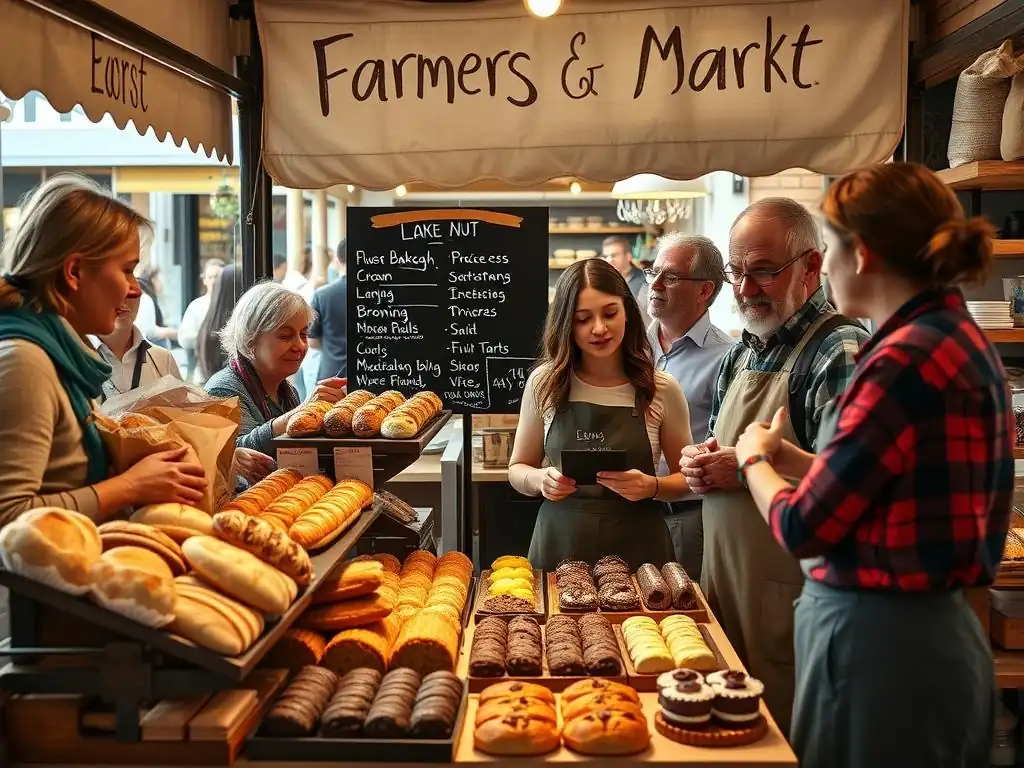
Before you can analyze your customers' price sensitivity, you need to know who your customers are! Your target market is the specific group of people most likely to buy your baked goods. Defining this group clearly helps you focus your marketing efforts, tailor your product offerings, and, crucially, understand their potential willingness to pay. Are you aiming for busy families needing convenient treats, health-conscious individuals seeking specific dietary options, or businesses looking for corporate gifts? Each group will have different needs, priorities, and financial capacities, all impacting their customer price sensitivity.
Identifying your target market involves looking at demographics (age, income, location, family status) and psychographics (lifestyle, values, interests, attitudes). For a home baker specializing in high-end French pastries, the target market might be affluent individuals in a specific neighborhood who appreciate gourmet food and are willing to pay premium prices for quality and authenticity. Their customer price sensitivity will likely be lower than someone targeting college students looking for budget-friendly cookies. Pinpointing these characteristics allows you to research and understand the pricing expectations within that specific group.
Defining Your Ideal Customer Profile for Home-Baked Treats
Creating an "ideal customer profile" or buyer persona is a helpful exercise in customer price sensitivity analysis. This involves building a detailed, semi-fictional representation of your typical customer. Give them a name, age, occupation, income range, and describe their lifestyle, hobbies, and where they shop. What are their baking needs or desires? Are they looking for convenience, unique flavors, dietary options, or impressive custom creations? What are their pain points related to baking or buying baked goods?
For example, an ideal customer for a home baker specializing in allergen-friendly cupcakes might be "Sarah, a 35-year-old working mother with two young children who have nut allergies. She values safe, delicious treats for school events and birthday parties but lacks the time or expertise to bake them herself. She is willing to pay a premium for guaranteed allergen-free products that are also appealing to kids.
Her income is moderate, so while she prioritizes safety, she still considers price relative to other specialty options." Understanding "Sarah's" priorities and financial situation helps inform your customer price sensitivity analysis for allergen-friendly cupcakes – highlighting that safety and convenience might reduce her price sensitivity compared to a standard cupcake buyer.
Segmenting Your Market: Identifying Different Customer Groups
Even within a seemingly single market, there are often different segments with varying levels of customer price sensitivity. It's rare that all your customers will have the exact same willingness to pay. Segmenting your market means dividing it into distinct groups based on shared characteristics, needs, or behaviors that affect their purchasing decisions and price sensitivity.
A home baker might identify segments like:
- Busy Professionals: Value convenience and quality, potentially less price-sensitive for quick, high-quality treats.
- Budget-Conscious Students: Prioritize low prices, highly price-sensitive.
- Health Enthusiasts: Seek specific ingredients (organic, low-sugar), willing to pay more for perceived health benefits, lower price sensitivity within their niche.
- Special Occasion Planners: Focused on unique, custom items for events, higher willingness to pay for bespoke designs and reliability, lower price sensitivity for high-stakes purchases.
By recognizing these different segments through customer price sensitivity analysis, you can potentially tailor your offerings and pricing strategies. You might offer value packs for students, premium ingredient options for health enthusiasts, and detailed custom pricing for occasion planners. Understanding these segments prevents a one-size-fits-all pricing approach that might alienate potential customers in different groups.
Conducting Customer Price Sensitivity Analysis: Practical Methods
So, how do you actually figure out how price-sensitive your customers are? There are several practical methods you can employ, even as a small home-based business. These methods involve gathering information directly from potential customers, observing their behavior, and researching the market. No single method provides a complete picture, but using a combination can offer valuable insights for your customer price sensitivity analysis.
It's important to approach these methods systematically. Define what you want to learn (e.g., "Would customers pay $3 for a large cookie instead of $2.50? "), choose the appropriate method, collect data carefully, and then analyze the results. Remember that customer stated preferences aren't always the same as their actual buying behavior, so combining different data sources is key to a robust customer price sensitivity analysis.
Surveys and Questionnaires: Gauging Price Preferences
Surveys and questionnaires are straightforward ways to ask potential customers about their price preferences directly. You can create simple online forms using free tools or even ask questions verbally at a farmer's market stall. Questions can range from "How much would you expect to pay for a slice of this cake?" to "Which price point seems most reasonable for a box of six muffins: A) $12, B) $15, C) $18?" You can also ask about the perceived value of specific ingredients or features.
For instance, a home baker developing a new line of artisanal bread could survey potential customers in their area. They might ask: "On average, how much are you willing to pay for a high-quality, large loaf of sourdough made with organic flour?" with a range of options ($5-$7, $8-$10, $11-$13, etc.).
They could also ask about the importance of specific factors like organic ingredients, local sourcing, or unique flavor profiles and how those influence willingness to pay. Analyzing responses from 50-100 potential customers can provide a preliminary understanding of the general price range your target market considers acceptable, forming a basis for your initial customer price sensitivity analysis.
Experimenting with Pricing: A/B Testing for Baked Goods
A more direct method for customer price sensitivity analysis is A/B testing, which involves offering the same product at different price points to similar customer groups and observing the sales results. This is easier for online businesses or those selling through multiple channels. For a home baker, this might involve selling at two different farmer's markets with slightly different demographics or listing products on an online platform at one price and selling directly via social media at another (though consistency is generally advised, this is a way to gather data).
A practical example could be offering your signature brownies at $3.00 each at one market for a month and $3.50 each at another similar market (or during different weeks at the same market, being transparent with repeat customers if necessary). Track the number of brownies sold at each price point and compare the total revenue generated. Total Revenue = Price x Quantity Sold.
If selling at $3.00 results in 100 brownies sold (Revenue = $300) and selling at $3.50 results in 70 brownies sold (Revenue = $245), it suggests that, in this specific scenario, the $3.00 price point was more effective in generating revenue, indicating some degree of price sensitivity. This real-world data is invaluable for refining your customer price sensitivity analysis.
Analyzing Competitor Pricing: Understanding Market Standards
Researching what your competitors are charging for similar baked goods is a fundamental step in customer price sensitivity analysis. This gives you a baseline understanding of the prevailing market prices and customer expectations in your area or niche. Look at other home bakers, local bakeries, and even relevant grocery store or online options if they target a similar customer segment.
Create a simple spreadsheet listing competitors and the prices of their comparable products. For example:
- Competitor A (Local Bakery): Standard Cupcake - $3.75, Custom Cake (serves 10) - $75
- Competitor B (Home Baker): Standard Cupcake - $3.50, Custom Cake (serves 10) - $70
- Competitor C (Grocery Store): Standard Cupcake (pack of 6) - $18 ($3 each), Custom Cake (serves 10, limited design) - $50
This comparison helps you see where your potential pricing falls within the market range. If you plan to price significantly higher, your customer price sensitivity analysis must justify that premium through clear differentiation (e.g., superior ingredients, unique designs, better service). If you price lower, understand the volume needed to be profitable and how it might affect your brand perception. Competitor analysis provides crucial context for your own pricing decisions.
Factors Affecting Price Sensitivity in the Baking Market
Beyond the general concept, several factors specifically influence how price-sensitive customers are when buying baked goods. These elements relate directly to the product itself, your business's reputation, and the market environment. Understanding these factors is crucial for an accurate customer price sensitivity analysis and for developing pricing strategies that resonate with your target market.
Recognizing these influences allows you to anticipate how customers might react to your prices and identify opportunities to potentially reduce price sensitivity. For example, if customers are highly sensitive to the price of a standard cookie, focusing on differentiating your cookie through a unique flavor or premium packaging might make them less likely to switch based solely on a small price difference.
Perceived Value of Your Baked Goods: Quality and Ingredients
The perceived value is arguably the most powerful factor influencing customer price sensitivity in baking. It's not just the physical product but what the customer believes it's worth to them. This is heavily tied to the quality of your ingredients and the craftsmanship you put into your baking. Do you use high-quality butter, real vanilla extract, premium chocolate, or locally sourced fruit? Are your techniques evident in the texture and flavor?
Customers often associate higher quality ingredients and careful preparation with higher value. If your chocolate chip cookies are made with premium European chocolate chunks and organic butter, and they consistently bake up perfectly with a gooey center, customers might perceive them as being worth more than a cookie made with standard ingredients. This higher perceived value can decrease their price sensitivity.
A key part of customer price sensitivity analysis is understanding which quality aspects your target market values most and ensuring your pricing aligns with that perceived value. Highlighting your quality ingredients (e.g., "Made with 100% real butter and Belgian chocolate") can help communicate this value to customers.
Brand Perception and Loyalty
Your brand perception – how customers view your home baking business – and the loyalty you build significantly impact customer price sensitivity. A strong brand associated with delicious, reliable products and friendly service can reduce the importance of price in a customer's decision-making. Customers who trust your brand and consistently enjoy your baked goods are often less likely to switch to a competitor solely because of a slightly lower price.
Building brand loyalty involves delivering consistent quality, providing excellent customer service, and creating a positive overall experience. If customers have had wonderful experiences ordering custom cakes from you for multiple family events, they are less likely to shop around based purely on price for their next occasion. They trust your ability to deliver and value the relationship. This loyalty translates into lower price sensitivity, as highlighted by customer price sensitivity analysis. Cultivating a strong brand where customers feel a connection to you and your products allows you more flexibility in your pricing.
Availability of Substitutes: Differentiating Your Offerings
The number and nature of substitutes available to your customers directly affect their customer price sensitivity. If customers have many easy alternatives that they perceive as similar to your product, they will be more sensitive to your price. Why pay more if they can get something "just as good" down the street or at the grocery store?
This is where differentiating your offerings becomes crucial. If you specialize in a unique flavor combination (e.g., a lavender-honey scone), cater to a specific dietary need (e.g., gluten-free, dairy-free, sugar-free), or offer a level of customization or artistry that competitors don't, you reduce the availability of direct substitutes. Customers seeking that specific unique value proposition will likely be less price-sensitive because your product meets their needs in a way that others don't.
Part of customer price sensitivity analysis involves honestly assessing how unique your products are and how easily customers can find alternatives that satisfy their needs equally well. The more unique and differentiated your offering, the lower the likely price sensitivity.
Strategies for Pricing Based on Customer Price Sensitivity

Once you have a solid understanding of your target market's customer price sensitivity, you can choose a pricing strategy that aligns with your findings and business goals. There isn't a single "right" pricing strategy; the best approach depends on your specific products, target market, costs, and competitive landscape. Your analysis should guide whether you position yourself as a premium provider, a value option, or somewhere in between.
Selecting the appropriate strategy based on your customer price sensitivity analysis is key to attracting the right customers and achieving profitability. It's not just about picking a number; it's about strategically positioning your business in the market.
Premium pricing is a strategy where you set prices higher than your competitors because you offer a superior product, experience, or brand perception. This strategy works best when your customer price sensitivity analysis reveals that your target market has low price sensitivity and highly values quality, uniqueness, or luxury. It requires you to genuinely deliver on that premium promise through exceptional ingredients, craftsmanship, presentation, and customer service.
For example, a home baker specializing in intricate French macarons made with imported almond flour and gourmet fillings might adopt a premium pricing strategy. If their customer price sensitivity analysis shows that their target customers are affluent individuals who appreciate authentic patisserie and are willing to pay $2.50 - $3.50 per macaron (compared to $1.50 - $2.00 for standard cookies), pricing at the higher end of this range is viable.
This strategy reinforces the perception of exclusivity and high quality, attracting customers who prioritize indulgence over budget. It's essential that the quality of the macarons and the overall brand experience justify the higher price point.
Value Pricing: Balancing Price and Perceived Benefits
Value pricing focuses on offering products at a price that customers perceive as excellent value for money. This doesn't necessarily mean being the cheapest, but rather offering a strong combination of quality, quantity, and price that appeals to a more price-sensitive market segment. Your customer price sensitivity analysis might indicate that your target customers are more budget-conscious or have many similar options available, making value an important factor.
A home baker targeting busy families or students might employ a value pricing strategy. They might offer slightly larger cookies, multi-buy discounts (e.g., "Buy 5, Get 1 Free"), or bundle deals (e.g., a "School Lunch Pack" with muffins and cookies).
If their customer price sensitivity analysis shows that their target market is highly responsive to price and values getting "more for their money," pricing slightly below premium competitors while maintaining good quality can attract a larger customer base. For example, pricing a dozen standard cookies at $15 ($1.25 each) when competitors charge $1.50-$2.00 each positions the baker as a value provider, appealing to customers whose customer price sensitivity is high but who still appreciate homemade quality over mass-produced options.
Competitive Pricing: Aligning with Market Standards
Competitive pricing involves setting your prices primarily based on what your competitors are charging for similar products. This is a common strategy when your customer price sensitivity analysis shows that your market is highly competitive and customers have many easily comparable options. In such a market, pricing significantly above competitors without clear differentiation can lead to lost sales, while pricing too far below might signal lower quality.
If you're selling relatively standard items like chocolate chip cookies or basic brownies in a market with many other home bakers or local shops offering similar products, competitive pricing might be the most practical strategy. Your customer price sensitivity analysis will involve researching competitor prices and positioning your price within that established range. You might price slightly below competitors to attract initial customers, match their prices, or price slightly above if you offer a small, noticeable difference (like using premium chocolate chips).
For instance, if most local bakers sell a standard brownie for $4.00, you might price yours at $3.75 or $4.00, knowing that your target customers are likely comparing prices for this common item. Your customer price sensitivity analysis here helps you understand the acceptable price window defined by the market itself.
Overcoming Price Sensitivity: Adding Value to Your Baked Goods
Even if your customer price sensitivity analysis reveals that your target market is quite price-sensitive, you're not powerless! You can implement strategies to reduce this sensitivity by increasing the perceived value of your baked goods and building stronger customer relationships. The goal is to make your product feel worth the price, even if it's not the absolute cheapest option available.
Adding value isn't just about the ingredients; it's about the entire customer experience. By focusing on these aspects, you can shift the customer's focus from just the price tag to the overall benefit they receive from choosing your business. This is a proactive approach to managing the findings of your customer price sensitivity analysis.
As mentioned earlier, ingredient quality directly impacts perceived value and can lower customer price sensitivity. Using premium, high-quality ingredients isn't just about better taste; it's a selling point you can communicate to your customers. Mentioning "real butter," "Belgian chocolate," "organic flour," "local berries," or "cage-free eggs" on your labels, website, or social media helps customers understand why your product might cost a little more.
For example, if your customer price sensitivity analysis shows customers are hesitant to pay $25 for a standard 9-inch apple pie, but you use expensive heritage apples, all-butter crust, and a hint of gourmet spice, emphasize these points. You could use a blockquote on your product description: Baked with crisp, local Honeycrisp apples, a flaky all-butter crust, and a touch of Madagascar vanilla. Taste the difference quality ingredients make!
This highlights the value proposition beyond just "apple pie" and can justify a higher price to customers who prioritize taste and quality, effectively reducing their customer price sensitivity for your specific pie.
Improving Customer Service: Building Relationships
Exceptional customer service can significantly reduce customer price sensitivity. When customers feel valued, remembered, and well-cared for, they are often willing to pay a little more for the positive experience. This includes being responsive to inquiries, handling orders efficiently, being friendly and approachable, and going the extra mile (e.g., remembering a regular customer's favorite order, adding a small complimentary sample).
Consider two home bakers selling similar cookies at similar prices. If one baker is slow to respond to messages, occasionally messes up orders, and is impersonal, while the other is quick to reply, double-checks order details, and greets customers with a warm smile, which one do you think customers will prefer, even if the price is the same or slightly higher for the second baker? The baker with better service builds loyalty, making customers less likely to switch purely based on price. This relationship-building is a powerful tool against high customer price sensitivity.
Creating a Unique Brand Experience
Beyond the product itself, the overall brand experience you create contributes to perceived value and can combat customer price sensitivity. This includes your packaging, the story behind your business, the ease of ordering, and the feeling customers get when they interact with you. Does your packaging feel thoughtful and professional? Do you share your passion for baking and the inspiration behind your recipes? Is the ordering process smooth and pleasant?
A home baker specializing in gift boxes of assorted cookies could create a unique brand experience by using beautiful, eco-friendly packaging, including a small handwritten note, and sharing the story of how their grandmother's recipes inspired their business. This transforms a simple box of cookies into a thoughtful gift or a special treat. Customers buying this experience are often less focused on the per-cookie price and more on the overall feeling and presentation. This unique experience effectively lowers customer price sensitivity compared to buying cookies in plain packaging.
Practical Examples of Customer Price Sensitivity in Baking
Looking at specific examples helps illustrate how customer price sensitivity analysis plays out in real-world home baking scenarios. Different types of baked goods appeal to different markets with varying sensitivities to price, requiring tailored pricing approaches.
These case studies demonstrate that understanding the customer, the product's place in the market, and the value drivers are key to setting successful prices that customers are willing to pay.
Case Study: Pricing Artisan Breads vs. Standard Loaves
Imagine a home baker selling two types of bread: a standard white sandwich loaf and an artisan sourdough boule made with organic heritage grain flour and a long fermentation process.
- Standard White Loaf: Target market is likely families looking for an everyday staple. Substitutes are readily available at grocery stores for around $2-$4. Customer price sensitivity is likely high. Pricing this loaf at $5-$6 might be too high for many customers, leading them to buy cheaper alternatives. A customer price sensitivity analysis would likely indicate that the acceptable price range is closer to $3-$4, requiring focus on efficiency or volume to be profitable.
- Artisan Sourdough Boule: Target market is likely foodies, health-conscious individuals, or those seeking unique flavors, often with higher disposable income. Substitutes are fewer and often found at specialty bakeries priced $6-$10+. Customer price sensitivity is likely lower. Customers are paying for the quality ingredients, the complex flavor developed through fermentation, and the artisanal process. A customer price sensitivity analysis for this segment might reveal a willingness to pay $7-$9 per loaf, making a premium price point viable and reflecting the higher cost of ingredients and labor.
This case shows that the type of product and its associated market segment fundamentally change the relevant customer price sensitivity analysis.
Case Study: Pricing Custom Cakes for Special Occasions
Consider a home baker who specializes in custom-designed cakes for birthdays, anniversaries, and other events. The value proposition here is highly personalized, often artistic, and tied to significant emotional moments.
- Product: A bespoke cake, tailored to a client's specific theme, size, flavor, and dietary needs. It requires significant time for consultation, design, baking, and intricate decoration.
- Target Market: Individuals planning special events, often prioritizing uniqueness, appearance, and reliability over being the absolute cheapest option. Their customer price sensitivity for a crucial item like a wedding cake is typically lower than for everyday treats.
- Pricing: Instead of pricing solely by ingredient cost, the baker must factor in design complexity, time spent (which can be many hours for intricate work), consultation time, reputation, and the guarantee of delivering a perfect centerpiece for a key event. Competitor analysis for custom cakes often shows pricing based per serving, with significant additional charges for complex designs (e.g., $5-$10+ per serving, plus a design fee). A customer price sensitivity analysis would involve understanding what customers in their area typically budget for event cakes of similar complexity and size, and recognizing that customers value the baker's skill and reliability highly. Pricing too low might attract customers who don't value the artistry, while pricing appropriately for the skill and time invested allows the baker to serve clients who appreciate and are willing to pay for true custom work.
This case highlights how the service aspect, customization, and the emotional significance of the purchase drastically alter customer price sensitivity compared to standard retail baked goods.
Tools and Resources for Customer Price Sensitivity Analysis

While customer price sensitivity analysis might sound complex, there are tools and resources available to help home bakers gather and analyze the necessary information. You don't need expensive software or a marketing degree to start; many resources are free or low-cost and accessible.
Leveraging these tools can streamline your data collection and analysis process, making customer price sensitivity analysis more manageable and effective for your home baking business.
Online Survey Platforms for Gathering Customer Data
Online survey platforms are excellent tools for creating and distributing questionnaires to gauge customer price preferences.
- Examples: Google Forms (free), SurveyMonkey (free basic plan), Typeform (free basic plan).
- How they help: You can easily design surveys with different question types (multiple choice, open-ended, rating scales) to ask about willingness to pay, perceived value of ingredients, importance of certain features, and demographic information. You can share the survey link via social media, email lists, or QR codes.
- Benefit for Customer Price Sensitivity Analysis: These platforms often provide basic analytics, showing response rates and summarizing answers, making it easier to see trends in price expectations and preferences among your target audience.
Using these platforms allows you to systematically collect feedback from a potentially large group, providing quantitative data to support your customer price sensitivity analysis.
Spreadsheet Software for Analyzing Pricing Data
Spreadsheet software is essential for organizing and analyzing the data you collect from surveys, pricing experiments, and competitor research.
- Examples: Google Sheets (free), Microsoft Excel.
- How they help: You can create tables to list competitor prices, track sales volume at different price points during A/B tests, organize survey responses, and calculate costs.
- Benefit for Customer Price Sensitivity Analysis: Spreadsheets allow you to perform calculations like profit margins at different price points, compare revenue generated during experiments, and visualize data through charts (e.g., a bar chart showing how many people chose each price option in a survey). This structured approach helps you make data-driven decisions based on your customer price sensitivity analysis.
Using a spreadsheet helps you move beyond guesswork and base your pricing decisions on concrete numbers derived from your research and experiments.
Market Research Reports for the Baking Industry
While specific reports on home baking businesses might be scarce and expensive, broader market research reports for the bakery industry or related food sectors can offer valuable insights into consumer trends, purchasing habits, and general price points for various categories of baked goods.
- Examples: Reports from industry associations, market research firms (often available in snippets or summaries online), articles in food industry publications.
- How they help: These reports might provide data on consumer spending on baked goods, growth in specific segments (like gluten-free or artisanal), and factors influencing purchasing decisions on a larger scale.
- Benefit for Customer Price Sensitivity Analysis: While not specific to your home business, this macro-level data provides valuable context. For example, a report showing a rising consumer willingness to pay more for organic or locally sourced food confirms that emphasizing these aspects could reduce customer price sensitivity for your products if that aligns with your target market. Use these reports as a starting point to understand broader trends influencing the market you operate within.
Accessing and reviewing relevant market data, even at a high level, can inform your understanding of consumer behavior and contribute to a more robust customer price sensitivity analysis.
Avoiding Common Pricing Mistakes in Your Home Baking Business
Even with a good understanding of customer price sensitivity analysis, it's easy to fall into common pricing traps. Being aware of these mistakes can help you avoid them and build a more sustainable and profitable business. Pricing is an ongoing process that requires regular review and adjustment based on market feedback and your own costs.
Avoiding these pitfalls ensures that your pricing strategy, informed by customer price sensitivity analysis, is practical, profitable, and aligns with your business goals.
Underestimating the Value of Your Ingredients and Labor
One of the most frequent mistakes home bakers make is underpricing their products because they don't fully account for all their costs, especially their own labor. You might track flour and sugar, but do you track the cost of electricity for your oven, the wear and tear on your equipment, packaging materials, labels, and your time? Your time spent sourcing ingredients, baking, decorating, packaging, marketing, and communicating with customers is valuable and must be factored into your pricing.
Failing to calculate your true costs means you might set prices that customers are willing to pay based on customer price sensitivity analysis, but which don't actually result in a profit after all expenses are considered. Create a detailed cost sheet for each product, including all ingredients (even small amounts of vanilla or salt), packaging, utilities, and a reasonable hourly rate for your time. Ensure your final price, informed by customer price sensitivity analysis, is high enough to cover these costs and provide a profit margin. Don't undervalue your skill and effort!
Ignoring Competitor Pricing and Market Trends
While you shouldn't only price based on competitors, ignoring them entirely is a mistake. Customers don't exist in a vacuum; they compare options. If your prices are significantly out of line with comparable products in your market without a clear, justifiable reason (like demonstrably higher quality or a unique offering), you risk losing customers.
Similarly, ignoring market trends can lead to outdated pricing. Is there a growing demand for vegan options? Are customers in your area increasingly willing to pay more for locally sourced goods? Staying informed about these trends, perhaps through the market research reports mentioned earlier, helps you understand shifts in customer price sensitivity. For example, if a trend shows increased willingness to pay for locally sourced ingredients, and you use them, highlighting this can justify a slightly higher price point that customers are now more receptive to, according to evolving market customer price sensitivity.
Failing to Adapt to Changing Customer Preferences
Customer preferences and market conditions are not static. What customers were willing to pay last year might change due to economic factors, new competitors entering the market, or evolving tastes. Setting a price and never revisiting it is a common error.
Your customer price sensitivity analysis should be an ongoing process, not a one-time task. Regularly review your sales data, gather customer feedback, and keep an eye on competitor pricing. Are sales slowing down at a certain price point? Are customers asking for different types of products? Are your costs increasing? Be prepared to test new price points or adjust your strategy as needed. Using methods like A/B testing periodically can help you stay attuned to current customer price sensitivity and ensure your pricing remains effective over time. Flexibility is key to long-term success.
Conclusion: Mastering Pricing Through Customer Understanding
Mastering pricing for your home baking business is a journey that begins and ends with understanding your customer. It's not about pulling numbers out of thin air, but about conducting thorough customer price sensitivity analysis to align your prices with what your target market values and is willing to pay. This involves researching your ideal customers, analyzing the competitive landscape, understanding the factors that influence their buying decisions, and using practical methods to test and refine your pricing strategy.
By prioritizing customer price sensitivity analysis, you move beyond simply covering costs to strategically positioning your business for profitability and growth. It empowers you to make confident pricing decisions that attract the right customers, build loyalty, and ensure your delicious baked goods are not only loved but also contribute to a sustainable and thriving business.
Key Takeaways for Pricing Your Baked Goods Effectively
- Know Your Customer: Define your target market and ideal customer profile to understand their needs, values, and financial capacity.
- Understand Price Sensitivity: Recognize how much price influences your target customers' decisions and identify factors that make them more or less sensitive.
- Analyze Competitors: Research what others are charging for similar products to understand market standards.
- Calculate Your True Costs: Account for all ingredients, overhead, and your valuable labor time.
- Determine Perceived Value: Understand what aspects of your product (quality, uniqueness, service) your customers value most.
- Choose a Strategy: Select a pricing strategy (premium, value, competitive) that aligns with your customer price sensitivity analysis and business goals.
- Add Value: Differentiate your offerings through quality, service, and brand experience to reduce price sensitivity.
- Test and Adapt: Use surveys, experiments, and ongoing analysis to refine your pricing over time based on real-world data and changing market conditions.
The Ongoing Importance of Customer Price Sensitivity Analysis
Customer price sensitivity analysis is not a one-time task but an ongoing process critical for the long-term success of your home baking business. The market changes, customer preferences evolve, and your costs fluctuate. Regularly revisiting your analysis ensures your pricing remains competitive, profitable, and aligned with the current realities of your market.
By staying attuned to how sensitive your customers are to price and why, you can proactively adjust your strategies, introduce new products effectively, and continue to grow your business. Embracing customer price sensitivity analysis helps you build a sustainable foundation, ensuring that your passion for baking also translates into a thriving livelihood, making sure customers are happy to pay for the delicious value you provide.
Frequently Asked Questions
What is customer price sensitivity analysis and why is it important for BakeWithEase?
Customer price sensitivity analysis helps us understand how much price changes affect our customers' willingness to buy our baking resources. This is crucial for pricing our recipes and courses effectively to maximize revenue.
How can BakeWithEase determine if its customers are price-sensitive?
We can use methods like surveys and A/B testing different price points on our website. Monitoring sales volume after price adjustments is also a key indicator.
What factors might influence the price sensitivity of BakeWithEase customers?
Factors like income level, baking skill, and the perceived value of our content influence their price sensitivity. Competition from other baking websites also plays a role.
If analysis reveals high price sensitivity, what strategies can BakeWithEase employ?
We could offer tiered pricing, providing basic recipes at a lower price and premium content at a higher price. Bundling recipes or offering discounts and promotions can also help.
How often should BakeWithEase conduct customer price sensitivity analysis?
We should conduct this analysis regularly, ideally every quarter or at least annually, to account for changing market conditions and customer preferences. This ensures our pricing strategy remains optimized.
Final Reflection: The Price of Understanding Your Customer
Understanding customer price sensitivity isn't just a business strategy; it's the key to sustainable growth in today's volatile market. Ignoring this crucial element can lead to missed opportunities, dwindling profits, and ultimately, failure. The ability to accurately gauge your target market's willingness to pay is no longer a luxury, but a necessity for survival.
The impact of effectively analyzing customer price sensitivity is profound and far-reaching. It shapes not only pricing strategies but also product development, marketing campaigns, and even the overall brand identity. Understanding what your customers value allows you to tailor your offerings to meet their needs and expectations, fostering loyalty and driving sales. The price is what you pay. Value is what you get.
– Warren Buffett. This quote perfectly encapsulates the core message: it's not just about the price tag, but the perceived value in relation to that price. This understanding is crucial for long-term success.
Now, consider your own business or even your personal spending habits. How do you react to different price points? What factors influence your purchasing decisions?
By applying the principles discussed in this article, you can gain a deeper understanding of your own market, whether you're a seasoned entrepreneur or a consumer navigating the complexities of the modern marketplace. Take the time to analyze your target audience, conduct thorough research, and use the insights gained to build a more robust and profitable business – or make more informed purchasing decisions for yourself. The power to understand and leverage price sensitivity is in your hands.
Unlock Your Pricing Power: Set Prices Customers Will Love
Thanks for diving deep into the world of pricing strategy! You now have the tools to understand your customers' price sensitivity and set prices that are both profitable and appealing. Ready to put this knowledge into action?
- Craft your ideal pricing strategy: Consider the insights gained today and implement them into your pricing model. Think about your cost of goods, your target profit margin, and the price points that resonate with your customer base. This is the most important step!
- Share your pricing wins (or challenges!): Join the conversation in the comments below – let's discuss what pricing strategies you’re using and what challenges you're facing.
- Explore BakeWithEase's recipe cost calculator: (This would be a link on the actual website, but is omitted here per the prompt instructions). It’s a handy tool to help you accurately determine your costs for each recipe.
So, what pricing strategy will you implement first, and how will you measure its success?