
The Best Flour for Amazing Focaccia & Flatbreads

Welcome to BakeWithEase, where baking becomes a joy, not a chore! Ever wondered if the secret to that perfect, airy focaccia lies in the flour you choose? You're in the right place. Discover the surprising key to unlocking the best flour focaccia recipe and elevate your bread baking game today. But which flour really makes the difference? Let's dive in and find out!
- The Best Flour for Pizza Dough & Bread
- Bake Pizza & Bread with the Right Flour: A Comprehensive Guide
- Understanding Flour Types for Pizza & Bread Success
- The Best Flour for Pizza Dough: Achieving that Perfect Crust
- Choosing Flour for Bread: Texture and Flavor
- Comparing Flour Options for Pizza and Bread
- The Ultimate Flour Guide for Your Best Pizza Dough Recipe
- Tips for Storing Flour to Maintain Freshness
- Beyond Wheat Flour: Exploring Alternative Flour Options
- Frequently Asked Questions
- Final Reflection: The Flour Power of Perfect Flatbreads
- Unleash Your Inner Pizzaiolo: Bake the Perfect Flatbread!
The Best Flour for Pizza Dough & Bread
Bake Pizza & Bread with the Right Flour: A Comprehensive Guide
Choosing the right flour is arguably the single most important decision you'll make when baking pizza or bread. It's not just about having flour; it's about understanding how different types behave, how they interact with water and yeast, and ultimately, how they contribute to the final texture, rise, and flavor of your baked goods. From the chewy crust of a perfect pizza to the airy crumb of a rustic loaf, the flour dictates the possibilities.
This guide will walk you through the fundamental differences between various flours, focusing on how they perform specifically in pizza dough and bread recipes. We'll explore everything from common all-purpose varieties to specialty options like Type 00 and high-gluten flours, helping you make informed choices to elevate your baking from good to truly amazing. Get ready to unlock the secrets to achieving those coveted textures and flavors!
Understanding Flour Types for Pizza & Bread Success
The Importance of Flour Selection in Bread Baking
Flour isn't just a white powder; it's a complex ingredient primarily made from ground wheat kernels, containing starch and protein. The most critical protein for bakers is glutenin and gliadin, which, when mixed with water, form gluten. Gluten is the elastic network that traps gases produced by yeast, allowing dough to rise and giving bread and pizza their structure. The amount and quality of protein (and thus gluten potential) vary significantly between different types of flour, directly impacting the dough's strength, elasticity, and ability to hold its shape during fermentation and baking.
Consider a classic French baguette compared to a soft sandwich loaf. The baguette requires a flour with moderate protein to develop enough structure for its open, airy crumb, while the sandwich loaf might use a slightly lower protein flour combined with enrichments like milk or eggs for tenderness.
Using the wrong flour can lead to dense, heavy loaves or pizza crusts that are too tough or too weak to hold toppings. For instance, using a very low-protein cake flour for a rustic bread would likely result in a flat, dense disc because the gluten network wouldn't be strong enough to support the rise.
Exploring Different Wheat Flours for Baking
Wheat flours are typically categorized based on their protein content and how finely they are ground. Common categories include all-purpose, bread flour, pastry flour, cake flour, and specialty flours like Type 00 or high-gluten flour. All-purpose flour is a blend, usually containing around 10-12% protein, making it versatile for various baked goods. Bread flour, specifically milled for yeast baking, boasts a higher protein content, typically 12-14%, leading to stronger gluten development and a chewier texture, ideal for many bread types and some pizza doughs.
Specialty flours offer unique properties. Type 00 flour, originating from Italy, is finely ground and often has a protein content suitable for pasta or specific pizza styles (around 11-12.5%, though this can vary). High-gluten flour, as the name suggests, has the highest protein content, often 14-16% or even higher, used when maximum chewiness and structure are desired, such as in bagels or certain artisan loaves. Understanding these differences is the first step in selecting the best flour for pizza dough or your desired bread type.
The Best Flour for Pizza Dough: Achieving that Perfect Crust
High-Gluten Flour: The Key to Chewy Pizza
For pizza crusts that boast incredible chewiness and strength, high-gluten flour is often the secret weapon. With protein levels typically ranging from 14% to 16% or even higher, this flour develops a very robust gluten network. This strength is crucial for doughs that undergo long fermentation periods or require significant stretching, like Neapolitan-style or New York-style pizza crusts. The high protein content allows the dough to capture more carbon dioxide produced by yeast, resulting in a more open internal structure and that characteristic chewy bite after baking at high temperatures.
Using high-gluten flour also means the dough can handle higher hydration levels (more water relative to flour), which contributes to a lighter, airier crust despite its chewiness. For example, a pizza dough made with 14% protein flour might comfortably handle 65-70% hydration or even higher, whereas a dough made with 10% protein flour might become too slack and difficult to handle at similar hydration levels.
This ability to absorb more water also helps keep the crust moist and tender on the inside while developing a crispy exterior when baked in a hot oven, like a brick oven reaching 800-900°F (425-480°C).
Type 00 Flour for Pizza: A Baker's Secret?
Type 00 flour, often associated with authentic Neapolitan pizza, is known for its extremely fine texture and moderate protein content, typically between 11% and 12.5%. Despite not being the highest in protein, the specific type of wheat used and the fine milling process contribute to a unique gluten structure that is very extensible yet strong enough for high-temperature baking. This allows the dough to stretch incredibly thin without tearing, creating a delicate, airy crust with a crispy bottom and soft, pillowy edges (the cornicione) when cooked rapidly at very high temperatures, often exceeding 800°F (425°C).
While the protein content of Type 00 flour might be similar to some all-purpose flours, its key difference lies in its low ash content and fine granulation. The low ash content means less of the outer bran layer is included, resulting in a very white flour and a cleaner flavor. The fine grind creates more surface area, which means the flour absorbs water quickly and evenly, leading to a smooth, easy-to-handle dough. Many pizza purists swear by Type 00 flour for achieving the specific characteristics of traditional Neapolitan pizza, where the rapid bake is essential.
Bread Flour for Pizza: A Viable Option?
Absolutely, bread flour is a widely used and excellent option for many pizza dough recipes, especially for home bakers. With its protein content typically ranging from 12% to 14%, bread flour provides a strong enough gluten network to create a chewy crust with good structure.
It's more readily available than high-gluten or imported Type 00 flours for many people and offers a great balance of strength and workability. Bread flour is particularly well-suited for pizza styles that might not require the extreme stretch of Neapolitan or are baked at slightly lower temperatures than professional pizza ovens, such as in a standard home oven reaching 500-550°F (260-290°C).
Using bread flour for pizza dough results in a crust that is satisfyingly chewy but perhaps not as intensely chewy as one made with very high-gluten flour. It handles hydration well, typically working nicely in recipes with 60-70% hydration. For instance, a simple pizza dough recipe using bread flour at 65% hydration will yield a dough that is easy to knead, stretches well, and bakes into a crust with a pleasant chew and good structure to hold toppings. It's a reliable workhorse flour for delicious homemade pizza.
Choosing Flour for Bread: Texture and Flavor
All-Purpose Flour for Versatile Bread
All-purpose flour, often shortened to AP flour, truly lives up to its name when it comes to bread baking, particularly for simpler or enriched loaves. With a protein content typically between 10.5% and 12%, it provides enough gluten development for a decent rise and crumb structure in many bread types. It's the go-to flour for quick breads, muffins, biscuits, and many basic yeast bread recipes, including sandwich loaves, rolls, and even some no-knead breads. Its moderate protein level makes the dough relatively easy to handle and results in a tender crumb compared to higher-protein flours.
While AP flour might not deliver the robust chew or lofty volume of loaves made with bread flour or specialty high-gluten flours, it's perfectly capable of producing delicious bread. For example, a classic white sandwich loaf made with AP flour often has a softer, finer crumb than one made with bread flour.
Using AP flour is also more forgiving for beginner bakers as the dough is less elastic and resistant than doughs made with higher-protein flours, making kneading and shaping simpler. Many recipes for enriched doughs, like challah or brioche, often call for AP flour because the added fats and sugars tenderize the dough, compensating for the lower protein content and resulting in a rich, soft texture.
Whole Wheat Flour in Bread: Adding Flavor and Nutrition
Whole wheat flour is milled from the entire wheat kernel, including the bran, germ, and endosperm, unlike white flours which primarily use the endosperm. This inclusion of the bran and germ gives whole wheat flour a significantly higher fiber content, beneficial nutrients like B vitamins and iron, and a distinct, nutty flavor.
The presence of bran and germ also affects gluten development; the sharp edges of the bran can cut the forming gluten strands, resulting in a denser loaf with a less airy crumb compared to white bread made with the same protein level. Typical protein content for whole wheat flour can range from 13% to 15%.
Because the bran interferes with gluten development and absorbs more water, whole wheat doughs often require higher hydration and longer kneading or resting times to achieve optimal structure. Many bakers blend whole wheat flour with white bread flour (e.g., 50/50 mix) to balance the nutritional benefits and flavor of whole wheat with the structure-building capacity of white flour. A loaf made with 100% whole wheat flour will be denser and heartier than a white loaf, offering a richer taste and more satisfying texture, often paired well with robust flavors or served with hearty meals.
Rye Flour for Bread: A Rustic Touch
Rye flour, milled from rye grain, brings a unique tangy flavor and dense texture to bread. Unlike wheat flour, rye contains less gluten-forming protein. The proteins present in rye don't form the same elastic network as wheat gluten. Instead, the structure of rye bread relies more on pentosans, complex carbohydrates that absorb large amounts of water and become gel-like.
This is why rye doughs are often sticky and don't develop the same elasticity as wheat doughs. Rye flour is often categorized by color or extraction rate (light, medium, dark), which relates to how much of the bran is included, similar to wheat flour. Protein content can vary, but its gluten potential is inherently lower than wheat.
Baking with rye flour typically requires different techniques than wheat baking. Because of the weaker gluten structure, 100% rye breads are often dense and require specific methods like using a sourdough starter (which helps break down pentosans and improves structure) or steaming during baking.
More commonly, rye flour is blended with wheat flour to produce loaves like classic deli rye bread, where the wheat flour provides the necessary gluten structure for a decent rise, while the rye contributes its characteristic flavor and slight tang. For example, a recipe might use 60% bread flour and 40% medium rye flour to achieve a loaf with good volume and a distinct rye character.
Comparing Flour Options for Pizza and Bread
Protein Content Comparison: Pizza vs. Bread
The protein content of flour is a primary indicator of its potential gluten development, which is key to the structure and texture of both pizza and bread. Flours typically range from around 5% protein (like cake flour) up to 16% or more (like high-gluten flour). For pizza dough, a higher protein content (11-14%+) is often preferred, especially for styles requiring a chewy crust and significant oven spring, such as Neapolitan or New York style.
This is because the strong gluten network can withstand intense heat and rapid expansion. Type 00 flour, while not always the highest in protein, is milled from specific wheat varieties selected for strong, elastic gluten suitable for high-temperature pizza ovens.
For bread, the ideal protein content varies depending on the desired outcome. A rustic artisan loaf might benefit from bread flour (12-14%) for a sturdy structure and open crumb, while a soft sandwich loaf might use all-purpose flour (10.5-12%) or a blend for a tender crumb. Enriched breads like brioche often use flours in the 10-12% range.
Whole wheat flour typically has high protein (13-15%), but the bran inhibits gluten development, leading to denser results unless blended. Understanding these ranges is crucial; using a low-protein flour for a high-hydration artisan bread would result in a slack, unmanageable dough, while using very high-gluten flour in a tender cake would make it tough.
| Flour Type | Typical Protein Range (%) | Common Use Cases (Pizza/Bread) |
|---|---|---|
| Cake Flour | 5-8 | Not suitable for yeast breads/pizza |
| Pastry Flour | 8-10 | Not typically used for yeast breads/pizza |
| All-Purpose Flour | 10.5-12 | Versatile bread, some pizza crusts (softer) |
| Bread Flour | 12-14 | Most yeast breads, many pizza crusts (chewier) |
| Type 00 Flour | 11-12.5 | Neapolitan pizza, some pasta |
| High-Gluten Flour | 14-16+ | Bagels, chewy artisan bread, specific pizza crusts |
| Whole Wheat Flour | 13-15 | Hearty breads (often blended) |
| Rye Flour | Varies (lower gluten) | Rustic breads (often blended) |
Gluten Development and Flour Choice
Gluten development is the process where the proteins glutenin and gliadin hydrate and link together to form an elastic network when flour is mixed with water and kneaded or allowed to rest (autolyse or bulk fermentation). The amount of gluten that can be developed is directly related to the flour's protein content and quality.
Flours with higher protein, like bread flour or high-gluten flour, have the potential to form a stronger, more extensive gluten network, which is essential for trapping the carbon dioxide produced by yeast. This trapped gas allows the dough to rise and creates the internal structure (crumb) of the bread or pizza crust.
The desired level of gluten development influences flour choice. For a chewy pizza crust or a rustic loaf with large air pockets, a strong gluten network from a high-protein flour is necessary. This requires sufficient kneading or long fermentation periods to allow the gluten to develop fully.
Conversely, for a tender sandwich loaf or a soft bread roll, moderate gluten development from all-purpose flour is sufficient; over-developing the gluten would result in a tough texture. Understanding how different flours develop gluten helps bakers predict the final texture and choose the best flour for pizza recipe outcomes and bread goals. For example, a Type 00 flour develops gluten differently due to its fine particle size, leading to extensibility ideal for stretching thin pizza.
Flavor Profiles of Different Flours in Breads
Beyond texture, flour contributes significantly to the flavor of bread. White flours, like all-purpose or bread flour, primarily milled from the endosperm, generally have a milder, slightly sweet, or neutral flavor profile, allowing other ingredients or fermentation byproducts to dominate. The specific type of wheat (e.g., hard red winter, hard red spring) can subtly influence flavor, but the difference is less pronounced in highly refined flours. Type 00 flour, due to its low ash content, offers a very clean and neutral taste, which is desirable for showcasing the simple flavors of traditional Neapolitan pizza.
Whole grain flours, containing the bran and germ, bring more complex and assertive flavors to bread. Whole wheat flour imparts a nutty, slightly earthy, and sometimes faintly bitter taste. The intensity of this flavor can vary depending on the wheat variety and how it's milled.
Rye flour is known for its distinctive tang and robust, earthy, and sometimes slightly sour notes, especially in darker varieties. Using a blend of white and whole grain flours allows bakers to balance structure and flavor, achieving loaves with character that still have a desirable crumb structure. For instance, adding 20% whole wheat flour to a bread flour base gives a loaf a subtle nutty undertone without making it overly dense.
The Ultimate Flour Guide for Your Best Pizza Dough Recipe
Recipe Adaptations Based on Flour Type
Using different types of flour often requires adjusting other aspects of a recipe, particularly hydration (the ratio of water to flour). Higher protein flours, like bread flour or high-gluten flour, absorb more water than lower protein flours, like all-purpose. If a recipe calls for AP flour at 60% hydration and you substitute bread flour, you might find the dough feels too stiff.
You may need to increase the water slightly, perhaps to 62-65%, to achieve the correct dough consistency. Conversely, substituting a lower protein flour into a recipe designed for bread flour might require slightly reducing the water to prevent the dough from being too sticky and slack.
Kneading time or fermentation strategy may also need adjustment. Higher protein flours often benefit from longer kneading or longer, slower fermentation to fully develop their stronger gluten potential. For example, a dough made with high-gluten flour for a chewy pizza crust might undergo a cold fermentation in the refrigerator for 24-72 hours to allow maximum flavor and gluten development with minimal effort.
Doughs made with softer flours, like AP, develop gluten more quickly and might be prone to tearing if over-kneaded or fermented for too long without careful handling. Always observe the dough's feel and adjust hydration and handling as needed when swapping flour types.
Tips for Working with High-Hydration Doughs
High-hydration doughs, which have a water-to-flour ratio of 70% or higher, often result in breads and pizza crusts with incredibly open, airy crumbs and crispy crusts. However, they can be quite sticky and challenging to handle, especially for beginners. The key is to embrace the stickiness and use techniques that minimize adding excess flour during handling, which can toughen the final product. Using wet hands or a dough scraper can help manage the stickiness during mixing and initial folds.
Techniques like stretch and folds, performed every 30-60 minutes during the bulk fermentation, are invaluable for developing gluten in high-hydration doughs without intensive kneading. Instead of traditional kneading, you gently stretch a portion of the dough up and fold it over itself, repeating around the bowl. This builds strength gradually.
Allowing for a long bulk fermentation, often several hours at room temperature or longer in the refrigerator, also helps develop strength through enzymatic activity and time, known as the autolyse principle or simply time-based development. Finally, shaping high-hydration doughs often involves minimal handling and using a well-floured surface or bench scraper to guide the dough rather than kneading it.
Best Flour for Pizza Recipe: Our Top Pick
For many home bakers aiming for a versatile, delicious pizza crust that balances chewiness and workability, bread flour is often the best flour for pizza recipe success. Its 12-14% protein content provides ample gluten for a satisfyingly chewy texture and good oven spring, making it suitable for baking in standard home ovens which typically reach temperatures around 500-550°F (260-290°C). Bread flour dough is also generally easier to handle and stretch than very high-gluten doughs, while still yielding a far superior crust to one made with lower-protein all-purpose flour.
Alternatively, if you have access to a pizza oven capable of reaching very high temperatures (750°F/400°C+) and are aiming for a lighter, airier, more traditional Neapolitan-style crust, Type 00 flour is an excellent choice. While slightly lower in protein than bread flour, its fine grind and specific gluten characteristics are optimized for this rapid, high-heat baking.
For the ultimate chewy, New York-style crust, high-gluten flour (14%+ protein) is the top pick, though it requires more experience to handle its very strong dough. Ultimately, the "best" flour depends on your desired crust style and baking equipment, but bread flour offers a fantastic starting point for most home pizza makers.
Tips for Storing Flour to Maintain Freshness
Proper Flour Storage for Optimal Baking Results
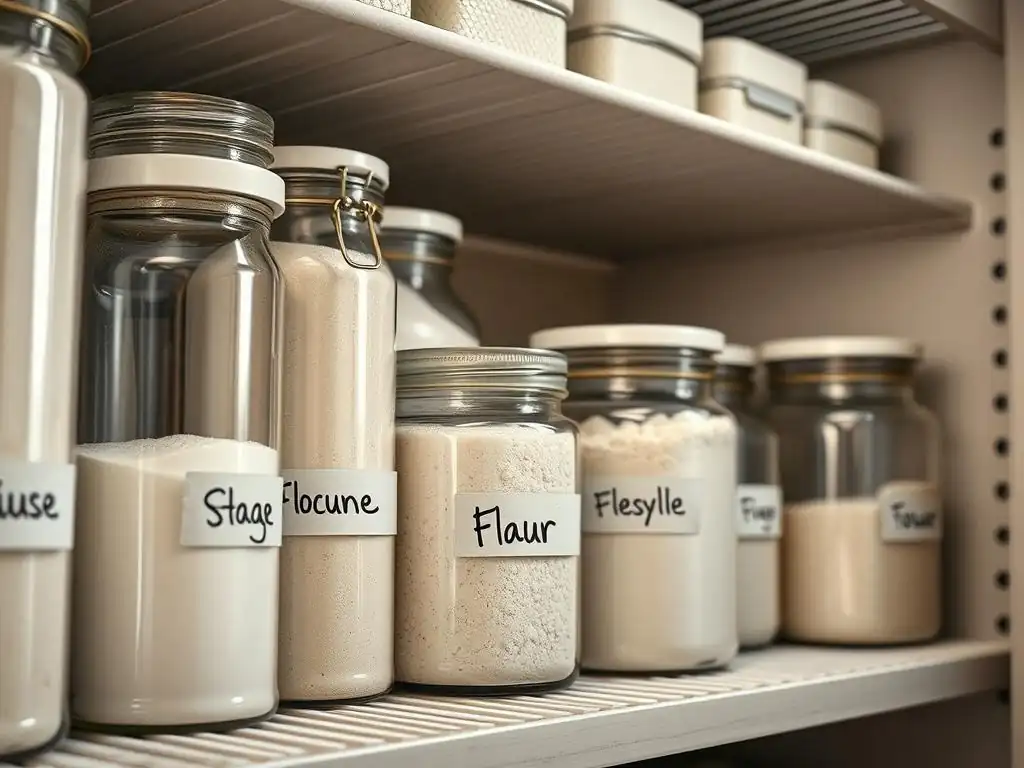
Flour is a pantry staple, but like any food product, it can lose freshness and even spoil if not stored correctly. Proper storage is essential to maintain the quality of the flour, preventing oxidation, moisture absorption, and pest infestation, all of which can negatively impact your baking results. Oxidized flour can develop off-flavors, while moisture can lead to clumping and mold. Pests like pantry moths or weevils are unwelcome guests that can ruin an entire batch.
The ideal storage conditions for flour are cool, dark, and dry. Temperatures between 50-70°F (10-21°C) are best. Storing flour in its original paper bag is okay for short periods if the environment is dry, but for longer storage or in humid conditions, transfer the flour to an airtight container.
- Airtight containers:
- Glass jars
- Food-grade plastic containers with tight-fitting lids
- Heavy-duty zip-top bags (press out excess air) - Storage locations:
- Pantry or cupboard (cool, dark, dry)
- Refrigerator (extends shelf life significantly, especially for whole grain flours)
- Freezer (best for long-term storage, prevents rancidity in whole grains)
Whole grain flours (like whole wheat or rye) are more perishable than white flours because they contain the germ, which is rich in oils that can go rancid. For this reason, it's highly recommended to store whole grain flours in the refrigerator or freezer, especially if you don't use them frequently. White flours stored properly in a pantry can last for several months, while whole grain flours are best used within 1-3 months at room temperature but will last 6-12 months in the fridge or freezer. Always check for off smells or signs of spoilage before use.
Beyond Wheat Flour: Exploring Alternative Flour Options
Spelt Flour for Bread
Spelt is an ancient grain that is a subspecies of wheat. Spelt flour can be used as an alternative or addition to modern wheat flour in bread baking. While it contains gluten, the gluten structure in spelt is more fragile and water-soluble compared to that in modern wheat. This means spelt doughs are often less elastic and require gentler handling; over-kneading can cause the gluten structure to break down. Spelt flour typically has a protein content similar to or slightly higher than all-purpose flour, often in the 11-13% range, but its gluten behaves differently.
Breads made with spelt flour often have a slightly nutty and sweet flavor profile. Because the gluten is more fragile, 100% spelt loaves can be denser than 100% modern wheat loaves, though they can still achieve a good rise with careful handling and appropriate hydration. Many bakers blend spelt flour with modern wheat bread flour to combine spelt's flavor and nutritional benefits with the stronger structure provided by wheat gluten.
For instance, substituting 25-50% of the bread flour in a standard recipe with spelt flour can add a lovely flavor dimension while maintaining a good crumb structure. Spelt flour also tends to absorb liquids more slowly initially but can become quite sticky if over-hydrated, so recipe adjustments may be necessary.
Frequently Asked Questions
What is the best flour for making focaccia?
The best flour for making focaccia is high-protein bread flour, which provides the necessary gluten structure for a chewy texture.
Can I use all-purpose flour instead of bread flour for focaccia?
Yes, you can use all-purpose flour, but the texture may be slightly less chewy and the focaccia might not rise as well as with bread flour.
What are the key ingredients for a basic focaccia recipe?
A basic focaccia recipe typically includes flour, water, yeast, salt, and olive oil. These ingredients work together to create a flavorful and airy bread.
How long should I let my focaccia dough rise?
It's recommended to let the focaccia dough rise for about 1 to 2 hours, or until it has doubled in size, to ensure the perfect airy texture.
Can I add toppings to my focaccia?
Absolutely! You can enhance your focaccia with various toppings like herbs, olives, tomatoes, or cheeses to add flavor and visual appeal.
Final Reflection: The Flour Power of Perfect Flatbreads
The quest for the perfect focaccia, a culinary journey fueled by the humble grain, reveals far more than just a recipe; it unveils the profound impact of ingredient choice on texture, flavor, and the overall baking experience. The seemingly simple act of selecting flour becomes a critical decision, influencing everything from the airy rise to the satisfying chew of the final product. This exploration into different flour types highlights the power of understanding your ingredients to achieve truly exceptional results.
This journey through various flours has not only improved my own baking but has also underscored the rich history and cultural significance embedded within each grain. The subtle nuances in flavor and texture, from the robust character of whole wheat to the delicate lightness of 00 flour, speak volumes about the diverse agricultural landscapes and traditions that contribute to our culinary heritage. Bread is the staff of life,
a simple phrase that carries immense weight when considering the profound impact of flour on cultures worldwide. It's a reminder that even the most basic ingredients hold a wealth of stories and connections.
Now, armed with this newfound knowledge, I invite you to embark on your own flour-powered adventure. Don't be afraid to experiment, to explore the diverse world of flours, and to discover the unique magic each one brings to your focaccia and flatbreads. The perfect loaf isn't just about following a recipe; it's about understanding the ingredients and allowing your creativity to flourish. So, gather your flours, embrace the process, and savor the delicious rewards of your culinary exploration.
Unleash Your Inner Pizzaiolo: Bake the Perfect Flatbread!
Thanks for joining us on this flour-powered journey! You've now got the knowledge to elevate your focaccia and flatbreads to the next level. Ready to put your new skills to the test?
- Bake your dream flatbread today! Experiment with the flour type you found most appealing and share your creation with us – we'd love to see it!
- Explore our other baking guides for more delicious inspiration and techniques.
- Join our baking community and share your tips and tricks – let’s all learn together!
What unique flavor combinations will you try in your next flatbread creation?