
Sourdough Enrichment: Making Brioche and Challah with Sourdough

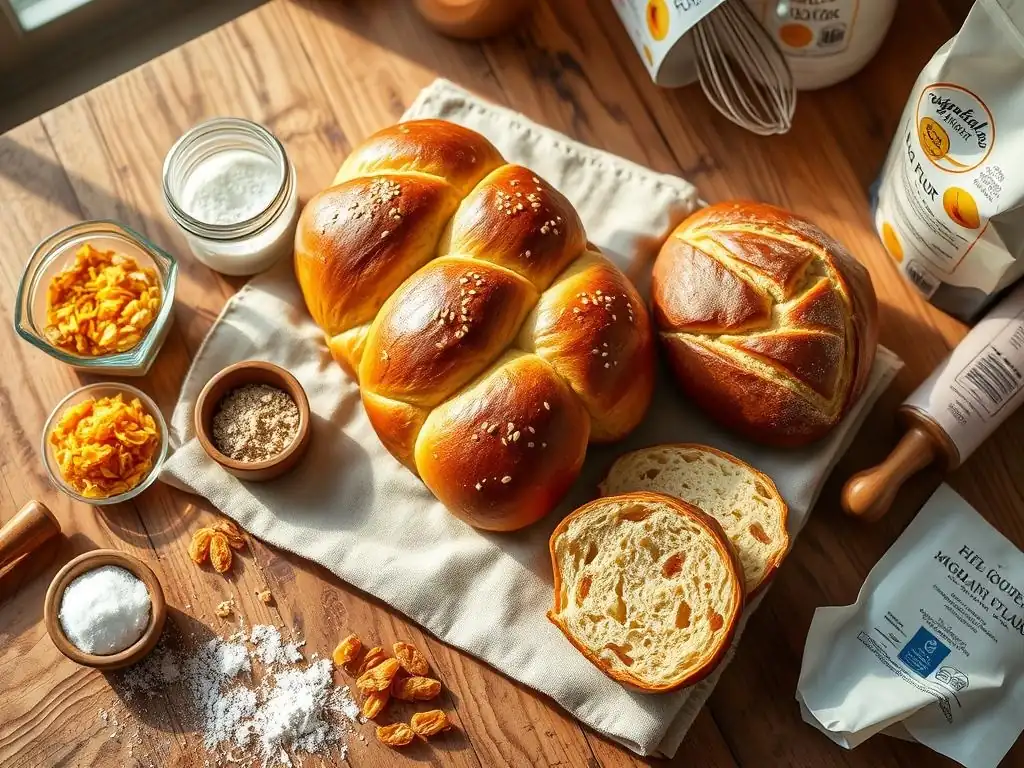
Welcome to BakeWithEase, your partner in baking brilliance! Ever dreamt of a sourdough masterpiece that combines the buttery richness of brioche with the braided beauty of challah? Well, prepare to turn that dream into reality! This week, we're diving deep into the secrets of sourdough enrichment, exploring how to create an unforgettable sourdough brioche challah recipe. Get ready to unlock a new level of baking confidence and discover the magic that happens when sourdough meets these classic breads. Intrigued? Let's get baking!
- Sourdough Enrichment: Brioche and Challah
- Introduction to Sourdough Brioche and Challah
- Key Ingredients for Sourdough Enriched Breads
- Sourdough Brioche Recipe
-
Sourdough Challah Recipe
- Preparing Sourdough Starter for Challah
- Mixing the Sourdough Challah Dough
- Bulk Fermentation: Flavor and Strength in Sourdough Challah
- Braiding Challah: Techniques and Styles
- Egg Wash and Toppings for Sourdough Challah
- Proofing and Baking Sourdough Challah
- Cooling and Enjoying Homemade Sourdough Challah
- Troubleshooting Sourdough Brioche and Challah
- Tips for Perfecting Sourdough Enriched Breads
- Conclusion: Mastering Sourdough Brioche and Challah
-
Frequently Asked Questions
- What is the main benefit of using sourdough in brioche and challah recipes?
- Can I use active dry yeast instead of sourdough starter in these recipes?
- What level of baking experience is recommended for attempting a sourdough brioche challah recipe?
- How long does it typically take to make sourdough brioche challah from start to finish?
- What are some common mistakes to avoid when making sourdough brioche challah?
- Final Reflection: The Unexpected Joys of Sourdough Enrichment
- Unleash Your Inner Baker: Craft Exquisite Sourdough Brioche & Challah!
Sourdough Enrichment: Brioche and Challah
Introduction to Sourdough Brioche and Challah
Expanding Sourdough Baking with Enriched Doughs
Moving beyond lean doughs like your everyday country loaf opens up a world of richer, softer breads. Enriched doughs, which include ingredients like eggs, butter, milk, and sugar, transform the texture and flavor profile dramatically. While traditional brioche and challah often rely solely on commercial yeast for leavening, integrating sourdough starter introduces a delightful complexity and tang, alongside improved digestibility and shelf life. This approach marries the classic richness of these breads with the unique characteristics of natural fermentation.
This expansion into enriched doughs requires understanding how the added fats and sugars interact with the sourdough starter. Fats can sometimes inhibit gluten development, requiring longer or more gentle mixing, while sugar provides additional food for the yeast and bacteria, potentially accelerating fermentation slightly depending on the quantity. Mastering sourdough brioche and sourdough challah involves finding the right balance and timing to achieve that signature soft, tender crumb and golden crust, all while harnessing the gentle power of your starter.
Benefits and Flavor Profiles of Sourdough Brioche and Challah
The primary benefit of using sourdough in brioche and challah is the depth of flavor it imparts. Instead of a simple sweet richness, you get a subtle tang that beautifully complements the butter and eggs. This fermentation process also contributes to a more complex aroma. Beyond flavor, sourdough can improve the keeping quality of these breads, keeping them moist and fresh for longer compared to their commercial yeast counterparts. The slight acidity helps preserve the crumb structure and prevent staling.
Furthermore, for many, sourdough fermentation can make grains easier to digest. The long fermentation process breaks down complex carbohydrates and phytic acid. The resulting sourdough brioche and sourdough challah often have a wonderfully soft, almost pillowy texture, a direct result of the enriched ingredients and the careful fermentation. The crust develops a beautiful golden hue, sometimes even a bit crispy, contrasting with the tender interior. It's a truly elevated baking experience.
Key Ingredients for Sourdough Enriched Breads
Sourdough Starter's Role in Brioche and Challah
The sourdough starter is the heart of your sourdough brioche and sourdough challah recipe. It provides the leavening power through natural yeast and contributes significantly to the flavor profile via lactic and acetic acids produced by bacteria. For enriched doughs, it's often best to use a vigorous, recently fed starter, sometimes referred to as being at its "peak" or slightly past it, when it's active and bubbly. A starter fed 4-6 hours prior to mixing at a 1:2:2 ratio (starter:flour:water by weight) is typically ideal.
Using a ripe starter ensures there's enough leavening activity to lift the heavy, enriched dough. The starter's hydration level (commonly 100% where flour and water are equal weight) affects the overall hydration of your final dough, so factor this in. The longer fermentation times inherent in sourdough baking allow the complex flavors from the starter to develop, transforming simple ingredients into a loaf with character. The microbial activity also helps tenderize the crumb.
Flour Selection: Achieving Texture in Sourdough Brioche and Challah
Selecting the right flour is crucial for achieving the desired texture in your sourdough brioche and sourdough challah recipe. A high-protein bread flour (typically 12-14% protein) is often recommended. The higher protein content means more gluten development, which is necessary to support the weight of the enriching ingredients like butter and eggs and provide structure for a good rise and tender crumb.
Using a strong bread flour helps the dough maintain its shape during the long fermentation and proofing periods. Some bakers might choose to blend bread flour with a small percentage of all-purpose flour for a slightly softer texture, but relying primarily on bread flour is key for handling and structure. The flour quality directly impacts gluten development, and insufficient gluten can lead to a dense or flat loaf, especially with the added fat that can interfere with gluten formation.
Sugar and Fat: Richness and Tenderness in Sourdough
Sugar and fat are defining components of enriched doughs, providing richness, tenderness, and flavor. Sugar, besides adding sweetness, helps tenderize the crumb and contributes to crust browning during baking through caramelization. Typical recipes might use anywhere from 5% to 15% sugar relative to the flour weight. It also provides readily available food for the sourdough starter, potentially boosting initial fermentation activity.
Butter, the primary fat in brioche, contributes immense richness and tenderness by coating gluten strands, limiting their development and resulting in a softer crumb. It also adds flavor and moisture. Brioche recipes often call for a significant amount of butter, sometimes up to 50% or more of the flour weight. Challah typically uses oil (often vegetable or olive oil) instead of butter, making it pareve (dairy-free), and usually in smaller quantities than butter in brioche, around 5-10%. The type and amount of fat significantly impact the final texture and handling of the sourdough enriched dough.
Eggs: Structure and Flavor in Sourdough Dough
Eggs play multiple roles in sourdough brioche and sourdough challah. They contribute to the structure, richness, color, and flavor of the dough. The proteins in eggs add strength and stability, helping the dough hold its shape and volume during fermentation and baking. The yolks, rich in fat and emulsifiers, add tenderness, moisture, and that characteristic golden hue to the crumb.
Using whole eggs, sometimes supplemented with extra yolks for added richness, is common. A typical recipe might use 1-3 whole eggs per 500g of flour, potentially with 1-2 extra yolks. Eggs also contribute liquid, which needs to be factored into the overall hydration of the dough. Their presence makes the dough richer and slightly more challenging to handle than lean doughs, requiring careful mixing and temperature management.
Sourdough Brioche Recipe
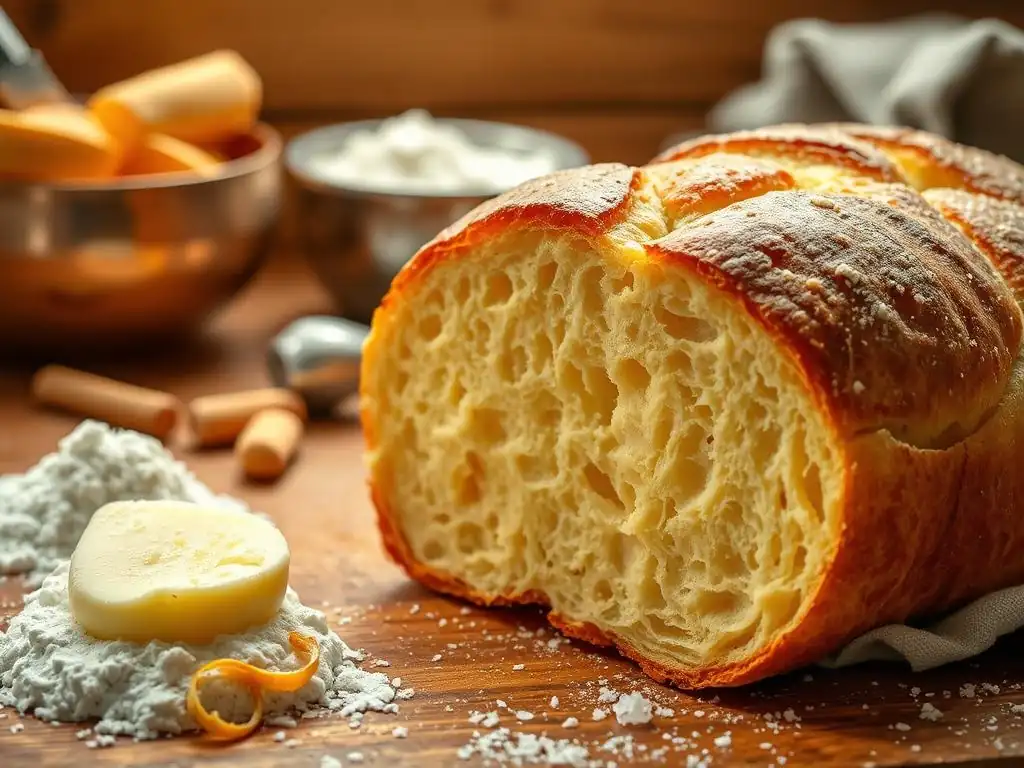
Preparing Sourdough Starter for Brioche
To make a successful sourdough brioche, your starter needs to be active and ready to work hard against the rich ingredients. The day before baking, feed your mature sourdough starter, aiming for it to be at its peak activity or slightly past it when you plan to mix the dough. For instance, if you typically feed your starter 1:1:1 (starter:flour:water), consider feeding it a larger ratio like 1:2:2 or even 1:3:3 approximately 6-8 hours before mixing, depending on your kitchen temperature, to ensure it's robustly bubbly and has doubled or tripled in size.
Using a strong starter is paramount because the high fat and sugar content in brioche can slow down fermentation. A weak starter might struggle to lift the dough, resulting in a dense loaf. You can perform a float test with a tiny piece of your starter dropped in water, but visual cues like significant bubbling throughout and a domed shape before starting to recede are usually sufficient indicators of readiness for your sourdough brioche challah recipe attempt.
Mixing the Sourdough Brioche Dough
Mixing sourdough brioche dough is a process that requires patience, especially when incorporating the butter. Begin by combining the ripe sourdough starter, flour, sugar, eggs, and milk (or liquid) in a stand mixer. Mix on low speed until a shaggy dough forms, then increase the speed slightly and mix until the dough starts to come together and develop some initial gluten structure, roughly 5-10 minutes. The dough will be quite sticky at this stage.
Once the initial mixing is done and the dough has some elasticity, begin adding the softened, room-temperature butter, a cube or two at a time, while the mixer is running on low speed. Wait until each addition of butter is almost fully incorporated before adding the next. This process can take 15-20 minutes. Continue mixing until the dough is smooth, elastic, and passes the windowpane test – you should be able to stretch a small piece thin enough to see light through it without tearing. The final dough temperature should ideally be around 75-78°F (24-26°C).
Bulk Fermentation: Flavor and Strength in Sourdough Brioche
Bulk fermentation is where the sourdough starter works its magic, developing flavor and strengthening the dough structure. After mixing, transfer the dough to a lightly greased container. Due to the richness, sourdough brioche bulk fermentation is typically longer and sometimes includes a period in the refrigerator. A common approach is to let the dough ferment at room temperature for 2-4 hours, performing 1-2 sets of stretch and folds in the first hour or two to build strength, followed by a long cold fermentation in the refrigerator for 8-16 hours, or even up to 48 hours for maximum flavor development.
During the room temperature phase, the dough should become noticeably puffier and smoother. The cold fermentation significantly slows down the rise but allows the sourdough's complex flavors to deepen. The dough should increase in volume by at least 50-75% during the combined bulk fermentation period. Observing the dough's activity and growth, rather than strictly following a timer, is key.
Shaping Brioche: Classic Techniques
Shaping sourdough brioche can take many forms, from a classic loaf in a tin to individual rolls or a stunning Brioche à Tête (head of brioche). For a loaf, gently degas the cold dough after bulk fermentation. For a standard loaf pan (e.g., 9x5 inches), you might divide the dough into 3-4 equal pieces, shape each into a ball, and place them side-by-side in the greased pan. This creates a lovely pull-apart texture.
Alternatively, for a single loaf, you can shape the dough into a batard or boule and place it in a proofing basket or directly in a tin. For rolls, divide the dough into smaller portions (e.g., 60-80g each), shape into tight balls, and place them in a muffin tin or on a baking sheet. Handling the cold dough is easier as the butter is firm, making it less sticky. Work quickly but gently to avoid deflating the dough excessively.
Proofing and Baking Sourdough Brioche
After shaping, the sourdough brioche needs a final proof. This is typically done at room temperature or in a slightly warm environment (like a turned-off oven with the light on). Proofing time varies significantly based on temperature and dough activity, but it can range from 2-4 hours at room temperature or shorter in a warmer spot. The dough should look visibly puffy and increased in volume, but not doubled, and feel soft and airy when gently poked (the indentation should spring back slowly).
Before baking, an egg wash (a beaten egg mixed with a splash of milk or water) is brushed over the surface for a golden, glossy crust. Bake in a preheated oven, typically around 350-375°F (175-190°C). Baking time depends on the size and shape; a standard loaf might take 30-40 minutes, while rolls take 15-25 minutes. The bread is done when it's deep golden brown and the internal temperature reaches approximately 190-200°F (88-93°C).
Cooling and Enjoying Homemade Sourdough Brioche
Once baked, it's crucial to let your beautiful sourdough brioche cool properly. Transfer the loaf or rolls from the pan to a wire rack immediately after removing them from the oven. Cooling on a rack allows air circulation around the entire loaf, preventing the bottom crust from becoming soggy and allowing the internal structure to set properly.
Resist the urge to slice into the warm bread right away, as the internal structure is still fragile and can become gummy. Allow a standard loaf to cool for at least 1-2 hours before slicing. Individual rolls might only need 30-60 minutes. Enjoy your homemade sourdough brioche sliced thick for toast, used for French toast, or simply enjoyed fresh with butter or jam. The subtle tang from the sourdough adds a delightful contrast to the rich, buttery crumb.
Sourdough Challah Recipe
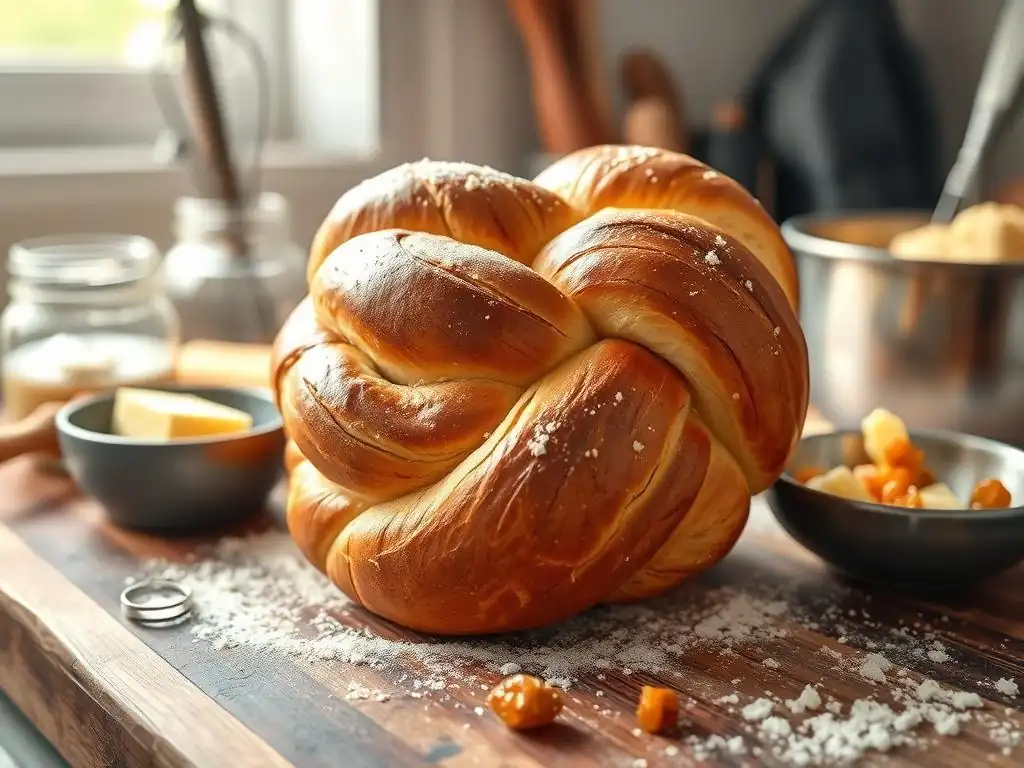
Preparing Sourdough Starter for Challah
Similar to brioche, a robust and active sourdough starter is essential for a great sourdough challah recipe. Plan to feed your starter so it's at its peak or just past its peak activity level when you're ready to mix the dough. A typical feeding ratio like 1:2:2 or 1:3:3 given 6-8 hours prior to mixing usually works well, ensuring the starter is bubbly, doubled or tripled in size, and ready to leaven the enriched dough.
Challah dough, while rich, often contains less fat than brioche, but the addition of eggs and sometimes sugar still requires a strong starter. A sluggish starter will result in a long, slow rise and potentially a dense loaf. The starter's hydration (commonly 100%) will contribute to the dough's overall hydration, which is typically moderately low for challah to facilitate braiding.
Mixing the Sourdough Challah Dough
Mixing sourdough challah dough usually begins by combining the active sourdough starter, flour, water (or milk/orange juice in some variations), eggs, sugar, and salt in a mixing bowl. Mix until a shaggy dough forms, then knead until a smooth, elastic dough develops. This can be done by hand or stand mixer. Challah dough is typically less sticky than brioche dough initially, making hand kneading a viable option for your sourdough brioche challah recipe effort.
Once the dough is smooth and elastic, incorporate the oil gradually. Mix until the oil is fully absorbed and the dough is soft, smooth, and passes the windowpane test. The dough should feel supple and manageable, ready for a long fermentation. Target a final dough temperature around 75-78°F (24-26°C) for optimal initial fermentation activity.
Bulk Fermentation: Flavor and Strength in Sourdough Challah
Bulk fermentation for sourdough challah serves to develop flavor and gluten strength. After mixing, place the dough in a lightly greased container. A typical bulk ferment might involve 2-4 hours at room temperature, with a few sets of stretch and folds (every 30-45 minutes) during the first half of this period to build structure. The dough should feel stronger and smoother after the folds.
Following the initial room temperature fermentation, a cold fermentation in the refrigerator for 8-16 hours is highly recommended. This slow, cool period deepens the complex sourdough flavors. The dough should increase in volume by at least 50-75% during the entire bulk fermentation process, becoming noticeably puffier and more relaxed yet cohesive.
Braiding Challah: Techniques and Styles
Braiding is a signature step for challah, transforming the dough into a beautiful, symbolic loaf. After cold bulk fermentation, gently degas the dough and divide it into equal pieces depending on the desired braid (e.g., 3, 4, 6, or even more strands). For a standard 6-strand braid, divide the dough into six equal portions.
Shape each portion into a smooth ball, then roll each ball into a long, even strand. The length and thickness of the strands will determine the final size of the loaf. A typical strand might be around 12-18 inches long. Arrange the strands and follow your preferred braiding pattern. Ensure the braid is even and not too tight, allowing room for expansion during proofing and baking.
Egg Wash and Toppings for Sourdough Challah
An egg wash is essential for achieving the characteristic glossy, golden crust of challah. Just before the final proof or right before baking, brush the braided loaf generously with an egg wash. A simple egg wash can be one whole egg beaten with a tablespoon of water or milk. For extra shine, some bakers use an egg yolk mixed with a little milk or cream.
After applying the egg wash, you can add traditional challah toppings. Sesame seeds and poppy seeds are very common, sprinkled over the wet egg wash. Coarse sea salt or everything bagel seasoning can also be used for a savory twist. For a sweeter finish, a sprinkle of sugar (like turbinado) can be added, particularly if the recipe is on the sweeter side.
Proofing and Baking Sourdough Challah
After braiding and applying the egg wash and toppings, the sourdough challah needs a final proof. Place the braided loaf on a baking sheet lined with parchment paper. Proof at room temperature for 2-4 hours, or in a slightly warmer environment. The dough should look visibly puffy and increased in size, but avoid overproofing, which can cause the braid to lose definition or collapse. A gentle poke should leave an indentation that slowly springs back.
Bake the challah in a preheated oven, typically around 350-375°F (175-190°C). Baking time varies based on size; a large loaf might take 30-45 minutes, while smaller rolls take less time. The challah is done when it's deep golden brown and an internal thermometer reads approximately 190-200°F (88-93°C).
Cooling and Enjoying Homemade Sourdough Challah
Proper cooling is vital for your sourdough challah after it comes out of the oven. Carefully transfer the baked loaf from the baking sheet to a wire rack immediately. This allows air to circulate underneath the bread, preventing the bottom crust from becoming soggy and letting the internal structure set properly as it cools.
Allow the challah to cool completely, or at least until it's just warm, before slicing. This typically takes 1-2 hours for a large loaf. Slicing too early can result in a gummy texture inside. Enjoy your beautiful homemade sourdough challah sliced for sandwiches, toast, or simply pulled apart and savored. The subtle sourdough tang adds a wonderful dimension to the slightly sweet, eggy crumb.
Troubleshooting Sourdough Brioche and Challah
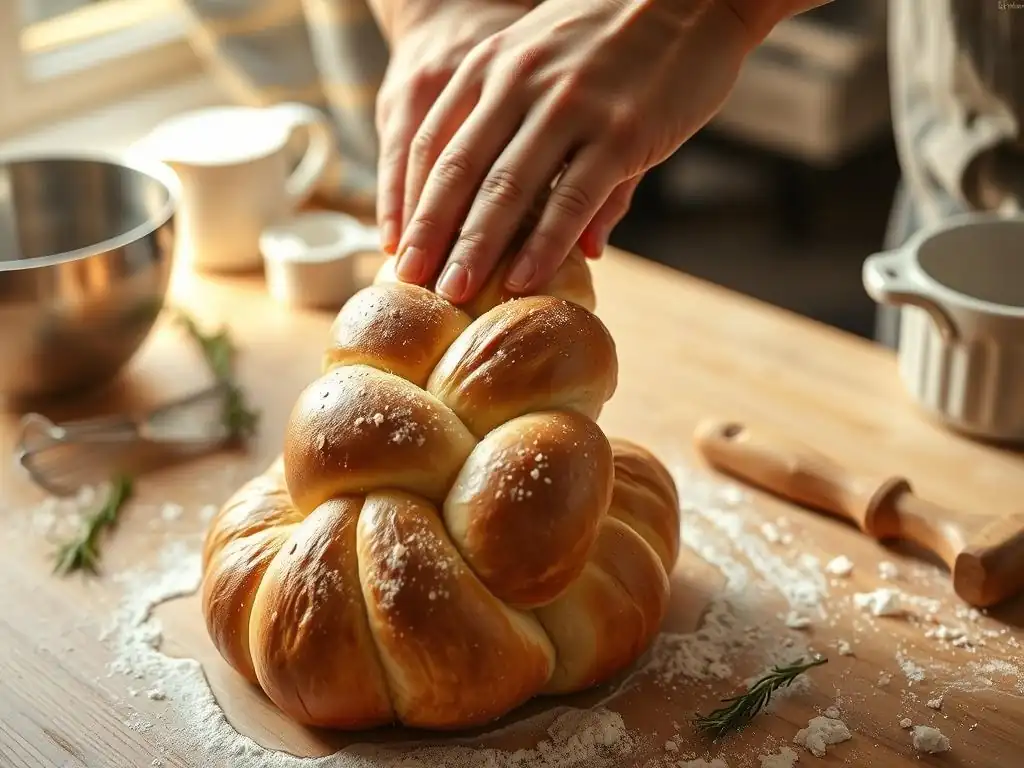
Managing Sticky Dough
Sticky dough is a common challenge when working with enriched doughs, especially sourdough brioche due to its high butter content. If your dough feels excessively sticky after the initial mixing and incorporating the fat, resist the urge to add a lot of extra flour immediately. Small additions of flour (a tablespoon at a time) can help, but often the solution lies in proper mixing and temperature control.
Ensure you are developing sufficient gluten during the mixing phase; this can take longer with enriched doughs. Mixing until the dough passes the windowpane test is a good indicator of adequate gluten development. Also, working with cold dough after bulk fermentation (especially for brioche) makes it much easier to handle and shape as the fat is solidified. If the dough is still too sticky to handle, a brief period in the refrigerator (30-60 minutes) can firm it up.
Achieving Proper Rise
Achieving a good rise in sourdough brioche and challah depends heavily on a few factors: the strength of your starter, sufficient fermentation time, and proper proofing conditions. If your loaves are dense or flat, first assess your starter's activity; it must be vigorous and bubbly at the time of mixing. Using a weak starter is a primary cause of poor rise in any sourdough, but especially in enriched doughs which are heavier.
Ensure your bulk fermentation and final proofing times are adequate. Sourdough takes longer than commercial yeast, and enriched doughs can be slower still. Watch the dough, not the clock; it should visibly increase in volume (50-75% in bulk, significant puffiness in proof). Also, check your dough temperature; a final dough temperature around 75-78°F (24-26°C) promotes good initial activity. Cold fermentation is great for flavor but requires sufficient warm fermentation time first or longer cold time.
Preventing Dense Texture
A dense texture in sourdough brioche or challah can result from several issues, often related to insufficient leavening or underdeveloped gluten. If your starter wasn't active enough or the fermentation/proofing times were too short, the dough won't have enough gas production to create an open crumb. Conversely, overproofing can also lead to a dense texture as the gluten structure weakens and collapses.
Another cause can be insufficient gluten development. The dough needs to be kneaded long enough to build a strong gluten network capable of trapping the gases produced by the starter. This is particularly important with high-fat brioche, where fat can interfere with gluten. Ensure your dough passes the windowpane test. Baking at the correct temperature is also key; an oven that's too cool can result in a dense crumb.
Adjusting for Climate and Humidity
Climate and humidity significantly impact sourdough baking, affecting fermentation speed and dough consistency. In warm, humid environments, fermentation will proceed much faster. You may need to reduce fermentation times or use cooler water when mixing to slow things down. The dough might also feel stickier due to the humidity, so avoid adding excessive flour.
In cold, dry environments, fermentation will be slower. You might need longer fermentation times or find a warmer spot for your dough to bulk ferment and proof. A proofing box or a turned-off oven with the light on can help maintain a consistent, warm temperature. The dough might also dry out more easily, so ensure it's covered well during fermentation to prevent a skin from forming. Monitoring the dough's activity, rather than relying solely on recipe times, is crucial for success regardless of your climate.
Tips for Perfecting Sourdough Enriched Breads
Maintaining a Healthy Sourdough Starter
A healthy, active sourdough starter is the bedrock of successful sourdough brioche and challah. Feed your starter regularly (daily if kept at room temperature, or weekly if refrigerated) to keep it strong and predictable. Use a consistent feeding ratio (like 1:1:1 or 1:2:2) and good quality flour. Look for signs of health: it should consistently double or triple in size within a predictable timeframe after feeding, have lots of bubbles, and smell pleasantly tangy, not overly acidic or like nail polish remover.
If your starter seems sluggish, try feeding it more frequently for a few days, using a higher ratio of flour and water (e.g., 1:3:3), and keeping it in a warm spot (75-80°F or 24-27°C). Using warm water (around 80-85°F or 27-29°C) for feeding can also help boost activity. A strong starter ensures reliable leavening for your sourdough brioche challah recipe and contributes great flavor.
Flavor Variations and Experimentation
Once you've mastered the basic sourdough brioche and sourdough challah recipe, don't hesitate to experiment with flavor variations. For brioche, consider adding orange zest, vanilla bean paste, or even chocolate chips or chunks during the final stages of mixing. Spices like cardamom or cinnamon can also be wonderful additions.
For challah, traditional variations include adding honey for sweetness (often replacing some or all of the sugar) or using orange juice instead of water for a citrusy note. Incorporating raisins, dried cranberries, or other dried fruits is popular. Savory challah variations can include herbs like rosemary or dill, garlic, or cheese, though these might require slight adjustments to the base recipe. Experimenting allows you to personalize your sourdough enriched doughs.
Sourdough Brioche and Challah Baking Schedule
Planning your baking schedule is key for sourdough enriched breads due to the long fermentation times. Both sourdough brioche and challah benefit significantly from a long, cold bulk fermentation (8-48 hours) in the refrigerator after an initial period at room temperature (2-4 hours). This cold period develops flavor and makes the dough easier to handle for shaping.
A typical schedule might involve mixing the dough in the late afternoon/early evening, performing stretch and folds for a couple of hours, then placing the dough in the refrigerator overnight or for up to two days. The next morning (or day), remove the dough, shape it while cold, and then allow it to proof at room temperature for 2-4 hours before baking. This split schedule allows you to fit the active steps around your day and ensures delicious, flavorful results.
Conclusion: Mastering Sourdough Brioche and Challah
Elevating Baking with Sourdough Enrichment
Mastering sourdough brioche and sourdough challah represents a significant step in expanding your sourdough baking skills. By successfully integrating natural leavening into these rich, tender doughs, you unlock new dimensions of flavor, texture, and aroma. The subtle tang of the sourdough beautifully complements the sweetness and richness of the butter, eggs, and sugar, creating breads that are far more complex and satisfying than their commercial yeast counterparts.
The process teaches valuable lessons about dough handling, temperature control, and patience, especially when working with high-fat doughs and long fermentation times. Achieving that perfect golden crust and soft, airy crumb in your sourdough brioche challah recipe is incredibly rewarding and opens the door to further exploration in the world of enriched sourdough baking.
Further Exploration: Bread Scoring Techniques
While sourdough brioche and challah are often left unscored or simply washed, learning bread scoring techniques can enhance the appearance of other sourdough loaves and is a valuable skill. Scoring, or lameing, involves making cuts on the surface of the dough just before baking. These cuts serve a functional purpose by guiding the expansion of the dough in the oven, preventing blowouts and helping achieve maximum oven spring.
Scoring also offers an artistic outlet, allowing bakers to create intricate patterns. Different depths and angles of cuts produce different effects, from simple slashes to complex designs. Practicing on simpler lean sourdough loaves can build confidence before potentially applying basic scoring to enriched doughs if desired, though the rich nature of brioche and challah means they expand differently than lean doughs and often don't require deep cuts for oven spring.
Frequently Asked Questions
What is the main benefit of using sourdough in brioche and challah recipes?
Using sourdough in brioche and challah adds a unique tangy flavor and improves the bread's texture and shelf life. It also enhances the digestibility compared to using only commercial yeast.
Can I use active dry yeast instead of sourdough starter in these recipes?
While possible, it will change the outcome. Using active dry yeast will result in a bread that lacks the characteristic sourdough tang and may have a slightly different texture. The recipe at BakeWithEase is optimized for sourdough starter.
What level of baking experience is recommended for attempting a sourdough brioche challah recipe?
While BakeWithEase strives for simplicity, these recipes are best suited for bakers with some experience. Familiarity with sourdough starter maintenance and basic bread-making techniques is helpful.
How long does it typically take to make sourdough brioche challah from start to finish?
The entire process, including starter activation, dough preparation, proofing, and baking, can take anywhere from 24 to 48 hours. Sourdough requires patience and time for proper fermentation.
What are some common mistakes to avoid when making sourdough brioche challah?
Over-proofing or under-proofing the dough are common issues. Also, ensure your sourdough starter is active and bubbly before using it. Be careful with the enrichment ingredients - too much fat or sugar can inhibit the sourdough's activity.
Final Reflection: The Unexpected Joys of Sourdough Enrichment
The marriage of sourdough's tangy complexity with the richness of brioche and challah represents more than just a delicious recipe; it's a testament to the enduring power of culinary innovation. This exploration into sourdough-enriched brioche and challah isn't simply about creating a new bread; it's about understanding how traditional techniques can be reimagined and elevated, resulting in breads that are both familiar and surprisingly new. The subtle nuances of flavor and texture achieved through this process highlight the potential for creative experimentation in the baking world.
This journey into sourdough enrichment has underscored for me the profound connection between tradition and innovation. The act of carefully nurturing a sourdough starter, a living organism, and then using it to transform simple ingredients into something so exquisite, feels deeply satisfying. It's a reminder of the slow, deliberate processes that often yield the most rewarding results. The best things in life are worth waiting for,
a sentiment that rings especially true when considering the time and care required to perfect these recipes. The subtle differences in texture and flavor between a traditional challah and its sourdough-enriched counterpart speak volumes about the potential for culinary exploration.
Now, I invite you to embrace the challenge. Don't be afraid to experiment with your own sourdough starter, to adjust the recipes to your liking, and to discover the unique joys that come with creating these magnificent loaves. The process itself, from the initial feeding of your starter to the final golden-brown crust, is a journey of discovery and a testament to the power of patience and culinary passion. The reward? A bread that is not only delicious but also deeply personal, a reflection of your own unique culinary journey.
Unleash Your Inner Baker: Craft Exquisite Sourdough Brioche & Challah!
Thanks for joining us on this sourdough adventure! We hope you’ve gained a newfound appreciation for the possibilities of incorporating sourdough starter into your favorite enriched doughs. Now it's time to put your knowledge into practice!
- Bake your own masterpiece: Start with your favorite brioche or challah recipe and substitute your active sourdough starter – you'll be amazed by the enhanced flavor and texture! Don't be afraid to experiment!
- Share your creations: Show us your beautiful loaves! Post a picture on social media using #BakeWithEaseSourdough and tag us—we'd love to see your baking journey.
- Explore further: Dive deeper into sourdough baking by checking out our other articles on starter maintenance and advanced techniques (available on bakewithease.com).
Ready to transform your baking game? What unique twist will you add to your sourdough brioche or challah?