
Customization Costs: How to Price Bespoke Baked Orders

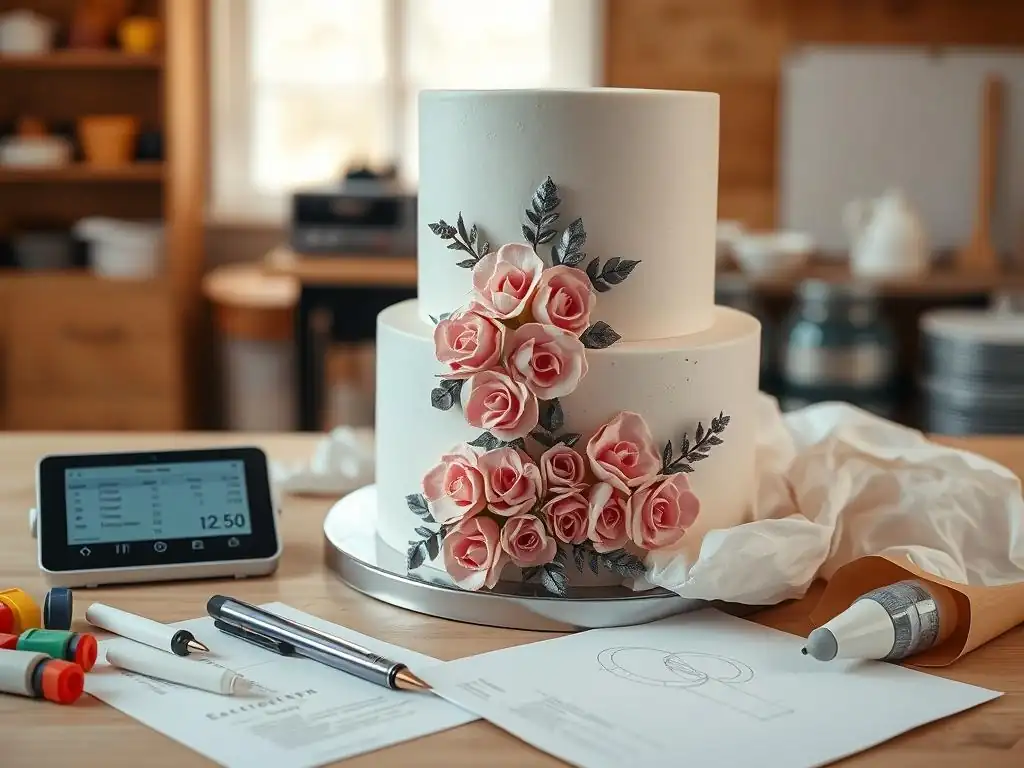
Welcome to BakeWithEase, where transforming flour and sugar into edible masterpieces becomes effortlessly achievable! Are you ready to navigate the exciting world of custom cake orders? This week, we're diving deep into bespoke cake pricing strategies, unlocking the secrets to valuing your artistry and craftsmanship. Ever wondered how to accurately price that intricately decorated cake or a unique dietary-requirement dessert? Read on to discover a straightforward approach to pricing your bespoke baked creations, ensuring profitability and happy customers.
- Customization Costs: Pricing Bespoke Baked Orders
- Understanding Bespoke Cake Pricing Strategies
- Key Factors Influencing Pricing
- Methods for Determining Price
-
Step-by-Step Guide to Pricing
- Step 1: Gather Order Details: Understanding Customer Vision
- Step 2: Calculate Material Costs: Estimate Ingredient Expenses
- Step 3: Estimate Labor Time: Baking and Decorating Time
- Step 4: Factor in Overhead: Allocate Fixed Costs
- Step 5: Add a Profit Margin: Ensuring Sustainability
- Step 6: Present the Price: Communicate Value and Justify Cost
- Tools and Resources
- Common Mistakes to Avoid
- Examples of Pricing Scenarios
- Maximizing Profitability
- Conclusion: Mastering Pricing for Success
-
Frequently Asked Questions
- How do I determine the base cost of a bespoke cake?
- What factors should I consider when pricing cake customizations?
- How do I price for edible decorations, like fondant figures or sugar flowers?
- Should I include a consultation fee in my bespoke cake pricing?
- How can I justify higher prices for bespoke cakes compared to standard cakes?
- Final Reflection: The Sweet Science of Bespoke Pricing
- Unlock Your Pricing Power: Bake with Confidence!
Customization Costs: Pricing Bespoke Baked Orders
Understanding Bespoke Cake Pricing Strategies
Why Accurate Pricing Matters
Setting the right price for your bespoke baked goods isn't just about making money; it's fundamental to the long-term health and sustainability of your home baking business. Underpricing can lead to burnout because you're working hard but not covering your costs or valuing your time properly. Imagine spending 10 hours on a detailed custom cake only to find you've only earned $5 an hour after expenses.
This isn't sustainable and quickly diminishes the joy of baking. Accurate pricing ensures that every hour you spend kneading, mixing, and decorating is fairly compensated, allowing your passion to remain a viable source of income.
Moreover, consistent and accurate pricing builds trust with your customers. When you can clearly articulate why a bespoke cake costs what it does, based on ingredients, labor, and design complexity, clients understand the value they are receiving. This transparency is key to managing expectations and avoiding uncomfortable negotiations. Over time, mastering your bespoke cake pricing strategies will allow you to invest back into your business, whether that's upgrading equipment, taking advanced decorating classes, or simply having the financial cushion to handle unexpected costs. It’s the difference between a hobby that occasionally pays for itself and a thriving, professional operation.
The Importance of Cost Calculation
Effective bespoke cake pricing strategies begin with a meticulous understanding of all the costs involved. Simply guessing or matching a competitor's price without knowing your own expenses is a recipe for financial trouble. Every ingredient, every minute spent working, every utility bill, and every piece of packaging contributes to the final cost of your product. Failure to account for any of these elements means you are potentially losing money on each order.
Consider a simple vanilla cake. While the flour, sugar, and eggs might seem inexpensive individually, when you factor in butter, vanilla extract, leavening agents, and potentially specialty items like food coloring or sprinkles, the ingredient cost adds up. Then, layer on the cost of electricity for your oven and mixer, water for cleaning, the boxes and boards used for presentation, and crucially, your time spent planning, baking, cooling, decorating, and packaging.
A detailed cost calculation provides the essential baseline for your pricing. Without this foundational step, any pricing method you choose will be built on shaky ground, making it impossible to truly gauge profitability or implement effective bespoke cake pricing strategies.
Key Factors Influencing Pricing
Ingredient Costs: Sourcing High-Quality Ingredients
The quality of your ingredients directly impacts the taste and texture of your bespoke baked goods, making them a cornerstone of your pricing structure. Using premium butter, real vanilla beans (instead of extract), high-quality chocolate, or organic flour elevates your product and justifies a higher price point. However, these superior ingredients come at a higher cost.
For example, while a pound of standard butter might cost around $4-$5, a high-fat European butter could easily be $7-$9 or more. Similarly, sourcing specialty items like imported cocoa powder or exotic fruits for fillings will significantly increase material costs compared to using standard supermarket options.
Tracking these costs accurately is vital. Many bakers find that ingredient costs for a custom cake can range anywhere from 15% to 30% of the final price, sometimes even higher for extremely elaborate designs requiring expensive components like edible gold leaf or rare flavorings. Keeping detailed records of your purchases, perhaps using a simple spreadsheet, allows you to calculate the exact cost per serving or per cake.
For instance, if a specific recipe for an 8-inch cake requires $15 worth of ingredients, you know this is your absolute minimum baseline before considering any other costs or desired profit margin. This granular approach is fundamental to developing sound bespoke cake pricing strategies.
Labor Costs: Calculating Time and Expertise
Your time and skill are arguably the most valuable components of a bespoke baked order, and accurately calculating labor costs is critical. This isn't just the time spent actively baking and decorating; it includes consultation with the client, planning the design, shopping for specific ingredients, preparing your workspace, cooling time, packaging, and even communication after delivery. A complex sculpted cake or an intricate tiered wedding cake can easily demand 10, 20, or even 40+ hours of work from start to finish.
To calculate labor cost, you need to assign an hourly rate for your work. This rate should reflect your skill level, experience, and desired income. For a home baker, this rate might start modest, perhaps $15-$25 per hour, but for a highly experienced decorator creating complex sugar art, it could be $50, $75, or even $100+ per hour.
If a custom cake takes 15 hours of labor at a rate of $30 per hour, the labor cost alone is $450. Ignoring this significant factor is one of the most common pitfalls in bespoke cake pricing strategies, leading bakers to severely undervalue their effort and expertise.
Overhead Costs: Accounting for Baking Space and Utilities
Running a home baking business involves costs beyond just ingredients and direct labor. These are your overhead costs – expenses that aren't tied to a specific order but are necessary for your business to function. They include utilities like electricity, gas, water, and internet; rent or mortgage costs allocated to your workspace; insurance; business licenses and permits; maintenance and depreciation of equipment (ovens, mixers, tools); and even office supplies.
Calculating overhead per order requires a bit more estimation. You can calculate your total monthly overhead and then divide it by the number of hours you work or the number of orders you complete in a typical month. For example, if your total monthly overhead is $300 and you average 20 custom cake orders a month, you might allocate $15 in overhead to each order.
Alternatively, if you work 120 baking hours a month, your overhead rate is $2.50 per hour ($300 / 120 hours). If a cake takes 15 labor hours, its overhead contribution would be $37.50 (15 hours * $2.50/hour). While these might seem like small amounts individually, they add up and must be included in your bespoke cake pricing strategies to ensure you cover all operating expenses.
Packaging Costs: Protecting Creations
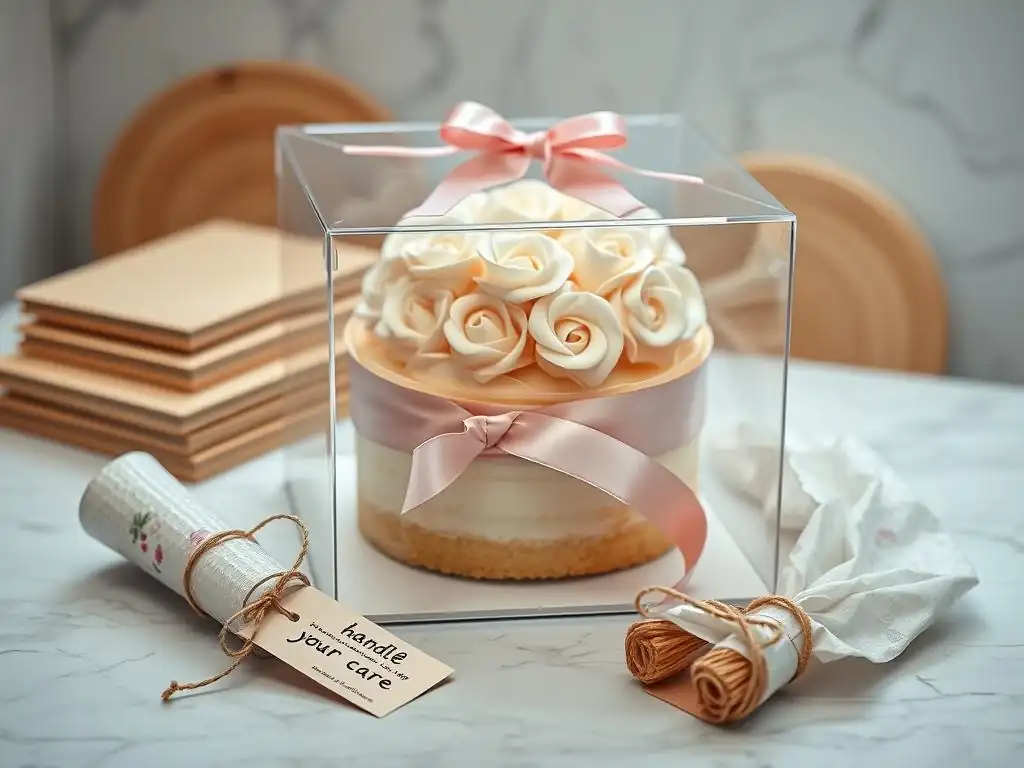
The presentation and safe transport of your beautiful baked goods are paramount, and packaging costs are a non-negotiable expense. This includes cake boxes, cake boards or drums, internal supports (like dowels), and potentially specialized carriers or coolers for large or delicate items. The cost varies significantly based on the size and complexity of the order. A simple box and board for a small cake might only cost $3-$5, but a sturdy, multi-tier box system for a large wedding cake could easily cost $20-$50 or more.
Don't forget the smaller, often overlooked packaging items: parchment paper, cellophane, tape, labels, and any decorative ribbons or stickers. These details contribute to the professional look of your finished product but add to the overall cost. For instance, a custom cake requiring a reinforced box, a sturdy drum, and internal supports might have packaging costs totaling $10-$15. Including these specific costs in your calculation ensures that the expense isn't eating into your profit margin and is a necessary component of effective bespoke cake pricing strategies.
Design Complexity: Factoring in Intricate Decorations
The level of detail and complexity in decorating a bespoke cake has a significant impact on both labor time and material costs, and therefore, the final price. A cake with simple buttercream swirls and basic sprinkles requires far less time and expensive materials than one featuring intricate fondant work, hand-painted details, custom sugar flowers, sculpted figures, or complex airbrushing. Each of these specialized techniques requires specific skills, more time, and often costly tools and materials (like high-quality fondant, edible paints, specialized molds, or sugar flower paste).
Consider the difference: a cake with basic piping might add 1-2 hours of labor and minimal material cost. A cake with a complex sugar flower spray might add 5-10 hours of specialized labor and $20-
Methods for Determining Price
Cost-Plus Pricing
Cost-plus pricing is one of the most straightforward methods for establishing bespoke cake pricing strategies. It involves calculating the total cost of producing an item (ingredients + labor + overhead + packaging) and then adding a predetermined profit margin on top of that cost. The formula is simple: Total Cost + Desired Profit = Price. For example, if a cake's total cost is $150 (including all materials, labor, overhead, and packaging), and you want a 50% profit margin on your costs, you would add $75 (50% of $150), resulting in a price of $225.
This method ensures that you cover all your expenses and guarantee a profit on every sale, provided your cost calculations are accurate. It's transparent and easy to explain to customers ("This price covers the cost of high-quality ingredients and the time spent creating your unique design, plus a standard operating margin"). However, a potential drawback is that it doesn't necessarily consider the market rate or the perceived value of your unique creation. A highly intricate, artistic cake might warrant a much higher price than a simple cost-plus calculation suggests, potentially leaving money on the table.
Value-Based Pricing: Reflecting Perceived Worth
Value-based pricing focuses on what the customer perceives the bespoke baked good to be worth, rather than strictly on your internal costs. This method acknowledges that a stunning, unique, and delicious custom cake for a significant life event (like a wedding or milestone birthday) holds immense value for the client beyond the sum of its parts. It's about the emotional connection, the centerpiece it provides, and the lasting memory it helps create.
Implementing value-based bespoke cake pricing strategies requires understanding your target market and what they are willing to pay for quality, artistry, and a personalized experience. Researching what similar high-end custom bakeries in your area charge is a good starting point. If a competitor charges $10 per serving for a comparable level of design and quality, you might price your cakes in a similar range, even if your internal costs are slightly lower or higher.
This method allows you to capture more revenue for truly exceptional work, but it requires confidence in your product's quality and strong market awareness. It's often used in conjunction with cost calculation to ensure profitability, ensuring the value-based price is always above your total cost.
Competitive Pricing: Analyzing Market Rates
Competitive pricing involves setting your prices based on what your competitors are charging for similar bespoke baked goods. This requires researching other home bakers and professional bakeries in your local area who offer custom cakes of comparable size, complexity, and quality. You can gather this information by checking their websites, social media, or even inquiring directly (though be mindful of being overly intrusive).
The goal isn't necessarily to be the cheapest, but to understand the typical price range for the kind of work you do. If most bakers charge between $6-$8 per serving for a certain style of custom cake, pricing yours at $4 might suggest lower quality (even if it's not true) or leave you significantly underpaid. Conversely, pricing it at $12 per serving without a clear differentiator (like exceptional artistry, unique flavors, or premium service) might price you out of the market.
Competitive pricing is a useful benchmark within your bespoke cake pricing strategies, helping you position yourself appropriately. However, it's crucial not to rely solely on competitor pricing without first understanding your own costs. You need to know if you can profitably operate at the prevailing market rates.
Step-by-Step Guide to Pricing
Step 1: Gather Order Details: Understanding Customer Vision
The very first step in pricing a bespoke order is to have a thorough consultation with the customer. You need to understand their complete vision: the occasion, theme, desired size (number of servings), flavor preferences, dietary restrictions, and critically, the design elements. Ask specific questions about decoration – are they looking for simple buttercream, intricate fondant, sugar flowers, hand-painting, sculpted elements, or edible images? Requesting inspiration photos can be helpful, but be clear about your capabilities and if there are any design limitations or additional costs associated with replicating complex styles.
A detailed understanding of the customer's requirements is the foundation for accurate bespoke cake pricing strategies. Without knowing the size and complexity, you cannot estimate ingredient costs, labor time, or required packaging. Use a consultation form or checklist to ensure you capture all necessary information. This initial step is not just about getting the details right; it's also about managing customer expectations regarding what is possible and what impacts the price.
Step 2: Calculate Material Costs: Estimate Ingredient Expenses
Once you have the order details, you can estimate the ingredient costs. Based on the size and flavor profile, determine the quantities of flour, sugar, eggs, butter, milk, flavorings, and any specialty items needed. Use your past purchase records or current market prices to assign a cost to each ingredient. For example, a standard 8-inch cake recipe might call for 1 cup of butter ($1.25), 2 cups of sugar ($0.50), 3 eggs ($0.75), etc. Summing these up gives you the base ingredient cost.
Next, factor in the costs for frosting, fillings, and any decorative materials. Buttercream might add another $5-$10 in ingredients, while a premium fruit filling could add $8-$15. Fondant, gum paste, food coloring, edible dusts, dowels, and cake boards/drums all contribute to material costs. List out every physical item that will go into or support the cake.
Let's say for a medium-sized custom cake with moderate decoration, your estimate is $30 for cake batter, $15 for frosting/filling, $20 for decorative materials (fondant, colors, sprinkles), and $10 for the board and box. Your total estimated material cost would be $75. Being meticulous in this step is crucial for accurate bespoke cake pricing strategies.
Step 3: Estimate Labor Time: Baking and Decorating Time
Estimate the total time required for the order, breaking it down into different phases. This includes:
- Consultation & Planning: (e.g., 0.5 - 1 hour)
- Ingredient Shopping: (e.g., 0.5 - 1 hour, if special trip needed)
- Baking & Cooling: (e.g., 1 - 3 hours, depending on cake size/layers)
- Making Frosting/Fillings: (e.g., 0.5 - 1 hour)
- Decorating: (This is the most variable step. Basic piping: 1-2 hours; Moderate fondant/details: 4-8 hours; Complex sculpting/sugar flowers: 10-20+ hours)
- Packaging: (e.g., 0.5 - 1 hour)
- Communication/Admin: (e.g., 0.5 - 1 hour)
Assign an hourly rate based on your skill and desired income (e.g., $25/hour). Multiply the estimated total time by your hourly rate to get the labor cost. For the medium-sized cake example, let's say the total estimated time is 12 hours. At $25/hour, the labor cost is $300. Accurately estimating labor is perhaps the most challenging but vital part of bespoke cake pricing strategies, as labor often constitutes the largest portion of your costs.
Step 4: Factor in Overhead: Allocate Fixed Costs
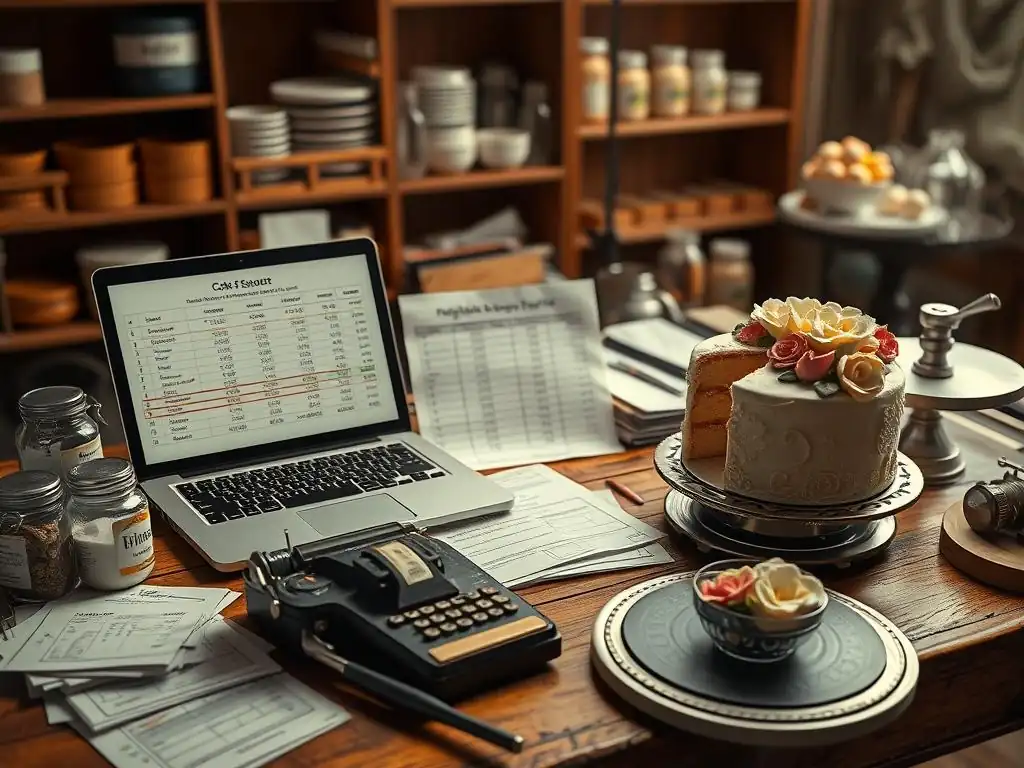
Now, add a portion of your overhead costs to the calculation. Using one of the methods described earlier (e.g., per order or per labor hour), allocate the appropriate amount. If you calculated your overhead rate at $2.50 per labor hour and the cake took 12 labor hours, the overhead allocation is $30 (12 hours * $2.50/hour).
This step ensures that costs like utilities, equipment depreciation, and business fees are being covered by your sales. While it might seem like a small amount compared to ingredients or labor, neglecting overhead means you're not fully accounting for the cost of running your business, which is essential for sustainable bespoke cake pricing strategies. Make sure your overhead calculation method is consistent across all your orders.
Step 5: Add a Profit Margin: Ensuring Sustainability
After calculating your total cost (Materials + Labor + Overhead + Packaging), add your desired profit margin. This is the amount you earn after all expenses are paid, representing the actual income for you and funds for reinvesting in the business. Profit margins can vary widely depending on your business goals, market, and perceived value. A common range for home baking businesses might be 20% to 50% of the total cost, or even higher for highly specialized work.
Using our example:
- Materials: $75
- Labor: $300
- Overhead: $30
- Packaging: $10
- Total Cost: $415
If you aim for a 30% profit margin on the total cost, the profit would be $415 * 0.30 = $124.50. The preliminary price would then be $415 + $124.50 = $539.50. This profit ensures your business is sustainable and allows for growth. Setting a realistic and fair profit margin is a key component of effective bespoke cake pricing strategies.
Step 6: Present the Price: Communicate Value and Justify Cost
The final step is to communicate the price to the customer clearly and confidently. Don't just state the number; explain what it covers. Briefly mention the use of high-quality ingredients, the hours of skilled labor involved in the custom design, and the care taken in packaging. This helps the customer understand the value they are receiving and justifies the cost, especially for complex bespoke cakes.
For instance, you might say, "For a custom cake of this size and design complexity, incorporating hand-sculpted sugar flowers and premium flavorings, the price is $540. This includes all ingredients, over 12 hours of specialized design work, and professional packaging to ensure safe transport." Be prepared to answer questions about the pricing structure, but stand firm on your calculated price. Your confidence in your bespoke cake pricing strategies reflects your confidence in your product and services.
Tools and Resources
Spreadsheet Templates
Using spreadsheet software (like Microsoft Excel, Google Sheets, or Apple Numbers) is an incredibly effective way to manage your bespoke cake pricing strategies. You can create detailed templates to track ingredient costs, calculate labor time based on estimated hours and your rate, automatically add overhead allocation, and calculate the final price with your desired profit margin.
A well-designed spreadsheet can include columns for:
- Ingredient Name
- Cost per unit (e.g., per pound, per egg)
- Quantity used in recipe/decoration
- Cost per item/batch
- Labor tasks (Baking, Decorating, etc.)
- Estimated Hours per task
- Your Hourly Rate
- Labor Cost per task/total
- Overhead Allocation
- Packaging Costs
- Total Cost
- Profit Margin (%)
- Profit Amount
- Final Price
Using formulas, the spreadsheet can instantly update the price as you input different variables. This systematic approach ensures consistency and accuracy in your bespoke cake pricing strategies and provides a clear record for each custom order.
Online Pricing Calculators
Several online tools and apps are available specifically designed to help bakers calculate pricing. These calculators often provide frameworks where you input your ingredient costs, labor time, overhead percentage, and desired profit margin, and they generate a suggested price. Some advanced versions might even help estimate ingredient quantities based on servings or pan sizes.
While these calculators can be a helpful starting point or a quick way to get an estimate, it's important to understand the logic behind them and ensure their assumptions align with your actual costs and business model. Don't rely on them blindly. They are best used as a guide or a double-check for your own calculations, not as a replacement for understanding the fundamental principles of bespoke cake pricing strategies. Always verify the inputs and outputs to ensure they accurately reflect your specific business situation.
Local Baking Associations and Pricing Guidelines
Joining local or national baking associations can provide valuable resources, including pricing guidelines and opportunities to network with other professionals. Many associations conduct surveys or provide suggested pricing ranges for various baked goods based on regional market conditions and typical costs. These guidelines can offer a useful benchmark, especially when you're starting out and refining your bespoke cake pricing strategies.
Networking with experienced bakers in your area can also offer insights into pricing trends and common practices. They may be willing to share general advice (though specific pricing formulas are often proprietary). While these guidelines and discussions should inform your decisions, remember that every business is unique. Your specific costs, skill level, target market, and brand positioning will ultimately determine the best pricing for your bespoke creations. Use association resources as a helpful reference point within your broader bespoke cake pricing strategies.
Common Mistakes to Avoid
Underpricing
One of the most detrimental mistakes home bakers make is underpricing their bespoke goods. This often stems from a lack of confidence, a desire to attract customers quickly, or a failure to accurately calculate all costs, particularly labor and overhead. Underpricing means you are working for less than minimum wage, potentially not covering your expenses, and certainly not building a sustainable business.
Consequences of underpricing include:
- Burnout due to excessive work for little return.
- Inability to invest in better equipment or ingredients.
- Customers who are solely price-driven and don't value your skill.
- Difficulty raising prices later.
For example, selling a complex custom cake that took 15 hours to create for only $200 is severe underpricing if your costs (materials, labor, overhead, packaging) easily exceed that amount. It's far better to price correctly and serve fewer customers profitably than to be constantly busy but financially struggling. Effective bespoke cake pricing strategies demand valuing your time and skill appropriately.
Overpricing
While underpricing is common, overpricing can also be a significant issue. Setting prices that are significantly higher than the market rate for comparable quality and complexity can deter potential customers and limit your order volume. Overpricing might happen if you overestimate the perceived value of your product or use unrealistic profit margin expectations.
Signs of potential overpricing include:
- Consistent feedback that your prices are too high.
- Customers frequently choosing competitors for similar items.
- Very low conversion rate from inquiry to booked order.
While you should price for your value, your prices must remain competitive within your specific market segment. Researching what successful bakers offering similar high-end custom work charge is essential. If your calculated price seems much higher, re-evaluate your cost structure and profit margin expectations, or consider if your product quality and branding truly justify the premium. Finding the sweet spot is key to successful bespoke cake pricing strategies.
Neglecting Costs: Leading to Financial Losses
Perhaps the most fundamental mistake is failing to track and include all costs in your pricing. This isn't just about forgetting an ingredient; it's often overlooking labor time, not allocating overhead, or ignoring smaller expenses like cleaning supplies, parchment paper, or wear and tear on equipment. Each neglected cost erodes your potential profit margin, turning what looks like a profitable sale into a loss.
Imagine you price a cake based only on ingredients and a rough guess at labor. You might calculate $50 in ingredients and estimate 5 hours of labor at $20/hour ($100), pricing the cake at $200 to make a quick $50 profit. However, if the cake actually took 8 hours, required $20 in packaging, and your overhead allocation was $15, your real costs were $50 (ingredients) + $160 (labor) + $15 (overhead) + $20 (packaging) = $245. Selling it for $200 means a $45 loss. Detailed cost tracking is non-negotiable for sound bespoke cake pricing strategies and preventing financial losses.
Examples of Pricing Scenarios
Scenario 1: Pricing a Birthday Cake
Consider a custom 8-inch round birthday cake, serving about 12-16 people. It's a popular flavor like vanilla bean with chocolate buttercream, decorated with simple piping, a personalized message, and a few sprinkles.
- Ingredients: $10 (cake batter) + $8 (buttercream) + $2 (sprinkles/colors) = $20
- Labor: Consultation (0.5 hr) + Baking/Cooling (1.5 hrs) + Buttercream (0.5 hr) + Decorating (1.5 hrs) + Packaging (0.5 hr) = 4.5 hours. At $25/hour = $112.50
- Overhead: 4.5 hours * $2.50/hour = $11.25
- Packaging: 8-inch board and standard box = $5
- Total Cost: $20 + $112.50 + $11.25 + $5 = $148.75
- Profit Margin: Let's aim for 40% of cost = $148.75 * 0.40 = $59.50
- Suggested Price: $148.75 + $59.50 = $208.25
For simplicity and market expectations, you might round this to $210 or price it per serving ($210 / 14 servings = $15/serving). This demonstrates how bespoke cake pricing strategies work for a relatively straightforward custom order.
Scenario 2: Pricing a Wedding Cake
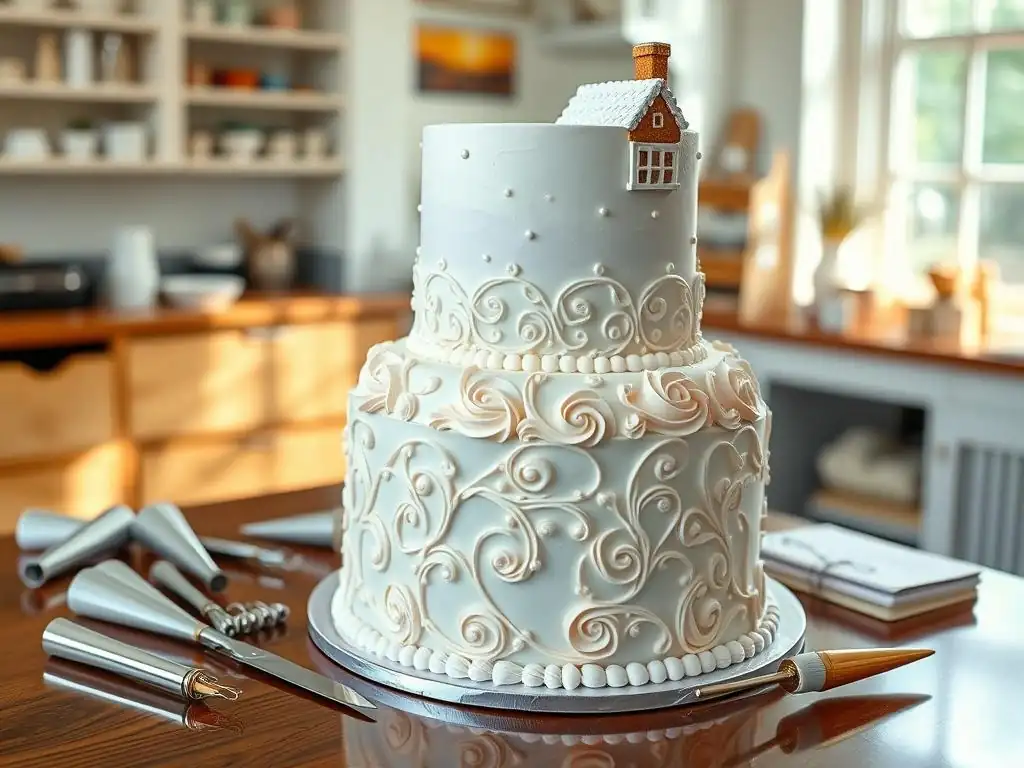
Now, let's look at a more complex order: a 3-tier wedding cake serving 80 people, with different flavors, covered in fondant, featuring intricate sugar lace details and 10 handmade sugar roses.
- Ingredients: $40 (cake batters) + $25 (fillings/buttercream undercoat) + $30 (fondant/gum paste) + $20 (colors/dusts) + $15 (internal supports) = $130
- Labor: Consultation (1 hr) + Planning/Sketching (1 hr) + Baking/Cooling (4 hrs) + Fillings/Crumb Coating (2 hrs) + Fondant Covering (3 hrs) + Sugar Lace (4 hrs) + Sugar Roses (6 hrs) + Stacking/Finishing (2 hrs) + Packaging (1 hr) = 24 hours. At $35/hour (reflecting higher skill for wedding cakes) = $840
- Overhead: 24 hours * $2.50/hour = $60
- Packaging: Sturdy multi-tier box system, drum = $30
- Total Cost: $130 + $840 + $60 + $30 = $1060
- Profit Margin: Aim for 30% of cost = $1060 * 0.30 = $318
- Suggested Price: $1060 + $318 = $1378
This price breaks down to approximately $17.23 per serving ($1378 / 80). This scenario highlights how significantly labor and design complexity influence bespoke cake pricing strategies, especially for wedding cakes which are often priced at a premium due to their significance and required expertise.
Scenario 3: Pricing a Corporate Event Cake
Consider a large sheet cake (e.g., 18x24 inches) serving 50 people, for a corporate event, featuring a company logo printed on edible paper and simple border piping. The flavor is standard vanilla cake with vanilla buttercream.
- Ingredients: $20 (cake batter) + $15 (buttercream) + $10 (edible image printing cost) + $5 (colors) = $50
- Labor: Consultation (0.5 hr) + Baking/Cooling (2 hrs) + Buttercream (1 hr) + Applying Image/Piping (1.5 hrs) + Packaging (0.5 hr) = 5.5 hours. At $30/hour (corporate clients often have higher budgets) = $165
- Overhead: 5.5 hours * $2.50/hour = $13.75
- Packaging: Large sheet cake box and board = $15
- Total Cost: $50 + $165 + $13.75 + $15 = $243.75
- Profit Margin: Aim for 35% of cost = $243.75 * 0.35 = $85.31
- Suggested Price: $243.75 + $85.31 = $329.06
This price is approximately $6.58 per serving ($329.06 / 50). Corporate orders often involve less intricate decoration per serving than small celebration cakes but require larger quantities and potentially faster turnarounds, justifying a different labor rate or profit margin approach within your bespoke cake pricing strategies.
Maximizing Profitability
Upselling Techniques
Once you have a solid understanding of your bespoke cake pricing strategies, you can explore ways to increase profitability per order through upselling. This involves offering premium add-ons or upgrades that enhance the customer's order and your revenue. Examples include offering higher-quality or specialty flavors and fillings (e.g., premium fruit purees, gourmet chocolate ganache), adding complementary baked goods like matching cupcakes or cookies, offering intricate decorative elements at an additional cost (e.g., custom-made cake toppers, detailed sugar work), or providing delivery and setup services for an extra fee.
When discussing options with a client, subtly highlight the benefits of these upgrades – "Our fresh raspberry filling adds a vibrant burst of flavor," or "Adding custom sugar figures will make the cake truly unique." Clearly list these options and their associated costs in your pricing guide or quote. A customer might initially request a basic design, but by showcasing appealing upgrades, you can increase the order value.
For instance, adding a premium filling for an extra $15-$30 or offering matching cupcakes at $3-$5 each can significantly boost the profitability of a single order without drastically increasing your core costs. Effective upselling is a key tactic to enhance bespoke cake pricing strategies.
Reducing Waste and Improving Efficiency
Minimizing waste and optimizing your baking process directly impacts your bottom line and improves profitability. Ingredients are a significant cost, and reducing spoilage or unusable scraps means more of your material cost translates into saleable product. This involves careful inventory management, proper storage of ingredients, and precise execution of recipes to avoid errors that result in discarded batter or frosting.
Improving efficiency in your workflow reduces the labor time spent on each order. This could involve standardizing recipes, organizing your workspace for smoother transitions between tasks (mixing, baking, decorating), preparing components in advance where possible (e.g., making ganache or certain decorations ahead of time), and using appropriate tools and equipment. For example, using kitchen scales for precise measurements reduces errors, and having all your decorating tools organized saves time searching.
If you can reduce the labor time on a typical cake by just 30 minutes through efficiency improvements, and your hourly rate is $25, that's an extra $12.50 profit per cake. Continuously seeking ways to streamline your process is vital for effective bespoke cake pricing strategies.
Building a Strong Brand and Customer Loyalty
A strong brand and loyal customer base allow you to command premium pricing and reduce marketing costs over time. When customers trust your quality, love your style, and have had positive experiences, they are more likely to become repeat buyers and refer new clients. This reduces the need for constant marketing efforts to find new customers and allows you to potentially increase prices as demand and your reputation grow.
Building a strong brand involves consistently delivering high-quality, delicious, and beautiful products, providing excellent customer service, and having a clear visual identity (logo, website style, packaging). Encourage customer reviews and testimonials. Offer loyalty incentives for repeat clients. A customer who is a fan of your work and trusts your brand is often less price-sensitive than someone simply searching for the cheapest option. They are buying into the experience and artistry you provide. Investing time and effort into building relationships and your brand identity is a long-term strategy that significantly supports your bespoke cake pricing strategies and overall business success.
Conclusion: Mastering Pricing for Success
Mastering bespoke cake pricing strategies is arguably as important as mastering your baking and decorating skills. It requires a blend of meticulous cost calculation, market awareness, confidence in your value, and a strategic approach to profitability. By accurately tracking ingredient, labor, overhead, and packaging costs, you establish a true baseline for your pricing. Methods like cost-plus, value-based, and competitive analysis provide frameworks for setting the final price, ensuring you not only cover expenses but also earn a sustainable profit that reflects your skill and the unique value of your custom creations.
Avoiding common pitfalls like underpricing or neglecting costs is crucial for long-term viability. Utilizing tools like spreadsheets and understanding industry benchmarks can aid your process. Ultimately, successful bespoke cake pricing strategies allow you to build a thriving home baking business where your passion is financially rewarding, enabling you to continue creating beautiful, delicious, and memorable baked goods for your customers.
Frequently Asked Questions
How do I determine the base cost of a bespoke cake?
The base cost should encompass the raw material costs like flour, sugar, eggs, and butter, as well as basic labor costs for mixing and baking a standard cake before customization. This provides a foundation for adding customization charges.
What factors should I consider when pricing cake customizations?
Consider the complexity of the design, the time required for intricate decorations, the cost of specialized ingredients (e.g., edible gold leaf), and your level of expertise. Don't forget to factor in the time spent communicating with the customer.
How do I price for edible decorations, like fondant figures or sugar flowers?
Calculate the cost of the materials used (fondant, sugar paste, food coloring), the time spent creating each decoration, and add a markup for your skill and artistry. These are labor-intensive and should be priced accordingly.
Should I include a consultation fee in my bespoke cake pricing?
It's a good idea to include a consultation fee, especially if it's time-consuming. This fee can be absorbed into the final price if the customer proceeds with the order, but it compensates you for your time if they don't.
How can I justify higher prices for bespoke cakes compared to standard cakes?
Emphasize the unique design, the high-quality ingredients, and the skill and artistry involved in creating a custom cake. Explain the time commitment required and the personalized service you provide.
Final Reflection: The Sweet Science of Bespoke Pricing
The art of crafting bespoke cakes is not just about flour and frosting; it's a delicate balance of artistry, skill, and shrewd business acumen. Successfully navigating the complexities of bespoke pricing is crucial for any baker hoping to thrive in this competitive market. This article has explored the multifaceted nature of pricing, from understanding your costs to effectively communicating value to your clients. Ignoring these strategies can lead to financial instability, while mastering them unlocks the potential for sustainable growth and creative freedom.
The journey of a bespoke cake, from initial consultation to the final flourish of frosting, is a deeply personal one. It's a testament to the power of personalized experiences in a world increasingly dominated by mass production. This resonates deeply with me, as I've witnessed firsthand the joy a perfectly tailored cake can bring. The best things in life are not things. They are people, places, memories and experiences.
This quote perfectly encapsulates the intangible value that bespoke bakers offer – an experience, a memory, a celebration elevated by meticulous craftsmanship and personalized attention.
Now, it's your turn to bake your own success. Consider the strategies outlined in this article – from detailed costing to transparent communication – and apply them to your own business. Don't be afraid to experiment, to refine your pricing model, and to continuously learn from your experiences. Remember, the sweetest reward isn't just a delicious cake, but the satisfaction of building a thriving business built on passion, precision, and a fair price. Embrace the challenge, and let the sweet science of bespoke pricing guide you to a prosperous future.
Unlock Your Pricing Power: Bake with Confidence!
Thanks for diving deep into the world of bespoke baking pricing! We hope you now feel empowered to confidently calculate profitable prices for your custom creations. Ready to put your newfound knowledge into action?
- Craft Your First Custom Price Sheet: Download our free pricing template (link to a fictional template on bakewithease.com) to easily organize your costs and pricing strategies. This is your key to baking success!
- Share Your Baking Wisdom: Tell us – what's the most creative custom order you've ever priced? Share your experience in the comments below!
- Explore Advanced Pricing Strategies: Dive deeper into our resources section (link to a fictional resource section on bakewithease.com) for more in-depth guides on niche pricing and seasonal promotions.
So, what delicious custom creation will you price first?