
Bake Vietnamese Banh Mi Bread: Light, Airy, and Perfect for Sandwiches

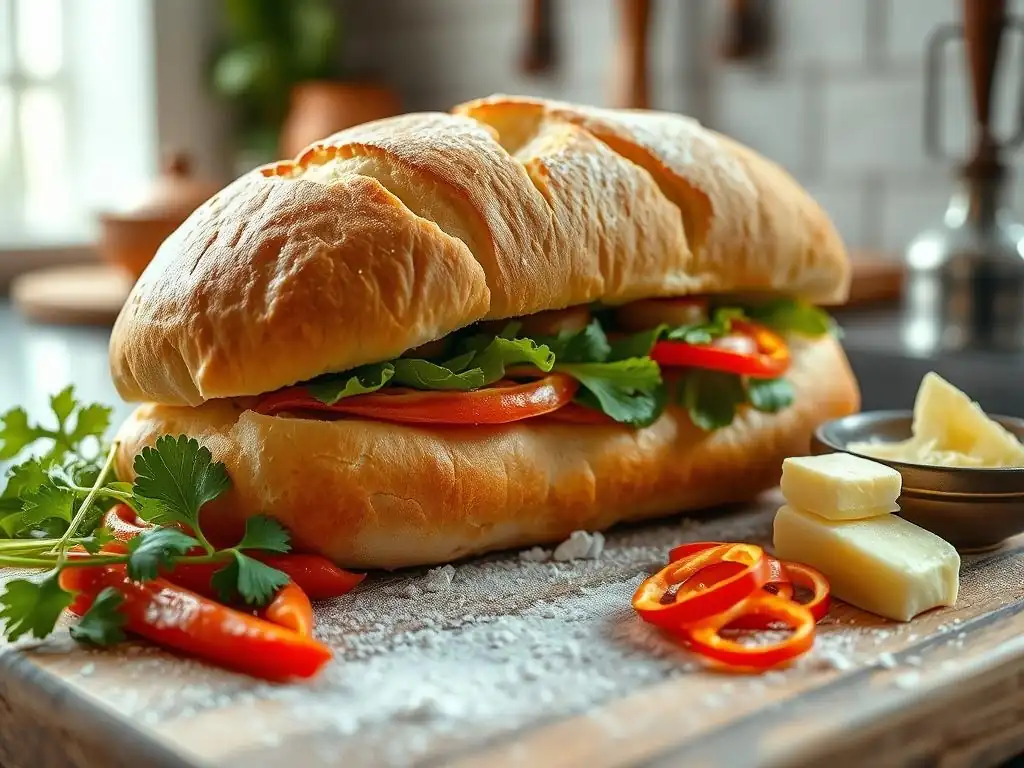
Welcome to BakeWithEase, where the aroma of freshly baked bread fills the digital air! Are you ready to unlock the secrets to creating bakery-quality bread in your own kitchen? This time, we're diving into a culinary adventure that will transport you to the streets of Vietnam. Discover our step-by-step guide to crafting the perfect Vietnamese banh mi bread. What makes this bread so uniquely light and airy? Keep reading, and let's bake!
- Introduction to Baking Authentic Vietnamese Banh Mi Bread at Home
-
The Ultimate Vietnamese Banh Mi Bread Recipe: A Step-by-Step Guide
- Gathering Your Ingredients: Essential Components for Banh Mi Bread
- The Banh Mi Bread Dough: Mixing, Kneading, and the Importance of Tangzhong
- First Rise: Developing Flavor and Texture in Your Banh Mi Dough
- Shaping the Banh Mi Bread: Achieving the Classic Baguette Form
- Second Rise: Proofing for a Light and Airy Crumb
- Baking the Banh Mi Bread: Achieving the Perfect Crust and Internal Temperature
- Cooling and Resting: Essential for Optimal Texture
- Tips and Tricks for Perfect Banh Mi Bread Every Time
- Using Your Homemade Banh Mi Bread: Sandwich Ideas and Beyond
- Storing Your Banh Mi Bread for Maximum Freshness
- Conclusion: Enjoying Your Homemade Vietnamese Banh Mi Bread
-
Frequently Asked Questions
- What makes Vietnamese Banh Mi bread unique compared to other bread types?
- Can I use only wheat flour for your Vietnamese Banh Mi bread recipe?
- What kind of fillings are traditionally used in a Vietnamese Banh Mi sandwich?
- How important is the proofing time for the Banh Mi bread dough?
- What are some tips for achieving a super crispy crust on my homemade Banh Mi bread?
- Final Reflection: The Enduring Magic of Banh Mi Bread
- Unleash Your Inner Baker: Craft the Perfect Banh Mi Loaf!
Introduction to Baking Authentic Vietnamese Banh Mi Bread at Home
Why Bake Your Own Banh Mi Bread? The Secret to Perfect Sandwiches
Baking your own Vietnamese banh mi bread recipe at home unlocks a level of freshness and flavor that store-bought options simply can't match. The foundation of a truly great banh mi sandwich is the bread itself – it needs to be incredibly light and airy on the inside, providing a soft cushion for fillings, while boasting a thin, shatteringly crisp crust on the outside.
Achieving this specific texture is the secret to the iconic sandwich experience. When you bake it yourself, you control every step, ensuring the perfect balance required to elevate humble ingredients into a delicious and satisfying meal.
Furthermore, the aroma of fresh bread filling your kitchen is an incomparable reward. It's a sensory experience that enhances the enjoyment of the final product. Beyond the sensory pleasure, baking at home ensures you know exactly what goes into your bread, allowing you to avoid additives or preservatives often found in commercial loaves. Mastering this particular Vietnamese banh mi bread recipe is not just about making bread; it's about creating the ideal vessel for a culinary masterpiece, giving your banh mi sandwiches that authentic touch.
Understanding the Unique Characteristics of Banh Mi Bread: Lightness and Crispy Crust
Vietnamese banh mi bread, often referred to simply as bánh mì, is a direct descendant of the French baguette but adapted to the Vietnamese climate and ingredients. Unlike its dense, chewy French cousin, banh mi bread is characterized by an exceptionally light and open interior crumb structure. This airiness is crucial because it prevents the bread from feeling heavy or overwhelming the delicate fillings of the sandwich. Imagine biting into a banh mi; the bread should compress easily without feeling doughy, yielding to the ingredients within.
The other defining characteristic is its distinctive crust. It's thin, almost fragile, and remarkably crispy, often described as having a crackly texture. This crust provides a delightful textural contrast to the soft interior and the varied textures of the sandwich fillings, such as pickled vegetables, grilled meats, and fresh herbs. Achieving this balance of a super light interior and a thin, crispy crust requires specific techniques in dough hydration, kneading, proofing, and crucially, baking with high heat and steam. Our Vietnamese banh mi bread recipe focuses on these elements to help you replicate these unique qualities.
The Ultimate Vietnamese Banh Mi Bread Recipe: A Step-by-Step Guide
Gathering Your Ingredients: Essential Components for Banh Mi Bread
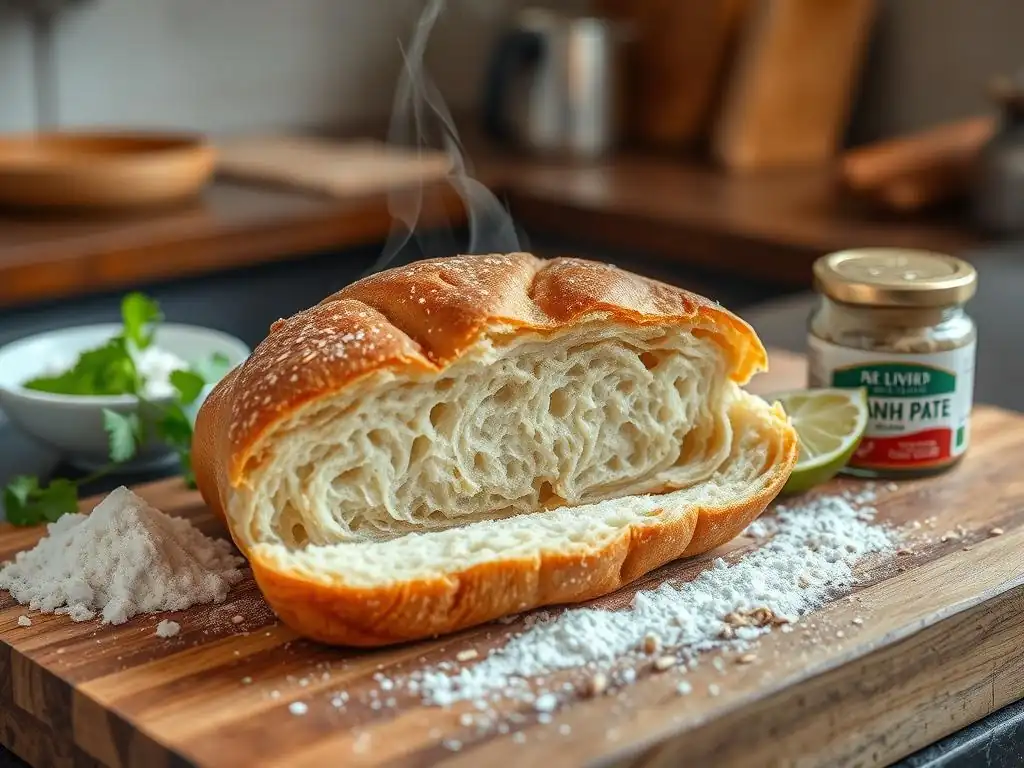
To embark on making this authentic Vietnamese banh mi bread recipe, you'll need a few key ingredients, most of which are standard pantry staples. The foundation is typically a blend of all-purpose flour and, sometimes, a small amount of bread flour for structure or rice flour for added crispness. You'll need warm water, active dry or instant yeast, salt for flavor and structure, and a touch of sugar to help activate the yeast and contribute to crust browning.
A crucial element that sets many banh mi recipes apart is the use of a Tangzhong or Yudane method. This involves cooking a small portion of the flour with liquid (water or milk) to form a paste before adding it to the main dough. This technique, originating from Asian baking, increases the dough's hydration capacity, resulting in an incredibly soft, moist, and light crumb that stays fresh longer.
For a basic Tangzhong, you might use about 5% of the total flour weight cooked with 25-30% of the liquid weight. This pre-gelatinized starch is key to achieving the desired airy texture unique to Vietnamese banh mi bread.
The Banh Mi Bread Dough: Mixing, Kneading, and the Importance of Tangzhong
Start by preparing your Tangzhong. Whisk together the specified amount of flour and water in a small saucepan. Heat it over medium heat, stirring constantly, until it forms a thick, paste-like consistency, similar to pudding. This usually takes just a few minutes. Remove from the heat and let it cool to room temperature before incorporating it into your main dough mixture.
In a large mixing bowl or the bowl of a stand mixer, combine the cooled Tangzhong with the remaining warm water, yeast, sugar, salt, and most of your flour. Mix until a shaggy dough forms. If using a stand mixer, attach the dough hook and knead on medium-low speed for about 8-10 minutes.
The dough should become smooth, elastic, and pull away from the sides of the bowl. If kneading by hand, turn the dough out onto a lightly floured surface and knead for 12-15 minutes until it passes the windowpane test (a small piece can be stretched thinly without tearing). This thorough kneading is vital for developing the gluten structure needed to support the airy crumb of your Vietnamese banh mi bread.
First Rise: Developing Flavor and Texture in Your Banh Mi Dough
After kneading, the dough needs time to ferment and rise, a process known as the first rise or bulk fermentation. Lightly grease a clean bowl, place the dough inside, and turn to coat. Cover the bowl tightly with plastic wrap or a damp cloth. Let the dough rise in a warm place, ideally around 75-80°F (24-27°C), until it has doubled in size. This typically takes between 1 to 1.5 hours, but the exact time can vary depending on the ambient temperature and the activity of your yeast.
During this first rise, the yeast is busy producing carbon dioxide gas, which causes the dough to expand. More importantly, this period allows enzymes to break down starches and proteins, developing complex flavors and aromas in the dough. A properly proofed dough will feel light and slightly puffy. You can test if it's ready by gently poking it with a lightly floured finger; if the indentation slowly springs back halfway, it's ready for the next step in crafting your Vietnamese banh mi bread.
Shaping the Banh Mi Bread: Achieving the Classic Baguette Form
Once the dough has doubled, gently punch it down to release the air. Turn the dough out onto a lightly floured surface and divide it into equal portions, typically yielding 4-6 small loaves depending on your desired size for the Vietnamese banh mi bread. Shaping is key to achieving the characteristic oblong shape and ensuring even baking.
For each portion, gently flatten it into a rectangle. Fold the top edge down to the center and press to seal. Fold the bottom edge up to meet the top fold and press again. Now, fold the dough in half lengthwise, pressing the seam firmly with the heel of your hand.
Roll the dough back and forth gently with your palms, starting from the center and working outwards, to elongate it into a short baguette shape, about 8-10 inches (20-25 cm) long. Aim for slightly tapered ends. Place the shaped loaves seam-side down on a baking sheet lined with parchment paper or a couche, leaving space between them.
Second Rise: Proofing for a Light and Airy Crumb
The second rise, or final proofing, is critical for achieving the incredibly light and airy interior of the Vietnamese banh mi bread. Cover the shaped loaves loosely with plastic wrap or a light cloth to prevent them from drying out. Let them rise in a warm, draft-free place. This rise is usually shorter than the first, typically taking 30-45 minutes, or until the loaves are visibly puffy and have increased by about 50-75% in size.
Proper proofing is a delicate balance. Under-proofed loaves will be dense and may split unexpectedly in the oven. Over-proofed loaves can collapse or spread too much, resulting in a poor shape and potentially a less airy crumb. The dough should feel light and fragile. To test for readiness, gently press the side of a loaf with your finger; the indentation should spring back very slowly, leaving a slight mark. This "slow spring back" indicates the dough is perfectly proofed and ready to be transformed into crispy Vietnamese banh mi bread.
Baking the Banh Mi Bread: Achieving the Perfect Crust and Internal Temperature
Preheat your oven to a high temperature, ideally between 450-475°F (230-245°C), with a baking stone or steel inside if you have one. Crucially, you need steam in the oven during the initial phase of baking to achieve that signature thin, crispy crust. You can create steam by placing a shallow pan on the bottom rack while the oven preheats and carefully pouring hot water into it just before loading the bread. Be extremely cautious when adding water to a hot pan in a hot oven.
Just before baking, slash the top of each loaf lengthwise with a sharp knife or lame. This allows the bread to expand evenly in the oven. Slide the loaves onto the hot baking surface (stone or steel).
Bake for 10-15 minutes with steam, then carefully remove the steam pan and continue baking for another 10-15 minutes, or until the loaves are deep golden brown and sound hollow when tapped on the bottom. The internal temperature should register around 200-210°F (93-99°C). This high heat and steam combination is paramount to achieving the desired texture for your Vietnamese banh mi bread recipe.
Cooling and Resting: Essential for Optimal Texture
Once baked to a beautiful golden brown and possessing that tell-tale crispy crust, the Vietnamese banh mi bread must be allowed to cool completely on a wire rack. This step is not merely about making the bread cool enough to handle; it is a critical part of the baking process that continues even after the bread is out of the oven. As the bread cools, the internal moisture redistributes, the starches finalize their structure, and the crust sets properly.
Cutting into hot bread can result in a gummy or doughy texture because the internal structure hasn't fully stabilized. Allowing the banh mi loaves to cool for at least 30-60 minutes ensures that the crumb achieves its intended light and airy quality and that the crust remains wonderfully crisp. Resist the urge to slice into them immediately! This resting period is essential for the perfect final texture of your homemade Vietnamese banh mi bread.
Tips and Tricks for Perfect Banh Mi Bread Every Time
Achieving the Crispy Crust: Oven Temperature and Steam Techniques
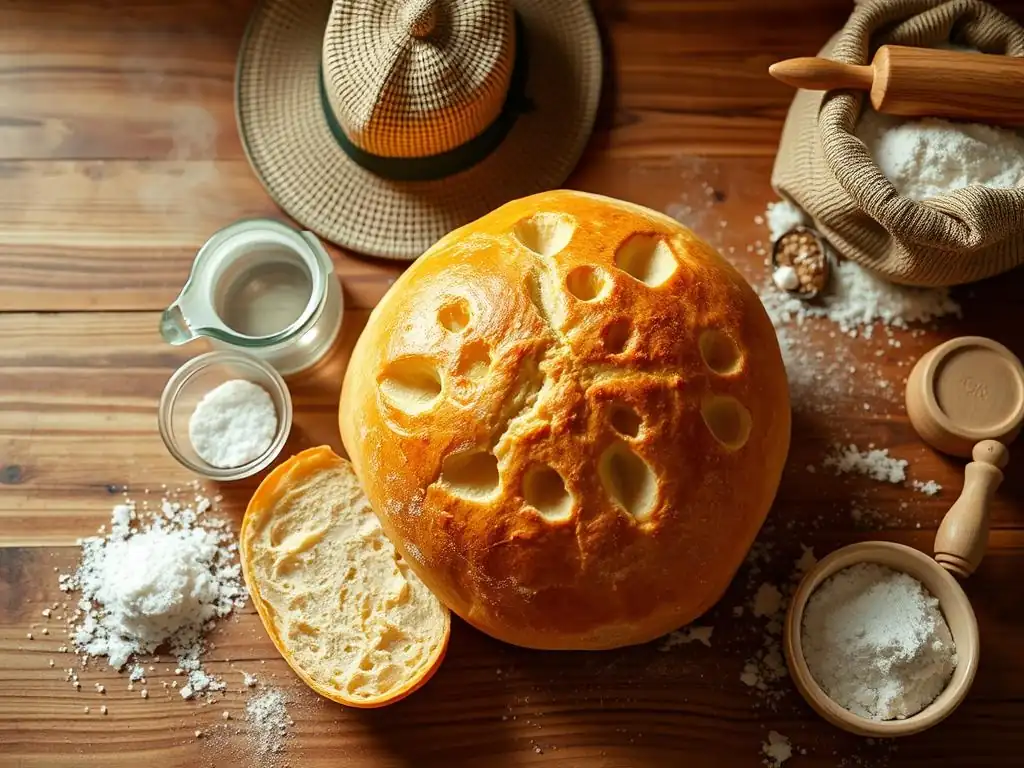
The hallmark of authentic Vietnamese banh mi bread is its incredibly thin and crispy crust, and achieving this requires a high-heat environment with significant steam during the initial baking phase. As mentioned earlier, preheating your oven to 450-475°F (230-245°C) is crucial. A hot oven ensures rapid oven spring, which helps the bread expand quickly before the crust sets.
To create steam, you can use a variety of methods. The most common is placing a cast iron pan or other oven-safe dish on the bottom rack while the oven preheats. Just before you load the bread, pour about a cup of hot water into the hot pan. Close the oven door quickly to trap the steam.
Another method is to spray the oven walls with water using a clean spray bottle just after loading the bread, repeating once or twice during the first few minutes. Some bakers even place ice cubes in the hot steam pan. The steam keeps the surface of the dough moist, allowing it to expand fully without the crust hardening prematurely. After about 10-15 minutes, the crust will have set, and you can remove the steam source to allow the crust to crisp up further in the dry heat.
Troubleshooting Common Banh Mi Bread Baking Problems
Even with a solid Vietnamese banh mi bread recipe, you might encounter some challenges. If your crust is too thick or not crispy enough, it's likely an issue with steam or oven temperature. Ensure your oven is fully preheated to a high temperature and that you are generating enough steam during the first part of the bake. Insufficient steam leads to a hard, thick crust rather than a thin, crackly one.
If your bread has a dense crumb rather than being light and airy, several factors could be at play. This could be due to under-kneading (not enough gluten development), under-proofing (not enough time for the yeast to create air pockets), or baking at too low a temperature (preventing good oven spring). Ensure your dough is well-kneaded, that it passes the proofing test before baking, and that your oven reaches the high temperature specified. Using the Tangzhong method correctly is also key to maximizing hydration and achieving that signature light crumb.
Variations on the Classic Recipe: Exploring Different Flours and Add-Ins
While the classic Vietnamese banh mi bread recipe typically uses all-purpose flour, you can experiment with variations to influence texture and flavor. Substituting a small percentage (say, 10-15%) of bread flour can sometimes add a little more structure, though be careful not to make it too chewy. Adding a tablespoon or two of rice flour is a traditional Vietnamese technique believed to contribute to the crispness of the crust.
Beyond flour types, consider subtle flavor variations. A tiny pinch of sugar is standard, but a touch of honey or malt powder can enhance browning and add a subtle sweetness. Some recipes might include a small amount of fat, like a teaspoon of vegetable oil or melted butter, which can contribute to a slightly softer crumb, though traditional banh mi bread is often lean. While not traditional add-ins in the dough itself for banh mi, you could explore toppings like sesame seeds for a different texture profile on the crust, though this departs from the classic look and feel.
Using Your Homemade Banh Mi Bread: Sandwich Ideas and Beyond
Classic Vietnamese Banh Mi Sandwich Fillings and Combinations
Now that you've mastered the Vietnamese banh mi bread recipe, it's time to fill those beautiful loaves! The classic banh mi sandwich is a symphony of flavors and textures. A common combination is bánh mì thịt nướng (grilled pork). This typically features tender, marinated grilled pork slices, creamy pâté, a smear of mayonnaise or butter, pickled carrot and daikon radish (đồ chua), fresh cilantro, cucumber slices, and often a few slices of fresh chili for heat.
Other popular fillings include bánh mì chả lụa (Vietnamese pork sausage), bánh mì xíu mại (pork meatballs in tomato sauce), or bánh mì gà (grilled chicken). The key is the interplay between the rich, savory proteins, the tangy pickles, the fresh herbs, and the creamy elements, all held within the perfectly crisp and airy banh mi bread. Don't forget a drizzle of soy sauce or a sprinkle of Maggi seasoning for that authentic umami punch.
Other Creative Ways to Enjoy Your Freshly Baked Banh Mi Bread
While the banh mi sandwich is the star, your homemade Vietnamese banh mi bread is versatile enough for other uses. Because of its light crumb and crispy crust, it makes excellent toast points for dipping into soups or stews, absorbing liquids beautifully without becoming soggy too quickly. Think of it alongside a hearty beef stew or a spicy seafood broth.
Cut into cubes and toasted, it can become croutons for salads, adding a delightful crunch. Smaller loaves or pieces can be served alongside main dishes as a bread basket item, perfect for sopping up sauces. Its unique texture also makes it a good base for open-faced sandwiches or even sliced and used for a lighter version of garlic bread. The possibilities extend beyond the traditional sandwich, allowing you to enjoy the fruits of your Vietnamese banh mi bread recipe in many delicious ways.
Storing Your Banh Mi Bread for Maximum Freshness
Proper Storage Techniques to Maintain Crust and Softness
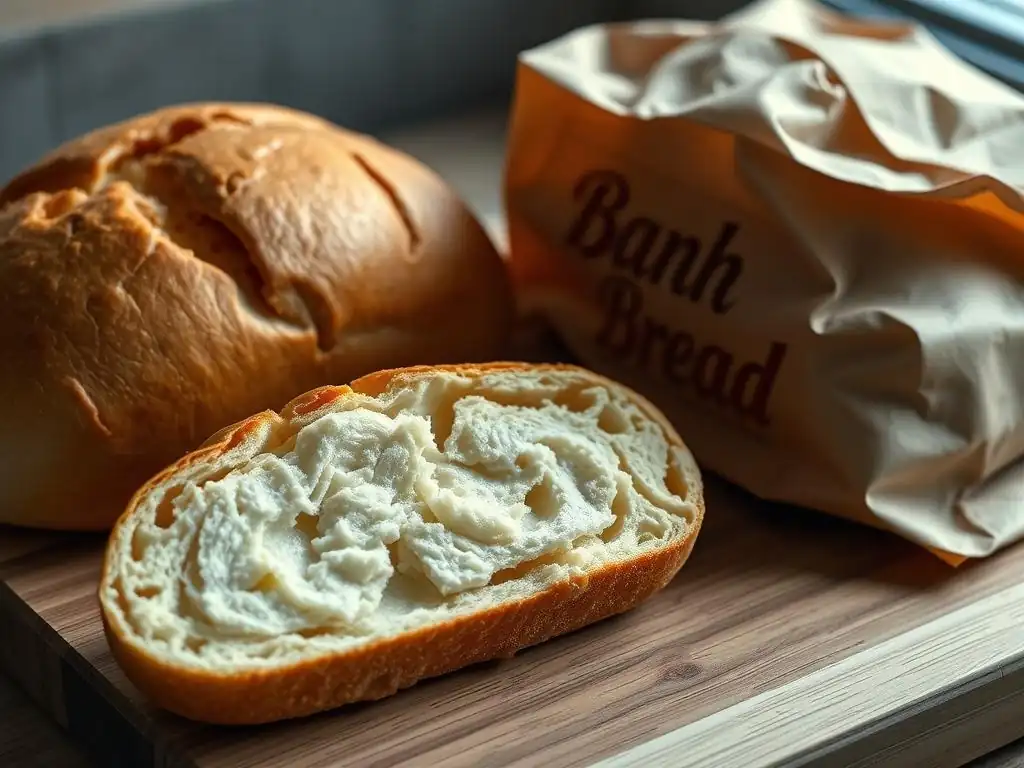
Proper storage is key to preserving the unique texture of your homemade Vietnamese banh mi bread. The biggest challenge is maintaining that wonderfully crispy crust while keeping the interior soft. Storing bread in airtight plastic bags, while keeping the interior soft, will inevitably soften the crust due to trapped moisture.
For short-term storage (a day or two), the best method is to store the cooled loaves at room temperature in a paper bag. A paper bag allows the crust to breathe, helping it retain some of its crispness, while still offering a small amount of protection. If you need to store it for slightly longer but still want some crust integrity, you can loosely wrap the cooled loaf in a clean linen towel or place it cut-side down on a cutting board. This sacrifices some moisture retention for a better crust texture compared to plastic.
Freezing and Reheating Banh Mi Bread
If you won't be eating your Vietnamese banh mi bread within a day or two, freezing is the best way to preserve its quality for longer periods. Ensure the loaves are completely cooled. Wrap each individual loaf tightly in plastic wrap, then wrap again in aluminum foil or place in a freezer-safe bag. Frozen properly, the bread can maintain good quality for up to 2-3 months.
To reheat frozen banh mi bread, remove it from the freezer and unwrap it. You can let it thaw at room temperature for an hour or two, or bake it directly from frozen. To revive the crust and warm the interior, preheat your oven to about 350-375°F (175-190°C). Place the loaf directly on the oven rack and bake for 10-15 minutes for thawed bread, or 20-25 minutes for frozen bread, until the crust is crispy and the interior is warm. This method brings back much of the bread's original texture, making it almost as good as fresh.
Conclusion: Enjoying Your Homemade Vietnamese Banh Mi Bread
Mastering the Art of Banh Mi Baking: A Rewarding Culinary Experience
Baking your own Vietnamese banh mi bread is a truly rewarding experience. It requires attention to detail, from understanding the role of Tangzhong to mastering the balance of proofing and the critical use of steam during baking. Each step in this Vietnamese banh mi bread recipe contributes to the final product's unique characteristics: the incredibly light and airy interior crumb and the thin, shatteringly crispy crust.
The effort invested pays off immensely when you slice open a warm loaf and hear the crackle of the crust, or bite into a homemade banh mi sandwich built on your own perfectly baked bread. It's a skill that, once refined, allows you to recreate the authentic flavors and textures of a beloved street food right in your own kitchen. Share your creations, experiment with fillings, and savor the satisfaction of mastering this delightful bread.
Frequently Asked Questions
What makes Vietnamese Banh Mi bread unique compared to other bread types?
Banh Mi bread is known for its incredibly light and airy texture, achieved by using a combination of wheat and rice flour. This results in a crispy crust and soft interior, perfect for sandwiches.
Can I use only wheat flour for your Vietnamese Banh Mi bread recipe?
While you can, using only wheat flour will change the final product. The rice flour is essential for the signature light and airy texture of Banh Mi. We recommend trying to source rice flour for the best results.
What kind of fillings are traditionally used in a Vietnamese Banh Mi sandwich?
Traditional Banh Mi fillings often include pâté, Vietnamese ham, pickled vegetables (carrots and daikon), cilantro, and chili peppers. However, you can get creative and use any fillings you enjoy!
How important is the proofing time for the Banh Mi bread dough?
Proofing is crucial! Adequate proofing allows the dough to develop flavor and rise properly, resulting in a light and airy bread. Follow the recipe's instructions carefully for the best outcome.
What are some tips for achieving a super crispy crust on my homemade Banh Mi bread?
A high oven temperature and creating steam in the oven are key. You can achieve this by placing a pan of hot water on the bottom rack during baking. This promotes a crispy and golden-brown crust.
Final Reflection: The Enduring Magic of Banh Mi Bread
The simple act of baking a loaf of banh mi bread connects us to a rich culinary heritage, and its airy texture and subtle sweetness continue to captivate palates worldwide. This isn't just about a recipe; it's about experiencing the heart of Vietnamese cuisine, a taste of home for many, and a delicious adventure for all. The enduring popularity of banh mi sandwiches speaks volumes about the power of simple, perfectly executed ingredients.
The journey of mastering this recipe, from the initial kneading to the satisfying crusty crackle of the finished loaf, has been a deeply rewarding one. It's a testament to the patience and precision required in baking, but also to the joy of sharing the results. Food is symbolic of love when words are inadequate.
- Alan D. Wolfelt. This quote perfectly encapsulates the feeling of sharing homemade banh mi bread – a gesture of love and care expressed through deliciousness. The cultural significance of this bread, its place in Vietnamese history and its current global presence, underscores its importance beyond mere sustenance.
Now, I invite you to embark on your own banh mi bread baking journey. Don't be intimidated by the process; embrace the challenge, savor the aromas, and relish the satisfaction of creating something truly special. The next time you bite into a perfectly crisp banh mi, remember the journey it took to get there, and the connection it fosters between cultures and generations. Let the experience inspire you to explore other culinary traditions and discover the magic hidden within each recipe.
Unleash Your Inner Baker: Craft the Perfect Banh Mi Loaf!
Thanks for joining us on this delicious journey into the world of Vietnamese Banh Mi bread! We hope you've gained the confidence to tackle this seemingly complex yet rewarding recipe. Ready to take your baking skills to the next level?
- Bake your own Banh Mi today! Use the recipe as your guide and share your experience with our community - we'd love to see your creations!
- Experiment with fillings: Once you've mastered the bread, explore different fillings beyond the classic Banh Mi to create your signature sandwich.
- Challenge a friend: Share this recipe with a fellow baking enthusiast and make it a collaborative baking project!
What unique ingredient will you add to your next Banh Mi creation to elevate the flavor?