
Why Do Baked Goods Brown? Mastering the Maillard Reaction

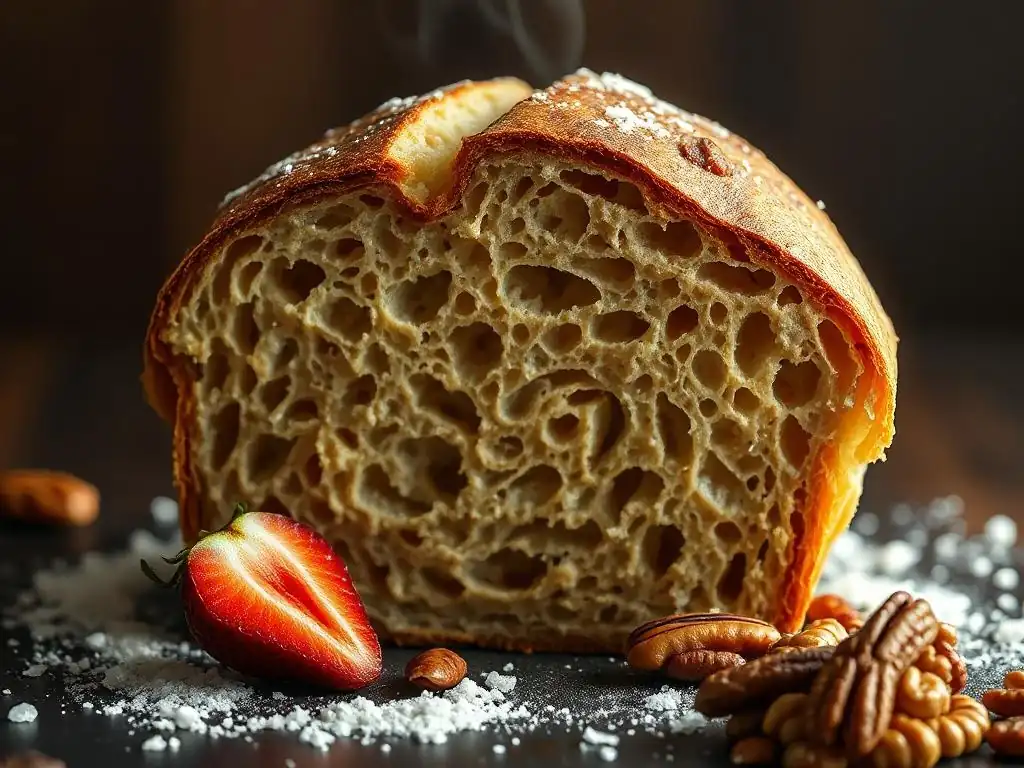
Welcome to BakeWithEase, your kitchen companion for all things baking! Ever wondered why your perfectly crafted cookies transform from pale dough to golden-brown delights? This "Baking Science Deep Dive" explores the fascinating science behind why baked goods brown, unlocking the secrets of the Maillard reaction and giving you the tools to control color, flavor, and texture like never before. Get ready to elevate your baking game!
- Understanding and Optimizing Gluten Development in Bread Baking
- The Importance of Gluten in Bread Baking
- What is Gluten? Unpacking the Proteins Behind Bread's Structure
- Key Factors Influencing Gluten Development
- Mastering Gluten Development: Techniques for Better Bread
- Troubleshooting Gluten-Related Issues in Bread Baking
- Gluten Development in Different Types of Bread
- Beyond the Basics: Advanced Techniques for Gluten Manipulation
- Conclusion: Harnessing the Power of Gluten for Exceptional Bread
-
Frequently Asked Questions
- Why do my baked goods brown when I bake them?
- What is the Maillard reaction, and why is it important in baking?
- Besides the Maillard reaction, are there other factors that influence browning?
- How can I control the browning of my baked goods during baking?
- What happens if my baked goods brown too quickly on top but are not cooked inside?
- Final Reflection: The Golden Crust: Unveiling the Magic of the Maillard Reaction
- Unlock Your Baking Potential: Mastering the Maillard Reaction!
Understanding and Optimizing Gluten Development in Bread Baking
The Importance of Gluten in Bread Baking
Gluten is the protein network that gives bread its characteristic structure, enabling it to trap gas bubbles produced during fermentation. Without sufficient gluten development, loaves collapse into dense masses rather than rising into lofty, open-crumb delights. In a typical artisan baguette, for example, a well-developed gluten network can hold up to 85% of the carbon dioxide generated by yeast, translating directly into volume and an airy crumb.
Moreover, gluten influences texture and mouthfeel. A 12% protein bread flour (e.g., King Arthur® Bread Flour at 11.7% protein) yields a chewier crust and more elastic crumb compared to a 9% all-purpose blend. Bakers aiming for a sandwich loaf often choose 10–11% protein to balance tenderness and structure. These subtle protein differences can be the deciding factor in achieving bakery-quality results at home.
The Structure of Bread: Gluten's Fundamental Role
Gluten is composed of two primary proteins— gliadin and glutenin—that, when hydrated and worked, form a viscoelastic matrix. This matrix behaves much like a three-dimensional mesh:
- Gliadin provides extensibility, allowing the dough to stretch as CO₂ expands.
- Glutenin provides elasticity, recoiling to maintain shape and trap gas.
In practical terms, a well-developed matrix translates into uniform cell walls visible under a 10× magnification in a crumb analysis. Studies at the American Institute of Baking have shown that doughs with optimal gluten networks exhibit a 25–30% increase in total gas retention compared to underdeveloped counterparts.
Why is Gluten Development Important? Texture, Rise, and Chew
A dough lacking adequate gluten development often yields dense, gummy loaves with irregular crumb. For instance, home bakers reporting “claggy” interior structures typically measure hydration above 75% but knead less than 5 minutes—a mismatch that undercuts network formation. Conversely, overkneading can break down the protein bonds, resulting in weak, slack dough that spreads rather than rising.
Beyond rise, gluten affects chewiness—a critical attribute in products like ciabatta (70–75% hydration) and bagels (50–55% hydration with added malt). A 2018 sensory panel in London ranked a well-kneaded ciabatta with 1.5% salt and 72% hydration as “optimal” for chew resilience, illustrating how precisely tuned gluten development elevates eating quality.
What is Gluten? Unpacking the Proteins Behind Bread's Structure
Glutenin and Gliadin: The Two Key Proteins
- Glutenin: High–molecular-weight subunits that form long, elastic strands.
- Gliadin: Smaller, sticky proteins that grant dough stretchability.
A flour with 13% protein typically contains about 60% glutenin and 40% gliadin, though ratios can shift by ±5% depending on wheat variety. This balance dictates whether a dough is more “stretchy” ( high gliadin) or “springy” ( high glutenin).
How Gluten Forms: Hydration and Mechanical Action
- Hydration (10–15 minutes)
- Water molecules hydrate the protein fractions, allowing them to unfold.
- Mechanical Action (5–20 minutes of kneading)
- Folding and stretching align protein chains into ordered networks.
# Simplified hydration ratio calculation
flour_weight=500  # grams
water_weight=300  # grams
hydration=$(( water_weight * 100 / flour_weight ))  # yields 60%
echo "Hydration: $hydration%"
This bash snippet helps bakers calculate hydration percentages quickly in a terminal or script.
Factors Affecting Gluten Development: A Holistic View
- Water quality (pH 6.5–7.5 ideal; hard water can strengthen gluten)
- Dough temperature (optimal 24°C for enzyme activity)
- Salt concentration (1.8–2.2% by flour weight to tighten gluten)
- Fats (butter, oil) that shorten or weaken networks when >5% of flour weight
“Even a 1% increase in salt can reduce gluten extensibility by 8%,” notes Pete Reynolds, Master Baker at The Bread Project.
Key Factors Influencing Gluten Development
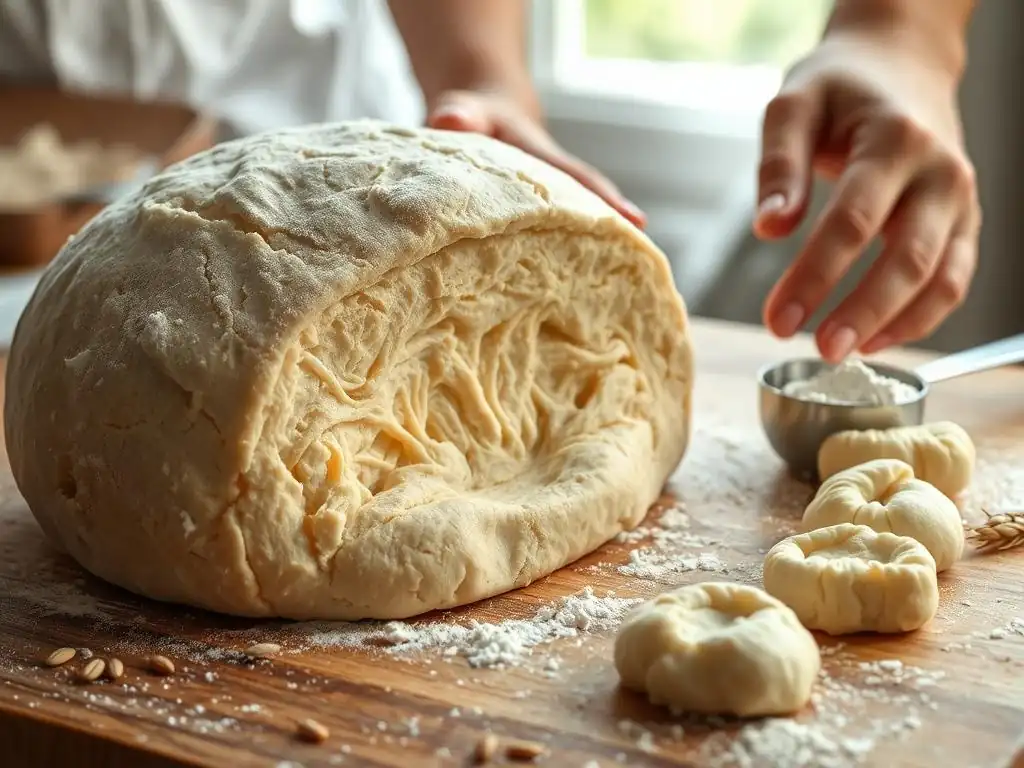
Water Temperature and Its Impact on Gluten Formation
Water temperature directly influences dough temperature, which should target 24°C (75°F) for balanced enzymatic activity and yeast metabolism.
- Too warm (>29°C): Overactive fermentation, weaker gluten.
- Too cool (<18°C): Slow gluten formation, tighter crumb, longer bulk fermentation.
Bakers often use the Dough Temperature Formula:
Desired Dough Temp = (Room Temp × 2 + Flour Temp + Water Temp) / 4
The Role of Flour Type: Protein Content and Strength
- Bread Flour (12–14% protein) → strong gluten network → airy, chewy loaves
- All-Purpose Flour (10–11% protein) → moderate strength → balanced crumb
- Whole Wheat Flour (13–15% protein but coarse bran) → weaker network, denser crumb
A 2019 test by Grain Council UK showed that replacing 20% bread flour with whole wheat reduces loaf volume by ~12%.
Mixing Techniques: From Gentle Folding to Intensive Kneading
- Stretch and Fold (every 30 min during bulk fermentation):
- Builds strength without over-oxidation.
- Intensive Kneading (5–10 min in a stand mixer):
- Rapid gluten alignment but risks heat buildup.
Task List for Dough Strengthening:
- [x] Autolyse 20 minutes
- [ ] 4 Stretch-and-fold cycles during bulk fermentation
- [ ] Final shaping with bench rest
Salt's Influence on Gluten Strength and Dough Stability
Salt (NaCl) interacts with protein molecules, stabilizing bonds and tightening the network.
- At 2%: Ideal crumb structure, improved gas retention.
- At 0–1%: Slacker dough, poor oven spring.
- Above 3%: Inhibits yeast, overly tight crumb.
The Impact of Fats and Oils on Gluten Development
Fats coat protein strands, preventing full contact and thus weakening the network.
- Lean Doughs (baguette, ciabatta): 0–2% fat → strong gluten
- Enriched Doughs (brioche, challah): 20–30% fat → require extended mixing or tangzhong
Mastering Gluten Development: Techniques for Better Bread
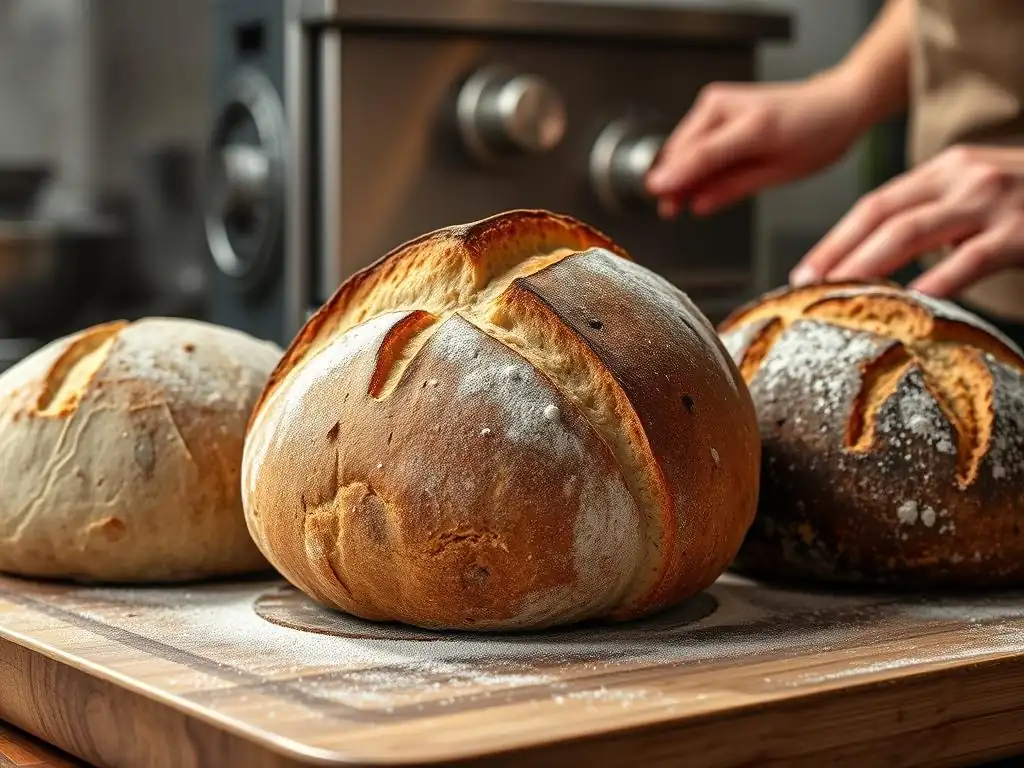
Autolyse: Enhancing Hydration for Improved Gluten
During an autolyse, flour and water rest together for 20–60 minutes before adding salt and yeast. This process:
- Improves hydration of proteins and starches.
- Reduces oxidation, preserving flavor compounds.
A study at Lesaffre Institute found that 30-minute autolyse increased dough extensibility by 15% compared to no autolyse.
Bulk Fermentation: Allowing Gluten to Mature
Bulk fermentation at 24°C for 90–120 minutes allows:
- Gas production for initial rise
- Enzymatic activity for dough strength
- Flavor development through organic acid formation
Note: Overfermented dough (pH <4.0) can weaken gluten, leading to collapse.
Windowpane Test: Assessing Gluten Development
To perform the windowpane test:
- Pinch a small dough ball (~20 g).
- Gently stretch it between fingertips.
- Look for a thin, translucent film without tears.
if (dough.stretchable and not dough.rips) {
  print("Gluten is well-developed");
} else {
  print("Continue kneading or folding");
}
Using a Stand Mixer vs. Hand Kneading: Pros and Cons
- Stand Mixer
- Pros: Consistent speed, less physical effort.
- Cons: Risk of overheating, harder to feel dough development.
- Hand Kneading
- Pros: Tactile feedback, precise control.
- Cons: Time-intensive, requires practice for uniformity.
Dense and Tough Bread: Underdeveloped Gluten
Symptoms:
- Compact crumb, tear-shaped holes under crust.
- Dough tears easily in windowpane test.
Solutions:
- Extend kneading by 5–10 minutes.
- Increase autolyse time to 45 minutes.
- Ensure water temperature yields a dough at 24°C.
Weak and Slack Dough: Overdeveloped Gluten
Symptoms:
- Dough spreads on bench, lacks structure.
- Large, irregular holes after baking.
Solutions:
- Shorten mixing time.
- Reduce hydration by 2–3%.
- Add salt or increase salt percentage to 2.2%.
Poor Rise and Structure: Gluten Deficiency
Symptoms:
- Collapsed loaves, flat mold.
- Underbaked texture even after correct bake time.
Solutions:
- Switch to higher-protein flour (e.g., from 10% to 12.5%).
- Incorporate vital wheat gluten at 1–2% of flour weight.
- Opt for stretch-and-fold technique during bulk fermentation.
Gluten Development in Different Types of Bread
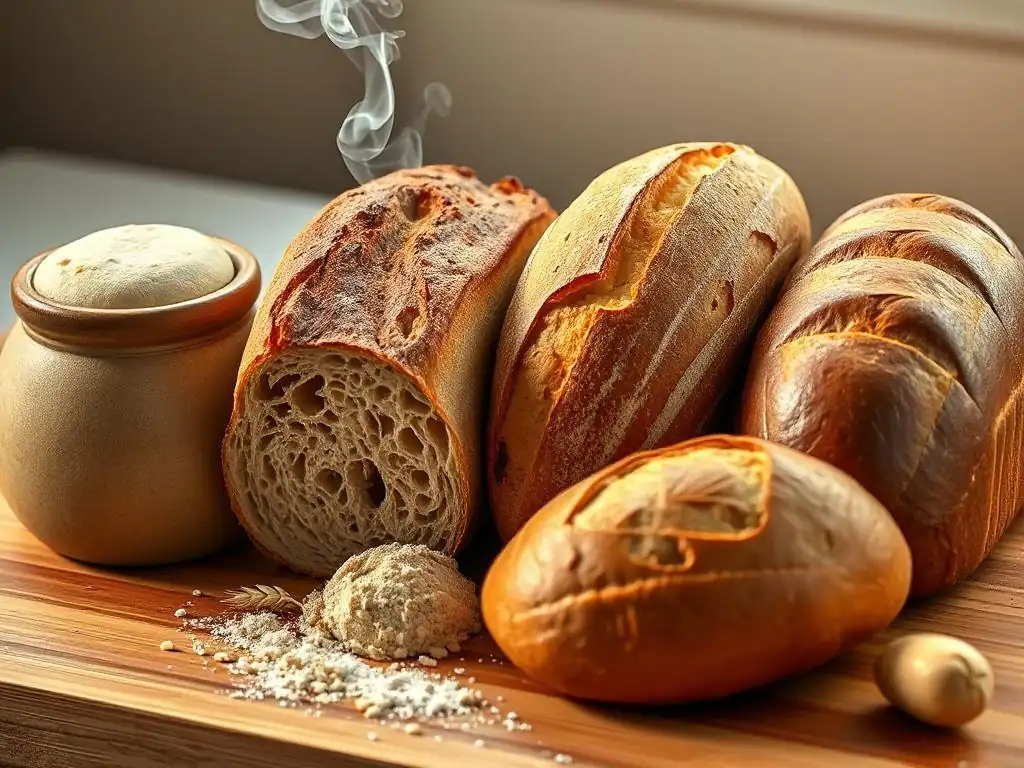
High-Hydration Doughs: Achieving Strong Gluten Networks
High-hydration doughs (68–75%) such as ciabatta rely on gently developed gluten to trap gas while still yielding open, often olive-sized alveoli.
- Use coil folds every 30 minutes.
- Aim for 24–26°C mash temperature during fermentation.
Enriched Doughs: Managing Gluten Development with Fats and Sugars
Brioche and challah often include 20–30% butter, sugar, and eggs. To compensate:
- Prolong mixing to 15–18 minutes in a mixer with a dough hook.
- Use a delayed fat addition technique—mix flour, water, yeast, salt, then incorporate butter gradually.
Sourdough Bread: Gluten Development and Acidity
Sourdough’s acidity (pH 3.5–4.2) strengthens gluten via acid-saponified bonds.
- Starter refreshment: 1:1:1 ratio (starter:flour:water) at 24°C yields peak activity in ~4 hours.
- Bulk ferment 3–4 hours with stretch-and-folds to build a resilient network without overoxidation.
Beyond the Basics: Advanced Techniques for Gluten Manipulation
Tangzhong Method: Pre-Gelatinizing Starch for Softer Bread
Tangzhong uses a 1:5 flour-to-water roux heated to 65°C, which:
- Holds 50% more water in dough.
- Extends shelf life by 1–2 days.
- Results in an ultra-soft crumb in milk breads.
Using Vital Wheat Gluten: Supplementing Protein Content
Adding vital wheat gluten at 1–3% of flour weight boosts protein from 11% to ~12–14%.
- Ideal for whole-grain or gluten-weak flours.
- Improves rise by 8–10% in home ovens.
Cold Fermentation: Slowing Down Gluten Development
Refrigerated bulk fermentation (4–6°C for 12–24 hours) allows:
- Gradual gluten strengthening via slow enzyme activity.
- Richer flavor through extended organic acid production.
- Enhanced dough handling due to firm texture.
Conclusion: Harnessing the Power of Gluten for Exceptional Bread
Gluten Development: A Cornerstone of Successful Bread Baking
Mastering gluten development—from selecting the right flour to choosing the ideal mixing and fermentation techniques—is essential for achieving bakery-quality loaves at home. Whether you’re crafting a high-hydration ciabatta, an enriched brioche, or a tangy sourdough, understanding the science behind gluten will empower you to troubleshoot issues and consistently bake exceptional bread. Happy baking!
Frequently Asked Questions
Why do my baked goods brown when I bake them?
Baked goods brown primarily due to the Maillard reaction, a chemical reaction between amino acids and reducing sugars that occurs when heat is applied. This process is responsible for the browning and development of complex flavors.
What is the Maillard reaction, and why is it important in baking?
The Maillard reaction is a non-enzymatic browning that occurs when proteins and sugars are heated. It's crucial in baking as it gives baked goods their characteristic golden-brown color, aroma, and flavor.
Besides the Maillard reaction, are there other factors that influence browning?
Yes, caramelization (the browning of sugars) and the presence of fats and proteins also play a role. However, the Maillard reaction is the most significant contributor to browning in most baked goods.
How can I control the browning of my baked goods during baking?
You can control browning by adjusting the oven temperature, baking time, and ingredients. For example, reducing the sugar content or using a lower temperature can slow down browning.
What happens if my baked goods brown too quickly on top but are not cooked inside?
This indicates the oven temperature might be too high. You can try lowering the oven temperature and/or tenting the baked good with foil to protect the surface while the inside finishes cooking.
Final Reflection: The Golden Crust: Unveiling the Magic of the Maillard Reaction
The browning of baked goods, a seemingly simple process, is actually a complex interplay of chemistry and heat, a culinary alchemy that transforms humble ingredients into irresistible treats. Understanding the Maillard reaction isn't just about achieving the perfect golden-brown crust; it's about unlocking the secrets behind the flavor and texture that make baked goods so captivating. This knowledge empowers us to create more delicious and visually appealing results in our own kitchens.
The Maillard reaction's influence extends far beyond the simple act of baking. It's a fundamental process that shapes our culinary landscape, influencing everything from the rich aroma of roasted coffee beans to the savory depth of seared meats. The beauty lies in its unpredictability, a subtle dance between temperature, time, and ingredients. As Harold McGee so eloquently put it, The Maillard reaction is a symphony of flavor, a complex interplay of hundreds of compounds that create the unique taste and aroma of browned foods.
This quote perfectly encapsulates the artistry and science intertwined in this fascinating chemical process.
Now, consider your own baking experiences. Have you ever noticed how a slight change in oven temperature or baking time can dramatically alter the color and flavor of your creations? I invite you to experiment, to explore the nuances of the Maillard reaction in your own kitchen. Observe the changes, understand the science, and most importantly, savor the results. By embracing this knowledge, you'll not only improve your baking skills but also deepen your appreciation for the intricate chemistry that transforms simple ingredients into culinary masterpieces.
Unlock Your Baking Potential: Mastering the Maillard Reaction!
Thanks for taking the time to explore the fascinating world of the Maillard reaction! You've now gained a deeper understanding of what makes those beautiful brown hues appear in your baked goods. Ready to put your newfound knowledge to the test?
- Experiment with different sugars and proteins: Try substituting different types of flour or sweeteners to observe the varying effects on browning. This is a great way to personalize your recipes and unlock unique flavors.
- Share your baking triumphs (and challenges!): Post a picture of your latest creation on social media and tag us – we’d love to see your results!
- Dive deeper into advanced baking techniques: Explore our other articles on BakeWithEase.com for more tips and tricks to elevate your baking game.
What unexpected flavors or browning effects will you discover in your next baking adventure?