
From Eclairs to Tarte Tatin: A Guide to France's Iconic Pastries

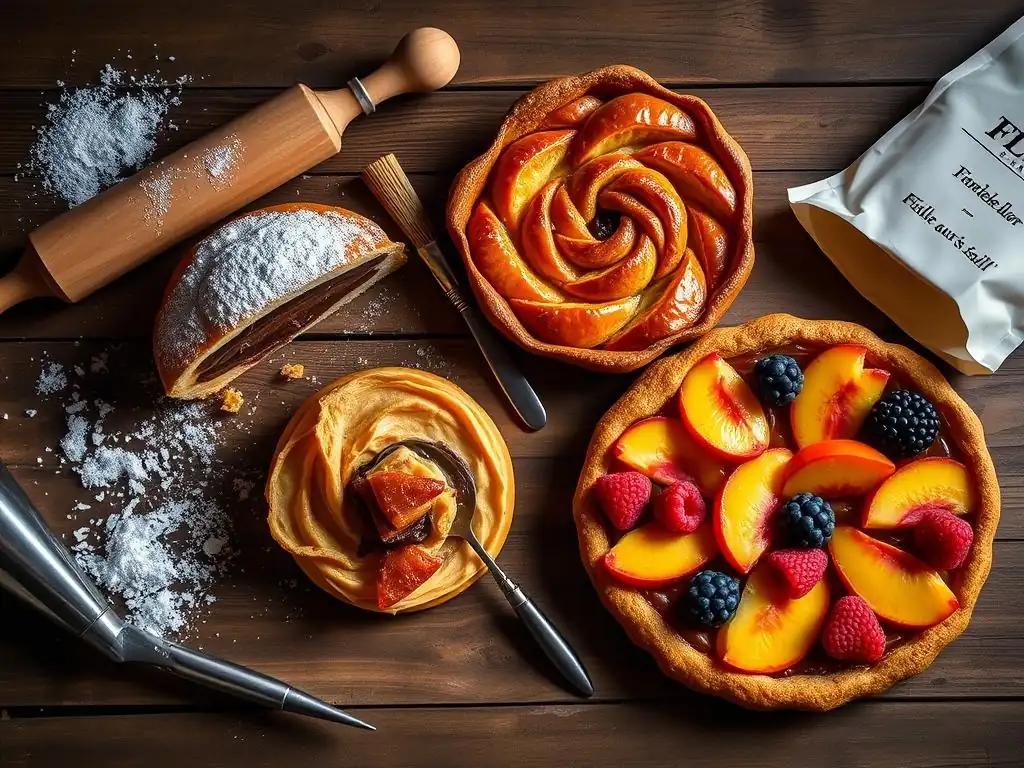
Welcome to BakeWithEase, where we unlock the secrets to creating delicious masterpieces in your very own kitchen! Are you ready to embark on a culinary journey to France? Dive into our guide, "From Eclairs to Tarte Tatin: A Guide to France's Iconic Pastries," and discover the refined art of French pastry baking techniques. Ever wondered how to achieve that perfect flaky crust or airy choux? Let's uncover the magic behind these iconic desserts and elevate your baking skills. What are the fundamental techniques to master? Keep reading to find out!
- Discovering the Art of French Pastry Baking Techniques
- Mastering Essential French Pastry Baking Techniques: A Baker's Handbook
- A Pastry Pilgrimage: Exploring France's Most Iconic Treats
- Equipping Your Kitchen for French Pastry Baking Success
- Elevate Your Baking Skills: Further Exploration of French Pastry Techniques
- Conclusion: Your French Pastry Baking Adventure Awaits.
-
Frequently Asked Questions
- How can BakeWithEase help me learn French pastry baking techniques?
- What types of French pastries can I learn to bake using BakeWithEase?
- Are the French pastry recipes on BakeWithEase suitable for beginners?
- Does BakeWithEase offer advice on sourcing ingredients for French pastries?
- What makes BakeWithEase a good resource for learning French pastry baking techniques compared to other sites?
- Final Reflection: The Enduring Allure of French Pastry Techniques
- Unleash Your Inner Pâtissier: Master French Pastry!
Discovering the Art of French Pastry Baking Techniques
Welcome to the exquisite world of French pastry, where butter, sugar, and flour are transformed into edible works of art. French pastry baking techniques are renowned globally for their precision, elegance, and ability to create textures and flavors that are simply unparalleled.
From the flaky layers of a croissant to the delicate shell of a macaron, each creation is a testament to centuries of culinary evolution and dedication to perfection. Embarking on a journey to master these techniques is not just about following recipes; it's about understanding the science behind the bake, developing a keen sense of touch, and appreciating the history embedded in every bite.
This guide will walk you through some of the most iconic French pastries, shedding light on the fundamental French pastry baking techniques required to bring them to life in your own kitchen. Whether you're a novice baker eager to learn the basics or looking to refine your existing skills, delving into French methods offers a rich and rewarding experience.
We'll explore foundational techniques like pâte à choux, puff pastry, and meringue, and discuss the specific applications for beloved treats like éclairs, tarte tatin, macarons, and croissants. Get ready to elevate your baking game and impress your friends and family with creations that rival those found in Parisian patisseries.
Mastering Essential French Pastry Baking Techniques: A Baker's Handbook
Understanding the Foundations: Key Techniques for French Pastries
Mastering French pastry begins with a solid understanding of fundamental techniques that form the backbone of countless recipes. One such cornerstone is the creation of pâte feuilletée, or puff pastry. This technique involves encasing a block of cold butter within dough and repeatedly folding and rolling (known as "turning" the dough) to create hundreds, even thousands, of thin layers of dough separated by butter.
When baked at high temperatures, the water in the butter turns to steam, forcing the layers apart and resulting in a remarkably light, airy, and flaky texture. A well-executed puff pastry can yield over 700 distinct layers, each contributing to that signature shatter and melt-in-your-mouth quality.
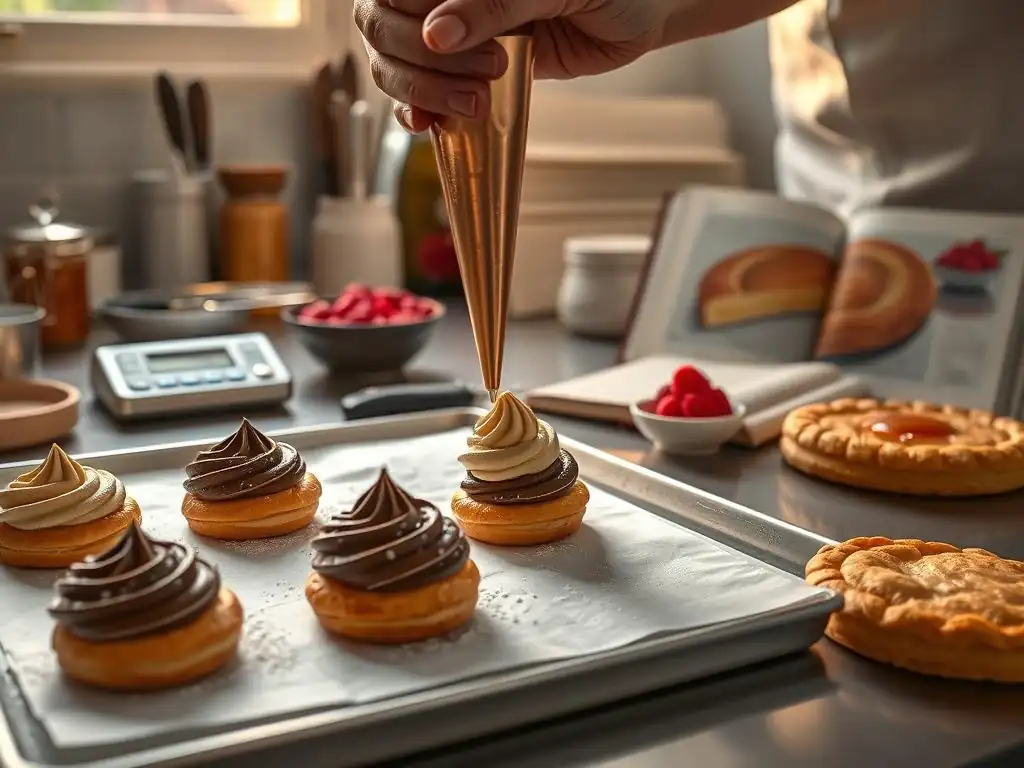
Another essential technique is the preparation of pâte à choux (choux pastry), a cooked dough used for éclairs, profiteroles, and gougères. This method involves cooking flour with a mixture of water, milk, butter, and sometimes sugar until it forms a thick paste, then beating in eggs one by one. The high moisture content and the addition of eggs create a dough that, when baked, produces a large cavity inside, perfect for filling.
This technique is relatively quick compared to puff pastry but requires careful attention to consistency and baking temperature to achieve the desired rise and hollow interior. Mastering pâte à choux opens the door to a world of delightful, light pastries.
A Pastry Pilgrimage: Exploring France's Most Iconic Treats
The Éclair: A Lightning Bolt of Deliciousness
The éclair, meaning "lightning" in French, is said to have been named either because it is eaten so quickly or because of the "flash" of glaze on top. This elegant pastry is a prime example of the versatility of pâte à choux. The dough is piped into elongated shapes, baked until golden brown and hollow, and then filled with cream – traditionally crème pâtissière (pastry cream) – and topped with a rich glaze, often chocolate. A classic chocolate éclair might measure around 14-18 cm (5.5-7 inches) in length and be filled with approximately 50-60 grams of pastry cream.
Creating the perfect éclair requires precision in the pâte à choux preparation, ensuring the dough has the right consistency to hold its shape during piping and baking. Baking is also critical; the éclairs must bake long enough to dry out the interior fully, preventing them from collapsing after cooling. A typical baking time might be around 25-35 minutes at temperatures ranging from 180°C to 200°C (350°F to 400°F), often with a reduction in temperature towards the end. The filling and glazing techniques add the final touch, transforming the simple choux shell into a truly decadent dessert.
The Tarte Tatin: An Upside-Down Apple Sensation
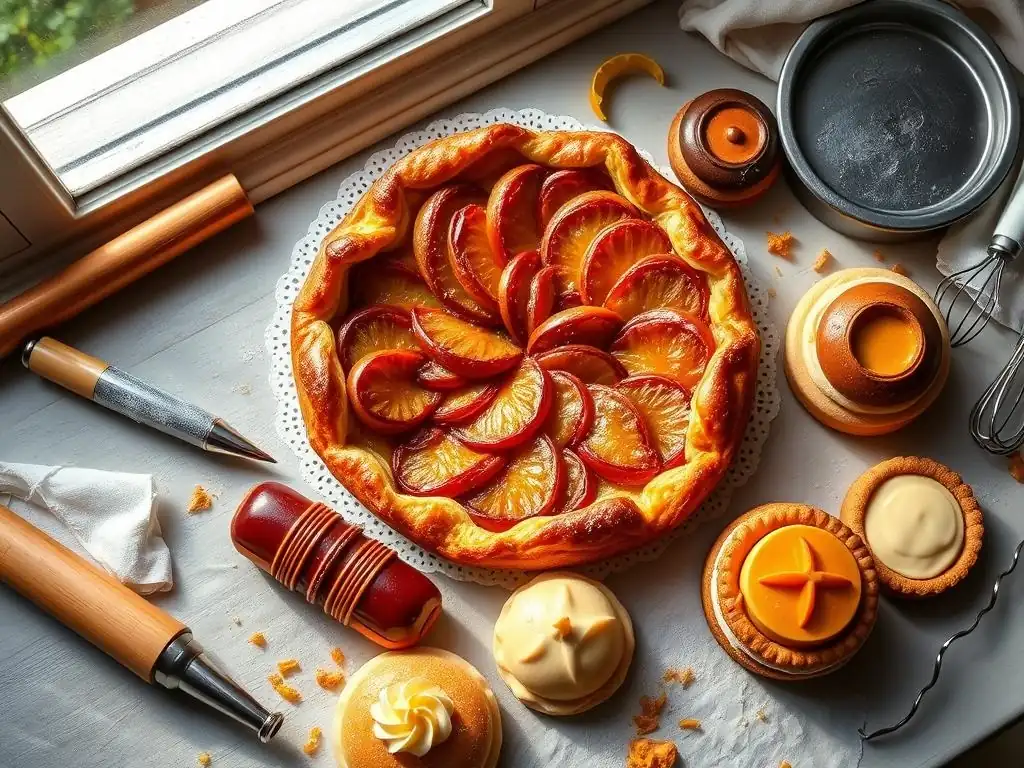
The Tarte Tatin, a delightful upside-down caramelized apple tart, was famously created by accident by the Tatin sisters in the late 19th century. The story goes that Stéphanie Tatin, running a hotel restaurant, was making an apple pie but accidentally left the apples cooking in sugar and butter for too long. In a hurry, she placed the pastry base on top of the caramelized apples and baked it, flipping it over before serving.
The result was a sensation. This simple yet brilliant technique relies on the apples caramelizing deeply in butter and sugar before being covered with a layer of pâte brisée or pâte feuilletée and baked.
Achieving the perfect caramel is key to a great Tarte Tatin. It requires patience to let the sugar melt and brown without burning, usually reaching an amber or even mahogany color before the apples are added. The apples, often firm varieties like Golden Delicious or Reinette, are arranged tightly in a buttered and sugared pan before baking.
A standard 24 cm (9.5 inch) tarte might use 8-10 medium apples, sliced or halved. The baking time varies, but often takes 30-40 minutes until the pastry is golden and the caramel is bubbling around the edges. The final, dramatic flourish is the inversion of the tart onto a serving plate, revealing the glossy, caramelized fruit.
The Macaron: A Colorful Confectionery Masterpiece
The macaron, a delicate meringue-based cookie sandwich, is perhaps one of the most visually appealing and technically challenging French pastries. It consists of two almond meringue shells joined by a filling, typically ganache, buttercream, or jam. While similar confections existed for centuries, the modern Parisian macaron, assembled as a sandwich with filling, gained popularity in the early 20th century, notably popularized by Pierre Desfontaines of Ladurée. Mastering macaron baking techniques involves several critical steps, each requiring precision.
The shells are made from a mixture of aged egg whites, almond flour, and sugar (either powdered sugar or a combination with granulated sugar). The macaronage step, folding the dry ingredients into the meringue, is crucial; the batter must be mixed just enough to achieve a lava-like consistency that flows smoothly when piped but holds its shape. Baking temperature and time are also vital; too hot and they crack, not hot enough and they don't develop the signature "foot" (a ruffled base).
A typical baking temperature is around 140°C to 160°C (285°F to 320°F) for 12-15 minutes. Successful macaron baking techniques result in smooth, crisp shells with a slightly chewy interior and a prominent foot.
The Croissant: A Buttery Breakfast Staple
The croissant, synonymous with French breakfast, is a crescent-shaped viennoiserie pastry made of layered yeast-leavened dough. While its origins trace back to Austria (the kipferl), the French refined the technique to create the iconic flaky, buttery layers we know and love today, primarily using pâte levée feuilletée (leavened puff pastry). This process involves incorporating a large amount of butter into a yeasted dough through repeated folding and rolling, similar to puff pastry, but with the added complexity of yeast fermentation.
The creation of a perfect croissant is a multi-day process involving chilling, resting, and precise handling. The dough is typically given 3-4 "turns" (folding and rolling cycles), resulting in hundreds of delicate layers of dough and butter. For instance, three single folds yield 27 layers, while four folds yield 81 layers, and a combination of single and double folds can create even more.
The quality of the butter is paramount; it must be cold and pliable to create distinct layers that don't melt into the dough prematurely. Proofing (allowing the shaped croissants to rise) is also essential for achieving a light, airy interior structure before baking at a high temperature, typically around 200°C to 220°C (400°F to 425°F) for 15-20 minutes, until golden brown and flaky.
Equipping Your Kitchen for French Pastry Baking Success
Essential Tools for Aspiring French Pastry Chefs
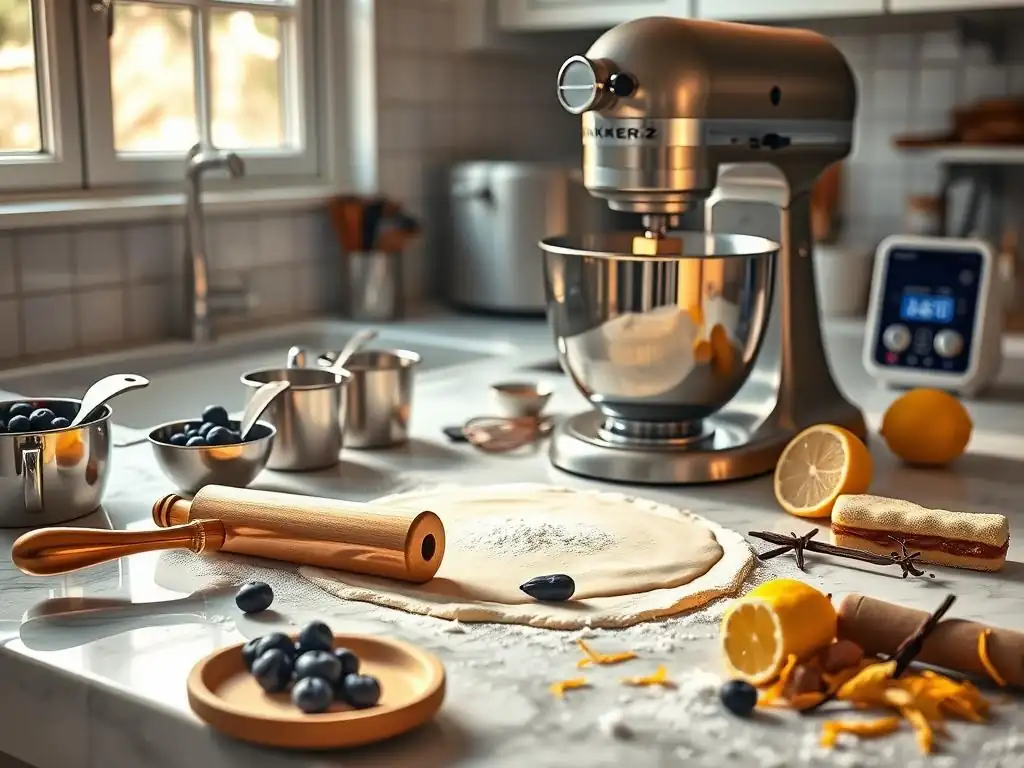
Embarking on the journey of mastering French pastry baking techniques requires more than just skill; having the right tools can make a significant difference in your success and efficiency. While you don't need a professional kitchen setup, a few key items are indispensable.
A sturdy rolling pin, preferably a French-style tapered one, is crucial for evenly rolling out doughs like pâte feuilletée and pâte brisée to precise thicknesses, often measured in millimeters. A standard tart pan with a removable bottom, typically 24-28 cm (9.5-11 inches) in diameter, is essential for creating beautiful tarts like Tarte Tatin or fruit tarts, ensuring easy removal without damaging the delicate crust.
Precision is key in French baking, making accurate measuring tools vital. A digital kitchen scale is highly recommended for weighing ingredients, as volume measurements can be inconsistent, especially for flour and sugar. Many classic French pastry recipes are developed using weights (grams) for optimal results. Additionally, a good quality whisk, a set of piping bags and tips (especially round and star tips in various sizes), and silicone baking mats (like Silpats) are invaluable for tasks ranging from whipping meringues to piping choux pastry or macarons and ensuring even baking and easy release.
Sourcing the Finest Ingredients for Authentic French Pastries
The quality of your ingredients directly impacts the outcome when applying French pastry baking techniques. French bakers emphasize using the best possible components, as simple recipes often rely on the inherent flavor and texture of each element. High-quality butter, particularly unsalted butter with a higher fat content (around 82% or more), is crucial for achieving flaky layers in croissants and puff pastry and providing rich flavor in creams and doughs. The difference between standard butter and a high-fat European-style butter can be substantial in laminated doughs.
Flour is another critical ingredient. While specific French flours (like Type 45 or Type 55) are ideal, using a good quality all-purpose flour with a moderate protein content (around 10-12%) can yield excellent results for many recipes, from tart doughs to choux pastry. For macarons, finely ground almond flour is non-negotiable for achieving the correct texture and structure of the shells.
Fresh, large eggs are also essential; their protein structure and moisture content are vital for meringues, custards, and enriching doughs like pâte à choux. Using real vanilla (extract, bean, or paste) instead of artificial flavoring will significantly enhance the taste of your creams and fillings, adding that touch of authentic French elegance.
Elevate Your Baking Skills: Further Exploration of French Pastry Techniques
Online French Pastry Baking Courses: Learn from the Experts
For those serious about mastering French pastry baking techniques, structured learning resources can provide invaluable guidance. Online courses offer a flexible way to delve deeper into specific areas, taught by experienced chefs. Many platforms provide comprehensive modules covering foundational skills such as making perfect crème anglaise (custard sauce), whipping stable meringues (French, Swiss, and Italian methods), and creating classic doughs like pâte sucrée (sweet shortcrust pastry) and pâte sablée (sandy shortcrust pastry).
These courses often break down complex French pastry techniques into manageable steps, with video demonstrations illustrating key actions like lamination for croissants or piping techniques for intricate decorations. Some specialized programs focus entirely on specific pastries, offering hours of detailed instruction solely on macarons or advanced viennoiserie. While costs vary, many introductory courses are available for under $100, providing a solid foundation, while more advanced or comprehensive programs might cost several hundred dollars, offering in-depth exploration of professional French baking techniques and recipes.
French Pastry Cookbooks: A Treasure Trove of Recipes and Techniques
Cookbooks dedicated to French pastry are another fantastic resource for expanding your knowledge and repertoire of French pastry baking techniques. Classics by renowned chefs offer detailed recipes and insights into traditional methods, often including diagrams or step-by-step photos for complex processes like folding puff pastry or assembling multi-component desserts. Look for books that explain the why behind techniques, not just the how, helping you understand the science of baking.
Many excellent French pastry cookbooks are available, ranging from those focused on foundational skills suitable for beginners to advanced texts for experienced bakers. Some books concentrate on specific categories, such as regional French tarts or viennoiseries, providing specialized knowledge. A good cookbook will offer tested recipes with precise measurements (often in grams), clear instructions for applying various French baking techniques, and tips for troubleshooting common issues. Investing in a few well-regarded French pastry cookbooks can provide a lifetime of learning and delicious baking adventures.
Conclusion: Your French Pastry Baking Adventure Awaits.
Embarking on the journey to master French pastry baking techniques is a rewarding endeavor that combines precision, patience, and a passion for creating delicious art. From understanding the foundational doughs like pâte feuilletée and pâte à choux to tackling iconic treats such as the éclair, Tarte Tatin, macaron, and croissant, each step builds your skill and confidence.
Equipping your kitchen with essential tools and committing to using quality ingredients are crucial for success. As you delve deeper, resources like online courses and comprehensive cookbooks offer pathways to refine your French baking techniques further. So, gather your ingredients, tie on your apron, and step into the wonderful world of French pastry. Your kitchen is now a patisserie waiting to happen!
Frequently Asked Questions
How can BakeWithEase help me learn French pastry baking techniques?
BakeWithEase provides simple recipes and step-by-step guides specifically designed to master French pastry baking techniques. You'll find tips and tricks for all skill levels, from beginner to advanced.
What types of French pastries can I learn to bake using BakeWithEase?
BakeWithEase offers a wide range of recipes, including iconic pastries like eclairs, tarte tatin, croissants, and many more. We focus on providing clear instructions for easy-to-find ingredients.
Are the French pastry recipes on BakeWithEase suitable for beginners?
Yes! Our recipes are designed for bakers of all levels. We offer beginner-friendly recipes with detailed instructions and helpful tips to ensure your success in French pastry baking.
Does BakeWithEase offer advice on sourcing ingredients for French pastries?
While we don't specifically list sources, our recipes use easy-to-find ingredients that are generally available in most supermarkets. We also provide substitution suggestions where possible.
What makes BakeWithEase a good resource for learning French pastry baking techniques compared to other sites?
BakeWithEase focuses on simplicity and clarity, offering step-by-step guides that break down complex techniques. We strive to make French pastry baking accessible and enjoyable for everyone.
Final Reflection: The Enduring Allure of French Pastry Techniques
The art of French pastry baking isn't merely a culinary pursuit; it's a testament to precision, patience, and a deep-seated cultural heritage that continues to captivate palates worldwide. From the delicate layers of a mille-feuille to the rich, buttery heart of a croissant, these techniques represent a legacy passed down through generations, a legacy that remains incredibly relevant in today's vibrant culinary landscape. The demand for authentic French pastries, and the skills to create them, remains high, demonstrating the enduring power of tradition and craftsmanship.
The journey through France's iconic pastries has revealed more than just recipes; it's unveiled a story of meticulous attention to detail, a pursuit of perfection that elevates baking to an art form. The dedication required to master these techniques is a mirror to the dedication found in many aspects of life. As Julia Child famously said, Find something you're passionate about and keep tremendously interested in it.
This sentiment perfectly encapsulates the spirit behind the creation of these exquisite pastries, a spirit that resonates far beyond the kitchen.
Now, consider your own approach to baking, to your craft, to your passions. What level of dedication are you willing to invest? What details, however small, can you refine to elevate your own work? The techniques explored in this guide are not just recipes; they are a framework for understanding precision, patience, and the transformative power of dedication. Embrace the challenge, experiment with these techniques, and discover the joy of creating something truly exceptional. Let the legacy of French pastry inspire your own culinary journey.
Unleash Your Inner Pâtissier: Master French Pastry!
Thanks for joining us on this delicious journey through the world of French pastries! We hope you've discovered new techniques and found inspiration to bake your own masterpieces. Now it's time to put your newfound knowledge to the test!
- Bake your own Éclair: This is your chance to try out the techniques you've learned and create a classic French pastry. Don't be afraid to experiment with different flavors!
- Share your baking journey: Post a picture of your creation on social media and tag us – we'd love to see your results!
- Explore other French dessert recipes on BakeWithEase.com to continue expanding your pastry skills and creating even more delightful treats.
Ready to transform your kitchen into a Parisian patisserie? What's the first French pastry you're going to tackle?