
From Paris to Provence: Finding France's Best Regional Pastries

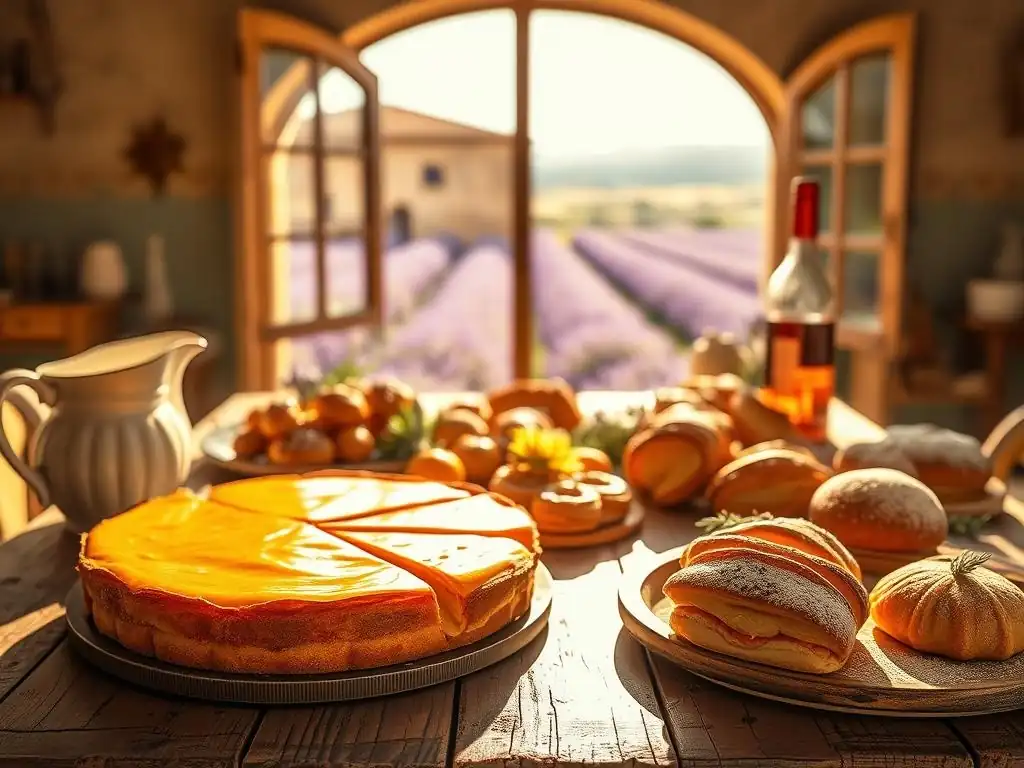
Welcome to BakeWithEase, your passport to the delightful world of baking! Ever dreamt of recreating the flaky, sun-kissed flavors of a Provençal patisserie in your own kitchen? This week, we're whisking you away on a virtual culinary journey to explore the heart of France. Prepare to discover authentic French pastry recipes Provence, unveiling the secrets behind regional delicacies that will transport your taste buds straight to the lavender fields and charming villages. Intrigued? Let's begin!
- A Culinary Journey Through France: Exploring Regional Pastries
- Unveiling the Diverse World of French Regional Pastries
- Essential Tools for Authentic French Pastry Baking
- Brittany: Discovering the Rustic Charm of Breton Pastries
- Alsace: Indulging in the Germanic-Influenced Pastries of Eastern France
- A Comparative Taste Test: Brittany vs. Alsace
- Expert Baking Tips and Techniques for French Pastries
- Experiencing French Pastry Culture
- Recreate French Flavors at Home: A Regional Pastry Recipe Roundup
-
Frequently Asked Questions
- What makes French pastry recipes Provence distinct from other French pastries?
- Where can I find reliable French pastry recipes Provence online?
- Are French pastry recipes Provence difficult to make for a beginner?
- What are some essential ingredients for authentic French pastry recipes Provence?
- How does the climate of Provence influence its French pastry recipes Provence?
- Final Reflection: A Sweet Journey Through France's Pastries
- Unleash Your Inner Pâtissier: Bake France's Best!
A Culinary Journey Through France: Exploring Regional Pastries
Unveiling the Diverse World of French Regional Pastries
From Brittany's Far Breton to Alsace's Kougelhopf: A Regional Pastry Exploration
France is renowned globally for its exquisite pastries, but the true depth of its culinary heritage lies not just in Parisian pâtisseries, but in the distinct regional specialties found across the country. Traveling from the windswept coasts of Brittany to the charming villages of Alsace reveals a fascinating tapestry of flavors, textures, and traditions, each region boasting pastries shaped by local ingredients, history, and climate.
While exploring the sheer variety, from the rustic simplicity of the west to the Germanic influences of the east, one begins to appreciate that mastering French pastry recipes means exploring this rich geographical diversity, just as finding the perfect French pastry recipes Provence might lead you down a different path than searching for Breton delights.
This regional exploration highlights how pastries evolve. In Brittany, the focus is often on butter, salt, and simple, hearty ingredients, reflecting the region's agricultural and maritime roots. Alsace, conversely, shows a blend of French elegance and German tradition, incorporating yeast-leavened doughs, fruits, and spices in unique ways. Understanding these regional differences is key to appreciating the full spectrum of French baking and provides home bakers with a wealth of inspiration beyond the classic croissants and macarons. It's a journey that encourages a deeper dive into the techniques and ingredients that make each regional pastry a unique treasure.
Essential Tools for Authentic French Pastry Baking
Must-Have Tools for French Pastry Perfection
Creating authentic French pastries at home requires more than just good recipes; having the right tools is fundamental. Precision is paramount in French baking, making a reliable digital kitchen scale indispensable for accurately measuring flour, sugar, and butter – ingredients where even a slight deviation can alter the final texture and structure.
Essential tools also include quality whisks for achieving airy meringues or smooth custards, flexible silicone spatulas for gently folding ingredients, and sturdy rolling pins for achieving uniform dough thickness, particularly for tarts or puff pastry. Investing in specific pans, like a non-stick Bundt pan for a traditional Kougelhopf or perforated tart rings for perfectly baked tart shells, can significantly elevate your results and bring you closer to the authentic taste and appearance of regional specialties.
Furthermore, tools that help manage temperature are crucial. A marble pastry board or a silicone mat is excellent for keeping butter-based doughs cool while rolling. Having cooling racks is also vital to prevent soggy bottoms after baking.
For more intricate pastries, a pastry brush for egg washes or glazes, and piping bags with various tips for decorative finishes or filling choux pastry are invaluable. While you don't need a professional kitchen setup, a selection of these fundamental tools, chosen for their quality and functionality, will equip you to tackle a wide range of French pastry recipes, including those from Brittany or Alsace, with greater confidence and success.
High-Quality Ingredients: The Foundation of Exquisite French Pastries
The soul of any exceptional French pastry lies in the quality of its ingredients. This is particularly true for regional specialties, where simple recipes often rely heavily on the flavor and texture contributed by just a few core components. High-fat European-style butter, ideally one with AOP (Appellation d'Origine Protégée) status like Beurre d'Isigny or Beurre Charentes-Poitou (typically containing 82% or more fat), is essential for achieving the flaky layers in puff pastry or the rich tenderness in shortcrust.
The higher fat content and specific churning process contribute significantly to both flavor and texture. Similarly, the type of flour matters; a softer wheat flour (like French Type 45 or Type 55, equivalent to a lower protein content all-purpose flour) is often preferred for delicate pastries and cakes.
Beyond butter and flour, the freshness and quality of other ingredients cannot be overstated. Farm-fresh eggs contribute richness and structure, while high-quality sugar, whether granulated or powdered, provides sweetness and aids in caramelization. For pastries featuring fruit, using seasonal, ripe produce is key – think plump prunes for Far Breton or sweet apples for a regional tart.
In regions like Alsace, specific ingredients like Kirsch (cherry brandy) or specific types of almonds or raisins are integral to the authentic flavor profile of pastries like Kougelhopf. Sourcing the best possible ingredients, perhaps from local markets or specialty stores, is a non-negotiable step towards recreating authentic French pastry recipes at home.
Brittany: Discovering the Rustic Charm of Breton Pastries
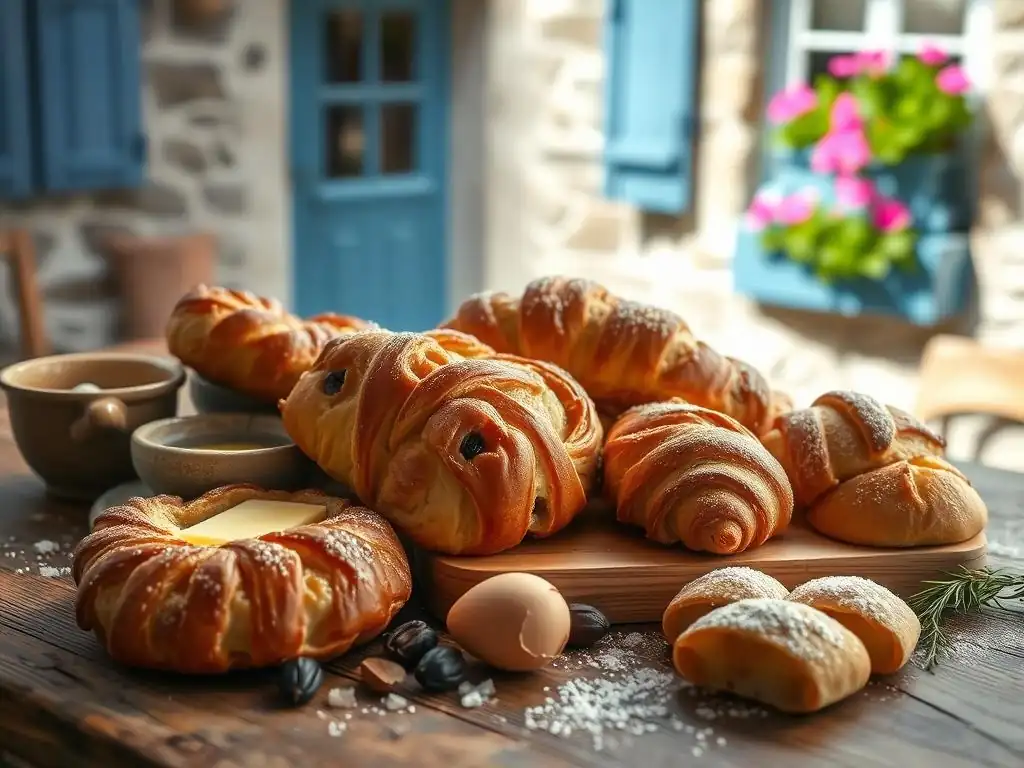
Far Breton: The Rich Custard Cake of Brittany
Far Breton is a classic, rustic dessert from Brittany, beloved for its simple ingredients and satisfyingly dense, custardy texture. Traditionally made with flour, sugar, eggs, milk, and often studded with dried prunes ( pruneaux), it resembles a thick, baked custard or a flan. The batter is typically poured into a large, shallow baking dish and baked until set and golden brown.
The inclusion of prunes, rehydrated in water or sometimes a bit of rum or apple brandy, adds pockets of chewy sweetness that contrast beautifully with the smooth custard base. Historical texts suggest variations of this "far" (a type of porridge or gruel) have existed in Brittany for centuries, evolving into the baked cake we know today, often served warm or at room temperature.
Its appeal lies in its straightforward preparation and comforting nature. While many modern recipes call for vanilla, traditional versions often rely solely on the quality of the milk, eggs, and prunes for flavor. The baking process creates a slightly firm exterior while maintaining a soft, almost pudding-like interior. It's a testament to Breton cuisine's ability to transform humble ingredients into something truly delicious. Whether enjoyed as a simple dessert or a hearty snack, Far Breton embodies the unpretentious yet deeply satisfying character of traditional Breton French pastry recipes.
Kouign Amann: The Buttery, Caramelized Delight of Douarnenez
Hailing from the town of Douarnenez in Finistère, Brittany, Kouign Amann is a pastry that champions butter and sugar in spectacular fashion. Its name literally means "butter cake" in the Breton language, and it lives up to it. The pastry is made by folding layers of dough with generous amounts of butter and sugar, similar to making puff pastry, but with the sugar incorporated directly into the layers.
As it bakes, the butter creates steam, puffing the layers, while the sugar caramelizes, creating a crisp, golden-brown exterior and a tender, buttery, slightly sticky interior. Legend has it that the pastry was invented by accident around 1860 by baker Yves-René Scordia when he was short on time and mixed excess butter and sugar into his bread dough.
The texture is a key part of its charm: flaky and crisp on the outside, soft and yielding on the inside, with delightful pockets of caramelized sugar. It's a rich, indulgent pastry, best enjoyed warm when the butter is still slightly molten and the caramel is soft. While the classic shape is round, often baked in a tin, individual portions are also popular. Mastering Kouign Amann requires precision in lamination and temperature control, but the reward is a truly unforgettable buttery, sweet, and caramelized experience that defines Breton patisserie at its most decadent.
Crêpes: Brittany's Versatile Thin Pancakes
While found throughout France, crêpes hold a special place in the heart of Brittany, considered their true homeland. These ultra-thin pancakes are a staple of Breton cuisine, enjoyed at any time of day and in countless ways.
Traditionally, there are two main types: the savory galette de sarrasin, made with buckwheat flour (which is naturally gluten-free), and the sweet crêpe de froment, made with wheat flour. Buckwheat galettes are often larger and served with savory fillings like ham, cheese, and egg ( complète), while sweet crêpes are smaller and filled with simple ingredients like butter and sugar, jam, chocolate, or fruit.
The simplicity of the batter – typically just flour, eggs, milk (or water for galettes), and a pinch of salt – belies the skill required to pour and cook them perfectly thin on a hot griddle ( billig). Crêpes are incredibly versatile, serving as a quick snack, a light meal, or a simple dessert. They are a common sight at festivals and markets across Brittany, often prepared fresh to order. Their widespread popularity and ease of preparation also make Breton-style crêpe French pastry recipes popular choices for home bakers looking to capture a taste of France with minimal fuss.
Alsace: Indulging in the Germanic-Influenced Pastries of Eastern France
Kougelhopf: The Iconic Bundt Cake of Alsace
Kougelhopf (or Kugelhopf) is arguably the most iconic pastry from Alsace, instantly recognizable by its distinctive tall, fluted shape thanks to the traditional ceramic or metal Bundt pan it's baked in. This sweet, yeasted cake is rich yet relatively light, often flavored with raisins soaked in Kirsch (cherry brandy) or rum, and studded with almonds. Before baking, the pan is heavily buttered and dusted with sliced almonds, which form a decorative pattern on the finished cake. Kougelhopf holds significant cultural importance in Alsace, traditionally baked for celebrations, holidays (especially Christmas and Easter), and family gatherings.
While the sweet version is most famous, a savory Kougelhopf also exists, made without sugar and often incorporating bacon or walnuts. The dough is enriched with butter and eggs, giving it a tender crumb. After baking, the sweet version is typically dusted generously with powdered sugar. Enjoying a slice of Kougelhopf with coffee or tea is a quintessential Alsatian experience. Its long history and cultural significance make it a cornerstone of Alsatian baking and a must-try for anyone exploring French pastry recipes with a touch of Germanic influence.
Tarte Flambée: The Savory "Flammkuchen" of Alsace
Although technically a savory dish, Tarte Flambée (or Flammkuchen in German, meaning "flame cake") is a regional specialty of Alsace and neighboring regions that is often found alongside sweet pastries in bakeries and restaurants. It consists of a very thin, bread-like dough rolled into an oval or rectangle, traditionally topped with crème fraîche or fromage blanc (a type of soft white cheese), thinly sliced onions, and lardons (small strips of smoked bacon).
The name comes from the fact that it was traditionally baked in a wood-fired oven while the flames were still licking the chamber, resulting in a quickly cooked, slightly charred, and very crispy crust.
The beauty of Tarte Flambée lies in its simplicity and the contrast of textures: the crispy, almost cracker-like base against the creamy topping and tender onions and lardons. While the classic topping is most popular, variations exist with mushrooms, grated cheese, or even sweet versions topped with apples and cinnamon.
Served hot, straight from the oven, it's a communal dish often sliced and shared. While not a sweet pastry, its prominence in Alsatian bakeries and its status as a regional icon make it an essential part of the culinary landscape when discussing Alsatian baking, offering a delicious savory counterpoint to the region's sweet treats.
Bredeles (also spelled Brédalas or Bredle) are small, festive cookies that are an integral part of Alsatian Christmas traditions. Baked in large quantities during the Advent season, these cookies come in a vast array of shapes, flavors, and textures, filling homes with the aroma of spices, butter, and citrus.
Families often have their own cherished recipes, and the variety found in bakeries and Christmas markets across Alsace is staggering, easily numbering in the dozens. Common types include Butterbredele (simple butter cookies), Anisbredele (anise cookies), Spritzbredele (pressed cookies), Zimtsterne (cinnamon stars, a German influence), and cookies flavored with orange zest, lemon zest, almonds, walnuts, or chocolate.
The tradition involves baking many different varieties and sharing them with family and friends. They are often beautifully decorated or shaped using cookie cutters and molds. While most popular during the Christmas season (typically from late November through December), some bakeries may offer a selection year-round. Exploring Bredeles offers a delightful insight into the home baking culture of Alsace and the region's love for spiced and buttery treats, providing numerous small-scale French pastry recipes perfect for holiday baking or sharing.
A Comparative Taste Test: Brittany vs. Alsace
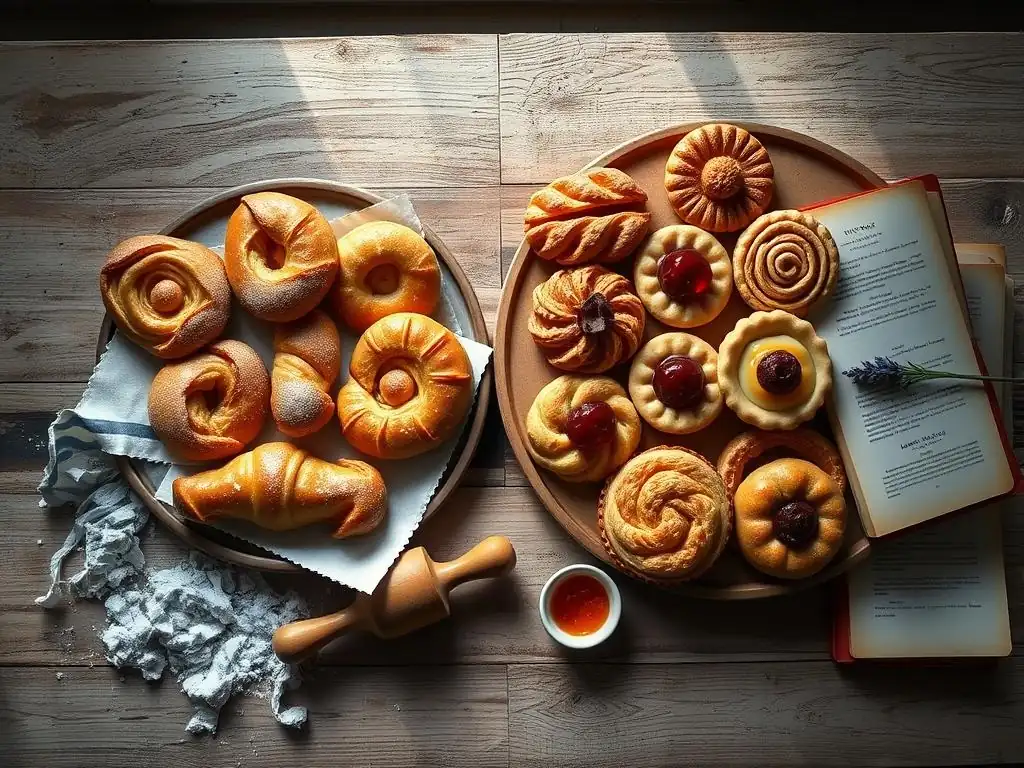
Contrasting Breton Far Breton and Alsatian Kougelhopf: A Flavor and Texture Analysis
Comparing Breton Far Breton and Alsatian Kougelhopf highlights the distinct baking philosophies of these two regions. Far Breton is fundamentally a baked custard enriched with flour, resulting in a dense, moist, and pudding-like texture, particularly when warm. Its sweetness comes primarily from sugar and the natural sweetness of the prunes, offering a straightforward, comforting flavor profile. The crust, if any, is minimal, often just a slightly firmer edge from contact with the baking dish. It's a dessert that relies on the richness of dairy and eggs and the simple goodness of fruit.
In contrast, Kougelhopf is a leavened cake with a much lighter, springier crumb thanks to the yeast. While also enriched with butter and eggs, its texture is airy and bread-like rather than dense and custardy. The flavor profile is more complex, often incorporating notes of Kirsch or rum, almonds, and the subtle sweetness of raisins, all enhanced by the caramelized exterior formed by the sugar and butter in the pan.
The shape itself contributes to the texture, allowing for even heat distribution. This comparison underscores the difference between a baked custard-based dessert and a rich, fruited yeast cake, showcasing the diverse approaches within French regional pastry recipes.
Crêpes vs. Tarte Flambée: Exploring Savory and Sweet Options
Comparing Breton Crêpes and Alsatian Tarte Flambée offers a look at how thin doughs are utilized differently in regional French cuisine, spanning both sweet and savory applications. Breton Crêpes, whether made with wheat or buckwheat flour, are characterized by their flexibility and softness. They are designed to be folded or rolled around fillings, making them versatile vehicles for a wide range of ingredients, from simple butter and sugar to elaborate savory combinations like ham, cheese, and mushrooms. The cooking method on a griddle results in a uniformly thin, slightly chewy texture.
Tarte Flambée, on the other hand, is all about crispness. Baked at high heat, the very thin dough becomes brittle and cracker-like.
Its purpose is to provide a sturdy, crispy base for the toppings, which are typically limited to a few key ingredients like crème fraîche, onions, and lardons, allowing the quality of each component and the crispy texture to shine. While both are thin, dough-based items cooked quickly, their fundamental textures (flexible vs. crisp) and primary uses (versatile wrap vs. crunchy base) highlight different regional approaches to simple, satisfying fare, providing diverse options when exploring French pastry recipes that aren't strictly sweet.
Expert Baking Tips and Techniques for French Pastries
Achieving Perfect Pastry Dough: Mastering Technique and Ingredients
Mastering French pastry dough, whether it's a flaky puff pastry, a tender shortcrust, or a rich brioche, hinges on understanding the interaction between ingredients and applying precise techniques. For doughs requiring cold butter, such as pâte brisée or pâte sablée, keeping ingredients and tools chilled is crucial. The fraisage technique, where butter is smeared into flour with the heel of your hand, helps create layers or a sandy texture depending on the desired result.
Avoid overworking the dough; excessive kneading develops gluten, which is desirable in bread but can result in tough pastry. Resting the dough in the refrigerator is often a critical step, allowing the gluten to relax and the fats to firm up, making it easier to roll and contributing to a better final texture.
Temperature control extends to the baking process. Ensure your oven is accurately preheated to the specified temperature, as inconsistent heat can lead to uneven baking or melted butter escaping before layers set. For enriched doughs like brioche or Kougelhopf, proper kneading develops the gluten structure necessary for a light, airy crumb, followed by sufficient proofing time to allow the yeast to work its magic.
Pay attention to visual cues – golden brown color, puffed layers, or a hollow sound when tapped – rather than relying solely on baking time. Consistency in technique, combined with high-quality ingredients, is the secret to achieving that sought-after French pastry perfection, applicable to everything from delicate tarts to rustic regional French pastry recipes.
Sourcing Authentic Ingredients: A Guide to Finding the Best
Sourcing authentic, high-quality ingredients is paramount for recreating genuine French pastry flavors at home. The most critical ingredient is often butter. Look for European-style butter with a high fat content (at least 82%) and ideally one that is cultured, offering a richer flavor. If possible, seek out French AOP butters from regions like Normandy or Charentes-Poitou, available at some specialty stores or online. For flour, while French T45 or T55 can be hard to find outside of France, a good quality unbleached all-purpose flour with a moderate protein content (around 10-11%) is a suitable substitute for many recipes.
Other key ingredients like eggs should be as fresh as possible. For regional specialties, specific items may require more effort to find. For example, finding good quality prunes for Far Breton or authentic Kirsch for Kougelhopf might mean visiting a liquor store or specialty food shop.
If a recipe calls for a specific type of sugar or spice, try to find the best version available. While replicating the exact flavor profile of a pâtisserie in Provence or a boulangerie in Brittany might be challenging without local produce, prioritizing quality in your core ingredients will significantly elevate your home-baked French pastry recipes.
Experiencing French Pastry Culture
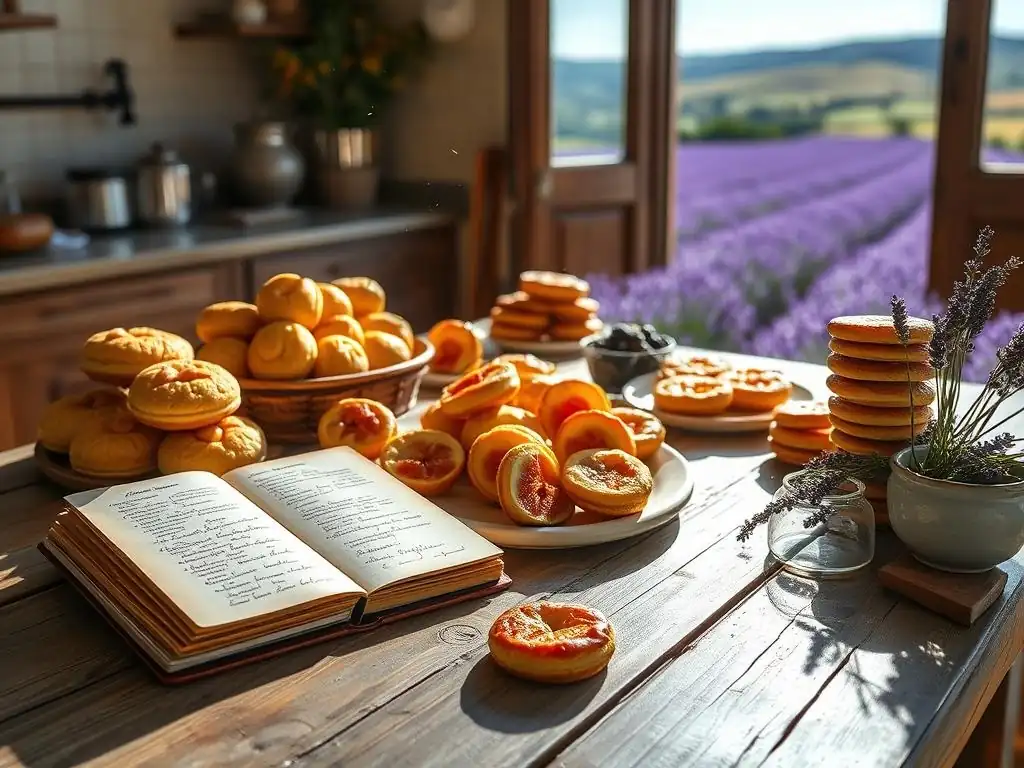
Exploring Bakeries in Brittany and Alsace: A Patisserie Guide
Visiting a boulangerie or pâtisserie in Brittany or Alsace is an essential part of experiencing the local culture and understanding the significance of regional pastries. In Brittany, look for bakeries that proudly display their Kouign Amann, often baked in large rounds and sold by weight, or simple signs advertising fresh crêpes. Many traditional bakeries will also sell Far Breton, sometimes baked in large ceramic dishes visible behind the counter.
Don't be afraid to ask about local specialties or what was baked fresh that morning. Small, family-run shops often offer the most authentic experience, using traditional methods and recipes passed down through generations.
In Alsace, the display cases will likely feature Kougelhopf in various sizes, alongside a dazzling array of Bredeles, especially during the Christmas season. You'll also find tartes aux fruits (fruit tarts) and other cakes reflecting both French and German influences. Seek out boulangeries that specialize in regional breads as well, as the line between bread and pastry is often blurred in traditional baking.
Engaging with the baker or staff can also provide insights into the history and significance of the pastries you're trying. Exploring these local bakeries is a delicious way to sample the best of regional French pastry recipes firsthand.
French Pastry Workshops: Learning from Regional Experts
For those who want to go beyond just tasting and truly understand the craft, participating in a French pastry workshop in Brittany or Alsace offers invaluable hands-on experience. Many bakeries and culinary schools in these regions offer classes specifically focused on local specialties. Imagine learning to laminate dough for Kouign Amann from a Breton pâtissier or shaping and baking Kougelhopf in a traditional Alsatian kitchen. These workshops provide not only the technical skills but also insights into the cultural context and history of the pastries.
Workshops often cover the entire process, from mixing the dough to baking and finishing the pastry. They provide an opportunity to work with authentic ingredients under the guidance of an expert, asking questions and receiving personalized tips. This practical experience is far more beneficial than simply following a recipe book. Whether you're interested in mastering the perfect crêpe or tackling the complexities of Kouign Amann, a regional pastry workshop is an enriching way to deepen your appreciation for French baking and bring authentic techniques back home to your own French pastry recipes.
Recreate French Flavors at Home: A Regional Pastry Recipe Roundup
Our Top 5 Regional French Pastry Recipes for Home Bakers
Bringing the taste of France's regions into your own kitchen is a rewarding experience. Here are five regional French pastry recipes that are approachable for home bakers and offer a true taste of regional diversity:
- Breton Crêpes (Sweet): A simple batter yields thin, versatile pancakes. Perfect with just butter and sugar, or filled with jam or chocolate. Requires minimal special equipment.
- Alsatian Kougelhopf (Sweet): While a yeast dough, it's less demanding than laminated pastries. The Bundt pan does most of the work shaping it, and the result is a beautiful, flavorful cake.
- Breton Far Breton: Essentially a baked custard with prunes. It's straightforward to mix and bake in a standard dish, offering a comforting, rustic dessert.
- Alsatian Butterbredele: These classic Christmas cookies are simple butter cookies, often cut into shapes. They are easy to make in batches and highly adaptable with different flavorings (like vanilla or lemon zest).
- Tarte Flambée (Alsatian Savory): Although savory, its thin, quick dough and simple topping make it an easy and impressive dish to replicate, offering a taste of Alsatian savory baking.
These selections provide a mix of sweet and savory, leavened and unleavened, offering a great starting point for exploring the breadth of French regional baking without requiring advanced techniques. They demonstrate that you don't need to be a professional to make delicious, authentic French pastry recipes at home.
Recommended French Pastry Recipe Books for Regional Specialties
To delve deeper into the world of regional French pastry recipes, investing in a good cookbook focused on specific regions or traditional baking is highly recommended. Look for books that provide historical context and detail the traditional methods used in different areas like Brittany, Alsace, or even French pastry recipes Provence. Books by authors known for their expertise in French regional cuisine, or those published by reputable French culinary institutions, are often excellent resources.
Consider titles that specifically mention "regional" or "traditional" French baking rather than just general patisserie. Some cookbooks might focus solely on one region, like Brittany or Alsace, providing an in-depth look at their unique specialties. Others might cover a wider range of regions, offering a comparative perspective. Reading these books can provide not only accurate recipes but also valuable insights into the cultural significance of these pastries and the subtle techniques that make them authentic. They serve as wonderful guides for home bakers eager to explore the full, rich landscape of French regional baking.
Frequently Asked Questions
What makes French pastry recipes Provence distinct from other French pastries?
Pastries from Provence often feature local ingredients like lavender, honey, and almonds. They have a rustic charm, often less refined than Parisian pastries, and emphasize seasonal flavors.
Where can I find reliable French pastry recipes Provence online?
BakeWithEase.com is a great resource! We specialize in easy-to-follow recipes and step-by-step guides. You can also find reliable recipes in reputable cookbooks focused on French regional cuisine.
Are French pastry recipes Provence difficult to make for a beginner?
Not necessarily! Many are surprisingly simple. Start with classic recipes like Tarte Tropézienne or Calissons. BakeWithEase.com offers beginner-friendly versions.
What are some essential ingredients for authentic French pastry recipes Provence?
Besides the aforementioned lavender, honey, and almonds, consider high-quality butter and olive oil for some recipes. Using fresh, local produce when in season will also elevate your baking.
How does the climate of Provence influence its French pastry recipes Provence?
The warm, sunny climate allows for the cultivation of fruits like melons, apricots, and figs. These fruits frequently appear in pastries and desserts, adding a fresh and vibrant element.
Final Reflection: A Sweet Journey Through France's Pastries
The enduring allure of French pastries transcends mere culinary delight; they are a tangible expression of regional identity and cultural heritage. From the delicate croissants of Paris to the sun-drenched delights of Provence, each pastry tells a story, a testament to generations of bakers perfecting their craft. This exploration of regional variations reveals not only the diversity of French baking but also the deep connection between food, place, and people.
This journey through France's pastry landscape has profoundly impacted my understanding of the country's rich culinary tapestry. It's more than just a list of recipes; it's a glimpse into the heart and soul of each region. The subtle differences in ingredients, techniques, and even the presentation reflect the unique character of each area. As the renowned French chef, Auguste Escoffier, once said, The only real failure is not to try.
This journey, filled with both successes and challenges in recreating these regional masterpieces, underscores the importance of embracing the process and celebrating the unique flavors of each region.
Now, I invite you to embark on your own culinary adventure. Don't just read these recipes; experience them. Gather your ingredients, embrace the process, and allow the aromas and flavors to transport you to the sun-drenched fields of Provence or the bustling streets of Paris. Let the creation of these pastries be a celebration of French culture and a testament to your own culinary creativity. The journey of a thousand miles begins with a single, perfectly baked tart.
Unleash Your Inner Pâtissier: Bake France's Best!
Thanks for joining us on a delicious journey through France's regional pastry delights! We hope you've discovered some new favorites and feel inspired to try your hand at baking. Now it's time to put your newfound knowledge to the test!
- Master a new recipe: Start with your favorite pastry from the article – perhaps the delicate Madeleines or the rich Tarte Tatin. Find a recipe online and give it a try!
- Share your baking journey: Post a picture of your creations on social media and tag us! Let's build a community of passionate bakers. Use #BakeWithEaseFrance
- Explore other regional specialties: Dive deeper into French baking by researching other lesser-known regional treats. What hidden pastry gems await discovery?
Ready to roll up your sleeves and create some French magic in your kitchen?