
The BakeWithEase Guide to Essential Beginner Baking Tools

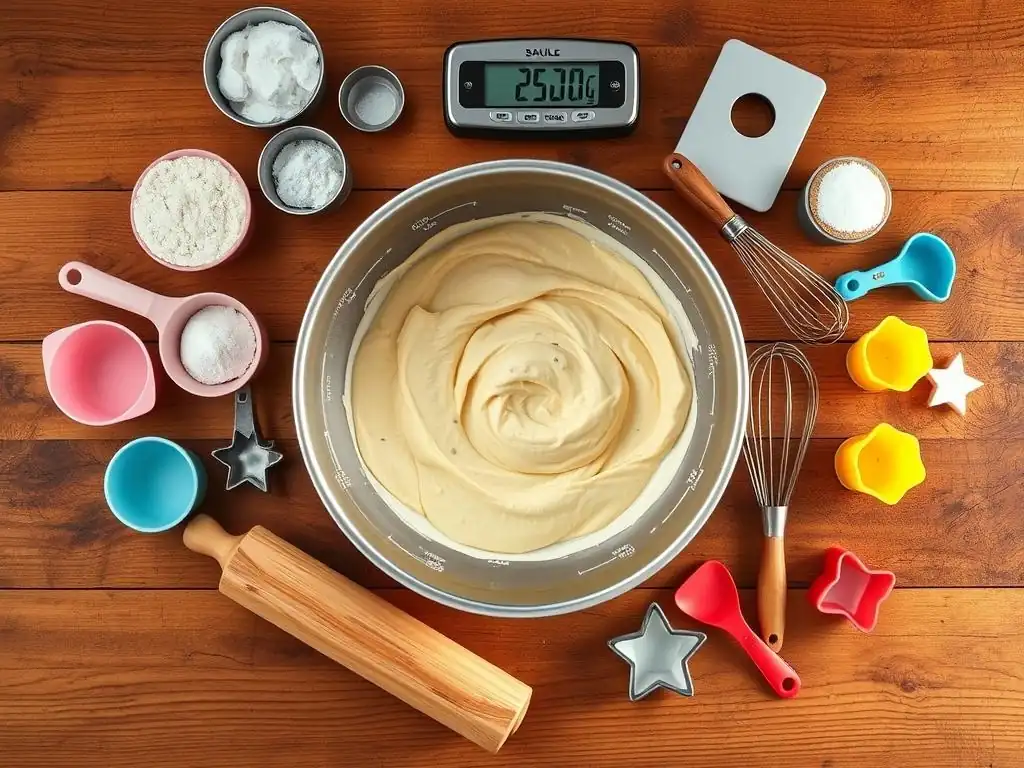
Welcome to BakeWithEase, your baking journey starts here!
Ready to transform your kitchen into a haven for delicious creations? Discover the secrets to effortless baking and unlock your inner pastry chef. This week, we're diving into the essential beginner baking tool kit – the foundation for every successful bake. Curious about which tools are actually necessary and which are just fancy extras? Read on to find out and start baking with confidence!
- Introduction to Your Essential Beginner Baking Tool Kit
- Must-Have Measuring Tools for Beginner Bakers
- Essential Mixing Tools for Beginner Bakers
- Essential Baking Pans and Molds for Beginners
- Other Indispensable Baking Tools for Beginners
- Investing in Your Essential Baking Tools: Budget-Friendly Options
- Caring for Your Essential Beginner Baking Tools
- Mastering Basic Baking Techniques with Your New Tools
- Conclusion: Enjoying the Journey with Your Essential Baking Tool Kit
-
Frequently Asked Questions
- What are the absolute must-have tools for someone just starting out with baking, according to BakeWithEase?
- Does BakeWithEase recommend any specific type of measuring cups or spoons for beginners?
- What kind of baking sheet is best for a beginner baker, according to BakeWithEase?
- Are there any tools BakeWithEase considers nice-to-have but not essential for a beginner baking tool kit?
- Where can I find more detailed information and recipes using these essential tools, based on the BakeWithEase guide?
- Final Reflection: The Sweetness of Simplicity in Baking
- Unleash Your Inner Baker: Start Baking Today!
Introduction to Your Essential Beginner Baking Tool Kit
Why Invest in Quality Baking Tools for Beginners?
Embarking on your baking journey is exciting, and having the right equipment can make all the difference between frustration and success. Investing in a quality essential beginner baking tool kit isn't about expensive gadgets; it's about acquiring reliable tools that perform consistently. Think of it as building a solid foundation for your new hobby.
Using accurate measuring tools, for instance, ensures your ingredients are in the correct proportions, which is critical for chemical reactions in baking like leavening. A good set of basic baking tools kit can significantly reduce common beginner mistakes, such as uneven baking, tough textures, or flat cookies.
Furthermore, durable tools last longer, saving you money in the long run compared to constantly replacing flimsy items. Stainless steel mixing bowls, for example, are resistant to odors and stains and can withstand vigorous mixing. Non-stick baking sheets, while requiring care, can prevent your carefully crafted cookies from sticking. Building your essential beginner baking tool kit with quality pieces means you can focus on learning techniques and enjoying the process, rather than battling with inadequate equipment. It's an investment in your baking future and the delicious treats you'll create.
What Makes a Baking Tool "Essential" for New Bakers?
An "essential" baking tool for a beginner is one that is fundamental to most basic baking recipes and techniques. These aren't specialized items for complex pastries but rather versatile tools you'll reach for repeatedly when making cookies, cakes, muffins, or simple breads. They are the workhorses of your kitchen. For example, accurate measuring cups and spoons are non-negotiable; without them, even the simplest recipe becomes guesswork. A good set of mixing bowls is also key, needed for combining ingredients, whether you're whisking eggs or folding flour into batter.
The tools in your essential beginner baking tool kit should also be relatively easy to use and clean. Complex equipment can be intimidating for newcomers. Simple spatulas, whisks, and baking pans that are straightforward in design and function are ideal. Consider a standard 9x13 inch baking pan – incredibly versatile for cakes, brownies, and bars. An 8-inch round cake pan is perfect for smaller layer cakes. These are tools that serve multiple purposes and are required for a wide range of foundational recipes, making them truly essential for anyone starting their baking adventure.
Must-Have Measuring Tools for Beginner Bakers
Dry Measuring Cups and Spoons: The Foundation of Baking Success
Accurate measurement of dry ingredients like flour, sugar, and leavening agents is perhaps the single most important factor in successful baking. Dry measuring cups typically come in sets including 1 cup, 1/2 cup, 1/3 cup, and 1/4 cup sizes.
It's crucial to use the 'scoop and level' method for flour: gently spoon flour into the cup until overflowing, then level off the excess with a straight edge (like the back of a knife) without packing it down. Measuring spoons are essential for smaller quantities of ingredients like baking soda, baking powder, salt, and spices, usually found in sets of 1 tablespoon, 1 teaspoon, 1/2 teaspoon, and 1/4 teaspoon.
Using the correct dry measuring cups and spoons ensures that the ratio of ingredients in a recipe is maintained, which directly impacts the texture, rise, and flavor of your baked goods. For instance, too much flour can result in a dry, dense cake or tough cookies, while too little baking powder can cause your muffins to fall flat. A reliable set of these tools forms the absolute bedrock of any essential beginner baking tool kit, providing the precision needed to follow recipes accurately right from the start. Look for sturdy plastic or metal sets that are clearly marked.
Digital Kitchen Scale: Achieving Precision in Baking Recipes
While dry measuring cups are standard, using a digital kitchen scale to measure ingredients by weight is often considered the most accurate method, especially by professional bakers. Many modern recipes, particularly those for bread or delicate pastries, provide measurements in grams or ounces. For example, a cup of all-purpose flour can vary in weight by as much as 20-30 grams depending on how it's scooped and leveled, but 120 grams of flour is always 120 grams. Using a scale eliminates this variability.
A good digital scale is an invaluable addition to your essential beginner baking tool kit as you become more comfortable. Scales typically measure in grams, ounces, pounds, and milliliters, often with a maximum capacity of around 5 kg (about 11 lbs), sufficient for most home baking needs. They are excellent for measuring flour, sugar, butter, and even liquids like milk or water. Precision in baking, achieved through a scale, leads to more consistent and reliable results, helping you understand the impact of ingredient ratios on the final product.
Liquid Measuring Cups: For Accurate Measurement of Wet Ingredients
Liquid ingredients like water, milk, oil, and vanilla extract require a different type of measuring cup than dry ingredients. Liquid measuring cups are typically made of clear glass or plastic with a spout for easy pouring and markings along the side, usually in ounces, cups, and milliliters. They also have extra space above the highest measurement mark to prevent spills. To measure accurately, place the cup on a flat surface and bend down so your eye is level with the desired measurement line, then pour the liquid until it reaches the mark.
Using a liquid measuring cup is crucial because the volume of liquids needs to be measured at eye level to account for the meniscus (the curve of the liquid's surface). Trying to measure liquids in a dry measuring cup can lead to inaccurate results and spills. A standard 2-cup (or 500ml) liquid measuring cup is a versatile size for an essential beginner baking tool kit, suitable for most recipes. Having separate tools for wet and dry ingredients ensures accuracy and makes the measuring process much cleaner and more efficient.
Essential Mixing Tools for Beginner Bakers
Mixing Bowls: Choosing the Right Size and Material
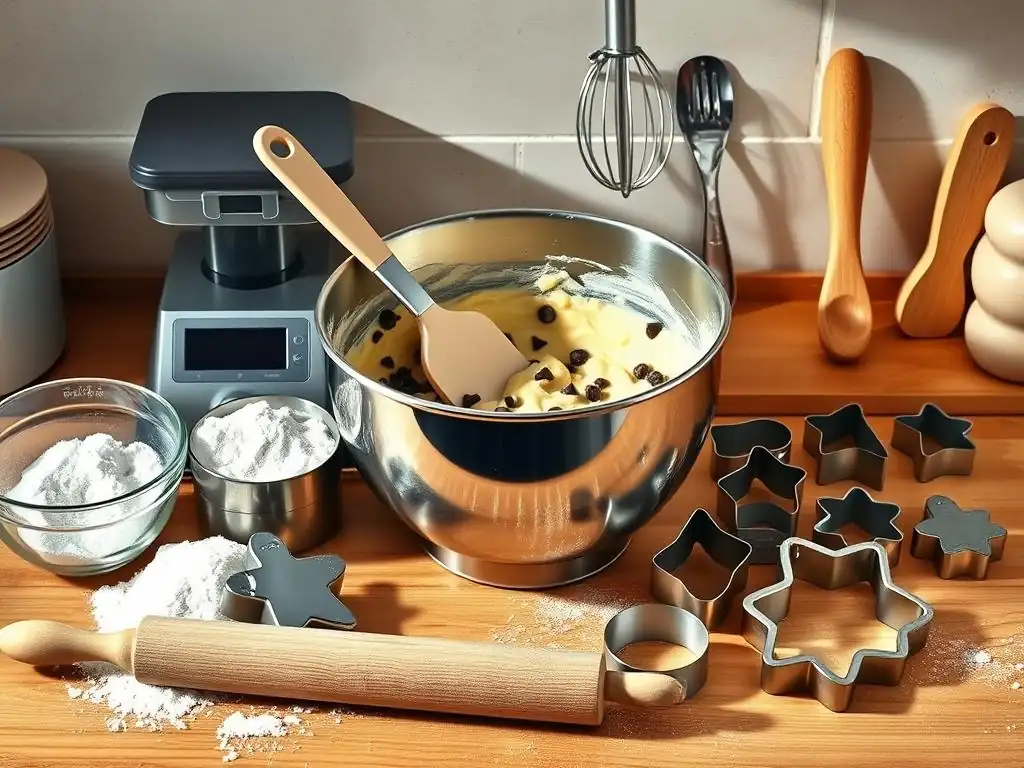
Mixing bowls are fundamental to almost every baking process, used for everything from whisking eggs to combining dry ingredients and mixing batters. Having a set of nesting bowls in various sizes is incredibly helpful for a beginner's baking tools kit. A common set might include sizes like 2.5 quart, 4 quart, and 6 quart. Multiple sizes allow you to work efficiently – a small bowl for whisking eggs, a medium one for dry ingredients, and a large one for combining everything.
Materials commonly include stainless steel, glass, and plastic. Stainless steel bowls are lightweight, durable, non-reactive, and easy to clean, though they can be noisy with a hand mixer. Glass bowls are heavy and microwave-safe, allowing you to melt butter or chocolate easily, but they can break. Plastic bowls are lightweight and affordable but can sometimes retain odors or stains. For your essential beginner baking tool kit, a set of stainless steel bowls is often recommended for their durability and versatility.
Spatulas: Folding, Scraping, and Smoothing Like a Pro
Spatulas are the unsung heroes of the baking kitchen, essential for a multitude of tasks. A good rubber or silicone spatula is flexible enough to scrape down the sides of a mixing bowl, ensuring all ingredients are incorporated, and sturdy enough to fold delicate ingredients like whipped cream or egg whites into batter without deflating them. They are also invaluable for smoothing batter into pans or scraping sticky dough off surfaces.
Silicone spatulas are particularly popular because they are heat-resistant, non-reactive, and easy to clean. Having at least two spatulas in different sizes – a smaller one for scraping jars and a larger one for mixing batter – is highly recommended for any essential beginner baking tool kit. They prevent waste by getting every last bit out of bowls and containers and are gentle enough for delicate tasks, making them indispensable for achieving the right texture in your baked goods.
Whisks: Aerating and Combining Ingredients Effectively
A whisk is essential for incorporating air into ingredients, smoothing lumps, and combining wet ingredients quickly. A balloon whisk, with its many wires, is ideal for whisking eggs for meringues or custards, whipping cream, or making smooth sauces. The wires help to introduce air, creating volume and lightness. A smaller whisk might be useful for combining dry ingredients or whisking vinaigrettes.
Having at least one good-sized balloon whisk in your essential beginner baking tool kit is a must. It's perfect for breaking up egg yolks and whites, ensuring they are fully combined, or for quickly mixing wet ingredients like milk, oil, and vanilla extract before adding them to the dry components. Whisks help create smooth batters and achieve desired textures, from fluffy whipped cream to evenly mixed pancake batter.
Hand Mixer: A Great Option for Beginner Baking
While not strictly mandatory for absolute beginners (you can do a lot with a whisk and elbow grease), a hand mixer is a relatively affordable electric tool that can significantly speed up and simplify many baking tasks. It's excellent for creaming butter and sugar, mixing cake batters, whipping cream, and kneading small batches of dough (if it comes with dough hooks).
A hand mixer saves considerable manual effort compared to whisking by hand, especially for tasks requiring sustained beating or mixing. Look for one with multiple speeds and sturdy beaters. It's a practical addition to an essential beginner baking tool kit, bridging the gap between manual tools and a more expensive stand mixer, allowing you to tackle a wider range of recipes with less fatigue. Most models are compact and easy to store.
Essential Baking Pans and Molds for Beginners
Baking sheets, also known as cookie sheets or sheet pans, are one of the most versatile items in any kitchen, especially for baking. They are flat or have low sides and are used for baking cookies, pastries, scones, roasting vegetables, and much more. A standard half-sheet size (approximately 18x13 inches) is a workhorse and fits comfortably in most home ovens. Having at least two allows you to bake in batches, which is crucial for cookies.
Look for sturdy, heavy-gauge aluminum baking sheets for even heat distribution, which helps prevent burnt bottoms and ensures consistent results. Non-stick surfaces can be helpful but require careful handling to maintain the coating; many bakers prefer uncoated aluminum and use parchment paper or silicone baking mats for easy release and cleanup. A couple of reliable baking sheets are a cornerstone of your essential beginner baking tool kit.
Cake Pans: Choosing the Right Size and Shape (Round, Square)
If you plan on baking cakes, having the right pans is essential. For beginners, a few standard sizes cover a wide range of recipes. An 8-inch or 9-inch round cake pan is perfect for single-layer or basic two-layer cakes. A 9x13 inch rectangular pan is incredibly versatile for sheet cakes, brownies, bar cookies, and even savory dishes.
Choosing light-colored metal pans is generally recommended as they conduct heat evenly and prevent over-browning around the edges compared to dark-colored pans. Non-stick coatings can be helpful, but greasing and flouring (or lining with parchment paper) are often still necessary for guaranteed release, especially with delicate cakes. Including these basic cake pans in your essential beginner baking tool kit opens up a world of cake possibilities.
Muffin Tins: Baking Perfect Muffins and Cupcakes Every Time
Muffin tins, or cupcake pans, are necessary if you want to bake perfectly portioned muffins or cupcakes. A standard tin has 12 cups, each typically holding about 1/3 to 1/2 cup of batter. Mini muffin tins are also available but less essential for beginners.
Most muffin tins are made of metal, often with a non-stick coating. Using paper liners is common for easy removal and cleanup, but you can also grease and flour the cups thoroughly. Muffin tins ensure that each portion bakes evenly and maintains its shape. They are a specific but important addition to your essential beginner baking tool kit if muffins or cupcakes are on your baking agenda. They are also useful for individual quiches, mini tarts, or savory egg cups.
Other Indispensable Baking Tools for Beginners
Rolling Pin: Mastering Dough Rolling Techniques
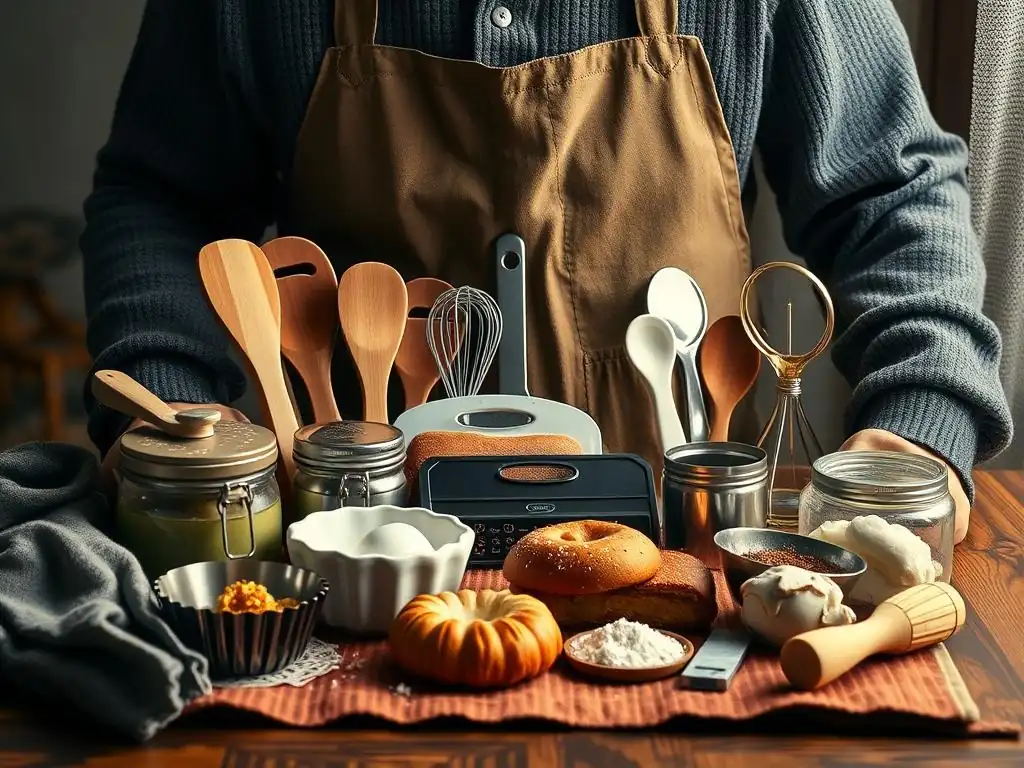
A rolling pin is essential for any recipe that involves rolling out dough, such as cookies, pie crusts, biscuits, or some breads. Rolling evenly is key to consistent thickness, which affects baking time and texture. Rolling pins come in various styles, including the classic American style with handles and a central barrel, or the French style, a simple tapered cylinder.
For an essential beginner baking tool kit, a medium-sized rolling pin (perhaps with a barrel length of 10-12 inches) is a good starting point. Wooden rolling pins are traditional and work well, though they require seasoning and proper cleaning. Non-stick rolling pins or using a floured surface/parchment paper with any pin can help prevent dough from sticking. Mastering the rolling pin is a fundamental step in expanding your baking repertoire.
Pastry Brush: Adding Shine and Flavor
A pastry brush might seem small, but it's surprisingly useful. It's used for applying washes to baked goods, such as egg wash for a golden, shiny crust on bread or pastries, or milk/cream for a softer finish. It's also used for brushing melted butter onto layers of phyllo dough or coating pans with melted butter or oil in hard-to-reach spots.
Pastry brushes are typically made with natural bristles or silicone. Silicone brushes are often easier to clean and more durable, as they don't shed bristles. A medium-sized pastry brush is a valuable, inexpensive addition to your essential beginner baking tool kit, adding professional-looking finishes and extra flavor to your creations.
Cooling Racks: Preventing Soggy Bottoms
Once your baked goods come out of the oven, they need to cool properly. Placing hot items directly on a solid surface traps steam, leading to soggy bottoms. Cooling racks, typically wire grids on legs, allow air to circulate around the item, promoting even cooling and preventing condensation.
Having at least one or two sturdy cooling racks is important for your essential beginner baking tool kit. They are used for cooling cookies, cakes (after a few minutes in the pan), muffins, breads, and pastries. Placing a cake pan on a cooling rack after removing it from the oven allows air to circulate around the pan, helping the cake shrink slightly and pull away from the sides, making it easier to invert. Proper cooling is a critical final step in ensuring the desired texture.
Oven Thermometer: Ensuring Accurate Baking Temperatures
Home ovens are notoriously inaccurate; the temperature displayed on the dial or digital screen can often be off by 25°F (about 15°C) or even more. An oven thermometer is a simple, inexpensive tool that hangs or stands inside your oven and provides an accurate reading of the actual temperature.
Baking is a science where temperature plays a significant role. An oven that is too hot can cause the outside of your bake to burn before the inside is cooked, while an oven that is too cool can result in pale, dense, or undercooked items. Placing an oven thermometer in your oven allows you to preheat accurately and adjust your oven's setting based on the true temperature. This simple tool is a highly recommended addition to any essential beginner baking tool kit for consistent and reliable results.
Investing in Your Essential Baking Tools: Budget-Friendly Options
Building Your Baking Arsenal Without Breaking the Bank
Starting baking doesn't require a huge upfront investment. You can build a functional essential beginner baking tool kit gradually and affordably. Prioritize the most crucial items first: a set of dry measuring cups and spoons, a liquid measuring cup, a couple of mixing bowls, a spatula, a whisk, and at least one baking sheet and one cake pan (like the versatile 9x13 inch). These items can often be found at very reasonable prices.
Consider purchasing tools one by one as recipes require them, or look for beginner sets specifically designed for newcomers, which often bundle the basics at a lower cost than buying individually. Don't feel pressured to buy the most expensive brands initially. Many mid-range options offer excellent performance and durability for beginners. For instance, a basic digital kitchen scale can be purchased for around $15-$25. Focus on function and reliability rather than fancy features.
Where to Find Affordable and Reliable Baking Tools
Affordable and reliable baking tools for your essential beginner baking tool kit can be found in various places. Large retailers like Target, Walmart, or IKEA often have basic baking sections with reasonably priced measuring tools, bowls, pans, and spatulas. Kitchen supply stores, even non-specialized ones, typically carry fundamental baking items.
Online marketplaces like Amazon offer a vast selection, allowing you to compare prices and read reviews from other buyers. Don't overlook discount stores, thrift shops, or even garage sales for hidden gems like sturdy old baking sheets or glass mixing bowls, though check their condition carefully. Local dollar stores can sometimes be good for basic plastic measuring cups or spatulas, though quality might vary. Researching reviews for specific budget-friendly brands can help you find tools that offer good value without compromising too much on performance.
Caring for Your Essential Beginner Baking Tools
Cleaning and Storing Your Baking Tools Properly
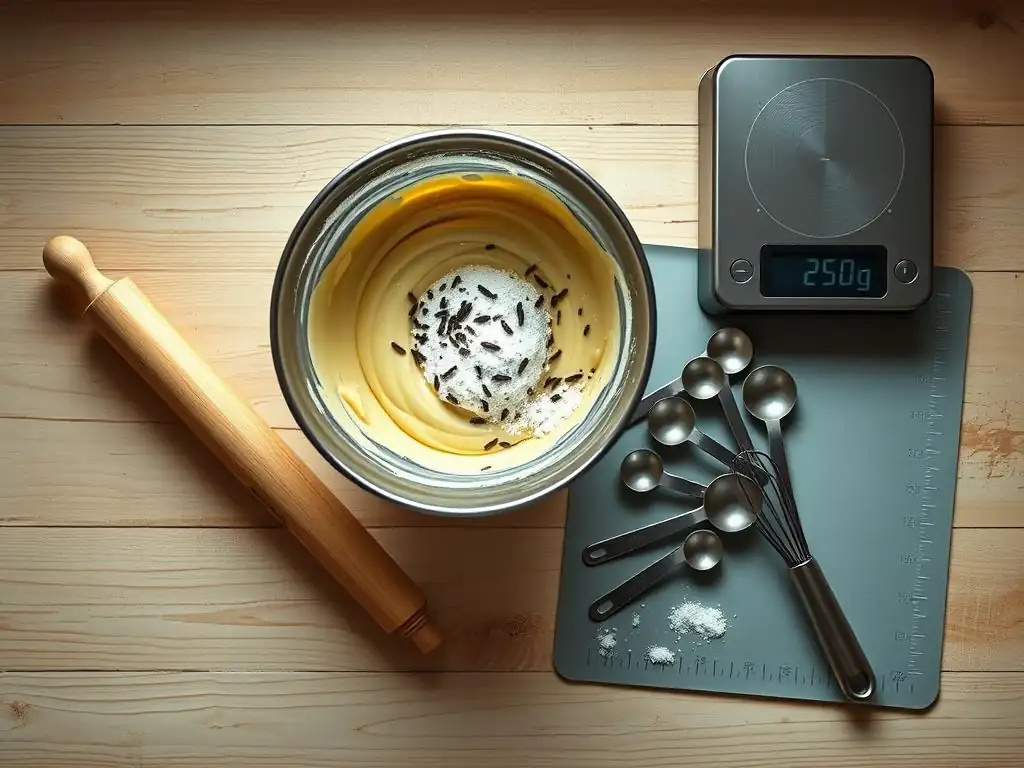
Proper care extends the life of your essential beginner baking tool kit. Wash measuring cups and spoons promptly after use to prevent sticky residue from hardening. Most stainless steel and glass items are dishwasher safe, but check manufacturer instructions. Handwashing is often recommended for non-stick pans and silicone tools to preserve their coating and material. Avoid abrasive scrubbers on non-stick surfaces.
Dry your tools thoroughly before storing to prevent rust (on metal items) or mildew. Store items in a dry, clean place. Nesting bowls and measuring cups save space. Hang items like whisks and spatulas if possible, or store them neatly in drawers or containers. Proper cleaning not only keeps your tools in good condition but also ensures hygiene in your baking.
Extending the Lifespan of Your Baking Equipment
Taking a few extra steps can significantly extend the lifespan of your essential baking tools for beginners. For non-stick pans, avoid using metal utensils that can scratch the surface; opt for wood, silicone, or plastic spatulas. Avoid extreme temperature changes, like plunging a hot baking sheet into cold water, which can cause warping.
Wooden rolling pins should be wiped clean, not soaked, and occasionally seasoned with food-grade mineral oil. Store baking sheets vertically in a rack or carefully stacked to prevent scratching. Keep sharp tools like knives (used for leveling or cutting) away from softer plastic or silicone tools. By treating your tools with care, your essential beginner baking tool kit will serve you well for many baking adventures to come.
Mastering Basic Baking Techniques with Your New Tools
The classic chocolate chip cookie is a perfect recipe to practice using your essential beginner baking tool kit. You'll use dry measuring cups and spoons for flour, sugar, baking soda, and salt. A liquid measuring cup for vanilla extract. Mixing bowls are needed to cream butter and sugar (perhaps with a hand mixer), whisk eggs, and combine dry ingredients before incorporating everything with a spatula.
You'll use a baking sheet, likely lined with parchment paper, to bake the cookies, and a cooling rack to let them finish setting without getting soggy bottoms. Using an oven thermometer ensures your oven is at the correct temperature (often around 350-375°F or 175-190°C) for even baking. This single recipe utilizes nearly every basic tool, helping you get comfortable with each item's function within the baking process.
Simple Vanilla Cake: A Beginner-Friendly Delight
Baking a simple vanilla cake is another excellent way to utilize your essential beginner baking tool kit. This recipe will involve precise measuring of flour, sugar, baking powder, and salt using dry cups and spoons, and milk, oil, and vanilla with a liquid measuring cup. Mixing bowls are used for combining wet and dry ingredients. You'll likely use a whisk for the wet ingredients and a spatula to gently fold the dry into the wet.
The batter will be poured into a prepared cake pan (like an 8-inch round or 9x13 inch rectangular pan), which might require greasing and flouring or lining with parchment paper, perhaps with the help of a pastry brush. An oven thermometer is crucial for ensuring the cake bakes evenly in a correctly heated oven (typically 350°F or 175°C). Finally, a cooling rack is needed to cool the baked cake. These foundational recipes build confidence and familiarity with your basic baking tools kit.
Conclusion: Enjoying the Journey with Your Essential Baking Tool Kit
Embracing the Fun of Baking with the Right Tools
Equipping yourself with an essential beginner baking tool kit is the first step on a rewarding and delicious journey. Having the right tools, from accurate measuring cups to reliable baking pans, removes much of the guesswork and frustration that can accompany early baking attempts. It allows you to focus on learning techniques, understanding ingredients, and enjoying the creative process of transforming simple components into delightful treats.
Baking is meant to be fun! With your basic baking tools kit ready, you're empowered to tackle recipes with confidence, experiment (once you've mastered the basics), and share your delicious creations with others. Don't worry about perfection; every baker starts somewhere. Embrace the learning process, celebrate your successes, and learn from any mishaps – they're all part of the journey.
Further Resources for Beginner Bakers on BakeWithEase.com
Now that you have a better understanding of the essential beginner baking tool kit, you're ready to start baking! On BakeWithEase.com, you'll find a wealth of resources specifically designed for beginners. We have step-by-step guides for classic recipes like those mentioned, detailed explanations of basic techniques like creaming butter and sugar or folding ingredients, and tips for troubleshooting common baking problems.
Explore our collection of easy-to-follow recipes, watch our technique tutorials, and read our articles on understanding ingredients. Your essential baking tools for beginners are your passport to exploring the wonderful world of baking. Happy baking!
Frequently Asked Questions
What are the absolute must-have tools for someone just starting out with baking, according to BakeWithEase?
BakeWithEase emphasizes starting with the basics: measuring cups and spoons, a mixing bowl, and a baking sheet. These foundational tools allow beginners to experiment without a large initial investment.
Does BakeWithEase recommend any specific type of measuring cups or spoons for beginners?
While specific brands aren't always necessary, BakeWithEase suggests using dry measuring cups for flour and sugar, and liquid measuring cups for liquids. A standard set is generally sufficient.
What kind of baking sheet is best for a beginner baker, according to BakeWithEase?
BakeWithEase recommends a light-colored aluminum baking sheet as they heat evenly and prevent burning. A non-stick surface is also beneficial for easy release of baked goods.
Are there any tools BakeWithEase considers nice-to-have but not essential for a beginner baking tool kit?
Yes, BakeWithEase considers items like a stand mixer, silicone baking mats, and specialty decorating tools as helpful but not essential when first learning to bake. These can be added later.
Where can I find more detailed information and recipes using these essential tools, based on the BakeWithEase guide?
Visit BakeWithEase.com for a wealth of simple recipes, step-by-step guides, and tips for using your essential beginner baking tools.
Final Reflection: The Sweetness of Simplicity in Baking
The accessibility of baking, once perceived as a daunting culinary feat, is now within everyone's reach. With the right tools, the seemingly complex world of baking transforms into a journey of creative expression and delicious rewards. This guide has highlighted the core equipment needed to embark on this rewarding adventure, demystifying the process and empowering aspiring bakers to confidently create their own masterpieces.
The impact of accessible baking extends far beyond the kitchen. It fosters a sense of community, connecting individuals through shared experiences of creating and enjoying homemade treats. The simple act of kneading dough, measuring ingredients, and watching a cake rise can be incredibly meditative and therapeutic. Baking is at once child's play and adult joy. And love, of course.
This quote perfectly encapsulates the joy and connection found within the process, a sentiment I've personally experienced countless times.
Now, it's your turn. Don't let the perceived complexity of baking hold you back. Take a moment to reflect on your own relationship with food and cooking. Consider investing in a few essential tools, and start small. Begin with a simple recipe, embrace the process, and savor the sweet rewards of your labor. The journey of a thousand delicious cakes begins with a single, well-equipped kitchen.
Unleash Your Inner Baker: Start Baking Today!
Thanks for taking the time to explore the world of beginner baking with BakeWithEase! We hope you've gained the confidence to tackle those delicious recipes you've always dreamed of. Now it's time to put your newfound knowledge into action.
- Begin with your must-have tool: Identify one tool from our list that excites you the most and order it today! (It's the perfect excuse to treat yourself!)
- Share your baking aspirations: Tell us which recipe you're most excited to try first in the comments below! Let's inspire each other.
- Explore further: Browse our website for even more baking tips and tricks – we have a whole world of recipes waiting for you!
Ready to transform your kitchen into a haven of deliciousness? What's the first thing you're baking?