
Creating Steam for the Ultimate Sourdough Rye Crust

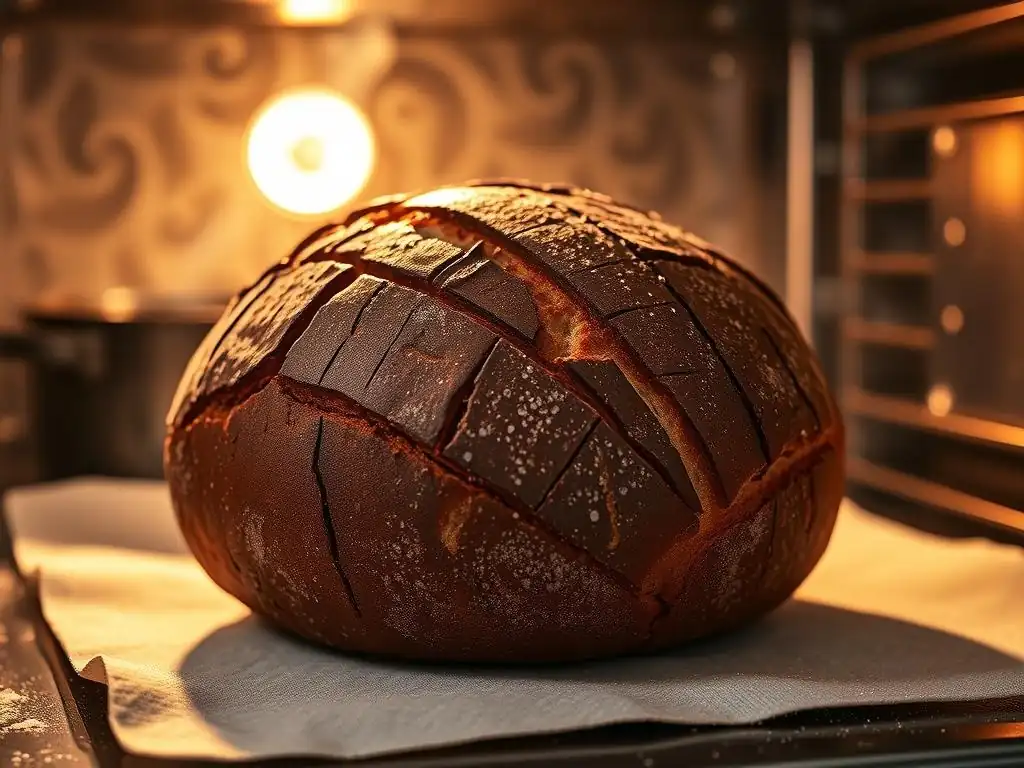
Welcome to BakeWithEase, your partner in baking perfection! Ever wondered how to achieve that perfectly crisp and chewy crust on your sourdough rye? Unlock the secrets to creating steam for an unforgettable baking experience. Discover the techniques and tips to elevate your sourdough rye crust – your journey to bakery-quality bread starts now!
- Practical Methods for Home Oven Steam Generation
-
Frequently Asked Questions
- What is the importance of steam when baking sourdough rye bread?
- How does steam affect the texture of the sourdough rye crust?
- What are some simple methods for creating steam in a home oven?
- Can I use ice cubes instead of hot water to create steam?
- How long should I maintain the steam during the baking process?
- Final Reflection: The Transformative Power of Steam in Sourdough Rye
- Unleash Your Inner Baker: Master the Sourdough Rye Crust!
Practical Methods for Home Oven Steam Generation
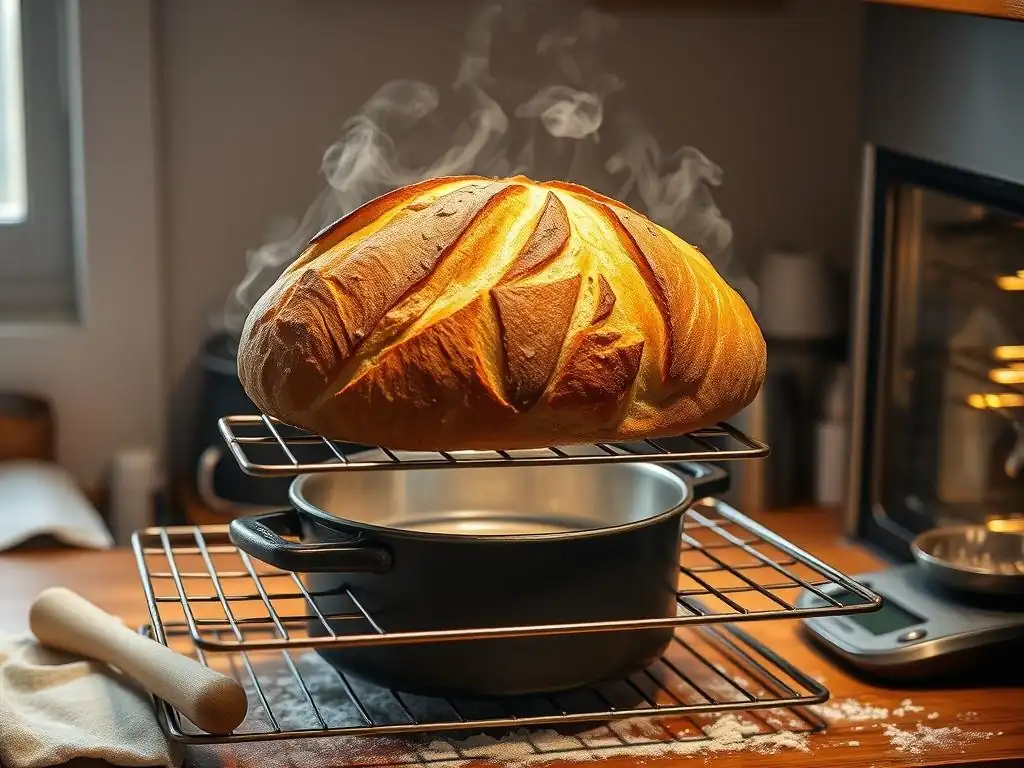
The Dutch Oven Method: Ideal for Consistent Steam
For many home bakers, especially those tackling the unique challenges of sourdough rye crust steam, the Dutch oven stands out as a remarkably effective tool. This method essentially creates a mini-oven within your main oven, trapping the moisture released by the dough as it bakes. The heavy lid seals in this steam, ensuring a humid environment around the loaf during the crucial initial phase of baking.
This trapped moisture keeps the surface of your sourdough rye dough pliable, allowing it to expand fully during oven spring without forming a hard, premature crust. A common practice is to preheat the Dutch oven to a high temperature, often around 475°F (245°C), for at least 30-45 minutes to ensure it's uniformly hot. Carefully lowering the dough into the hot pot and quickly replacing the lid is key to trapping the maximum amount of steam.
The consistent steam generated by a preheated Dutch oven provides an ideal environment for achieving that coveted thin, crispy sourdough rye crust. Unlike methods where steam dissipates quickly in a large oven cavity, the Dutch oven concentrates the moisture right where the loaf needs it most. After the initial baking period (typically 20-25 minutes), the lid is removed.
This allows the trapped steam to escape and the crust to dry out and brown effectively. This two-stage baking process – steaming with the lid on, then finishing with the lid off – is highly reliable for developing excellent color and texture on your sourdough rye crust, minimizing the risk of a tough, leathery exterior.
Baking Stone and Water Pan Combination: A Versatile Approach
Using a baking stone or steel in conjunction with a water pan is another popular and versatile method for generating steam for sourdough rye crust steam in a home oven. A baking stone or steel provides intense radiant heat from the bottom, which is excellent for oven spring. The water pan is placed on a rack below the baking stone, or sometimes on the oven floor if safe to do so.
As the oven preheats, the water in the pan heats up, eventually turning into steam. To maximize steam production right when the loaf goes in, some bakers add boiling water to the preheated pan just before loading the dough. This creates a burst of steam that envelops the loaf.
This setup offers more flexibility than a Dutch oven, allowing you to bake larger loaves or multiple loaves simultaneously. The effectiveness of the steam for your sourdough rye crust depends heavily on the size and surface area of the water pan and the temperature of the water added. A larger, shallow pan with a wide surface area will generate more steam than a small, deep one.
Using boiling water initially ensures rapid steam creation. Maintaining this steam for the first 15-20 minutes is critical for optimal sourdough rye crust development and oven spring before the crust begins to set. Ensure your oven is well-sealed to prevent steam from escaping too quickly.
Lava Rocks and Water: Affordable and Effective Steam
An often-underestimated method for generating robust steam for sourdough rye crust steam involves using lava rocks in a metal pan. Lava rocks are porous and have a high surface area, making them excellent for absorbing and then quickly releasing heat. To use this method, place a heatproof pan (like a cast iron skillet or an old baking pan) filled with lava rocks on the bottom rack of your oven or directly on the oven floor if permitted. Preheat the oven with the pan and rocks inside to your desired baking temperature, typically 450-475°F (230-245°C).
Just before loading your sourdough rye loaf, carefully pour about a cup of boiling water over the hot lava rocks. This creates an instant and significant burst of steam. The hot rocks quickly vaporize the water, filling the oven cavity with humidity.
This method is particularly effective for larger ovens or when baking directly on a stone or steel without the enclosure of a Dutch oven. The steam generated helps keep the surface of your sourdough rye pliable, promoting maximum expansion and contributing to a thinner, crisper crust. Remember to use caution when pouring boiling water into a hot oven to avoid steam burns.
Spray Bottle Technique: Supplementing Steam, Not Replacing It
While often mentioned in basic bread baking guides, the spray bottle technique is generally insufficient on its own to create the necessary level of steam for achieving a truly superior sourdough rye crust in a standard home oven. Spraying the oven walls with water just before and after loading the loaf can add some humidity, but the effect is usually fleeting in a large, vented oven cavity. The steam dissipates quickly, and the temperature drops each time the oven door is opened to spray, which can negatively impact oven spring.
However, a spray bottle can be useful as a supplementary tool or for specific purposes. Lightly misting the surface of your sourdough rye loaf before placing it in the oven can help the initial crust stay moist and expand better. For enriched doughs or loaves where a very thin, shiny crust is desired, a quick mist might contribute slightly.
But for the robust, crackly sourdough rye crust steam requires, relying solely on a spray bottle is unlikely to yield the best results. It's far more effective to combine this with a method that generates sustained steam, like a Dutch oven, water pan, or lava rocks.
Frequently Asked Questions
What is the importance of steam when baking sourdough rye bread?
Steam is crucial for achieving a perfectly crisp crust and a good oven spring. It prevents the crust from forming too quickly, allowing the bread to expand fully.
How does steam affect the texture of the sourdough rye crust?
Steam helps create a thin, shiny, and crackly crust. Without it, the crust will be thicker and tougher, and the inside may not be as open and airy.
What are some simple methods for creating steam in a home oven?
A common method is to place a preheated cast iron skillet on the bottom rack and pour hot water into it after loading the dough. Another option is using a covered Dutch oven.
Can I use ice cubes instead of hot water to create steam?
Yes, ice cubes work well because they release steam gradually. Be careful when adding them to a hot cast iron skillet to avoid splattering.
How long should I maintain the steam during the baking process?
Typically, steam is needed for the first 15-20 minutes of baking. After this, release the steam to allow the crust to dry and crisp up properly.
Final Reflection: The Transformative Power of Steam in Sourdough Rye
The pursuit of the perfect sourdough rye crust is a journey of precision and patience, but the impact of steam on that journey is undeniable. Mastering steam control isn't just about achieving a beautiful, crackly exterior; it's about unlocking the full potential of the sourdough's complex flavors and textures, a process that elevates baking from a task to an art.
The influence of steam extends beyond the individual loaf; it speaks to a broader appreciation for the subtle nuances of baking and the importance of understanding the fundamental principles of heat transfer. The baker's touch is not just in the ingredients, but in the understanding of the process.
This quote, though not directly about steam, encapsulates the essence of what we've explored. The quest for the perfect crust mirrors a larger cultural shift towards appreciating artisanal craftsmanship and the value of slow, deliberate processes in a fast-paced world. It's a reminder to slow down, observe, and appreciate the intricate details that contribute to something truly exceptional.
Now, consider your own baking journey. What techniques have you mastered? What challenges still await? I encourage you to experiment with steam in your own sourdough rye bakes, to observe the changes, and to discover the unique magic that steam brings to your creations. Don't be afraid to adjust your approach, to learn from your mistakes, and to celebrate the successes. The perfect crust is not a destination, but a continuous process of learning, refining, and ultimately, finding joy in the craft. Embrace the steam, embrace the process, and embrace the delicious results.
Unleash Your Inner Baker: Master the Sourdough Rye Crust!
Thanks for joining us on this sourdough rye crust journey! You've now unlocked the secrets to a perfectly crisp, tangy, and irresistible crust. Ready to take your baking skills to the next level?
- Bake your dream sourdough rye loaf today! Use what you've learned to create your own masterpiece. Don't be afraid to experiment – that's where the real magic happens!
- Share your baking triumphs (and tribulations!) with us. We'd love to see your creations and hear about your experience. Use #BakeWithEaseRye on social media!
- Challenge a friend to a sourdough bake-off! It’s a fun and delicious way to share your newfound knowledge.
What unique twist will you add to your sourdough rye crust to make it truly your own?