
Elevate Your Baking: Simple Secrets for Vegan Bread Success

Welcome to BakeWithEase, your trusted guide to the delightful world of baking!
Ever dreamt of creating perfectly crusty, airy vegan bread at home? You're in the right place! Dive into our article and unlock simple, yet powerful vegan bread baking tips that will transform your loaves and impress even the most discerning palates. Intrigued? Discover the secrets to achieving bakery-quality vegan bread with ease. Let's get baking!
- Vegan Bread Baking Tips: Secrets to a Perfect Loaf
-
Frequently Asked Questions
- What are some common substitutes for eggs in vegan bread baking?
- What types of flour work best for vegan bread baking?
- How can I achieve a good rise in my vegan bread without traditional yeast?
- What are some key differences between baking vegan bread and non-vegan bread?
- How can I prevent my vegan bread from being too dense or dry?
- Final Reflection: The Sweetness of Success: Baking Vegan Bread
- Unlock Your Inner Vegan Baker!
Vegan Bread Baking Tips: Secrets to a Perfect Loaf
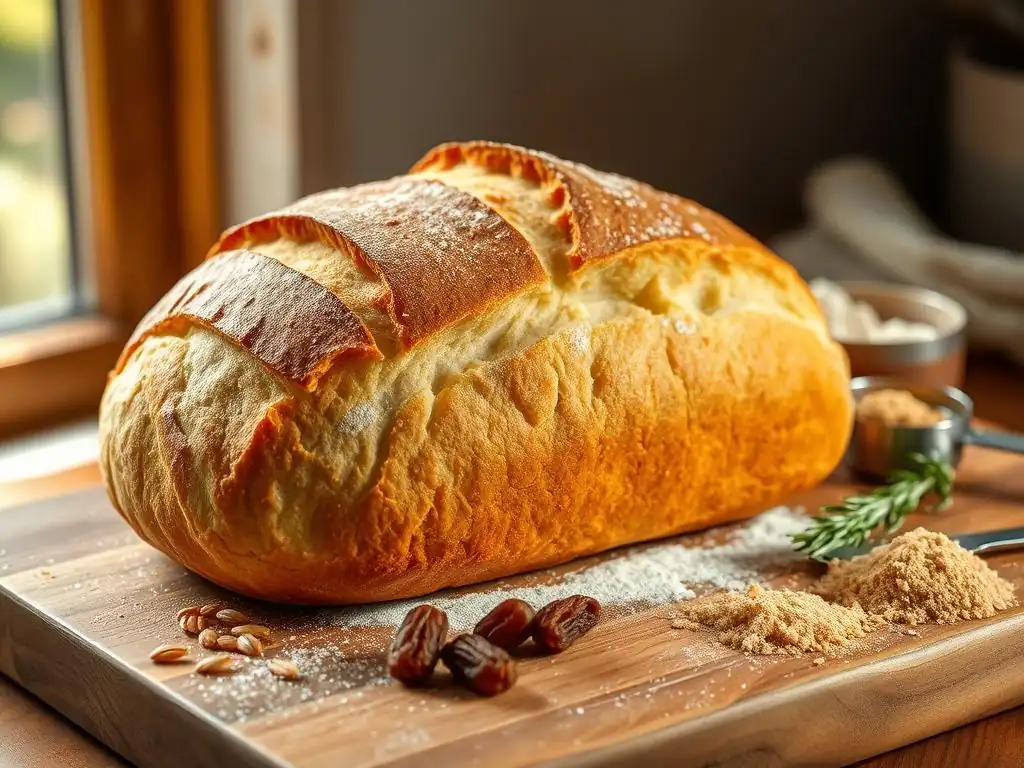
Embarking on the journey of baking vegan bread can be incredibly rewarding. While the fundamental principles of bread making apply, there are nuances when working without eggs and dairy that require specific attention. These vegan bread baking tips are designed to help you navigate common challenges and achieve consistently delicious results, transforming your kitchen into a haven for aromatic, perfectly baked vegan loaves.
Mastering a few key techniques and understanding how your ingredients behave in a vegan context are paramount. From handling the dough to understanding the ideal baking environment, these secrets will elevate your baking skills. Whether you're aiming for a rustic boule or soft sandwich slices, applying these specific vegan bread baking tips will significantly improve the texture, rise, and flavor of your creations.
The Importance of Hydration in Vegan Bread Dough
Hydration refers to the ratio of water to flour in your bread dough. In vegan bread, where animal proteins aren't present to contribute structure and richness, careful hydration becomes even more critical. A properly hydrated dough allows for better gluten development, resulting in a lighter, airier crumb. Too little water can lead to a dense, dry loaf, while too much can make the dough difficult to handle, though often results in a more open crumb structure if managed correctly.
Understanding hydration helps predict how your dough will behave. A standard sandwich loaf might have a hydration level around 60-65% (meaning 60-65g of water per 100g of flour), creating a relatively easy-to-handle dough. Higher hydration doughs, like those for ciabatta or focaccia, can reach 75-85% or even higher, requiring different handling techniques like stretch and folds rather than traditional kneading, but yielding a wonderfully open and chewy texture. Adjusting hydration slightly based on the type of flour used (whole wheat absorbs more water than white flour) is a crucial vegan bread baking tip for success.
Mastering the Vegan Bread Kneading Technique
Kneading is the process that develops gluten, the protein network that gives bread its structure and elasticity. For vegan bread, effective kneading is vital as we rely solely on the flour's gluten for chewiness and rise, without the added structure from eggs or dairy. Kneading aligns the gluten strands, creating a strong, extensible dough that can trap the gases produced by yeast during fermentation, leading to a well-risen loaf.
Whether you choose to knead by hand or use a stand mixer, the goal is a smooth, elastic dough that passes the "windowpane test" – you should be able to stretch a small piece thinly enough to see light through it without it tearing. Hand kneading typically takes 10-15 minutes, while a stand mixer might achieve the same result in 6-10 minutes on medium speed. Proper kneading is a fundamental vegan bread baking tip that directly impacts the final texture of your loaf.
Proofing Vegan Bread Dough: Finding the Sweet Spot
Proofing, also known as fermentation, is the period where yeast produces carbon dioxide gas, causing the dough to rise. This process is crucial for flavor development and achieving a light, airy texture in vegan bread. The ideal temperature for proofing is typically between 75°F and 80°F (24°C to 27°C). A warm, draft-free environment is best; you can create this by placing the dough in a lightly oiled bowl covered with plastic wrap or a damp cloth, often in a slightly warm oven (turned off) or microwave.
Knowing when your vegan dough is perfectly proofed is perhaps one of the most important vegan bread baking tips. For the first rise, the dough should roughly double in size. For the second rise (after shaping), the dough should look visibly puffy and pass the "poke test": gently press your finger into the dough about half an inch deep; if the indentation springs back slowly, leaving a small mark, it's ready. If it springs back immediately, it needs more time. If it stays indented completely, it's likely over-proofed and may collapse during baking.
Baking Temperatures and Times for Vegan Bread
Baking is the final transformation, turning proofed dough into a crusty, flavorful loaf. For most standard vegan bread loaves, a high initial oven temperature is beneficial to encourage a good oven spring – the final burst of rising that occurs in the first few minutes of baking. Temperatures often range from 400°F to 450°F (200°C to 230°C). Preheating your oven thoroughly for at least 20-30 minutes before putting the bread in is essential to ensure consistent heat and optimal rise.
The total baking time will vary significantly based on the size and shape of your loaf. Smaller rolls might bake in 15-25 minutes, while a large boule could take 35-50 minutes. The crust should be golden brown and firm. Tapping the bottom of the loaf should produce a hollow sound, indicating it's baked through. For the most accurate assessment, however, checking the internal temperature is the most reliable method, a key vegan bread baking tip for consistent results.
Recommended Internal Temperatures for Vegan Bread Doneness
A loaf of vegan bread is considered fully baked when its internal temperature reaches between 200°F and 210°F (93°C and 99°C) for most lean bread (made primarily with flour, water, yeast, and salt). Enriched doughs, like those used for rolls or challah-style bread which might contain added fats or sweeteners, are often done slightly lower, around 190°F to 200°F (88°C to 93°C). Using an instant-read thermometer inserted into the center of the loaf is the most reliable way to confirm doneness.
Frequently Asked Questions
What are some common substitutes for eggs in vegan bread baking?
Common egg substitutes include applesauce, flaxseed meal mixed with water (flax eggs), and mashed banana. These help to provide binding and moisture in your vegan bread.
What types of flour work best for vegan bread baking?
While all-purpose flour is versatile, whole wheat flour, bread flour, and spelt flour can add texture and flavor to your vegan bread. Experiment to find your preferred combination for taste and structure.
How can I achieve a good rise in my vegan bread without traditional yeast?
Ensuring your yeast is fresh and properly activated is crucial. You can also add a touch of sugar or molasses to the dough to feed the yeast and encourage a better rise.
What are some key differences between baking vegan bread and non-vegan bread?
Vegan bread often requires adjustments in hydration and fat content to compensate for the lack of eggs and dairy. You may need to add more liquid or plant-based fats like olive oil or coconut oil.
How can I prevent my vegan bread from being too dense or dry?
Proper kneading and proofing are essential. Over-baking can also lead to dryness, so monitor your bread closely and use a thermometer to check for doneness.
Final Reflection: The Sweetness of Success: Baking Vegan Bread
The accessibility of delicious, wholesome vegan bread is no longer a niche pursuit; it's a culinary revolution. More and more people are seeking plant-based alternatives, and mastering vegan bread baking is a key part of that movement. This means that the simple secrets shared in this article are not just helpful tips, but tools for empowerment, allowing anyone to create nourishing and satisfying loaves from the comfort of their own kitchen.
The journey of vegan baking, for me, has been one of constant learning and delightful surprises. It's a testament to the creativity and resourcefulness of plant-based cooking. The initial challenges – understanding the role of gluten substitutes, mastering hydration levels, and achieving that perfect crumb – eventually gave way to a deep appreciation for the subtle nuances of flour, yeast, and water. The best bread is made with love, and a little bit of patience.
– This unsung adage perfectly encapsulates the experience.
Now, it's your turn. Don't be intimidated by the seemingly complex world of vegan bread making. Take the knowledge gained from this article, experiment with different flours and techniques, and most importantly, enjoy the process. Each loaf you bake, whether it's a rustic sourdough or a fluffy milk bread alternative, is a step towards a more sustainable and delicious future. Embrace the challenge, and savor the sweet reward of perfectly baked, plant-based bread.
Unlock Your Inner Vegan Baker!
Thanks for taking the time to explore the world of vegan bread baking with us! We hope you've discovered some valuable tips and tricks to help you create delicious, fluffy loaves. Ready to put your newfound knowledge to the test?
- Bake your first vegan masterpiece! Try out one of the recipes mentioned in the article – we're confident you'll be amazed by the results.
- Share your baking journey! Post a picture of your creation on social media and tag us – we'd love to see your success!
- Explore other vegan baking adventures on our website for more inspiration and recipes!
What exciting vegan bread recipe will you conquer first?