
Scoring Baguettes Like a Pro: Techniques for Different Patterns

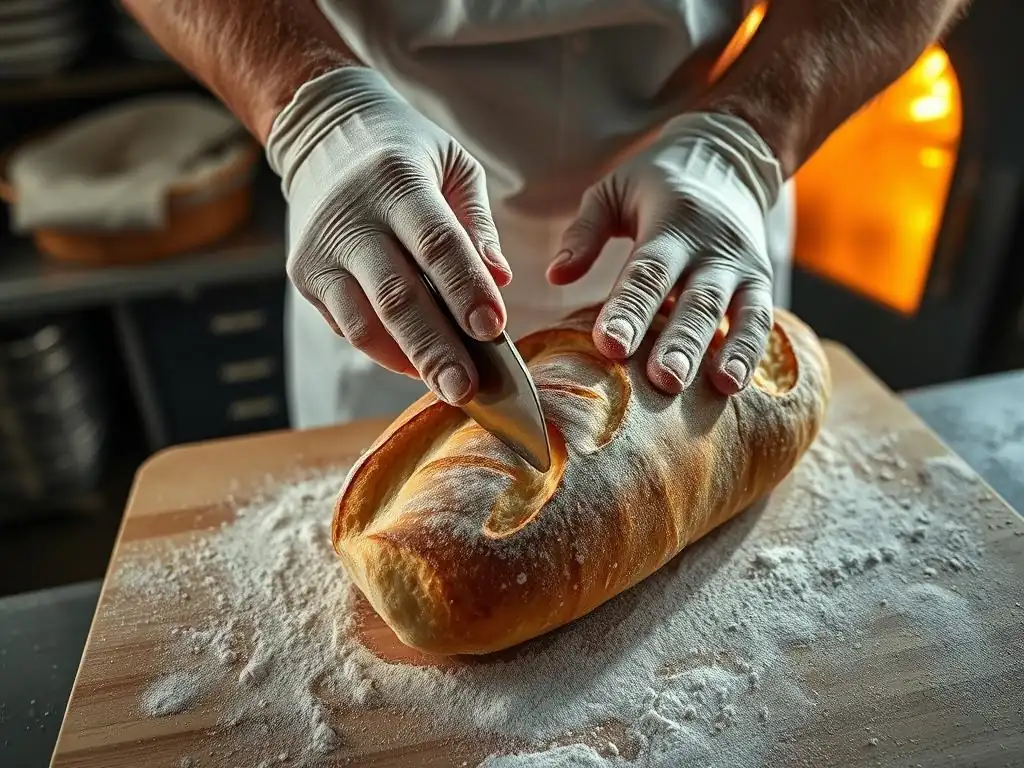
Welcome to BakeWithEase! Ever wondered how professional bakers achieve those stunning, intricate designs on their baguettes? Unlock the secrets to elevating your bread baking game with our comprehensive guide to baguette scoring patterns techniques. Discover the art and science behind creating visually appealing and perfectly risen loaves. Ready to transform your baguettes from simple to spectacular? Let's get scoring!
- Mastering Baguette Scoring: An Introduction to Artisan Techniques
- Essential Tools for Baguette Scoring
- Basic Baguette Scoring Techniques: A Step-by-Step Guide
- Advanced Baguette Scoring Patterns: Elevate Your Baking
- Troubleshooting Common Baguette Scoring Problems
- Exploring Creative Baguette Scoring Designs
- Maintaining Your Baker's Lame for Longevity
- Perfecting Your Baguette: Beyond Scoring
- Frequently Asked Questions
- Final Reflection: The Art and Science of the Baguette Score
- Unlock Your Inner Boulanger: Master the Art of Scoring
Mastering Baguette Scoring: An Introduction to Artisan Techniques
Scoring, or coupe, is the art of making deliberate cuts on the surface of proofed bread dough just before it goes into the oven. For baguettes, this step is absolutely crucial. It's not just about making your bread look pretty; it serves vital functional purposes that directly impact the final shape, texture, and rise of your baguette. Mastering baguette scoring patterns techniques is a key step in becoming a skilled baker.
This guide will walk you through the essential tools, basic and advanced techniques, and common troubleshooting tips so you can confidently achieve beautiful and functional scores on your baguettes. Whether you're aiming for the classic single slash or more intricate designs, understanding the principles behind the cuts will elevate your baking from good to outstanding.
Why Baguette Scoring Matters: Beyond Aesthetics
Scoring is fundamentally about controlling how the dough expands in the oven. As the dough hits the hot oven, the yeast has a final burst of activity, and trapped gases expand rapidly (this is known as oven spring). Without scoring, the dough would burst unpredictably at its weakest point, resulting in a poorly shaped loaf with an uneven crust. The scores provide designated weak points, allowing the dough to expand in a controlled manner along the cuts.
Beyond controlling expansion, scoring influences the crust development. The cuts open up, creating beautiful "ears" or grigne (pronounced "green-yuh"), which are thin, crispy edges of crust that add delightful texture. Different baguette scoring patterns techniques dictate how and where this expansion occurs, directly impacting the final shape and the distribution of the crust. A well-scored baguette will have a better rise and a more desirable crust structure.
Understanding the Baker's Lame: Your Essential Baguette Scoring Tool
The primary tool for scoring baguettes is called a lame (pronounced "lahm"). It's essentially a razor blade or very sharp knife mounted on a handle. The sharpness of the blade is paramount; a dull blade will drag and tear the delicate dough surface, leading to ragged cuts that don't open properly in the oven. Using a proper lame allows for quick, clean cuts that are essential for achieving good oven spring and defined grigne.
While you might be tempted to use a kitchen knife, a lame is specifically designed for this task. Its thin, sharp blade glides through the dough with minimal resistance. Many lames also allow you to hold the blade at a specific angle, which is critical for creating the iconic ear on a baguette. Investing in a good lame is arguably the most important step after perfecting your dough when focusing on baguette scoring patterns techniques.
Essential Tools for Baguette Scoring
Having the right tools makes the scoring process much smoother and increases your chances of success. While the lame is the star, understanding the different types available and how to maintain them is key. The state of your dough also plays a critical role, making proper hydration and proofing just as important as the sharpness of your blade.
Proper tools and dough preparation work hand-in-hand. Even the sharpest lame won't give you a clean score on poorly proofed dough. Conversely, perfectly proofed dough can be ruined by a dull blade. Paying attention to both aspects will significantly improve your baguette scoring patterns techniques.
Types of Lames: Straight, Curved, and Replaceable Blades
Lames come in various forms, each offering slightly different benefits. A common type is the straight lame, which holds a standard double-edged razor blade in a straight line. This is versatile for many types of bread, including making deep, straight cuts. Another popular type is the curved lame, which holds the razor blade in a gentle curve. This curve is particularly useful for creating the long, overlapping diagonal cuts characteristic of traditional baguettes, as it helps lift the dough slightly as you cut, encouraging the formation of the grigne.
Many modern lames feature replaceable blades. This is highly practical as it ensures you always have a razor-sharp edge. Blades dull relatively quickly when cutting dough, especially wetter doughs. Being able to pop in a fresh blade means you don't have to worry about sharpening and can maintain optimal cutting performance easily. Some lames have handles made of wood, plastic, or metal, offering different grips and aesthetics.
Preparing Your Lame for Optimal Scoring
Before each scoring session, ensure your lame is clean and the blade is sharp. If using a replaceable blade lame, insert a fresh blade. For a straight lame, ensure the blade is securely fastened. A quick wipe with a dry cloth can remove any residual flour or dough from previous uses. Some bakers like to lightly dust the blade with flour to prevent sticking, especially with high-hydration doughs, although a truly sharp blade on properly proofed dough often doesn't require this.
The angle at which you hold the lame is crucial for different baguette scoring patterns techniques. For the classic baguette grigne, you typically want to hold the blade at a shallow angle, around 20-30 degrees relative to the dough surface. This angle allows the blade to slice just under the surface tension, creating a flap of dough that will lift and crisp up into the ear during baking. Practicing the angle on a piece of parchment paper or even a kitchen towel can be helpful before approaching your precious dough.
The Importance of Dough Hydration and Proofing for Scoring
The hydration level of your dough significantly impacts how it scores. A dough that is too dry (say, below 65% hydration) can be stiff and prone to tearing rather than slicing cleanly. Very wet doughs (above 80% hydration), while yielding a wonderful open crumb, can be challenging to score as they are sticky and may collapse easily. Baguette doughs typically range from 70% to 78% hydration, offering a good balance for handling and scoring.
Proper proofing is perhaps the most critical factor for successful scoring. If the dough is under-proofed, it will be too tight and resistant, making clean cuts difficult and potentially leading to uncontrolled bursting elsewhere. If it's over-proofed, it will be slack and fragile, collapsing when you try to score it, and won't have enough energy left for good oven spring.
The dough should be just right – puffy, but still with enough structure to hold its shape after scoring. A common test is the poke test: gently poke the dough with a wet finger; if the indentation slowly springs back about halfway, it's often ready.
Basic Baguette Scoring Techniques: A Step-by-Step Guide
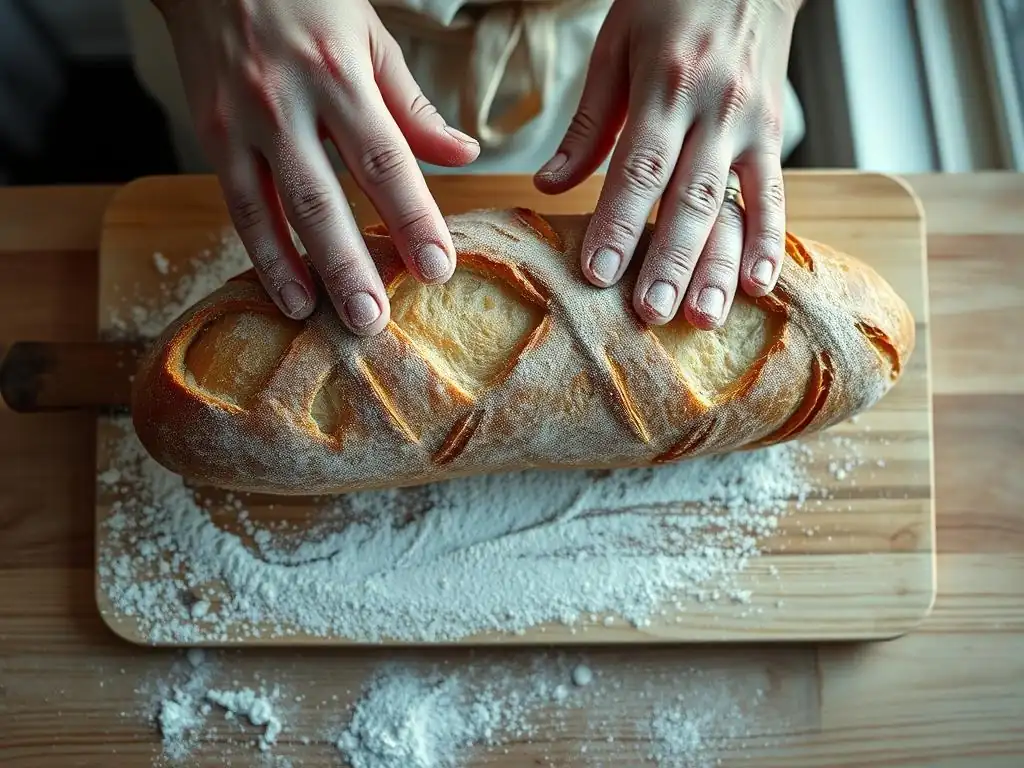
Let's start with the fundamental techniques that form the basis of most baguette scoring patterns techniques. The goal here is to make confident, clean cuts that allow for controlled expansion. This section covers the preparation and the simplest, yet highly effective, single slash.
Mastering the basics is essential before moving on to more complex designs. Consistency in your cuts is key to achieving uniformly baked and visually appealing baguettes.
Preparing Your Baguette Dough for Scoring
Once your baguette dough has completed its final proofing and is ready for baking, handle it gently. Transfer the proofed baguette onto a peel dusted with cornmeal or placed on parchment paper. The surface should be taut and slightly tacky, but not overly sticky. If the surface seems dry, a very light mist of water can help, but be careful not to make it wet, which can hinder scoring.
Ensure your scoring surface is stable. If using parchment paper on a peel, make sure the paper is flat. If transferring directly to a hot baking stone or steel, work quickly but calmly. Have your prepared lame ready. Take a moment to visualize the cuts you intend to make. This brief pause helps ensure your first cut is confident and accurate.
The Single Slash: Classic and Effective
The single slash is the most basic baguette scoring pattern technique, often used on shorter loaves or as a starting point for beginners. It involves making one long cut down the center of the loaf, typically slightly off-center. This allows the loaf to open up along a single seam, creating a prominent grigne.
To execute a single slash, hold your lame at a shallow angle (around 30 degrees) relative to the dough surface. Starting from one end, make one continuous, smooth cut along the length of the baguette. Aim for a depth of about 1/4 to 1/2 inch (approximately 0.5 to 1 cm). The cut should be decisive and relatively quick to avoid dragging the dough.
Achieving a Clean and Consistent Cut
Consistency is paramount for even expansion and a beautiful loaf. To achieve a clean cut, ensure your blade is razor-sharp. A dull blade will snag and tear the dough. Use a confident, fluid motion rather than a hesitant one. Think of it like slicing through butter, not sawing through wood.
The depth and angle of the cut should be consistent along the entire length of the score. Inconsistent depth can lead to uneven tearing or expansion. For the classic grigne, maintaining that shallow 30-degree angle is key. Practice the motion without the blade on a practice surface until it feels natural. Remember, slight imperfections are part of the charm of artisan bread, but aiming for consistency improves the final result.
Advanced Baguette Scoring Patterns: Elevate Your Baking
Once you've mastered the basic single slash, you can explore more intricate and visually striking baguette scoring patterns techniques. These patterns not only change the appearance of the baked loaf but can also subtly influence the crumb structure and crust development.
These advanced techniques require a bit more practice and control, but the results are often stunning and well worth the effort. They allow bakers to add a personal touch to their loaves.
The Épi de Blé (Wheat Stalk) Pattern: A Detailed Tutorial
The Épi de Blé, or "wheat stalk," pattern is a decorative score that transforms the baguette into something resembling a stalk of wheat. It's created by making a series of cuts that are then pulled or pushed to the side. This pattern yields many small, crispy pieces along the sides of the baguette, making it easy to break off individual portions.
This technique requires a slightly different approach to scoring, focusing on creating distinct sections rather than a single opening. It's a favorite for its rustic appearance and shareability.
Creating the Épi de Blé: Step-by-Step Instructions
- Prepare: Ensure your proofed baguette is on your baking surface. Have a sharp lame ready, preferably a straight one for more control over the cuts.
- First Cut: Make the first cut near one end of the baguette. Hold the lame at a steep angle (closer to 90 degrees) relative to the dough surface, cutting about 1/2 to 3/4 inch (1 to 2 cm) deep, diagonally across the loaf.
- Subsequent Cuts: Move down the loaf about 1 to 1.5 inches (2.5 to 4 cm). Make another steep diagonal cut, parallel to the first.
- Angle and Pull: For each cut you make, immediately use the tip of your lame or a pair of kitchen shears to gently pull the cut section of dough to one side. Alternate sides with each subsequent cut down the length of the loaf. For example, pull the first cut to the right, the second to the left, the third to the right, and so on.
- Continue: Repeat this process down the entire length of the baguette, creating a series of alternating pulled sections that resemble the grains on a wheat stalk.
Tips for Perfecting the Wheat Stalk Design
- Use a very sharp blade. Dull blades will drag the dough rather than making clean cuts, making it hard to pull the sections neatly.
- Cut relatively deep. The steep angle and depth are necessary for the sections to separate cleanly and form distinct "grains" when pulled.
- Work quickly but gently. The dough is delicate at this stage. Make the cut decisively, then gently pull the section to the side without tearing it completely off.
- Consistent spacing is key to an attractive pattern. Try to make your cuts relatively equidistant along the length of the loaf.
- Practice makes perfect! Your first Épi might be a bit messy, but you'll quickly get the hang of the motion and spacing.
The Chevron Pattern: Adding Visual Appeal
The Chevron pattern is created by making a series of overlapping diagonal cuts along the length of the baguette. Unlike the single slash which uses parallel cuts, the chevron uses cuts that intersect or overlap slightly, forming a V-shape pattern along the top of the loaf after baking. This pattern can result in multiple smaller "ears" along the cuts.
This pattern is visually dynamic and offers another way to control expansion and create interesting crust textures. It's a popular choice for adding a touch of elegance to your baguettes.
Mastering the Chevron Cut: A Visual Guide
- First Set of Cuts: Starting near one end, make a diagonal cut across the loaf, holding the lame at the classic shallow angle (20-30 degrees). Make this cut about 3-4 inches (7-10 cm) long.
- Second Set of Cuts: Move down the loaf. Make another diagonal cut of similar length, but this time angle it in the opposite direction so that it slightly overlaps the end of the first cut, forming the top part of a 'V' or chevron.
- Repeat: Continue down the length of the baguette, alternating the direction of the diagonal cuts so that they overlap the previous cut, creating a continuous series of chevron shapes.
- Consistency: Ensure the angle, depth (around 1/4 to 1/2 inch or 0.5 to 1 cm), and length of each cut are consistent for a uniform pattern. The overlap should be minimal, just enough to connect the cuts.
The Grigne: Unlocking Oven Spring
The grigne is the crusty flap of dough that lifts along the score line during baking. It's a hallmark of a well-scored baguette and indicates good oven spring. Achieving a pronounced grigne is a primary goal of many baguette scoring patterns techniques. It adds incredible texture and visual appeal.
The formation of the grigne is a direct result of the controlled expansion through the score and the angle at which the score was made. The shallow angle allows the top layer of dough to peel back as the loaf expands beneath it.
Understanding the Angle and Depth of Grigne Scoring
To encourage a strong grigne, the angle of your lame is paramount. As mentioned before, hold the blade at a shallow angle, typically between 20 and 30 degrees, relative to the dough surface. This angle ensures you are slicing under the surface tension, creating a flap that can lift. Cutting straight down (90 degrees) will result in the dough opening up symmetrically rather than forming an ear.
The depth of the score also matters. If the score is too shallow (less than 1/4 inch or 0.5 cm), it may not be deep enough to provide a clear path for expansion, and the dough might burst elsewhere. If it's too deep (more than 1/2 inch or 1 cm), the dough might tear excessively or the ear might be too large and flat. Finding the right depth comes with practice, but the 1/4 to 1/2 inch range is a good starting point for most baguette scoring patterns techniques.
Troubleshooting Common Baguette Scoring Problems
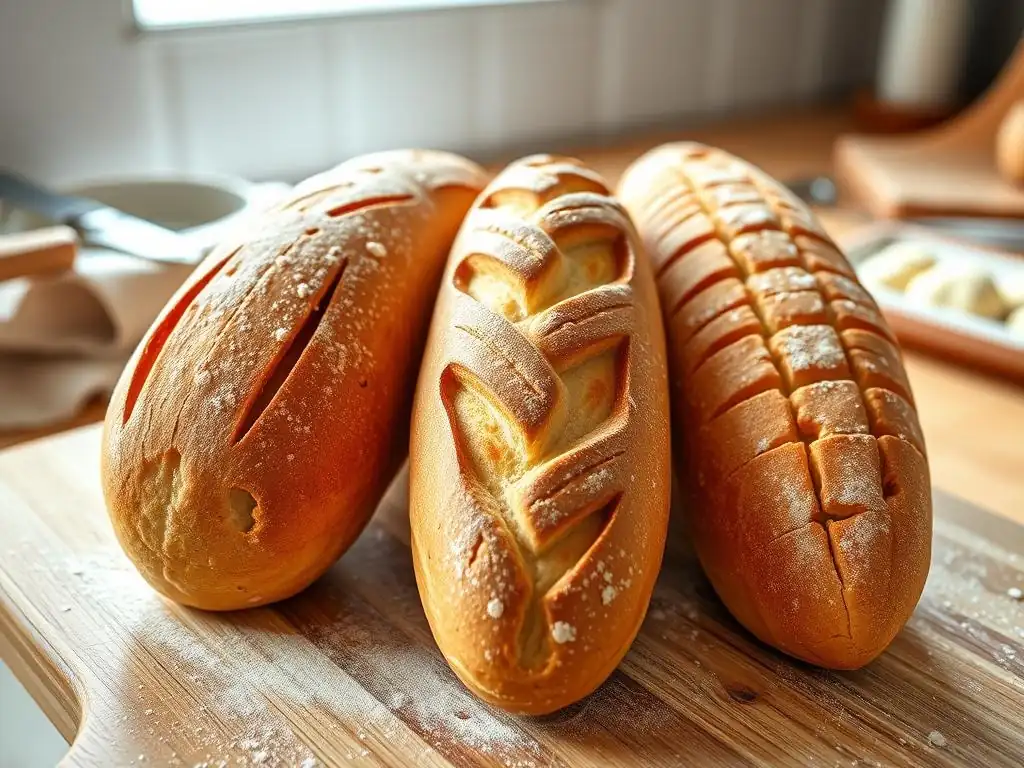
Even with the right tools and techniques, you might encounter issues when scoring baguettes. Recognizing these problems and understanding their causes will help you improve your baguette scoring patterns techniques over time.
Don't get discouraged by imperfect scores! Every loaf is a learning opportunity.
Dough Sticking to the Lame: Prevention and Solutions
Dough sticking to the lame is a common frustration, especially with wetter doughs. This prevents clean cuts and can drag the dough, ruining the score.
- Prevention:
- Ensure your blade is extremely sharp. A fresh blade is the best defense.
- Score dough that is properly proofed – not too wet or sticky on the surface.
- Lightly dust the blade with flour between cuts. Some bakers keep a small cup of flour nearby for this purpose.
- Solutions:
- If sticking occurs, gently clean the blade with a damp cloth and dry it thoroughly before attempting the next cut.
- Try a slightly different angle or motion. A quicker, more decisive stroke can sometimes help.
- Consider if your dough might be slightly over-proofed and thus too fragile and sticky.
Uneven Expansion During Baking: Identifying the Cause
If your baguette expands unevenly, bursting in places other than your scores, or if the scores don't open cleanly, several factors could be at play.
- Under-proofing: This is a frequent culprit. Tightly proofed dough has too much surface tension, forcing it to find the weakest point to burst, which might not be your intended score lines. The scores themselves may also gape open too widely without forming a nice ear.
- Dull Lame: A dull blade tears the dough instead of slicing it cleanly. These ragged cuts don't provide a defined path for expansion, leading to unpredictable bursts.
- Inconsistent Scoring: If some scores are deeper or at a different angle than others, the dough will expand more forcefully through the most effective cuts, leaving others underdeveloped.
- Insufficient Steam: While not directly related to scoring technique, lack of steam in the oven can cause the crust to set too quickly before significant oven spring occurs, inhibiting the opening of the scores.
Achieving Consistent Scoring Depth: Tips and Tricks
Maintaining a consistent depth across multiple scores, especially on a long baguette, takes practice. Inconsistent depth leads to uneven grigne and unpredictable expansion.
- Practice Grip: Find a comfortable grip on your lame that allows you to control the angle and depth. Some bakers find handles easier than bare blades.
- Visualize: Before you start cutting, mentally trace the path of your scores and visualize the desired depth.
- Use a Guide (Optional): For practicing consistency, you could lightly mark the dough surface with flour or even a very light indentation (though be careful not to deflate it) as a guide, but the goal is to eventually freehand confidently.
- Feel the Dough: As you score, you should feel the blade slice through the surface tension and into the dough. Pay attention to that feeling to gauge depth. It should offer some resistance but not feel tough or gummy.
Exploring Creative Baguette Scoring Designs
Once you're comfortable with basic baguette scoring patterns techniques, the door opens to more creative and artistic designs. While classic patterns are beautiful, experimenting can be fun and yield unique results.
Creativity in scoring allows you to personalize your loaves and impress others with your baking skills.
Adapting Patterns to Different Baguette Sizes
The size and shape of your baguette will influence which scoring patterns work best. A very long, thin baguette might look best with numerous overlapping diagonal cuts or an Épi pattern. Shorter, wider loaves might suit fewer, longer diagonal slashes or even a simple straight cut down the middle.
Consider the surface area you have to work with. A standard baguette might be around 18-24 inches (45-60 cm) long. This length allows for 5-7 overlapping diagonal cuts for the classic look. A mini-baguette might only need 2-3 cuts. Adjust the length and spacing of your cuts to fit the dimensions of your loaf while maintaining the overall pattern's aesthetic.
Incorporating Flour and Dusting for Enhanced Visuals
A light dusting of flour on the proofed dough surface before scoring can dramatically enhance the visual contrast after baking. As the scores open, the pale interior is revealed against the floured crust, making the pattern pop. Rice flour is often preferred for dusting as it doesn't absorb moisture as readily as wheat flour and creates a crisp white contrast.
You can dust the entire surface, or use stencils or your hand to create patterns with the flour before scoring. For example, dusting only certain areas can highlight specific parts of your baguette scoring patterns techniques. Be careful not to use too much flour, as it can create a thick, unappetizing layer on the crust. A fine, even dusting is usually sufficient.
Spiral and Leaf Patterns: Adding Artistic Flourishes
Beyond the traditional, you can explore truly artistic scoring. A simple spiral can be created by starting a cut at one end and curving it continuously towards the other. Leaf patterns involve making a central cut (the vein) and then several smaller diagonal cuts branching off from it.
These patterns often require a very steady hand and precise control over the lame angle and depth. They might not always result in a large grigne in the same way classic cuts do, as their primary purpose is often decorative. Experimenting with different angles and depths can help you understand how the dough responds and how to achieve the desired artistic effect with your baguette scoring patterns techniques.
Maintaining Your Baker's Lame for Longevity
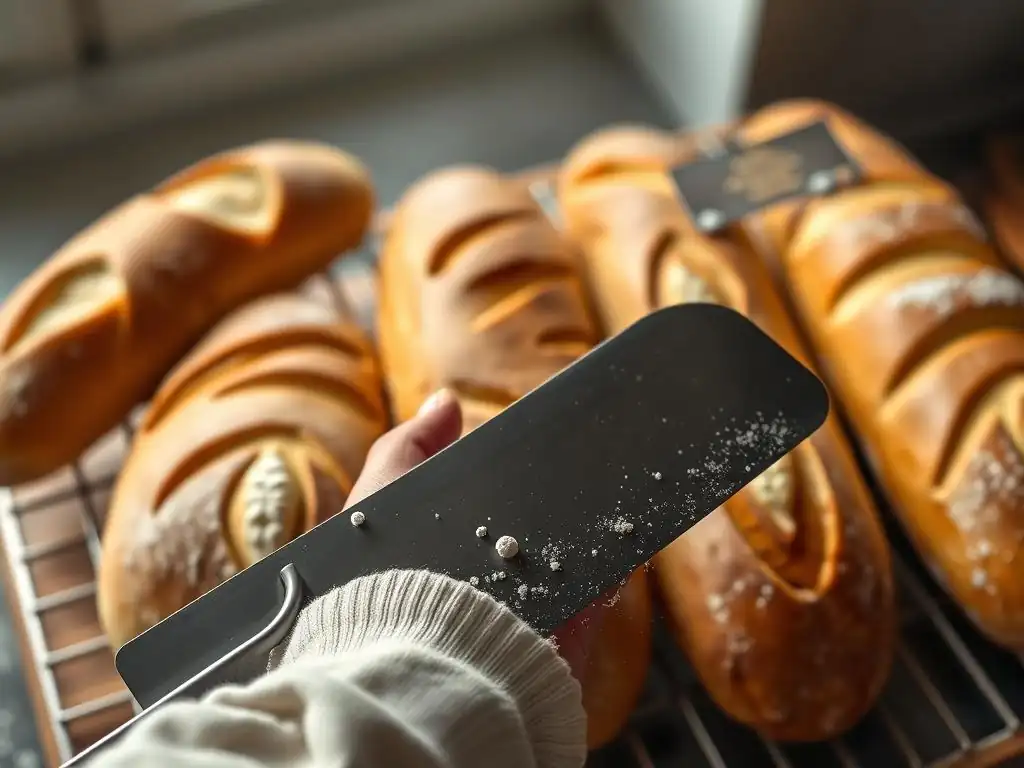
Your lame is an investment in your baking. Proper care ensures it remains sharp and effective for countless loaves, making all your baguette scoring patterns techniques easier and more successful.
A well-maintained lame is a joy to use and crucial for consistent results.
Proper Cleaning and Storage Techniques
After each use, it's important to clean your lame. Dough can dry and harden on the blade, making it dull and unhygienic. If using a replaceable blade, carefully remove it and wipe it clean with a dry cloth or paper towel. Avoid using water if possible, as razor blades can rust quickly. If washing is necessary, dry the blade immediately and thoroughly.
Store your lame safely. Many lames come with protective covers or cases. This not only protects the sharp blade from damage but also prevents accidental cuts. Store it in a dry place to prevent rust. If you live in a humid environment, consider adding a small desiccant packet to the storage container.
For lames with fixed blades or if you want to extend the life of replaceable blades (though replacement is often easier and more effective), sharpening might be an option depending on the blade material. Standard double-edged razor blades are typically not sharpened by the user; they are simply replaced.
However, some specialized lames might use thicker blades that can be honed or sharpened. Consult the manufacturer's instructions for your specific lame. For standard razor blades, the most "sharpening" you can do is ensure it's perfectly clean and free of any dried dough residue that might be hindering its edge. Always replace blades when they feel like they are starting to drag or skip on the dough. A pack of 100 razor blades is relatively inexpensive and will last a long time, ensuring you always have a perfectly sharp edge for your baguette scoring patterns techniques.
Perfecting Your Baguette: Beyond Scoring
While mastering baguette scoring patterns techniques is vital, it's just one piece of the puzzle in creating a perfect baguette. The best score can't save a poorly made dough or incorrect baking conditions.
Achieving a truly great baguette involves integrating excellent dough handling, scoring, and baking methods.
Baking Techniques for Optimal Crust and Crumb
Successful baguette baking requires a very hot oven and the presence of steam during the initial phase of baking. A typical baking temperature for baguettes is high, often 450-500°F (230-260°C). Baking on a preheated baking stone or steel helps provide a strong burst of heat from below, contributing to oven spring and crust development.
The duration of the bake depends on the size of the baguette and your oven, but typically ranges from 20 to 30 minutes. The baguettes are done when they are deep golden brown and sound hollow when tapped on the bottom. Proper baking ensures the crust is crisp and the interior crumb is open and airy, complementing your careful baguette scoring patterns techniques.
Achieving a Crisp Crust: The Importance of Steam
Steam is absolutely critical for developing a thin, crisp crust and maximizing oven spring. In a dry oven environment, the crust forms too quickly, restricting the dough's ability to expand and preventing the scores from opening fully. Steam keeps the surface moist, allowing the dough to expand before the crust sets.
There are several ways to create steam in a home oven:
- Placing a tray of hot water in the bottom of the oven when you preheat it.
- Using a Dutch oven or cloche (though this is harder for long baguettes).
- Throwing ice cubes onto a hot tray in the bottom of the oven just as you load the bread.
- Using a spray bottle to mist the oven walls (be cautious of oven lights/elements).
Maintaining steam for the first 10-15 minutes of baking is usually sufficient.
Enjoying Your Perfectly Scored Baguette
After the baguettes are baked to a beautiful golden brown with well-defined scores and a lovely grigne, let them cool on a wire rack for at least 20-30 minutes before slicing. Cutting into a hot baguette can result in a gummy crumb.
Admire your work! Notice how your baguette scoring patterns techniques influenced the final shape and crust. Listen to the satisfying crackle of the cooling crust. Now, slice, serve, and enjoy the fruits of your labor. Whether slathered with butter, dipped in olive oil, or used for sandwiches, a perfectly scored and baked baguette is one of baking's simple pleasures.
Frequently Asked Questions
What is baguette scoring and why is it important?
Baguette scoring involves making shallow cuts on the surface of the dough before baking. This allows the baguette to expand properly in the oven and creates visually appealing patterns.
What are some basic baguette scoring patterns I can try?
Beginners can start with the simple straight slash or the epi pattern (wheat stalk). More advanced options include the grigne and overlapping scores.
What type of blade is best for scoring baguettes?
A lame (pronounced lahm) is the preferred tool. It's a very sharp, thin blade specifically designed for scoring dough. Alternatively, a razor blade can also be used.
How deep should I score my baguettes?
Typically, scores should be around 1/4 to 1/2 inch deep. The depth can affect the oven spring and the final appearance of the baguette.
What can I do if my baguette scoring isn't working properly?
Ensure your blade is sharp and the dough is properly proofed. Practice your scoring angle and depth. Over-proofing or under-proofing can also affect scoring results.
Final Reflection: The Art and Science of the Baguette Score
The seemingly simple act of scoring a baguette is, in reality, a crucial determinant of its final texture, appearance, and overall success. A perfectly executed score isn't just aesthetically pleasing; it's the culmination of understanding dough development, oven spring, and the delicate balance between controlled expansion and structural integrity. This knowledge, once considered the exclusive domain of master bakers, is now accessible to all who are willing to learn.
The impact of understanding baguette scoring extends far beyond the kitchen. It's a microcosm of precision and artistry, a testament to the power of meticulous technique in achieving a desired outcome. The seemingly insignificant slashes become a canvas for creativity, allowing bakers to express themselves through a variety of patterns and depths. As the renowned baker Lionel Poilâne once said, Bread is a mirror of the baker's soul.
The careful consideration given to each score reflects not only skill but also a deep respect for the craft and the ingredients involved.
Now, consider your own baking journey. What patterns will you explore? What textures will you strive for? I encourage you to experiment, to embrace the imperfections, and to find joy in the process of creating something beautiful and delicious. The next time you score a baguette, remember the artistry involved, and let the act become a meditation on precision, creativity, and the enduring magic of bread making. The perfect score awaits.
Unlock Your Inner Boulanger: Master the Art of Scoring
Thanks for diving into the world of baguette scoring! We hope you've gained valuable insights into creating those beautiful, perfectly-risen loaves. Ready to take your baking to the next level?
- Practice your favorite score: Choose one pattern from the article and try it out immediately. Even a small attempt will build your confidence and technique.
- Share your creations: Show off your perfectly scored baguettes on social media – use #BakeWithEaseBaguettes and tag us! We'd love to see your results.
- Experiment with a new pattern: Don't be afraid to try a different scoring technique next time. The more you practice, the more confident you'll become.
What unique scoring pattern will you try first, and why does it appeal to you?