
Scoring Tools: Lame vs. Knife for Baguettes

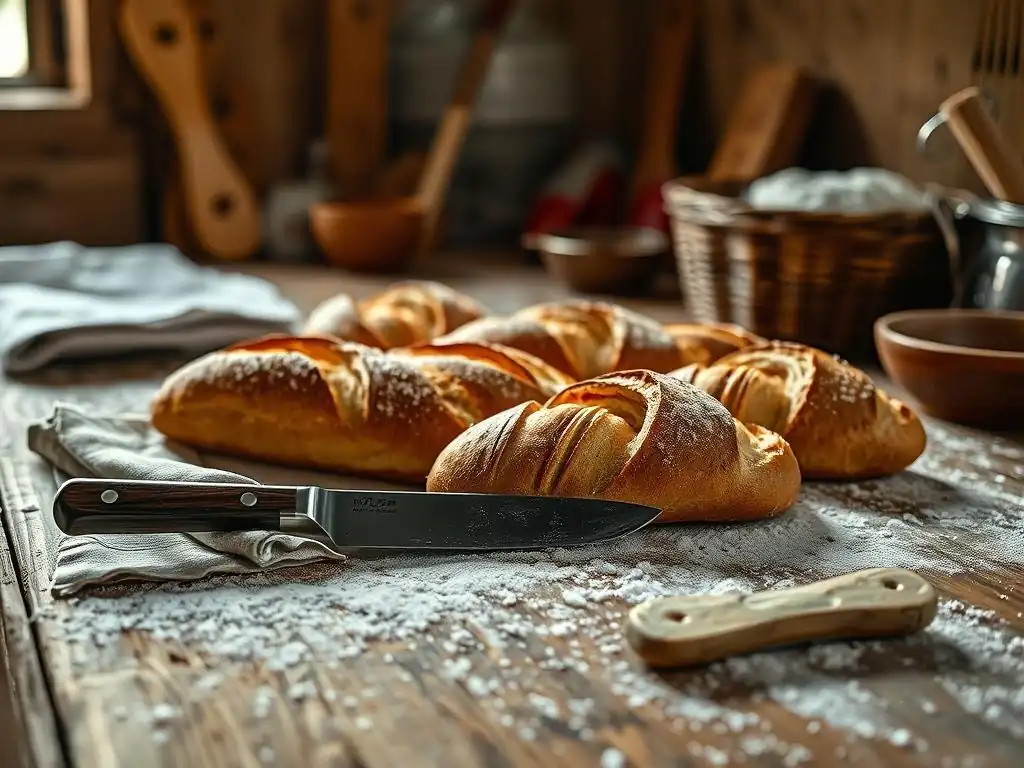
Welcome to BakeWithEase, where the joy of baking meets effortless execution! Ever wondered if your baguette could achieve that perfect, bakery-worthy crust? This guide dives deep into the essential world of baguette scoring tools, comparing the classic lame to the everyday knife. Discover which tool will unlock those coveted ears and elevate your bread baking game. Intrigued? Let's unlock the secrets to scoring success!
- Baguette Scoring Tools Guide: Lame vs. Knife for Perfect Baguettes
- Introduction to Baguette Scoring and its Importance
- Understanding Baguette Scoring Tools: Lame vs. Knife
- Lame vs. Knife: A Detailed Comparison for Baguette Scoring
- Achieving Different Baguette Scoring Patterns with Lame and Knife
- Step-by-Step Guide: Using a Lame for Baguette Scoring
- Tips and Tricks for Perfect Baguette Scoring
- Maintaining Your Baguette Scoring Tools
- Which Baguette Scoring Tool is Right for You? A Final Recommendation
- Conclusion: Mastering the Art of Baguette Scoring with the Right Tool
-
Frequently Asked Questions
- What is a lame and why is it recommended for scoring baguettes?
- Can I use a regular kitchen knife instead of a lame to score my baguette?
- What are the benefits of using a lame over a knife for scoring baguettes?
- What are some important factors to consider when choosing a lame for baguette scoring?
- How do I properly clean and maintain my lame to ensure its longevity and effectiveness?
- Final Reflection: The Art and Science of the Baguette Score
- Unleash Your Inner Boulanger: Master the Art of Baguette Scoring!
Baguette Scoring Tools Guide: Lame vs. Knife for Perfect Baguettes
Introduction to Baguette Scoring and its Importance
Why Scoring Matters for Baguettes: Achieving Optimal Oven Spring
Scoring, also known as slashing or gashing, is a critical step in the baguette baking process. It involves making shallow cuts on the surface of the dough just before it goes into the hot oven. These cuts aren't just for decoration; they serve a vital functional purpose. As the baguette dough is exposed to the intense heat of the oven, trapped gases inside expand rapidly, a phenomenon known as oven spring. Without score marks, the dough would likely burst unpredictably at its weakest point, resulting in an uncontrolled shape and a less desirable crust.
The precise cuts created by scoring provide predetermined weak points, directing the dough's expansion upwards and outwards along the slashes. This controlled expansion allows the baguette to achieve its maximum volume and characteristic shape. Furthermore, proper scoring helps develop the "grigne," which is the crispy flap of crust that forms along the edges of the cuts.
A well-developed grigne is a hallmark of a perfectly baked artisan baguette, contributing significantly to the texture and visual appeal, while also promoting even browning and caramelization of the crust during the Maillard reaction. Achieving a beautiful, consistent grigne is often the goal of mastering baguette scoring.
The Role of Scoring Tools in Baguette Baking Success
The quality and type of tool used for scoring have a direct impact on the success of your baguette's oven spring and final appearance. A clean, sharp cut is essential. A dull tool will drag or tear the delicate surface of the dough, causing it to snag and potentially collapse or expand unevenly. This can restrict oven spring and result in a dense crumb or a misshapen loaf with poor crust development.
Different tools offer varying degrees of sharpness, control, and ease of use, each influencing the precision and consistency of the scores you can make. Whether you're aiming for classic overlapping slashes, a single bold cut, or intricate decorative patterns, the right tool facilitates a swift, confident stroke that minimizes stress on the dough. Understanding the characteristics of popular baguette scoring tools, like the specialized lame or a sharp knife, is key to consistently producing beautiful loaves with excellent oven spring and a perfect crust.
Understanding Baguette Scoring Tools: Lame vs. Knife
What is a Baguette Lame? A Deep Dive
A lame (pronounced "lahm") is a specialized tool designed specifically for scoring bread dough. At its core, it's essentially a handle designed to hold a razor blade securely. The purpose of the handle is to provide a comfortable grip and better control over the angle and depth of the cut compared to holding a bare razor blade. Lames are favored by many professional bakers for their ability to deliver exceptionally sharp and clean cuts on dough, which is paramount for achieving optimal oven spring and a well-defined grigne.
The design of a lame allows the baker to make swift, precise incisions with minimal drag. Because they use standard, inexpensive razor blades, the cutting edge can be replaced frequently, ensuring you always score with a razor-sharp edge. This is particularly important for scoring high-hydration or sticky doughs, which are prone to tearing if the blade isn't perfectly sharp. The dedicated design of a lame makes it a purpose-built instrument for the delicate task of scoring.
Different Types of Lames: Straight, Curved, and Adjustable
Lames come in various forms, primarily distinguished by how they hold the razor blade. A straight lame holds the blade flat and is excellent for making straight, simple cuts, like a single slash down the center of a loaf or decorative geometric patterns. A curved lame, often the most popular choice for baguettes, holds the blade with a slight curve.
This curve helps the baker achieve the ideal shallow angle (typically around 20-30 degrees relative to the dough surface) needed for the classic overlapping slashes that encourage the formation of the grigne or "ear" on a baguette. The curved blade naturally leads the cut in a way that lifts the dough slightly as it slices.
Some modern lames are adjustable, allowing the baker to change the curvature of the blade from straight to significantly curved. This versatility can be appealing, allowing one tool to be used for different types of loaves and scoring patterns. Beyond the blade shape, lames also vary in handle material (wood, plastic, metal) and design, impacting ergonomics and durability. Selecting a type often comes down to personal preference and the specific scoring techniques you plan to use most often.
The Ergonomics of a Lame: Finding the Right Fit
The handle of a lame is designed to provide a secure and comfortable grip, which is essential for making confident and controlled cuts. Lame handles come in various materials and shapes, from simple plastic sticks to elegantly crafted wooden handles. A well-designed handle fits comfortably in your hand, allowing you to maneuver the blade precisely and maintain the correct angle throughout the scoring process. This is particularly important when scoring multiple baguettes or attempting intricate patterns.
The ergonomics of the lame directly influence your ability to execute consistent scores. A handle that feels too small, too large, or awkward can lead to hesitant cuts, uneven depth, or difficulty maintaining the correct angle, especially the crucial 20-30 degree angle needed for baguette grigne. Trying different styles or reading reviews about grip comfort can help you find a lame that feels like a natural extension of your hand, making the scoring process smoother and more successful.
Using a Knife for Baguette Scoring: Is it a Viable Option?
While a specialized lame is the preferred tool for many bakers, it is absolutely possible to score baguettes successfully using a very sharp knife or even a bare razor blade (with extreme caution). Before specialized lames became widely available, many bakers relied on straight razor blades or sharp knives. The key differentiator is the sharpness of the blade and the baker's skill in controlling it without the aid of a dedicated handle designed for scoring.
Using a knife requires a degree of precision and confidence to achieve the same clean, shallow cuts that a lame facilitates. It can be more challenging to maintain the shallow angle required for the grigne with a standard knife blade compared to a curved lame. However, for simple straight slashes or decorative patterns, a razor-sharp knife can perform admirably. It often comes down to having the right type of knife and ensuring its edge is meticulously maintained.
Types of Knives Suitable for Baguette Scoring
Not just any kitchen knife will do for scoring baguette dough. The blade must be incredibly sharp, ideally with a thin edge. A razor blade, held carefully between thumb and forefinger (use extreme caution! ), is essentially the cutting part of a lame and provides unparalleled sharpness. A utility knife with a fresh, sharp blade can also work well, offering a handle for slightly better control than a bare blade.
Some bakers successfully use a very small, razor-sharp paring knife, provided its edge is honed to perfection just before use. The critical factor regardless of the type is sharpness. A dull knife will inevitably drag and tear the dough, ruining the potential for a good grigne and even oven spring. Testing the blade's sharpness on a piece of paper (it should slice through cleanly without snagging) is a good indicator before attempting to score your precious baguette dough.
Knife Sharpening for Precise Baguette Cuts
If you opt to use a knife for baguette scoring, maintaining a razor-sharp edge is non-negotiable. Unlike lame blades which are disposable, a knife edge needs regular sharpening. Using a sharpening stone (like a combination 1000/6000 grit stone) to create a refined edge is ideal. A honing steel won't sharpen the blade but will realign the edge and should be used just before scoring.
The goal is an edge so fine that it can slice through the delicate, elastic surface of the dough effortlessly. A well-sharpened knife, while perhaps requiring more skill to angle correctly than a curved lame, can still produce beautiful, clean cuts. Neglecting sharpening, however, guarantees frustration and subpar scoring results, leading to torn dough and restricted expansion during baking.
Lame vs. Knife: A Detailed Comparison for Baguette Scoring
Cut Precision and Control: Lame vs. Knife
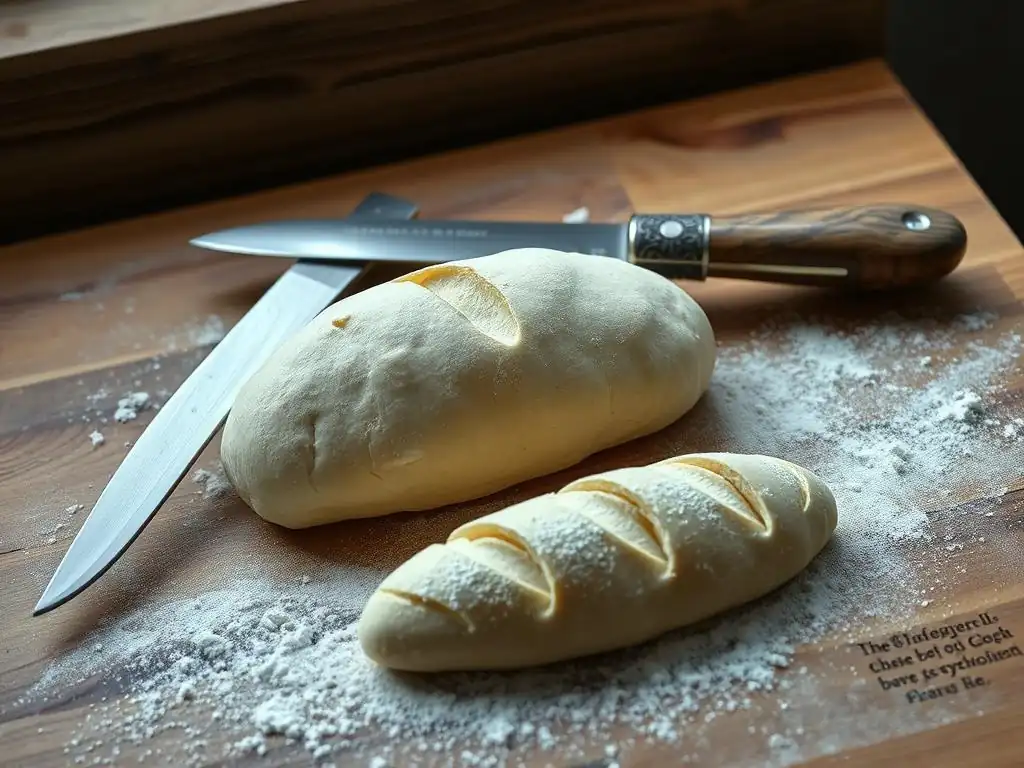
When it comes to achieving precise and controlled cuts, the specialized design of a lame often gives it an edge, especially for beginners or those aiming for the classic baguette grigne. A lame, particularly a curved one, is inherently designed to hold the razor blade at a shallow angle (around 20-30 degrees), which is crucial for creating the flap of dough that becomes the grigne. The handle provides stability and leverage, making it easier to execute swift, consistent strokes along the length of the baguette. This controlled angle and depth are vital for predictable oven spring.
Using a knife, while possible, requires more manual dexterity to maintain the correct angle and depth consistently. A standard knife blade isn't designed with a built-in curve or angle guide like a curved lame. This means the baker must consciously control the angle with their wrist and hand for every single cut. Achieving shallow, overlapping cuts for a classic grigne can be more challenging with a knife, as it's easier to accidentally cut too deep or too straight, which can hinder proper grigne formation and expansion.
Ease of Use and Learning Curve: Which Tool is More User-Friendly?
For many bakers, especially those new to scoring baguettes, a lame offers a gentler learning curve. The fixed or adjustable angle of the blade holder helps guide the user towards the correct technique. A curved lame, in particular, makes it almost intuitive to get the desired shallow, overlapping cuts for the grigne. The handle provides a secure grip, reducing the risk of slipping and making confident strokes easier.
Using a knife, conversely, generally requires more practice to master. Holding a bare razor blade demands extreme caution and a steady hand. Using a utility knife or paring knife requires the baker to develop the feel for the correct shallow angle and consistent depth without the aid of a specialized tool.
Beginners using a knife might find it harder to avoid tearing the dough or making cuts that are too deep or too vertical, which can negatively impact the final loaf shape. While skilled bakers can achieve excellent results with a knife, the initial steps are often easier with a dedicated lame.
Cost and Availability: Budget-Friendly Baguette Scoring Options
Considering cost, both options offer budget-friendly entry points. A basic plastic lame with a pack of razor blades can be purchased for a relatively low cost, often under $20 for the lame itself and replacement blades costing just pennies each when bought in bulk (e.g., a pack of 100 blades might cost less than $10). This makes maintaining a razor-sharp edge very economical. More elaborate wooden or adjustable lames can cost $20-$50 or more, but the ongoing cost of blades remains low.
If you already own a suitable, very sharp knife (like a utility knife or a high-quality paring knife you are willing to keep razor-sharp), using it for scoring might seem free. However, if you need to purchase a knife specifically for this purpose or invest in sharpening equipment (stones can cost $30-$100+), the initial outlay can be higher than a basic lame. The absolute cheapest method is often a bare single-edge razor blade, which costs minimal, but this method is the least safe and offers the least control.
Blade Maintenance and Longevity: Lame vs. Knife
Maintenance differs significantly between a lame and a knife used for scoring. With a lame, the blade is disposable. For optimal results, many bakers recommend using a fresh blade every few scoring sessions, or even for every batch of baguettes, especially if scoring multiple loaves. Replacing the blade is quick and easy. The lame handle itself requires minimal maintenance, just wiping it clean and storing it properly. A single handle can last for years.
A knife, on the other hand, requires regular sharpening to maintain the necessary razor edge. This involves using sharpening stones or other honing tools. While a high-quality knife blade can last for many years with proper care, the edge used for scoring needs attention before potentially every use to ensure it's sharp enough to slice through dough without dragging. The time and effort involved in sharpening a knife are greater than simply swapping out a razor blade on a lame.
Achieving Different Baguette Scoring Patterns with Lame and Knife
Classic Baguette Scoring Patterns: Épi, Grigne, and Simple Slash
Several classic scoring patterns are commonly applied to baguettes, each influencing the final look and expansion. The Simple Slash involves one or two long cuts running lengthwise down the baguette. This is perhaps the easiest to execute with either a lame or a very sharp knife, provided the cut is clean and at a shallow angle.
The Grigne pattern, the most iconic for baguettes, consists of multiple overlapping diagonal cuts along the top of the loaf. These cuts should overlap by about one-third to one-half of the previous cut, creating the potential for a beautiful "ear" or flap of crust to develop. A curved lame is particularly well-suited for achieving the correct angle and overlap for the grigne.
The Épi pattern, meaning "wheat stalk" in French, is created by making diagonal cuts down the sides of the loaf and pulling sections away slightly to resemble a wheat stalk. This pattern is often achieved using kitchen shears, but can also be done with a very sharp straight lame or knife point, making small, deep cuts and separating the dough. The choice of tool and technique directly impacts how cleanly these patterns form and how they expand in the oven.
Decorative Scoring Techniques: Wheat Stalk, Leaf Patterns, and Geometric Designs
Beyond the classics, bakers often use scoring for decorative purposes, transforming the baguette surface into a canvas. Techniques like the Wheat Stalk (different from the Épi, often a more stylized central cut with side embellishments), Leaf Patterns (multiple curved cuts resembling veins), or complex Geometric Designs require precision and control. These patterns often utilize straight blades or the very tip of a sharp knife or lame.
Creating intricate patterns demands a tool that allows for fine detail work and sharp points. A straight lame or a single-edge razor blade held carefully offers excellent precision for these designs. A utility knife with a fine point can also be effective. While a curved lame is ideal for the classic grigne, its curvature can make intricate straight or pointed cuts challenging. Decorative scoring requires a confident hand and a tool capable of executing small, deliberate incisions without tearing the dough.
How the Tool Affects the Final Look of Your Baguette
The tool you choose directly influences the quality of the cut, which in turn dictates the final appearance of your baguette. A clean, swift cut made with a razor-sharp tool (whether a lame or a knife) allows the dough to expand freely and predictably along the score line, resulting in a well-defined grigne and excellent oven spring. The edges of the cut will curl back cleanly, forming that desirable crispy flap.
Conversely, a hesitant or dull cut, often a risk with a knife that isn't sharp enough or a poorly handled tool, will drag and tear the dough surface. This ragged edge restricts controlled expansion. Instead of a clean grigne, you might get a messy, uneven burst, or the dough might not expand much at all along the score, leading to a less voluminous loaf with a less appealing crust texture and appearance. The tool is a facilitator; it enables the baker to make the precise cuts needed for the dough to perform optimally in the heat of the oven.
Step-by-Step Guide: Using a Lame for Baguette Scoring
Preparing Your Lame for Scoring
Before you begin scoring your proofed baguette dough, ensure your lame is ready. If it's a new lame or you haven't used it in a while, insert a fresh razor blade securely into the holder according to the manufacturer's instructions. For most lames, this involves carefully flexing the blade slightly to fit it into clips or a slot. If using a curved lame, ensure the blade is curved in the correct orientation – typically, the curve should help you achieve that shallow angle relative to the dough surface.
Always handle razor blades with extreme caution. Once the blade is secure, you might lightly flour the blade itself or the surface of the dough where you plan to score. This can help prevent the blade from sticking to very wet or sticky dough. Have your lame ready to go right next to your proofed baguettes, as timing is often critical – baguettes are typically scored just before loading into the hot oven.
Mastering the Angle and Depth of the Cut
The key to successful baguette scoring with a lame, especially for the classic grigne, lies in mastering the angle and depth of your cuts. Hold the lame at a shallow angle to the dough surface, ideally between 20 and 30 degrees. Imagine slicing under a thin layer of the dough's skin rather than cutting straight down. This shallow angle is what encourages the dough to peel back and form the grigne during oven spring.
The depth of the cut should be consistent, typically around 1/4 to 1/2 inch (about 0.5 to 1 cm) deep. Too shallow, and the dough might still burst elsewhere; too deep, and you risk collapsing the loaf or causing the grigne to be too large and brittle. Practice on scrap dough or even a piece of paper to get a feel for maintaining this shallow angle and consistent depth with a swift, confident stroke.
Creating Consistent Scores for Professional Results
To achieve the classic, professional look of overlapping slashes on a baguette, consistency is paramount. Start your first cut near one end of the baguette, holding the lame at the shallow 20-30 degree angle. Use a single, fluid motion to make the slash along the length of the loaf. For the next cut, overlap the previous cut by about one-third to one-half of its length, maintaining the same shallow angle and depth.
Continue this overlapping pattern down the length of the baguette, making typically 3 to 5 slashes depending on the length of the loaf. Each slash should be parallel to the others and overlap consistently. The goal is a series of uniform cuts that will open cleanly and evenly in the oven, creating a beautiful, continuous grigne. Practice helps build the muscle memory needed for this consistency.
Choosing the Right Knife and Preparing it for Scoring
If you're opting to use a knife for baguette scoring, your first and most critical step is selecting the right tool. You need a knife with an extremely sharp, thin blade. A dedicated single-edge razor blade (held with caution!) or a utility knife with a fresh blade are excellent choices. If using a paring knife, it absolutely must be honed to a razor edge just before you score. A dull knife will drag and tear the dough, leading to disastrous results.
Once you have your sharp knife, ensure it is clean. You might lightly flour the blade or the surface of the dough to help prevent sticking, especially with high-hydration dough. Have the knife ready to go immediately after proofing, as quick and confident cuts are key when using this tool.
Achieving Clean Cuts with a Knife: Techniques and Tips
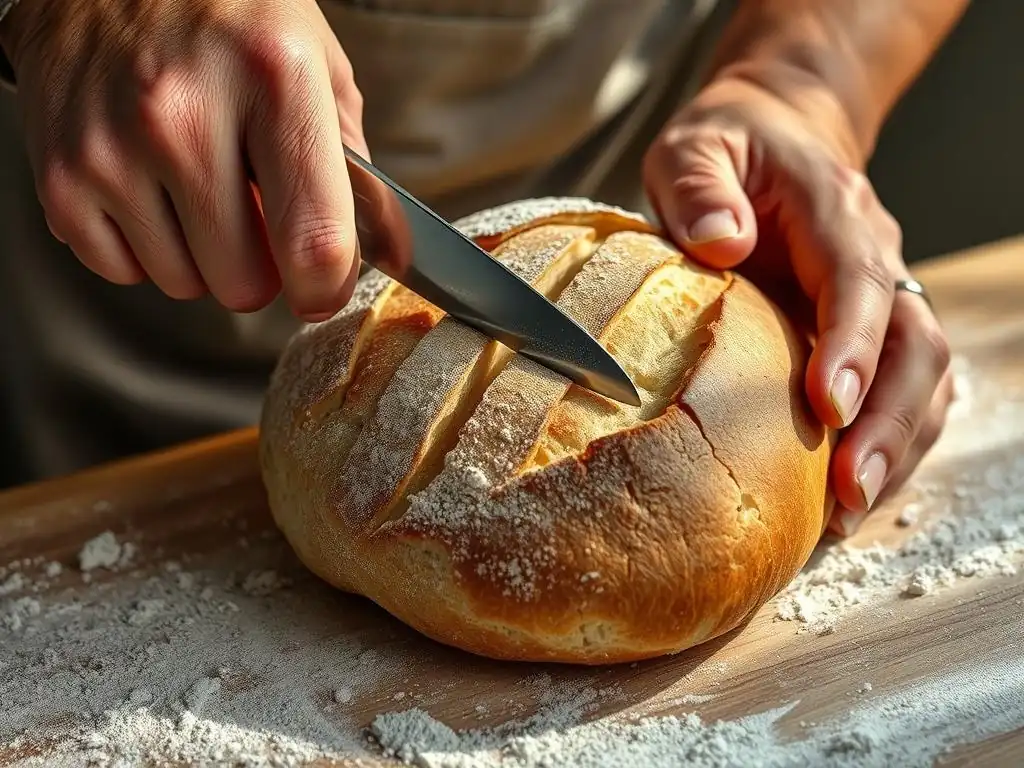
Achieving clean cuts with a knife requires technique and confidence. Just as with a lame, aim for a shallow angle relative to the dough surface, ideally around 20-30 degrees, especially if attempting the grigne pattern. Use a swift, decisive single stroke for each cut. Avoid sawing motions, as this will tear the dough.
Maintain a consistent depth, around 1/4 to 1/2 inch (0.5 to 1 cm). If scoring multiple overlapping slashes for a grigne, overlap each cut by about one-third to one-half of the previous one, keeping the angle and depth uniform. If the dough is particularly sticky, occasionally wiping the blade clean or reapplying a light dusting of flour can help maintain a clean cut.
Avoiding Tears and Uneven Scoring
Avoiding tears and uneven scoring is arguably more challenging with a knife than with a specialized lame, primarily due to the difficulty in consistently maintaining the correct shallow angle and the ease with which a slightly less-than-razor-sharp edge can snag. The absolute best defense against tearing is an incredibly sharp blade. If the knife drags even slightly when you attempt a cut, stop and sharpen it immediately.
Other factors include dough hydration and proofing (discussed later) and your technique. Be confident and swift with your stroke; hesitation can lead to dragging. Practice on less critical loaves or even play dough to get a feel for the required angle and pressure. If you find yourself consistently tearing the dough with a knife, it might be an indicator that a lame would be a more suitable tool for your needs or that your knife isn't sharp enough.
Tips and Tricks for Perfect Baguette Scoring
Dough Hydration and its Impact on Scoring
The hydration level of your baguette dough significantly affects how easy or difficult it is to score cleanly. Higher hydration doughs (those with a higher percentage of water relative to flour, often 70% or more) tend to be stickier and more extensible. While this contributes to a beautiful open crumb, it makes scoring more challenging as the dough is more prone to sticking to the blade and tearing. Scoring high-hydration dough requires a razor-sharp blade, a confident hand, and often a light dusting of flour on the dough surface or blade.
Lower hydration doughs (e.g., 60-65% hydration) are typically firmer and less sticky, making them easier to score cleanly. The surface holds its shape better, allowing the blade to glide through more smoothly. Understanding your dough's hydration and adjusting your technique (and ensuring maximum blade sharpness) accordingly is crucial for successful scoring, regardless of the tool you use.
Proofing and its Effect on Scoring Results
The proofing stage is another critical factor influencing scoring success. Dough that is proofed correctly – not under-proofed or over-proofed – is ideal for scoring. Under-proofed dough is too tight and elastic; when you try to score it, it resists the blade and springs back immediately, making it difficult to get a clean, deep enough cut.
Over-proofed dough, conversely, is too fragile and lacks structure. It might look puffy and soft. Attempting to score over-proofed dough can cause it to deflate or tear easily, and the cuts might not open properly in the oven. The "poke test" is a good indicator: gently press the dough with a floured finger.
If the indentation springs back immediately, it's under-proofed. If it springs back slowly, leaving a small indentation, it's likely proofed correctly. If the indentation remains fully, it's likely over-proofed. Scoring dough at its optimal proofing stage ensures the surface has the right tension to receive a clean cut and expand correctly.
Troubleshooting Common Scoring Problems: Dragging, Collapsing, and Uneven Expansion
Experiencing problems while scoring is common, but understanding the causes can help. Dragging or snagging of the blade is almost always due to a dull blade or sticky dough. Ensure your lame has a fresh blade or your knife is razor-sharp. Lightly flouring the dough or blade can help with sticky dough. A hesitant or slow stroke can also cause dragging; try a swifter, more confident motion.
Collapsing of the loaf after scoring often indicates the dough was over-proofed. The structure is too weak to withstand the pressure of scoring. Ensure you are proofing your baguettes correctly. Cutting too deeply or using too heavy a hand can also contribute to collapse, especially in delicate doughs. Uneven expansion can result from inconsistent scoring (uneven angle, depth, or overlap), under-proofing (some parts might be tighter than others), or uneven heat distribution in your oven. Review your scoring technique for consistency and ensure your oven is properly preheated and calibrated.
Maintaining Your Baguette Scoring Tools
Cleaning and Storing Your Lame
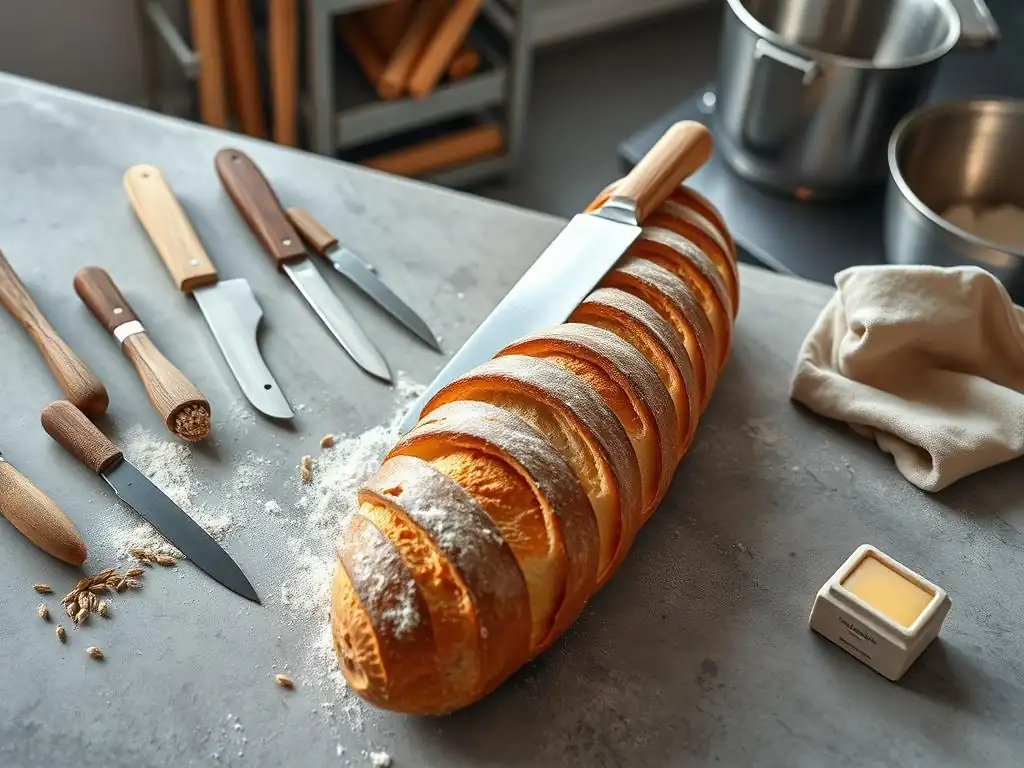
Proper maintenance of your lame ensures its longevity and keeps it ready for your next bake. After scoring, carefully wipe any dough residue off the razor blade using a clean cloth or paper towel. Be extremely cautious when handling the exposed blade. If the blade is dull or you've scored several loaves, carefully remove and dispose of the blade safely (e.g., in a dedicated blade disposal container or wrapped securely).
Store the lame handle in a dry place. If it's a wooden handle, avoid prolonged exposure to moisture. Many lames come with a protective cover for the blade when not in use; always utilize this for safety. Keeping the handle clean and dry prevents buildup and ensures it remains comfortable to grip.
For lames, the primary "sharpening" technique is simply replacing the disposable razor blade. Razor blades are designed for single or limited use in this context and are not typically sharpened. The low cost of replacement blades makes this the most practical approach to ensuring a razor-sharp edge every time you score.
For knives used for scoring, regular sharpening is essential. Use a sharpening stone appropriate for your knife's steel type, following the correct angle for your blade (often around 15-20 degrees per side for kitchen knives). Start with a coarser grit stone to establish the edge, then move to finer grits (like 3000 or 6000 grit) to refine it to a razor edge. Use a honing steel lightly just before scoring to realign the edge. A knife used for scoring needs to be significantly sharper than one used for chopping vegetables.
Extending the Lifespan of Your Scoring Tools
The lifespan of a lame handle is quite long with minimal care; avoiding harsh chemicals or excessive moisture is usually sufficient. The key to maintaining the effectiveness of a lame is the frequent replacement of its disposable blades. Using a fresh blade every few scoring sessions guarantees optimal performance.
For knives, extending their lifespan and effectiveness for scoring relies entirely on proper sharpening and storage. Always clean your knife immediately after use and store it safely in a block, on a magnetic strip, or with a blade guard to protect the edge. Regular sharpening prevents the edge from becoming too dull, which can make subsequent sharpening more difficult and shorten the overall life of the blade. Treat your scoring knife with care, dedicating time to sharpening, and it will serve you well.
Which Baguette Scoring Tool is Right for You? A Final Recommendation
Considering Your Skill Level and Baking Frequency
When choosing between a lame and a knife for your baguette scoring tools guide, consider your experience level and how often you bake baguettes. If you are a beginner or bake baguettes frequently and prioritize achieving the classic grigne with minimal frustration, a curved lame is often the recommended tool. Its design simplifies maintaining the correct shallow angle and encourages consistent overlapping cuts, making the learning process smoother.
If you are an experienced baker with excellent knife skills, or if you primarily make simple slashes or decorative patterns that don't require the specific angle of a curved grigne, a utility knife or even a bare razor blade (used with extreme caution) can be effective. However, be prepared for the necessity of maintaining a truly razor-sharp edge through regular sharpening. For occasional bakers who already own a very sharp knife, starting there might be sufficient before investing in a dedicated lame.
Choosing the Best Tool Based on Your Budget
Budget is another factor in your baguette scoring tools guide decision. The most budget-friendly option is typically a bare single-edge razor blade, costing very little but offering the least safety and control. A basic plastic lame with a pack of blades is a very affordable entry point, usually under $20, and provides significantly improved handling and safety over a bare blade. Replacement blades are also inexpensive.
If you already own a suitable knife and sharpening equipment, using the knife might seem like the free option. However, if you need to purchase a high-quality, sharp knife and sharpening stones, the initial cost could exceed that of a basic lame. For most home bakers looking for the best balance of performance and value specifically for baguette scoring, a curved lame offers excellent results for a modest investment.
Achieving Your Desired Baguette Aesthetics
Finally, consider the specific look you want for your baguettes. For the classic, prominent grigne or "ear" that lifts beautifully during oven spring, a curved lame is the tool of choice for many bakers. Its design facilitates the precise, shallow, overlapping cuts needed for this effect.
If you prefer simple straight slashes, intricate geometric patterns, or Épi cuts (often done with scissors but also possible with a straight blade), a straight lame or a razor-sharp utility knife or paring knife can be equally effective, or even preferred for certain detailed work. The tool should enable you to execute the specific scoring patterns you desire cleanly and confidently, allowing your baguettes to expand beautifully and achieve their intended aesthetic.
Conclusion: Mastering the Art of Baguette Scoring with the Right Tool
Mastering the art of baguette baking involves many steps, and scoring is undeniably one of the most visually impactful. A clean, confident score line is the baker's promise to the dough, guiding its transformation in the oven. While both a specialized lame and a razor-sharp knife can be used for scoring, this baguette scoring tools guide highlights their distinct advantages and challenges.
A lame, particularly a curved one, offers ease of use, consistent angle control, and the convenience of disposable razor-sharp blades, making it an excellent choice for achieving the classic baguette grigne, especially for beginners. A knife, while requiring more skill to maintain the precise angle and edge sharpness, can be effective for various patterns, particularly straight or intricate designs, provided it is truly razor-sharp.
Ultimately, the "right" baguette scoring tool depends on your skill level, budget, and the specific scoring patterns you aim to create. Whichever tool you choose, practice and a commitment to a razor-sharp edge are your best allies in achieving perfectly scored baguettes with beautiful oven spring and a stunning crust.
Frequently Asked Questions
What is a lame and why is it recommended for scoring baguettes?
A lame is a specialized scoring tool with a very sharp blade. It's recommended because it provides clean, precise cuts crucial for proper baguette oven spring and appearance.
Can I use a regular kitchen knife instead of a lame to score my baguette?
Yes, you can, but it's generally not recommended. A standard knife is often too thick and dull, leading to uneven scores and tearing of the dough.
What are the benefits of using a lame over a knife for scoring baguettes?
Using a lame offers better control and precision, resulting in more consistent scoring. This leads to improved oven spring, and a more aesthetically pleasing baguette.
What are some important factors to consider when choosing a lame for baguette scoring?
Consider the blade sharpness, handle comfort, and ease of blade replacement. A comfortable grip and a razor-sharp blade are essential for effective scoring.
How do I properly clean and maintain my lame to ensure its longevity and effectiveness?
Rinse the blade after each use and dry it thoroughly to prevent rusting. Store it in a safe place to protect the blade and prevent accidents.
Final Reflection: The Art and Science of the Baguette Score
The perfect baguette score is more than just aesthetics; it's the key to unlocking the bread's full potential. A crisp, beautifully expanded crust and a light, airy crumb are directly linked to the precision and technique used in scoring. This seemingly simple act is a crucial step in the baking process, impacting both the visual appeal and the overall eating experience.
The exploration of lame vs. knife scoring has revealed a fascinating interplay between tool, technique, and the resulting bread. It's a journey that transcends mere functionality, touching upon the artistry of baking and the connection between baker and bread. Baking is both science and art; it's a dance between precision and intuition.
This quote perfectly encapsulates the nuanced relationship between the scoring tool and the final product. The choice, ultimately, reflects the baker's personal style and their pursuit of perfection.
Consider your own baking journey. What tools do you currently use? What results have you achieved? I encourage you to experiment, to try both a lame and a knife, and to discover which tool best suits your style and helps you achieve your ideal baguette. The pursuit of the perfect score is an ongoing process, a testament to the enduring appeal of this classic bread and the joy found in the craft of baking. Embrace the challenge, and let your baguettes speak volumes about your dedication and skill.
Unleash Your Inner Boulanger: Master the Art of Baguette Scoring!
Thanks for diving into the world of baguette scoring with us! We hope you now feel confident in choosing the right tool – and technique – for perfectly crafted loaves. Ready to put your newfound knowledge to the test?
- Embrace the perfect score: Practice your chosen scoring method (lame or knife) on a few practice baguettes. Pay attention to the depth and consistency of your cuts.
- Share your creations: Post a photo of your masterpiece on social media and tag us @BakeWithEase – we'd love to see your baking journey!
- Experiment with different flours: Try different types of flour to see how it affects your scoring results. What unexpected textures and crusts can you create?
So, what amazing baguette creations will you bake next?