
Using PreFerments (Poolish/Biga) for Both Ciabatta and Rustic Bread

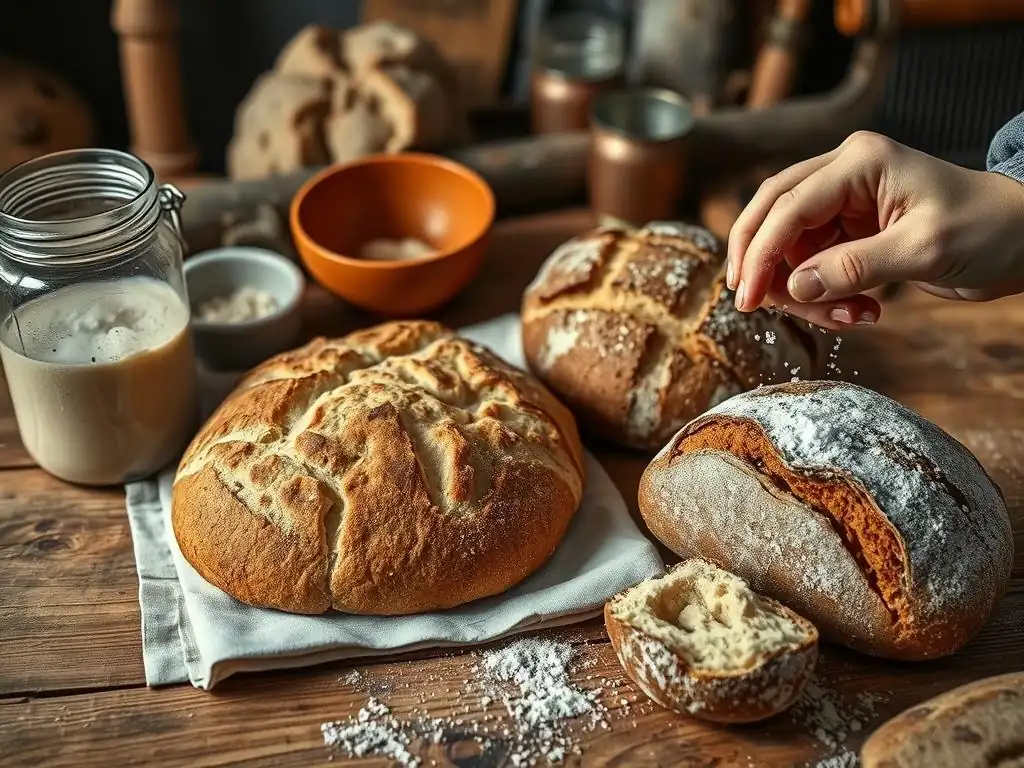
Welcome to BakeWithEase, your guide to unlocking the secrets of exceptional baking! Ever wondered how to achieve that perfectly airy crumb and complex flavor in your bread? This week, we're diving deep into the magic of preferments, specifically exploring how to create a stunning Preferment ciabatta rustic bread recipe using poolish or biga. Intrigued? Keep reading to discover the transformative power of this simple technique and elevate your bread baking skills to the next level!
- Using PreFerments (Poolish/Biga) for Ciabatta and Rustic Bread: BakeWithEase
- Understanding PreFerments: Poolish and Biga for Bread Baking
- PreFerment Ciabatta Recipe: Achieving Open Crumb and Flavor
- Rustic Bread Recipe with Biga: Enhancing Crust and Complexity
- Troubleshooting Your PreFerment Ciabatta and Rustic Bread
- PreFerment Ciabatta Rustic Bread Recipe: Variations and Tips
- Mastering Bread Baking with PreFerments: Conclusion
-
Frequently Asked Questions
- What exactly is a preferment and why is it used in baking?
- How does using a preferment impact the final texture of ciabatta or rustic bread?
- What's the difference between a poolish and a biga, and when should I use each?
- Can I use the same preferment (poolish or biga) for both ciabatta and rustic bread recipes?
- What are the key ingredients besides the preferment needed for a good ciabatta or rustic bread?
- Final Reflection: The Transformative Power of Preferments
- Unleash Your Inner Baker: Master Pre-Ferments!
Using PreFerments (Poolish/Biga) for Ciabatta and Rustic Bread: BakeWithEase
Understanding PreFerments: Poolish and Biga for Bread Baking
What is a PreFerment and Why Use It?
A preferment is essentially a portion of dough or batter that is mixed ahead of time and allowed to ferment for a period before being added to the final dough. It typically consists of flour, water, and a small amount of yeast.
The magic of a preferment lies in this initial fermentation phase, which develops complex flavors and aromas that would not be possible in a standard dough mixed and baked quickly. This preliminary step allows enzymes to break down starches into sugars, which yeast then consumes, producing organic acids and alcohols that contribute significantly to the bread's taste and texture.
Using a preferment is a technique favored by artisan bakers worldwide because it dramatically enhances the quality of the final loaf. It contributes to a more open crumb structure, a richer, more nuanced flavor profile, and often a better crust development. For recipes like a preferment ciabatta rustic bread recipe, this initial fermentation is crucial for achieving the signature characteristics of these breads – the airy, irregular holes of ciabatta and the deep, satisfying flavor of rustic loaves. It's a simple step that adds complexity without necessarily adding much difficulty to the overall process.
Poolish vs. Biga: Key Differences Explained
Poolish and Biga are two of the most common types of preferments, differing primarily in their hydration levels and fermentation times, which in turn affect their consistency and the characteristics they impart to the final bread. A Poolish is a very wet preferment, typically made with equal parts flour and water by weight, resulting in a batter-like consistency (100% hydration).
It usually incorporates a small amount of yeast and ferments for a relatively long period, often 12 to 16 hours at room temperature (around 70-75°F or 21-24°C), sometimes longer in the refrigerator. This high hydration and long, slow fermentation encourages significant enzymatic activity and contributes to a very open crumb structure and delicate flavor.
In contrast, a Biga is a much stiffer preferment, made with a lower hydration, usually between 50% and 65% water relative to the flour weight. It uses slightly more yeast than a Poolish and typically undergoes a shorter, more vigorous fermentation, often 12 to 24 hours at room temperature, or sometimes up to 48 hours or more in a cooler environment like a refrigerator.
The stiffer consistency of the Biga strengthens the gluten network more effectively during the prefermentation stage. This results in a preferment that provides excellent structure and chewiness to the final bread, making it particularly well-suited for rustic loaves and certain styles of ciabatta.
Benefits of Using PreFerments in Ciabatta and Rustic Breads
Incorporating a preferment into your ciabatta or rustic bread recipe offers a multitude of benefits that significantly elevate the final product. One of the most noticeable advantages is the improvement in flavor. The long fermentation process in the preferment allows for the development of complex organic acids and other compounds that contribute a depth and richness of flavor simply unattainable in a straight dough method. This slow development results in the characteristic tangy notes often desired in artisan breads.
Beyond flavor, preferments have a profound impact on the texture and structure of the bread. For ciabatta, a Poolish preferment is often used to help achieve its hallmark open, airy crumb structure with large, irregular holes. The high hydration of the Poolish contributes to a wetter final dough, which is key to this texture.
For rustic breads, a Biga can provide excellent structure and a chewy texture, alongside a robust crust. Both types of preferments also contribute to improved crust development, often resulting in a thinner, crispier crust, and extend the shelf life of the bread by increasing its acidity, which inhibits mold growth. Using a preferment ciabatta rustic bread recipe truly unlocks the potential of these classic loaves.
PreFerment Ciabatta Recipe: Achieving Open Crumb and Flavor
Ingredients for the Poolish Ciabatta PreFerment
To make a Poolish preferment for your ciabatta, you will need just three simple ingredients: flour, water, and a tiny amount of yeast. The key ratio for a Poolish is equal parts flour and water by weight, achieving 100% hydration. For a standard loaf or two, you might use:
- 200 grams (approx. 1 1/2 cups) strong bread flour (like King Arthur Bread Flour or similar high-protein flour)
- 200 grams (approx. 3/4 cup + 2 tbsp) lukewarm water (around 75-80°F or 24-27°C)
- 0.5 grams (about 1/8 teaspoon) instant dry yeast
Using a strong bread flour with a protein content of 12-14% is recommended as it provides the necessary gluten structure to support the high hydration. The small amount of yeast is crucial for a slow, controlled fermentation that develops maximum flavor over many hours. Ensure your water is lukewarm, not hot, as hot water can kill the yeast.
Preparing the Poolish PreFerment for Ciabatta: Step-by-Step
Making the Poolish is straightforward and requires minimal effort upfront. It's primarily a waiting game.
- Gather your ingredients and a medium-sized mixing bowl. A clear container is helpful to observe the fermentation activity.
- Measure the flour and water accurately by weight. Using a digital scale is highly recommended for precision, especially with high-hydration preferments.
- In the bowl, combine the water and the instant dry yeast. Stir gently to dissolve the yeast.
- Add the measured flour to the water/yeast mixture.
- Mix with a spoon or whisk until there are no dry clumps of flour and the mixture is smooth, like a thick batter. It doesn't need extensive kneading, just thorough mixing.
- Cover the bowl loosely with plastic wrap or a lid to prevent it from drying out.
- Let the Poolish ferment at room temperature (around 70-75°F or 21-24°C) for 12 to 16 hours, or until it is bubbly, has more than doubled in volume, and the surface is covered in bubbles, some of which may have popped. It should also have a pleasant, slightly alcoholic aroma. If your kitchen is warmer, it might be ready sooner; if cooler, it may take longer. You can also ferment it in the refrigerator for 24-48 hours after an hour or two at room temperature for an even slower, more complex development.
Ciabatta Dough Ingredients (Including Poolish)
Once your Poolish is ripe and ready, you'll combine it with additional ingredients to form the final ciabatta dough. The Poolish typically makes up a significant percentage of the total flour in the final dough, often 20-40% or even higher. Here's a typical set of ingredients for a preferment ciabatta rustic bread recipe:
- All of the prepared Poolish (approx. 400 grams)
- 300 grams (approx. 2 1/4 cups) strong bread flour
- 150-200 grams (approx. 1/2 to 3/4 cup) lukewarm water (adjust based on desired hydration and flour absorption)
- 10 grams (approx. 1 1/2 teaspoons) fine sea salt
- 2 grams (approx. 1/2 teaspoon) instant dry yeast (optional, can rely solely on Poolish yeast if active)
Note the additional water amount allows for a very wet dough, characteristic of ciabatta, often reaching 75-80% hydration relative to the total flour weight (including the flour in the Poolish). The optional yeast addition can help ensure a good rise, especially if the Poolish fermentation wasn't as vigorous as expected. Salt is crucial for flavor and gluten development.
Mixing and Shaping the Ciabatta Dough
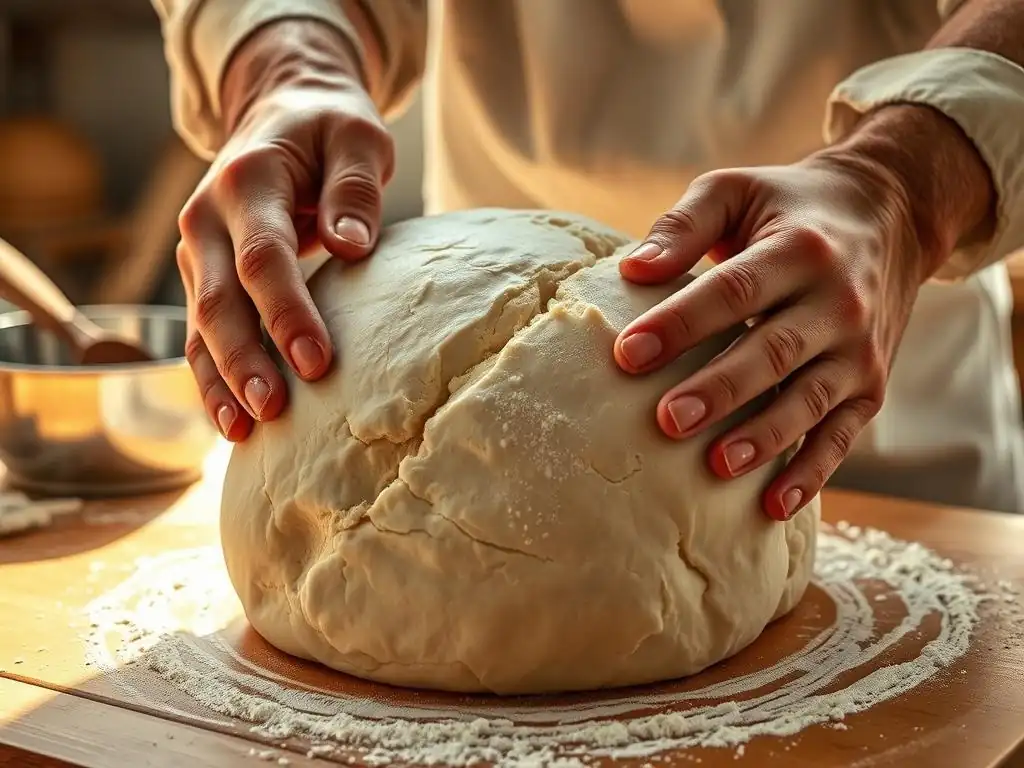
Mixing ciabatta dough is different from standard bread as it's very wet and not typically kneaded vigorously. The high hydration makes traditional kneading difficult.
- In a large mixing bowl, combine the ripe Poolish with the additional flour, water, salt, and optional yeast.
- Mix with a sturdy spoon or a dough whisk until just combined into a shaggy mass. There should be no dry flour pockets.
- Let the dough rest for 20-30 minutes (autolyse). This allows the flour to hydrate fully and gluten development to begin naturally.
- After the rest, perform a series of "stretch and folds" directly in the bowl every 30-45 minutes over the next 2-3 hours. To do this, wet your hands, grab one edge of the dough, gently stretch it upwards, and fold it back over the center. Rotate the bowl a quarter turn and repeat 3-4 times. This process builds gluten strength without traditional kneading. You should perform 4-5 sets of stretch and folds.
- After the stretch and folds, the dough should be smooth, elastic, and full of air bubbles. Let it proof in the covered bowl at room temperature for another 1-2 hours, or until it has significantly increased in volume and is very bubbly.
- Gently transfer the dough onto a well-floured surface. Be careful not to deflate it. Divide the dough into desired shapes (typically rectangular loaves) using a bench scraper, again, handling gently. Avoid excessive shaping or degassing.
Baking the Perfect Poolish Ciabatta
Baking ciabatta requires high heat and steam to achieve the signature crust and crumb.
- Preheat your oven with a baking stone or steel inside to a high temperature, typically 450-475°F (230-245°C), for at least 30-60 minutes. Place a baking tray or cast iron pan on the bottom rack for steam.
- Just before loading the bread, carefully pour about a cup of hot water into the preheated tray on the bottom rack to create steam.
- Carefully transfer the shaped ciabatta loaves onto parchment paper or a peel dusted with semolina or cornmeal.
- Slide the loaves onto the hot baking stone/steel.
- Bake for 20-25 minutes, or until the crust is golden brown and the internal temperature reaches 200-210°F (93-99°C). You may need to rotate the loaves halfway through baking for even browning.
- Cool the baked ciabatta on a wire rack completely before slicing. This allows the interior to set properly. Enjoy your delicious preferment ciabatta rustic bread recipe outcome!
Rustic Bread Recipe with Biga: Enhancing Crust and Complexity
Ingredients for the Biga Rustic Bread PreFerment
For a rustic bread with a chewy crust and complex flavor, a Biga preferment is an excellent choice. A Biga is much stiffer than a Poolish, typically using 50-65% hydration. For a loaf of rustic bread, you might prepare:
- 250 grams (approx. 1 3/4 cups + 2 tbsp) strong bread flour or Tipo 00 flour
- 150 grams (approx. 1/2 cup + 2 tbsp) cool water (around 60-65°F or 15-18°C)
- 0.75 grams (about 1/4 teaspoon) instant dry yeast
Using a flour with good gluten potential is beneficial for the Biga's structure. The lower hydration results in a crumbly, dough-like consistency rather than a batter. Slightly cooler water and a touch more yeast compared to a Poolish help manage the fermentation rate over the typical 12-24 hour period at room temperature or longer in the fridge.
Making the Biga PreFerment for Rustic Bread: A Simple Guide
Preparing a Biga is similar to making a very stiff dough.
- Measure your ingredients precisely using a scale.
- In a mixing bowl, combine the flour and yeast.
- Add the cool water to the dry ingredients.
- Mix with your hands or a sturdy spoon until all the flour is hydrated and a stiff, shaggy dough forms. It will be quite dry and crumbly initially. You may need to knead it lightly in the bowl for a minute or two just to bring it together into a cohesive mass. Avoid over-kneading at this stage.
- Cover the bowl tightly with plastic wrap or a lid.
- Allow the Biga to ferment at room temperature (around 70-75°F or 21-24°C) for 12 to 24 hours. It should visibly increase in volume, become more airy, and develop a pleasant, slightly nutty aroma. The surface might show some bubbles. For a longer, slower fermentation that develops more complex flavors, you can refrigerate the Biga for 24-48 hours after an hour or two at room temperature. The Biga should be fully mature and slightly domed or starting to flatten slightly on top when ready.
Rustic Bread Dough Ingredients (Including Biga)
The Biga will form the foundation of your rustic bread dough. Similar to ciabatta, the Biga will constitute a significant portion of the total flour. A common preferment ciabatta rustic bread recipe ratio might involve using 30-50% of the total flour in the Biga.
- All of the prepared Biga (approx. 400 grams)
- 400 grams (approx. 3 cups) strong bread flour
- 280-320 grams (approx. 1 cup + 3 tbsp to 1 1/3 cups) lukewarm water (adjust based on desired hydration, typically 70-80% total)
- 12 grams (approx. 2 teaspoons) fine sea salt
- 1 gram (approx. 1/4 teaspoon) instant dry yeast (optional, can rely solely on Biga yeast)
The hydration for the final dough, including the water in the Biga, will typically range from 70% to 80% or even higher, contributing to a moist crumb. The amount of additional water needed will depend on the hydration of your Biga and your target final dough hydration. Salt is essential for flavor and strength. A little extra yeast can be added for insurance if needed, but the Biga should provide plenty of leavening power.
Kneading and Proofing the Rustic Bread Dough
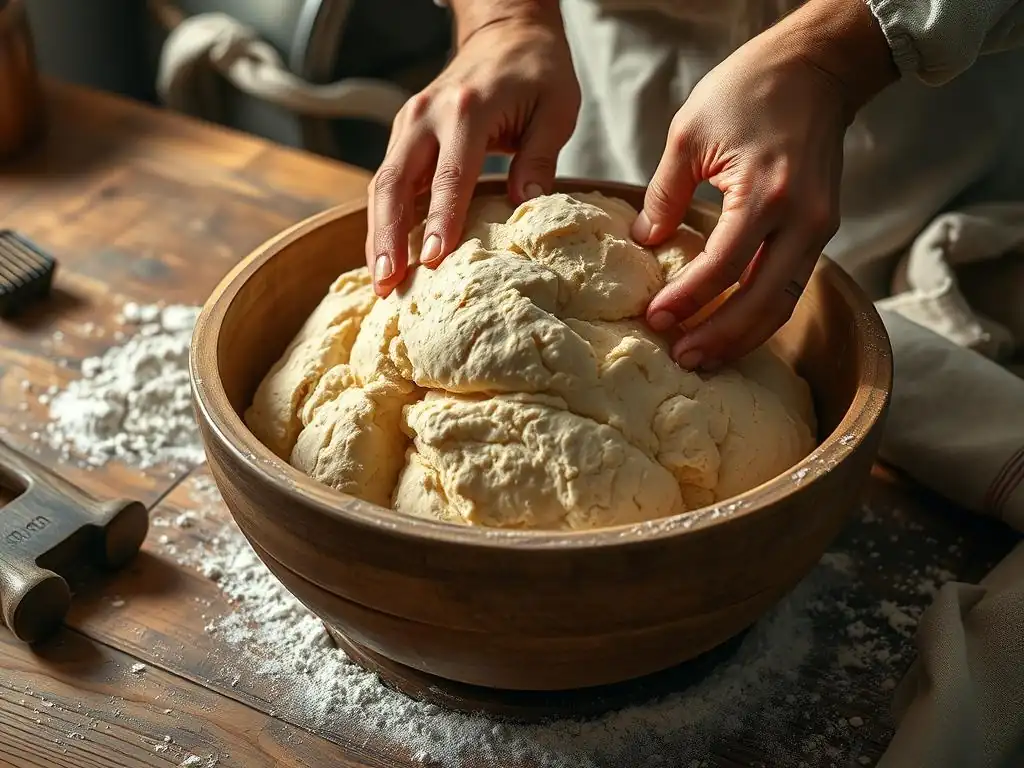
Rustic bread dough made with Biga is often less wet than ciabatta, allowing for more traditional kneading, though gentle handling is still key.
- In a large mixing bowl, break the mature Biga into smaller pieces and combine it with the additional flour, water, salt, and optional yeast.
- Mix until a shaggy dough forms. Turn the dough out onto a lightly floured surface.
- Knead the dough for 8-15 minutes, either by hand or using a stand mixer with a dough hook, until it is smooth, elastic, and passes the windowpane test (a small piece can be stretched thin enough to see light through without tearing).
- Place the kneaded dough in a lightly oiled bowl, cover, and let it bulk ferment at room temperature (70-75°F or 21-24°C) for 1.5 to 2.5 hours, or until it has nearly doubled in volume and is bubbly.
- Gently turn the dough out onto a lightly floured surface. Shape the dough into your desired rustic loaf shape (round boule or oval batard). Avoid degassing the dough excessively.
- Place the shaped dough into a proofing basket (banneton) or on a baking sheet lined with parchment paper, seam-side up if using a banneton. Cover and let proof for 1-1.5 hours at room temperature, or until it is puffy but springs back slowly when gently poked. Alternatively, you can cold proof in the refrigerator for 8-16 hours for additional flavor development and easier handling.
Baking the Rustic Bread with Biga
Baking rustic bread often involves high heat and steam to achieve a deep golden crust and excellent oven spring.
- Preheat your oven with a baking stone or Dutch oven inside to a high temperature, usually 450-475°F (230-245°C), for at least 30-60 minutes. If using a stone, prepare for steam as described in the ciabatta section (water in a tray). If using a Dutch oven, preheat it with the lid on.
- If using a stone, create steam just before loading. If using a Dutch oven, carefully remove the hot lid.
- Gently transfer the proofed dough to the baking surface (stone or Dutch oven). If using a banneton, invert it onto the stone or into the Dutch oven. Score the top of the loaf with a sharp knife or razor blade (lame).
- If baking on a stone, bake with steam for the first 15-20 minutes, then remove the steam source and continue baking. If using a Dutch oven, bake covered for the first 20-25 minutes.
- Remove the lid from the Dutch oven (if used) and continue baking for another 20-30 minutes, or until the crust is a deep golden brown and the internal temperature reaches 200-210°F (93-99°C).
- Cool the rustic bread on a wire rack completely before slicing to allow the crumb to set. This preferment ciabatta rustic bread recipe using Biga yields a loaf with fantastic chew and flavor.
Troubleshooting Your PreFerment Ciabatta and Rustic Bread
Common Issues with Poolish and Biga
Working with preferments can sometimes present challenges, but most are easily overcome with a little understanding of the process. One common issue is an inactive or under-fermented preferment. This usually happens if the yeast was old, the water temperature was too hot or cold, or the fermentation time/temperature wasn't sufficient. A ripe Poolish or Biga should be visibly active, bubbly, and have a pleasant, slightly sweet or alcoholic aroma, not smell like acetone (over-fermented). If it's sluggish, try moving it to a warmer spot or giving it a little more time.
Another issue can be an over-fermented preferment. If your Poolish has collapsed significantly or smells strongly of acetone, it may be past its peak. While often still usable, it might result in a less vigorous final rise and a slightly sourer flavor. For a Biga, over-fermentation can lead to it becoming too soft or even liquidy.
To avoid this, especially in warm environments, consider reducing the yeast quantity slightly or using cooler water. Alternatively, refrigerating the preferment for part of its fermentation cycle can slow things down effectively. Understanding the visual and aromatic cues of a ripe preferment is key to success with any preferment ciabatta rustic bread recipe.
Adjusting Hydration in PreFermented Doughs
Achieving the correct hydration level is critical, especially for ciabatta with its characteristic open crumb, but also important for the chewiness of rustic bread. The hydration of the final dough is the total weight of water divided by the total weight of flour (including the water and flour in the preferment). Factors like the type of flour used (different flours absorb water differently – high-protein bread flour absorbs more than all-purpose), ambient humidity, and even the ripeness of the preferment can affect how much water the dough needs.
If your dough feels too stiff during mixing or stretch and folds for a high-hydration bread like ciabatta (which should be very wet and difficult to handle traditionally), you can gradually add a tablespoon or two of extra water until the desired consistency is reached. Conversely, if the dough feels too slack and isn't developing strength during stretch and folds, it might be over-hydrated for the flour used.
In this case, you can try adding a small amount of additional flour (a tablespoon at a time) during the initial mixing or the first set of stretch and folds, though this is less ideal as it disrupts the ratio. Practice and observing how the dough feels are the best ways to learn to adjust hydration.
Achieving the Desired Crust and Crumb
The crust and crumb are hallmarks of great artisan bread, and preferments play a significant role in developing them. For an open crumb in ciabatta, ensure your Poolish is very active, use high hydration in the final dough (75-85% or higher), handle the dough gently during mixing, stretch and folds, and shaping to preserve gas bubbles, and bake at high heat with plenty of steam. Steam keeps the crust soft initially, allowing the dough to expand fully before the crust sets, leading to a larger rise and more open structure.
For a chewy crust on rustic bread made with Biga, aim for a well-developed gluten structure through sufficient kneading (but not over-kneading), proper proofing, and high-heat baking. The Biga contributes to strength and flavor. Achieving a good crust also relies on high baking temperatures and steam, particularly in the first part of the bake.
Baking in a Dutch oven is an excellent way to trap steam and ensure a robust, dark, and chewy crust. For both types of bread in a preferment ciabatta rustic bread recipe, cooling the bread completely on a wire rack is essential for the internal crumb structure to stabilize and the crust to become properly crisp.
PreFerment Ciabatta Rustic Bread Recipe: Variations and Tips
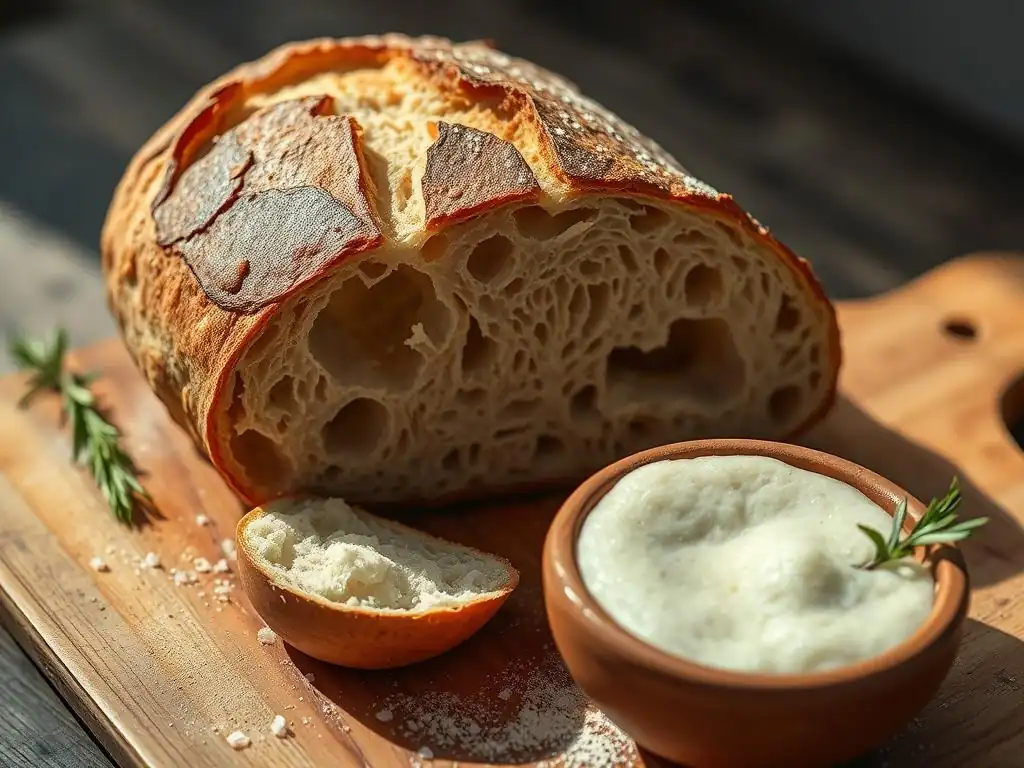
Exploring Different Flours for PreFerments
While strong bread flour is a standard choice for both Poolish and Biga due to its high protein content which supports gluten development, experimenting with different flours can add unique characteristics to your preferment ciabatta rustic bread recipe. Using a portion of whole wheat flour (e.g., 10-20%) in your Poolish or Biga can add nutty flavors and improve the nutritional profile, though it might absorb more water, requiring slight hydration adjustments.
For a lighter, more delicate crumb in ciabatta, some bakers incorporate Italian Tipo 00 flour, known for its fine texture and moderate protein, into the final dough or even the Poolish itself.
Rye flour can also be used in small amounts in a preferment, particularly for rustic loaves, adding tanginess and complexity. However, rye behaves differently than wheat flour as it has less gluten-forming potential, so it's usually used as a smaller percentage (e.g., 5-15%) of the total flour in the preferment or final dough.
The key is to understand how different flours absorb water and affect fermentation activity. Starting with a reliable strong bread flour is recommended when first learning how to use a preferment ciabatta rustic bread recipe, then gradually introducing other flours once you are comfortable with the basic technique.
Adding Flavors to Your Ciabatta and Rustic Bread
Adding flavor enhancers can transform a basic preferment ciabatta rustic bread recipe into something truly special. These can be incorporated into the final dough mix. Roasted garlic, fresh herbs like rosemary or thyme, or olives are classic additions to ciabatta. For rustic breads, nuts (like walnuts or pecans), seeds (such as sunflower or pumpkin seeds), or dried fruits (like cranberries or figs) work wonderfully.
Ingredients like cheese (parmesan or chunks of cheddar), sun-dried tomatoes, or even spices can also be folded into the dough during the stretch and folds or shaping stage. When adding inclusions, consider their moisture content; wet ingredients might require slightly less added water in the dough. It's often best to add inclusions towards the end of the mixing or during the first set of stretch and folds to avoid inhibiting gluten development. Start with small amounts, perhaps 5-10% of the total flour weight in additions, and adjust in future bakes based on your preference.
Storing and Using Leftover PreFerments
Sometimes you might have leftover preferment if you scaled down a recipe or made a bit extra. While preferments are best used at their peak ripeness, they can often be stored for a short period. A Poolish or Biga that has fully ripened at room temperature can typically be stored in the refrigerator for up to 24-48 hours. The cold temperature significantly slows down the fermentation process.
When you're ready to use a refrigerated preferment, it's a good idea to take it out of the fridge an hour or two before mixing the final dough to allow it to warm up slightly. This helps the yeast become active again. While the flavor might continue to develop in the fridge, the leavening power might slightly decrease over extended cold storage.
If a refrigerated preferment seems less active, you might consider adding a small amount of extra yeast to your final dough to ensure a good rise. Using a stored preferment can still contribute significant flavor to your next preferment ciabatta rustic bread recipe bake.
Mastering Bread Baking with PreFerments: Conclusion
Why PreFerments Elevate Your Ciabatta and Rustic Bread Recipes
Mastering the use of preferments like Poolish and Biga is a game-changer for any home baker aspiring to create artisan-quality bread. These simple mixtures of flour, water, and yeast, prepared in advance, are the secret ingredient behind the complex flavors, airy textures, and beautiful crusts found in the best ciabatta and rustic loaves. The long fermentation process in the preferment allows enzymes and yeast to work slowly, developing organic acids and aromatic compounds that simply don't have time to form in a rapid, straight-dough method. This contributes a depth and nuance of flavor that is truly unparalleled.
Furthermore, preferments contribute significantly to the structure and texture of the bread. A high-hydration Poolish encourages the open, irregular crumb characteristic of authentic ciabatta, while a stiffer Biga provides strength and chewiness for rustic loaves. Both types of preferments also contribute to improved crust development and can even help extend the shelf life of your bread.
By incorporating a preferment ciabatta rustic bread recipe into your baking routine, you're not just following a recipe; you're engaging with a time-honored technique that transforms simple ingredients into loaves with character, depth, and irresistible appeal. It's a rewarding step on the path to becoming a more accomplished bread baker.
Frequently Asked Questions
What exactly is a preferment and why is it used in baking?
A preferment, like poolish or biga, is a fermented dough starter made before the main dough. It's used to enhance the flavor, texture, and shelf life of breads like ciabatta and rustic bread by predigesting starches and developing complex flavors.
How does using a preferment impact the final texture of ciabatta or rustic bread?
Preferments contribute to a more open and airy crumb structure. The increased fermentation time allows for greater gas production, resulting in the characteristic large holes found in ciabatta and rustic bread.
What's the difference between a poolish and a biga, and when should I use each?
Poolish is typically a wetter preferment (equal parts flour and water) while biga is drier. Poolish often yields a slightly tangier flavor, while biga can contribute to a chewier texture.
Can I use the same preferment (poolish or biga) for both ciabatta and rustic bread recipes?
Yes, you generally can. The specific hydration and quantity of the preferment might need slight adjustments depending on the final recipe, but the same type of preferment works well for both.
What are the key ingredients besides the preferment needed for a good ciabatta or rustic bread?
Beyond the preferment, you'll need high-quality flour, water, salt, and sometimes a touch of yeast in the main dough. The quality of the flour significantly impacts the gluten development and final texture.
Final Reflection: The Transformative Power of Preferments
The subtle art of using preferments like poolish and biga isn't just a baking technique; it's a gateway to unlocking unparalleled flavor and texture in your bread. Mastering these methods elevates both ciabatta and rustic loaves from good to extraordinary, proving that sometimes, the most impactful changes come from the smallest, most patient steps. This is particularly relevant today, as home bakers increasingly seek to elevate their skills and create artisan-quality bread in their own kitchens.
The journey of exploring preferments has been a deeply rewarding one for me. It's not just about the improved crumb structure and that delightful tang; it's about understanding the fundamental chemistry of fermentation and how it impacts the final product. Patience is a virtue, especially in baking.
This simple adage perfectly encapsulates the essence of working with preferments – the slow, deliberate process yields results far surpassing the speed of a quick, direct method. The subtle nuances in flavor and texture are a testament to the time invested, a reward that resonates far beyond the simple act of eating.
Now, it's your turn. Consider the possibilities: the airy pockets of a perfectly executed ciabatta, the robust chew of a rustic loaf, all achievable through the mindful application of a preferment. Don't be intimidated by the extra steps; embrace the process, experiment with different hydration levels, and discover the unique character that each preferment brings to your bread. The journey of mastering preferments is a continuous one, filled with learning, experimentation, and the undeniable satisfaction of creating something truly special. So, gather your ingredients, and let the magic of fermentation begin.
Unleash Your Inner Baker: Master Pre-Ferments!
Thanks for taking the time to explore the world of poolishes and bigas! You've just unlocked a secret to creating incredible ciabatta and rustic loaves. Ready to put your new knowledge into practice?
- Bake your best bread yet: Start with a simple poolish today and experience the difference a pre-ferment makes in your next loaf. You’ll be amazed!
- Share your sourdough journey: Snap a picture of your beautiful, airy bread and share it with us on social media – we’d love to see your creations! Use #BakeWithEasePreFerments
- Dive deeper into sourdough: Explore our other articles on sourdough techniques for even more baking inspiration.
What unique flavor will your pre-fermented bread reveal? Let's hear about it in the comments below!