
Advanced Keto Techniques: Whipping Egg Whites to Stiff Peaks

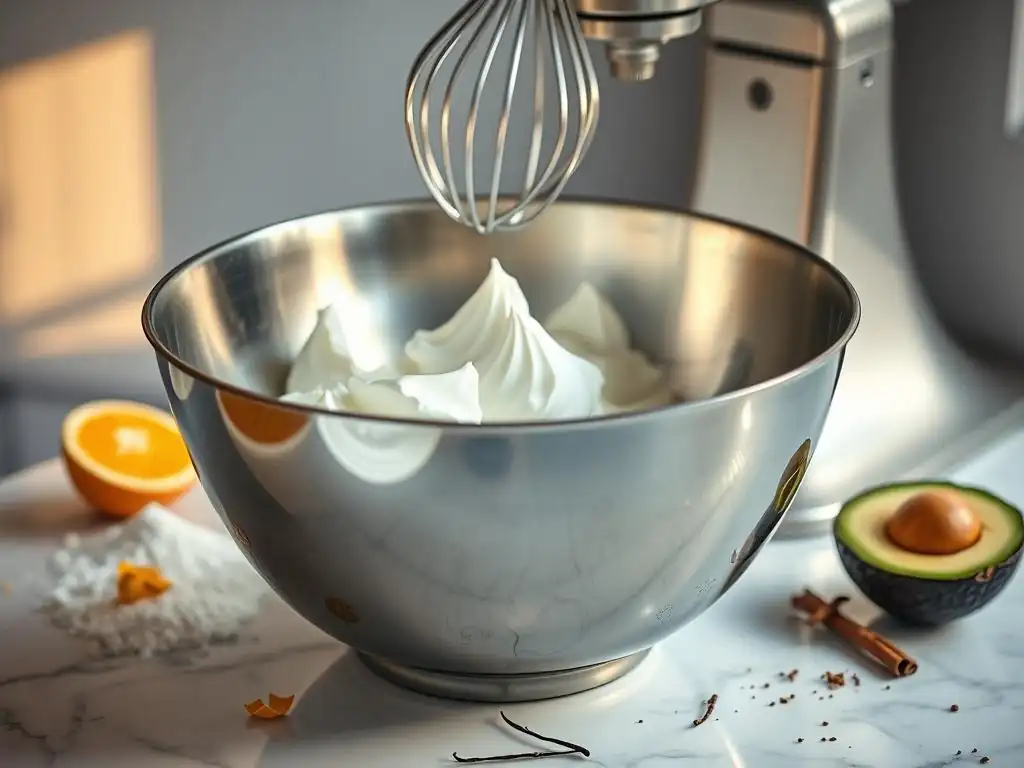
Welcome to BakeWithEase, your shortcut to baking bliss!
Are you ready to unlock the secrets to perfectly airy keto creations? Dive in to discover advanced Keto egg white whipping tips that will revolutionize your low-carb baking. Forget flat, dense desserts – we’ll show you how to achieve stiff peaks and light-as-air textures, even without the sugar. Curious how it's done? Let's get started!
- Introduction to Keto Baking and Egg Whites
-
Mastering the Art of Whipping Egg Whites on Keto: A Step-by-Step Guide
- Preparing for Success: Essential Tools and Ingredients
- Step 1: Separating Eggs Effectively
- Step 2: Ensuring Clean and Grease-Free Equipment
- Step 3: The Importance of Chilled Egg Whites
- Step 4: Selecting the Right Mixer Speed
- Step 5: Identifying the Stages: From Foamy to Stiff Peaks
- Step 6: Stabilizing Egg Whites: Cream of Tartar and Alternatives
- Keto Egg White Whipping Tips: Achieving Perfect Stiff Peaks
- Advanced Techniques for Keto Egg White Recipes
- Storing and Using Leftover Whipped Egg Whites in Keto Baking
- Conclusion: Enhancing Keto Baking with Perfectly Whipped Egg Whites
-
Frequently Asked Questions
- How does keto baking differ from traditional baking when it comes to whipping egg whites?
- What are some common problems people face when whipping egg whites for keto recipes?
- Can I use any type of sweetener when whipping egg whites for a keto meringue?
- What temperature should my egg whites be for optimal whipping results in a keto recipe?
- What are some tips for preventing my keto meringue from weeping (leaking liquid)?
- Final Reflection: Mastering the Art of Keto Egg White Whipping
- Unlock Your Keto Baking Potential!
Introduction to Keto Baking and Egg Whites
The Role of Egg Whites in Keto Baking
In the realm of keto baking, where traditional flour and sugar are largely off-limits, egg whites become an indispensable ingredient. Their unique composition, primarily protein and water, allows them to transform into a light, airy foam when whipped.
This foam is crucial for providing structure and lift to baked goods without relying on leavening agents like baking powder or yeast, which can sometimes contain unwanted starches or behave unpredictably in low-carb environments. Understanding the fundamental role of egg whites is the first step in mastering advanced keto techniques, particularly when aiming for delicate textures in treats like keto meringues or cloud bread.
Beyond leavening, egg whites contribute minimal carbohydrates and fats, aligning perfectly with the macronutrient goals of a ketogenic diet. They act as a binder and stabilizer, helping to hold together ingredients that might otherwise be crumbly in a keto context. For instance, in a keto almond flour cake, incorporating properly whipped egg whites can significantly improve the crumb structure and prevent density, resulting in a lighter, more palatable dessert that feels closer to its traditional counterpart. This makes learning the best keto egg white whipping tips essential for expanding your repertoire of delicious low-carb baked goods.
Why Whipping Egg Whites is Crucial for Keto Baking
Whipping egg whites introduces air bubbles into the protein structure, dramatically increasing their volume and creating a stable foam. This aeration is the primary mechanism for leavening many keto recipes that require a light texture. Without properly whipped egg whites, dishes intended to be airy and delicate, such as a keto chocolate soufflé or a low-carb lemon meringue pie filling, would fall flat and dense. The goal is to create a foam with sufficient stability to hold its shape and support other ingredients during mixing and baking.
Achieving stiff peaks is particularly important in keto baking because many keto-friendly flours, like almond or coconut flour, are denser and heavier than wheat flour. They don't possess the same gluten structure to trap gases and provide lift. Therefore, the lift must come from another source, and perfectly whipped egg whites are often the answer. Mastering keto egg white whipping tips ensures you can consistently produce the necessary volume and stability, turning potentially heavy keto batters into delightfully light and airy creations. This skill is foundational for anyone serious about achieving excellent results in their low-carb baking adventures.
Understanding the Science of Egg White Foam
The magic of whipping egg whites lies in the denaturation of their proteins, primarily albumin. When mechanical force (whipping) is applied, the proteins unfold and rearrange themselves around the air bubbles being incorporated. These denatured proteins then bond with each other, creating a network that traps the air, forming a stable foam. The more you whip, the tighter this protein network becomes, and the smaller the air bubbles get, resulting in a finer, more stable foam capable of forming stiff peaks.
Several factors influence this process. Temperature affects protein behavior; slightly warmer egg whites (room temperature) whip faster and to a greater volume, but chilled egg whites often yield a more stable foam, which can be beneficial for beginners seeking consistent keto egg white whipping tips.
Fat is the enemy of egg white foam; even a tiny amount can prevent the proteins from bonding effectively, leading to a weak, unstable structure. Acids, like cream of tartar or lemon juice, help stabilize the foam by strengthening the protein network, making them valuable additions when aiming for robust stiff peaks for your keto recipes.
Mastering the Art of Whipping Egg Whites on Keto: A Step-by-Step Guide
Preparing for Success: Essential Tools and Ingredients
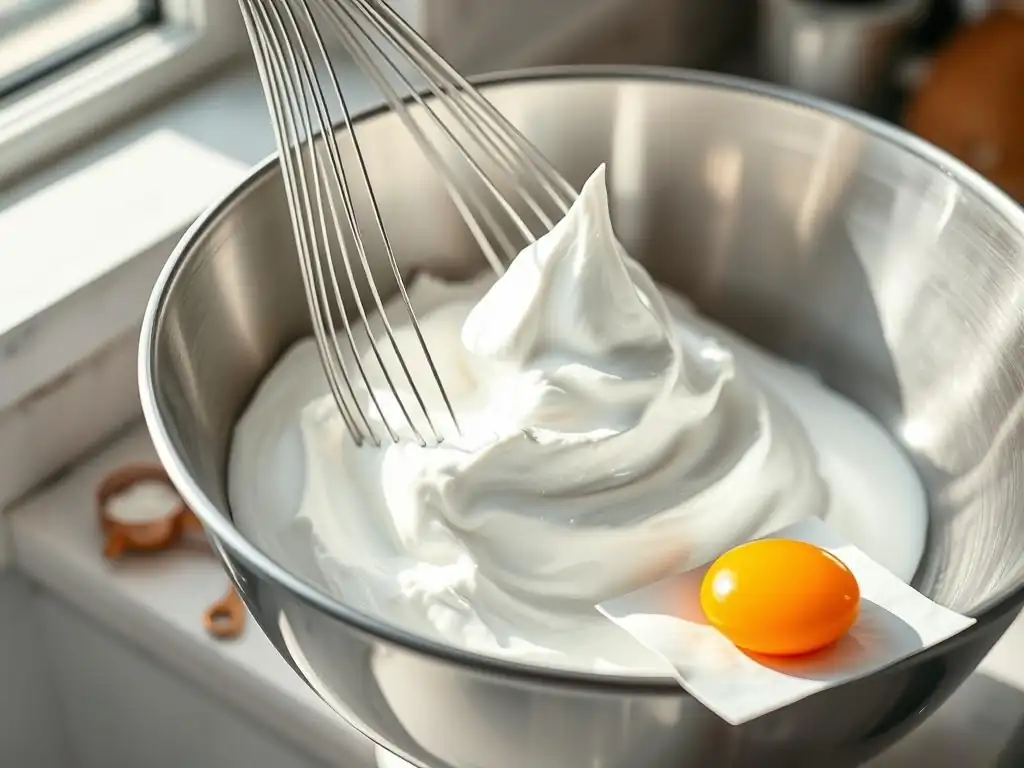
Success in whipping egg whites for keto recipes starts with proper preparation. You will need fresh, high-quality eggs. While room temperature eggs whip faster, many find slightly chilled eggs (straight from the refrigerator, around 4°C or 40°F) are easier to separate cleanly, minimizing the risk of yolk contamination.
The key tools are a clean, dry bowl and a whisk or electric mixer. Glass or metal bowls are preferred over plastic, as plastic can retain grease residue. A stand mixer with a whisk attachment offers the most consistent results and is ideal for larger quantities, while a hand mixer or even a balloon whisk can work for smaller batches.
Beyond the eggs and equipment, consider a stabilizing agent. Cream of tartar is standard, typically used at a ratio of about 1/8 teaspoon per large egg white. Lemon juice or white vinegar can also serve as acidic stabilizers, using about 1/4 teaspoon per large egg white.
A pinch of salt is sometimes added at the beginning of whipping; it helps break down the protein structure initially, allowing the whites to whip faster, though it doesn't contribute to stability at the stiff peak stage. Having these ingredients measured and ready before you begin is a crucial keto egg white whipping tip for ensuring a smooth process.
Step 1: Separating Eggs Effectively
Separating egg whites from yolks is perhaps the most critical step, as even a trace of yolk (which contains fat) can ruin your efforts to achieve stiff peaks for keto baking. Start with chilled eggs, as the yolks are firmer and less likely to break. Have three bowls ready: one for the whites, one for the yolks, and a small "transfer" bowl. Crack the egg over the transfer bowl. Gently pass the yolk back and forth between the two shell halves, allowing the white to fall into the transfer bowl.
Once the white is completely separated, pour it into your main bowl designated for whipping egg whites. This technique, using the transfer bowl, is a vital keto egg white whipping tip because it ensures that if you accidentally break a yolk, only that single white is contaminated, and you haven't ruined the entire batch of whites already in your main bowl. Repeat this process for each egg, adding only clean whites to the main whipping bowl and placing the yolks in their separate bowl for later use in other recipes (like keto custards or sauces).
Step 2: Ensuring Clean and Grease-Free Equipment
As mentioned earlier, fat is the nemesis of perfectly whipped egg whites. Any trace of grease on your bowl or whisk can prevent the proteins from forming the necessary stable network, making it impossible to achieve stiff peaks suitable for keto recipes. Therefore, ensuring your equipment is impeccably clean and grease-free is non-negotiable. Wash your bowl and whisk thoroughly with hot, soapy water.
After washing, it's highly recommended to wipe down the inside of your bowl and the whisk attachment with a paper towel dipped in a bit of vinegar or lemon juice. This acidic wipe helps to cut through any lingering invisible grease film and provides an extra layer of assurance. Let the equipment air dry completely or dry it with a clean, lint-free towel. Taking this extra step is a simple yet incredibly effective keto egg white whipping tip that can save you frustration and ensure successful aeration every time.
Step 3: The Importance of Chilled Egg Whites
While some traditional baking texts suggest room temperature eggs whip faster and achieve greater volume, for many home bakers and especially when learning keto egg white whipping tips, starting with slightly chilled egg whites offers distinct advantages, particularly regarding separation. Chilled egg yolks are firmer and less prone to breaking during separation, significantly reducing the risk of fat contamination that can sabotage whipping.
Once cleanly separated, the chilled whites will still whip up beautifully, though it might take a minute or two longer initially compared to room temperature whites. The resulting foam from chilled whites is often reported to be denser and more stable, which is beneficial when folding them into heavier keto batters or when you need the meringue to hold its shape for an extended period before baking, as is often the case with keto lemon meringue pie or keto meringue cookies.
So, while the initial whip might be slightly slower, the improved separation and potentially more stable final result make starting with chilled egg whites a valuable technique for consistent keto baking outcomes.
Step 4: Selecting the Right Mixer Speed
The speed at which you whip egg whites significantly impacts the size and stability of the air bubbles incorporated into the foam. Starting on a low speed is a crucial keto egg white whipping tip. Begin whipping the egg whites on low to medium-low speed for the first minute or two. This initial slow whisking helps to gently break up the egg white structure and incorporate small, uniform air bubbles. Rushing this step by starting on high speed can create large, uneven bubbles that result in a less stable foam that collapses more easily.
Once the egg whites look foamy and opaque, resembling dish soap suds, gradually increase the mixer speed to medium-high or high. This is where the volume increases rapidly and the foam develops structure. Maintain this speed until you reach the desired peak stage (soft, firm, or stiff peaks). Using the right speed progression ensures you build a strong, fine-bubbled structure from the start, leading to maximum volume and stability crucial for successful keto baking applications like soufflés or meringues.
Step 5: Identifying the Stages: From Foamy to Stiff Peaks
Whipping egg whites progresses through distinct stages, each with specific visual and textural characteristics. Understanding these stages is key to mastering keto egg white whipping tips. The first stage, achieved after a minute or two on low speed, is foamy. The whites are bubbly and translucent, similar to soap bubbles. As you increase speed, they become soft peaks. The whites are opaque, white, and voluminous. When you lift the whisk, the peaks curl over on themselves.
Continuing to whip leads to firm peaks. The peaks stand up but the very tip curls slightly. Finally, you reach stiff peaks. The peaks stand up straight and sharp when the whisk is lifted, with no drooping.
If you invert the bowl carefully, the whites should stay put. For most keto recipes requiring significant lift, like soufflés or meringues, stiff peaks are essential. Learning to recognize these stages by eye is a vital skill; for example, reaching stiff peaks for a keto meringue recipe typically takes 5-7 minutes with a stand mixer on medium-high speed, though times vary based on quantity and equipment.
Step 6: Stabilizing Egg Whites: Cream of Tartar and Alternatives
Adding a stabilizer significantly enhances the structure and stability of whipped egg whites, making them more resilient when folded into batters and less likely to weep or collapse during baking. Cream of tartar, an acidic salt, is the most common choice for this purpose in keto baking. It works by lowering the pH of the egg whites, which helps the proteins bond more strongly and creates a tougher, more elastic foam that can hold more air.
A standard amount is about 1/8 teaspoon of cream of tartar per large egg white. Add it after the egg whites have reached the foamy stage, just before increasing the mixer speed. If you don't have cream of tartar, an equal amount of lemon juice or white vinegar (approximately 1/4 teaspoon per large egg white, as they are less concentrated acids) can be used as an alternative. These acidic stabilizers are a secret weapon for achieving reliably stiff peaks and maintaining their volume, a critical keto egg white whipping tip for complex keto recipes.
Keto Egg White Whipping Tips: Achieving Perfect Stiff Peaks
Common Mistakes in Whipping Egg Whites and How to Avoid Them
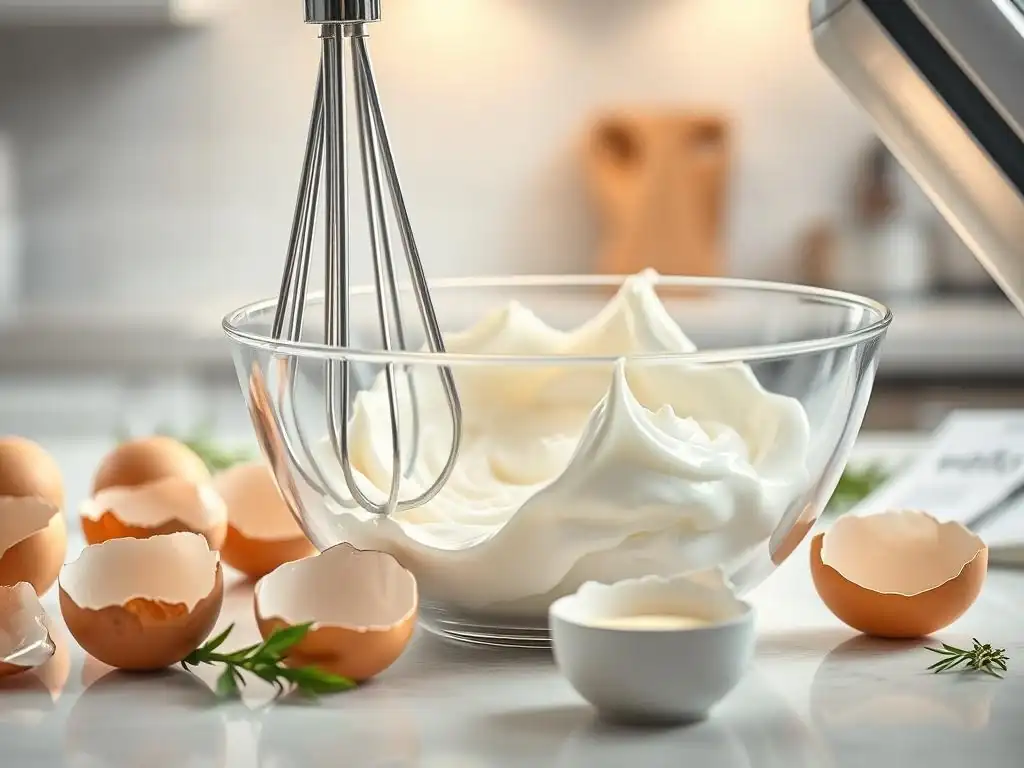
Whipping egg whites seems simple, but several common pitfalls can prevent you from achieving perfect stiff peaks for your keto baking. The most frequent mistake is fat contamination. Even a tiny amount of egg yolk or grease from equipment can deflate the foam. To avoid this, ensure bowls and whisks are spotless and grease-free (wipe with vinegar!) and separate eggs carefully using the three-bowl method.
Another common error is under-whipping or over-whipping. Under-whipped whites won't provide sufficient lift, while over-whipped whites become dry, grainy, and unstable, losing their ability to incorporate smoothly into batters. Pay close attention to the visual cues for each stage (foamy, soft, firm, stiff peaks) and stop immediately when the desired stage is reached. For stiff peaks, stop as soon as they hold their shape firmly. Ignoring these keto egg white whipping tips can lead to disappointing results in your low-carb baked goods.
Troubleshooting: Addressing Common Whipping Problems
Sometimes, despite your best efforts, the egg whites just won't whip up properly. The most common problem is failure to reach stiff peaks. If your whites remain foamy or only reach soft peaks after extended whipping, the likely culprit is fat contamination. Unfortunately, if yolk has gotten in, you'll need to discard that batch and start over with fresh, carefully separated whites and meticulously clean equipment.
If the whites seem to whip initially but then start to look curdled or watery, you've likely over-whipped them. Once over-whipped, they lose their structure and cannot be salvaged for delicate folding. For keto recipes like meringues, slightly over-whipped whites might still work if baked immediately, but they won't incorporate well into batters. To avoid this, stop whipping as soon as stiff peaks form. Using a stabilizer like cream of tartar (1/8 tsp per egg white) can also help prevent over-whipping by making the foam more stable at the stiff peak stage, a valuable keto egg white whipping tip.
Achieving Stiff Peaks: Visual and Textural Indicators
Knowing exactly when you've hit the stiff peak stage is crucial for many keto recipes. Visually, when you lift the whisk or beaters out of the bowl, the peaks of egg white should stand straight up without any drooping or curling at the tips. They should look glossy and smooth, not dull or grainy. If the peaks are soft and flop over, continue whipping. If they look dry and broken, you've gone too far.
Texturally, stiff peaks feel firm and dense when you run a spoon or spatula through them. If you carefully tilt or even invert the bowl (over your head if you're brave, but maybe over the counter first! ), the whipped egg whites should hold firmly in place and not slide or pour out. This stability is what provides the essential lift and structure in keto baking. Practicing and observing these visual and textural cues is key to mastering keto egg white whipping tips and consistently achieving the desired results.
Maintaining Volume and Stability in Whipped Egg Whites
Once you've achieved those beautiful, stiff peaks, the clock starts ticking. Whipped egg whites are most stable immediately after whipping. Their structure begins to degrade over time as the trapped air bubbles coalesce and escape. To maintain maximum volume and stability, use them immediately in your keto recipe. If the recipe requires folding them into a batter, do so gently and quickly to minimize deflation.
If you need to hold them for a few minutes while preparing other components of your keto dish, cover the bowl with a damp paper towel or plastic wrap pressed directly onto the surface of the whites to prevent them from drying out, which can also cause them to lose volume. Adding a stabilizer like cream of tartar (1/8 tsp per large egg white) during whipping is one of the most effective keto egg white whipping tips for building a more robust foam structure that is less likely to deflate quickly.
Advanced Techniques for Keto Egg White Recipes
Incorporating Whipped Egg Whites into Keto Batters: Folding Techniques
Properly incorporating whipped egg whites into a heavier keto batter (like one made with almond flour or cream cheese) is an art form. The goal is to combine the mixtures without deflating the airy foam you worked hard to create. This is where the 'folding' technique comes in. Start by adding about one-third of the whipped egg whites to the base batter. Gently mix this portion in using a spatula until partially combined; this lightens the base batter, making it easier to fold in the remaining whites without losing volume.
Then, add the remaining whipped egg whites in two batches. Use a large spatula and a gentle motion, cutting down through the center of the mixture, sweeping the spatula towards the edge of the bowl, and then bringing it up and over the mixture. Rotate the bowl as you go. The motion should be deliberate but light, like folding laundry. Continue folding until just combined – a few small streaks of white are acceptable. Over-mixing will deflate the whites. Mastering this gentle folding is a crucial advanced keto egg white whipping tip for light and airy results.
Keto Recipes That Benefit from Perfectly Whipped Egg Whites: Keto Meringues
Keto meringues are a prime example of a recipe where perfectly whipped egg whites are the star. Traditional meringues rely on the protein structure of whipped egg whites combined with sugar to create a stable foam that bakes into a crisp confection. For keto versions, granular keto-friendly sweeteners like erythritol or allulose are used instead of sugar. The key is to whip the egg whites to very stiff, glossy peaks before gradually adding the sweetener while continuing to whip until the mixture is smooth and shiny and the sweetener is fully dissolved.
For a batch using 3 large egg whites, you might use about 1/2 cup of powdered keto sweetener. Whip the whites with 1/4 tsp cream of tartar until stiff peaks form, then slowly drizzle or spoon in the sweetener while the mixer runs on medium-high. The mixture should hold incredibly stiff peaks, like shaving cream.
Baking at a very low temperature (around 100-120°C or 210-250°F) for an extended period (1-2 hours) dries out the meringue without browning it, resulting in light, airy keto meringue cookies. Achieving these stiff, glossy peaks is the most important keto egg white whipping tip for successful meringues.
Keto soufflés, both sweet and savory, are another classic dish entirely dependent on the lift provided by whipped egg whites. A soufflé typically starts with a flavorful base (like a keto cheese sauce for savory, or a chocolate ganache for sweet) and then has a significant amount of stiffly whipped egg whites gently folded in. The air trapped in the egg whites expands in the heat of the oven, causing the soufflé to rise dramatically.
For a keto cheese soufflé base made with 1 cup of cheese sauce, you might fold in the stiffly whipped whites from 3-4 large eggs. The quality of the soufflé's rise is a direct indicator of how well the egg whites were whipped and folded. Over-folding can lead to a poor rise, while perfectly folded stiff peaks result in that impressive, airy structure.
Baking quickly at a relatively high temperature (around 190-200°C or 375-400°F) helps set the structure before it collapses. Mastering keto egg white whipping tips and the gentle folding technique is paramount for achieving a show-stopping keto soufflé.
Variations: Adding Keto-Friendly Flavors to Whipped Egg Whites
While the primary function of whipped egg whites is structure, you can also infuse them with keto-friendly flavors, particularly when making meringues or using them as a topping. Extracts like vanilla, almond, or lemon can be added after the stiff peaks have formed but before or during the addition of sweetener. Use just a few drops, as too much liquid can destabilize the foam. For example, adding 1/4 teaspoon of vanilla extract to the whites from 3 eggs destined for keto meringues can impart a lovely aroma.
Citrus zest, like lemon or orange zest, can also be folded in very gently at the end for a burst of flavor, particularly in keto lemon meringue pie filling or citrusy keto desserts. Powdered spices like cinnamon or nutmeg can be sifted over the finished meringue before baking. Be mindful of using powdered ingredients, as they can weigh down the foam if added in large quantities. These flavor additions allow you to customize your keto baking creations, making perfectly whipped egg whites even more versatile.
Storing and Using Leftover Whipped Egg Whites in Keto Baking
Properly Storing Whipped Egg Whites for Optimal Volume
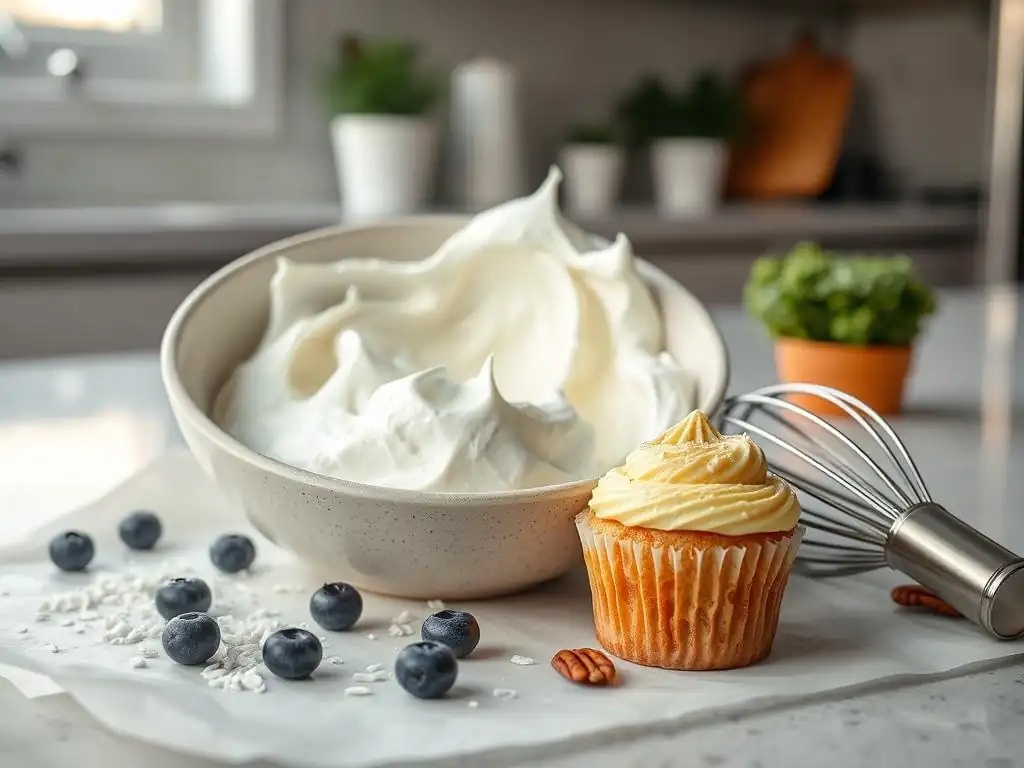
Ideally, whipped egg whites should be used immediately after whipping to ensure maximum volume and stability for your keto recipes. However, sometimes you might have leftovers or need to prepare them slightly in advance. While they will lose some of their initial volume and stability over time, you can store them to retain as much quality as possible. Transfer the whipped egg whites to an airtight container.
Press a piece of plastic wrap directly onto the surface of the whipped whites before sealing the container. This minimizes exposure to air, which can cause the foam to dry out and deflate. Store the sealed container in the refrigerator. Stored this way, whipped egg whites can remain usable for about 24-48 hours, though they will likely lose some of their stiffness compared to freshly whipped whites. They may require a very brief re-whisking before use, but be careful not to overdo it. Proper storage is a helpful keto egg white whipping tip if you frequently have leftover whites.
Utilizing Leftover Whipped Egg Whites in Keto Recipes
Don't let leftover whipped egg whites go to waste! Even if they've lost some volume, they can still be useful in various keto recipes. While they might not provide enough lift for a full-blown soufflé or tall meringue, they can still be gently folded into keto batters for slightly lighter texture in muffins, quick breads, or pancakes. For example, folding leftover whipped whites from 2 eggs into a batch of keto almond flour pancakes can make them notably fluffier.
They can also be used to make smaller quantities of keto meringue cookies or even added to scrambled eggs or omelets for extra fluffiness (though this isn't typically considered 'baking'). If they have deflated significantly, they can be gently re-whipped for a short time, though they may not reach the same stiff peak potential as fresh whites. Getting creative with using leftover whipped whites is a practical keto egg white whipping tip for reducing waste in your kitchen.
Shelf Life and Freshness of Whipped Egg Whites
The shelf life of whipped egg whites is relatively short compared to unwhipped eggs. For optimal results in terms of lift and stability, use them immediately after whipping. When stored properly in an airtight container in the refrigerator, they are best used within 24 hours. After 48 hours, the foam structure will have degraded significantly, and while they are still safe to consume if kept chilled, their leavening power will be minimal.
You can visually assess the freshness; if they have separated into liquid and foam, they are past their prime for applications requiring significant lift. The texture may also become watery or rubbery. While you can try to re-whip them, they typically won't regain their original volume or stiffness. Planning your keto baking around the immediate use of whipped egg whites is the best approach, but knowing their approximate shelf life helps manage leftovers effectively.
Conclusion: Enhancing Keto Baking with Perfectly Whipped Egg Whites
Mastering the art of whipping egg whites to stiff peaks is a transformative skill for anyone serious about keto baking. These airy clouds of protein are the secret weapon for achieving light, delicate textures in a world often dominated by denser, low-carb flours. From impressive keto soufflés that rise tall to delicate keto meringue cookies that melt in your mouth, perfectly whipped egg whites provide the essential lift and structure without adding carbs.
By following the detailed steps – ensuring cleanliness, separating eggs carefully, using the right speed progression, and recognizing the stages – you can consistently achieve the stiff peaks needed for success. Incorporating stabilizers like cream of tartar (1/8 tsp per large egg white) and learning gentle folding techniques further refines your abilities. With these keto egg white whipping tips in your arsenal, you're well-equipped to elevate your keto baking from simple substitutes to truly remarkable culinary creations, expanding the possibilities of what you can bake on a low-carb diet.
Frequently Asked Questions
How does keto baking differ from traditional baking when it comes to whipping egg whites?
Keto baking often requires more precision because alternative flours and sweeteners behave differently than traditional ingredients. This impacts the structure and stability of whipped egg whites, making it more challenging to achieve stiff peaks.
What are some common problems people face when whipping egg whites for keto recipes?
Common problems include egg whites not reaching stiff peaks, collapsing quickly after whipping, or becoming grainy. These issues can stem from fat contamination, incorrect whipping speed, or improper ingredient ratios.
Can I use any type of sweetener when whipping egg whites for a keto meringue?
No, not all keto sweeteners are suitable. Powdered sweeteners like erythritol or monk fruit are generally preferred because they dissolve more easily and don't add unnecessary moisture, leading to a more stable meringue.
What temperature should my egg whites be for optimal whipping results in a keto recipe?
Room temperature egg whites are ideal. They whip up to a greater volume and create a more stable foam compared to cold egg whites, leading to better volume and stability.
What are some tips for preventing my keto meringue from weeping (leaking liquid)?
Ensure the sugar is fully dissolved during whipping, and bake at a low temperature for a longer period to thoroughly dry out the meringue. Also, avoid overbaking, which can cause the meringue to crack and weep.
Final Reflection: Mastering the Art of Keto Egg White Whipping
The seemingly simple act of whipping egg whites to stiff peaks takes on a new significance within the ketogenic lifestyle. Perfectly whipped egg whites are not just a culinary delight; they are a versatile tool for creating light and airy keto-friendly desserts, cloud bread, and even savory dishes, allowing for creative indulgence without sacrificing dietary goals. This mastery unlocks a world of possibilities for those committed to a low-carb lifestyle.
The journey of perfecting keto egg white whipping has been a fascinating exploration of both culinary technique and mindful eating. It's a testament to the power of adaptation and creativity within dietary restrictions. The process itself is a meditative practice, requiring patience and precision. The result? A light-as-air texture that belies the simplicity of the ingredients. As Julia Child once said, Find something you're passionate about and keep tremendously interested in it.
This passion for perfecting keto baking, for finding joy in the process, is what truly elevates the experience beyond mere dietary adherence.
Now, consider your own kitchen. Think about the possibilities unlocked by mastering this seemingly small technique. What keto-friendly creations will you bring to life? Will you experiment with different flavor combinations? Will you challenge yourself to create a signature keto dessert? The journey of culinary exploration within the ketogenic diet is ongoing, and the ability to whip egg whites to perfection is just one step on that path. Embrace the challenge, enjoy the process, and savor the delicious results.
Unlock Your Keto Baking Potential!
Thanks for diving into the world of advanced keto baking with us! We hope you learned some valuable techniques to elevate your keto creations. Ready to put your new skills to the test?
- Whip up a keto masterpiece! Try experimenting with stiffly-beaten egg whites in your next keto recipe. The results will amaze you!
- Share your keto baking triumphs! Show off your fluffy creations on social media and tag us – we'd love to see what you bake!
- Explore more keto baking secrets: Dive deeper into our other articles for even more tips and tricks to master the art of keto baking.
What incredible keto treat will you create with your newly acquired egg-whipping expertise?