
Master Food Cost Percentage: The Key to Profitable Baking

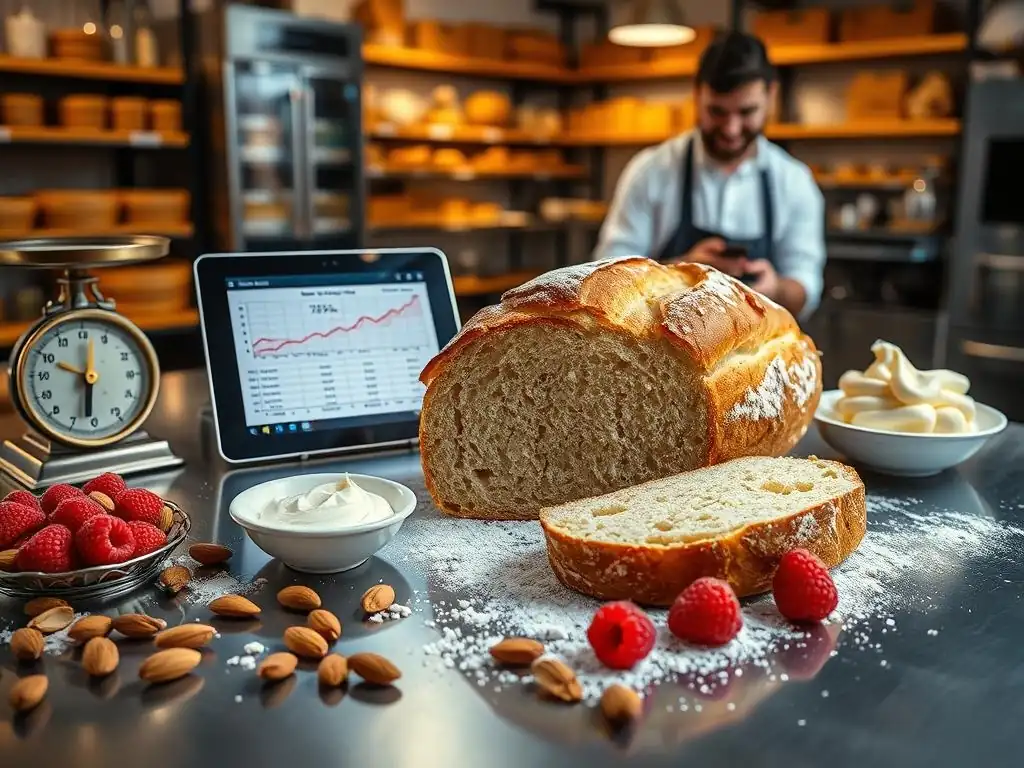
Welcome to BakeWithEase, where turning flour and dreams into delicious realities is our specialty! Ever wondered if your baking passion could also be a profitable venture? This week, we're diving deep into the essential skill of calculating bakery profit margins. Understanding your food cost percentage is the secret ingredient to ensuring your home baking business thrives. Intrigued? Read on to unlock the formula for baking success!
- Mastering Food Cost Percentage: The Key to Profitable Baking at Your Home Baking Business
- Understanding Food Cost Percentage for Bakery Profitability
-
Calculating Food Cost Percentage: A Step-by-Step Guide for Bakers
- Step 1: Determine Your Total Food Costs for a Specific Baking Project [e.g., a batch of macarons]
- Step 2: Calculate the Total Revenue Generated from the Same Baking Project
- Step 3: Apply the Food Cost Percentage Formula: (Food Cost / Revenue) x 100
- Example: Calculating Food Cost Percentage for French Macarons
- Analyzing Your Food Cost Percentage: Benchmarks for a Profitable Bakery
-
Strategies to Reduce Food Cost Percentage and Boost Bakery Profit Margins
- Recipe Optimization: Minimizing Waste and Maximizing Yield [e.g., Using fruit pulp in other recipes]
- Sourcing Ingredients Strategically: Finding the Best Value [e.g., Bulk buying flour]
- Portion Control: Ensuring Consistent Serving Sizes [e.g., Using a scale for cookie dough]
- Minimizing Spoilage: Proper Storage and Inventory Management [e.g., FIFO - First In, First Out]
- Negotiation with Suppliers: Building Relationships for Better Pricing
- The Impact of Labor Costs on Overall Bakery Profitability
- Pricing Strategies Based on Food Cost Percentage: Maximizing Your Baking Profits
- Tools and Resources for Managing Food Cost in Your Baking Business
- Avoiding Common Mistakes When Calculating Bakery Profit Margins
- Mastering Food Cost Percentage: Your Path to a Sustainable and Profitable Baking Business
-
Frequently Asked Questions
- How do I calculate my bakery's food cost percentage?
- Why is understanding food cost percentage important for a bakery?
- What is a good food cost percentage for a bakery?
- How can I lower my bakery's food cost percentage?
- What other factors besides food cost percentage should I consider when pricing my baked goods?
- Final Reflection: Baking a Profitable Future
- Unlock Your Baking Business's Full Potential!
Mastering Food Cost Percentage: The Key to Profitable Baking at Your Home Baking Business
Understanding Food Cost Percentage for Bakery Profitability
Why Food Cost Percentage Matters in Your Baking Business
For any home baker looking to turn a passion into a sustainable income, understanding and controlling food cost percentage is absolutely critical. This metric is the bedrock upon which accurate pricing and, ultimately, profitability are built. Without a clear picture of how much your ingredients cost relative to your sales price, you're essentially guessing whether each item you bake is making you money or costing you money. It directly impacts your ability to grow, reinvest in your business, and achieve financial stability.
Accurate food cost calculation provides the insights needed for effective decision-making, from setting competitive yet profitable prices to identifying areas for cost reduction. For example, if your food cost for a batch of cookies is 40% when you expected 25%, you know you need to investigate ingredient sourcing, recipe yield, or portioning. Mastering this calculation is the first vital step in calculating bakery profit margins effectively and ensuring your hard work translates into tangible financial success.
Defining Food Cost Percentage: A Baker's Essential Metric
Food cost percentage is a simple but powerful ratio that expresses the cost of the ingredients used to produce an item as a percentage of the revenue generated from selling that item. The basic formula is: (Total Ingredient Cost / Total Revenue) * 100. This metric focuses purely on the direct cost of the raw materials that go into your baked goods.
It's essential to calculate this for individual items or batches to understand their contribution to your overall profitability before considering other expenses like labor, packaging, utilities, or marketing. For instance, if a cake costs $10 in ingredients and you sell it for $40, your food cost percentage for that cake is 25%. This specific number is a primary component when you begin calculating bakery profit margins for your entire operation.
Food Cost Percentage vs. Profit Margin: Key Differences Explained
While often discussed together, food cost percentage and profit margin are distinct metrics, each vital for evaluating your baking business's financial health. Food cost percentage, as defined, looks only at the cost of ingredients relative to sales revenue. It tells you how much of your sales price is consumed by the direct cost of materials. A low food cost percentage is generally desirable as it leaves more room for other costs and profit.
Profit margin, on the other hand, provides a broader view of your business's financial performance. Gross profit margin considers sales revenue minus the total cost of goods sold (COGS), which includes food costs plus direct labor costs. Net profit margin goes even further, subtracting all business expenses (labor, overhead like rent/utilities, marketing, etc.) from total revenue. While food cost percentage is a key driver, a healthy food cost percentage doesn't guarantee a good profit margin; you must also manage labor and overhead effectively when calculating bakery profit margins overall.
Calculating Food Cost Percentage: A Step-by-Step Guide for Bakers
Step 1: Determine Your Total Food Costs for a Specific Baking Project [e.g., a batch of macarons]
To accurately calculate the food cost for a specific item or batch, you need to meticulously list every ingredient used and its precise cost. This requires knowing the price you paid for each bulk ingredient (like a 5lb bag of flour or a dozen eggs) and calculating the cost per unit (per gram, per egg, per teaspoon).
For a batch of 50 macarons, for example, you'd calculate the cost of the specific amount of almond flour, powdered sugar, granulated sugar, egg whites, and any coloring or flavoring used for the shells, plus the cost of ingredients for the filling (butter, sugar, chocolate, fruit puree, etc. ).
Let's say a batch of 50 macarons uses $3.50 worth of almond flour, $1.00 of sugars, $0.80 of egg whites, $0.20 of coloring/flavoring, and $2.50 of filling ingredients. The total food cost for that batch would be $3.50 + $1.00 + $0.80 + $0.20 + $2.50 = $8.00. This detailed breakdown is crucial for identifying where your ingredient costs are concentrated and is the first step in accurately calculating bakery profit margins per item.
Step 2: Calculate the Total Revenue Generated from the Same Baking Project
Next, determine the total revenue you generated from selling the specific item or batch for which you calculated the food cost. Using the macaron example, if you sell the 50 macarons in boxes of 10 for $25 per box, and you sell all 5 boxes, your total revenue from that batch is 5 boxes * $25/box = $125.
It's important that the revenue figure corresponds exactly to the batch of goods whose ingredients you costed in Step 1. If some items from the batch were given away or spoiled, they should ideally be accounted for as waste or marketing costs, not included in the revenue figure used for the food cost calculation of the sold goods. This ensures your calculation reflects the cost of ingredients for the items that were actually sold, providing a true picture for calculating bakery profit margins.
Step 3: Apply the Food Cost Percentage Formula: (Food Cost / Revenue) x 100
With your total food cost for the batch and the total revenue from selling that batch, you can now apply the formula: Food Cost Percentage = (Total Food Cost / Total Revenue) * 100. Using our macaron example: Food Cost Percentage = ($8.00 / $125.00) * 100.
Performing this calculation gives you ($8.00 / $125.00) ≈ 0.064. Multiplying by 100 gives a food cost percentage of 6.4%. This means that for every dollar of macaron sales revenue, about 6.4 cents went towards the cost of the ingredients. This low food cost percentage suggests a potentially highly profitable item, but it's just one piece of the puzzle when calculating bakery profit margins, as labor and overhead are significant for intricate items like macarons.
Example: Calculating Food Cost Percentage for French Macarons
Let's walk through the macaron example again with slightly more detailed approximated costs.
- Ingredients for 50 shells: 150g almond flour (@ $0.04/g = $6.00), 150g powdered sugar (@ $0.008/g = $1.20), 110g aged egg whites (@ $0.05/g = $5.50), 150g granulated sugar (@ $0.005/g = $0.75), vanilla extract ($0.50), food coloring ($0.30). Shell cost total: $14.25.
- Ingredients for filling (e.g., chocolate ganache): 200g chocolate (@ $0.03/g = $6.00), 200g heavy cream (@ $0.015/g = $3.00), butter ($0.50). Filling cost total: $9.50.
- Total Food Cost for 50 macarons: $14.25 (shells) + $9.50 (filling) = $23.75.
If these 50 macarons are sold in 5 boxes of 10 at $25 per box, the Total Revenue is $125.00. Food Cost Percentage = ($23.75 / $125.00) * 100 = 19%. This means 19% of the revenue from these macarons covers the ingredient cost. This example highlights how ingredient costs for premium items can add up, making accurate costing vital for calculating bakery profit margins. A 19% food cost is generally considered quite healthy, leaving significant room for labor, overhead, and profit, especially given the perceived value of macarons.
Analyzing Your Food Cost Percentage: Benchmarks for a Profitable Bakery

While there's no single "perfect" food cost percentage for all bakeries, general benchmarks exist, though they can vary significantly based on the type of baked good and business model (e.g., wholesale vs. retail). Many bakeries aim for a food cost percentage between 20% and 35%. Items with less expensive base ingredients like bread or basic cookies might target the lower end (e.g., 20-25%), while more elaborate items using premium ingredients like intricate cakes, pastries, or items with lots of chocolate, nuts, or fresh fruit might have a slightly higher target (e.g., 28-35%).
For instance, a simple batch of sugar cookies might have a food cost closer to 20-22% because the main ingredients (flour, sugar, butter, eggs) are relatively low cost per serving. In contrast, a multi-tiered custom cake with fondant and intricate decorations might have a food cost closer to 30-35% due to the quantity and variety of ingredients, including more expensive items like specialty cocoa, high-quality extracts, or edible decorations. Understanding these typical ranges helps you assess if your current food costs are competitive and sustainable when calculating bakery profit margins for different product lines.
Factors Influencing Your Bakery's Food Cost Percentage [e.g., Ingredient Quality, Waste]
Several factors directly impact your food cost percentage beyond just the recipe itself. The quality of ingredients you choose plays a significant role; using premium organic flour and European butter will result in a higher ingredient cost than using standard commercial alternatives, directly affecting your food cost percentage. While higher quality can justify a higher price, you must ensure the price increase more than offsets the ingredient cost increase to maintain or improve your food cost percentage.
Waste is another massive factor. Spoilage from improper storage, errors during baking that lead to discarded batches, or even excessive trimmings and scraps all contribute to higher food costs without generating revenue. For example, if 10% of your cookie dough batch is wasted due to burning or mishandling, that 10% of ingredient cost is absorbed by the remaining salable cookies, effectively increasing their individual food cost percentage. Managing these factors is essential for accurately calculating bakery profit margins and maximizing profitability.
Identifying High Food Cost Items in Your Baking Recipes [e.g., Vanilla Extract, Chocolate]
Not all ingredients contribute equally to your food cost. Some items, while used in smaller quantities, are disproportionately expensive per unit. Vanilla extract, especially pure vanilla, is a classic example; a small bottle can cost significantly, and its cost per teaspoon adds up across many batches. High-quality chocolate, specialty nuts (like pistachios or macadamias), exotic fruits, premium spices (like saffron or cardamom), and certain dairy products can also be significant cost drivers.
Analyzing your recipes ingredient by ingredient and calculating the cost per unit of the final product helps pinpoint these high-cost items. For instance, in a chocolate chip cookie, the chocolate chips might represent a larger portion of the ingredient cost than the flour or sugar. Identifying these allows you to explore alternative sourcing, consider slightly adjusting recipes (without compromising quality), or ensure your pricing adequately reflects the cost of these premium components. This granular analysis is key to effectively calculating bakery profit margins and optimizing your ingredient spending.
Strategies to Reduce Food Cost Percentage and Boost Bakery Profit Margins
Recipe Optimization: Minimizing Waste and Maximizing Yield [e.g., Using fruit pulp in other recipes]
Optimizing your recipes is a powerful way to lower food costs. This involves refining techniques to reduce errors and spoilage during baking, ensuring every batch comes out perfectly. It also means looking for ways to maximize the yield from your ingredients. For example, if you make fruit tarts and have leftover fruit pulp or trimmings, could they be used in a compote, smoothie, or another baked item like muffins or scones?
Another aspect is standardizing recipes and procedures. Consistent measurements (using scales! ), baking times, and temperatures reduce variance and prevent costly mistakes. Reviewing recipes to see if slightly less of an expensive ingredient can be used without impacting quality, or if a less expensive but still high-quality alternative exists, can also help. Even small adjustments across multiple batches can lead to significant savings, directly improving your profitability when calculating bakery profit margins.
Sourcing Ingredients Strategically: Finding the Best Value [e.g., Bulk buying flour]
Where and how you purchase your ingredients significantly impacts your food costs. Buying in bulk often yields lower per-unit costs for staples like flour, sugar, butter, and eggs. Consider joining a wholesale club or purchasing directly from restaurant supply stores or distributors once your volume increases. Comparing prices from different suppliers for common ingredients can also reveal cost-saving opportunities.
However, strategic sourcing isn't just about the lowest price. It also involves considering quality, reliability, and delivery costs. Sometimes, paying slightly more for a consistent, high-quality ingredient prevents wasted batches or dissatisfied customers. Building relationships with local suppliers might offer competitive pricing or access to fresher, unique ingredients that can become a selling point, justifying a higher price while potentially keeping food costs reasonable. Smart sourcing is fundamental for effectively calculating bakery profit margins.
Inconsistent portioning is a silent food cost killer. If you're making cookies and one batch yields 48 cookies while the next yields only 40 because the dough balls were larger, you've used the same amount of ingredients but generated less revenue per ingredient cost. This directly increases the food cost percentage for the batch with larger, fewer cookies.
Using tools like scales to weigh cookie dough, scoops for muffins or cupcakes, or measuring guides for slicing cakes ensures consistency across every item. This not only helps control ingredient costs but also provides a consistent product for your customers, which is crucial for building trust and repeat business. Implementing strict portion control is a simple yet highly effective strategy for reducing waste and accurately calculating bakery profit margins.
Minimizing Spoilage: Proper Storage and Inventory Management [e.g., FIFO - First In, First Out]
Spoilage is pure loss – you paid for the ingredients, but they generated zero revenue. Proper storage is paramount: using airtight containers, storing ingredients at correct temperatures (refrigerated, frozen, dry), and keeping your pantry clean and organized. Labeling ingredients with purchase dates or expiration dates is also essential.
Implementing a First-In, First-Out (FIFO) inventory system is a best practice. This means using ingredients you purchased first before using newer stock. This prevents older ingredients from expiring in storage. Regularly reviewing your inventory helps identify items nearing expiration that could be used in a special or discounted item rather than being thrown away. Minimizing spoilage directly reduces your overall ingredient expense, leading to a better food cost percentage and improved results when calculating bakery profit margins.
Negotiation with Suppliers: Building Relationships for Better Pricing
As your baking business grows and your order volume increases, you gain leverage to negotiate with your suppliers. Don't be afraid to discuss pricing, especially for ingredients you purchase frequently and in larger quantities. Building a good relationship with your suppliers is key; they are more likely to work with you if you are a reliable, consistent customer.
You can inquire about potential volume discounts, ask if they have specials on ingredients you use often, or even discuss slightly extended payment terms if cash flow is a concern (though always pay on time if possible to maintain a good relationship). Even a small percentage discount on your most used ingredients can add up significantly over time, directly lowering your food cost percentage and boosting your overall profitability when calculating bakery profit margins.
The Impact of Labor Costs on Overall Bakery Profitability
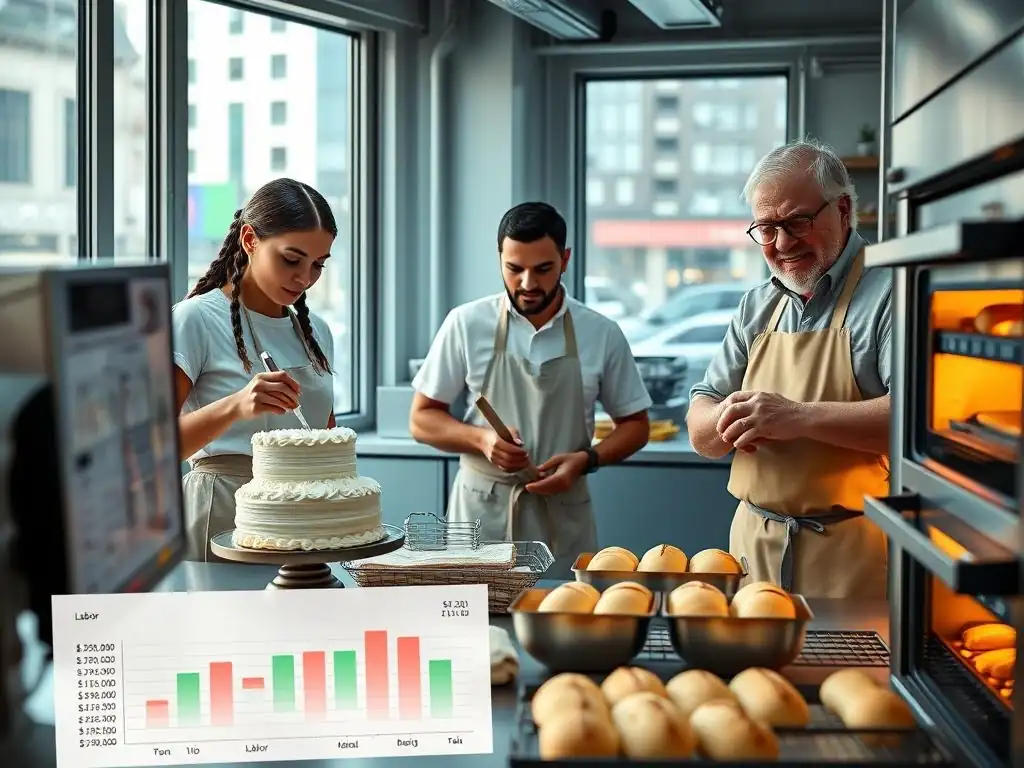
Distinguishing Food Costs from Labor Expenses
While food cost percentage focuses solely on ingredient costs, it's crucial to understand that this is only one part of your overall cost structure. Labor costs – the money you pay yourself and any employees for the time spent baking, decorating, packaging, selling, and managing the business – are typically the other largest expense for a home or small-scale bakery. It's vital to track these costs separately from ingredient costs.
Mixing food and labor costs makes it impossible to accurately analyze the efficiency of your ingredient usage or the productivity of your time. A low food cost percentage is great, but if it takes you an excessive amount of time to produce that item (leading to high labor cost per item), its overall profitability might be low. Conversely, an item with a slightly higher food cost might be very quick to produce, resulting in a better overall profit margin. Distinguishing these allows for more accurate analysis when calculating bakery profit margins.
Incorporating Labor Costs into Your Pricing Strategy
Your pricing must cover not only your ingredient costs but also your labor costs and all other operating expenses, while still leaving room for profit. A common approach is to calculate your hourly labor rate (either what you pay employees or what you value your own time at) and then estimate the time it takes to produce each item or batch. This labor cost per item is then added to the food cost per item to get a more complete picture of your direct costs.
For example, if a batch of cookies has an $8 food cost and takes 30 minutes of your time, valued at $20/hour, the labor cost for that batch is $10. The total direct cost is $8 (food) + $10 (labor) = $18. This $18 figure is much more useful for pricing than the $8 food cost alone. Your selling price must be significantly higher than this $18 to cover packaging, utilities, marketing, and profit. Incorporating labor is essential for accurately calculating bakery profit margins.
Calculating Total Cost of Goods Sold (COGS) for a More Accurate Profit Picture
To get a truly accurate picture of the direct costs associated with producing your baked goods, you need to calculate the Cost of Goods Sold (COGS). For a bakery, COGS primarily includes your total food costs plus your total direct labor costs (the wages paid to those directly involved in production). It might also include other direct costs like packaging materials (boxes, labels, etc. ).
The formula is often simplified as: Beginning Inventory + Purchases - Ending Inventory + Direct Labor Costs = COGS. This gives you the total cost of ingredients and labor that went into the goods you sold during a specific period. Subtracting COGS from your Total Revenue gives you your Gross Profit. This Gross Profit is a much better indicator of your production efficiency than revenue minus food cost alone. Calculating COGS is a fundamental step in accurately calculating bakery profit margins and understanding your business's financial health.
Pricing Strategies Based on Food Cost Percentage: Maximizing Your Baking Profits
Cost-Plus Pricing: A Simple Approach to Setting Prices
Cost-plus pricing is one of the most straightforward methods for setting prices, often used by new baking businesses. It involves calculating the total cost to produce an item (including food, labor, and a portion of overhead) and then adding a desired profit margin percentage. For example, if the total cost to make a cake is $25, and you want a 30% profit margin on that cost, you would add $25 * 0.30 = $7.50 profit, setting the price at $25 + $7.50 = $32.50.
Alternatively, you can use your target food cost percentage as a starting point. If your target food cost is 30% and the ingredients for a dozen cupcakes cost $6, you can estimate the selling price should be $6 / 0.30 = $20 per dozen. While simple, this method relies heavily on accurate cost tracking and doesn't necessarily consider market demand or competitor pricing. It's a useful baseline, but shouldn't be the only factor when calculating bakery profit margins and setting final prices.
Value-Based Pricing: Considering Perceived Value and Customer Willingness to Pay
Value-based pricing focuses on what your customers are willing to pay based on the perceived value of your baked goods, rather than strictly on your costs. If your cakes are known for their exquisite taste, beautiful decoration, and use of premium ingredients, customers may be willing to pay a higher price than a standard cake from a grocery store, even if your ingredient costs are only slightly higher.
This strategy requires understanding your target market, your unique selling propositions, and the competitive landscape. While your food cost percentage is still important for ensuring profitability, the selling price is set based on market perception. If customers perceive high value, you can potentially charge a premium, leading to a lower food cost percentage and higher profit margins per item. Combining cost analysis with value perception is a powerful approach for calculating bakery profit margins effectively.
Competitive Pricing: Analyzing Competitor Prices in Your Area
Understanding what your competitors are charging for similar baked goods is crucial, especially when you're starting out. Competitive pricing involves researching the prices of other bakeries or home bakers in your local area or online market. This helps you position your own prices within a reasonable range that customers expect.
If your prices are significantly higher than competitors for similar items, you need a clear justification (e.g., higher quality ingredients, unique designs, exceptional service). If your prices are too low, you might be leaving money on the table or, worse, operating at a loss without realizing it due to inaccurate costing. While you shouldn't price solely based on competitors, knowing their prices provides valuable context for your own pricing strategy and helps you ensure your prices are competitive while still allowing for healthy calculating bakery profit margins.
Tools and Resources for Managing Food Cost in Your Baking Business
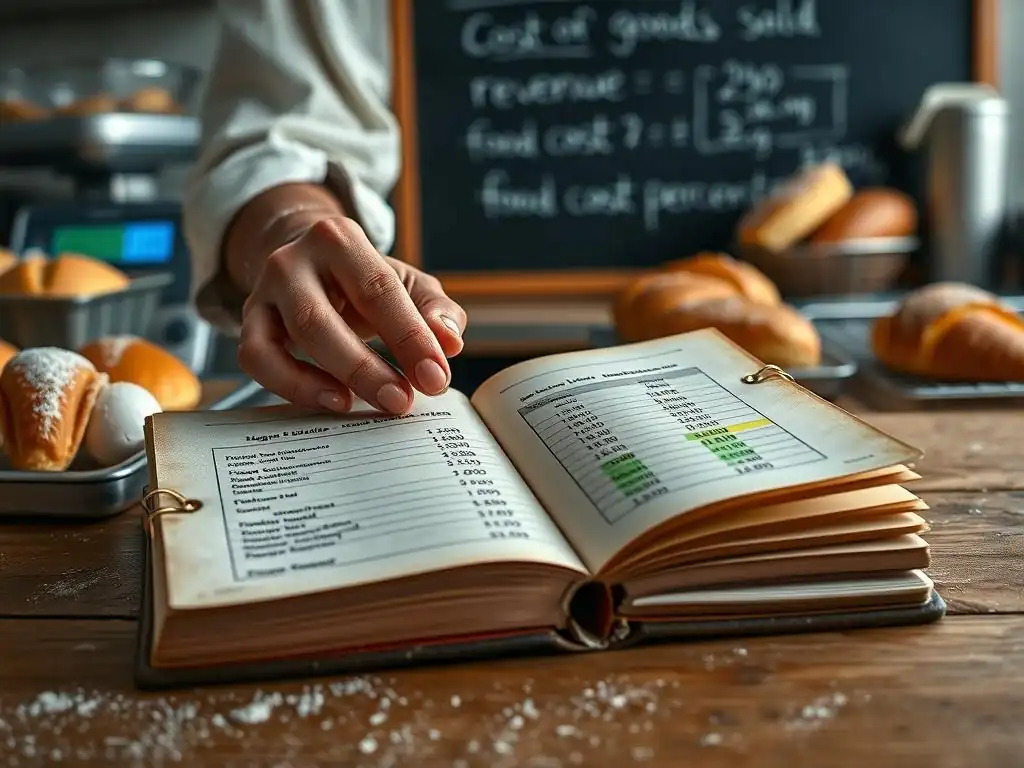
Spreadsheets for Tracking Food Costs and Revenue
For home bakers and small businesses, a simple spreadsheet (like those in Excel, Google Sheets, or similar programs) can be an incredibly effective tool for managing food costs. You can create tabs for ingredient inventory with unit costs, recipe costing sheets to calculate the cost per batch or item, and sales tracking sheets to record revenue.
By consistently inputting data – ingredient purchases, quantities used in recipes, and sales revenue – you can easily calculate food costs for individual items or for a specific period (weekly, monthly). Formulas can automate calculations like cost per unit or food cost percentage. While manual data entry is required, spreadsheets offer flexibility and a clear visual overview, making them a great starting point for calculating bakery profit margins.
Baking Software for Recipe Costing and Inventory Management [e.g., BakeCalc]
As your business grows, managing costs with spreadsheets can become time-consuming. Dedicated baking or restaurant management software can streamline the process significantly. These programs often include features for recipe costing, inventory management, sales tracking, and reporting. You input your ingredient costs and recipes, and the software can automatically calculate the food cost for each item you produce.
Some software solutions also help manage inventory levels, alerting you when supplies are low and tracking usage to prevent waste. While there's an investment involved, the time saved and the accuracy gained from using specialized software can be invaluable for a growing business focused on accurately calculating bakery profit margins and optimizing operations.
Online Resources for Finding Wholesale Baking Supplies [e.g., WebstaurantStore]
Accessing wholesale pricing is key to lowering ingredient costs as your volume increases. Numerous online resources and suppliers cater specifically to food businesses, offering bulk ingredients, packaging, and supplies at competitive prices. Websites like WebstaurantStore (a popular example of this type of resource) offer a vast catalog of items, often at prices significantly lower than retail supermarkets.
Exploring these online wholesalers allows you to compare prices across different suppliers and find the best deals on your most used ingredients. While minimum order quantities or shipping costs might apply, the savings on bulk purchases can dramatically improve your food cost percentage. Researching and utilizing these types of resources is a smart move for any home baker looking to scale up and improve their calculating bakery profit margins.
Avoiding Common Mistakes When Calculating Bakery Profit Margins
Inaccurate Cost Tracking: The Importance of Detailed Records
One of the most detrimental mistakes a baker can make is failing to track costs accurately and consistently. Guessing ingredient costs or not accounting for small quantities of expensive items (like extracts or spices) leads to skewed food cost percentages. Relying on retail prices for ingredients when you're buying in bulk at wholesale prices also gives a false picture.
Maintaining detailed records of every ingredient purchase, including the date, supplier, quantity, and total cost, is fundamental. Breaking down bulk costs to a per-unit cost (per gram, per ounce, per piece) is essential for accurate recipe costing. Without precise data entry and diligent record-keeping, any calculation of food cost percentage or overall calculating bakery profit margins will be flawed, potentially leading to underpricing and financial struggles.
Focusing solely on food and perhaps labor costs is another common pitfall. A profitable baking business must cover all expenses. Packaging (boxes, ribbons, labels), utilities (electricity for ovens, water), equipment maintenance, insurance, permits, website fees, marketing materials, and even small items like cleaning supplies all add to the cost of doing business.
These "hidden" or overhead costs must be factored into your overall pricing strategy, even though they aren't part of the food cost percentage calculation itself. A common approach is to estimate total monthly overhead costs and allocate a portion of this cost to each item sold based on factors like production time or sales volume. Failing to account for these expenses means your "profit" calculated from food and labor costs might be an illusion, hindering accurate calculating bakery profit margins.
Failing to Regularly Review and Adjust Prices
The cost of ingredients fluctuates, market demand changes, and your own efficiency improves or declines over time. Setting prices once and never revisiting them is a recipe for financial trouble. Ingredient prices can increase unexpectedly due to supply chain issues or seasonal changes. If your ingredient costs go up by 10% but your prices remain the same, your food cost percentage increases, and your profit margin shrinks.
Regularly reviewing your food costs (ideally monthly or quarterly) and recalculating your food cost percentage and overall profitability is crucial. Based on these reviews, you should be prepared to adjust your prices as needed. This might involve small, incremental increases to keep pace with rising costs or larger adjustments based on market conditions or significant changes to your recipes or processes. Proactive price management, informed by accurate cost tracking, is vital for sustainable calculating bakery profit margins.
Mastering Food Cost Percentage: Your Path to a Sustainable and Profitable Baking Business
Continuously Monitoring and Optimizing Your Food Cost Percentage
Mastering food cost percentage isn't a one-time task; it's an ongoing process of monitoring, analysis, and optimization. Regularly calculate your food cost percentage for your top-selling items and for your overall business. Track trends over time – are costs increasing? Is your percentage staying within your target range?
Use the insights gained from these calculations to inform your business decisions. If a specific item has an unacceptably high food cost, investigate why. Can you source ingredients differently? Adjust the recipe? Increase the price? Continuously seeking ways to optimize ingredient usage, reduce waste, and source strategically will directly impact your bottom line and improve your ability to maintain healthy calculating bakery profit margins.
Investing in Your Baking Business for Long-Term Growth
A profitable baking business requires strategic investment. This includes investing in accurate scales and measuring tools for portion control, quality storage containers to minimize spoilage, and potentially baking software as your business grows. Investing in your own skills through classes or training can also lead to more efficient techniques and less wasted product.
Furthermore, reinvesting a portion of your profits back into the business – whether it's upgrading equipment, purchasing ingredients in larger quantities for better pricing, or improving your marketing – is essential for long-term growth and sustainability. Understanding your true costs, including food cost percentage and labor, allows you to determine how much profit is available for reinvestment, fueling future success in calculating bakery profit margins and expanding your reach.
Celebrating Your Successes and Learning from Your Challenges
Building a profitable baking business from scratch is challenging, and mastering financial concepts like food cost percentage takes time and effort. It's important to celebrate your successes along the way, whether it's achieving your target food cost percentage for the first time, successfully negotiating with a supplier, or simply getting better at tracking your expenses.
Equally important is learning from your challenges. Did a batch fail, increasing your food cost? Analyze why and implement procedures to prevent it from happening again. Was a price increase met with resistance? Re-evaluate your value proposition or target market. Every calculation, every mistake, and every success provides valuable data that helps you refine your processes, improve your financial management, and continue on the path towards a thriving and profitable baking business, constantly refining your approach to calculating bakery profit margins.
Frequently Asked Questions
How do I calculate my bakery's food cost percentage?
Food cost percentage is calculated by dividing your total food costs by your total sales and multiplying by 100. This gives you the percentage of revenue spent on ingredients.
Why is understanding food cost percentage important for a bakery?
Understanding your food cost percentage allows you to price your baked goods effectively to ensure profitability. It also helps you identify areas where you can reduce costs without compromising quality.
What is a good food cost percentage for a bakery?
A good food cost percentage for a bakery generally falls between 25% and 35%. However, this can vary depending on factors like ingredient sourcing and pricing strategy.
How can I lower my bakery's food cost percentage?
You can lower your food cost percentage by negotiating better prices with suppliers, reducing food waste, and optimizing your recipes to use less expensive ingredients where possible.
What other factors besides food cost percentage should I consider when pricing my baked goods?
Besides food cost percentage, you should also consider labor costs, overhead expenses (rent, utilities), and your desired profit margin when setting prices. These factors contribute to the overall cost of running your bakery.
Final Reflection: Baking a Profitable Future
Mastering food cost percentage isn't just about numbers; it's the cornerstone of a thriving bakery. Ignoring this crucial metric is akin to navigating a ship without a compass – you might reach land eventually, but the journey will be far longer, more arduous, and potentially disastrous. Understanding and consistently managing your food cost percentage is the difference between scraping by and building a truly successful baking business.
The impact of precise cost control extends far beyond the balance sheet; it shapes the entire culinary landscape. It dictates the ingredients we use, the recipes we create, and ultimately, the experience we offer our customers. The delicate balance between quality ingredients and profitability is a constant challenge, a tightrope walk that requires both artistry and astute business acumen. The secret to success is to know something nobody else knows.
– Aristotle Onassis. While not directly about baking, this quote highlights the competitive advantage gained through mastering a skill like precise food cost calculation – a skill not all bakers possess.
Now, it's your turn. Take the knowledge you've gained here and apply it to your own baking endeavors. Analyze your recipes, track your expenses meticulously, and don't be afraid to experiment with different strategies to optimize your food cost percentage. Remember, this isn't just about maximizing profit; it's about creating a sustainable and fulfilling business that allows you to share your passion for baking with the world. The journey to mastering your bakery's profitability is ongoing, but with dedication and the right tools, you can bake a truly profitable future.
Unlock Your Baking Business's Full Potential!
Thanks for diving into the world of food cost percentages! We hope you now feel empowered to take control of your bakery's profitability. Ready to put this knowledge into action?
- Calculate your food cost percentage immediately: Grab a pen and paper (or open a spreadsheet! ), and apply the formulas we discussed to your latest baking project. You'll be surprised how quickly you can identify areas for improvement!
- Share your insights: Discuss your findings and any challenges you faced with our community in the comments below – let's learn from each other!
- Explore our free recipe cost calculator: For an even smoother experience, download our free resource (link in bio/on website) to streamline your calculations.
What's the first recipe you're going to analyze to optimize its profitability?