
Price for Profit: Mastering CostPlus Pricing for Home Bakers


Welcome to BakeWithEase, your trusted guide to the sweet world of baking! Ever wondered if you're really making a profit from your delicious creations? Unravel the mystery of pricing with our insightful guide on cost plus pricing for baking. Discover how to accurately calculate your expenses and set prices that not only cover your costs but also ensure a healthy profit margin. Ready to bake up a thriving business? Let's get started!
- Pricing for Profit: Mastering Cost-Plus Pricing for Cottage Food Businesses
- Introduction to Cost-Plus Pricing for Cottage Food Businesses
- Step-by-Step Guide to Implementing Cost-Plus Pricing for Your Products
- Advantages and Disadvantages of Cost-Plus Pricing
- Practical Examples of Cost-Plus Pricing in Action
- Tips and Tricks for Optimizing Your Cost-Plus Pricing Strategy
- Beyond the Basics: Advanced Cost-Plus Pricing Considerations
- Common Mistakes to Avoid When Using Cost-Plus Pricing
- Tools and Resources for Cost-Plus Pricing Success
- Conclusion: Mastering Cost-Plus Pricing for a Profitable Cottage Food Business
-
Frequently Asked Questions
- How does Cost-Plus Pricing work in the context of home baking?
- What are the key cost components I need to consider when using Cost-Plus Pricing for my baked goods?
- Why is Cost-Plus Pricing recommended for home bakers?
- How do I determine a reasonable profit margin to add using Cost-Plus Pricing?
- What are the potential drawbacks of using Cost-Plus Pricing alone?
- Final Reflection: The Sweet Success of Strategic Pricing
- Unlock Your Baking Business's Profit Potential!
Pricing for Profit: Mastering Cost-Plus Pricing for Cottage Food Businesses
Introduction to Cost-Plus Pricing for Cottage Food Businesses
Why Cost-Plus Pricing is Essential for Cottage Food Business Profitability
For anyone running a cottage food business from their home kitchen, understanding how to price products correctly is absolutely fundamental to long-term success. Many home bakers initially price their goods based on what competitors charge or simply guess what feels right, often underestimating the true costs involved. This can lead to working incredibly hard without actually making a sustainable profit.
Cost-plus pricing provides a structured, reliable method to ensure that every item you sell contributes positively to your bottom line, covering all your expenses and leaving room for growth. Implementing a solid cost plus pricing for baking strategy means you're not just busy; you're building a viable business.
Without a clear understanding of costs, it's easy to fall into the trap of 'busy poverty' – constantly baking and selling, but never quite having enough money left over after expenses. Cost-plus pricing forces you to look critically at every single cost associated with your products, from the flour and sugar to the electricity used by your oven and even your own time.
By calculating the true cost of production per item and adding a desired profit margin, you arrive at a selling price that guarantees profitability if you sell enough volume. This method provides a solid foundation for financial planning and allows you to make informed decisions about pricing, product development, and efficiency improvements.
Understanding the Basics of Cost-Plus Pricing: A Simple Overview
At its core, cost-plus pricing is a straightforward method: calculate the total cost of producing a product, then add a percentage (your desired profit margin) to arrive at the selling price. Think of it as: Cost + Profit = Price. The 'cost' part includes both the direct costs immediately tied to making the product (like ingredients and packaging) and a portion of your indirect costs or overhead (like rent, utilities, and marketing). This method ensures that every sale not only covers the specific expenses incurred for that item but also contributes to the general running costs of your business and generates a profit.
This simple formula makes cost plus pricing for baking an accessible starting point, especially for those new to business finance. It provides a clear, logical way to justify your prices to yourself and potentially to customers, as the price is directly linked to the cost of production plus a fair return for your effort and investment. While it's not the only pricing strategy available, mastering the basics of cost-plus pricing is a crucial first step in ensuring your home baking business is financially healthy and sustainable. It moves you away from guesswork and towards data-driven pricing decisions.
Step-by-Step Guide to Implementing Cost-Plus Pricing for Your Products
Step 1: Calculating Your Direct Costs
Identifying All Direct Costs: Ingredients, Packaging, and Direct Labor
Direct costs are the expenses that can be directly traced to the production of a specific item. For a home baker, the most obvious direct costs are ingredients. Every cup of flour, every egg, every gram of chocolate that goes into a specific cake or cookie is a direct cost for that item. Packaging is another significant direct cost – the box for a dozen cupcakes, the label on a jam jar, the ribbon around a loaf of bread.
These materials are used only for that specific product. Finally, and often overlooked, is direct labor. This is the time you (or any paid help, if applicable) spend directly making that product. This isn't your marketing time or administrative time; it's the hands-on baking, decorating, and packaging time for that specific batch.
Accurately identifying these costs is the critical first step in applying cost plus pricing for baking. You need to be meticulous. For example, if you bake different types of cookies, you need to track the specific ingredients and quantities used for each type. Similarly, if a customer orders a special cake, you need to factor in the specific, potentially higher, cost of ingredients or unique packaging used for that custom order. Ignoring any of these direct costs means you are underestimating the true expense of creating your product from the very beginning, which will lead to underpricing later on.
Accurately Tracking Ingredient Costs for Each Recipe
Tracking ingredient costs requires breaking down the price you pay for bulk ingredients into the cost per unit used in a recipe. For example, if a 5 lb bag of all-purpose flour costs $3.00, and there are approximately 18 cups in that bag, the cost per cup is $3.00 / 18 cups = $0.17 per cup. You need to do this for every ingredient.
If a recipe for a batch of 12 cookies uses 2 cups of flour, 1 cup of sugar, 1/2 lb of butter, and 2 eggs, you'd calculate: 2 cups flour * $0.17/cup = $0.34; 1 cup sugar * $0.25/cup = $0.25; 0.5 lb butter * $4.00/lb = $2.00; 2 eggs * $0.30/egg = $0.60. The total ingredient cost for the batch is $0.34 + $0.25 + $2.00 + $0.60 = $3.19.
This level of detail is crucial for accurate cost plus pricing for baking. Keep a spreadsheet or use recipe costing software to store these calculations. Update ingredient prices regularly, perhaps quarterly, as they can fluctuate.
Don't forget smaller items like baking powder, vanilla extract, or spices; while the cost per batch might seem small, they add up, especially if you bake frequently. A recipe might use only 1 teaspoon of vanilla, but if a 4oz bottle costs $5.00 and contains roughly 24 teaspoons, that teaspoon costs $5.00 / 24 = $0.21. Every penny counts when determining your true production cost.
Calculating Direct Labor Costs: Your Time is Valuable
Your time spent baking is a direct cost and must be included. Many home bakers undervalue their labor or don't include it at all, essentially working for free. To calculate direct labor cost, first decide on an hourly rate for your time.
This could be minimum wage, a living wage for your area, or an hourly rate that reflects your skill and experience (e.g., $15, $20, or $25+ per hour). Then, time how long it takes to perform the direct tasks for a specific product batch: measuring, mixing, baking, cooling, decorating, and packaging. Exclude time spent on marketing, emails, shopping for ingredients, or cleaning up the entire kitchen unless it's specifically tied to that batch (like washing the mixing bowl used only for those cookies).
Let's say you bake a batch of 12 cookies and the hands-on time (mixing, scooping, baking, packaging) takes 30 minutes. If your chosen hourly rate is $20, your direct labor cost for that batch is $20/hour * 0.5 hours = $10. Add this to your ingredient and packaging costs. This demonstrates that the true cost of making those 12 cookies is much higher than just the ingredients. Including labor is non-negotiable for sustainable cost plus pricing for baking; it ensures you are paying yourself for the skilled work you do.
Step 2: Determining Your Indirect Costs (Overhead)
Understanding Overhead Expenses: Rent, Utilities, and Marketing
Indirect costs, or overhead, are the expenses necessary to run your business but are not directly tied to producing a specific product. These costs would exist even if you didn't bake a specific batch of cookies.
Examples include a portion of your home's rent or mortgage (if you use dedicated space), utilities like electricity and gas for running ovens and mixers, internet and phone bills, insurance, business permits, marketing and advertising expenses (website fees, social media ads), office supplies, and general kitchen equipment maintenance or depreciation. These costs are vital for your business to operate but aren't easily assigned to a single cookie or cake.
Managing overhead is crucial for effective cost plus pricing for baking. While you can't eliminate these costs, understanding them allows you to factor them into your pricing. Failing to account for overhead means your selling price is only covering direct costs and profit, leaving a gap that ultimately eats into your personal funds. These costs are often fixed or semi-fixed monthly expenses that need to be covered by the revenue generated from all your sales.
Allocating Overhead Costs to Individual Products
Allocating overhead to individual products is perhaps the trickiest part of cost-plus pricing for home bakers. Since overhead isn't directly caused by one product, you need a fair way to distribute it across everything you sell. A common method is to calculate your total monthly overhead and then divide it by the total number of products you expect to sell in that month.
For example, if your total monthly overhead (including a portion of utilities, internet, etc.) is $300 and you anticipate selling 500 individual items (cookies, cupcakes, loaves of bread) in a month, you would allocate $300 / 500 items = $0.60 of overhead to each item sold.
Alternatively, you could allocate overhead based on direct labor hours or a percentage of direct costs, especially if some products take significantly more time or use much more expensive ingredients than others. If a complex cake takes 3 hours of labor while a dozen cookies takes 30 minutes, allocating overhead based on labor hours might be more accurate. Using the $300 monthly overhead example and assuming 50 total labor hours in the month, the overhead rate per labor hour is $300 / 50 hours = $6 per labor hour.
The complex cake would absorb $6/hour * 3 hours = $18 in overhead, while the cookie batch absorbs $6/hour * 0.5 hours = $3. Choose an allocation method that seems most fair and representative of how your products consume resources.
Step 3: Adding Your Desired Profit Margin
What is a Profit Margin and Why is it Important?
The profit margin is the percentage of the selling price that is profit after all costs (direct and indirect) have been accounted for. It's the money left over that you can reinvest in your business (buy new equipment, develop new recipes, increase marketing) or pay yourself as the owner beyond your direct labor rate. A healthy profit margin is essential for the sustainability and growth of your cottage food business. Without profit, you're essentially running a very demanding hobby, not a business.
Profit is not a bonus; it's a necessity. It provides a buffer for unexpected expenses, allows you to absorb potential price increases in ingredients without immediately raising your own prices, and funds future investments that can help you become more efficient or expand your offerings. Understanding and setting a clear profit margin goal is a key component of effective cost plus pricing for baking success. It defines what you aim to earn on each sale beyond just covering your expenses.
Setting a Realistic and Competitive Profit Margin
Setting your desired profit margin involves balancing your financial goals with market realities. A common starting point for many small businesses is aiming for a profit margin of 15% to 20% on top of costs, but this can vary significantly depending on your product, niche, and local market. For highly specialized or premium baked goods, you might aim for a higher margin (e.g., 25-30% or more), while for high-volume, less labor-intensive items like basic cookies or muffins, a slightly lower margin might be acceptable if it allows you to be competitive.
Before setting your margin in stone, research what similar businesses in your area charge for comparable products. While cost-plus pricing starts internally with your costs, you can't completely ignore the external market. If your calculated price with a 20% margin is significantly higher than everyone else's for a similar product, you might need to re-evaluate your costs, seek more efficient production methods, or adjust your margin slightly.
Remember, the goal is to set a margin that makes your business profitable while still offering value that customers are willing to pay for. Don't just pick a number; justify it based on your business goals and market context.
Step 4: Calculating Your Final Selling Price Using Cost-Plus Pricing
The Cost-Plus Pricing Formula: A Practical Application
Once you have calculated your total cost per item (Direct Costs + Allocated Indirect Costs), you can apply the cost-plus pricing formula. The formula is:
Selling Price = Total Cost per Item / (1 - Desired Profit Margin Percentage as a Decimal)
Let's use an example. Suppose the total cost (ingredients + packaging + direct labor + allocated overhead) for one loaf of artisan bread is $4.50. You desire a 20% profit margin (0.20 as a decimal). The calculation would be: Selling Price = $4.50 / (1 - 0.20)
Selling Price = $4.50 / 0.80
Selling Price = $5.63
So, using cost plus pricing for baking, your initial calculated selling price for that loaf of bread would be $5.63. This price ensures that after covering all the costs associated with baking that loaf, you retain $1.13 ($5.63 * 0.20) as profit.
Fine-Tuning Your Price Based on Market Research
The price calculated using the cost-plus formula is a strong starting point, but it shouldn't necessarily be your final price. It's crucial to compare this calculated price with what the market will bear and what your competitors are charging for similar quality products.
If your calculated price of $5.63 for the bread is significantly lower than comparable loaves in your area (e.g., others charge $7.00), you might have room to increase your price and potentially your profit margin, or keep it lower as a competitive advantage. Conversely, if your calculated price is much higher (e.g., others charge $4.50), you need to investigate why your costs are so high, perhaps find cheaper suppliers or more efficient methods, or accept a lower profit margin for that specific product to remain competitive.
Market research isn't about abandoning your cost-plus calculation; it's about using it as a baseline and adjusting strategically. Your cost-plus price tells you the minimum you must charge to be profitable at your desired margin. The market tells you the maximum customers are willing to pay and what your competitors are charging.
The sweet spot is often a price that covers your costs, provides a healthy profit, and is perceived as fair value by your target customers based on quality and market context. This fine-tuning step ensures your cost plus pricing for baking is not just profitable on paper but also viable in the real world.
Advantages and Disadvantages of Cost-Plus Pricing
Benefits of Using Cost-Plus Pricing
Ensuring Profitability
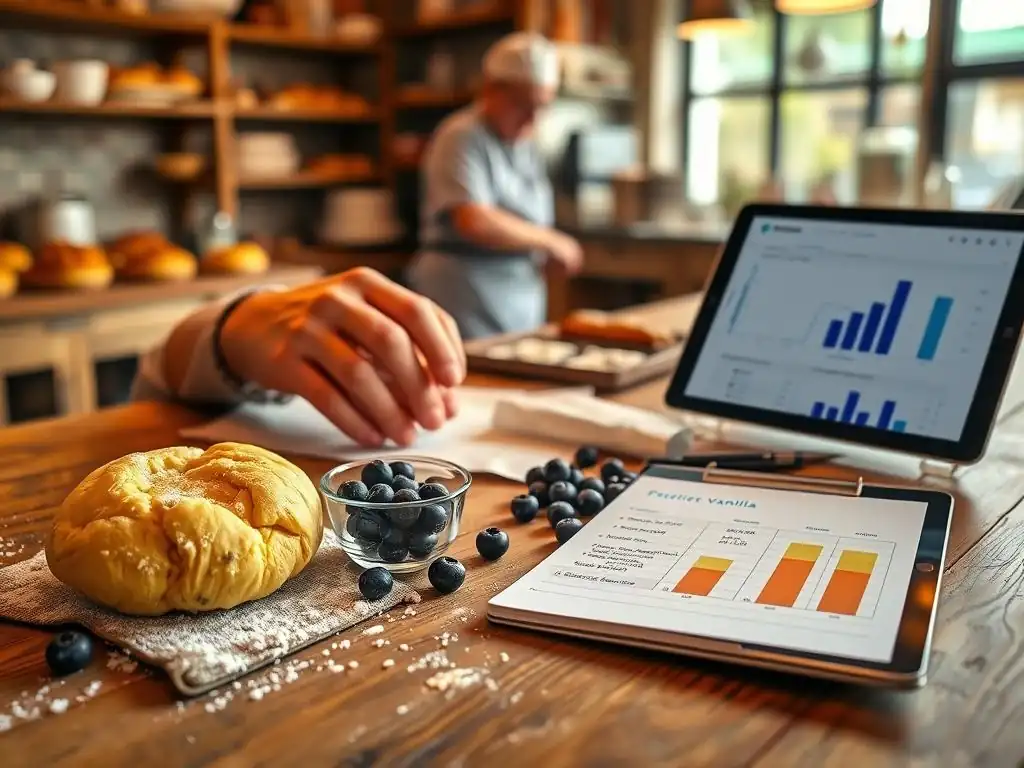
One of the most significant benefits of using cost-plus pricing is the confidence that each sale contributes directly to your business's profitability. By starting with a clear calculation of all costs and adding a desired profit margin, you build profit into the price from the ground up. This removes the guesswork common among new home bakers and provides a solid financial foundation. It ensures that you are not losing money on any product and that your business is generating the revenue needed to cover expenses and grow.
Transparency and Justification of Your Pricing
Cost-plus pricing offers transparency, both internally for the business owner and potentially externally for customers (though you don't typically share your detailed cost breakdown). As the business owner, you have a clear, logical reason for every price you set, based on tangible costs and a defined profit goal. This makes pricing decisions less arbitrary. While you might not list your cost breakdown on your price list, knowing your costs allows you to confidently explain the value behind your prices if asked, perhaps highlighting the quality of ingredients or the labor-intensive process, which are reflected in your costs.
Simplicity and Ease of Implementation
Compared to more complex pricing strategies like value-based pricing or competitive pricing (used in isolation), the basic principles of cost-plus pricing are relatively simple to understand and implement, especially for a small cottage food business. Once you have a system for tracking costs, applying the formula is straightforward. This accessibility makes cost plus pricing for baking a great starting point for home bakers learning about business finance, providing a clear path to setting prices that work.
Drawbacks of Cost-Plus Pricing
Ignoring Market Demand and Competitor Pricing
A significant drawback is that pure cost-plus pricing, without any market research, completely ignores what customers are willing to pay and what competitors are charging. You might calculate a price that is either far too high for your market (leading to low sales) or far too low (leaving potential profit on the table). For example, if your highly efficient process results in a very low cost, strict cost-plus pricing might lead you to underprice your product compared to its perceived value or competitor pricing.
Potential for Overpricing
If your production process is inefficient, or your ingredient costs are high due to small-batch purchasing or using premium ingredients without verifying market demand, cost-plus pricing can lead to prices that are uncompetitively high. Customers won't care about your high costs if they can get a similar product for less elsewhere. This strategy doesn't incentivize efficiency; in fact, higher costs can paradoxically lead to higher prices under this model, potentially making you less competitive.
Difficulty in Accurately Tracking All Costs
While seemingly simple, accurately tracking all costs, especially allocating indirect costs like utilities, can be challenging for a home-based business. Estimating how much of your home's electricity bill was used specifically for baking last month requires careful tracking and estimation, which can introduce inaccuracies into your cost calculations. If your cost data is inaccurate, your final price using cost plus pricing for baking will also be inaccurate, potentially undermining the reliability of the method.
Practical Examples of Cost-Plus Pricing in Action
Cost-Plus Pricing Example: Pricing a Jar of Homemade Jam
Let's price a standard 8oz jar of strawberry jam.
- Direct Costs:
- Strawberries: 2 lbs @ $3.00/lb = $6.00
- Sugar: 4 cups @ $0.25/cup = $1.00
- Pectin: 1 box @ $3.00/box (makes 8 jars) = $0.38 per jar
- Lemon Juice: $0.10
- Jar & Lid: $0.75 per jar
- Label: $0.10 per jar
- Direct Labor: 30 mins for a batch making 8 jars. At $20/hour, labor per jar = ($20/hour * 0.5 hours) / 8 jars = $10 / 8 = $1.25 per jar.
- Total Direct Cost per Jar: $6.00 (for 8 jars) + $1.00 (for 8 jars) + $0.38 + $0.10 + $0.75 + $0.10 + $1.25 = $9.58 for the batch / 8 jars = ~$1.20 per jar (recalculating based on batch costs). Let's refine: Ingredient cost for 8 jars = $7.10. Packaging cost for 8 jars = $0.75 * 8 = $6.00. Direct labor for 8 jars = $10. Total Direct Cost for 8 jars = $7.10 + $6.00 + $10 = $23.10. Direct Cost per Jar = $23.10 / 8 = $2.89.
- Indirect Costs (Allocated): Assume monthly overhead is $300 and you sell 200 items (including 50 jars of jam). Overhead per item = $300 / 200 = $1.50. So, allocated overhead per jam jar = $1.50.
- Total Cost per Jar: $2.89 (Direct) + $1.50 (Indirect) = $4.39.
- Desired Profit Margin: 25% (0.25).
- Cost-Plus Selling Price: $4.39 / (1 - 0.25) = $4.39 / 0.75 = $5.85.
Using cost plus pricing for baking (or jam-making! ), a reasonable starting price for your homemade jam would be $5.85 per 8oz jar. You would then compare this to local market prices for similar quality jam and adjust slightly if necessary, ensuring you don't drop below $4.39 unless you can reduce costs.
Cost-Plus Pricing Example: Pricing a Batch of Granola Bars
Let's price a batch of 12 large granola bars.
- Direct Costs:
- Oats, Nuts, Seeds: $3.50
- Sweeteners (honey/maple syrup): $1.50
- Add-ins (chocolate chips/dried fruit): $2.00
- Oil/Flavorings: $0.50
- Packaging (individual wraps/box): $0.30 per bar * 12 bars = $3.60
- Direct Labor: 45 mins for the batch. At $20/hour, labor for batch = $20 * 0.75 hours = $15.
- Total Direct Cost for 12 bars: $3.50 + $1.50 + $2.00 + $0.50 + $3.60 + $15 = $26.10.
- Direct Cost per Bar: $26.10 / 12 = $2.18.
- Indirect Costs (Allocated): Using the previous example's $1.50 overhead per item, allocated overhead per granola bar = $1.50.
- Total Cost per Bar: $2.18 (Direct) + $1.50 (Indirect) = $3.68.
- Desired Profit Margin: 20% (0.20).
- Cost-Plus Selling Price: $3.68 / (1 - 0.20) = $3.68 / 0.80 = $4.60.
Based on cost plus pricing for baking these granola bars, a single large bar could be priced around $4.60. This might seem high compared to mass-produced bars, but reflects the cost of quality ingredients, individual packaging, and skilled labor for a homemade product. You'd then assess if the market for premium, homemade granola bars supports this price point.
Cost-Plus Pricing Example: Pricing a Loaf of Bread
Let's price a standard loaf of sourdough bread.
- Direct Costs:
- Flour (bread flour, whole wheat): 3 cups total @ avg $0.20/cup = $0.60
- Water, Salt, Starter: $0.10
- Electricity/Gas for baking: Estimated $0.50 per loaf (based on oven time)
- Packaging (bag, label): $0.50
- Direct Labor: 30 mins hands-on (mixing, shaping, baking) + 15 mins active starter maintenance/feeding allocated per loaf. Total 45 mins. At $20/hour = $20 * 0.75 hours = $15.
- Total Direct Cost per Loaf: $0.60 + $0.10 + $0.50 + $0.50 + $15 = $16.70.
- Indirect Costs (Allocated): Using the previous example's $1.50 overhead per item, allocated overhead per loaf = $1.50.
- Total Cost per Loaf: $16.70 (Direct) + $1.50 (Indirect) = $18.20.
- Desired Profit Margin: 20% (0.20).
- Cost-Plus Selling Price: $18.20 / (1 - 0.20) = $18.20 / 0.80 = $22.75.
This example highlights how labor-intensive products like sourdough can have a high cost base when labor is properly valued. A $22.75 price for a loaf of sourdough calculated using cost plus pricing for baking might seem very high, but it reflects the significant time and skill involved, plus utilities and overhead.
This price would need to be compared against what artisan bakeries charge for similar quality sourdough in your area. If the market price is lower, you might need to find ways to reduce labor time, ingredient costs, or accept a lower margin on this specific product, potentially offsetting it with higher margins on less labor-intensive items.
Tips and Tricks for Optimizing Your Cost-Plus Pricing Strategy
Regularly Reviewing and Adjusting Your Pricing
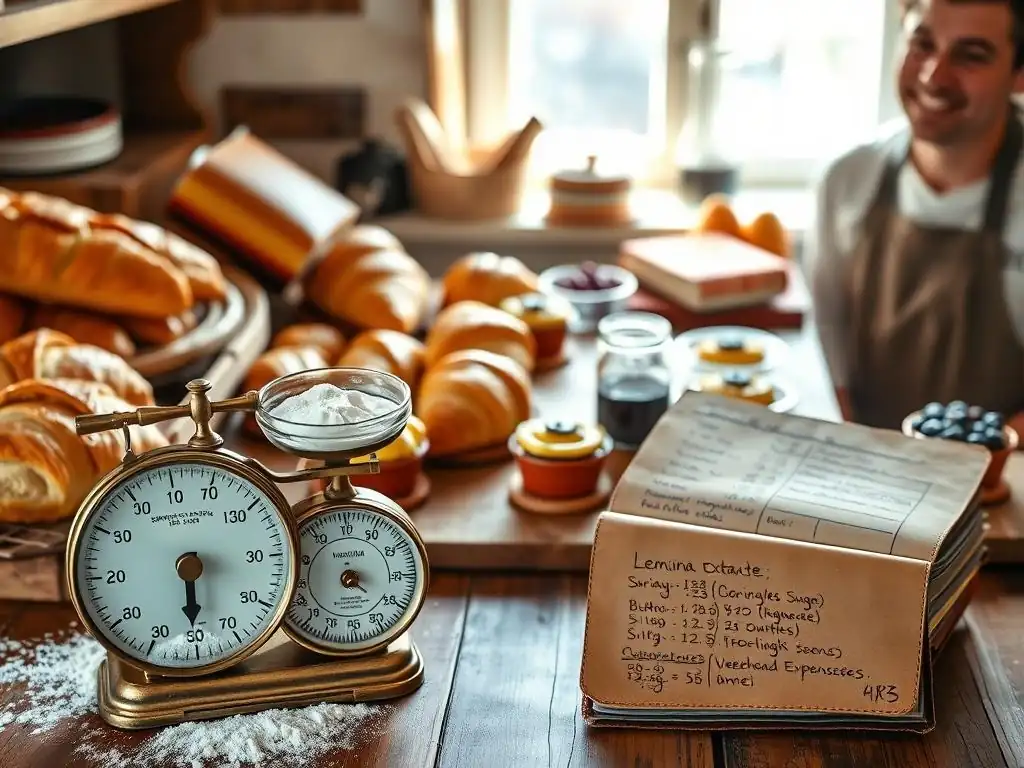
Costs fluctuate. The price of flour, butter, or eggs can change significantly over time. Utility rates might increase. Even your efficiency might improve or decrease depending on your workload. For your cost plus pricing for baking strategy to remain accurate and effective, you must review and adjust your cost calculations and resulting prices regularly. Aim for at least a quarterly review. Check your supplier invoices for ingredient price changes. Re-evaluate your estimated utility usage. As you become more efficient, your direct labor time per batch might decrease.
Setting a reminder to review your pricing every few months is a simple but powerful step. This ensures your prices continue to reflect your true costs and desired profitability in the current economic climate. Don't wait until you feel like you're not making enough money; proactive review is key.
Streamlining Your Production Process to Reduce Costs
Once you've used cost-plus pricing to understand where your costs lie, you can look for ways to reduce them without sacrificing quality. Streamlining your production process is a great way to lower direct labor costs and potentially utility costs. Can you prepare ingredients in larger batches? Can you schedule baking to maximize oven efficiency? Are there tools or techniques that could speed up mixing, shaping, or packaging? Even small improvements in efficiency can add up over time, directly reducing the cost per item.
Reducing waste is another form of streamlining. Precise measurements, proper storage of ingredients, and careful baking techniques minimize wasted ingredients and failed batches, directly lowering your costs per usable product. Lower costs mean you can potentially offer more competitive prices or increase your profit margin without raising prices.
Negotiating with Suppliers for Better Ingredient Prices
As your business grows and you purchase ingredients in larger quantities, don't hesitate to explore different suppliers or negotiate prices with your current ones. Buying in bulk often reduces the per-unit cost of ingredients like flour, sugar, and nuts. Consider sourcing from local farms or wholesalers if possible. Even a small percentage reduction in the cost of your most frequently used ingredients can have a significant positive impact on your overall costs and thus on your cost plus pricing for baking.
Building relationships with suppliers can also lead to better terms or advance notice of price changes. While negotiating might seem intimidating, remember that you are a valuable customer. Ask about bulk discounts, loyalty programs, or potential price breaks for consistent orders.
Monitoring Competitor Pricing and Market Trends
While cost-plus pricing is cost-driven, you cannot operate in a vacuum. Regularly monitor what your competitors are charging for similar products and stay aware of market trends in your area. Are customers willing to pay a premium for organic ingredients? Is there high demand for gluten-free options that could command a higher price? Use market information to validate or adjust the prices you calculate using the cost-plus method.
If your calculated price is significantly different from the market, understand why. Is it due to higher quality ingredients (a potential selling point)? Is it due to inefficiencies you need to address? Or is the market simply unwilling to pay your desired profit margin for that specific item? Use competitor pricing and market trends as valuable feedback to refine your cost plus pricing for baking strategy, ensuring your prices are both profitable and appealing.
Beyond the Basics: Advanced Cost-Plus Pricing Considerations
Incorporating Variable Costs into Your Pricing Strategy
While we discussed direct costs (like ingredients) and indirect costs (like rent), sometimes it's helpful to further categorize costs as variable or fixed. Variable costs change directly with the volume of production (e.g., ingredients, packaging, direct labor per item). Fixed costs remain relatively constant regardless of production volume (e.g., monthly website hosting, insurance). Understanding this distinction is useful because as your volume increases, your fixed costs are spread across more units, decreasing the allocated fixed cost per item.
In advanced cost plus pricing for baking, you might calculate a price based only on variable costs plus a contribution margin per unit, which then collectively covers fixed costs and contributes to profit. This level of detail can be useful for understanding the financial impact of scaling your production.
Understanding the Impact of Volume on Your Costs and Pricing
The volume of products you sell directly impacts your allocated indirect costs per item. As mentioned, if your total monthly overhead is $300 and you sell 100 items, the overhead per item is $3.00. If you increase sales to 500 items with the same $300 overhead, the overhead per item drops to $0.60. This significantly lowers your total cost per item ($2.89 direct + $0.60 indirect = $3.49 for the jam jar), potentially allowing you to lower your selling price to be more competitive or maintain the price and enjoy a higher profit margin.
Conversely, if your volume drops, the allocated overhead per item increases, driving up your costs. Understanding this relationship is key to managing profitability as your business scales up or down. Cost plus pricing for baking needs to consider expected volume when allocating overhead.
Using Cost-Plus Pricing as a Foundation for Market-Based Pricing
Cost-plus pricing doesn't have to be the only strategy you use forever. Many successful businesses use it as a foundation. They calculate their minimum profitable price using cost-plus and then adjust that price upwards based on market demand, competitor pricing, and the perceived value of their unique products. This hybrid approach ensures profitability while allowing you to capitalize on market opportunities and the unique value you offer.
For instance, if your cost-plus price for a special occasion cake is $60, but similar cakes from reputable local bakers sell for $80-$100, you might choose to price yours at $85. This hybrid cost plus pricing for baking strategy allows you to capture additional profit based on market value, while still being confident that your base costs are covered.
Common Mistakes to Avoid When Using Cost-Plus Pricing

Failing to Accurately Track All Costs
This is arguably the most common and damaging mistake. If you don't track every ingredient, every piece of packaging, every minute of labor, and a realistic portion of your overhead, your calculated 'cost' will be too low. This leads directly to underpricing your products, resulting in lower-than-expected profits or even losses, despite using the cost-plus method. Be diligent and detailed in your cost tracking from day one.
Setting Unrealistic Profit Margins
While it's tempting to aim for a very high profit margin (e.g., 50% or more), setting a margin that the market simply won't support will result in prices that are too high, leading to few sales. Conversely, setting a margin that is too low (e.g., 5-10%) might not generate enough profit to reinvest in the business or provide a sustainable income, even if you sell a high volume. Research typical margins in your industry and balance your profit goals with market reality when applying cost plus pricing for baking.
Ignoring Market Demand and Competitor Pricing
As discussed, relying solely on your costs without considering the market is a major pitfall. Your price must not only cover your costs and desired profit but also be acceptable to your target customers and competitive within your local market, considering the quality and uniqueness of your product. Use market data to inform your final pricing decisions after calculating your cost-plus baseline.
Not Reviewing and Adjusting Prices Regularly
The business environment is dynamic. Ingredient prices change, utility costs fluctuate, and your own efficiency evolves. Failing to regularly review your costs and adjust your prices means your initial cost-plus calculation quickly becomes outdated. This can lead to shrinking profit margins as costs rise, if your prices remain stagnant. Make price review a standard part of your business operations.
Tools and Resources for Cost-Plus Pricing Success
Spreadsheet Templates for Cost Calculation
You don't need fancy software to start. A simple spreadsheet (like those in Google Sheets, Excel, or similar programs) can be incredibly effective for tracking ingredient costs, recipe costs, labor time, and overhead. You can create templates for each recipe to input ingredient quantities and costs, calculate labor, and add allocated overhead. Many free templates specifically designed for food costing are available online to help you get started with cost plus pricing for baking calculations.
Online Cost-Plus Pricing Calculators
Several websites and business blogs offer free online calculators specifically for cost-plus pricing. While these tools are often basic, they can be helpful for quickly calculating a potential selling price once you have your total cost per unit and desired profit margin. They are great for getting a quick estimate or double-checking your manual calculations.
Recommended Accounting Software
As your business grows, dedicated accounting software (like QuickBooks, Xero, or even simpler ones like Wave) can significantly streamline tracking expenses, income, and profitability. While not strictly a cost-plus pricing tool, good accounting software makes it much easier to pull accurate data on your overall expenses, which is essential for calculating and allocating overhead costs effectively. Some software even has features for tracking inventory and recipe costs.
Conclusion: Mastering Cost-Plus Pricing for a Profitable Cottage Food Business
Key Takeaways for Implementing Cost-Plus Pricing Effectively
Mastering cost plus pricing for baking is a fundamental step towards building a sustainable and profitable cottage food business. The core principle is simple: identify all your costs (direct ingredients, packaging, labor, and allocated indirect overhead), add a desired profit margin, and that gives you a solid baseline for your selling price. Remember to track ingredient costs accurately per recipe, value your time by including direct labor, and find a fair way to allocate overhead expenses.
While the formula is straightforward, success lies in the details – diligent cost tracking, realistic profit margin setting, and regular review. Don't forget to use your calculated cost-plus price as a starting point and fine-tune it based on crucial market research, observing competitor pricing and understanding what your customers are willing to pay for the quality and value you provide.
Growing Your Business with Smart Pricing Strategies
Implementing cost-plus pricing provides clarity and confidence in your financial operations. It moves you away from guesswork and towards data-driven decisions. Knowing your true costs and ensuring profitability on every sale allows you to make informed choices about which products are most profitable, where you might need to become more efficient, and how to strategically adjust prices as costs or market conditions change.
A strong grasp of cost plus pricing for baking is not just about setting prices; it's about understanding the financial health of your business. By consistently applying this method and combining it with market awareness, you lay the groundwork for sustainable growth, allowing you to turn your passion for baking into a thriving and rewarding venture.
Frequently Asked Questions
How does Cost-Plus Pricing work in the context of home baking?
Cost-Plus Pricing involves calculating the total cost of ingredients and labor and then adding a predetermined profit margin to arrive at the selling price. This ensures you cover expenses and make a profit.
What are the key cost components I need to consider when using Cost-Plus Pricing for my baked goods?
You must factor in the cost of all ingredients, including even small amounts of spices. Additionally, you should account for your labor costs, and potentially packaging and utilities used during baking.
Why is Cost-Plus Pricing recommended for home bakers?
It offers a transparent and straightforward way to determine pricing. It allows bakers to easily adjust prices as ingredient costs fluctuate, ensuring consistent profitability.
How do I determine a reasonable profit margin to add using Cost-Plus Pricing?
Research market prices for similar baked goods in your area. Consider your skill level and the quality of your ingredients when setting your desired profit margin.
What are the potential drawbacks of using Cost-Plus Pricing alone?
It doesn't always consider competitor pricing or customer demand, potentially leading to prices that are too high or too low. It is recommended to combine cost plus pricing with market research to determine the right price.
Final Reflection: The Sweet Success of Strategic Pricing
Understanding cost-plus pricing isn't just about numbers; it's about the sustainable future of your baking business. Profitability isn't a luxury for home bakers; it's the lifeblood that allows you to continue creating delicious treats and sharing your passion with others. This article has explored the practical application of cost-plus pricing, equipping you with the tools to accurately calculate costs, determine a fair profit margin, and ultimately, price your baked goods for success.
The impact of proper pricing extends far beyond simple financial gain. It allows you to value your time, skills, and ingredients appropriately, fostering a sense of professional pride and self-worth. The price is what you ask. Value is what the customer gets.
This quote highlights the crucial connection between pricing and the perceived value of your products. By mastering cost-plus pricing, you not only ensure profitability but also communicate the quality and dedication poured into each creation, attracting loyal customers who appreciate your craft.
Now, it's your turn. Take the knowledge gained from this article and apply it to your own baking business. Experiment with different profit margins, analyze your costs meticulously, and observe the impact on your bottom line. Remember, mastering cost-plus pricing is an ongoing process, a journey of refinement and adaptation. Embrace the challenge, and watch your baking business flourish, one delicious, strategically priced treat at a time.
Unlock Your Baking Business's Profit Potential!
Thanks for taking the time to learn about mastering Cost-Plus pricing! You've now got the tools to confidently price your delicious creations and build a thriving baking business. Ready to put your newfound knowledge into practice?
- Calculate the price of your star recipe using the Cost-Plus method: Grab your recipe and cost sheet—let's turn those delicious treats into profitable ventures!
- Share your Cost-Plus calculations with fellow bakers in our comments section: Let's build a supportive community and help each other succeed! What pricing challenges have you faced, and how did you overcome them?
- Experiment with different profit margins: See how adjusting your markup affects your overall profitability. What's the sweet spot for your business?
What surprising insights did you discover about your pricing strategy after using the Cost-Plus method?