
Measuring Spices Accurately: Tips for Consistent Baking

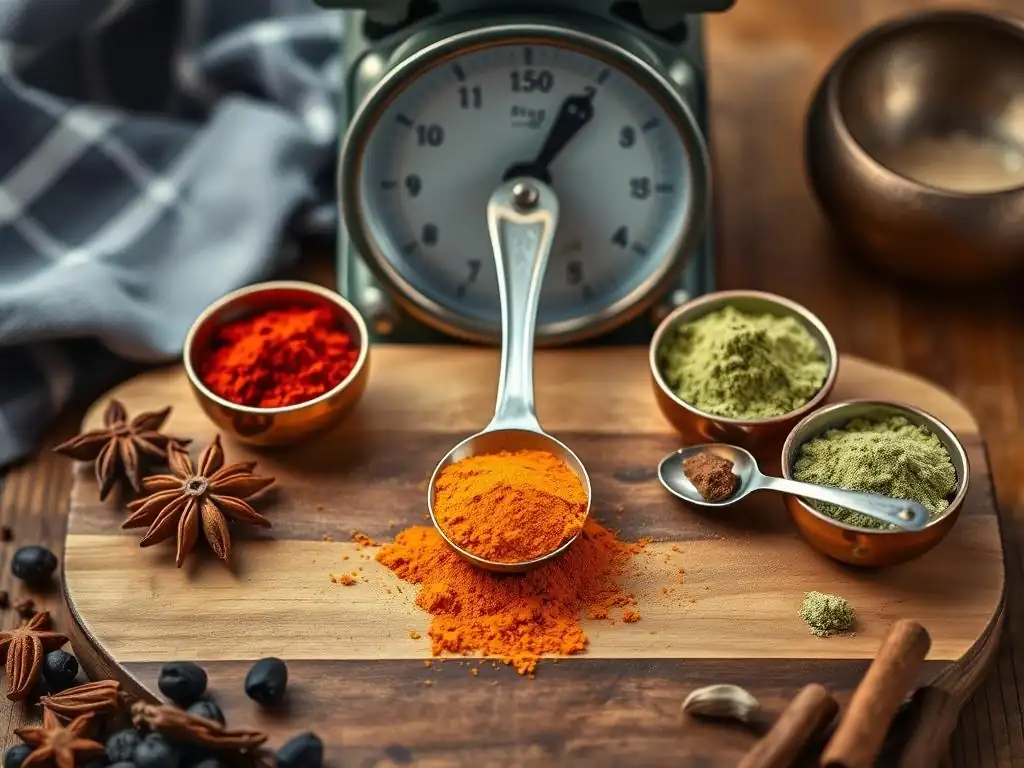
Welcome to BakeWithEase, your companion on a delicious journey into the world of baking! Are you tired of inconsistent results in your baked goods? Discover the secret to perfectly flavored creations in our latest deep dive: Mastering the art of accurate spice measurements baking. Unlocking this key element will elevate your recipes from good to extraordinary. Ready to bake with confidence? Let's get started!
- Measuring Spices Accurately: Tips for Consistent Baking on BakeWithEase
- Why Accurate Spice Measurements Matter in Baking
- Tools for Precise Spice Measurement in Baking
- Techniques for Accurate Spice Measurement
- Storing Spices Properly for Best Flavor and Accurate Measurement
- Spice Measurement Chart for Common Baking Spices
- Adjusting Spice Amounts in Baking Recipes
- Troubleshooting Spice-Related Baking Issues
- Conclusion: Mastering Accurate Spice Measurements for Baking Success
-
Frequently Asked Questions
- How crucial is accurate spice measurement in baking?
- What's the best way to measure spices for baking, especially small quantities?
- Are there differences in volume between ground and whole spices, and how does this affect measurement?
- How does humidity affect dry spices, and does it impact accurate measurements?
- If I accidentally add too much spice to a recipe, can I fix it?
- Final Reflection: The Unsung Hero of Baking Precision
- Unlock Your Baking Potential: Precise Spice, Perfect Results!
Measuring Spices Accurately: Tips for Consistent Baking on BakeWithEase
Why Accurate Spice Measurements Matter in Baking
Baking is often described as a science, where precise ratios of ingredients are critical to achieving the desired chemical reactions and structural outcomes. While we often focus heavily on flour, sugar, and leavening agents, the accurate measurement of spices plays a surprisingly significant role. Spices, though used in smaller quantities, contribute the soul of many baked goods, providing aroma, depth, and characteristic flavors. Getting these measurements right is fundamental to consistent baking results, ensuring that your favorite recipes turn out perfectly every time you make them. Without accurate spice measurements baking can feel unpredictable and frustrating.
Think about a classic spiced apple pie or a warm gingerbread cookie. The magic isn't just in the crust or the texture; it's largely in the blend and intensity of the spices used – cinnamon, nutmeg, cloves, ginger. Too much of one spice can overpower all other flavors, leading to a harsh or unbalanced taste. Too little, and the baked good can taste bland and uninspired. Mastering precise spice measurement is a key step in elevating your baking from good to consistently great, allowing you to reproduce beloved flavors time and time again.
Achieving Consistent Flavor Profiles with Precise Spice Dosing
Precise spice dosing is the secret weapon for bakers aiming for consistency. Every time you bake a recipe, you want it to taste as good, if not better, than the last. This is particularly true for signature bakes or recipes you share with others. Slight variations in ingredients like flour or sugar might be somewhat forgiving, but even a small error in measuring potent spices can drastically alter the flavor profile. For instance, adding just a quarter teaspoon too much ground clove to a batch of gingerbread can make it taste medicinal rather than warmly spiced.
By focusing on accurate spice measurements baking becomes much more reliable. Let's consider a standard pumpkin pie recipe that might call for 1 teaspoon of cinnamon, 1/2 teaspoon of ginger, and 1/4 teaspoon of ground cloves. If you consistently measure these amounts accurately using proper techniques and tools, you will consistently achieve that familiar, comforting pumpkin pie flavor.
In contrast, if you scoop haphazardly, one batch might be heavy on the cinnamon, another might lack the warmth of ginger, leading to inconsistent results that make it hard to perfect your technique or trust your own recipes. Consistency in flavor builds confidence and makes the baking process more enjoyable.
The Impact of Inaccurate Spice Amounts on Baked Goods
The consequences of inaccurate spice amounts extend beyond just flavor. While taste is the most obvious impact, the volatile oils in spices can sometimes interact with other ingredients or affect texture, especially in delicate bakes. For example, an excessive amount of a spice like ground ginger, which can be quite pungent, might leave a lingering heat or bitterness. Similarly, too much ground clove or allspice can introduce an unpleasant astringency.
Furthermore, the absence of enough spice is just as detrimental as too much. Imagine biting into a snickerdoodle cookie that lacks that characteristic cinnamon-sugar crust punch because the cinnamon wasn't measured accurately. The cookie might still be edible, but it misses the essential flavor note that defines it. In recipes where spices provide warmth, depth, or contrast (like cardamom in a sweet roll), an inaccurate measurement can leave the final product tasting flat or one-dimensional. Achieving accurate spice measurements baking ensures that every component of your recipe contributes harmoniously to the final delicious outcome.
Tools for Precise Spice Measurement in Baking
Having the right tools is fundamental to achieving accurate spice measurements baking. While you might get away with approximations for some culinary tasks, baking demands precision, especially when dealing with potent flavorings like spices. Standard kitchen spoons aren't designed for accurate measurement and can vary significantly in volume. Investing in proper measuring tools is a small step that yields big rewards in the consistency and quality of your baked goods.
The two primary tools for measuring spices in baking are measuring spoons and a kitchen scale. Each has its strengths and is suited for different situations or levels of precision desired. Understanding how to use each tool correctly is key to ensuring your spice measurements are as accurate as possible, leading to more predictable and delicious results every time you bake.
Essential Measuring Spoons for Baking Spices
A good set of measuring spoons is the most common and accessible tool for measuring spices. These sets typically include spoons for 1/4 teaspoon, 1/2 teaspoon, 1 teaspoon, and 1 tablespoon. For baking, it's crucial to use a set specifically designed for cooking and baking, as these are calibrated to provide reasonably accurate volumes. Look for sets made from sturdy metal or durable plastic with clearly marked measurements that won't fade over time.
When using measuring spoons for accurate spice measurements baking, ensure you use the dry measuring spoons, not liquid measuring spoons (which are designed with a spout and fill line). The technique for filling and leveling the spoon is also critical, which we'll discuss later. A set that includes less common sizes like 1/8 teaspoon can be incredibly useful for potent spices like cayenne pepper or ground cloves, where even a slight excess can be overwhelming. Some high-quality sets are designed to be narrow, fitting easily into spice jars, which is a convenient feature.
Using a Kitchen Scale for Accurate Spice Weights in Baking
For the utmost precision in accurate spice measurements baking, using a digital kitchen scale is the gold standard. While most traditional recipes provide spice quantities by volume (teaspoons, tablespoons), measuring by weight is inherently more accurate because it's not affected by how tightly the spice is packed or the size of the individual spice particles. A teaspoon of loosely packed ground cinnamon can weigh significantly less than a teaspoon of firmly packed cinnamon.
Modern digital scales are relatively inexpensive and measure in grams or ounces, often with precision down to 0.1 grams. Many professional bakers and serious home bakers prefer weighing spices, especially for large batches or complex recipes where consistency is paramount.
To measure spices by weight, simply place a small bowl or piece of parchment paper on the scale, tare (zero) the scale, and add the spice until the desired weight is reached. While converting volume measurements to weight requires a chart (as spice densities vary), some recipes are starting to include weight measurements for spices, reflecting this shift towards greater precision.
Calibrated Measuring Cups: Are They Accurate Enough for Spices?
Calibrated measuring cups, typically used for larger volumes of dry ingredients like flour or sugar, are generally not suitable for measuring the small quantities of spices called for in most recipes. Standard dry measuring cup sets usually start at 1/4 cup, which is equivalent to 4 tablespoons or 12 teaspoons – a far larger volume than you'd typically need for a single spice in a recipe.
Attempting to measure tiny amounts like 1/2 teaspoon in a 1/4 cup measure is impractical and highly inaccurate. The proportions are too small relative to the size of the cup, making it impossible to level properly or achieve any degree of precision. For accurate spice measurements baking, stick to dedicated measuring spoons or a kitchen scale. Measuring cups have their place in baking, but they are not the right tool for the granular precision needed with spices.
Techniques for Accurate Spice Measurement
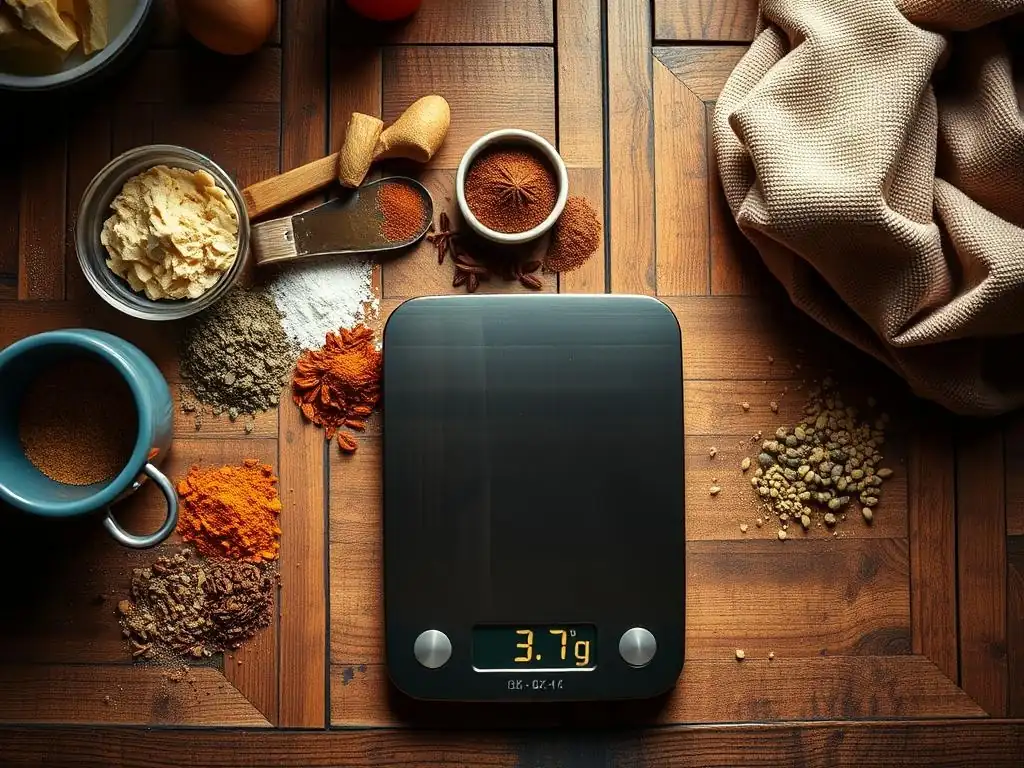
Even with the right tools, the way you use them is just as important for accurate spice measurements baking. Simply scooping a spoon into a jar isn't enough; specific techniques ensure you get the correct amount of spice every time, eliminating variability that can lead to inconsistent results. Mastering these simple techniques is crucial for any baker who wants to take their craft seriously.
These techniques involve careful filling, leveling, and understanding the difference between volume and weight measurement. By implementing these methods consistently, you remove much of the guesswork from working with spices, allowing you to focus on the other aspects of your baking and trust that your flavor base is spot on.
Leveling Spices for Accurate Spoon Measurements
When using measuring spoons, the most critical technique is leveling. This ensures that you are measuring a consistent volume each time. To level ground spices:
- Dip the measuring spoon into the spice jar or scoop spice into the spoon.
- Overfill the spoon slightly.
- Use a straight edge, such as the back of a knife or a small offset spatula, to scrape away the excess spice, making the top of the spice flush with the rim of the spoon.
It's important not to pack down ground spices into the spoon unless the recipe specifically calls for it (which is rare for spices). Packing can significantly increase the amount of spice in the spoon, leading to an overpowering flavor. For whole spices (like whole cloves or star anise), count them if the recipe specifies a number, or weigh them if a weight is given. If measuring whole spices by volume (e.g., 1 tsp whole cloves), fill the spoon without crushing them and level gently if needed. This careful leveling is fundamental to accurate spice measurements baking by volume.
Converting Spice Volumes to Weights for Baking
While many recipes list spices by volume, converting to weight offers superior accuracy, especially for common ground spices like cinnamon or ginger. However, this requires knowing the density of the specific spice, which can vary slightly depending on grind size and how finely it's processed. A general conversion chart can be helpful, but remember these are often averages. For example:
- 1 teaspoon ground cinnamon ≈ 2.6 grams
- 1 teaspoon ground nutmeg ≈ 2.2 grams
- 1 teaspoon ground ginger ≈ 2.0 grams
- 1 teaspoon ground cloves ≈ 2.4 grams
If a recipe calls for 2 teaspoons of ground cinnamon, you would aim for approximately 5.2 grams (2 x 2.6g) on your scale. Using a scale for accurate spice measurements baking eliminates the variable of how packed the spice is in the spoon. When converting, use a reliable source for conversion charts, but be aware that densities can vary. For critical recipes, weighing is the best approach if you have a scale and a reliable conversion.
Avoiding Common Spice Measurement Errors
Several common pitfalls can lead to inaccurate spice measurements:
- Using household spoons: Teaspoons and tablespoons used for eating are not calibrated for measurement and vary widely in volume.
- Scooping and not leveling: Simply scooping a spoon results in inconsistent amounts depending on how full or packed the spoon is.
- Measuring over the mixing bowl: If you accidentally overfill the spoon and level it over your bowl, the excess falls in, adding too much spice. Always level over a piece of parchment paper or a separate dish.
- Using clumpy spices: Spices that have clumped due to moisture or age are difficult to measure accurately by volume.
- Guessing: Never guess spice amounts, especially for potent ones.
By being mindful of these errors and employing proper leveling techniques or using a scale, you significantly improve your accurate spice measurements baking, leading to more reliable and delicious outcomes.
Storing Spices Properly for Best Flavor and Accurate Measurement
The flavor and potency of spices degrade over time, and improper storage can accelerate this process, affecting not only their taste but also how accurately they can be measured. Spices are sensitive to light, heat, air, and moisture. Storing them correctly ensures they retain their vibrant flavors and aromas, which is essential for impactful baking, and also helps maintain their texture, making them easier to measure accurately.
Proper storage also prevents issues like clumping, which makes accurate volume measurement nearly impossible. Investing time in organizing and storing your spices correctly is an investment in the quality and consistency of your baking.
The Importance of Fresh Spices for Baking
Fresh spices are paramount for achieving the best flavor in your baked goods. Over time, the volatile oils that give spices their aroma and taste evaporate. Ground spices have a larger surface area and lose potency faster than whole spices. While whole spices might last 3-4 years, ground spices are typically best used within 6-12 months. Using stale spices means you're adding bulk but very little flavor, leading to bland results even if your measurements are technically "accurate."
You can often tell if a ground spice is fresh by its aroma. Rub a small pinch between your fingers; if the aroma is faint or absent, it's likely past its prime and won't contribute much flavor to your baking. Using fresh, potent spices means you can rely on the amounts specified in recipes to deliver the expected flavor impact, contributing significantly to overall accurate spice measurements baking success.
Best Practices for Spice Storage to Prevent Clumping and Flavor Loss
To keep your spices fresh and prevent clumping:
- Store in airtight containers: Glass jars with tight-fitting lids are ideal. Avoid plastic containers which can absorb odors.
- Keep away from heat and light: Store spices in a cool, dark place, away from the stove, oven, or direct sunlight. A drawer or pantry shelf away from appliances is best.
- Avoid moisture: Never sprinkle spices directly from the jar over a steaming pot, as moisture can enter the jar and cause clumping. Measure spices into a spoon or dish first.
Following these simple practices drastically extends the life and potency of your spices. Well-stored spices maintain their loose, free-flowing texture, making it much easier to achieve accurate spice measurements baking when using measuring spoons.
How Spice Storage Affects Measurement Accuracy
Poor storage, particularly exposure to moisture, can cause ground spices to clump together. When spices are clumpy, it's impossible to get a consistent fill in a measuring spoon. A spoon filled with clumpy spice will likely contain more spice than a spoon filled with loose, free-flowing spice, even if you attempt to level it. This directly leads to inaccurate spice measurements.
For example, if your ground ginger has turned into a hard lump, trying to chip off a teaspoon will result in an inconsistent amount each time. Even if you manage to break it up, the texture is different from fresh ginger, affecting how it settles in the spoon. Storing spices correctly ensures they remain in a state that allows for easy and accurate volume measurement. If your spices are severely clumped, it's often best to replace them for both flavor and measurement accuracy.
Spice Measurement Chart for Common Baking Spices
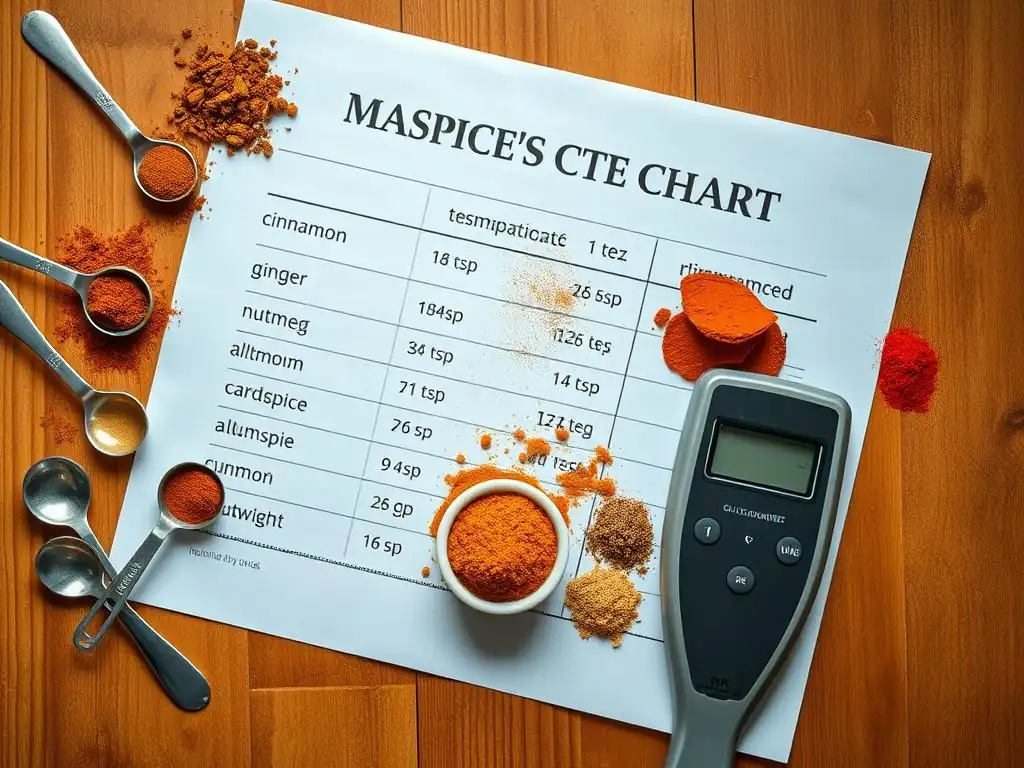
While weighing is the most accurate method, many recipes still use volume measurements. Having a general idea of common volume-to-weight conversions for frequently used baking spices can be incredibly helpful. Remember that these are approximate values, as the density of ground spices can vary based on grind size and moisture content. Using these figures with a kitchen scale can significantly improve your accurate spice measurements baking.
- Ground Cinnamon
- Ground Nutmeg
- Ground Ginger
Let's look at some typical conversions based on common densities.
Cinnamon: Volume to Weight Conversion
Cinnamon is one of the most widely used spices in baking, featuring in everything from cookies and cakes to pies and pastries. Ground cinnamon is relatively light and fluffy compared to some other spices.
- 1 teaspoon ground cinnamon ≈ 2.6 grams
- 1 tablespoon ground cinnamon ≈ 7.8 grams (approximately 3 teaspoons)
If a recipe calls for 2 tsp of ground cinnamon, you would aim for around 5.2 grams on your scale for maximum accuracy. Using a scale with these conversions is a great way to achieve more accurate spice measurements baking, especially if you're scaling a recipe up or down.
Nutmeg: Volume to Weight Conversion
Nutmeg, often used alongside cinnamon in sweet bakes, is denser than ground cinnamon. It's available whole (which you grate fresh) or pre-ground. Freshly grated nutmeg is generally considered more flavorful.
- 1 teaspoon ground nutmeg ≈ 2.2 grams
- 1 tablespoon ground nutmeg ≈ 6.6 grams (approximately 3 teaspoons)
For recipes calling for a pinch or a small amount of ground nutmeg, weighing can prevent accidentally adding too much of this potent spice. A quarter teaspoon of ground nutmeg is roughly 0.55 grams. Utilizing weight conversions helps ensure accurate spice measurements baking for even small quantities.
Ginger: Volume to Weight Conversion
Ground ginger provides a warm, slightly peppery note to baked goods like gingerbread, cookies, and spice cakes. Its density is similar to nutmeg.
- 1 teaspoon ground ginger ≈ 2.0 grams
- 1 tablespoon ground ginger ≈ 6.0 grams (approximately 3 teaspoons)
Knowing this conversion allows you to measure ginger precisely, avoiding the common issue of it being either too subtle or overwhelmingly spicy. If a recipe requires 1.5 teaspoons of ground ginger, you can calculate that as 3.0 grams for a more reliable measurement. Consistent, accurate spice measurements baking relies on understanding these equivalencies.
Adjusting Spice Amounts in Baking Recipes
Once you've mastered accurate spice measurements baking, you might want to start experimenting with recipes – scaling them, substituting spices, or even developing your own flavor profiles. Understanding how to adjust spice quantities correctly is crucial to maintaining balance and achieving the desired taste outcome without overpowering other ingredients.
Adjusting spices isn't just about simple arithmetic; it requires considering the potency of different spices and how they interact. Approaching this thoughtfully ensures your experimental bakes are successful and delicious.
Scaling Spice Quantities Up or Down
When scaling a recipe up or down, you generally scale all ingredients proportionally. If you double a cookie recipe, you would typically double the amount of each spice. However, with potent spices, a linear scale isn't always the best approach, especially when scaling up significantly. For instance, doubling the amount of ground cloves in a recipe might make the flavor too intense.
A good strategy when scaling spices (especially potent ones) is to start with slightly less than the proportionally scaled amount and taste a small sample of the dough or batter (if safe to do so, like cookie dough) or the finished product, adding more if needed. For example, if doubling a recipe calls for doubling a potent spice from 1/4 tsp to 1/2 tsp, you might start with 1/3 tsp and adjust. When scaling down, be extra precise with your smaller measurements using accurate spice measurements baking tools like tiny measuring spoons or a precise scale.
Substituting Spices and Maintaining Flavor Balance
Substituting spices can add a new dimension to familiar recipes, but it requires understanding the flavor profile and potency of both the original and the substitute spice. For example, replacing cinnamon with cardamom will yield a very different result. If substituting spices with similar profiles (like swapping ground ginger for ground cardamom in some recipes), consider their relative strengths. Cardamom is often more potent than ginger, so you might use slightly less.
- Common Baking Spice Substitutions:
- Allspice for Cinnamon/Nutmeg/Cloves blend
- Cardamom for Ginger or Cinnamon (use less)
- Nutmeg for Mace (use slightly more Mace as it's milder)
- Mixed Spice for a blend of common baking spices
When substituting, start with a conservative amount (perhaps 3/4 of the original amount if the substitute is potent) and adjust in future batches. Accurate spice measurements baking are essential here to control the impact of the new spice.
Experimenting with Spice Ratios in Baking: A Guide
Developing your own spice blends or adjusting the ratios in a recipe is where baking gets truly creative. Start with a base recipe you know well and make small, incremental changes to the spice amounts in test batches.
- Choose one or two spices to adjust first.
- Increase or decrease the amount by a small increment (e.g., 1/8 or 1/4 teaspoon).
- Bake the recipe and taste it critically, comparing it to the original.
- Make notes on what you changed and the resulting flavor.
- Repeat the process, making further small adjustments until you achieve your desired flavor balance.
This iterative process, combined with accurate spice measurements baking for each trial, allows you to fine-tune spice levels and ratios confidently, leading to truly personalized and perfected recipes.
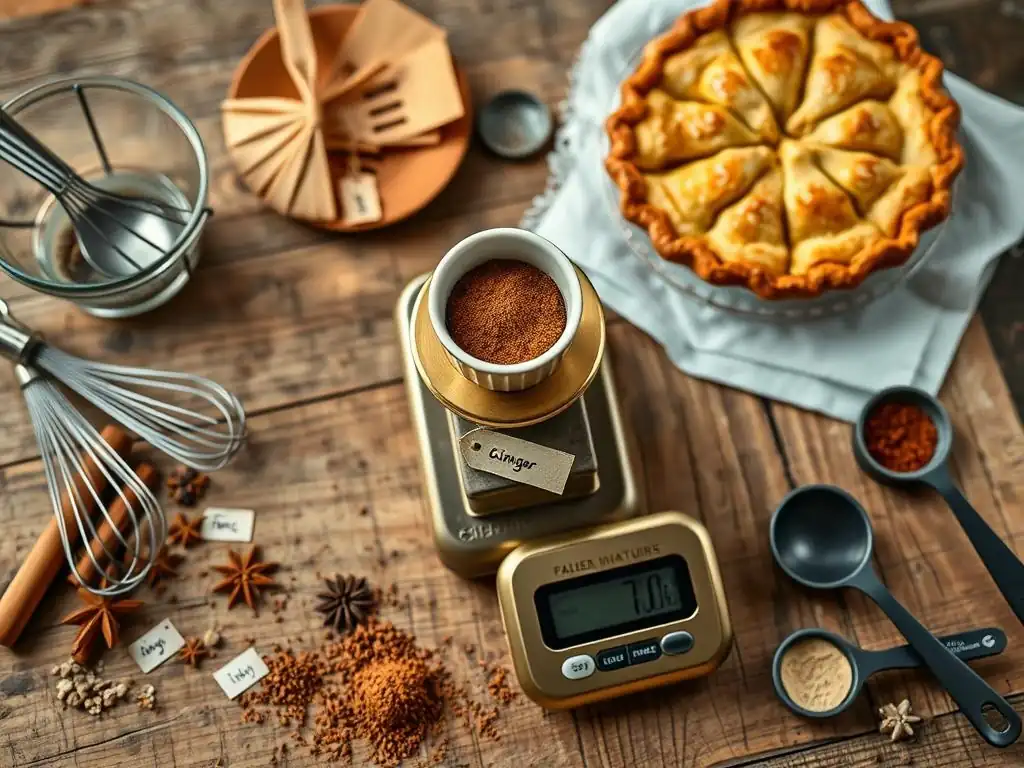
Even with careful measurement, sometimes things go wrong. You might find a spice flavor is too strong, too weak, or tastes off. Knowing how to identify and address these issues is part of becoming a skilled baker. Troubleshooting spice problems helps you learn from mistakes and improve your technique for accurate spice measurements baking in the future.
Common issues often relate to the quantity of spice, the quality of the spice, or how it interacts with other flavors in the recipe.
Spice Overpowering Other Flavors: How to Fix It
If a spice flavor is too dominant in your baked goods, it usually means too much was added, or the spice was exceptionally potent. Unfortunately, once baked, it's difficult to remove flavor.
- For the current batch: If possible, serve the item with something that can balance the strong flavor, like a mild glaze, whipped cream, or unsweetened accompaniment.
- For future batches:
- Carefully review your measurement technique. Did you level properly?
- Reduce the amount of the offending spice in the recipe next time. Start by cutting it back by 1/4 or 1/3.
- Consider the freshness/potency of your spice. Was it newly opened and very strong?
Making accurate spice measurements baking a non-negotiable step helps prevent this issue from occurring in the first place.
Lack of Spice Flavor: How to Enhance It
If your baked goods taste bland or lack the expected spice notes, the likely culprits are inaccurate measurement (too little spice added) or stale spices.
- For the current batch: While you can't add spice into the baked good after it's cooked, you can add spice to accompaniments like glazes, icings, or sauces served with it. You could also dust the finished product with a spiced sugar mixture.
- For future batches:
- Double-check the recipe's spice quantities and ensure you are measuring accurately.
- Check the freshness of your spices. Are they old and lacking aroma? If so, replace them.
- Consider slightly increasing the amount of spice in the recipe for the next bake, perhaps by 1/4 or 1/2 teaspoon, depending on the total amount called for.
Consistent, accurate spice measurements baking using fresh spices is the best way to ensure vibrant flavor in every bake.
Identifying Old or Stale Spices Affecting Taste
Using old or stale spices is a common reason for disappointing flavor, even if you measure accurately. Spices don't necessarily "go bad" in a way that makes you sick, but they lose their essential oils and flavor compounds.
Signs of stale spices:
- Faded color
- Lack of noticeable aroma when rubbed between fingers
- Ground spices that are severely clumped
- Whole spices that look dusty or brittle
If you suspect your spices are old, compare them to a fresh batch if possible, or simply replace them. While it might seem wasteful, using fresh spices is fundamental to achieving the intended flavor profile of a recipe. You can have perfect, accurate spice measurements baking, but if the spice itself has no flavor, your results will still be disappointing. Make it a habit to check the freshness of your spices periodically.
Conclusion: Mastering Accurate Spice Measurements for Baking Success
Achieving consistent, delicious results in baking hinges on accuracy, and nowhere is this more evident than with spices. These potent ingredients, used in relatively small amounts, have a profound impact on the final flavor, aroma, and overall appeal of your baked goods. By understanding why accurate spice measurements baking is important, utilizing the right tools, employing proper techniques, and maintaining the freshness of your spices, you gain greater control over your baking outcomes.
Moving beyond guesswork to precise measurement transforms your baking from an occasional success into a reliable art form. Whether you rely on carefully leveled measuring spoons or the precision of a digital scale, making the effort to measure spices accurately is a habit that pays off in consistently flavorful cookies, cakes, breads, and pastries. Embrace the precision, and taste the difference it makes!
Consistent Baking Results Through Precise Spice Control
Precise spice control is a cornerstone of consistent baking results. When you measure spices accurately every single time, you eliminate a major variable in your recipes. This means that if a batch of cookies doesn't turn out perfectly, you can look at other factors like oven temperature, mixing technique, or ingredient temperature, rather than wondering if you added too much or too little cinnamon. Accurate spice measurements baking provides a reliable foundation upon which to build and perfect your skills.
This consistency is especially valuable when sharing recipes or baking for others. They come to expect a certain flavor from your signature bakes, and accurate spice measurement ensures you can deliver that expected deliciousness batch after batch. It builds confidence in your abilities and makes the baking process itself more predictable and enjoyable.
Resources for Further Learning about Baking Spices
To deepen your understanding of spices in baking, explore resources that delve into their origins, flavor profiles, and how they interact. Look for detailed guides on specific spices like vanilla, cardamom, or ginger. Many baking books and reputable online sources offer in-depth information on using spices effectively.
Consider experimenting with whole spices and grinding them yourself just before use – this often provides the most intense flavor. Learn about different spice blends and how they are traditionally used in various cuisines and baked goods. The world of baking spices is vast and fascinating, and the more you learn, the better equipped you'll be to make informed decisions about their use and achieve truly accurate spice measurements baking for outstanding results.
Frequently Asked Questions
How crucial is accurate spice measurement in baking?
Accurate spice measurement is extremely important for consistent results. Even slight variations can significantly alter the flavor profile of your baked goods, leading to unexpected or undesirable tastes.
What's the best way to measure spices for baking, especially small quantities?
Using measuring spoons is the most common and generally reliable method. For tiny amounts (less than 1/8 teaspoon), consider using a digital kitchen scale for increased precision, or dividing larger measurements.
Are there differences in volume between ground and whole spices, and how does this affect measurement?
Yes, there is a difference! Ground spices are more compact than whole spices, so a measured amount of ground spice will have a stronger flavor impact. Adjust recipes accordingly, perhaps using slightly less of a ground spice substitute.
How does humidity affect dry spices, and does it impact accurate measurements?
Humidity can cause spices to clump, making accurate measurement difficult. Store spices in airtight containers in a cool, dry place to prevent this. Shake or stir spices before measuring to ensure they are loosely packed.
If I accidentally add too much spice to a recipe, can I fix it?
It depends on the spice and the recipe, but often you can't completely undo it. In some cases, adding a bit more of the other ingredients (like flour or liquid) can help to dilute the flavor, but it's always best to be precise from the start.
Final Reflection: The Unsung Hero of Baking Precision
Accurate spice measurements are not merely a detail; they are the cornerstone of consistent and delicious baking. A pinch too much or too little can transform a masterpiece into a culinary catastrophe, highlighting the crucial role of precision in this delicate art. This article explored various methods for achieving accuracy, from the humble teaspoon to the sophisticated digital scale, emphasizing the impact even minor discrepancies can have on the final product.
The pursuit of accurate spice measurement reflects a deeper cultural shift towards mindful cooking and a greater appreciation for the nuances of flavor. We've moved beyond haphazard estimations, embracing a more scientific approach to baking, driven by a desire for repeatable results and a deeper understanding of the ingredients we use. The difference between something good and something great is attention to detail.
This quote, though not specifically about baking, perfectly encapsulates the importance of precision in achieving truly exceptional results.
Now, consider your own baking journey. Are you ready to elevate your skills by embracing the principles of accurate spice measurement? Try experimenting with different measuring techniques, paying close attention to the subtle changes in your baked goods. The journey towards baking perfection begins with a single, precisely measured teaspoon – and the rewards are immeasurable. Embrace the challenge, and discover the transformative power of accuracy in your kitchen.
Unlock Your Baking Potential: Precise Spice, Perfect Results!
Thanks for taking the time to learn about measuring spices accurately! We hope you now feel confident in creating consistently delicious baked goods. Ready to put your newfound knowledge into practice?
- Master your spice game: Start by measuring your spices using a scale for precise results — you'll notice a remarkable difference! This ensures consistent flavor in every batch.
- Share your baking triumphs (and challenges!): Tell us about your experiences with precise spice measuring on our social media! Let's learn from each other.
- Experiment with new spice combinations: Now that you're measuring with accuracy, don't be afraid to get creative with your spice blends. What delicious flavor adventure awaits you?
Ready to bake something amazing with perfectly measured spices? What's your favorite spice to experiment with?