
Hydration is Key: Finding the Perfect Water Ratio for Pizza Dough

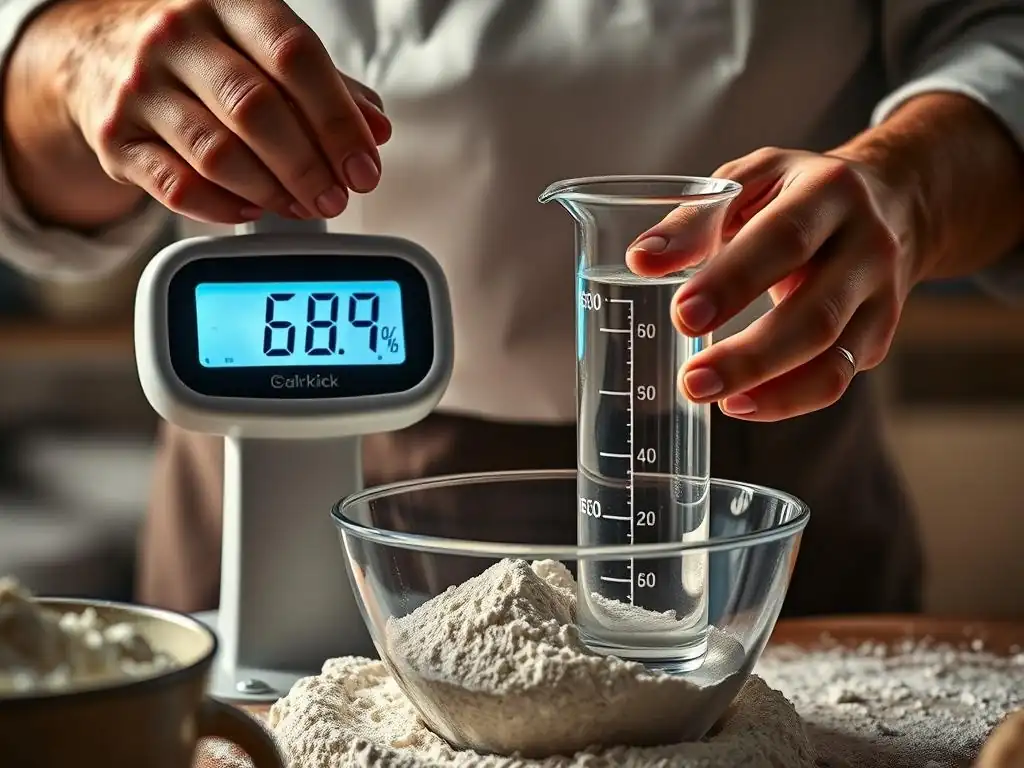
Welcome to BakeWithEase, where baking becomes a joy, not a chore! Ever wondered if you're really getting the most out of your pizza dough? Dive in and discover the secret to achieving that perfect crust – it all starts with mastering the perfect pizza dough water ratio. This isn't just about hydration; it's about unlocking flavor and texture you never thought possible. Ready to elevate your pizza game?
- Understanding Pizza Dough Hydration: The Foundation of Great Pizza
- Achieving the Perfect Pizza Dough Water Ratio: A Step-by-Step Guide
- Mastering Pizza Dough Hydration Levels: Different Styles, Different Ratios
- Troubleshooting Pizza Dough Hydration Problems: Common Issues and Solutions
- Experimenting with Pizza Dough Water Ratios: Finding Your Perfect Balance
- Beyond Water: Other Liquids to Enhance Your Pizza Dough
- Advanced Pizza Dough Hydration Techniques: For the Experienced Baker
-
Frequently Asked Questions
- What is the importance of water ratio in pizza dough?
- How does the water ratio affect the pizza crust?
- What is a good starting point for the water ratio in pizza dough?
- What factors can influence the ideal water ratio for pizza dough?
- How do I adjust the water ratio if my pizza dough is too sticky or too dry?
- Final Reflection: The Perfect Slice, One Drop at a Time
- Unlock Your Perfect Pizza Dough: Hydration Mastery Awaits!
Understanding Pizza Dough Hydration: The Foundation of Great Pizza
What is Pizza Dough Hydration and Why Does it Matter?
Pizza dough hydration refers to the amount of water used in relation to the amount of flour, expressed as a percentage. It is calculated by dividing the weight of the water by the weight of the flour and multiplying by 100. For instance, a dough made with 500 grams of flour and 300 grams of water has a hydration of (300 / 500) \* 100 = 60%.
This percentage is arguably the single most critical factor influencing the final texture and handling characteristics of your pizza dough. Getting the perfect pizza dough water ratio right is fundamental to achieving the desired crust, whether you're aiming for a crispy cracker-thin base or a light, airy Neapolitan edge.
The hydration level directly impacts how the gluten structure develops within the dough. Water allows the proteins in flour (glutenin and gliadin) to bond and form the elastic network known as gluten. More water generally leads to a more extensible dough, meaning it can be stretched thinner without tearing, and promotes a more open, airy crumb structure during baking. Conversely, less water results in a tighter, less extensible dough that is easier to handle but typically produces a denser, crispier crust. Understanding this relationship is the first step toward mastering your perfect pizza dough water ratio.
The Impact of Water on Pizza Dough Texture and Flavor
The amount of water in your pizza dough significantly dictates its final texture after baking. Lower hydration doughs (typically below 60%) yield a crust that is easier to roll or press thin and bakes up exceptionally crisp. Think of a classic New York style slice or a Roman-style pizza al taglio; these often benefit from lower to medium hydration for structure and crunch. The limited water also means the dough handles more easily, making it forgiving for beginners.
Higher hydration doughs (above 65%) result in a wetter, stickier dough that requires different handling techniques, but they reward the baker with a crust that is light, airy, and often develops large, irregular air pockets (cornicione). This is the hallmark of authentic Neapolitan pizza. Furthermore, higher hydration can influence flavor development. More water allows yeast to move and ferment more freely, potentially contributing to a more complex flavor profile, especially during longer fermentation periods. Finding the perfect pizza dough water ratio means balancing ease of handling with desired crust characteristics.
Achieving the Perfect Pizza Dough Water Ratio: A Step-by-Step Guide
Calculating the Ideal Water Percentage for Your Pizza Dough
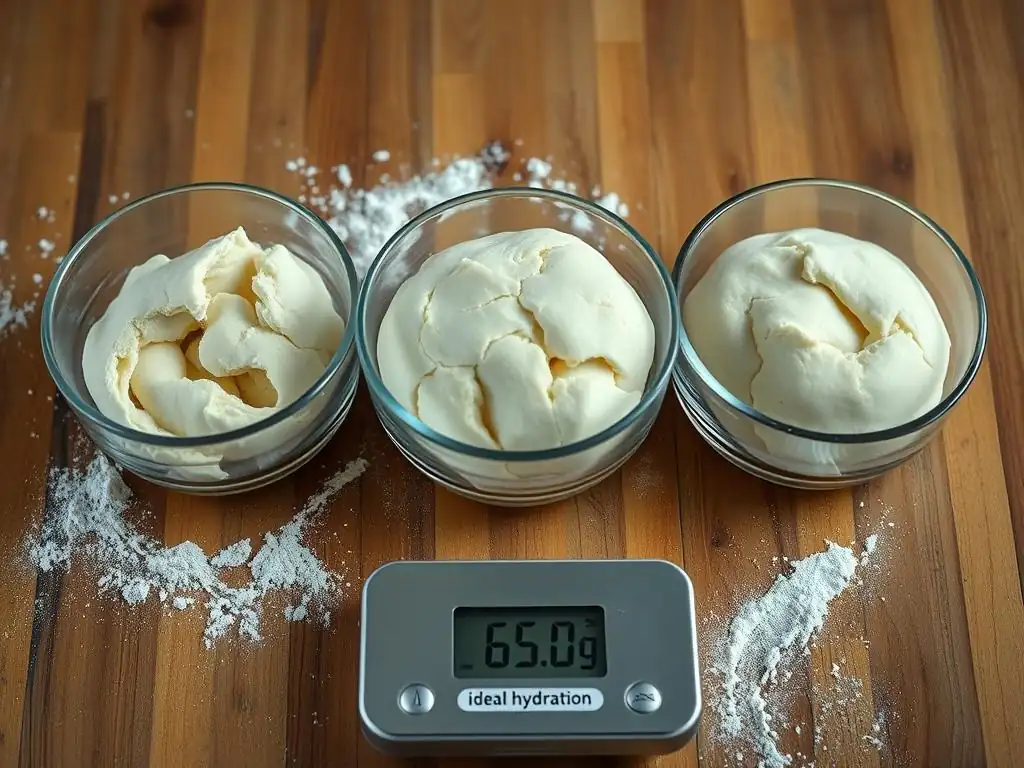
Determining your ideal water percentage starts with understanding the basic calculation: (Water Weight / Flour Weight) * 100 = Hydration %. Most standard pizza dough recipes fall within a hydration range of 55% to 70%. To calculate the water needed for a specific hydration, you rearrange the formula: Water Weight = (Hydration % / 100) * Flour Weight.
For example, if you want 62% hydration using 600 grams of flour, you'd need (62 / 100) * 600 = 0.62 * 600 = 372 grams of water. Precision in weighing your ingredients, especially the water, is crucial for consistent results when seeking the perfect pizza dough water ratio.
Once you've calculated the theoretical amount of water, consider starting in the middle of a typical range, say 60-65%, for a versatile dough. As you mix, observe the dough's consistency. Does it feel too stiff? Too sticky? This initial feel, combined with the calculation, helps you begin. Over time, as you gain experience, you'll learn to slightly adjust the water based on the specific flour you're using and the feel of the dough, even if the scale says otherwise, inching closer to your perfect pizza dough water ratio.
Factors Affecting Your Pizza Dough Water Needs: Flour Type, Environment, and More
Choosing the Right Flour for Optimal Hydration
The type of flour you use is perhaps the biggest variable influencing how much water your dough can absorb and how it behaves at different hydration levels. Flours with higher protein content, like strong bread flour (often 12-14% protein), can absorb significantly more water than softer flours, such as Italian Tipo 00 flour (typically 10-12% protein), which is milled for lower protein and finer particle size.
A bread flour might comfortably handle 65-75% hydration, yielding a robust, chewy crust, while the same hydration with Tipo 00 could result in an extremely wet and difficult-to-manage dough, better suited for 55-65% hydration for a classic Neapolitan texture.
Understanding the protein content and absorption rate of your specific flour brand is key to finding the perfect pizza dough water ratio. Some flour bags even provide an absorption value or recommend hydration ranges. Experimenting with different flours at similar hydration levels will quickly reveal how flour type impacts dough handling and final crust structure. For a consistent perfect pizza dough water ratio, stick to one type of flour initially and learn its characteristics before branching out.
Adjusting Water Based on Ambient Humidity and Temperature
Environmental conditions play a subtle but important role in pizza dough hydration. High humidity means there's more moisture in the air, which your flour can absorb even before you add water. On a very humid day, you might find that your dough feels sufficiently hydrated using slightly less water than you would on a dry day, perhaps a difference of 1-2% hydration. Conversely, in a very dry climate or during winter when indoor air is dry, the flour might absorb less ambient moisture, potentially requiring a tiny bit more water to achieve the same dough consistency.
Temperature also indirectly affects hydration by influencing fermentation speed and dough feel. Warmer temperatures speed up yeast activity, which can make the dough feel stickier and more relaxed sooner. While you don't drastically change hydration for temperature, being aware of how temperature affects dough feel can help you troubleshoot stickiness (is it over-fermented or truly too wet?). Keeping your kitchen temperature consistent or noting it down when you bake can help you refine your perfect pizza dough water ratio over time.
Mastering Pizza Dough Hydration Levels: Different Styles, Different Ratios
Low Hydration Pizza Dough: Crispy and Thin Crust
Low hydration doughs, typically ranging from 50% to 57% water, are characterized by their stiffness and ease of handling. This makes them ideal for rolling or pressing into thin, uniform crusts that bake up exceptionally crispy. Styles like thin-crust tavern-style pizza or some New York slices often utilize hydration in this range. The reduced water content limits gluten development compared to wetter doughs, resulting in a tighter crumb structure and a less airy crust, prioritizing crunch over chewiness.
Working with low hydration dough is relatively straightforward. It's less sticky, holds its shape well, and is forgiving for beginners learning to shape pizza. While it might not develop the large bubbles seen in higher hydration crusts, a well-made low hydration dough delivers a satisfying snap and crunch that is perfect for pizzas loaded with toppings, as the sturdy crust provides excellent structural support. Achieving a perfect pizza dough water ratio in this range focuses on workability and crispness.
Medium Hydration Pizza Dough: A Balanced Approach for Versatility
Medium hydration doughs, generally falling between 58% and 65% water, strike a balance between ease of handling and desirable crust texture. This range is incredibly versatile and suitable for a wide variety of home oven pizza styles. A 62% hydration dough, for example, offers enough extensibility to stretch relatively easily while still being manageable without excessive stickiness. The resulting crust typically has a pleasant chewiness balanced with some crispness, providing a good middle ground.
This hydration range is often recommended for those moving beyond basic low-hydration doughs but not yet ready to tackle the challenges of very wet doughs. It allows for decent oven spring and some development of an open crumb structure, making it suitable for everything from a slightly thicker pan pizza to a hand-stretched round. Many reliable everyday pizza recipes target a perfect pizza dough water ratio within this medium range due to its forgiving nature and excellent all-around results.
High Hydration Pizza Dough: Light, Airy, and Neapolitan Style
High hydration doughs, typically starting at 65% water and going up to 80% or even higher for some artisan styles, are the secret behind the incredibly light, airy crusts found in authentic Neapolitan pizza. The high water content allows for maximum gluten development and extensibility, enabling the dough to be stretched very thin while still creating a robust outer rim (cornicione) that puffs up dramatically in a hot oven, developing large, irregular air pockets. This hydration level produces a crust that is soft, chewy, and melts in your mouth rather than snapping.
While high hydration yields superior texture and lightness, it comes with a trade-off in handling difficulty. The dough is very wet, sticky, and requires specific techniques to manage. However, mastering a high hydration perfect pizza dough water ratio is incredibly rewarding, producing results that are hard to achieve with drier doughs. It's a goal many home bakers strive for to replicate pizzeria-quality crusts.
Working with High Hydration Dough: Tips and Tricks
Handling high hydration dough requires patience and a shift in technique. Forget dusting your surface heavily with flour; this will simply create a dry, tough layer on the outside of your otherwise airy dough. Instead, use minimal flour or work on a lightly oiled surface. Wetting your hands slightly can also prevent sticking when handling the dough. Tools like a bench scraper are invaluable for dividing and moving this type of dough.
Cold fermentation is particularly beneficial for high hydration doughs. A long, slow fermentation in the refrigerator (24-72 hours or even longer) helps develop flavor and also makes the dough slightly easier to handle when cold. When it's time to shape, be gentle. Use gravity and stretching rather than aggressive rolling or pressing. The goal is to preserve the air bubbles that developed during fermentation, which will give you that coveted open, airy crust structure. Perfecting your high hydration perfect pizza dough water ratio takes practice, but these tips help manage the stickiness.
Troubleshooting Pizza Dough Hydration Problems: Common Issues and Solutions
Dough Too Sticky: Adding Flour and Adjusting Technique
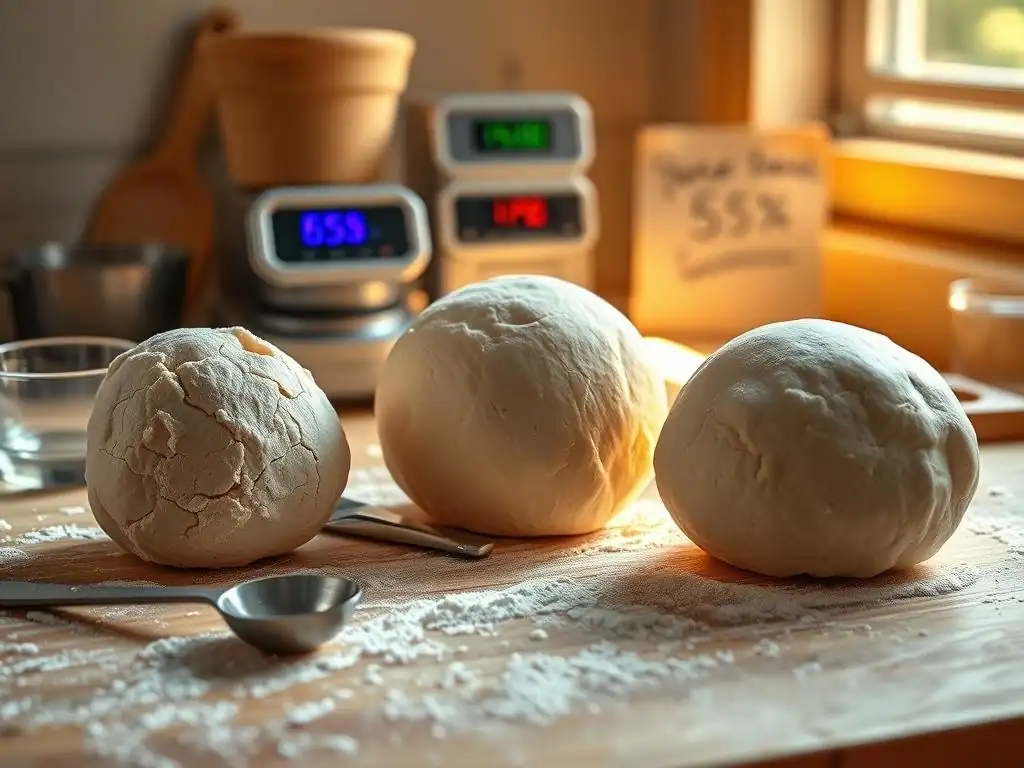
If you've followed a recipe but your dough feels excessively sticky and difficult to handle during mixing or kneading, it likely has too much water relative to the flour's absorption. This can happen due to variations in flour, humidity, or simply a mismeasurement. The first step is to resist the urge to dump in a lot of flour. Instead, add flour gradually, perhaps a tablespoon at a time, incorporating it fully before adding more. Do this only until the dough reaches a manageable consistency that is still slightly tacky but not sticking uncontrollably to your hands or the bowl.
Another approach, especially after initial mixing, is to adjust your technique. Instead of traditional kneading, try the stretch-and-fold method in the bowl or on a lightly floured surface. This develops gluten without requiring as much surface tension or added flour. A dough that feels very wet initially might become more manageable after 20-30 minutes of rest as the flour continues to absorb the water. Sometimes, patience and a change in kneading style are more effective than adding excessive flour when the perfect pizza dough water ratio feels slightly off.
Dough Too Dry: Incorporating More Water Carefully
Conversely, if your dough feels stiff, crumbly, and isn't coming together into a cohesive ball during mixing, it's likely too dry. This can happen if you've used too little water, your flour is particularly thirsty, or the environment is very dry. Just as with sticky dough, the solution is gradual. Add more water, but do so in small increments, like a teaspoon or two at a time. Incorporate each addition fully before deciding if more is needed.
Adding water to a dry dough can be tricky, especially if you're past the initial mixing stage. If kneading by hand, make a small well in the dough, add the water, and carefully fold the dough over to enclose it, then continue kneading until absorbed. If using a stand mixer, drizzle the water in slowly while the mixer is running on low speed.
The goal is to hydrate the dry spots and allow the dough to become smooth and elastic. Patience is key; forcing too much water in at once can make it difficult to incorporate evenly and throw off your perfect pizza dough water ratio.
Recognizing Over-Hydrated Dough: Rescuing a Sticky Situation
An over-hydrated dough is one that is excessively wet, often feeling more like a thick batter than a dough. It might not form a ball at all, sticking aggressively to everything. While adding flour can help, if the dough is severely over-hydrated (e.g., accidentally adding water for 80% hydration when the recipe called for 60%), simply adding flour might change the overall ratio of ingredients too much, affecting flavor and rise. You can try incorporating more flour gradually, perhaps up to 10-15% of the original flour weight, kneading well to see if it becomes manageable.
If the dough remains extremely wet and impossible to handle even after adding some flour, it might be too far gone for a standard pizza crust. In such cases, consider repurposing the mixture. Very wet doughs can sometimes be used for focaccia (which is baked in a pan and doesn't require shaping) or even a type of no-knead bread. While not the perfect pizza dough water ratio you aimed for, it salvages your ingredients. Learn from the experience – precise measurement is vital for achieving the intended hydration.
Experimenting with Pizza Dough Water Ratios: Finding Your Perfect Balance
Testing Different Hydration Levels to Discover Your Preference
The best way to find your perfect pizza dough water ratio is through hands-on experimentation. Start with a reliable base recipe and make small batches varying only the hydration percentage. For instance, if a recipe calls for 60% hydration, try making batches at 58%, 62%, and 65%. Use the same flour, yeast, salt, and fermentation method for each batch. Pay close attention to how each dough feels during mixing, kneading, and shaping.
After baking, critically evaluate the crust from each batch. Which one had the texture you preferred? Was it the crispness of the lower hydration, the balance of the medium, or the airiness of the high? Did one handle significantly easier or harder than the others? This direct comparison across slightly different hydration levels, using the same ingredients and equipment, is the most effective way to pinpoint the perfect pizza dough water ratio that suits your taste and baking setup.
Recording Your Results: Building Your Pizza Dough Hydration Journal
To make your experiments truly valuable, keep a detailed record of each attempt. A simple notebook or spreadsheet can serve as your pizza dough hydration journal. For each batch, note down the exact weights of all ingredients (flour type and brand are crucial! ), the calculated hydration percentage, the ambient temperature and humidity if possible, the mixing time, the fermentation schedule (including bulk fermentation and cold proofing times), and your observations on dough handling.
Most importantly, record your assessment of the baked crust: its texture (crispy, chewy, airy), flavor, and appearance (crumb structure, crust color). Reviewing these notes over time will reveal patterns and help you understand how different factors, especially the perfect pizza dough water ratio, impact your final results. This journal becomes an invaluable resource for consistently reproducing your favorite crusts and troubleshooting issues.
Beyond Water: Other Liquids to Enhance Your Pizza Dough
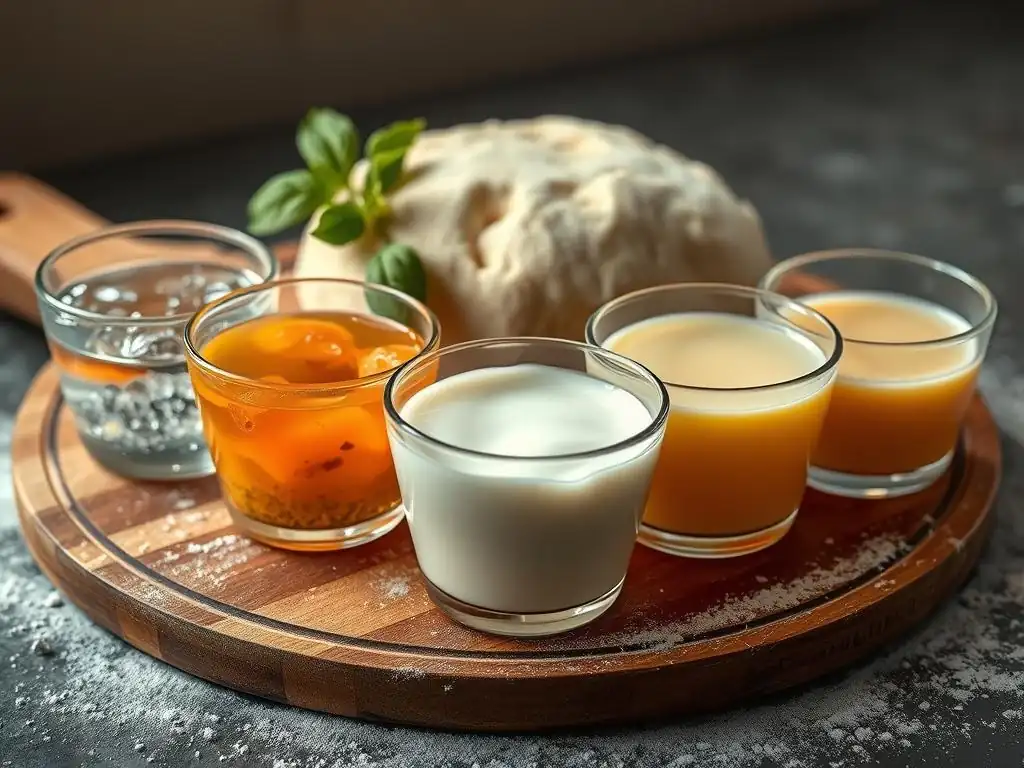
Using Milk, Olive Oil, or Beer in Your Pizza Dough for Added Flavor
While water is the primary liquid in most pizza doughs, incorporating other liquids can significantly alter the flavor and texture. Substituting a portion of the water with milk, for example, adds richness and can result in a softer crust with a slightly sweeter flavor due to the lactose (milk sugars). Using olive oil, typically added in addition to the water rather than as a direct substitute for hydration calculation, contributes tenderness, flavor, and can improve crust color.
Beer is another interesting option. The liquid contributes to hydration, while the fermentable sugars and yeast compounds in the beer can interact with the dough's yeast, potentially adding complex, malty flavors and aiding in fermentation. Some recipes use beer as a partial replacement for water, while others might use a small amount for flavor. Experimenting with these additions, while keeping the overall liquid weight in mind for calculating total hydration, can lead to delicious variations on your perfect pizza dough water ratio.
The Science Behind Liquid Substitutions in Pizza Dough
The impact of liquids like milk, oil, and beer goes beyond simple hydration. Milk contains fats and proteins that can interfere slightly with gluten development, leading to a more tender crumb. The sugars in milk can also contribute to browning during baking. Olive oil, being a fat, coats gluten strands, inhibiting their full development, which results in a more tender, less chewy crust. The antioxidants in olive oil can also affect yeast activity and flavor over longer fermentation periods.
Beer introduces not only water and fermentable sugars but also enzymes and hop compounds that can influence yeast activity and add unique flavors. The carbonation in beer doesn't directly translate to crust airiness but the dissolved CO2 can slightly lower pH, affecting fermentation. Understanding these interactions helps you predict how substituting liquids will alter your dough and crust, allowing you to intentionally modify your perfect pizza dough water ratio strategy for desired outcomes.
Advanced Pizza Dough Hydration Techniques: For the Experienced Baker
Autolyse: Pre-Hydrating Flour for Improved Dough Development
Autolyse is a simple yet powerful technique, particularly useful for higher hydration doughs or doughs made with strong flours. It involves initially mixing just the flour and water from your recipe and letting this mixture rest for a period (typically 20 minutes to several hours) before adding the salt and yeast. During this rest, the flour becomes fully hydrated, and enzymes naturally present in the flour begin to break down proteins and starches.
The benefits of autolyse include faster and easier gluten development (requiring less kneading), increased dough extensibility (making it easier to stretch thin without tearing), and improved crumb structure. It allows the flour to absorb the water more completely, refining your perfect pizza dough water ratio's effectiveness. For example, a dough that might be sticky and hard to work with at 70% hydration initially can become much more manageable after a 30-minute autolyse.
Poolish and Biga: Using Preferments to Enhance Flavor and Hydration
Preferments like poolish and biga are mixtures of flour, water, and a small amount of yeast that are prepared several hours or even a day or two in advance of the main dough mix. They undergo a long, slow fermentation, developing complex flavors and aromas. A poolish is typically a liquid preferment with a 100% hydration ratio (equal weights of flour and water), while a biga is a stiffer preferment, often around 50-60% hydration.
Using a preferment means that a portion of your total dough's flour and water (and yeast) is already fermented and developed before you even start mixing the main dough. This contributes significantly to the final flavor profile with desirable acidic and alcoholic compounds. Furthermore, preferments help manage hydration, especially in high hydration doughs, as a portion of the water is already incorporated into the preferment structure. Incorporating a poolish or biga is a sophisticated way to achieve a more flavorful crust while contributing to the overall perfect pizza dough water ratio calculation.
Frequently Asked Questions
What is the importance of water ratio in pizza dough?
The water ratio, or hydration level, significantly impacts the dough's texture, workability, and the final crust. Too little water results in a tough crust; too much makes the dough sticky and difficult to handle.
How does the water ratio affect the pizza crust?
A proper water ratio yields a crust that is both crispy and chewy. Higher hydration levels generally lead to a more open crumb structure and a lighter, airier crust.
What is a good starting point for the water ratio in pizza dough?
A good starting point is around 60-70% hydration, meaning 60-70 grams of water for every 100 grams of flour. This range is generally manageable for beginners.
What factors can influence the ideal water ratio for pizza dough?
Factors include the type of flour used (different flours absorb water differently), the humidity in your environment, and your desired crust texture.
How do I adjust the water ratio if my pizza dough is too sticky or too dry?
If too sticky, gradually add a small amount of flour until manageable. If too dry, slowly incorporate a small amount of water until the dough feels soft and pliable, remembering to adjust gradually.
Final Reflection: The Perfect Slice, One Drop at a Time
The quest for the perfect pizza dough hinges on a seemingly simple element: water. Getting the hydration right isn't just about achieving the ideal texture; it's about unlocking the full potential of your flour, creating a dough that's both manageable and delicious. This seemingly small detail dramatically impacts the final product, transforming a mediocre pie into a culinary masterpiece.
The journey to understanding the perfect water ratio for pizza dough has been a fascinating exploration into the chemistry of baking and the artistry of pizza making. It's a testament to how a seemingly insignificant detail can have profound consequences. The subtle nuances of hydration – the way it affects gluten development, fermentation, and ultimately, the crust's texture and flavor – are truly remarkable. The most important ingredient in any recipe is love, but in pizza dough, it's definitely water.
(This is a fictional quote, feel free to replace it with a real one if you have one.)
Now, armed with this knowledge, I invite you to embark on your own pizza-making adventure. Experiment with different hydration levels, observe the changes in your dough, and discover the perfect balance that suits your taste and flour. Don't be afraid to fail; each attempt brings you closer to mastering the art of crafting that perfect, perfectly hydrated pizza dough. The journey is as rewarding as the destination – a delicious, perfectly crafted pizza.
Unlock Your Perfect Pizza Dough: Hydration Mastery Awaits!
Thanks for diving into the world of perfect pizza dough hydration! You've now got the knowledge to create truly exceptional crusts. Ready to put your new skills to the test?
- Master the perfect hydration: Try making a batch of dough using your newly calculated water ratio – you might be surprised by the results! Record your findings to fine-tune your technique.
- Share your pizza journey: Show off your perfectly hydrated pizza creation on social media using #BakeWithEaseHydration. Let's inspire each other!
- Experiment with flour types: Explore how different flours react to varying hydration levels. What unexpected textures will you discover?
What unique ingredient will you try incorporating into your next perfectly hydrated pizza masterpiece?