
The Importance of Oven Temperature for Perfect Choux Pastry

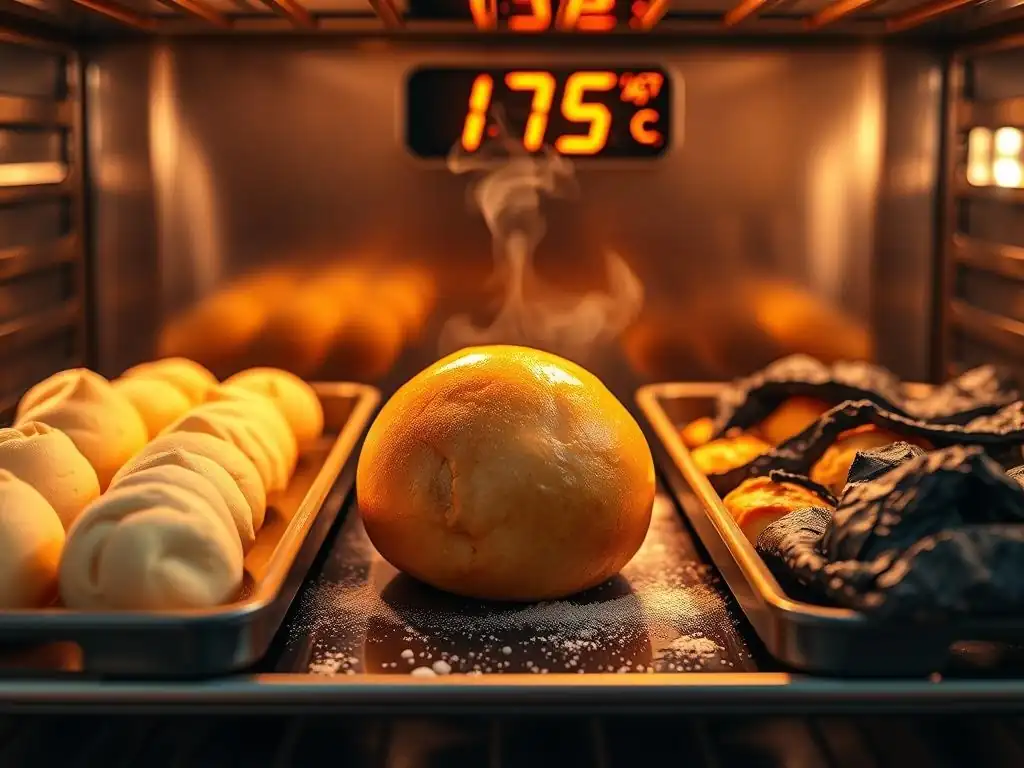
Welcome to BakeWithEase, your trusted guide to unlocking baking brilliance! Ever wondered if you're truly mastering the secrets behind that coveted golden-brown finish? This week, we're diving deep into the science of perfect choux pastry, and the surprisingly crucial role of oven temperature. Unlock the secrets to light, airy puffs and avoid common pitfalls that keep bakers up at night. Ready to elevate your choux game? Let's get started!
- Bake Like a Pro: Mastering Choux Pastry Through Oven Temperature Control
- Understanding the Role of Oven Temperature in Choux Pastry Success
- The Ideal Oven Temperature Range for Perfect Choux
- Troubleshooting Choux Pastry Problems Related to Oven Temperature
- Achieving Consistent Oven Temperature
- Tips and Tricks for Perfect Choux Pastry Baking
- Common Mistakes in Choux Pastry Baking Related to Oven Temperature
- Perfect Choux Pastry Oven Temperature: A Recipe for Success
- Conclusion: Bake Your Best Choux Pastry with Precise Oven Temperature
- Frequently Asked Questions
- Final Reflection: The Pursuit of the Perfect Puff
- Unlock Your Choux Pastry Potential!
Bake Like a Pro: Mastering Choux Pastry Through Oven Temperature Control
Choux pastry, or pâte à choux, is a wonderfully versatile base for countless desserts like éclairs, cream puffs, and gougères. While the dough itself is relatively simple, achieving that signature light, airy, and hollow interior requires precision, and perhaps the most critical factor is your oven temperature. Getting the perfect choux pastry oven temperature is the key to unlocking its potential, allowing it to puff dramatically and set properly, creating that delightful crisp shell.
Mastering the bake is where many home bakers encounter challenges. Unlike cakes or cookies that rely on chemical leaveners, choux pastry leavens through steam generated from the high moisture content in the dough. This steam needs intense heat to expand rapidly, creating the hollow center. Then, the shell needs time at a slightly lower temperature to dry out and become stable. This two-stage baking process, dictated entirely by the oven's heat, is fundamental to achieving perfect results every time you bake choux pastry.
Understanding the Role of Oven Temperature in Choux Pastry Success
Why Accurate Oven Temperature Matters for Choux Pastry
Accurate oven temperature is non-negotiable when aiming for perfect choux pastry. The initial high heat provides the explosive energy needed for the water in the dough to turn into steam instantly, causing the pastry to puff up rapidly like a balloon. If the temperature is too low during this crucial phase, the steam generation is slow, and the pastry won't achieve its maximum volume. Imagine trying to inflate a balloon slowly – it's less likely to reach its full size.
Conversely, if the oven is too hot initially, the outside of the choux can set too quickly before the inside has fully expanded, leading to cracks, splitting, or even collapsing. Following this initial high heat phase, a reduction in temperature is essential. This lower heat allows the pastry to continue baking gently, drying out the interior and stabilizing the structure. Without this drying phase, the choux will collapse upon cooling or remain soggy inside. Achieving the correct perfect choux pastry oven temperature ensures both maximum puff and a stable, dry interior shell.
The Science Behind Choux Pastry Expansion and Oven Heat
The science behind choux pastry's dramatic rise is fascinating and directly linked to oven heat. The dough is made by cooking flour with water, butter, and eggs, creating a batter with a high moisture content. When this dough is placed in a hot oven, typically starting around 400°F (200°C), the water quickly turns to steam. This steam is trapped within the relatively rigid structure of the dough, forcing it to expand outwards and upwards.
This rapid expansion happens because the cell walls of the dough are still pliable at the high initial temperature. As the steam pushes outwards, it creates the characteristic hollow cavity. After the initial puff, the temperature is usually reduced to around 350°F (175°C).
At this lower temperature, the steam pressure decreases slightly, and the pastry begins to dry out and firm up. The protein in the eggs coagulates, and the starch gelatinizes, creating a stable structure that can hold its shape once cooled. This dual-stage baking process, leveraging different perfect choux pastry oven temperatures, is the scientific foundation for achieving that light, crisp texture.
The Ideal Oven Temperature Range for Perfect Choux
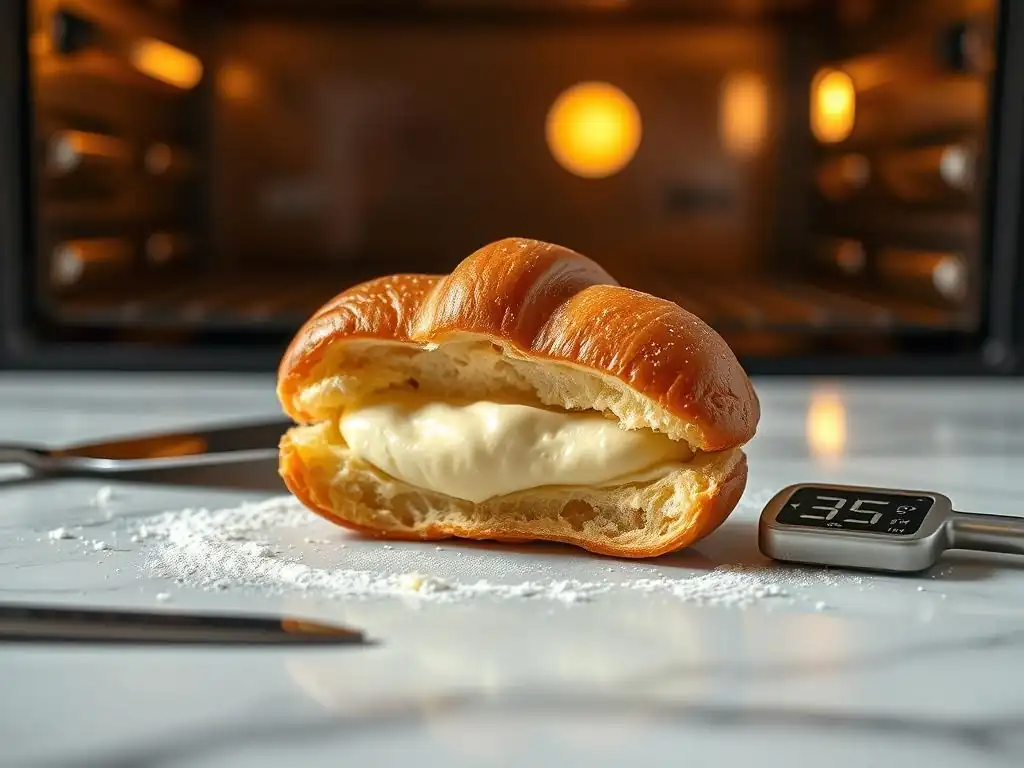
Recommended Temperature for Initial Puffing (e.g., 400°F/200°C)
For the crucial initial puffing phase of choux pastry, a high temperature is required. A commonly recommended starting point is 400°F (200°C). This intense heat provides the necessary energy for the water in the dough to convert rapidly into steam, creating significant internal pressure that causes the pastry to expand dramatically. This phase usually lasts for the first 10-15 minutes of baking, depending on the size of your choux pieces.
Baking at 400°F (200°C) ensures that the exterior begins to set just enough to contain the expanding steam but remains flexible enough to allow for maximum volume increase. If the temperature is too low during this initial period, the steam won't generate fast enough, and the choux will remain flat or rise inadequately. Achieving this specific perfect choux pastry oven temperature is the first step towards a beautifully puffed pastry shell.
Lowering the Temperature for Drying and Setting (e.g., 350°F/175°C)
After the initial high-temperature puff, it's essential to lower the oven temperature to around 350°F (175°C). This reduction in heat serves a different, but equally important, purpose: drying out the interior of the choux pastry and allowing the structure to set completely. Continuing to bake at the high initial temperature for too long can lead to the exterior browning too quickly while the inside remains moist or even raw.
The lower temperature allows the pastry to finish baking gently, ensuring that the steam trapped inside can escape gradually, and the structure created during the puffing phase becomes stable and crisp. This drying phase is critical for preventing the choux from collapsing upon cooling. Baking at 350°F (175°C) for the remainder of the time – often another 20-30 minutes or more, depending on size – guarantees a golden-brown, firm shell with a perfectly hollow interior, demonstrating the importance of the correct perfect choux pastry oven temperature throughout the entire process.
Choux Pastry Doesn't Rise: Temperature Too Low?
One of the most common frustrations when baking choux pastry is finding that it simply doesn't rise. This is frequently a direct consequence of the oven temperature being too low, especially during the critical initial phase. If your oven isn't reaching the required 400°F (200°C) or if it fluctuates significantly below this mark, the water in the dough won't convert into steam rapidly enough to create the necessary internal pressure for dramatic expansion.
A low oven temperature means the dough sets slowly, and the steam generation is weak. Instead of a sudden puff, you get a sluggish rise, resulting in flat, dense, and often heavy pastries that lack the characteristic hollow center. Ensuring your oven is accurately preheated to the target perfect choux pastry oven temperature and maintaining that heat during the initial bake is crucial for achieving the desired rise.
Exploding Choux: Is Your Oven Too Hot?
While a lack of rise is a problem, overly aggressive expansion leading to cracked or "exploding" choux is also linked to temperature, specifically if the oven is too hot initially. If the oven temperature significantly exceeds the recommended 400°F (200°C), the exterior of the choux pastry can set too quickly and become rigid before the steam inside has fully expanded.
As the internal steam pressure continues to build, it forces its way out through the weakest points in the dough, causing the pastry to split or crack violently. While some cracking is normal and even desirable for rustic looking choux, excessive splitting or bursting often indicates the initial bake was too hot. Calibrating your oven and using an oven thermometer can help verify you're hitting the correct perfect choux pastry oven temperature range.
Soggy Choux: Oven Temperature and Moisture
Soggy choux pastry, which collapses upon cooling or feels heavy and damp inside, is a strong indicator that the pastry wasn't baked long enough or at the correct temperature during the drying phase. Even if the choux puffs beautifully at the high initial temperature, if the subsequent lower temperature phase (around 350°F/175°C) is too short or too cool, the interior won't have sufficient time to dry out and set.
Residual moisture inside the pastry creates instability. As the choux cools, this moisture condenses, causing the structure to weaken and collapse. Ensuring the choux is baked until it is deeply golden brown and feels light and hollow when lifted is key. This often requires baking for longer than you might initially think, sometimes 30-40 minutes total depending on size, primarily at the lower temperature to achieve that crisp, dry interior – a testament to the importance of the correct perfect choux pastry oven temperature for the entire bake.
Achieving Consistent Oven Temperature
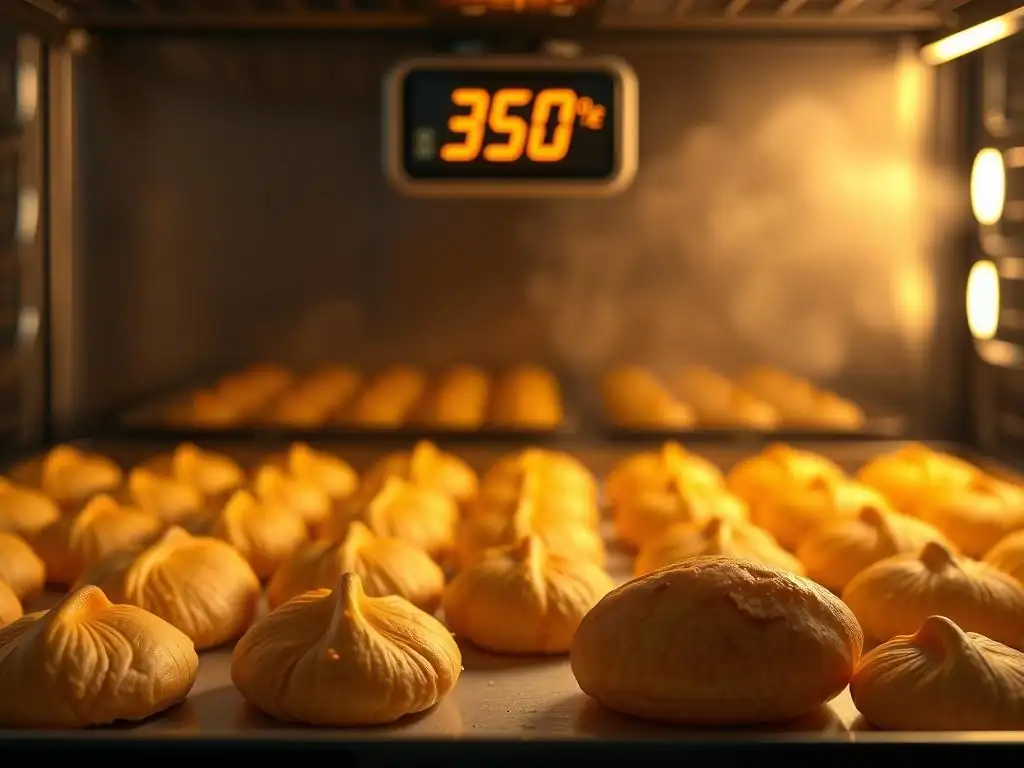
Calibrating Your Oven for Accurate Baking
Achieving the perfect choux pastry oven temperature consistently requires knowing if your oven is actually heating to the temperature you set. Many home ovens can be off by as much as 25-50°F (15-30°C) or more. Oven calibration is the process of checking and sometimes adjusting your oven's temperature settings to match the actual temperature inside. You can often find instructions for calibrating your specific oven model in the user manual, or some service technicians can perform this for you.
Checking your oven's accuracy is the first step. Place an oven thermometer inside and compare its reading to the temperature displayed on your oven's control panel after the oven has been preheating for at least 20-30 minutes. If there's a significant discrepancy, you may need to adjust the internal thermostat according to the manufacturer's instructions or simply remember to set your oven higher or lower to compensate for the difference when aiming for the perfect choux pastry oven temperature.
Using an Oven Thermometer for Precision
An oven thermometer is an indispensable tool for any serious baker, especially when tackling temperature-sensitive recipes like choux pastry. These inexpensive gadgets hang or stand inside your oven and provide an accurate reading of the actual temperature inside the cavity, independent of your oven's internal sensor.
By using an oven thermometer, you can verify that your oven has reached the correct perfect choux pastry oven temperature before you place the dough inside and monitor whether the temperature remains stable throughout the baking process. This eliminates the guesswork and helps diagnose potential issues if your choux isn't baking correctly. It's a simple tool that provides critical data for consistent baking success.
Adjusting Baking Time Based on Oven Performance
Even with a calibrated oven and an oven thermometer, slight variations in oven performance can impact baking time. Factors like how quickly your oven recovers temperature after the door is opened, the efficiency of its heating elements, and even external room temperature can play a role. Therefore, while recipe times provide a guideline, it's crucial to learn to read your choux pastry and adjust the baking duration accordingly.
If your oven runs a little cooler than indicated, you might need to add a few extra minutes to ensure the choux is fully dried out. Conversely, if it runs hot, you might need to slightly reduce the time or keep a closer eye on browning. The goal is a pastry that is golden brown, feels lightweight, and sounds hollow when tapped. Trust your senses and your oven thermometer more than just the clock when aiming for the perfect choux pastry oven temperature and bake time.
Tips and Tricks for Perfect Choux Pastry Baking
Preheating Your Oven Correctly
Properly preheating your oven is paramount for choux pastry success. It's not enough to just wait for the oven's preheat indicator light to turn off. Ovens often signal they've reached the set temperature before the internal cavity and walls are uniformly heated. For choux, you need intense, radiant heat from all directions.
Allow your oven to preheat for at least 20-30 minutes after it signals it has reached the target temperature, especially for the initial high-temperature phase (e.g., 400°F/200°C). Use your oven thermometer to confirm the temperature is stable and accurate before placing the choux inside. Skipping this step means you'll be baking in an environment that isn't hot enough, directly impacting the crucial initial puff and hindering your quest for perfect choux pastry oven temperature.
The Importance of Avoiding Oven Door Opening During Baking
Resist the urge to open the oven door frequently while your choux pastry is baking, particularly during the first 15-20 minutes. Opening the door causes a significant drop in internal oven temperature – potentially as much as 50-100°F (30-55°C) or more. This sudden loss of heat is detrimental to the delicate structure of the rising choux.
During the initial puffing phase, the structure is still very fragile. A sudden drop in temperature can cause the steam pressure inside to decrease too quickly, leading to the pastry collapsing before the structure has set. Even during the drying phase, opening the door unnecessarily prolongs the baking time and can affect the final crispness.
Trust the process and your oven thermometer; observe through the oven window if possible, and only open the door when absolutely necessary, such as to rotate the tray (quickly!) if your oven has hot spots. Maintaining a consistent perfect choux pastry oven temperature is key.
Achieving Even Baking with Proper Rack Placement
Even within a well-calibrated oven, temperature can vary depending on rack placement. Hot spots are common. For most choux pastry baking, the middle rack is the ideal position. This places the pastries in the center of the oven cavity, equidistant from the top and bottom heating elements and the oven walls, promoting even heat circulation.
Baking multiple trays of choux at once can be tricky. If you must bake two trays, place them on the upper and lower third racks and rotate them halfway through the baking time to ensure even exposure to heat. Avoid placing trays too close to the top or bottom elements, which can cause the choux to brown too quickly or unevenly. Proper rack placement, combined with the correct perfect choux pastry oven temperature, contributes significantly to uniform puff and color across your batch.
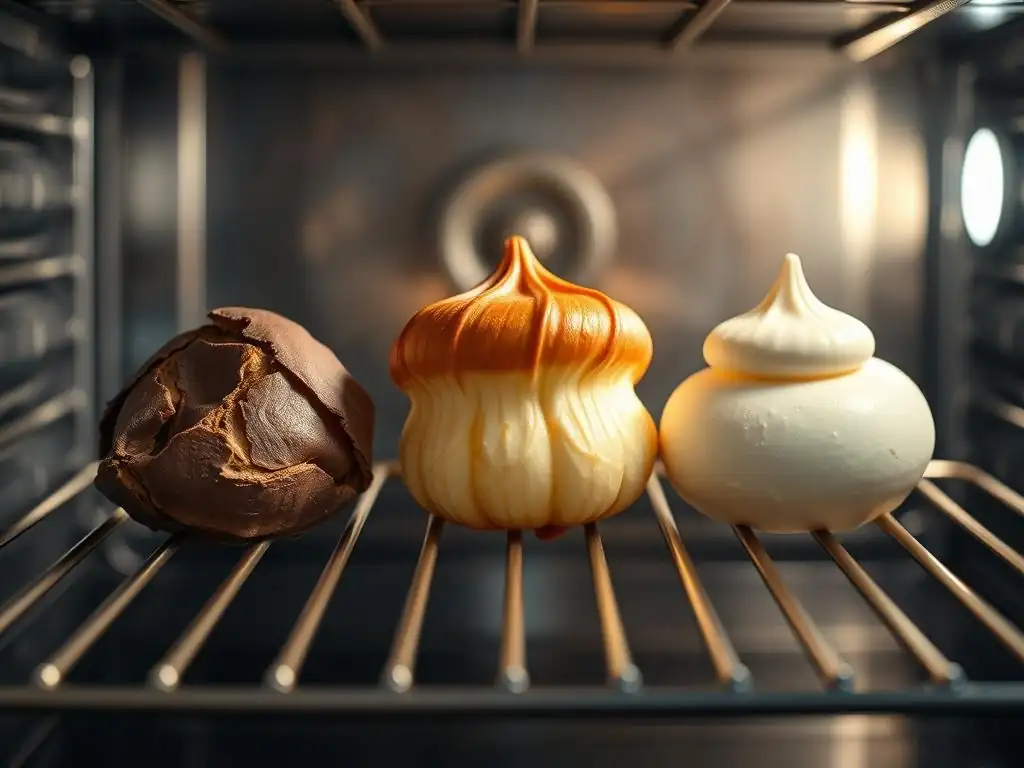
Ignoring Oven Temperature Variations
A fundamental mistake is assuming your oven is calibrated and heats accurately to the set temperature. As mentioned earlier, ovens can be significantly off. Ignoring this potential variation and simply setting the oven dial to the recipe's specified temperature without verifying the actual internal temperature is a recipe for inconsistency.
Using an oven thermometer is a simple step that bypasses this issue entirely. By knowing the true perfect choux pastry oven temperature inside your oven, you can make necessary adjustments to your oven's setting or the baking time, ensuring you are providing the optimal heat environment for your choux to rise and dry properly.
Overcrowding the Oven
Placing too many choux pastries on a single baking sheet or putting too many trays in the oven at once can lead to poor results, largely due to its impact on oven temperature and airflow. Overcrowding restricts the circulation of hot air around each pastry.
When airflow is limited, the heat distribution becomes uneven. This can result in some pastries browning too quickly while others remain pale, or worse, inhibit the proper steam generation and drying process. Ensure there is ample space around each choux on the baking sheet (at least 1-2 inches) and avoid putting more than two trays in a standard home oven at a time, ideally baking one tray on the middle rack for the best results and most consistent perfect choux pastry oven temperature exposure.
Baking at Incorrect Temperatures
Perhaps the most direct mistake is simply baking the choux at the wrong temperature setting or for the wrong duration at each temperature stage. Skipping the initial high heat phase means insufficient puff. Staying at the high heat for too long leads to burning or cracking. Not reducing the temperature for the drying phase results in soggy interiors.
Following a recipe's specific temperature and time instructions is a good starting point, but understanding why those temperatures are used (initial puff vs. drying) is crucial. Always use an oven thermometer to confirm the actual temperature and adjust as needed. Mastering the perfect choux pastry oven temperature involves understanding this two-stage process and executing it accurately in your oven.
Perfect Choux Pastry Oven Temperature: A Recipe for Success
Classic Choux Pastry Recipe with Detailed Temperature Instructions
Here is a basic structure for a classic choux pastry recipe, emphasizing the critical temperature steps:
- Ingredients: Water/Milk, Butter, Salt, Sugar (optional), Flour, Eggs.
- Method:
- Combine liquid, butter, salt, and sugar in a saucepan. Bring to a rolling boil over medium heat.
- Remove from heat and add sifted flour all at once. Stir vigorously with a wooden spoon until a smooth dough forms that pulls away from the sides of the pan.
- Return to low heat and cook, stirring constantly, for 2-3 minutes to dry out the dough slightly. This is called dessécher.
- Transfer dough to a mixing bowl (stand mixer or by hand). Let cool slightly for 5-10 minutes.
- Gradually beat in eggs, one at a time, ensuring each egg is fully incorporated before adding the next. The dough should be smooth, glossy, and pipeable, holding a soft peak (the "bird's beak" test).
- Preheat oven to 400°F (200°C), ensuring it holds this perfect choux pastry oven temperature consistently using an oven thermometer. Allow to preheat for at least 20-30 minutes after it signals readiness.
- Pipe or spoon dough onto a baking sheet lined with parchment paper, leaving ample space between pieces (1-2 inches).
- Place in the preheated 400°F (200°C) oven. Bake for 10-15 minutes, or until they have puffed significantly and are starting to turn golden brown.
- Reduce oven temperature to 350°F (175°C). Do not open the oven door to do this unless absolutely necessary; most ovens allow temperature adjustment without opening.
- Continue baking at 350°F (175°C) for another 20-30 minutes (or longer, depending on size), until deeply golden brown all over and they feel light and hollow when lifted. They should look dry, not wet or shiny.
- Turn off the oven. You can leave the choux inside with the door slightly ajar for another 5-10 minutes to help them dry out further, though some bakers skip this.
- Cool completely on a wire rack before filling.
- Ingredients: Water/Milk, Butter, Salt, Sugar (optional), Flour, Eggs.
- Method (Temperature Focused):
  1. Cook dough on stovetop.
  2. Add eggs to form pipeable dough.
  3. Preheat oven to **400°F (200°C)**, verified with thermometer. Preheat 20-30 mins *after* signal.
  4. Pipe dough.
  5. Bake at **400°F (200°C)** for 10-15 mins (initial puff).
  6. **Reduce oven to 350°F (175°C)** (drying phase).
  7. Continue baking at **350°F (175°C)** for 20-30+ mins until deeply golden and dry.
  8. Optional: Turn off oven, leave door ajar for 5-10 mins.
  9. Cool completely.
Tips for Adjusting the Recipe Based on Your Oven
Every oven is different, even when calibrated. Pay attention to how your choux bakes. If they are splitting excessively at the start, your initial 400°F (200°C) might be too hot; try reducing it slightly to 390°F (195°C) or 375°F (190°C) and extend the time at that temperature slightly. If they are not puffing well, ensure your oven is truly reaching and holding 400°F (200°C).
If your choux are collapsing or soggy after cooling, they likely need more time at the lower 350°F (175°C) temperature to dry out. Don't be afraid to bake them until they are very golden brown – paler choux are often underbaked inside. Use your oven thermometer to guide your temperature settings and trust your judgment on visual cues (color, lightness) to determine the final baking time. Adapting the perfect choux pastry oven temperature and time to your specific oven is key to consistent results.
Conclusion: Bake Your Best Choux Pastry with Precise Oven Temperature
Mastering the Art of Choux Pastry Baking
Mastering choux pastry is a rewarding step in any baker's journey, and the single most impactful factor is achieving and maintaining the perfect choux pastry oven temperature. Understanding the two distinct phases of baking – the initial high heat for puffing and the subsequent lower heat for drying and setting – and ensuring your oven accurately provides these temperatures is fundamental.
By using an oven thermometer, calibrating your oven if necessary, and paying close attention to the visual cues of your baking choux, you gain the control needed to consistently produce beautifully puffed, light, and crisp pastries. Don't be discouraged by initial attempts; practice combined with precise temperature management will lead to success.
Further Resources for Choux Pastry Creations
To continue your journey with choux pastry, explore variations on the classic dough, such as adding cheese for gougères or incorporating cocoa for chocolate éclairs. Experiment with different filling techniques and flavor combinations, from classic pastry cream to savory mousses.
Look for detailed guides on piping techniques to create uniform shapes and sizes, which also contributes to even baking. Understanding the nuances of dough consistency and how it affects the final bake is also valuable. By focusing on the core technique of perfect choux pastry oven temperature control and building upon it, you'll unlock a world of delicious possibilities.
Frequently Asked Questions
What is the ideal oven temperature for baking choux pastry?
The ideal oven temperature is usually a high initial temperature (around 400-425°F/200-220°C) to create steam and puff, then lowered to around 350°F/175°C to bake the interior without burning.
Why is oven temperature so crucial for choux pastry success?
Oven temperature is critical because it dictates the steam generation inside the pastry, which is essential for creating the hollow center and light, airy texture that defines choux.
What happens if the oven temperature is too low?
If the oven temperature is too low, the choux pastry won't puff up properly. It will remain flat and dense, lacking the signature hollow interior.
Too high of an oven temperature can cause the choux pastry to brown too quickly on the outside while remaining undercooked and soggy inside.
How can I ensure my oven maintains the correct temperature for choux pastry?
Use an oven thermometer to verify your oven's accuracy and avoid opening the oven door frequently during baking, as this releases heat and can disrupt the cooking process.
Final Reflection: The Pursuit of the Perfect Puff
Mastering choux pastry isn't just about following a recipe; it's about understanding the delicate dance between heat and hydration that transforms humble batter into airy, elegant puffs. The seemingly insignificant detail of oven temperature, as explored throughout this article, proves to be the pivotal factor determining success or failure. Get it wrong, and you're left with deflated disappointments; get it right, and you're rewarded with the exquisite texture and satisfying rise that define truly perfect choux.
The quest for the perfect choux pastry transcends mere culinary technique; it's a reflection of our desire for precision and control in a world often characterized by uncertainty. The meticulous attention to detail required – from precise ingredient measurements to the careful monitoring of oven temperature – mirrors the dedication we bring to other aspects of our lives. As Julia Child wisely said, Find something you're passionate about and keep tremendously interested in it.
This pursuit of perfection, even in something as seemingly simple as baking, embodies that spirit of passionate engagement.
Now, consider your own baking journey. What seemingly small details have you overlooked that might be holding you back from achieving your culinary goals? Perhaps it's time to revisit your techniques, to meticulously measure ingredients, and to pay closer attention to that often-overlooked element: oven temperature. Don't be afraid to experiment, to adjust, and to refine your approach. The reward – that perfect, golden-brown puff – is well worth the effort. Embrace the challenge, and let the pursuit of perfection guide you to baking success.
Unlock Your Choux Pastry Potential!
Thanks for diving into the world of perfect choux pastry! We hope you gained valuable insights into the crucial role of oven temperature in achieving those airy, light-as-a-feather puffs. Now it's time to put your newfound knowledge into practice.
- Bake your dream choux today! Try the recipe you've been eyeing and meticulously monitor that oven temperature. Note any adjustments you need to make for your specific oven.
- Share your baking triumphs (or even your learning experiences!) on our BakeWithEase social media pages! Use #BakeWithEaseChoux to connect with other bakers.
- Experiment with different filling and glazing techniques to create unique and delicious choux creations!
What delicious choux pastry masterpiece will you bake first?