
Unlock the Magic of Choux Pastry: Your Intermediate Guide

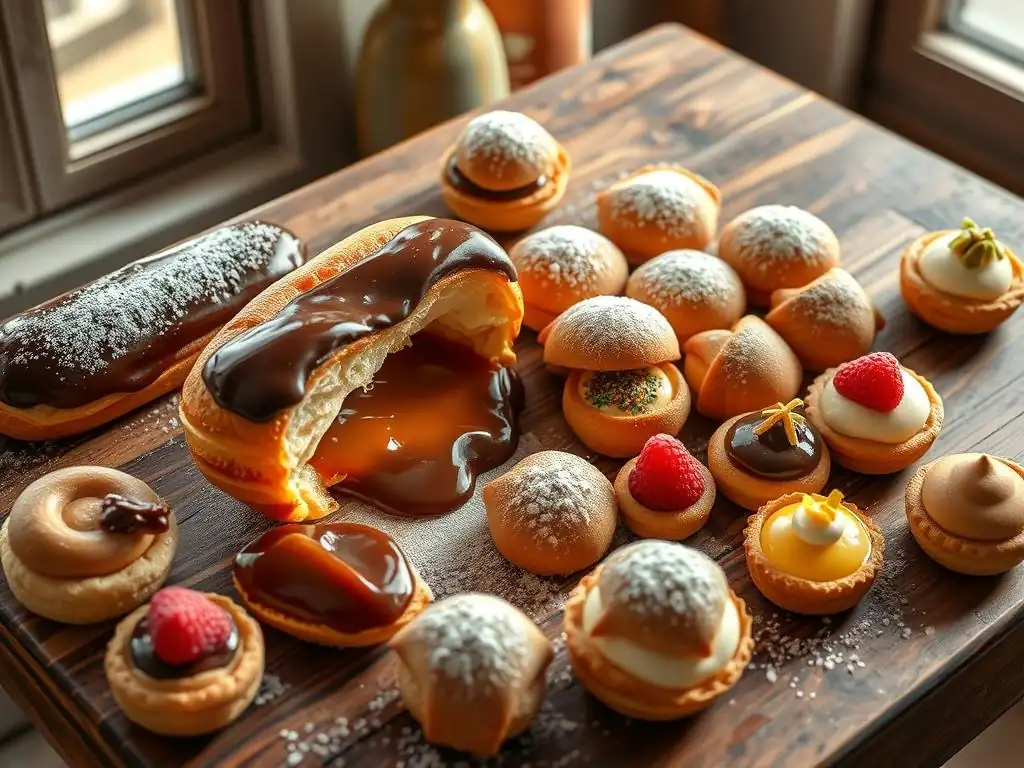
Welcome to BakeWithEase, your trusted companion in the delightful world of baking! Ever dreamt of crafting perfect cream puffs or éclairs? Our step-by-step guidance makes even seemingly complex techniques achievable. Dive into "Unlock the Magic of Choux Pastry: Your Intermediate Guide" and discover our easy choux pastry recipe – a gateway to light, airy, and irresistible treats. Ready to elevate your baking game? Let's get started!
- Mastering Choux Pastry for the Home Baker
- Understanding the Fundamentals of Choux Pastry
- Classic Choux Pastry Recipe: A Step-by-Step Guide
- Troubleshooting Common Choux Pastry Problems
- Beyond the Basics: Intermediate Choux Pastry Techniques
- Creative Choux Pastry Fillings and Glazes
- Advanced Choux Pastry Creations
- Storing and Serving Choux Pastry
- Elevate Your Baking: Mastering the Art of Choux
- Frequently Asked Questions
- Final Reflection: Mastering the Magic of Choux, One Cream Puff at a Time
- Unleash Your Inner Pâtissier: Master Choux Perfection!
Mastering Choux Pastry for the Home Baker
Welcome back to BakeWithEase! If you've mastered basic cakes and cookies, you're ready to step up your baking game. Choux pastry, or pâte à choux, might sound fancy, but with the right understanding and technique, it's surprisingly approachable. This guide is designed for intermediate bakers looking to unlock the secrets of this versatile dough. We'll go beyond a simple easy choux pastry recipe, diving into the why behind each step, troubleshooting common issues, and exploring creative ways to use your newfound skills. Get ready to create stunning éclairs, airy cream puffs, and more!
Choux pastry is unique because it relies on steam to puff up dramatically in the oven, creating a hollow interior perfect for filling. Unlike many other doughs, it starts on the stovetop before baking, a crucial step that gelatinizes the starch in the flour and creates a stable base for the steam expansion. Mastering this technique opens the door to a world of classic pastries and modern creations, proving that an easy choux pastry recipe is well within your reach with a little practice.
Understanding the Fundamentals of Choux Pastry
What is Choux Pastry and Why is it Special?
Choux pastry, literally translating to "cabbage paste" due to its rough appearance after piping (or perhaps its resemblance to small cabbages when baked), is a light, airy dough used in many classic French desserts and savory dishes. Its magic lies in its simple ingredients and unique preparation method. Unlike laminated doughs like puff pastry or enriched doughs like brioche, choux relies on a high moisture content which turns into steam during baking. This steam is trapped by the cooked dough structure, causing the pastry to inflate dramatically and create that signature hollow center.
The special nature of choux pastry comes from its ability to transform simple ingredients – water, butter, flour, and eggs – into a light, crisp shell. This incredible puff is achieved through the gelatinization of starch on the stovetop and the subsequent steam pressure in a hot oven. A well-made choux pastry should be golden brown, crisp on the outside, and wonderfully hollow inside, ready to be filled with creams, mousses, or even savory ingredients. It's a fundamental pastry technique that unlocks a vast repertoire of delicious treats.
Essential Ingredients for a Classic Choux Pastry
Creating a successful easy choux pastry recipe starts with understanding the role of each ingredient. You'll need water (or milk, or a combination), unsalted butter, all-purpose flour, and large eggs. The liquid and butter are heated together to create a base. Using unsalted butter gives you control over the salt level, which is minimal in sweet choux but can be adjusted for savory versions. Typically, a standard recipe might use about 1 cup of liquid and 1/2 cup (1 stick) of butter.
The flour, usually all-purpose, is added all at once to the hot liquid/butter mixture off the heat, then cooked briefly over medium heat. This cooking step is vital; it gelatinizes the starch in the flour, forming a stable paste that can absorb the eggs and later expand with steam. You'll cook it until it forms a ball and a thin film appears on the bottom of the pan, usually taking 1-3 minutes after returning to the heat. Finally, eggs are incorporated one at a time off the heat.
Eggs provide structure and richness, and their protein sets during baking, creating the final shell. The number of eggs is crucial for achieving the right consistency – too few and the dough won't puff, too many and it will collapse. A standard batch might require 3-5 large eggs, added gradually until the dough reaches the correct ribbon-like consistency.
Equipment Checklist for Perfect Choux: Beyond the Basics
While you don't need a professional kitchen to make an easy choux pastry recipe, having the right tools certainly helps ensure success. Beyond standard measuring cups and spoons, you'll need a heavy-bottomed saucepan. A heavy pan distributes heat evenly and prevents the dough from scorching during the stovetop cooking phase. A 2-3 quart size is usually sufficient for a standard batch. You'll also need a sturdy wooden spoon or heatproof spatula for mixing the dough vigorously on the stovetop.
For incorporating the eggs, a stand mixer fitted with a paddle attachment is highly recommended. While you can do it by hand, adding eggs one by one and mixing thoroughly requires significant effort. A mixer makes this step much easier and ensures the eggs are fully emulsified into the dough.
Finally, a piping bag fitted with a round or star tip (like an Ateco 805 or 826) is essential for shaping your choux pastries cleanly and consistently onto a baking sheet lined with parchment paper or a silicone mat. Using parchment or a silicone mat is crucial to prevent sticking and ensure even baking.
Classic Choux Pastry Recipe: A Step-by-Step Guide
Preparing the Dough: Achieving the Right Consistency
The first step in your easy choux pastry recipe involves the stovetop cooking. Combine your liquid (water, milk, or a mix) and cubed butter in a heavy-bottomed saucepan with a pinch of salt (and sugar if making sweet choux). Heat over medium heat until the butter is fully melted and the liquid just begins to simmer. Remove the pan from the heat immediately and add all the flour at once. Stir vigorously with a wooden spoon or spatula until the mixture forms a cohesive ball.
Return the pan to medium heat and continue to cook the dough, stirring constantly, for 1-3 minutes. This step is called the panade and is vital for drying out the dough slightly and gelatinizing the starch. You'll know it's ready when the dough forms a ball and a thin film or crust starts to form on the bottom of the pan. Transfer the hot dough to a stand mixer bowl and let it cool for 5-10 minutes, stirring occasionally on low speed, before adding the eggs. This cooling prevents the eggs from scrambling when added.
Piping Techniques for Various Choux Shapes: Éclairs, Cream Puffs, and Profiteroles
Once your choux dough is prepared and has cooled slightly, it's time to incorporate the eggs until the dough reaches the perfect "ribbon" consistency. Add the eggs one at a time, mixing thoroughly after each addition on medium-low speed, scraping down the sides of the bowl as needed. The dough is ready when it is smooth, glossy, and falls from the paddle in a thick ribbon or "V" shape. If you lift the paddle, a peak should form and slowly collapse. It's often better to under-mix slightly and add a final egg yolk if needed, rather than over-mixing.
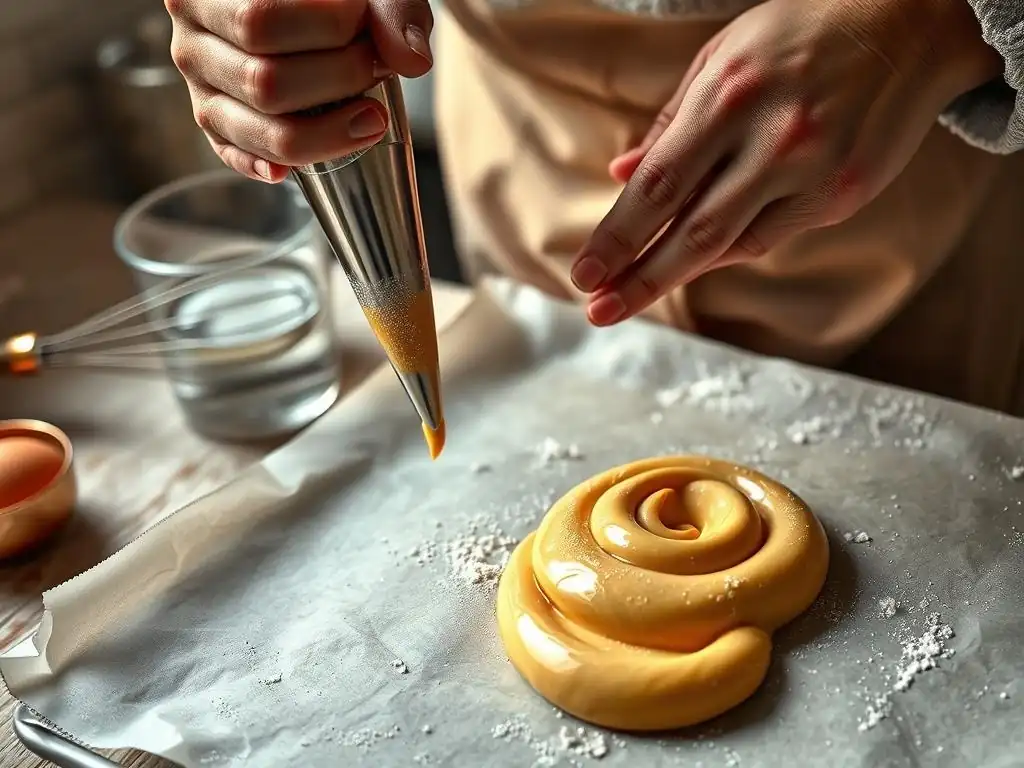
Now, transfer the dough to your prepared piping bag. For classic cream puffs (or pâtes à choux), use a large round tip and pipe mounds about 1.5 to 2 inches in diameter onto your lined baking sheet, leaving 2 inches between them. For éclairs, use a large round or star tip and pipe straight lines about 4-5 inches long. For profiteroles, pipe smaller mounds, about 1 inch in diameter. For a neater finish and to prevent cracked tops, you can gently smooth down any peaks with a wet fingertip or the back of a spoon.
Baking Choux Pastry: Temperature Control and Visual Cues
Baking choux pastry requires a specific approach to achieve maximum puff and a crisp exterior. Most recipes call for starting the oven at a high temperature, typically around 425°F (220°C), for the first 10-15 minutes. This initial blast of heat creates a rush of steam from the high moisture content in the dough, causing the pastries to puff up rapidly. For example, piping 2-inch cream puffs might require this high heat for about 12 minutes.
After this initial high-heat phase, the oven temperature is usually reduced to a lower temperature, such as 375°F (190°C), for the remainder of the baking time, which can be anywhere from 20 to 30 minutes or even longer, depending on the size of the pastries. This lower temperature allows the insides to cook through and the shells to dry out and become crisp without burning the exterior.
Visual cues are key: the pastries should be deeply golden brown and feel light and hollow when lifted. Crucially, do not open the oven door during the initial high-heat phase, as this can cause the pastries to collapse.
Achieving the Perfect Hollow Center: The Key to Success
The hallmark of a well-made choux pastry is its large, hollow interior, perfect for filling. This is primarily achieved through the powerful steam expansion during baking. However, ensuring the inside is fully cooked and dry is equally important to prevent the shells from becoming soggy or collapsing upon cooling. After the pastries have puffed up and turned golden brown at the lower temperature, they need sufficient time to bake through.
To help dry out the centers and ensure they remain hollow, some bakers recommend piercing the side of each pastry with a sharp knife or skewer a few minutes before the end of the baking time. Then, turn off the oven, prop the door slightly ajar with a wooden spoon, and leave the pastries inside for another 10-15 minutes. This allows the residual heat to gently dry out the interiors further.
For example, if baking éclairs for a total of 35 minutes, you might pierce them at the 30-minute mark and then let them sit in the cooling oven. This drying step is crucial for a stable, crispy shell and a perfect hollow cavity, making your easy choux pastry recipe truly successful.
Troubleshooting Common Choux Pastry Problems
Why is My Choux Pastry Flat?
One of the most frustrating issues when making choux pastry is ending up with flat, dense discs instead of airy puffs. Several factors can contribute to this. The most common culprit is insufficient cooking of the panade on the stovetop. If you don't cook the flour/liquid mixture long enough (the typical 1-3 minutes after adding flour), the starch won't fully gelatinize, resulting in a weak structure that can't support the steam expansion. Ensure you see that film forming on the bottom of the pan.
Another frequent cause is adding too many eggs or adding them too quickly without proper mixing between additions. The dough needs to be able to hold its shape when piped; if it's too wet, it will spread out instead of puffing up. Remember the "ribbon" test: the dough should fall from the paddle in a thick ribbon.
Finally, opening the oven door too early during the initial high-heat phase is a sure way to cause your pastries to collapse. The sudden drop in temperature deflates the steam before the structure has set. Sticking to the 10-15 minute no-peek rule for high heat is vital.
Preventing Soggy Choux: Baking and Cooling Tips
Soggy choux pastry is often the result of insufficient baking or improper cooling. If the pastries aren't baked long enough at the lower temperature setting, the interiors won't have a chance to dry out completely. They might look golden on the outside but will feel heavy and soft. Ensure your baking time at the reduced temperature is adequate, typically 20-30+ minutes depending on size, until the pastries feel very light when lifted.
Proper cooling is also essential. Once baked, choux pastries should be cooled completely on a wire rack. Placing them directly on a solid surface traps steam underneath, leading to a soggy bottom. The final drying step in the turned-off oven with the door ajar, mentioned earlier, is one of the most effective ways to ensure a crisp shell and prevent sogginess, allowing residual heat to wick away moisture. For example, leaving small profiteroles in the cooling oven for 10 minutes or larger éclairs for 15 minutes can make a significant difference in texture.
Dealing with Lumpy Choux Dough: A Quick Fix
Lumpy choux dough usually occurs during the initial stovetop cooking phase when the flour is added. If you don't add the flour all at once and stir vigorously immediately, or if the liquid isn't hot enough, the flour can form clumps. The key is to remove the pan from the heat when adding the flour, dump it all in, and stir hard until a smooth ball forms before returning it to the heat for the panade step.
If you find yourself with a slightly lumpy dough after the panade step, don't despair entirely. Once you transfer it to the mixer bowl and start adding the eggs, the vigorous mixing action will often help smooth out smaller lumps. However, larger, dry clumps might persist. While not ideal, you can sometimes press the dough through a fine-mesh sieve after the panade step (before adding eggs) to remove lumps, though this is quite tedious. The best fix is prevention: ensure your liquid is hot, add all the flour at once, and stir with maximum effort immediately.
Beyond the Basics: Intermediate Choux Pastry Techniques
Flavoring Choux Pastry: Adding Extracts, Zests, and Spices
Once you've mastered the basic easy choux pastry recipe, you can start experimenting with flavorings added directly to the dough. This is a simple way to elevate your creations without changing the fundamental technique. Extracts like vanilla, almond, or coffee can be added along with the eggs. For a batch using 4 eggs, adding 1 teaspoon of vanilla extract is a common starting point.
Citrus zests, like lemon or orange, can add a bright, fresh note. Grate the zest finely and add it to the liquid/butter mixture at the beginning. The heat will help infuse the flavor. Spices such as cinnamon, nutmeg, or even a pinch of cayenne for savory applications can be incorporated with the flour. For example, adding 1/4 teaspoon of ground cinnamon to the flour mixture is great for choux meant for apple fillings. Remember that flavorings should complement your intended filling or glaze.
Creating Craquelin Topping for Enhanced Texture and Flavor
Craquelin is a sweet, crumbly topping that adds a delightful crisp texture and a touch of sweetness to choux pastry. It's made from a simple mixture of butter, sugar (usually brown sugar for color and flavor), and flour, sometimes with added flavorings like cocoa powder or spices. The ingredients are typically rubbed together like a crumble or mixed in a food processor until a dough forms.
This dough is then rolled out very thinly between two sheets of parchment paper and chilled until firm. Once firm, use a cookie cutter or knife to cut out circles or squares slightly larger than your piped choux dough mounds or strips. Place the chilled craquelin pieces on top of the piped choux dough before baking. As the choux puffs, the craquelin bakes into a crisp, crackled shell on top, adding both visual appeal and a wonderful textural contrast. A typical craquelin ratio might be equal parts butter, brown sugar, and flour by weight (e.g., 50g each).
Making Savory Choux Pastry: Gougères and Cheese Puffs
Choux pastry isn't just for sweets! An easy choux pastry recipe can be easily adapted for savory applications, the most famous being gougères. Gougères are cheese puffs made by incorporating grated cheese directly into the choux dough. Hard, flavorful cheeses work best, such as Gruyère, Comté, or aged cheddar. You might use anywhere from 1/2 cup to 1 cup of grated cheese per standard batch of choux dough.
To make savory choux, simply omit the sugar from the initial liquid mixture and add a pinch more salt. After the eggs are fully incorporated and the dough is smooth and glossy, fold in your grated cheese. You can also add black pepper, chopped fresh herbs like chives or thyme, or a pinch of cayenne pepper for extra flavor. Pipe the dough into small mounds (like profiteroles) and bake as usual. Gougères are typically served warm as an appetizer or accompaniment to soup, offering a delightful cheesy bite with a light, airy texture.
Creative Choux Pastry Fillings and Glazes
Classic Cream Fillings: Pastry Cream, Chantilly Cream, and Chocolate Cream
The hollow center of choux pastry is practically begging to be filled! Classic options include French pastry cream ( crème pâtissière), a rich, cooked custard. A standard recipe uses milk, sugar, egg yolks, and a thickener like flour or cornstarch, often flavored with vanilla. A batch using 2 cups of milk and 4 egg yolks can fill roughly 15-20 medium cream puffs.
Chantilly cream, or sweetened whipped cream, is a lighter alternative. Simply whip heavy cream with powdered sugar and a touch of vanilla extract until stiff peaks form. It's crucial to fill choux with Chantilly cream just before serving, as it can deflate over time. Chocolate cream can be a variation of either pastry cream (by melting chocolate into hot pastry cream) or a rich chocolate mousse. For a simple chocolate glaze, melt dark chocolate with a little butter or cream. These classic fillings provide a perfect contrast to the crisp choux shell.
Innovative Filling Ideas: Fruit Compotes, Mousses, and Curds
Beyond the classics, the possibilities for choux fillings are vast and exciting. Fruit compotes or purées, like raspberry, passion fruit, or cherry, offer a bright, slightly tart contrast to the richness of the choux. A simple raspberry compote can be made by simmering 1 cup of raspberries with 2-3 tablespoons of sugar and a squeeze of lemon juice until thickened. Allow it to cool completely before filling.
Light and airy mousses, such as chocolate mousse, coffee mousse, or fruit mousse, also make excellent fillings. Their texture complements the crisp shell beautifully. Lemon curd or other fruit curds provide a tangy, intense flavor. A batch of lemon curd using 3 egg yolks and the juice and zest of 2 lemons can fill a dozen éclairs. Experimenting with different flavors and textures for your fillings allows you to put your own spin on an easy choux pastry recipe.
Mastering Glazes: Chocolate, Caramel, and Fondant
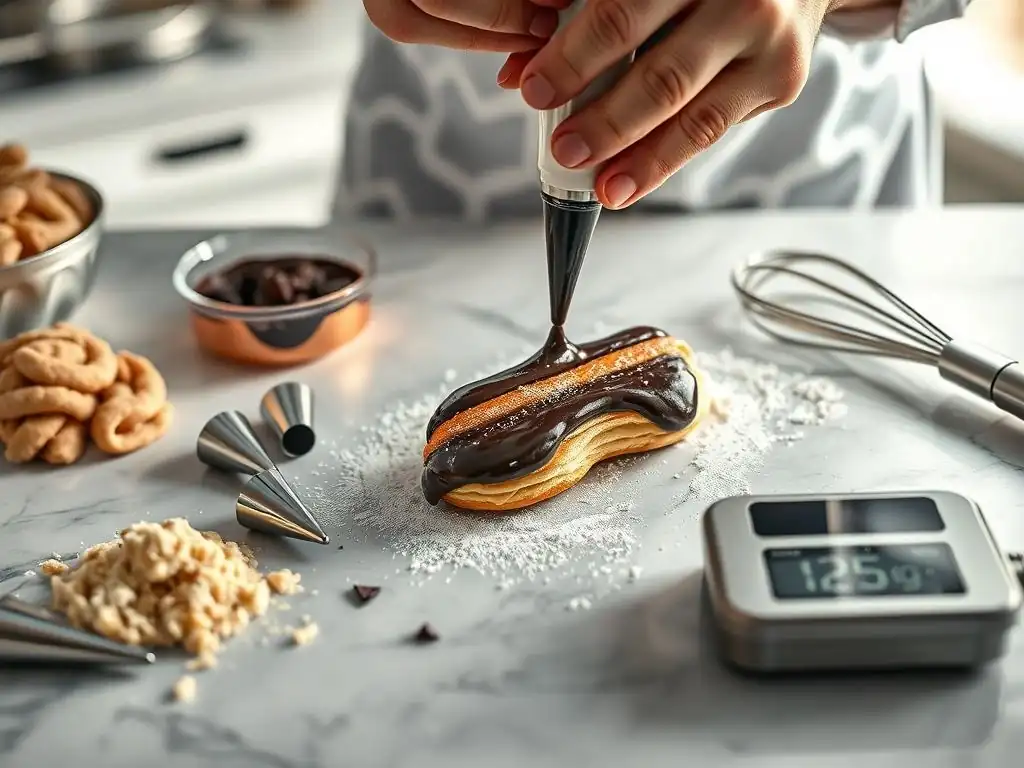
A glaze adds a finishing touch of flavor, texture, and visual appeal to choux pastries, particularly éclairs. A simple chocolate glaze is a popular choice. You can use melted tempered chocolate for a shiny, snappy finish, or a simple ganache made by pouring hot cream over chopped chocolate (a 1:1 ratio of chocolate to cream by weight, e.g., 100g chocolate to 100g cream, makes a good pouring ganache).
Caramel glaze, often used for classic pastries like Paris-Brest, can be made by cooking sugar until it caramelizes and adding butter and cream. This requires careful temperature control (around 340-350°F or 170-175°C for the caramel). Fondant glaze, while traditional for éclairs, is a bit trickier. It's a cooked sugar syrup that is beaten until opaque and then warmed gently before dipping the pastry tops. Adding a little corn syrup to the sugar when cooking can help prevent crystallization. Mastering these glazes elevates your easy choux pastry recipe to bakery quality.
Advanced Choux Pastry Creations
Croquembouche: Building a Showstopping Tower of Cream Puffs
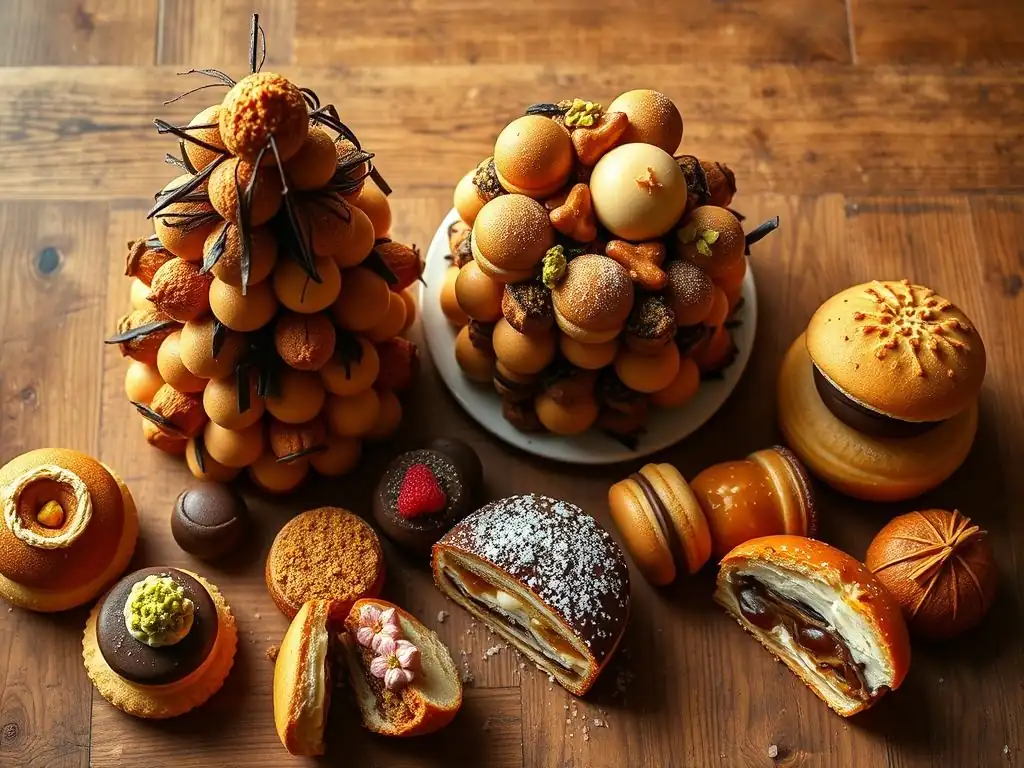
For those looking for a truly impressive project after mastering an easy choux pastry recipe, the Croquembouche is the ultimate challenge. This classic French dessert is a cone-shaped tower made of small, filled choux pastry balls ( profiteroles) glued together with caramel. It's often decorated with spun sugar, nougatine, or other confections.
Building a Croquembouche requires making a significant number of small profiteroles (often 50-100 or more for a standard tower), filling them (typically with pastry cream), and then dipping each one in hot caramel before quickly assembling them around a cone mold. The caramel acts as the edible glue. The difficulty lies in working quickly with hot caramel and building a stable structure. It's a project that tests your choux skills, patience, and assembly technique, often reserved for special occasions like weddings or baptisms.
Paris-Brest: A Decadent Wheel of Choux Pastry
The Paris-Brest is another iconic French pastry made from choux dough, shaped into a large ring to resemble a bicycle wheel, in honor of the Paris-Brest cycling race. The ring is typically sliced horizontally and filled generously with a praline-flavored cream, often crème mousseline (pastry cream enriched with butter). It's usually topped with sliced almonds and powdered sugar.
To make a Paris-Brest, you pipe a large choux ring onto a baking sheet. A common size is 8-10 inches in diameter. Sometimes a smaller inner ring is piped inside the larger one for extra structure. The ring is often topped with sliced almonds before baking. After baking and cooling, it's filled with the rich praline cream. This pastry requires precise piping for the ring shape and a delicious, stable filling.
Saint Honoré Cake: A Celebration of Choux and Cream
The Saint Honoré cake is a complex and elegant dessert that combines multiple choux techniques. It typically consists of a base of puff pastry or shortcrust pastry, topped with a ring of caramelized choux pastry balls. The center is then filled with Chantilly cream or Chiboust cream (pastry cream lightened with meringue), and the cake is often decorated with spun sugar.
Creating a Saint Honoré involves making several components: the base pastry, multiple small choux puffs, and the main cream filling. The small choux puffs are often dipped in caramel before being attached to the base ring. This cake showcases mastery of not just an easy choux pastry recipe, but also caramel work and cream preparation. It's a true showstopper that demonstrates a high level of pastry skill.
Storing and Serving Choux Pastry
Best Practices for Storing Unfilled Choux
Proper storage is key to maintaining the crispness of your baked choux shells. Unfilled choux pastry should be stored in an airtight container at room temperature. Ensure they are completely cooled before storing. Storing them while warm will trap moisture and make them soggy. They will typically stay crisp for 1-2 days this way.
For longer storage, unfilled choux shells freeze exceptionally well. Once completely cooled, arrange them in a single layer on a baking sheet and freeze until solid. Then, transfer them to a freezer-safe bag or container, removing as much air as possible. Frozen unfilled choux can last for several weeks. To use, simply place them directly on a baking sheet and reheat in a preheated oven (around 350°F or 175°C) for 5-10 minutes until crisp again before filling.
Assembling and Serving Tips for Optimal Freshness
Filled choux pastries are best assembled and served as close to serving time as possible, especially if using delicate fillings like Chantilly cream or mousse. Filling them too far in advance can cause the shells to become soggy from the moisture in the filling. For fillings like pastry cream or curd, you have a bit more flexibility, but the shells will still soften over time.
To fill, you can either slice the pastry horizontally and spoon or pipe in the filling, or use a piping bag fitted with a small round tip to pierce the bottom or side of the shell and pipe the filling inside. For example, a standard 1.5-inch cream puff might hold about 2-3 tablespoons of filling. Once filled, dust with powdered sugar, glaze the tops, or add other decorations. Serve promptly to enjoy the delightful contrast between the crisp shell and the luscious filling.
Elevate Your Baking: Mastering the Art of Choux
You've now gone beyond a simple easy choux pastry recipe and delved into the techniques, troubleshooting, and creative possibilities this versatile dough offers. Mastering choux pastry is a significant step in your baking journey, opening doors to classic French patisserie and allowing you to create impressive desserts and savory bites.
With practice, you'll develop a feel for the right dough consistency and the visual cues during baking. Don't be discouraged by initial failures; every baker encounters flat or soggy choux now and then. Review the troubleshooting tips, adjust your technique, and try again. Your efforts will be rewarded with light, airy pastries perfect for any occasion. Keep practicing your easy choux pastry recipe variations, explore new fillings, and soon you'll be creating choux masterpieces with confidence!
Frequently Asked Questions
What is choux pastry and why is it considered "magic"?
Choux pastry, also known as pâte à choux, is a light pastry dough used to make profiteroles, éclairs, and other delicious treats. It's considered "magic" because it uses a simple process to create a pastry that puffs up beautifully when baked.
Is this recipe truly "intermediate" in difficulty?
While this recipe is designed for bakers with some experience, it provides clear step-by-step instructions and tips to ensure success. Beginners may find it challenging, but with patience and attention to detail, it's achievable.
What makes this choux pastry recipe "easy"?
The recipe focuses on simplified techniques and readily available ingredients, making the process less intimidating. The instructions are designed for intermediate bakers who are trying to master this pastry.
What are some common mistakes to avoid when making choux pastry?
Avoid opening the oven door during baking, as this can cause the pastry to deflate. Also, ensure the dough is cooked sufficiently on the stovetop to prevent a soggy final product.
Can I use different fillings for my choux pastry creations?
Absolutely! Choux pastry is incredibly versatile. You can fill it with sweet creams, savory fillings, or even use it as a base for other desserts.
Final Reflection: Mastering the Magic of Choux, One Cream Puff at a Time
The seemingly simple choux pastry, a testament to the power of precise technique, remains surprisingly relevant in today's culinary landscape. Its versatility, from delicate cream puffs to majestic éclairs, continues to captivate both amateur bakers and seasoned professionals alike. The enduring appeal of this classic lies not just in its deliciousness, but in the satisfying sense of accomplishment that comes with mastering its seemingly temperamental nature.
The journey of learning to make choux pastry, for me, has been a lesson in patience, precision, and the unexpected joys of culinary experimentation. It's a technique that demands attention to detail, rewarding the careful baker with perfectly puffed, golden-brown delights. The process itself is a meditation, a quiet dance between heat and hydration, resulting in a creation far exceeding the sum of its simple ingredients. The most beautiful things in the world cannot be seen or even touched - they must be felt with the heart.
This quote, while not directly about baking, perfectly encapsulates the emotional connection one can forge with the process of creating something beautiful and delicious like choux pastry.
Now, it's your turn. Don't be intimidated by the seemingly complex instructions; embrace the challenge. Experiment with different fillings, glazes, and toppings. Let the aroma of baking choux pastry fill your kitchen, a testament to your dedication and skill. Remember the satisfaction of that first perfectly puffed puff, and let that feeling inspire you to continue exploring the endless possibilities of this magical dough. You might just surprise yourself with what you can create.
Unleash Your Inner Pâtissier: Master Choux Perfection!
Thanks for joining us on this choux pastry adventure! You’ve now unlocked the secrets to creating flawlessly light and airy puffs. Ready to put your new skills to the test?
- Bake your dream choux: Try out one of the recipes mentioned in the article, focusing on mastering the crucial steps for perfect texture. Experiment with different fillings and glazes!
- Share your choux creations: Post a picture of your masterpiece on social media and tag us – we’d love to see your results! #BakeWithEaseChoux #ChouxPerfection
- Challenge yourself: Try a more advanced choux recipe, like éclairs with intricate decorations or delicate profiteroles.
What creative choux pastry masterpiece will you bake next?