
How to Scale French Pastry Recipes Successfully

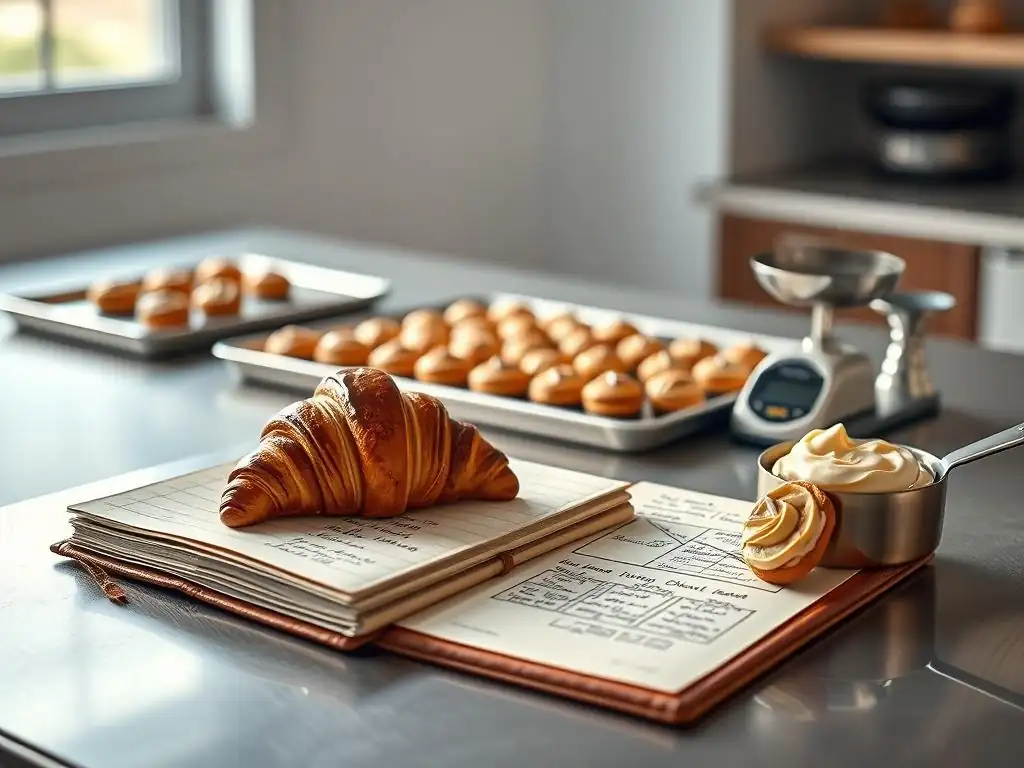
Welcome to BakeWithEase, your kitchen companion for conquering the world of baking! Ever dreamt of effortlessly scaling that intricate French pastry recipe you found, without the fear of a baking disaster? Dive in as we unlock the secrets to scaling French pastry recipes easily, providing you with the knowledge and techniques to adapt your favorite treats to any occasion. Ready to transform your baking game? Let's get started!
- Scaling French Pastry Recipes for Home Baking
- Introduction: Scaling for Consistent Results
- Understanding French Pastry Fundamentals
- Challenges in Scaling Pastry Recipes
- Step-by-Step Scaling Guide
- Scaling Specific Pastries: Examples & Tips
- Tools and Resources for Scaling
- Tips for Successful Scaling
- Troubleshooting Scaling Problems
- Conclusion: Expanding Your Baking Potential
-
Frequently Asked Questions
- How do I convert measurements accurately when scaling a French pastry recipe?
- What is a scaling factor, and how do I calculate it for a French pastry recipe?
- Which ingredients are most sensitive to scaling in French pastry recipes?
- How does scaling affect the baking time and temperature of French pastries?
- What adjustments should I make to the mixing and proofing times when scaling a French pastry recipe?
- Final Reflection: Mastering the Art of Scaling, One Croissant at a Time
- Unlock Your Pastry Potential: Scale with Confidence!
Scaling French Pastry Recipes for Home Baking
Introduction: Scaling for Consistent Results
Scaling French pastry recipes easily can feel like a daunting task for the home baker. Unlike savory dishes where a pinch more salt or a splash more liquid might not ruin the result, French pastry demands precision. A recipe designed to make, say, 24 macarons might not yield the same perfect results if you simply halve all the ingredients to make 12, or double them for 48, without understanding the underlying principles. This section will introduce why scaling accurately is crucial for success and how BakeWithEase approaches this challenge.
Achieving consistent texture, flavor, and appearance in French pastries relies heavily on the precise ratios of ingredients and the specific techniques used. When you scale a recipe, you're not just changing quantities; you're potentially altering these critical ratios and the way the ingredients interact. For example, a small amount of egg white might whip up differently in a large batch compared to a small one due to surface area and mixing dynamics. Mastering the art of scaling French pastry recipes easily means understanding these nuances and making necessary adjustments beyond simple multiplication or division.
Why Scaling Matters for Home Bakers
For home bakers, scaling recipes is essential for flexibility and reducing waste. Often, a professional-sized recipe yields far more than a small household needs, leading to excess ingredients or finished products. On the other hand, you might want to bake a large batch of cookies or pastries for a special occasion or gathering. Knowing how to accurately scale allows you to adjust recipes to fit your needs without compromising the quality that makes French pastries so beloved.
Scaling accurately also builds confidence and expands your baking repertoire. Imagine wanting to try a complex entremet recipe designed for a large mold, but you only have a smaller one. Or perhaps you've perfected a small batch of éclairs and want to bake enough for a party. Scaling French pastry recipes easily empowers you to take on these challenges, adapting recipes to your available equipment, time, and desired yield, ensuring your baking efforts are both successful and enjoyable.
BakeWithEase's Approach to Pastry Scaling
At BakeWithEase, we believe that scaling French pastry recipes should be accessible and understandable for everyone. Our approach focuses on demystifying the process by emphasizing the foundational principles of baking chemistry and physics that govern how ingredients interact. We guide you through understanding the role of each component – flour, sugar, fat, liquids, leaveners – and how their relationships are affected when quantities change.
Our resources provide practical, step-by-step methods for scaling, moving beyond simple arithmetic. We advocate for the use of precise measurements by weight, explaining why this is non-negotiable in French pastry. We also introduce tools like the baker's percentage, not as an intimidating professional concept, but as a helpful framework that reveals the inherent structure of a recipe, making scaling French pastry recipes easily a logical and manageable task rather than a guesswork exercise.
Understanding French Pastry Fundamentals
French pastry is renowned for its elegance, delicate textures, and complex flavors, all of which stem from a deep understanding of ingredients and technique. To successfully scale French pastry recipes easily, it's crucial to first grasp these fundamental principles. This section delves into the importance of precision, the specific roles of key ingredients, and how common techniques can be impacted by scaling, setting the stage for accurate adjustments.
The foundation of consistent French pastry lies in the scientific interaction of ingredients under specific conditions. For instance, the gluten development in a croissant dough is carefully controlled through hydration levels and mixing techniques. Altering the amount of flour or water without adjusting the other proportionally, or changing the mixing time without accounting for the larger or smaller batch size, will directly affect the final texture. Understanding why a recipe calls for a specific amount of an ingredient and how it interacts with others is the first step towards mastering scaling.
Precision: The Importance of Accurate Measurements
Precision in baking, especially in French pastry, is paramount. Unlike cooking, where ingredient amounts can often be adjusted "to taste," baking relies on chemical reactions that require exact proportions. A difference of just a few grams of flour or sugar can significantly alter the texture, rise, or spread of a baked good. For example, adding too much flour to a macaron shell recipe will result in thick, lumpy batter and cracked shells, while too little will cause them to spread excessively.
This is why measuring by weight, typically in grams, is the gold standard in professional kitchens and highly recommended for home bakers serious about scaling French pastry recipes easily. Volume measurements (cups, spoons) are notoriously inaccurate due to variations in how ingredients are packed or scooped.
100 grams of flour will always be 100 grams, regardless of how you scoop it, but a cup of flour can vary by 10-20% depending on the method. Using a digital scale eliminates this variability, ensuring that your scaled ingredient amounts are as accurate as the original recipe intended, providing a reliable starting point for successful scaling.
Key Ingredients and Their Roles
Understanding the function of key ingredients is vital for successful scaling. Flour provides structure through gluten development; sugar adds sweetness, tenderness, moisture, and aids in browning; fats (like butter) contribute richness, flakiness, and tenderness; eggs bind ingredients, provide structure, richness, and leavening; and liquids hydrate dry ingredients and activate leaveners. Each plays a specific role, and changing the amount of one without considering its effect on others can disrupt the delicate balance of the recipe.
Consider butter in puff pastry or croissant dough. It's not just a flavor agent; its melting point and ability to create steam during baking are crucial for creating those distinct layers. When scaling, ensuring the butter remains cold and is incorporated correctly relative to the dough volume and temperature becomes even more critical.
Similarly, the protein content of flour impacts gluten development, and using a different type or brand when scaling can require adjustments to liquid or mixing time. Knowledge of these roles helps predict how scaling might impact the outcome and what adjustments might be needed beyond simple proportioning when scaling French pastry recipes easily.
Common Techniques and Their Scaling Impact
Many French pastry techniques are sensitive to batch size. Whipping egg whites for meringues or macarons, for instance, requires sufficient volume to create a stable foam. Scaling down too much might make it difficult to whip effectively in a standard mixer, while scaling up significantly might require a larger mixer and potentially longer whipping time to achieve the same stiff peaks. Similarly, emulsifying batters, like in a génoise, relies on vigorous mixing to incorporate air and create a stable structure; the dynamics of this process change with batch size.
Kneading dough, whether for brioche or croissants, is another technique affected by scaling. A smaller batch might knead faster or require less handling to avoid over-developing gluten, while a larger batch needs more time and power. Temperature control, critical for working with butter-rich doughs, also becomes more challenging with larger volumes which retain heat differently. When scaling French pastry recipes easily, it's important to anticipate how techniques might need slight modification to achieve the desired results consistently across different batch sizes.
Challenges in Scaling Pastry Recipes

While the concept of scaling seems straightforward – multiply or divide ingredients – the reality in French pastry can be complex. The non-linear effects of ingredient interactions, changes in surface area to volume ratios, and the impact on specific techniques present significant challenges. Recognizing these hurdles is the first step towards overcoming them and mastering the art of scaling French pastry recipes easily for your home kitchen.
One of the primary difficulties lies in the fact that not all ingredients or steps scale perfectly linearly. For example, the amount of leavening agent (baking powder or soda) might not need to be scaled in direct proportion, especially in recipes with small quantities, as too much can lead to off-flavors or excessive rise followed by collapse.
Similarly, the surface area of a large batch of dough exposed to air is different from a small batch, affecting drying rates or fermentation times. These subtle changes can have a profound impact on the final product's texture and appearance, making simple arithmetic insufficient for truly successful scaling.
Ingredient Ratios and Texture/Flavor
The precise ratios of ingredients are the backbone of French pastry. The ratio of flour to liquid determines hydration and gluten development; the ratio of sugar to egg whites affects meringue stability; the ratio of fat to flour dictates flakiness in pie crusts or puff pastry. When scaling, maintaining these critical ratios is paramount. However, the impact of these ratios can change with volume. For instance, a tiny amount of a powerful flavor extract might overwhelm a small batch but be perfectly balanced in a large one.
Furthermore, scaling can affect how quickly heat penetrates the product during baking, which in turn impacts how ingredients react. A larger cake might take significantly longer to bake, potentially leading to a drier texture if not adjusted correctly. Conversely, a smaller batch might bake too quickly, preventing proper structure development or browning. Understanding how ingredient ratios interact and how scaling affects these interactions is key to maintaining the desired texture and flavor profile when scaling French pastry recipes easily.
The Baker's Percentage: A Scaling Tool
The baker's percentage is an invaluable tool for understanding and scaling pastry recipes, revealing the inherent structure of a formula independent of batch size. In baker's percentage, all ingredient weights are expressed as a percentage of the flour weight, which is always 100%. For example, a simple bread dough might be 100% flour, 60% water, 2% salt, and 1% yeast. This system immediately shows the hydration level (water as a percentage of flour) and the relative amounts of other ingredients.
Using baker's percentage makes scaling French pastry recipes easily more intuitive. To scale a recipe using baker's percentage, you first convert the original recipe to percentages. Then, decide on your desired total dough/batter weight or the weight of flour you want to use for your new batch size. Multiply your desired flour weight by each ingredient's percentage (as a decimal) to find the new weight for that ingredient. This method ensures that the critical ratios are maintained precisely, regardless of whether you're making a small test batch or a large production quantity.
Common Scaling Mistakes to Avoid
Several common mistakes can derail attempts at scaling French pastry recipes. The most frequent error is simply multiplying or dividing volume measurements (cups, tablespoons) instead of converting to and working with weights. As discussed, volume is inaccurate and inconsistent. Another mistake is failing to consider the impact on technique; for instance, overmixing a smaller dough batch because you used the same mixing time as the larger original recipe.
Ignoring the potential need for minor ratio adjustments, especially for potent ingredients like leaveners, extracts, or strong spices, is another pitfall. Sometimes, these don't scale perfectly linearly. Finally, neglecting to adjust baking time and temperature is a common error. Larger batches require longer baking times and sometimes slightly lower temperatures to prevent burning the outside before the inside is cooked through. Being aware of these common issues is crucial for scaling French pastry recipes easily and successfully.
Step-by-Step Scaling Guide
Mastering scaling French pastry recipes easily becomes achievable with a structured approach. This guide provides a clear, step-by-step process that minimizes guesswork and maximizes accuracy. By following these steps, you can confidently adjust your favorite French pastry recipes to yield the perfect amount for your needs, ensuring delicious and consistent results every time.
The process begins with understanding the original recipe's yield and determining your desired outcome. From there, it's all about leveraging the power of precise measurement by weight and applying a simple mathematical factor to ensure all ingredients are adjusted proportionally. While the math is straightforward, the key lies in the accuracy of your initial measurements and the consistency with which you apply the scaling factor across the entire ingredient list, setting the foundation for successful scaling.
Step 1: Define Your Target Yield
The first step in scaling any recipe is to clearly define how much you want to make. Look at the original recipe and determine its standard yield – how many cookies, tarts, or grams of dough it produces. Then, decide on your target yield. Do you want half the amount, double, or perhaps a specific weight of finished product? Knowing your desired outcome is essential before you start adjusting ingredient quantities.
For example, if a macaron recipe yields 48 shells (24 assembled macarons) and you only want 24 shells (12 assembled macarons), your target yield is half of the original. If a brioche recipe yields 1000 grams of dough and you need 1500 grams for a specific mold, your target yield is 1.5 times the original weight. Clearly defining this target is the necessary starting point for scaling French pastry recipes easily.
Step 2: Convert to Weight (Grams)
This is perhaps the most critical step for accurate scaling, especially with French pastry. Ensure your original recipe lists ingredients by weight, preferably in grams. If it uses volume measurements (cups, tablespoons), you must convert these to weight before scaling. Use reliable conversion charts or online resources that provide accurate weight equivalents for common baking ingredients like flour, sugar, butter, and liquids.
For instance, while a cup of all-purpose flour is often approximated as 120-130 grams, using a precise conversion for the specific type of flour in your recipe is best. Water and milk are generally easy to convert as 1 ml equals 1 gram. Fats like butter or oil also have standard gram equivalents per volume. Converting everything to grams ensures that your base recipe measurements are accurate, which is fundamental for scaling French pastry recipes easily without introducing errors from the start.
Step 3: Calculate the Scaling Factor
Once you have all ingredient amounts listed by weight and have defined your target yield, calculate the scaling factor. This factor is the number you will multiply each ingredient's original weight by to get its new weight. The simplest way to calculate the scaling factor is to divide your desired yield by the original yield (using consistent units, e.g., desired number of cookies / original number of cookies, or desired total dough weight / original total dough weight).
Let's revisit the macaron example: Original yield = 48 shells, Desired yield = 24 shells. Scaling factor = 24 / 48 = 0.5. For the brioche example: Original yield = 1000g dough, Desired yield = 1500g dough. Scaling factor = 1500 / 1000 = 1.5. This calculated factor is the key multiplier for scaling French pastry recipes easily and accurately.
Step 4: Apply the Factor to All Ingredients
Now, take the weight of each ingredient in the original recipe (in grams, from Step 2) and multiply it by the scaling factor you calculated in Step 3. This will give you the new, scaled weight for each ingredient. Be meticulous and apply the factor to every ingredient, no matter how small the quantity.
For example, if the original macaron recipe calls for 100g almond flour, 100g powdered sugar, 100g egg whites, and 100g granulated sugar, and your scaling factor is 0.5, your new ingredient list will be: 50g almond flour, 50g powdered sugar, 50g egg whites, and 50g granulated sugar. This systematic application ensures that the critical ratios of the original recipe are maintained, making scaling French pastry recipes easily a precise process.
Step 5: Adjust Baking Time and Temperature
Scaling a recipe often necessitates adjustments to baking time and sometimes temperature. A larger batch, spread across multiple trays or baked in a larger pan, will take longer for heat to penetrate evenly. Conversely, a smaller batch might bake much faster. There's no universal formula for this adjustment; it often requires a bit of estimation and careful monitoring during baking.
As a general rule, for larger batches, you might need to increase baking time by 15-30% or more, and sometimes slightly decrease the temperature (e.g., from 180°C to 170°C) to prevent the edges from burning before the center is done. For smaller batches, reduce the time significantly and keep a close eye on the product. It's always better to check for doneness early and add more time than to overbake. This step is where experience and observation play a role in scaling French pastry recipes easily beyond just the math.
Scaling Specific Pastries: Examples & Tips
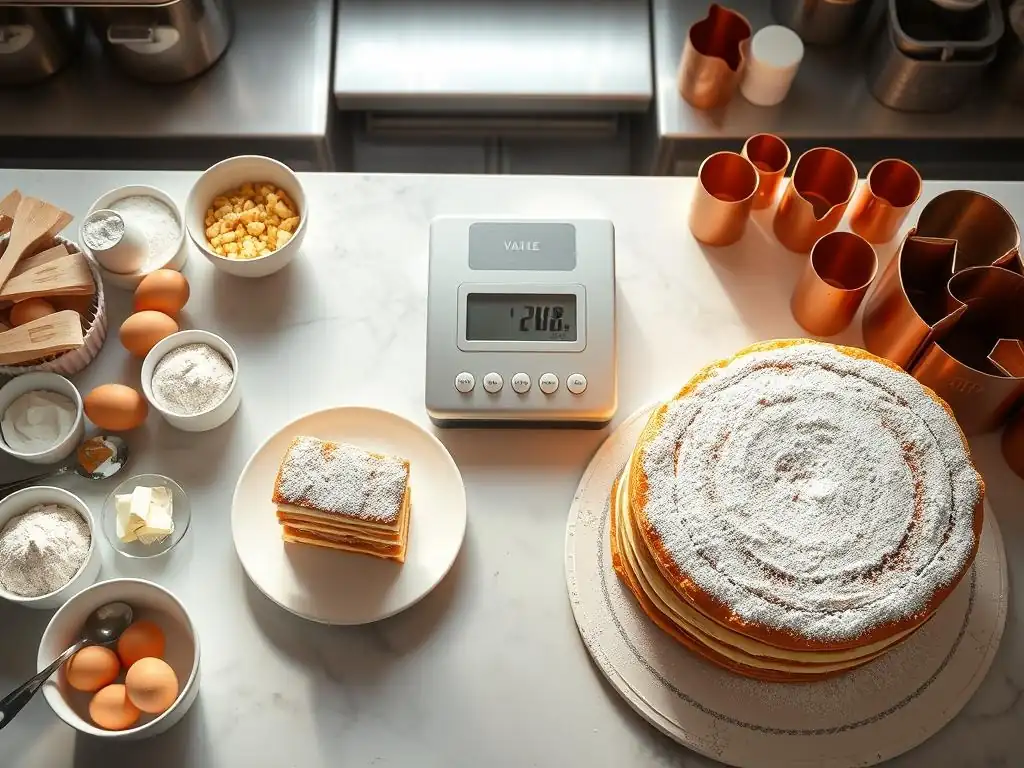
Scaling French pastry recipes easily involves understanding the specific challenges each type of pastry presents. While the general steps of converting to weight, calculating a factor, and applying it hold true, specific techniques and ingredient interactions become more critical depending on the pastry. This section provides examples and tips for scaling some popular French pastries, highlighting key considerations for each.
Each type of French pastry relies on a unique combination of ingredients and techniques to achieve its characteristic texture and structure. Macarons depend on a stable meringue and proper drying time. Croissants rely on lamination and precise fermentation. Choux pastry needs the right hydration and cooking technique for proper rise. Tart dough requires careful handling to remain tender and flaky. Recognizing these specific needs is crucial for successful scaling.
Scaling Macaron Recipes: Achieving Perfect Feet
Scaling macaron recipes presents unique challenges, primarily related to the meringue and the consistency of the batter (the macaronage). The volume of egg whites needs to be sufficient for your mixer to whip into a stable, stiff meringue. Scaling down too much might make this difficult in a standard home stand mixer bowl, potentially requiring a smaller bowl or even hand whisking for very small batches. Scaling up requires a powerful mixer and careful monitoring to avoid over-whipping large volumes.
The consistency of the macaronage is also highly sensitive to batch size. Mixing a larger batch might require more folds to reach the lava-like consistency, while a smaller batch might get there very quickly. Overmixing is a common issue when scaling French pastry recipes easily like macarons. Drying time before baking can also vary; larger trays or more trays in the oven might affect air circulation and humidity, impacting how quickly the shells form a skin. Pay close attention to visual cues rather than just time when mixing and resting scaled macaron batter.
Scaling Croissant Recipes: Managing Dough Hydration
Scaling croissant recipes involves managing dough hydration and temperature during lamination and fermentation. The dough hydration (water relative to flour) is critical for gluten development and elasticity needed for rolling and folding. When scaling, ensure the water amount is precisely scaled by weight relative to the flour. However, incorporating a large block of butter into a very small amount of dough, or vice versa, can be technically challenging.
Temperature control becomes even more vital with scaled batches. A larger batch of dough takes longer to chill down between folds, increasing the risk of the butter softening too much. A smaller batch might chill faster but can also warm up quickly while working with it. Fermentation times might also need slight adjustment, as dough volume affects yeast activity. When scaling French pastry recipes easily like croissants, focus on maintaining the correct dough and butter temperatures throughout the process and be prepared to adjust chilling times.
Scaling Choux Pastry Recipes: Achieving Proper Rise
Scaling choux pastry recipes requires careful attention during the initial cooking stage on the stovetop and during baking. The ratio of liquid to flour and the amount of eggs are crucial for creating the steam needed for the characteristic hollow center and rise. When scaling, ensure these ratios are maintained by weight. The stovetop cooking step, which gelatinizes the starch, is sensitive to the volume being cooked; a larger batch will take longer to cook and dry out sufficiently.
Adding eggs to the cooked paste also needs care. A larger batch requires more mixing power to incorporate the eggs smoothly, while a smaller batch can become too wet easily. During baking, choux rely on high initial heat to generate steam. Scaling affects how quickly this heat penetrates. For larger batches, ensure adequate spacing between pastries on the baking sheet and potentially bake in multiple batches to avoid overcrowding the oven, which can inhibit rise. Scaling French pastry recipes easily like choux means focusing on the consistency of the paste before adding eggs and managing oven space effectively.
Scaling Tart Dough Recipes: Maintaining Structure
Scaling tart dough (like pâte sucrée or pâte sablée) focuses on maintaining tenderness and preventing toughness. The ratio of fat to flour is key here. When scaling, ensure this ratio is precise by weight. The method of incorporating fat (creaming for pâte sucrée, cutting in for pâte sablée) is also critical. Scaling down a recipe with a creaming method might require using a smaller mixer attachment or even hand mixing to avoid overworking the dough.
Handling the dough after mixing is also affected by scale. A smaller batch might chill faster but can also become crumbly if overworked. A larger batch takes longer to chill and can be harder to roll evenly. Ensuring the dough remains cold and is handled minimally is crucial regardless of scale. When scaling French pastry recipes easily like tart dough, pay attention to the texture after mixing and chilling, adjusting handling and rolling techniques as needed to maintain tenderness.
Tools and Resources for Scaling
While understanding the principles is key, having the right tools and resources can significantly simplify the process of scaling French pastry recipes easily. Leveraging technology and readily available information can help ensure accuracy and save time, allowing you to focus on the enjoyable aspects of baking rather than complex calculations.
From digital scales to online calculators and guides on baker's percentage, a few essential resources can become indispensable companions in your scaling journey. These tools help confirm your calculations, provide reliable conversion data, and deepen your understanding of recipe structure, making the transition from a standard recipe to a scaled version much smoother and more reliable for the home baker.
Online Scaling Calculators
Numerous online scaling calculators are available that can take an original recipe's ingredient list and a desired scaling factor (or target yield) and output the new ingredient amounts. While these are helpful, it's crucial to use calculators that allow inputting ingredient amounts by weight (grams) and preferably understand baker's percentage.
Using a calculator can quickly verify your manual calculations or perform complex scaling factors. However, always double-check the results, especially for sensitive ingredients. Think of them as helpful assistants, not substitutes for understanding the underlying principles of scaling French pastry recipes easily.
Baker's Percentage Resources
Understanding baker's percentage is one of the most powerful skills for a baker looking to scale recipes confidently. Many online guides, articles, and videos explain how to convert a standard recipe to baker's percentage and how to use it for scaling. BakeWithEase provides resources specifically tailored to home bakers to demystify this concept.
Learning to view a recipe through the lens of baker's percentage reveals the inherent structure and ratios, making it easier to troubleshoot issues and adapt recipes creatively. Investing a little time in learning this system pays dividends in making scaling French pastry recipes easily a more logical and less intimidating process.
Recommended Kitchen Scales
A reliable digital kitchen scale is arguably the most important tool for accurate scaling. Look for a scale that measures in grams with precision, ideally to at least one decimal place for smaller quantities. It should have a tare function to zero out the weight of your container.
Scales vary in capacity (e.g., up to 5kg or 10kg) and platform size. Choose one that fits your typical baking needs. Having an accurate scale is non-negotiable for scaling French pastry recipes easily and consistently; it removes the variability inherent in volume measurements and provides a solid foundation for all your calculations.
Tips for Successful Scaling
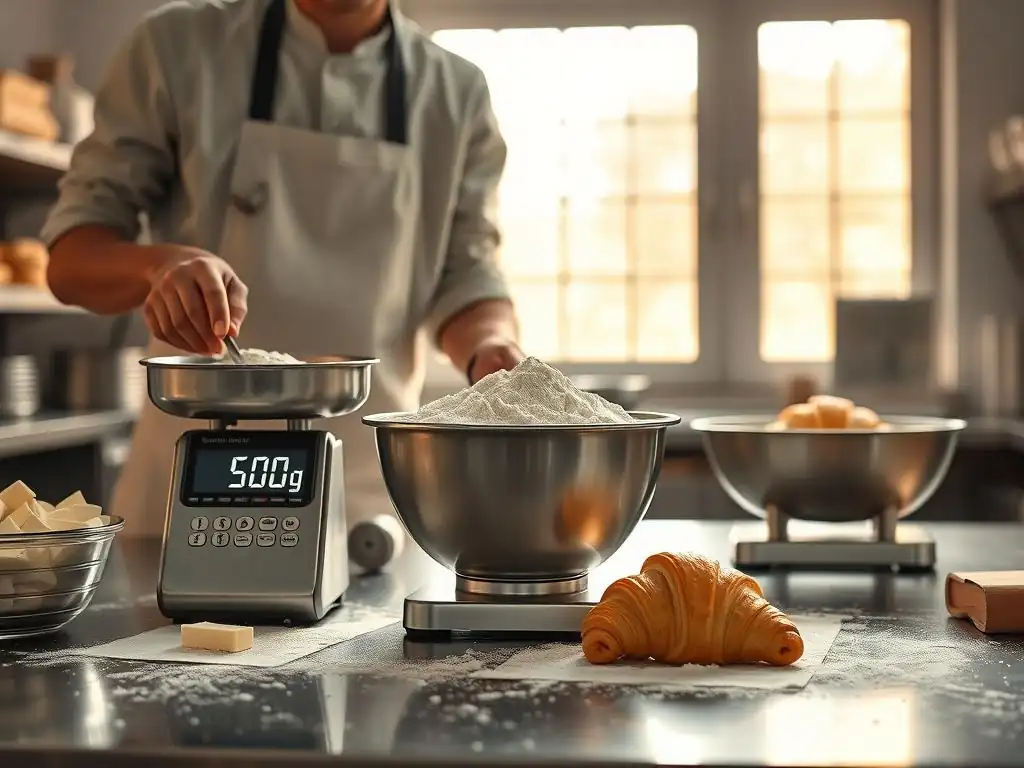
Beyond the step-by-step process and essential tools, several practical tips can significantly improve your success when scaling French pastry recipes easily. These tips focus on testing, observation, and meticulous record-keeping, helping you fine-tune your approach and achieve consistent, high-quality results every time you adjust a recipe.
Scaling is not always a one-time perfect calculation; sometimes, minor adjustments are needed based on how the scaled recipe performs in your specific kitchen and oven. Being prepared to test, observe closely, and document your findings will turn scaling from a potential source of frustration into a rewarding part of your baking journey.
Batch Testing: Fine-Tuning Your Recipe
After scaling a recipe, especially for complex pastries or significant scaling factors, it's highly recommended to bake a small test batch before committing to a large quantity. This allows you to check if the scaled ratios work as expected, observe the dough/batter consistency, and verify the adjusted baking time and temperature.
A small test batch minimizes wasted ingredients and effort if adjustments are needed. For example, if you scale a cookie recipe and the test batch spreads too much, you might slightly increase the flour in the main batch. Batch testing is a crucial step in confidently scaling French pastry recipes easily and ensuring the final outcome meets your expectations.
Adjusting for Oven Variations
Every oven is different, with hot spots and variations in actual temperature versus the setting. These variations can become more pronounced when baking larger or smaller batches. A fully loaded oven will bake differently than one with a single tray.
When baking scaled recipes, especially larger quantities spread across multiple racks, rotate your trays halfway through the baking time for even results. Monitor the product closely and rely on visual cues (color, rise, texture) rather than just the clock, making small temperature adjustments if necessary. Accounting for your specific oven's quirks is vital for successful scaling French pastry recipes easily.
Ingredient Quality: Maintaining Flavor
When scaling recipes, ensure you use ingredients of comparable quality to the original recipe. Scaling doesn't magically improve poor-quality ingredients. If the original recipe called for high-quality European butter, using a lower-fat butter in your scaled version might compromise the texture and flavor.
Similarly, variations in flour protein content or the freshness of leaveners can impact results. While scaling adjusts quantities, maintaining ingredient quality helps ensure that the scaled version retains the desired flavor profile and texture of the original recipe, contributing to the overall success of scaling French pastry recipes easily.
Documentation: Tracking Your Adjustments
Keep detailed notes whenever you scale a recipe. Record the original recipe, your target yield, the calculated scaling factor, the new ingredient weights, and any adjustments you made to mixing time, resting time, baking temperature, or baking time.
Note down the results of your test batch and the final outcome of the full scaled batch. Did the texture feel right? Was the baking time accurate? Were there any issues? This documentation creates a valuable personal baking log that makes future scaling attempts of the same recipe much easier and more reliable, solidifying your ability to confidently manage scaling French pastry recipes easily.
Troubleshooting Scaling Problems
Despite careful planning and execution, you might encounter issues when scaling French pastry recipes. Recognizing common problems and knowing how to troubleshoot them is part of the learning process. Most issues stem from slight inaccuracies in scaling, changes in technique dynamics, or misjudgments in baking time/temperature.
Addressing scaling problems requires a bit of detective work, comparing your results to the expected outcome and identifying where things might have gone wrong in the scaling or execution steps. With practice and attention to detail, you can learn to diagnose and correct issues, ensuring your scaled pastries turn out beautifully.
Dough Consistency Issues
One common problem when scaling, particularly with doughs like brioche, croissants, or tart dough, is achieving the correct consistency. A scaled-up dough might feel too wet or too stiff compared to the original. This could be due to inaccurate weighing, especially if you had to convert from volume, or slight variations in flour absorption depending on the batch size and mixing time.
If a scaled dough feels too wet, you can try adding a small amount of flour (a tablespoon or two at a time) until the desired consistency is reached, noting the extra amount added for future scaling. If it's too stiff, a tiny amount of liquid might help. For laminated doughs, temperature is often the culprit; if the butter is too soft, the dough will feel greasy and difficult to work with. Scaling French pastry recipes easily means being prepared to make minor consistency tweaks based on feel, especially when working with new recipes or significant scale changes.
Uneven Baking Issues
Scaled batches, especially larger ones, can sometimes bake unevenly. Some pastries might be overdone on the edges while undercooked in the center, or items on one tray might bake faster than those on another. This is often related to oven hot spots, overcrowding the oven, or incorrect temperature/time adjustments.
To troubleshoot uneven baking, ensure your oven temperature is accurate using an oven thermometer. Avoid placing too many items on a single tray or too many trays in the oven at once, which restricts airflow. Always rotate trays front-to-back and top-to-bottom halfway through the baking time. If edges are browning too fast, you can shield them with foil. Adjusting temperature slightly lower and increasing baking time can also help achieve more even cooking for larger items when scaling French pastry recipes easily.
Flavor Imbalances
Occasionally, a scaled recipe might have a flavor imbalance – perhaps too sweet, not sweet enough, or an extract flavor is too prominent or too weak. While accurate weighing should maintain ratios, the perception of flavor can sometimes change with batch size, or a potent ingredient wasn't scaled perfectly linearly.
If a flavor is too strong (like vanilla extract), reduce the amount slightly in your next scaled batch. If it's too weak, increase it. Sugar levels are usually precise, but if a scaled pastry tastes off, double-check your calculations. Remember that ingredients like salt significantly impact overall flavor balance; ensure it was scaled correctly. Scaling French pastry recipes easily involves not just hitting the right weights but also tasting the final product and making subtle flavor adjustments in future attempts if needed.
Conclusion: Expanding Your Baking Potential
Scaling French pastry recipes easily is a skill that unlocks immense potential for the home baker. It transforms recipes from fixed formulas into flexible blueprints that you can adapt to fit any occasion, need, or inspiration. By understanding the fundamental principles, embracing precision, and following a systematic approach, you can confidently adjust recipes without sacrificing the delicate balance and exquisite quality that define French pastry.
Gone are the days of being limited by standard recipe yields. Whether you want to whip up a small batch of perfect financiers for a quiet afternoon or bake dozens of flaky croissants for a celebratory brunch, mastering scaling empowers you to do so successfully. It deepens your understanding of how ingredients work together and builds confidence in your ability to manipulate recipes, expanding your baking horizons significantly.
Embrace Scaling with BakeWithEase
At BakeWithEase, we are committed to making complex baking techniques, including scaling, accessible and manageable for everyone. Our resources, guides, and step-by-step approaches are designed to equip you with the knowledge and confidence needed to tackle scaling French pastry recipes easily. We believe that with the right tools and understanding, adapting recipes to your needs should be a source of creativity and satisfaction, not frustration.
We encourage you to put these scaling principles into practice. Start with a familiar, simple recipe and scale it by a small factor (like 0.5 or 1.5). Use your scale, follow the steps, and document your process. With each successful scaling attempt, your confidence will grow, and you'll be well on your way to effortlessly adjusting any French pastry recipe that catches your eye, truly making baking fit your life.
Further Exploration: Advanced Techniques
Once you are comfortable with basic scaling, you can explore more advanced techniques and concepts that further enhance your ability to adapt recipes. Delving deeper into baker's percentage for different types of dough (lean bread dough vs. enriched brioche) or understanding the specific gravity of ingredients can provide even greater precision.
Experimenting with how different flours or sugars behave when scaled can also lead to new insights. The world of French pastry is vast and offers endless opportunities for learning and creativity. Mastering scaling French pastry recipes easily is a fundamental step that opens the door to exploring more complex formulas and techniques with confidence, allowing you to truly bake with ease and expertise.
Frequently Asked Questions
How do I convert measurements accurately when scaling a French pastry recipe?
Accurate conversion relies heavily on using a kitchen scale for weight-based measurements, which are more precise than volume. Convert all measurements to grams or ounces before scaling, and then use a scaling factor to adjust.
What is a scaling factor, and how do I calculate it for a French pastry recipe?
A scaling factor is the ratio between the desired yield and the original yield of the recipe. Divide your desired yield by the original yield to get the scaling factor, then multiply each ingredient by this factor.
Which ingredients are most sensitive to scaling in French pastry recipes?
Ingredients like yeast, baking powder/soda, and eggs are highly sensitive. Small changes can significantly impact the recipe's outcome. Consider adjusting these incrementally rather than directly scaling.
How does scaling affect the baking time and temperature of French pastries?
Larger batches generally require longer baking times, while smaller batches need less. Keep a close eye on the pastry and use a thermometer to ensure it's properly baked. Adjust the temperature if necessary, following the original instructions.
What adjustments should I make to the mixing and proofing times when scaling a French pastry recipe?
Mixing times may need to be slightly adjusted depending on the batch size. Proofing times are generally temperature-dependent, so monitor the dough closely and adjust based on its rise, not a fixed time.
Final Reflection: Mastering the Art of Scaling, One Croissant at a Time
The ability to confidently scale French pastry recipes is no longer a niche skill; it's a crucial element for any baker aiming for efficiency and consistent quality. Whether you're a home baker dreaming of a larger batch of croissants for a party or a professional pastry chef scaling up for a bustling café, mastering this technique unlocks a world of possibilities and significantly impacts your baking success.
The delicate balance of ingredients in French pastry makes scaling a true test of baking knowledge. It's not simply a matter of multiplying numbers; it's about understanding the underlying principles of hydration, gluten development, and the interplay of fats and sugars. The most important thing in baking is to understand the 'why' behind the 'how.'
This quote, though not specifically about scaling, perfectly encapsulates the essence of successful French pastry baking, and by extension, scaling its recipes. The impact of this knowledge extends beyond the kitchen; it fosters a deeper appreciation for the precision and artistry involved in creating these exquisite treats.
Now, it's your turn. Consider the recipes you already cherish. Are there adjustments you can make to scale them up or down with confidence? Don't be afraid to experiment, to learn from your mistakes, and to embrace the journey of mastering this essential skill. The reward? The joy of sharing perfectly scaled, flawlessly executed French pastries with those you love, or the satisfaction of running a successful pastry business built on a foundation of precise technique. The art of scaling is yours to conquer.
Unlock Your Pastry Potential: Scale with Confidence!
Thanks for joining us on this delicious journey into scaling French pastry recipes! You've now got the knowledge to tackle bigger batches with ease. Ready to put your newfound skills to the test?
- Bake a masterpiece: Try scaling your favorite recipe – perhaps that delicate macaron recipe or challenging croissant dough – using the techniques we've discussed. Note down any adjustments you need to make for your oven and equipment.
- Share your success (or challenges!): We'd love to hear about your baking adventures! Share your scaled-up creations and any tips you've discovered in the comments below. Let's build a supportive community of pastry enthusiasts together!
- Bonus Challenge: Experiment with scaling a recipe that uses unconventional ingredients or techniques, and share your results!
What unique twist will you add to your next batch of scaled-up pastries?