
Understanding Oven Temperatures for Baked Goods

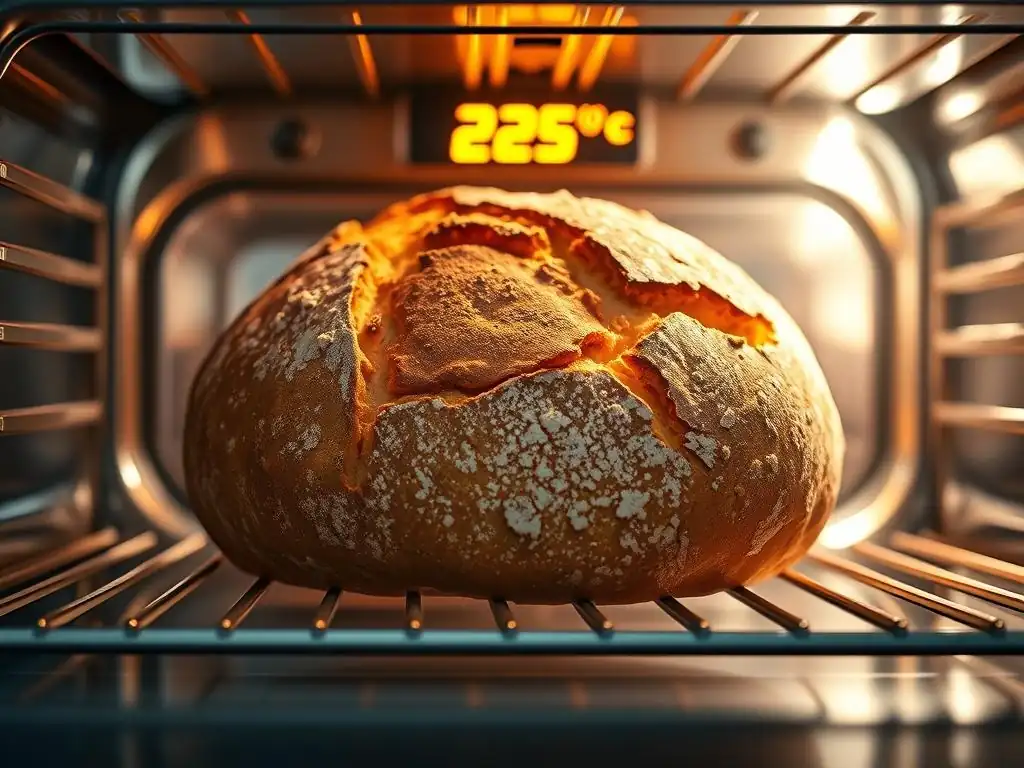
Welcome to BakeWithEase, your kitchen companion for all things baking! Ever wondered if your oven is truly baking at the temperature it claims? Unlock the secrets to baking perfection with our guide to Precise Oven Temperature Baking Tips. Discover how mastering this often-overlooked element can transform your pastries and desserts from good to extraordinary. Read on to ensure every bake is a resounding success!
- Understanding Oven Temperatures for Baked Goods: BakeRight's Guide
- Achieving Baking Perfection: The Importance of Precise Oven Temperature
- Deciphering Oven Temperature Settings: A Baker's Guide
- Identifying and Addressing Oven Temperature Inaccuracies
-
Precise Oven Temperature Baking Tips for Specific Baked Goods
- Best Oven Temperatures for Bread: Crust Development and Internal Structure
- Optimal Temperatures for Baking Cakes: Ensuring Even Rise and Moistness
- Cookie Baking Temperatures: Achieving Desired Texture and Spread
- Perfecting Temperatures for Pies: Achieving Golden Crusts and Cooked Fillings
- Understanding Temperatures for Baking Pastries: Flakiness and Crispness
- Troubleshooting Common Baking Issues Related to Oven Temperature
- Mastering Oven Temperature: Advanced Baking Techniques
- Maintaining Your Oven for Consistent Baking Temperatures
-
Frequently Asked Questions
- How crucial is an accurate oven temperature for baking success?
- What are some signs that my oven temperature might be inaccurate?
- What's the best way to check if my oven is heating to the correct temperature?
- If my oven temperature is off, how can I adjust for it when baking?
- Are there specific baked goods that are more sensitive to oven temperature fluctuations than others?
- Final Reflection: The Art and Science of Precise Oven Temperatures
- Unlock Baking Perfection: Master Your Oven's Secrets!
Understanding Oven Temperatures for Baked Goods: BakeRight's Guide
Achieving Baking Perfection: The Importance of Precise Oven Temperature
Why Precise Oven Temperature Matters for Baking Success
Achieving consistently delicious results in baking hinges significantly on mastering your oven's temperature. Even a slight deviation from the recommended temperature can dramatically alter the outcome of your baked goods, affecting everything from texture and rise to color and flavor. For instance, a cake baked at a temperature just 25°F (approx.
15°C) higher than specified might develop a hard crust before the interior is fully cooked, leading to a dry or unevenly baked product. Conversely, baking too cool can result in a dense, heavy texture and pale appearance because the leavening agents aren't activated effectively. Mastering precise oven temperature baking tips is fundamental for any baker aiming for predictable, high-quality results.
Understanding the science behind oven heat transfer is key. Ovens primarily use convection (air movement) and radiation (heat waves) to cook food. The set temperature dictates the intensity of these processes. Too much heat too quickly can cause the exterior of delicate items like soufflés or cheesecakes to set prematurely or crack.
For robust items like artisan bread, a very hot initial temperature is often crucial for developing a strong crust and achieving the desired oven spring. Therefore, paying close attention to and verifying your oven's temperature is a cornerstone of successful baking. Implementing precise oven temperature baking tips helps you control these reactions for the perfect bake every time.
The Impact of Temperature on Different Baked Goods
The ideal baking temperature varies widely depending on the type of baked good and the desired outcome. Delicate items such as custards or cheesecakes often require low, gentle heat, typically between 300°F and 325°F (approx. 150°C to 160°C), sometimes even baked in a water bath, to prevent curdling or cracking and ensure a smooth, creamy texture. This slow baking allows the proteins to set gradually without becoming tough.
In contrast, items like puff pastry or certain types of bread demand high initial temperatures, often in the range of 400°F to 450°F (approx. 200°C to 230°C). This high heat creates steam rapidly within the dough layers, causing them to separate and puff dramatically, resulting in a light, airy texture. For cookies, temperatures typically range from 350°F to 375°F (approx. 175°C to 190°C), with the specific temperature influencing spread and crispness. Understanding these nuances and applying precise oven temperature baking tips tailored to each recipe is vital for achieving the intended characteristics of your baked creations.
Deciphering Oven Temperature Settings: A Baker's Guide
Understanding Conventional Oven Temperatures
A conventional oven heats using elements on the top and bottom, circulating air naturally as it warms. When you set a conventional oven to, say, 350°F (approx. 175°C), you're setting the target temperature for the air inside the cavity. However, conventional ovens often have hotspots and cooler spots, meaning the temperature isn't uniform throughout. The bottom rack is typically hotter due to the lower heating element, while the top rack might be exposed to more radiant heat from the top element or less heat overall depending on the oven's design.
Baking in a conventional oven often requires rotating your pans halfway through the baking time to ensure even cooking. This helps compensate for the temperature variations within the oven cavity. Recipes developed for conventional ovens usually account for this unevenness to some degree, but understanding your specific oven's tendencies is part of mastering precise oven temperature baking tips. For example, if your oven consistently bakes hotter on the bottom, you might need to place items you want browned on the top on a higher rack or adjust baking times slightly.
Convection Oven Temperatures: Adjustments for Even Baking
Convection ovens use a fan to circulate hot air around the oven cavity, resulting in more uniform temperatures and faster cooking times compared to conventional ovens. This forced air movement helps transfer heat more efficiently to the food's surface, promoting faster browning and crisping. Because of this efficiency, recipes often recommend reducing the temperature by 25°F (approx. 15°C) when using a convection setting compared to a conventional setting. For instance, a recipe calling for 350°F in a conventional oven might suggest 325°F (approx. 160°C) in a convection oven.
The circulating air in a convection oven also helps eliminate or significantly reduce hotspots, leading to more even baking across multiple racks simultaneously. This is particularly beneficial when baking large batches of cookies or multiple cake layers. However, the fan can sometimes be too powerful for delicate items like soufflés, potentially causing them to collapse. Knowing when to use the convection feature (and at what adjusted temperature) is a crucial aspect of applying precise oven temperature baking tips for optimal results.
Decoding Oven Symbols and Temperature Markings
Modern ovens come equipped with various symbols and settings beyond simple temperature dials or digital inputs. Understanding these symbols is essential for utilizing your oven's full capabilities. Common symbols include icons for conventional bake (often a single line at the top and bottom), convection bake (usually a fan symbol, sometimes with lines), broil (often a zigzag line at the top), and sometimes specific modes like convection roast (fan with top and bottom lines) or proofing (low temperature with fan).
Temperature markings can be in Fahrenheit (°F) or Celsius (°C), and sometimes both. It's crucial to know which system your recipe uses and which system your oven displays to avoid significant errors. Many digital ovens allow you to switch between Fahrenheit and Celsius. Familiarizing yourself with your specific oven's manual is the best way to decode its unique symbols and features, ensuring you can accurately set the temperature and mode required for your precise oven temperature baking tips.
Identifying and Addressing Oven Temperature Inaccuracies
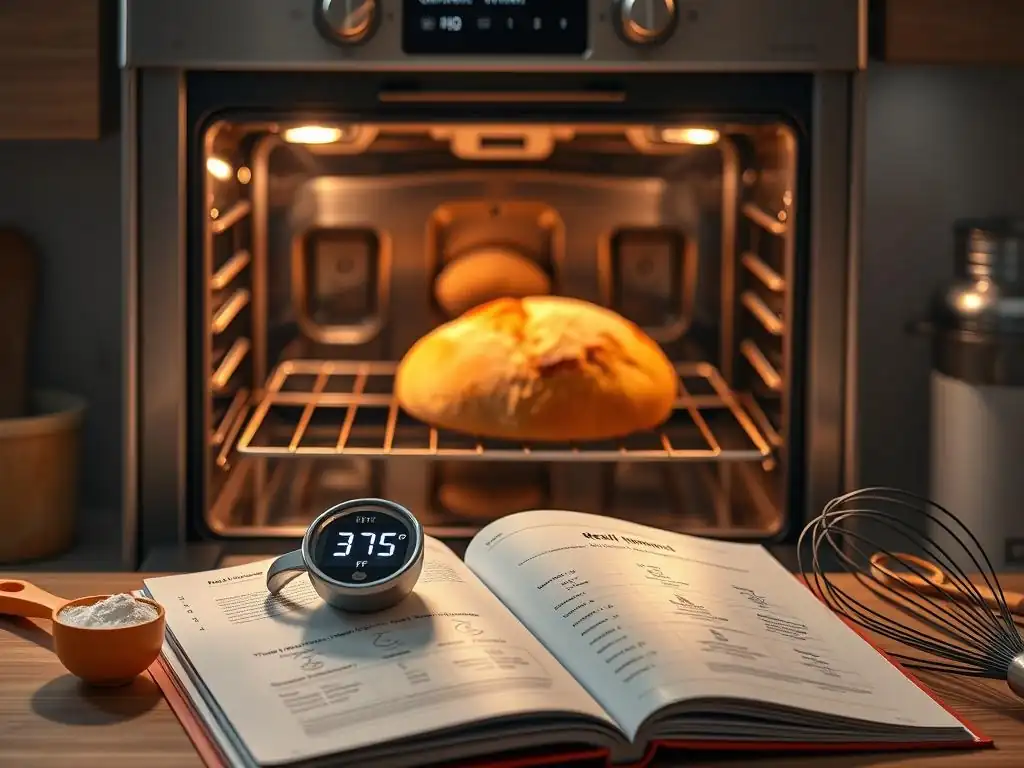
Recognizing Signs of an Inaccurate Oven Temperature
An oven that isn't heating accurately is a common culprit behind baking failures. One of the most obvious signs is when baked goods consistently finish much faster or slower than the recipe suggests, despite following instructions precisely. For example, if your cookies are over-browned on the bottom and done in 8 minutes when the recipe calls for 12-15 minutes at 350°F, your oven might be running too hot. Conversely, if cakes take significantly longer to bake through and remain pale, the oven might be too cool.
Other indicators include uneven browning across a single sheet pan or within the oven cavity, indicating hotspots. If the edges of your baked goods are burnt while the center is still raw, this strongly suggests the oven temperature is too high, causing the exterior to cook before the interior catches up. Recognizing these patterns is the first step in diagnosing an inaccurate oven. Implementing precise oven temperature baking tips starts with knowing if your oven is telling you the truth about its internal heat.
Calibrating Your Oven for Accurate Baking Temperatures
Ovens, especially older models, can drift from their factory calibration over time. If you suspect your oven is inaccurate, calibration might be necessary. This process typically involves adjusting the oven's internal thermostat to match the actual temperature displayed. Many modern digital ovens have a calibration setting accessible through the control panel, often allowing you to adjust the temperature up or down by a certain number of degrees (e.g., +/- 30°F or +/- 15°C).
To calibrate, you'll first need to verify the oven's actual temperature using a reliable oven thermometer. Once you know the consistent difference between the displayed temperature and the real temperature, you can use the calibration setting to correct it. For example, if your oven displays 350°F but consistently reads 375°F on an accurate thermometer, you would adjust the calibration setting down by 25°F. Consult your oven's manual for specific instructions on accessing and using the calibration feature. Regular calibration is a key precise oven temperature baking tip for ensuring consistent results.
Using an Oven Thermometer for Precise Temperature Monitoring
An inexpensive oven thermometer is perhaps the single most valuable tool for any baker serious about achieving precise oven temperature baking tips. Oven thermostats are notoriously inaccurate, sometimes off by as much as 50°F (approx. 28°C). Placing a simple, reliable oven thermometer inside your oven allows you to see the actual temperature, not just what the dial or digital display claims.
For best results, place the thermometer near the center of the oven cavity, away from the walls or heating elements. Allow the oven to preheat for at least 20-30 minutes after the preheat indicator light or sound comes on, as the oven often hasn't reached the set temperature yet. Monitor the thermometer throughout the baking cycle to see how the temperature fluctuates. This practice helps you understand your oven's true temperature profile and allows you to make necessary adjustments to the displayed setting to hit your target temperature accurately.
Precise Oven Temperature Baking Tips for Specific Baked Goods
Best Oven Temperatures for Bread: Crust Development and Internal Structure
Baking bread often involves high temperatures, typically ranging from 375°F to 475°F (approx. 190°C to 245°C). The initial high heat is crucial for oven spring – the final burst of rising that occurs when the dough hits the hot oven. This high temperature also helps to rapidly form a crust, which traps steam inside the loaf, contributing to a light and airy interior structure. For lean doughs like baguettes or sourdough, starting at 450°F-475°F (approx. 230°C-245°C) for the first 10-15 minutes before potentially lowering the temperature is a common technique.
The Maillard reaction, which creates the desirable browning and complex flavors in the crust, occurs best at higher temperatures. Baking at too low a temperature will result in a pale, soft crust and potentially a dense interior. For enriched doughs like challah or brioche, slightly lower temperatures, around 375°F-400°F (approx. 190°C-200°C), are often used to prevent the sugars and fats from burning before the bread is cooked through. Mastering precise oven temperature baking tips for bread is essential for achieving that perfect balance of crispy crust and tender crumb.
Optimal Temperatures for Baking Cakes: Ensuring Even Rise and Moistness
Cakes generally require a moderate temperature, most commonly 325°F to 350°F (approx. 160°C to 175°C). This temperature range allows the cake batter to rise gradually and evenly as the leavening agents produce gas and the structure sets. Baking at too high a temperature can cause the cake to rise too quickly, dome excessively, and crack, while also forming a tough, dry crust before the interior is fully cooked.
Conversely, baking a cake at too low a temperature can lead to a dense, flat cake that doesn't rise properly. The lower heat doesn't activate the leaveners efficiently, and the structure takes too long to set, potentially resulting in tunneling or a gummy texture. Using precise oven temperature baking tips like verifying your oven's temperature with a thermometer and ensuring it's fully preheated before placing the cake inside are critical steps for achieving a moist, evenly risen cake with a tender crumb.
Cookie baking temperatures typically fall between 350°F and 375°F (approx. 175°C to 190°C), but the specific temperature choice greatly influences the final texture and spread. For a cookie that spreads more and has crispier edges with a chewy center, 375°F (approx. 190°C) is often preferred. The higher heat causes the butter to melt faster, allowing the cookie to spread before the structure sets.
If you desire a thicker, puffier cookie with less spread, baking at 350°F (approx. 175°C) is usually better. The slightly lower temperature allows the cookie's structure to set more quickly relative to the butter melting, limiting spread. Factors like ingredient temperature (using cold butter) also play a role, but oven temperature is a primary driver of cookie shape and texture. Experimenting within this range and applying precise oven temperature baking tips based on your desired outcome is key to cookie perfection.
Perfecting Temperatures for Pies: Achieving Golden Crusts and Cooked Fillings
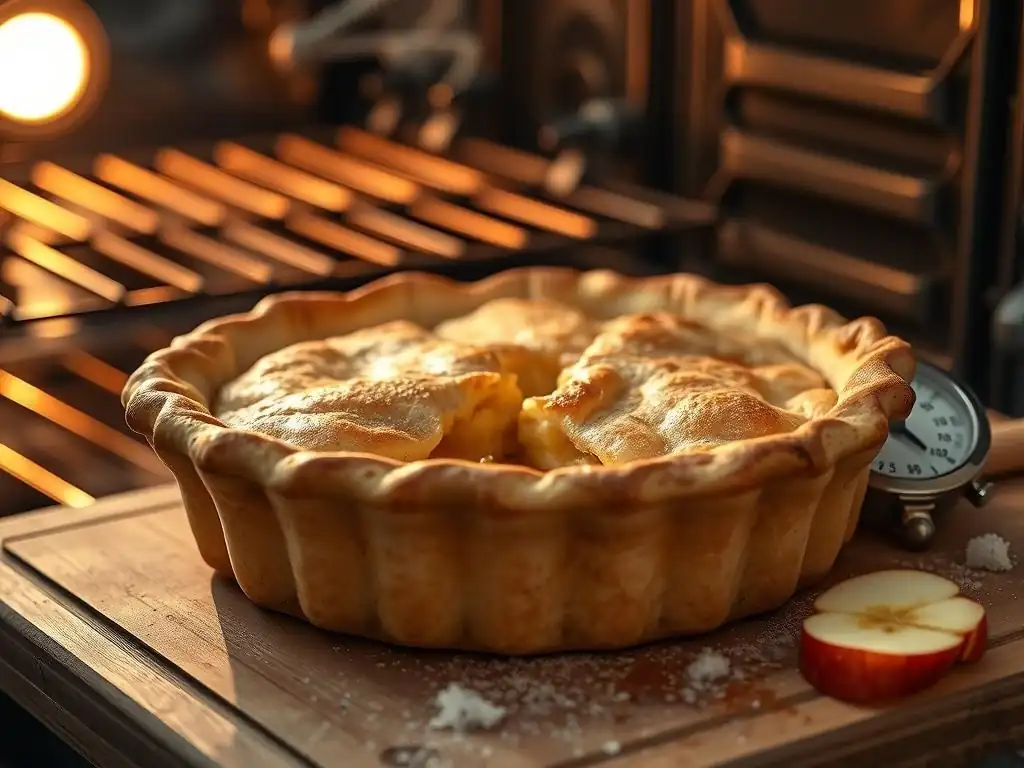
Baking pies requires balancing the cooking of the filling with the browning and crisping of the crust. Many fruit pies start baking at a higher temperature, such as 400°F to 425°F (approx. 200°C to 220°C), for the initial 15-20 minutes. This high heat helps set the bottom crust quickly and begins the browning process on the top crust. After this initial period, the temperature is often reduced to 375°F or 350°F (approx. 190°C or 175°C) to allow the filling to cook through without the crust burning.
Custard or cream pies, which have fillings that set via egg proteins, typically require lower, gentler temperatures, often 325°F to 350°F (approx. 160°C to 175°C). This prevents the filling from curdling or cracking. Using pie shields or aluminum foil to protect the edges of the crust is a common technique regardless of temperature, preventing them from over-browning before the center is done. Utilizing precise oven temperature baking tips and potentially adjusting temperatures mid-bake is crucial for achieving a perfectly cooked filling and a beautifully golden, flaky crust.
Understanding Temperatures for Baking Pastries: Flakiness and Crispness
Achieving the signature flakiness and crispness in pastries like croissants, puff pastry, or danishes is highly dependent on oven temperature. These pastries rely on layers of dough and butter; when exposed to high heat, the water in the butter turns to steam, forcing the layers apart. Temperatures typically range from 375°F to 425°F (approx. 190°C to 220°C), depending on the specific pastry and desired outcome.
Baking at too low a temperature will prevent the steam from forming rapidly enough, resulting in a dense, heavy pastry without distinct layers. Too high a temperature can cause the exterior to brown and set too quickly, preventing the interior layers from fully expanding and potentially leading to an undercooked center.
For example, croissants often start at a higher temperature (around 400°F/200°C) to achieve a quick rise and then the temperature is slightly lowered to ensure the interior bakes through. Applying precise oven temperature baking tips tailored to laminated doughs is key to achieving that coveted light, airy, and flaky texture.
Burnt Edges, Raw Center: Temperature Too High?
A classic sign of an oven running too hot is when baked goods develop overly dark or burnt edges while the center remains undercooked or raw. This happens because the intense heat quickly cooks the exterior of the item, forming a crust that prevents heat from penetrating efficiently to the center. For example, a thick brownie batter or a dense cake baked in an oven that's too hot will likely exhibit this issue. The outside will look done, or even overdone, long before the inside is cooked through.
To address this, first verify your oven's actual temperature with an oven thermometer. If it's consistently higher than the set temperature, you'll need to adjust your oven's setting downwards accordingly (e.g., if it reads 375°F when set to 350°F, set it to 325°F for future bakes). Additionally, you might need to cover the edges of your pan with foil partway through baking to shield them from the direct heat, allowing the center more time to catch up. These are essential precise oven temperature baking tips for salvaging bakes from an overzealous oven.
If your cookies spread too much and are thin and pale, or your cakes are dense and don't rise properly, the oven temperature might be too low. When the temperature is too low, the leavening agents (like baking soda or baking powder) don't activate as effectively or quickly. For cookies, the butter melts and spreads too much before the structure sets. For cakes, the batter takes too long to warm up and rise, potentially leading to a heavy, compacted texture.
Again, checking your oven's actual temperature with a thermometer is the crucial first step. If the temperature is consistently below the set point, you'll need to set your oven higher to compensate. For instance, if your oven reads 325°F when set to 350°F, try setting it to 375°F to reach the target 350°F. Ensure your oven is fully preheated before baking; the preheat light often comes on before the oven has truly reached the set temperature. Patience during preheating and precise oven temperature baking tips are vital for avoiding these issues.
Uneven Baking: Identifying Hotspots in Your Oven
Uneven baking, where items on one side of the baking sheet or oven cavity cook faster or brown more than others, indicates the presence of hotspots. Most ovens have some degree of unevenness, but severe hotspots can significantly impact results, especially when baking multiple items at once. You might notice cookies on the back of the sheet are done while those in the front are still pale, or one side of a cake bakes faster than the other.
To identify hotspots, you can perform a simple test: arrange slices of white bread or shredded coconut evenly across a large baking sheet and bake them in a preheated oven (say, 350°F/175°C) until they begin to brown. The areas that brown fastest indicate the hottest spots in your oven. To mitigate hotspots, rotate your baking sheets halfway through the baking time.
If the unevenness is severe, you might need to bake fewer items at a time or avoid placing items directly in the hottest spots. Understanding your oven's unique temperature profile is a key component of applying precise oven temperature baking tips effectively.
Mastering Oven Temperature: Advanced Baking Techniques
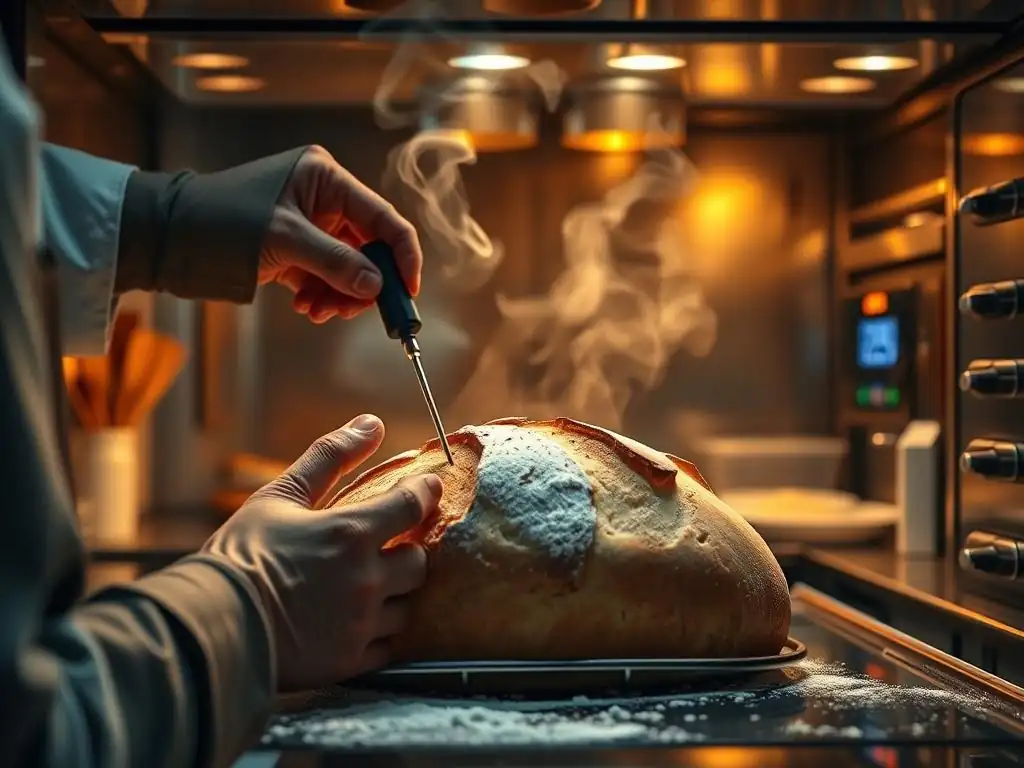
Using Oven Temperature to Control Caramelization
Caramelization, the process where sugars brown and develop complex flavors, is highly temperature-dependent. It typically occurs at temperatures starting around 320°F (approx. 160°C). In baking, controlling caramelization through oven temperature is crucial for achieving desired crust colors, flavors, and textures. For instance, baking at a slightly higher temperature towards the end of the bake cycle can promote deeper caramelization on a cake's surface or the crust of a bread.
Conversely, if you want to prevent excessive caramelization, such as when baking delicate shortbread or meringues, lower temperatures are necessary. Baking at 300°F (approx. 150°C) or even lower for extended periods allows the item to dry out and set without significant browning. Understanding the temperature thresholds for caramelization and applying precise oven temperature baking tips to manipulate it allows for greater control over the final taste and appearance of your baked goods.
Baking at Different Temperatures for Complex Flavors
Some advanced baking techniques involve deliberately changing the oven temperature during the baking process to achieve specific results. This is often seen in bread baking, where a high initial temperature (e.g., 450°F/230°C) is used for oven spring and crust development, followed by a lower temperature (e.g., 400°F/200°C) to ensure the interior bakes through without the crust burning. This two-stage baking creates a complex interplay of textures and flavors.
Another example is baking cheesecakes; often, they are baked at a moderate temperature (325°F/160°C) until mostly set, and then the oven is turned off, allowing the cheesecake to finish cooking gently in the residual heat as the oven cools. This slow cooling prevents cracking. Mastering these temperature transitions requires precise oven temperature baking tips and a good understanding of how different temperatures affect the specific ingredients and structure of your bake.
Slow Roasting for Enhanced Flavor and Texture
While often associated with meats, the technique of slow roasting at very low temperatures can also be applied to certain baked goods to achieve unique textures and enhanced flavors. Baking at temperatures as low as 200°F to 250°F (approx. 95°C to 120°C) for extended periods can gently dry out items, intensify flavors, and create crispy or chewy textures that are difficult to achieve at higher heats.
Examples include slow-roasting fruits like tomatoes or apples to concentrate their sweetness before using them in tarts or cakes, or making meringues which are essentially slow-baked at low temperatures to dry them out completely without browning. This technique requires patience and an oven that can maintain a very consistent low temperature. Precise oven temperature baking tips for slow roasting involve careful monitoring and potentially using an external thermometer to ensure the oven doesn't fluctuate too much.
Maintaining Your Oven for Consistent Baking Temperatures
Regular Cleaning for Optimal Oven Performance
A clean oven is more likely to heat accurately and evenly. Spills, grease, and burnt-on food residues absorb heat and can create hotspots or cause temperature fluctuations. For instance, a large burnt patch on the oven floor will absorb radiant heat, potentially making the area above it cooler, while other parts of the oven heat normally. Heavy buildup can also interfere with the proper functioning of heating elements or temperature sensors.
Regularly wiping down the interior after spills and performing more thorough cleanings periodically (following your oven's self-cleaning instructions or manual cleaning methods) helps ensure that heat is distributed as intended. This simple maintenance step is an often-overlooked but important precise oven temperature baking tip that contributes to consistent baking results.
Checking and Replacing Heating Elements
Over time, the heating elements in your oven can degrade or fail. In electric ovens, you can often visually inspect the elements (top and bottom). If they appear warped, cracked, or have visible breaks, they may not be heating efficiently or evenly. A failing element will lead to inaccurate temperatures and significant unevenness in baking. For example, if the bottom element is weak, the bottoms of your baked goods might be consistently undercooked while the tops are fine.
Gas ovens have igniters and burners that can also experience issues. If your oven takes an unusually long time to preheat, or if you notice inconsistent flame patterns, the burner might need cleaning or the igniter might be failing. If you suspect a heating element issue, it's best to consult your oven's manual or a qualified technician. Ensuring your heating elements are in good working order is fundamental for achieving precise oven temperature baking tips.
Professional Oven Maintenance: When to Call an Expert
While regular cleaning and using an oven thermometer can help mitigate some temperature issues, sometimes professional maintenance is necessary. If your oven consistently fails to reach the set temperature, overheats significantly, or if the calibration feature doesn't correct the temperature discrepancy, there might be a problem with the thermostat, temperature sensor, or control board.
These components are complex and typically require a trained technician to diagnose and repair. If you've tried basic troubleshooting steps and are still experiencing significant temperature inaccuracies or other functional problems, calling a qualified appliance repair professional is the most reliable way to restore your oven to proper working order. Investing in professional maintenance ensures that your oven provides accurate and consistent temperatures, allowing you to confidently apply precise oven temperature baking tips for all your culinary endeavors.
Frequently Asked Questions
How crucial is an accurate oven temperature for baking success?
Very crucial! An inaccurate oven temperature can lead to underbaked or overbaked goods. It significantly impacts the texture and overall quality of your baked creations.
What are some signs that my oven temperature might be inaccurate?
Signs include uneven baking, baked goods taking longer or shorter than the recipe indicates, or burning on the outside while being raw inside. A simple oven thermometer is your best friend.
What's the best way to check if my oven is heating to the correct temperature?
Use an oven thermometer, placed in the center of the oven. Allow the oven to preheat fully, then check the thermometer reading. Repeat this process a few times to ensure consistent accuracy.
If my oven temperature is off, how can I adjust for it when baking?
If your oven consistently runs hot or cold, you can adjust the temperature setting accordingly. For example, if it runs hot, reduce the temperature by 25 degrees. Consider getting it professionally calibrated.
Are there specific baked goods that are more sensitive to oven temperature fluctuations than others?
Yes, delicate pastries like macarons and soufflés are especially sensitive. Also, yeast breads require precise temperature control for proper rising and texture.
Final Reflection: The Art and Science of Precise Oven Temperatures
Mastering oven temperature is not merely about following a recipe; it's the cornerstone of consistent, delicious baked goods. A seemingly small fluctuation can dramatically impact the final product, transforming a light and airy cake into a dense brick or a perfectly crisp cookie into a chewy disappointment. This understanding is more crucial than ever in today's diverse culinary landscape, where home bakers are constantly experimenting with new recipes and techniques.
The pursuit of precise oven temperature reflects a deeper cultural shift towards valuing craftsmanship and attention to detail in the kitchen. We're moving beyond simply following instructions and embracing a more nuanced understanding of the baking process. This resonates with a broader trend towards mindful consumption and appreciation for quality ingredients and techniques. The difference between something good and something great is attention to detail.
– Unknown. This quote perfectly encapsulates the importance of precise oven temperature control in achieving baking excellence.
Now, consider your own baking journey. What adjustments can you make to ensure your oven is consistently calibrated? Perhaps it's time to invest in an oven thermometer, or maybe you need to experiment with adjusting baking times based on your oven's quirks. Take this knowledge and apply it – embrace the challenge of mastering your oven, and unlock a world of consistently delicious baked creations. The reward is not just perfectly baked goods, but a deeper understanding of the art and science behind this beloved culinary practice.
Unlock Baking Perfection: Master Your Oven's Secrets!
Thanks for diving into the world of oven temperatures with us! You've now got the knowledge to bake with confidence and achieve consistently delicious results. Ready to put your new skills to the test?
- Bake your favorite recipe today, paying close attention to the temperature and timing. Note any adjustments you make and the outcome!
- Share your baking triumphs (or even your funny fails!) with fellow baking enthusiasts in the comments below. Let's learn from each other!
- Try experimenting with a new recipe that challenges your newfound temperature understanding – maybe that sourdough you've been eyeing?
What delicious creation will you conquer first with your newfound oven mastery?