
Traditional Easter Breads from Eastern Europe: Bake Them All

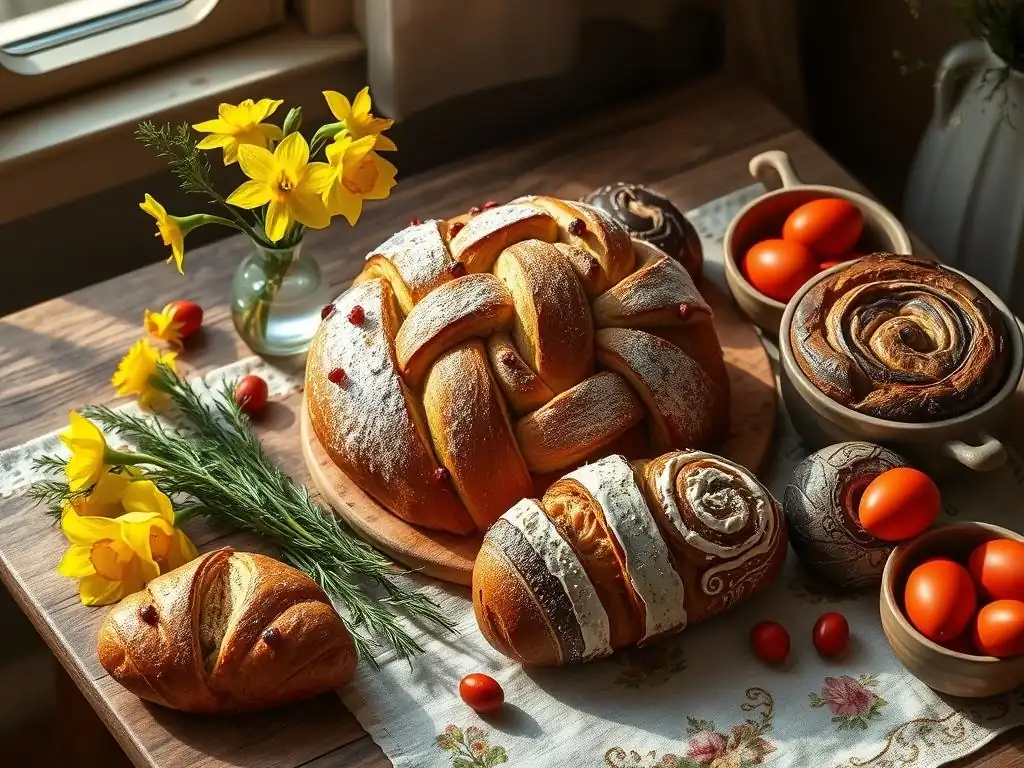
Welcome to BakeWithEase, your guide to unlocking the delicious world of baking! Are you ready to embark on a flavorful journey across Eastern Europe? This week, we're diving deep into the rich traditions and heartwarming aromas of Eastern European Easter bread recipes. Discover the secrets behind these festive loaves, and prepare to impress your loved ones with a taste of history. Intrigued? Keep reading to explore the authentic recipes and techniques that make these breads so special!
- Delving into the World of European Easter Breads
- Traditional European Easter Bread Recipes Explored
- Baking European Easter Breads: Recipes and Techniques
- Variations and Modern Interpretations of European Easter Breads
- Tips and Tricks for Successful European Easter Bread Baking
- Troubleshooting Common European Easter Bread Baking Issues
- Beyond the Recipe: Exploring European Baking Traditions
- Enjoy Your Homemade European Easter Bread!
-
Frequently Asked Questions
- What makes Eastern European Easter breads special compared to other breads?
- Are the recipes on BakeWithEase.com suitable for beginner bakers?
- What are some common ingredients used in Eastern European Easter breads?
- Can I adapt these recipes to be gluten-free or vegan?
- Where can I find hard-to-find ingredients for these breads, like specific types of candied fruit?
- Final Reflection: A Taste of Tradition, A Legacy of Flavor
- Unleash Your Inner Baker: Bring Easter Traditions to Life!
Delving into the World of European Easter Breads
Easter is a time of renewal, celebration, and, for many, a cherished opportunity to gather around the table and share delicious food. Across Europe, this festive season is marked by a rich tradition of baking special breads. These are not just ordinary loaves; they are often symbolic, beautifully decorated, and infused with flavors that evoke warmth and comfort.
From the sweet, brioche-like textures found in Eastern European Easter bread recipes to the spiced fruit buns of the British Isles, the diversity of these celebratory baked goods is truly remarkable. Exploring these different styles offers a delightful journey through culinary history and regional customs.
The art of baking these traditional breads is passed down through generations, with each family often having its own slight variations or secret ingredients. Whether it's the addition of specific spices like mahleb or cardamom, the incorporation of dried fruits and nuts, or the unique shaping techniques, each bread tells a story.
Mastering these European Easter bread recipes can be a rewarding challenge, allowing bakers to connect with centuries-old traditions while creating something truly special for their own celebrations. This guide aims to demystify some of these iconic breads, providing insights and techniques to help you successfully bake them at home, adding a touch of authentic European flair to your Easter table.
Traditional European Easter Bread Recipes Explored
The Cultural Significance of Easter Breads in Europe
Easter breads hold deep cultural and religious significance across Europe, symbolizing resurrection, new life, and abundance after the Lenten fast. In many traditions, the round shape represents eternity or the sun, while braided loaves often symbolize the Holy Trinity or the intertwining of life. Specific ingredients also carry meaning; for example, eggs baked into or placed on top of the bread represent rebirth.
These breads are often blessed in church on Easter morning, reinforcing their sacred role in the holiday. The act of baking itself is often a communal or family activity, passed down through generations, strengthening bonds and preserving cultural heritage.
Beyond their religious symbolism, these breads are integral to the festive meals and social gatherings that define Easter. They are shared with family and friends, given as gifts, and serve as a centerpiece on the Easter table. The aroma of baking bread fills homes, creating a warm and inviting atmosphere.
In countries like Greece with Tsoureki or Italy with Colomba Pasquale, the specific bread is instantly recognizable and synonymous with the holiday. The time and care taken to prepare these intricate loaves reflect the importance of the occasion, making the simple act of baking a profound expression of faith, community, and tradition.
Essential Ingredients in European Easter Breads
While the specific ingredients vary greatly depending on the region and recipe, several key components form the foundation of many traditional European Easter bread recipes. Flour, yeast, eggs, milk or butter, and sugar are almost universally present, contributing to the rich, often slightly sweet dough. The quality of these basic ingredients is paramount for achieving the desired texture and flavor. Many recipes call for enriched doughs, meaning they contain a higher proportion of fat (butter or oil), eggs, and sugar compared to standard bread dough, resulting in a softer, more tender crumb.
Beyond the basics, specific flavorings and additions define regional variations. Eastern European Easter bread recipes often feature aromatic spices like vanilla, lemon zest, orange zest, or unique additions like ground mahleb (a spice derived from cherry seeds, common in Greek and Turkish baking) or cardamom. Dried fruits such as raisins, currants, or candied citrus peels are frequently incorporated, adding sweetness and texture.
Some recipes might include nuts like almonds or walnuts. The choice of ingredients not only imparts distinct flavors but also contributes to the bread's structure and keeping quality, making each loaf a unique reflection of its cultural origin.
Baking European Easter Breads: Recipes and Techniques
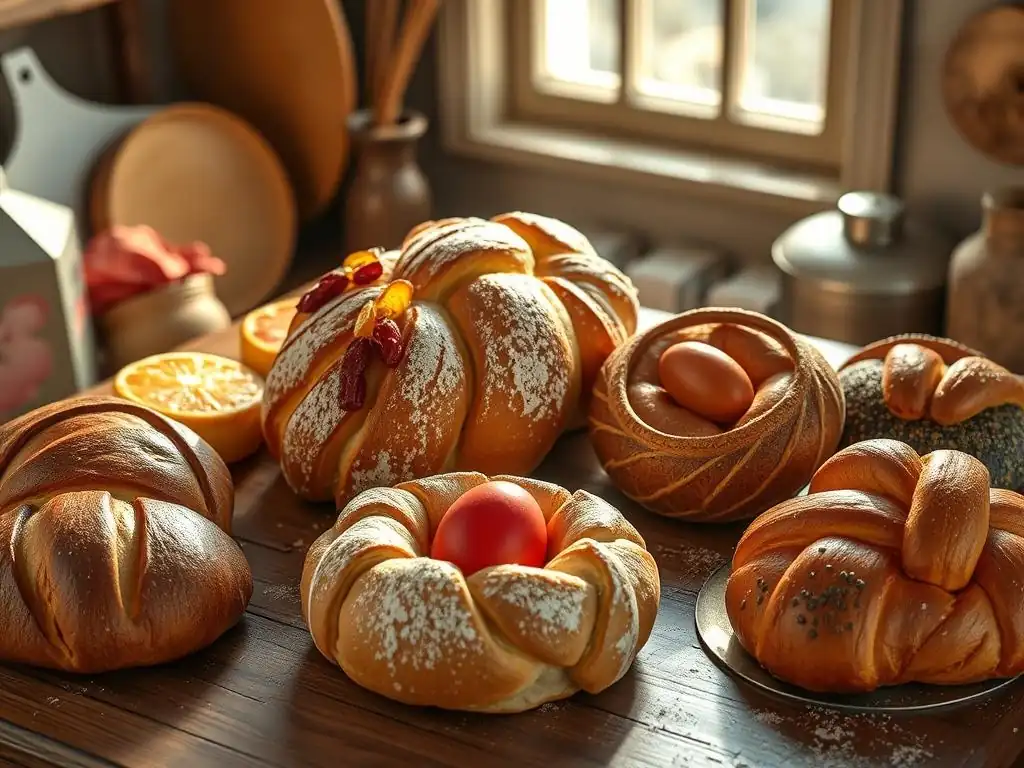
Recipe 1: Italian Colomba Pasquale (Easter Dove Bread) - A Detailed Guide
Colomba Pasquale, meaning "Easter Dove," is a traditional Italian Easter bread shaped like a dove, symbolizing peace. It's similar in texture to Panettone or Pandoro, characterized by a light, airy, and enriched dough. The classic version includes candied orange peel and is topped with a pearl sugar and almond crust. Making Colomba requires patience and careful temperature control, often involving a natural sourdough starter (lievito madre) or a preferment for optimal flavor and texture, though recipes using commercial yeast are also common for home bakers.
The process typically involves multiple steps and long fermentation periods, sometimes spanning two days. This slow fermentation develops complex flavors and contributes to the bread's signature lightness. Baking is done in special dove-shaped paper molds. After baking, the bread is traditionally hung upside down immediately to cool, preventing the rich, soft crumb from collapsing under its own weight. This technique is crucial for maintaining the bread's impressive height and delicate structure, a hallmark of a well-made Colomba.
Preparing the Colomba Dough: Key Techniques
The dough for Colomba Pasquale is a highly enriched dough, meaning it has a significant amount of fat (butter), eggs, and sugar. This richness makes the dough soft and sticky, requiring careful handling. Kneading is crucial to develop the gluten structure needed to support the rich ingredients and the large volume. Stand mixers are highly recommended for this task, often requiring 20-30 minutes of kneading at medium speed until the dough is smooth, elastic, and passes the "windowpane test" (a small piece of dough can be stretched thinly without tearing).
Temperature control is paramount throughout the fermentation process. The dough benefits from a warm, stable environment, typically between 25-28°C (77-82°F). Using warm milk and eggs, and potentially a proofing box or oven with a proofing setting, helps maintain this temperature. The dough undergoes at least two long rises.
The first rise, after initial mixing and kneading, can take several hours until the dough doubles or triples in volume. A second rise occurs after shaping, inside the paper mold, which can also take 3-5 hours or longer, depending on the yeast activity and temperature. Patience during these long fermentation periods is key to achieving the desired texture and flavor profile.
Shaping and Baking the Perfect Colomba Pasquale
Shaping Colomba involves dividing the dough into two pieces. The larger piece forms the body of the dove, while the smaller piece forms the wings. The dough is typically rolled or gently stretched into elongated shapes which are then arranged in the dove mold to resemble a bird. This requires careful handling of the delicate, proofed dough to avoid deflating it. Once shaped and placed in the mold, the dough undergoes its final proofing, rising to fill the mold and create a domed top.
Before baking, the top of the proofed dough is brushed with an egg wash or glaze and generously topped with a mixture of pearl sugar and almonds. Baking takes place in a preheated oven, typically around 170-180°C (340-350°F), for about 40-60 minutes, depending on the size. A probe thermometer is invaluable here; the internal temperature should reach 94-96°C (201-205°F) for the bread to be fully cooked.
As mentioned earlier, the immediate step after removing from the oven is to pierce the base with long skewers and hang the bread upside down until completely cool. This prevents the rich structure from collapsing and results in the characteristic tall, airy loaf.
Recipe 2: Greek Tsoureki: A Classic Easter Bread
Tsoureki is a beloved Greek Easter bread, known for its rich, slightly sweet, and highly aromatic character. It's traditionally braided, often incorporating red-dyed eggs into the braids as a symbol of Christ's blood and resurrection. The distinctive flavor comes from two key spices: mahleb (ground cherry seeds) and mastic (a resin from the mastic tree, often used in crystal or powder form). These unique ingredients give Tsoureki its signature taste and aroma, setting it apart from other enriched breads.
Like many traditional European Easter bread recipes, Tsoureki dough is enriched with eggs, butter, and milk, giving it a soft, tender crumb similar to brioche. The kneading process is important to develop a strong gluten structure, which is necessary to support the fat and sugar content and allow for a good rise and the characteristic chewy texture. The dough is often slightly sticky initially but becomes smooth and elastic with proper kneading. The braiding itself is an art form, with common patterns including three-strand or four-strand braids, sometimes formed into rings or larger loaves.
Creating the Aromatic Tsoureki Dough
The foundation of authentic Tsoureki is the careful preparation of the dough, starting with activating the yeast in warm milk (around 40-45°C or 105-115°F) with a pinch of sugar. The dry ingredients, including flour, sugar, salt, ground mahleb, and powdered mastic, are typically combined separately. Melted butter and beaten eggs are then incorporated into the dry ingredients along with the yeast mixture.
Kneading, either by hand or with a stand mixer, is essential to develop the dough's elasticity. This usually takes 10-15 minutes with a mixer until the dough is smooth, shiny, and pulls away from the sides of the bowl.
After kneading, the dough undergoes its first rise in a warm place, typically doubling in size over 1-2 hours. The dough is then punched down, divided, and shaped into strands for braiding. Some recipes call for a second, shorter rise after shaping before the loaves are brushed with an egg wash (sometimes mixed with milk or a pinch of sugar) to achieve a golden-brown crust. The amount of mahleb and mastic used can be adjusted to personal preference, but traditional recipes call for enough to provide a distinct aroma and flavor that is instantly recognizable as Tsoureki.
Decorating Your Tsoureki: Traditional Elements
Decorating Tsoureki is an integral part of the tradition, adding visual appeal and symbolic meaning. The most common decoration is the inclusion of red-dyed hard-boiled eggs nestled within the braids. These eggs, dyed red to symbolize the blood of Christ, are placed raw into the shaped dough before the final rise and bake along with the bread. Ensuring the eggs are properly hard-boiled and cooled beforehand is important.
Other traditional decorations include sprinkling the top of the egg-washed bread with sliced almonds or sesame seeds before baking. Some bakers also add a simple glaze made from powdered sugar and milk or lemon juice after the bread has cooled slightly. The goal is to create a beautiful, festive loaf that serves as a centerpiece for the Easter meal. The combination of the rich golden crust, the vibrant red eggs, and the sprinkling of nuts or seeds makes Tsoureki not just a delicious bread, but a work of art embodying the spirit of the holiday.
Recipe 3: Hot Cross Buns: A Festive Easter Treat (British)
Hot Cross Buns are a classic British Easter treat, traditionally eaten on Good Friday. These sweet, spiced buns are studded with dried fruit (typically currants, raisins, or candied peel) and marked with a cross on top, usually made from a flour and water paste applied before baking or an icing applied after. While perhaps not strictly an Eastern European Easter bread recipe, their widespread popularity and association with the Easter season make them a relevant inclusion in a European context.
The dough for Hot Cross Buns is a relatively simple enriched dough, using milk, butter, sugar, and eggs. The defining characteristics are the spices used, which commonly include cinnamon, nutmeg, allspice, and sometimes ground cloves or mixed spice. The dried fruit adds bursts of sweetness and texture. The process is generally straightforward, involving mixing the dough, kneading, a first rise, shaping into buns, a second rise, adding the cross, and baking. They are best eaten warm, split and buttered, perhaps with a cup of tea.
Making the Hot Cross Bun Dough: Spice Blends and Fruit
Creating the perfect Hot Cross Bun dough starts with combining warm milk and yeast, often with a pinch of sugar to help activate the yeast. Flour, sugar, salt, and the crucial blend of spices are then added. A typical spice mix might include 1-2 teaspoons of ground cinnamon, 1/2 teaspoon of ground nutmeg, and a pinch of ground allspice per batch of 12-16 buns. The amount of spice can be adjusted to personal preference, but they should be noticeably aromatic. Melted butter and an egg are incorporated to enrich the dough.
The dried fruit, usually around 100-150g (about 2/3 to 1 cup) for a batch of 12 buns, is typically kneaded in after the dough has been partially developed, to avoid tearing the gluten strands excessively during the initial kneading. Currants are traditional, but raisins, sultanas, and mixed candied peel are also common additions. Some recipes suggest soaking the dried fruit in warm water or tea for 10-15 minutes before adding it to the dough to plump it up and prevent it from drying out the buns during baking.
Icing and Marking: The Signature Cross
The signature cross on a Hot Cross Bun is essential. There are two primary methods for creating it. The traditional method involves making a paste from plain flour and water (typically a 1:1 ratio) to form a thick, pipeable mixture. This paste is piped onto the top of the proofed buns in the shape of a cross just before they go into the oven. As the buns bake, the paste dries and sets, creating a matte white cross.
The second, often sweeter, method involves applying a cross of icing after the buns have baked and cooled slightly. This icing is typically made from powdered sugar mixed with a small amount of water, milk, or lemon juice to a thick consistency that can be piped or spooned onto the buns. While the flour paste cross is more traditional, the icing cross adds extra sweetness and is often preferred for its taste and bright white appearance. Either method results in the iconic symbol that makes Hot Cross Buns instantly recognizable.
Variations and Modern Interpretations of European Easter Breads
Gluten-Free European Easter Bread Adaptations
Adapting traditional European Easter bread recipes to be gluten-free presents a unique challenge, as gluten is crucial for the structure and elasticity of these often-enriched doughs. However, with the rise of gluten-free baking, innovative approaches have emerged. Using a blend of gluten-free flours, such as rice flour, tapioca starch, and potato starch, forms the base. Ingredients like psyllium husk or xanthan gum are essential to mimic the binding properties of gluten, providing structure and preventing the bread from becoming crumbly.
Achieving the light, airy texture characteristic of breads like Colomba or Tsoureki in a gluten-free version requires careful hydration and often longer proofing times in a warm environment. Recipes might incorporate extra eggs or fats to add richness and tenderness. While replicating the exact texture of the original can be difficult, successful gluten-free adaptations focus on capturing the essence of the flavors – the spices, dried fruits, and sweetness – and creating a soft, enjoyable crumb. Many recipes simplify the shaping (like skipping complex braids) to manage the more delicate gluten-free dough.
Vegan European Easter Bread Recipes
Creating vegan versions of traditional European Easter bread recipes involves substituting animal products like eggs, butter, and milk. Plant-based milks (soy, almond, oat) are readily available alternatives to dairy milk. Vegan butter substitutes, often made from vegetable oils, can replace dairy butter, providing the necessary fat content for richness. Replacing eggs is perhaps the most complex part, as eggs contribute to binding, leavening, moisture, and richness.
Various egg substitutes can be used depending on the recipe's needs. For structure and binding, flax eggs (ground flaxseed mixed with water) or chia eggs work well. For leavening and richness, commercial egg replacers, applesauce, mashed banana, or silken tofu can be employed, although the specific substitute will impact the final texture. Some recipes rely more heavily on yeast activity and careful kneading to achieve lift without eggs. Successful vegan adaptations focus on balancing moisture and structure to create a tender crumb while retaining the traditional flavors from spices and fruit, offering an inclusive option for these festive treats.
Incorporating Unique Flavors: Lemon, Orange, and Almond
While traditional European Easter bread recipes have classic flavor profiles, modern bakers often enjoy experimenting with additional or intensified flavors. Citrus zest from lemons and oranges is a common and delightful addition to many sweet bread doughs. Incorporating more zest than a traditional recipe calls for, or using specific types of citrus like blood oranges for their unique aroma, can add a brighter, more pronounced citrus note that complements the richness of the dough and the sweetness of the fruit.
Almond flavor is another natural pairing for many Easter breads, particularly those containing nuts or with a sweet crust like Colomba Pasquale. This can be introduced through the addition of almond extract to the dough or glaze, or by incorporating almond paste or marzipan into the bread itself, creating pockets of dense, sweet almond flavor within the soft crumb. These flavor enhancements, while perhaps not strictly traditional in every case, allow for personalization and can elevate the familiar taste profiles, adding an exciting twist to classic Eastern European Easter bread recipes and others.
Tips and Tricks for Successful European Easter Bread Baking
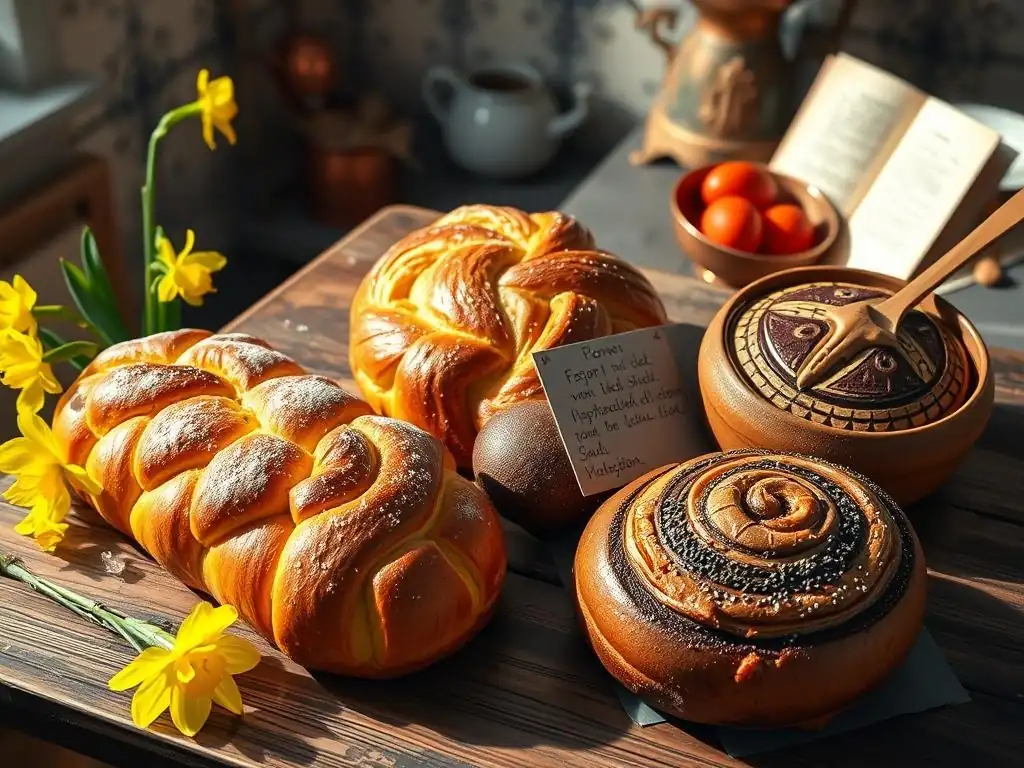
Achieving Optimal Rise: Dough Temperature and Environment
Optimal dough rise is fundamental to achieving the light, airy texture characteristic of many European Easter bread recipes. Yeast activity is highly dependent on temperature. A dough temperature between 24-27°C (75-80°F) is generally ideal for consistent and relatively quick fermentation. Using warm liquids (milk or water) when activating yeast and mixing the dough helps achieve this initial temperature.
The proofing environment is equally important. A warm, draft-free location is essential. Options include a slightly warmed oven (turned off), a proofing box, or simply covering the dough bowl tightly and placing it in a warm spot in the kitchen.
If your kitchen is cool, placing the dough near a warm appliance or using a heating pad on a low setting can help. Humidity also plays a role; covering the dough with plastic wrap or a damp towel prevents a skin from forming, which can inhibit rising. Patience is key; don't rush the proofing process, allowing the dough to fully double or even triple in volume for a proper rise.
Maintaining Moisture: Baking Time and Techniques
Maintaining moisture is crucial for preventing Easter breads from becoming dry and dense. Rich doughs, like those used in many Eastern European Easter bread recipes, are less prone to drying out than leaner doughs due to their fat and sugar content, but proper baking techniques are still necessary. Overbaking is a primary cause of dryness, so monitoring baking time closely and using a thermometer to check internal temperature (usually 90-96°C or 195-205°F depending on the bread type) is recommended.
Baking with steam can also help keep the crust soft initially and contribute to a better rise. This can be achieved by placing a pan of hot water in the bottom of the oven when preheating or by spraying the oven walls with water at the start of baking. For enriched breads like Colomba, hanging them upside down after baking helps redistribute moisture evenly throughout the loaf. Allowing the bread to cool completely before slicing is also important, as slicing a warm loaf can release steam and lead to a drier texture once fully cooled.
Storing Your Easter Breads for Extended Freshness
Proper storage is key to enjoying your homemade European Easter breads for as long as possible. Once completely cooled, the best way to store most sweet, enriched breads is by wrapping them tightly in plastic wrap, then placing them in a large airtight container or a resealable plastic bag. This prevents air exposure, which causes staling. Stored at room temperature this way, most Easter breads will remain fresh and soft for 3-5 days.
For longer storage, freezing is an excellent option. Whole loaves or individual slices can be wrapped tightly in plastic wrap, followed by a layer of aluminum foil or placed in a freezer-safe bag. Properly wrapped, Easter bread can be frozen for up to 2-3 months. Thaw frozen bread at room temperature. To refresh slightly stale bread, a brief warming in a low oven (around 150°C or 300°F) or toaster oven can help soften the crumb and bring out its aromas, making it enjoyable again.
Troubleshooting Common European Easter Bread Baking Issues
Dough Not Rising? Troubleshooting Steps
If your European Easter bread dough isn't rising as expected, several factors could be the cause. First, check the yeast. Ensure it's fresh and hasn't expired. Active dry yeast usually needs to be proofed in warm liquid (around 40-45°C or 105-115°F) with a pinch of sugar; if it doesn't become foamy within 5-10 minutes, it may be dead. Instant yeast can often be mixed directly with dry ingredients, but warm liquids are still beneficial.
The temperature of your ingredients and proofing environment is critical. Liquids that are too hot will kill the yeast, while those too cold will slow it down significantly. Ensure your liquids are within the recommended temperature range. Your proofing environment might be too cold or drafty.
Try moving the dough to a warmer spot, like a turned-off oven with the light on, or a warm corner of the kitchen. Ensure the dough is properly covered to prevent drying. Finally, ensure you haven't added too much salt, as excessive salt can inhibit yeast activity. If the dough still shows no signs of life after troubleshooting, you may need to start over with fresh yeast.
Bread Too Dry? Solutions for Improvement
A dry Easter bread can be disappointing, but identifying the cause can help improve future bakes. The most common reason is overbaking. Ensure you are baking for the correct time and, ideally, checking the internal temperature. Baking at too high a temperature can also lead to a dry crust and potentially dry interior before the center is fully cooked. Try slightly lowering the oven temperature and extending the baking time if needed.
Insufficient fat or liquid in the recipe can also result in a dry crumb. Enriched doughs rely on butter, eggs, and milk for moisture and tenderness. Ensure you are accurately measuring all ingredients, especially fats and liquids.
Kneading the dough sufficiently is also important; proper gluten development helps the dough retain moisture. If a finished loaf feels dry, it can sometimes be slightly revived by brushing the crust with melted butter or a simple syrup while still warm, or by gently warming slices. For future bakes, consider slightly increasing the hydration by adding a tablespoon or two more milk or water if the dough seems too stiff during mixing.
Uneven Baking? Achieving Consistent Results
Uneven baking, where parts of the loaf are overcooked or undercooked, is a common issue. This is often caused by inconsistent oven temperature or hot spots within the oven. Using an oven thermometer to verify your oven's actual temperature is a good first step, as oven thermostats can be inaccurate. Preheating the oven thoroughly for at least 20-30 minutes is essential to ensure the temperature is stable.
Rotating the bread halfway through the baking time can help ensure even browning and cooking, especially if you suspect your oven has hot spots. For larger or taller loaves, like Colomba, the top might brown too quickly before the inside is cooked. If this happens, you can loosely tent the top of the bread with aluminum foil for the latter part of the baking time. Using the correct size and type of baking pan or mold specified in the recipe is also important for even heat distribution and proper cooking.
Beyond the Recipe: Exploring European Baking Traditions
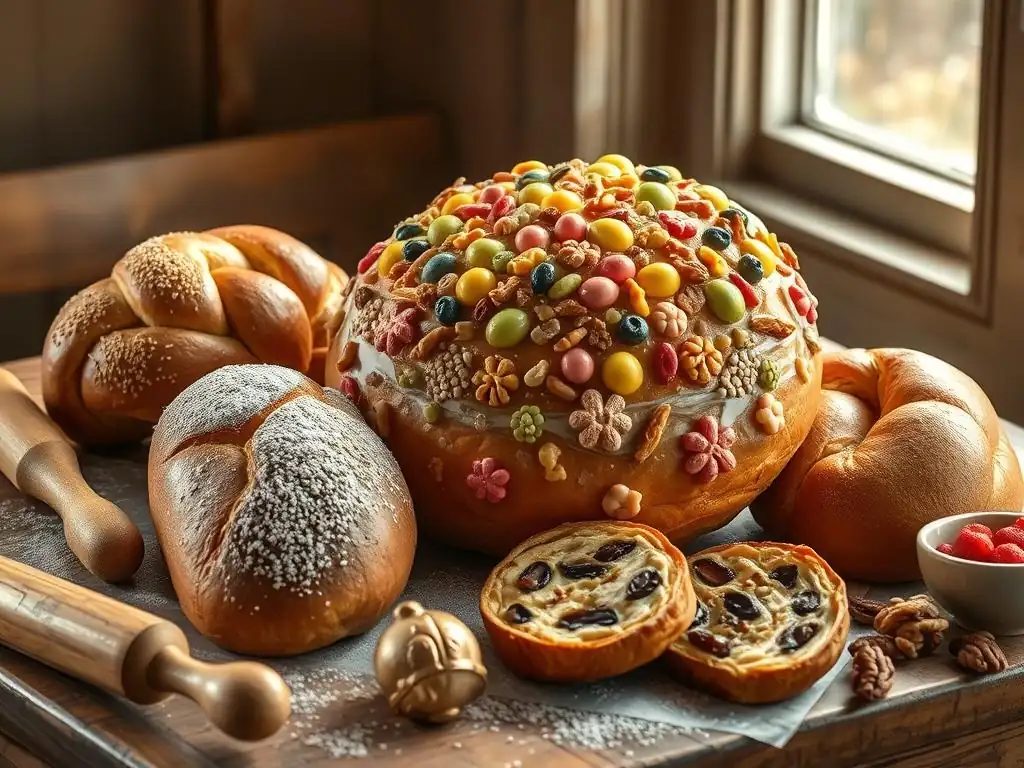
A Historical Overview of Easter Breads in Europe
The tradition of baking special breads for Easter dates back centuries, rooted in both pagan spring festivals and Christian observances. Early pagan cultures often baked enriched breads as offerings to celebrate the return of spring, fertility, and the sun after the long winter. As Christianity spread, many of these customs were adapted and integrated into the Easter celebration, with the symbolism shifting to reflect Christian themes like resurrection and new life.
During the medieval period, certain foods, including rich breads, were forbidden during the Lenten fast. The consumption of special, often enriched and decorated, breads on Easter Sunday became a joyous marker of the fast's end and a celebration of the holiday.
The practice of baking these breads became intertwined with religious rituals, such as the blessing of food baskets on Easter morning, which included the festive bread. Over time, distinct regional variations developed across Europe, influenced by local ingredients, cultural practices, and historical events, leading to the diverse array of Eastern European Easter bread recipes and other European varieties we see today.
Regional Variations in European Easter Bread Recipes
The geographical and cultural diversity of Europe is beautifully reflected in its Easter bread traditions. While many share common elements like richness and symbolic shapes or decorations, the specifics vary significantly. For instance, in Italy, the dove-shaped Colomba Pasquale is paramount, while in Greece, the braided, spice-infused Tsoureki with red eggs is the icon.
In Russia and other Slavic countries, the tall, cylindrical Kulich and the accompanying sweet cheese dessert Paskha are central to the celebration. Kulich is another prime example of Eastern European Easter bread recipes, often made with a very rich dough, flavored with saffron, vanilla, or cardamom, and topped with a white glaze and sprinkles.
Further west, in Germany, Osterbrot (Easter bread) is typically a sweet, braided loaf, sometimes containing raisins or candied fruit. France has Fougasse de Pâques, a sweet, often anise-flavored bread shaped into a leaf or ladder. Scandinavian countries have their own versions, often spiced and enriched. The British Isles are known for Hot Cross Buns. These regional differences highlight how local ingredients, climate, and historical influences have shaped these culinary traditions, offering a fascinating glimpse into Europe's diverse baking heritage beyond just Eastern European Easter bread recipes.
Enjoy Your Homemade European Easter Bread!
Serving Suggestions and Pairing Ideas
Homemade European Easter bread is a versatile treat that can be enjoyed in numerous ways. While delicious on its own, its rich, slightly sweet nature makes it perfect for pairing with simple accompaniments. A classic serving suggestion is to slice the bread and serve it simply with butter. The warmth of the bread melts the butter, enhancing its flavor.
For a more decadent treat, serve slices with jam, honey, or a light glaze. Tsoureki and Kulich are particularly good toasted and served with butter and jam for breakfast or brunch. Colomba Pasquale pairs wonderfully with fresh berries or a dollop of whipped cream. These breads also make excellent bases for bread pudding or French toast if you happen to have any leftovers (a rare occurrence!). Pairing these breads with coffee, tea, or a sweet dessert wine completes the festive experience, making your homemade creation a highlight of your Easter celebration.
One of the most rewarding aspects of baking traditional European Easter bread recipes is the opportunity to share them with others. These breads are steeped in tradition and symbolize community and celebration. Gifting a beautiful homemade loaf to family, friends, or neighbors is a wonderful way to spread Easter cheer and share a piece of culinary heritage.
Whether you've baked a fragrant Tsoureki, an elegant Colomba, or a batch of spiced Hot Cross Buns, your effort and care will be appreciated. Sharing your baked goods not only allows others to enjoy the delicious results of your labor but also keeps these cherished baking traditions alive. It's a tangible expression of warmth and generosity, reinforcing the spirit of togetherness that is so central to the Easter holiday.
Frequently Asked Questions
What makes Eastern European Easter breads special compared to other breads?
Eastern European Easter breads are unique due to their rich symbolism and often sweet or enriched dough, incorporating ingredients like eggs, butter, and sometimes saffron. They also frequently feature decorative elements.
Are the recipes on BakeWithEase.com suitable for beginner bakers?
Yes, BakeWithEase strives to provide simple recipes and step-by-step guides suitable for bakers of all levels, including beginners interested in trying Eastern European Easter bread recipes.
What are some common ingredients used in Eastern European Easter breads?
Common ingredients include eggs, butter, sugar, flour, milk (or water), and yeast. Many recipes also call for raisins, candied fruit, or spices like cardamom or nutmeg.
Can I adapt these recipes to be gluten-free or vegan?
Adapting these recipes may require some experimentation. BakeWithEase.com might offer specific gluten-free or vegan variations of Eastern European Easter bread recipes in the future or have information on substituting ingredients.
Where can I find hard-to-find ingredients for these breads, like specific types of candied fruit?
BakeWithEase recommends checking specialty food stores, online retailers, or international markets for ingredients that are not typically found in regular grocery stores. You can also try substituting with similar ingredients.
Final Reflection: A Taste of Tradition, A Legacy of Flavor
The enduring appeal of traditional Easter breads from Eastern Europe isn't just about delicious recipes; it's a vibrant testament to cultural heritage and the power of shared culinary traditions. These recipes, passed down through generations, represent more than just ingredients and techniques; they are living links to family history, community bonds, and the enduring spirit of springtime renewal. The continued interest in these recipes, evidenced by the ever-growing online search for "Eastern European Easter bread recipes," shows a global hunger for authentic culinary experiences and a desire to connect with diverse cultural narratives.
The meticulous preparation and symbolic meaning woven into each loaf—from the intricate braids of kolač to the sweet aroma of paska—have profoundly impacted the cultural landscape of Eastern Europe and beyond. These breads are not merely food; they are potent symbols of faith, hope, and the cyclical nature of life, representing rebirth and the promise of a bountiful harvest. Food is symbolic of love when words are inadequate.
- Alan D. Wolfelt. This quote perfectly encapsulates the emotional weight and significance imbued in these traditional Easter breads. They are a tangible expression of love, passed from baker to eater, carrying with them generations of stories and memories.
Now, as you consider the recipes and the rich history behind them, I invite you to explore the possibilities. Perhaps you'll try your hand at baking one of these beautiful loaves, connecting with a tradition far older than yourself.
Or maybe you'll simply appreciate the artistry and cultural significance of these culinary masterpieces, expanding your understanding of the diverse world of food and its power to unite us. Regardless, I hope this journey through the world of Eastern European Easter breads has enriched your understanding of culinary heritage and inspired you to explore the delicious stories waiting to be discovered in your own kitchen.
Unleash Your Inner Baker: Bring Easter Traditions to Life!
Thanks for joining us on this delicious journey through the heart of Eastern Europe! We hope you've discovered some truly inspiring Easter bread recipes to try. Ready to get baking?
- Bake your favorite Easter bread today! Choose one recipe that excites you most and get started. Don't be afraid to experiment with different ingredients or techniques.
- Share your baking journey! Post a picture of your creation on social media and tag us – we'd love to see your beautiful Easter breads.
- Explore our other regional baking recipes – you might find your new favorite! Many cultures have unique baking traditions, and we have recipes for you.
What unique twist will you add to your Easter bread this year? Let us know in the comments!