
Is Scoring Necessary? (And How to Do It)

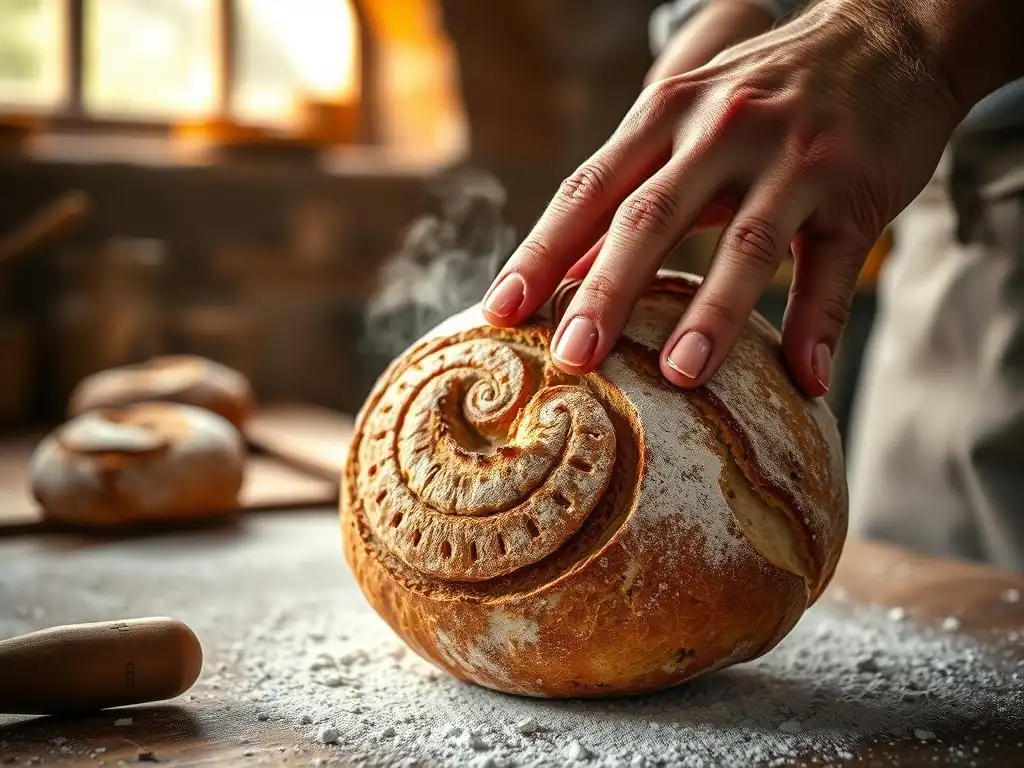
Welcome to BakeWithEase, where baking becomes a joy, not a chore! Ever wondered if that elegant slash on your crusty loaf is just for show? Prepare to unlock the secrets behind achieving bakery-worthy bread at home. This week, we delve into the critical art of how to score bread – uncovering why it's essential for perfect texture and stunning aesthetics. Curious to learn the science behind the slice? Keep reading, and let's get baking!
- The Art of Scoring: Achieving Bakery-Worthy Croissants
- Why Score Croissants? The Importance of Scoring for Optimal Baking
- How to Score Croissants: A Step-by-Step Guide
- Advanced Scoring Techniques: Elevating Your Croissant Artistry
- The Impact of Scoring on Croissant Characteristics
- Conclusion: Mastering Scoring for Perfect Croissants
- Frequently Asked Questions
- Final Reflection: The Art and Science of Scoring Bread
- Unleash Your Inner Baker: Take the Next Step!
The Art of Scoring: Achieving Bakery-Worthy Croissants
Why Score Croissants? The Importance of Scoring for Optimal Baking
Scoring, often associated with rustic bread loaves when discussing how to score bread, is equally vital for delicate pastries like croissants. It's not just an aesthetic choice; it's a functional technique that significantly impacts the final texture, shape, and appearance of your baked goods. Proper scoring allows you to control the expansion of the dough in the hot oven, preventing blowouts and ensuring an even rise. Without scoring, the rapidly expanding steam inside the croissant might burst through the weakest point of the dough, leading to an irregular, unappealing shape and potentially dense spots.
Beyond controlling expansion, scoring plays a crucial role in developing the signature flaky layers and achieving that desirable golden-brown crust. The cuts expose fresh surfaces of dough to the oven's heat, facilitating the Maillard reaction and caramelization, contributing to both color and flavor. For anyone learning how to score bread or pastries, understanding these fundamental principles is key to moving from good to truly exceptional results, transforming simple dough into a professional-looking treat right in your home kitchen.
Directing Oven Spring: Preventing Uneven Expansion
Oven spring is the rapid expansion of dough when it's first placed in a hot oven, typically occurring within the first 10-15 minutes as water turns to steam. For croissants, which rely heavily on lamination and steam to create distinct layers, controlling this spring is paramount. Scoring provides predetermined weak points on the surface, guiding the expansion outwards and upwards along the cuts rather than allowing the dough to rupture randomly. Imagine a balloon with carefully placed slits – it expands predictably along the slits instead of bursting unpredictably.
Without scoring, the intense heat causes the outer crust to set quickly, while the inside continues to expand. This pressure builds until it finds the path of least resistance, often resulting in a large, irregular tear or a misshapen pastry. By making precise cuts, you dictate where this expansion occurs, ensuring a more uniform shape, a higher rise, and preventing dense, unexpanded areas. This controlled process is a core element when mastering how to score bread dough, especially for laminated doughs where layer separation is desired.
Enhancing Visual Appeal: Achieving a Professional Finish
The visual appeal of a croissant is undeniable, and scoring is a major contributor to that bakery-quality look. The deliberate cuts bloom in the oven, creating defined edges and patterns that highlight the beautiful layers and golden crust. A perfectly scored croissant has a symmetrical shape and an inviting surface texture that signals quality and craftsmanship. This aesthetic element is why bakers dedicate time to mastering the art of scoring, moving beyond just functional cuts to creating visually pleasing designs.
Different scoring patterns can dramatically alter the final look. A simple straight cut along the length, a few perpendicular slashes, or even more intricate leaf-like patterns (often seen on baguettes, but adaptable in principle when considering how to score bread generally) each result in a unique bloom and texture on the finished pastry. The clean, defined edges created by a sharp blade contrast beautifully with the puffed, golden crust, making the croissant not just a delicious treat but a feast for the eyes.
Optimizing Crust Texture: Promoting Crispness and Flakiness
Scoring directly influences the development of the croissant's crust, specifically its crispness and flakiness. The cuts expose more surface area of the dough to the dry heat of the oven. This allows moisture to escape more efficiently from these specific points, promoting faster crust formation and drying out, which is essential for a crisp exterior. Think of it like baking a potato with slits versus a whole one – the one with slits develops a crispier skin faster.
Furthermore, as the dough expands along the scores, it pushes the layers apart slightly, encouraging the separation that defines a flaky croissant. The exposed edges of the layers brown and crisp up, contributing to the delightful shatteringly crisp texture when you bite into it. While lamination creates the potential for flakiness, proper scoring helps realize that potential by facilitating controlled expansion and optimal moisture release at the crust level. It's a critical step in achieving that perfect balance between a tender, airy interior and a crisp, golden exterior.
How to Score Croissants: A Step-by-Step Guide
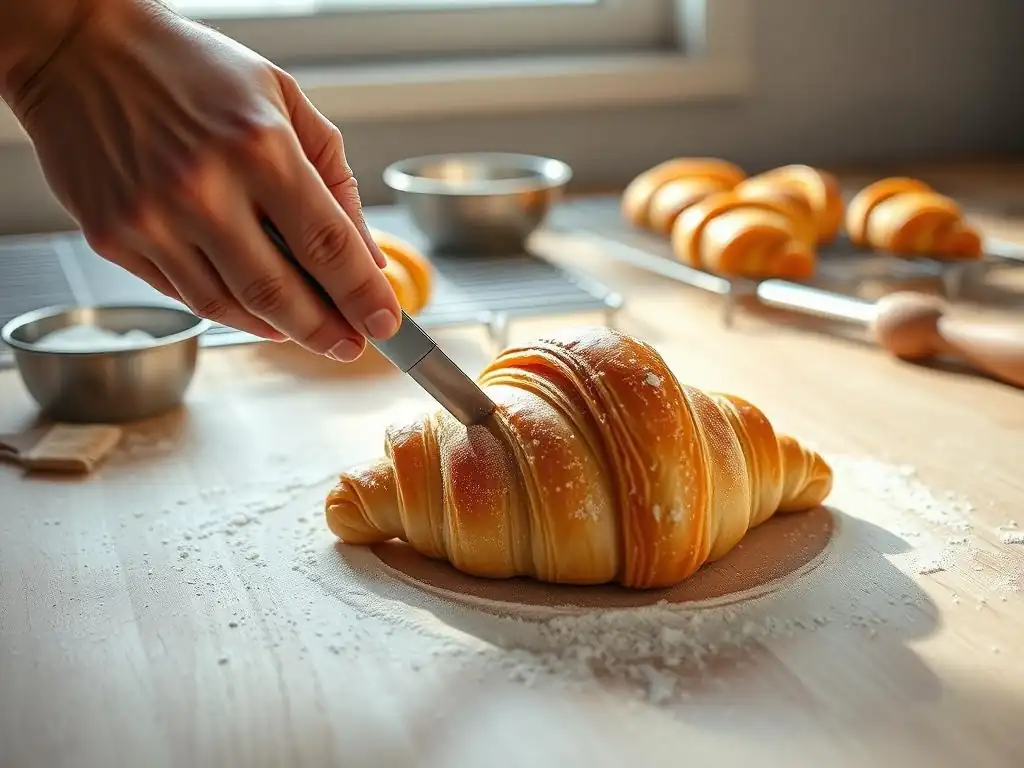
Scoring croissants requires precision and the right tools. Unlike scoring a rustic loaf where deep, bold cuts are common when learning how to score bread, croissant scoring is often more delicate to preserve the lamination. Here’s a breakdown of the process.
Essential Tools for Scoring Croissants
Having the correct tools makes a significant difference in achieving clean, effective cuts on your delicate croissant dough. A sharp blade is non-negotiable to slice through the layers cleanly without tearing or dragging the dough. Using a dull tool is one of the most common mistakes bakers make, leading to poor oven spring and a messy appearance.
The goal is to make swift, decisive cuts that open up the dough surface but don't compress the layers underneath. Proper tool selection is the first step in mastering how to score bread dough, especially sensitive laminated types like croissants.
The Lame: Your Primary Scoring Tool
A baker's lame (pronounced "lahm") is specifically designed for scoring dough. It consists of a handle holding a razor blade, often slightly curved. The curvature allows you to make precise, shallow cuts at an angle, which is ideal for guiding expansion and creating beautiful ears or blooms on bread, and controlled openings on pastries.
For croissants, a straight-bladed lame or one with a slight curve can be effective. The key is the sharpness of the blade. A fresh razor blade is incredibly sharp, allowing you to slice through the proofed dough with minimal resistance, ensuring clean cuts that open up nicely during baking.
Alternatives to a Lame: Razor Blade or Sharp Serrated Knife
If you don't have a dedicated lame, a plain razor blade held carefully between your fingers is a common alternative. Exercise extreme caution when using a bare blade! It offers the same sharpness as a lame blade and allows for similar control over the angle and depth of the cut.
Another option, though less ideal for the fine cuts needed for croissants compared to traditional how to score bread techniques, is a very sharp serrated knife. The serrations can sometimes snag the dough, but a high-quality, exceptionally sharp serrated knife used with a swift motion can work in a pinch. However, for best results and safety, a lame or a bare razor blade is highly recommended.
Preparing Your Croissant Dough for Scoring
The state of your dough before scoring is just as important as the scoring technique itself. Dough that is too warm, too cold, or improperly proofed will be difficult to score effectively and won't achieve optimal oven spring regardless of how well you make the cuts.
Paying attention to dough temperature and proofing level ensures the dough is firm enough to hold a cut but still has enough potential energy to expand vigorously in the oven. This preparation stage is crucial before you even think about how to score bread or croissants.
Dough Temperature and Proofing: Ensuring Proper Expansion
Croissant dough should be well-chilled but not frozen when you score it, typically around 40-50°F (4-10°C). If the dough is too warm, it will be soft and sticky, making clean cuts difficult; the blade will drag and tear rather than slice. If it's too cold, it can be brittle, and the cuts might not open properly during baking.
Proofing level is also critical. Croissants are usually baked when they are mostly proofed, often around 75-80% of their final volume. They should look puffy and feel delicate but still hold their shape. Over-proofed dough can collapse when scored, while under-proofed dough won't have enough strength or gas production for good oven spring along the cuts. Getting the proofing right is a key step in successfully learning how to score bread and pastries.
Lightly Flour the Surface: Preventing Sticking and Dragging
Before scoring, lightly dusting the surface of the croissant with flour can help the blade glide smoothly over the dough without sticking. Use a minimal amount of flour – just enough to create a very thin, almost invisible layer. Too much flour can create dry spots on the crust.
You can use a fine mesh sieve to apply the flour evenly. This small step makes a significant difference in the ease and cleanliness of your scoring, ensuring your blade doesn't catch on the dough's surface as you make your cuts.
Mastering the Scoring Technique: Precise Cuts for Best Results
Once your dough is prepared and you have your sharp tool ready, the actual scoring technique involves a few key considerations: the angle, the depth, and the pattern. Consistency in these elements is what separates amateur scoring from professional results.
Practicing on less critical pieces or even scrap dough can help you get a feel for the right pressure and motion before working on your beautifully proofed croissants. Understanding these nuances is fundamental to mastering how to score bread and pastries effectively.
Angle and Depth: Creating Controlled Expansion
For croissants, cuts are typically made at a shallow angle, often between 30 and 45 degrees relative to the surface of the dough. This angle helps create a 'lip' or 'ear' as the dough expands, guiding the spring upwards and outwards. A straight, 90-degree cut tends to just open up flat.
The depth of the cut should be just enough to break the surface tension and expose the layers beneath, usually around 1/4 to 1/2 inch (0.5 - 1 cm) deep, depending on the size of the croissant and your desired bloom. Cuts that are too shallow won't effectively guide the oven spring, while cuts that are too deep can cause the croissant to spread out excessively rather than rising upwards, and might even puncture the delicate layers too much.
Common Scoring Patterns: Straight, Curved, or Leaf Patterns
The most common scoring pattern for a standard crescent-shaped croissant is a single straight cut running lengthwise along the outer curve. This simple cut is highly effective at directing the oven spring and is easy to execute cleanly.
Another common approach is several short perpendicular cuts along the length. For larger, straight croissants (like pain au chocolat shapes), a few diagonal slashes are typical. While less common than on traditional loaves when learning how to score bread, some bakers experiment with curved or leaf-like patterns for decorative effect, though these require a very steady hand and perfectly proofed dough to avoid damaging the structure.
Troubleshooting Croissant Scoring: Addressing Common Issues
Even with the right tools and technique, you might encounter issues when scoring. Recognizing these problems and knowing how to address them is part of the learning curve in mastering how to score bread and pastry doughs.
Common problems include sticky dough that tears, cuts that don't open, or cuts that are either too shallow or too deep. Don't get discouraged; these are typical challenges that every baker faces at some point.
Dough Too Sticky: Chill the Dough or Use More Flour
If your dough is sticking to the blade and tearing rather than slicing cleanly, it's likely too warm or slightly over-proofed. The easiest fix is to pop the croissants back into the refrigerator for 10-20 minutes. Chilling firms up the butter layers and the dough itself, making it much easier to score cleanly.
Alternatively, ensure you are using a very sharp blade and try dusting the surface with a very light amount of flour just before scoring. If the dough is significantly over-proofed and sticky, it might be difficult to salvage the scoring, but chilling is always the first step to try.
Scoring Too Shallow/Deep: Adjust Pressure and Angle
Cuts that are too shallow won't open properly in the oven, resulting in uncontrolled expansion and blowouts. Cuts that are too deep can cause the croissant to spread horizontally instead of rising vertically, and can disrupt the internal structure.
If your cuts aren't opening, you might be scoring too shallowly or your dough is under-proofed. If they are spreading too much, you might be cutting too deep or at too steep an angle, or your dough might be slightly over-proofed. Practice adjusting the pressure on the blade and the angle at which you hold it. A slight change in angle (e.g., from 90 degrees to 45 degrees) can dramatically affect how the cut opens. It takes a bit of practice to find the sweet spot for your specific dough and proofing level.
Advanced Scoring Techniques: Elevating Your Croissant Artistry
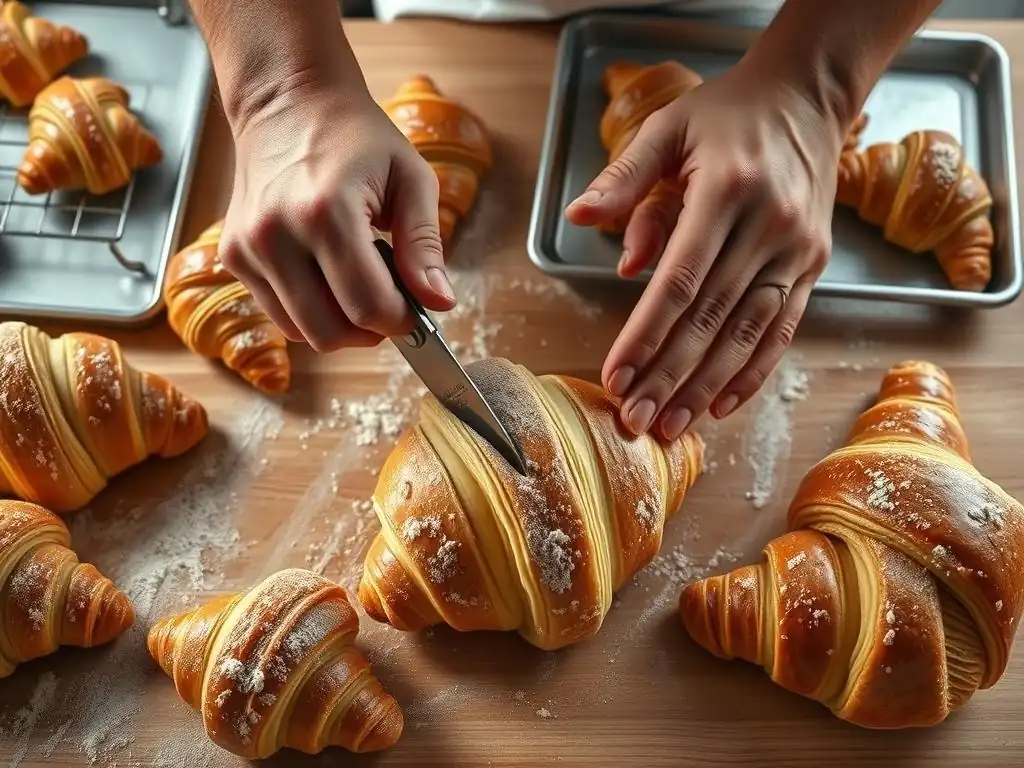
Once you've mastered the basic scoring techniques for functionality, you can explore more advanced methods to add a touch of artistry to your croissants. These techniques often focus on creating more intricate designs while still respecting the need for controlled oven spring.
While traditional how to score bread designs can be quite complex, adapting these principles to the delicate nature of croissant dough requires finesse.
Decorative Scoring: Creating Unique and Artistic Designs
Moving beyond simple cuts, decorative scoring involves creating patterns that are both visually appealing and functional. This might include multiple parallel cuts, crosshatching, or even intricate leaf or wheat stalk patterns. These designs require a very steady hand, a sharp blade, and dough that is perfectly proofed and chilled.
- Parallel Cuts: Several short, parallel cuts along the length.
- Crosshatching: Diagonal cuts in both directions to create a diamond pattern.
- Leaf Pattern: A central cut with smaller angled cuts branching off, similar to baguettes.
These patterns not only look impressive but can also influence the final texture of the crust in interesting ways, creating areas of intense crispness where the cuts overlap. However, they take practice to execute without damaging the dough structure.
Experimenting with Different Scoring Tools: Specialized Lames or Stencils
While a standard lame is versatile, some specialized tools can assist with decorative scoring. Curved lames can help create specific arcs. For very intricate, repeatable patterns, some bakers might even experiment with stencils (though this is more common for flour patterns before baking or scoring) or custom-made scoring tools, though these are far less common for croissants than for larger bread loaves where complex how to score bread patterns are a hallmark.
Ultimately, the best tool is the one you are most comfortable using to achieve clean, precise cuts. Experimentation with different blade shapes or holders can help you find what works best for your technique and the designs you want to create.
The Impact of Scoring on Croissant Characteristics
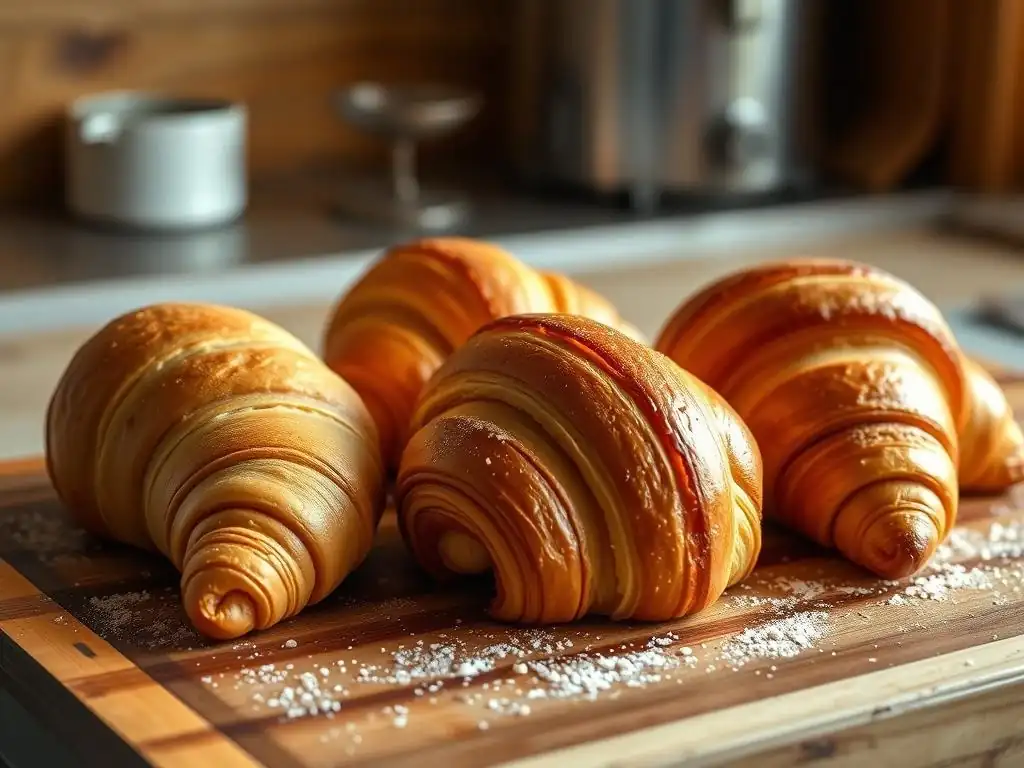
Scoring isn't just about appearance and preventing blowouts; it fundamentally affects the final eating experience of the croissant. The way you score influences the color, texture, and even the internal structure.
Understanding these impacts reinforces why mastering how to score bread and pastries like croissants is a valuable skill for any serious home baker.
Scoring and the Maillard Reaction: Enhancing Crust Color
The Maillard reaction, responsible for the delicious browning and complex flavors in baked goods, occurs most effectively on dry surfaces exposed to heat. Scoring exposes fresh, moist dough surfaces to the oven environment. As these cuts open up and the exposed dough dries slightly, they become prime locations for the Maillard reaction and caramelization (of sugars in the dough) to occur.
This leads to a richer, deeper golden-brown color along the cuts compared to the unscored surface. The contrast between the darker, more caramelized edges of the cuts and the lighter, flaky surface contributes significantly to the visual appeal and adds layers of flavor to the crust.
Scoring and Layer Development: Promoting Even Flakiness
While the lamination process creates the potential for hundreds of flaky layers within a croissant, scoring helps these layers achieve their full potential during baking. As the dough expands along the scores, it encourages the separation of these butter-laminated layers.
The steam generated inside the croissant pushes the layers apart, and the controlled expansion facilitated by scoring ensures this happens uniformly throughout the pastry. This leads to a more consistent, open crumb structure and distinct, airy layers from edge to edge, which is the hallmark of a perfectly baked croissant. Without scoring, the expansion can be uneven, leading to areas where layers are compressed or don't separate properly.
Conclusion: Mastering Scoring for Perfect Croissants
Scoring is a seemingly small step in the croissant-making process, but its impact is profound. From directing oven spring and preventing blowouts to enhancing visual appeal and optimizing crust texture and layer development, mastering how to score bread dough, specifically for delicate pastries like croissants, is essential for achieving bakery-quality results at home. It requires sharp tools, properly prepared dough, and a precise technique.
While it may take a few attempts to get it just right, the effort is well worth it for the satisfaction of baking a perfectly shaped, beautifully golden, and incredibly flaky croissant. Practice makes perfect, so grab your lame and start scoring your way to croissant success!
Frequently Asked Questions
### Why is scoring bread important?
Scoring bread allows the dough to expand properly in a controlled manner during baking. This prevents uncontrolled bursts and ensures a more attractive loaf.
### What tools are best for scoring bread?
A lame (pronounced "lahm") is the traditional and preferred tool. A sharp knife or razor blade can also be used, but ensure it's very sharp to prevent tearing the dough.
### How deep should I score my bread?
The depth depends on the type of score and the bread. Generally, scores should be about ¼ to ½ inch deep. Experiment to find what works best for your dough.
### What scoring patterns are common for bread?
Popular patterns include a single slash, cross, box, and leaf or wheat stalk. The pattern affects the final look and the way the bread expands.
### Can I score bread after it's already in the oven?
No, scoring must be done before baking. Once the crust begins to form, it's too late. Scoring after baking will not affect the crumb structure.
Final Reflection: The Art and Science of Scoring Bread
The seemingly simple act of scoring bread is, in reality, a crucial step in achieving a beautiful, flavorful loaf. It's not just about aesthetics; proper scoring directly impacts oven spring, crust development, and the overall texture of your bread. This article explored the "why" and "how" of scoring, demystifying a technique often shrouded in mystery for home bakers.
The impact of scoring extends beyond the individual baker's kitchen; it speaks to a deeper connection with the craft of bread making. It's a tangible representation of the artistry involved, a delicate balance between scientific precision and intuitive understanding. As the renowned baker, Chad Robertson, once said, Bread baking is a conversation between you and the dough.
Scoring is a crucial part of that conversation, a silent dialogue between baker and flour that yields a stunning result. The act itself, the careful incision into the risen dough, is a meditative practice, a moment of mindful creation.
Now, consider your own baking journey. What have you learned about the power of a precise score? Perhaps you've experimented with different patterns, discovering the unique characteristics each one imparts. Or maybe you've experienced the frustration of a poorly scored loaf, prompting a deeper understanding of the process. I encourage you to continue experimenting, to embrace the imperfections, and to find your own voice within the art of scoring. Each loaf is a unique opportunity to refine your technique, to deepen your connection with the process, and to savor the rewards of a perfectly scored, beautifully risen bread.
Unleash Your Inner Baker: Take the Next Step!
Thanks for spending time with us and learning more about scoring your bread! We hope you now feel more confident in tackling this often-misunderstood baking technique. Ready to put your new knowledge to the test?
- Bake a loaf today! Try scoring a simple sourdough or your favorite recipe – see the difference it makes!
- Share your baking journey! Post a picture of your perfectly scored loaf on social media using #BakeWithEaseScoring.
- Explore different scoring patterns! Experiment with different designs – your creativity is the only limit!
So, what exciting bread are you ready to score and bake?