
Ready for a Challenge? Baking Sourdough Croissants at Home

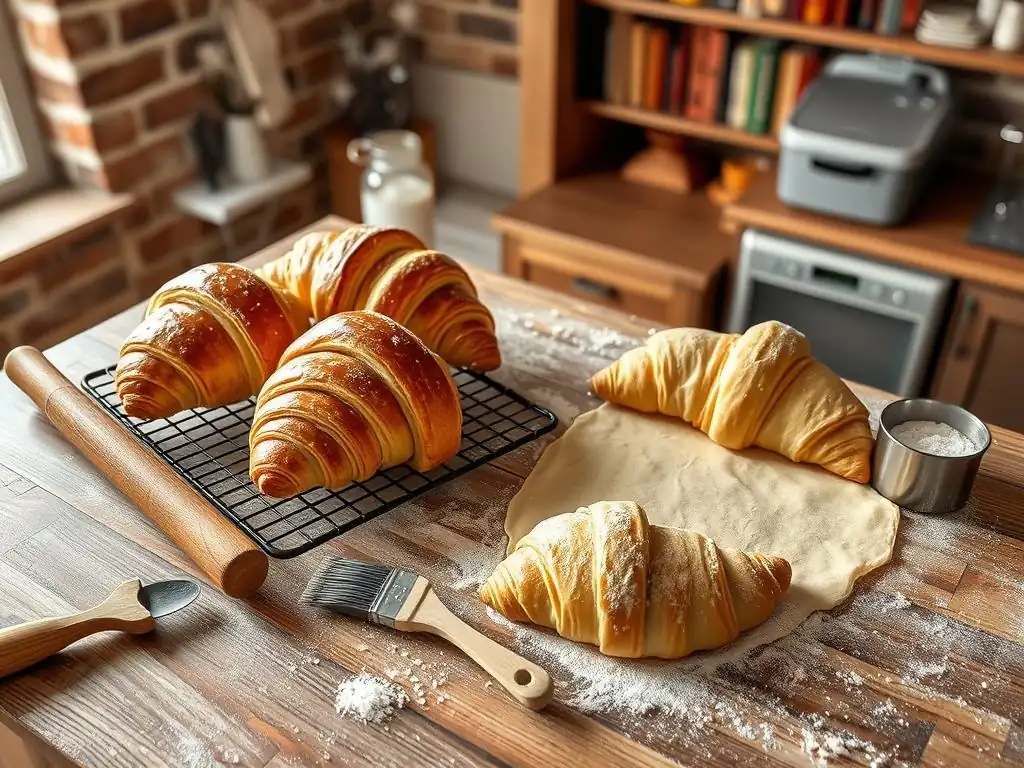
Welcome to BakeWithEase, your trusted companion in the delightful world of baking! Ever dreamt of the flaky, buttery perfection of a Parisian sourdough croissant but thought it was beyond your reach? Think again. We're about to embark on a rewarding journey, guiding you through the steps to baking sourdough croissants at home. Get ready to unlock the secrets to this seemingly complex pastry and discover how you can achieve that irresistible golden crust and tangy flavor in your own kitchen. Intrigued? Let's get started!
- Baking Naturally Leavened Croissants: A Comprehensive Guide
- Introduction to Naturally Leavened Croissant Baking: A Labor of Love
- Mastering Naturally Leavened Croissant Dough: The Foundation
- The Art of Lamination: Creating Delicate Layers
- Shaping and Proofing Your Naturally Leavened Croissants
- Baking Naturally Leavened Croissants to Perfection
- Troubleshooting Naturally Leavened Croissant Baking
- Serving and Storing Your Homemade Croissants
- Advanced Techniques and Variations
- Conclusion: The Satisfaction of Baking Naturally Leavened Croissants
-
Frequently Asked Questions
- What makes sourdough croissants different from regular croissants?
- Is baking sourdough croissants at home difficult?
- What are the key ingredients needed for sourdough croissants?
- How long does it take to bake sourdough croissants at home?
- What are some common mistakes when baking sourdough croissants?
- Final Reflection: The Unexpected Joys of Sourdough Croissant Alchemy
- Unleash Your Inner Boulanger: Craft Your Dream Croissants!
Baking Naturally Leavened Croissants: A Comprehensive Guide
Introduction to Naturally Leavened Croissant Baking: A Labor of Love
The Allure of Naturally Leavened Croissants: Flavor and Texture
Baking sourdough croissants at home offers a truly unique and rewarding experience, primarily due to the distinct flavor profile and exceptional texture imparted by natural leavening. Unlike croissants made with commercial yeast, sourdough versions develop a complex, slightly tangy taste that complements the richness of the butter beautifully. This depth of flavor is a result of the slow fermentation process driven by wild yeasts and bacteria present in the sourdough starter (levain). The acidity produced during fermentation also subtly alters the gluten structure, contributing to a more tender crumb while still allowing for those signature flaky layers.
Beyond flavor, the texture of sourdough croissants is often described as superior by enthusiasts. The slower rise allows for better development of the gluten network, resulting in a stronger dough capable of trapping steam during baking more effectively. This leads to a more open, airy interior crumb structure with larger, irregular holes, characteristic of a well-baked croissant.
The lamination process, combined with the natural leavening, ensures that the numerous thin layers of dough and butter separate perfectly in the oven, creating that irresistible shatteringly crisp exterior that gives way to a soft, pillowy inside. Achieving this perfect contrast is a hallmark of successful sourdough croissants baking at home.
Are Naturally Leavened Croissants Right for You? Commitment and Patience
Taking on the challenge of sourdough croissants baking at home is not for the faint of heart; it requires a significant investment of time, patience, and attention to detail. This is an intermediate to advanced baking project that unfolds over typically two to three days, sometimes even longer depending on your schedule and ambient temperature.
The process involves preparing an active sourdough starter (levain), mixing and developing the dough, multiple stages of fermentation, creating and incorporating a butter block, precise lamination with rest periods, careful shaping, a long, slow proofing phase, and finally, the bake. Each step is crucial and impacts the final outcome.
Success in baking sourdough croissants at home hinges on understanding the nuances of working with natural leaven – managing its activity, predicting fermentation times, and controlling dough temperature throughout the multi-day process. It's a test of your baking intuition and your ability to adapt.
If you enjoy challenging yourself in the kitchen, are meticulous with measurements and timing, and find satisfaction in a lengthy, rewarding process that culminates in truly exceptional pastries, then diving into sourdough croissants is absolutely worth the effort. The learning curve can be steep, but the result – a batch of warm, flaky, tangy sourdough croissants you baked yourself – is incredibly gratifying.
Mastering Naturally Leavened Croissant Dough: The Foundation
Understanding the Ingredients for Naturally Leavened Croissants
Flour Selection: Bread Flour vs. All-Purpose Flour
The choice of flour is fundamental when baking sourdough croissants at home, as it significantly impacts the dough's strength and ability to develop the necessary structure for lamination. Bread flour, with its higher protein content (typically 12-14%), is often recommended because it develops a strong gluten network capable of withstanding the rigorous rolling and folding required during lamination. This strength helps prevent the dough from tearing, ensuring distinct layers. Using bread flour can lead to a more robust dough that holds its shape well through extended fermentation and proofing.
Alternatively, some bakers prefer a blend of bread flour and all-purpose flour (around 10-11.5% protein) or even just good quality all-purpose flour. Using a lower protein flour can result in a slightly more tender crumb, although it requires careful handling to avoid tears during lamination. For beginners tackling sourdough croissants baking at home, starting with bread flour might offer a bit more insurance against structural issues. Experimentation with different flours or blends is encouraged once you've mastered the basic technique to find your preferred balance of strength and tenderness.
The Role of Butter: European-Style vs. Standard
Butter is perhaps the second most critical ingredient in sourdough croissants, responsible for creating those signature flaky layers and rich flavor. High-quality butter is essential, and many recipes specifically call for European-style butter. The key difference lies in the butterfat content; European-style butter typically contains 82-84% butterfat, compared to around 80% in standard American butter. This higher fat content makes European butter more pliable and less likely to melt too quickly during lamination, which is crucial for keeping the butter layer intact between the dough layers.
Using butter with the correct consistency is paramount. It needs to be firm but flexible – cold enough not to melt into the dough, but pliable enough to roll out evenly without cracking. Many bakers recommend using butter straight from the refrigerator and pounding or rolling it into a consistent block before chilling it back down to the ideal temperature (often around 50-55°F or 10-13°C) for lamination. The quality and handling of the butter directly contribute to the separation of layers and the final flakiness when baking sourdough croissants at home.
The Levain: Cultivating Flavor and Leavening Power
The levain, your active sourdough starter, is the heart of naturally leavened croissants, providing both the leavening power and the characteristic tangy flavor. A strong, active levain is non-negotiable for successful sourdough croissants baking at home. It needs to be fed regularly and used at its peak activity, usually when it has doubled or tripled in volume and is full of bubbles. The specific ratio of flour, water, and starter used in feeding the levain, as well as the fermentation temperature, will influence its acidity and activity.
For croissant dough, which is enriched with butter and sugar and undergoes long fermentation periods, it's common to use a stiffer levain (lower hydration, e.g., 50-70% hydration) or a liquid levain built from a stiff starter. A stiffer levain is often preferred as it tends to be less acidic and provides a slower, steadier rise, which is beneficial for dough that will be laminated and undergo extended cold fermentation. The unique microbial profile of your personal levain will contribute a subtle, complex sour note that distinguishes homemade sourdough croissants from their commercial yeast counterparts.
Step-by-Step Guide to Making Naturally Leavened Croissant Dough
Building a Stiff Levain: Optimal for Croissant Dough
To begin the process of baking sourdough croissants at home, you'll typically start by building a stiff levain. This involves feeding your mature sourdough starter with a specific ratio of flour and water to create a less hydrated mixture than a standard liquid starter. A common ratio might be 1 part starter, 2 parts flour, and 1 part water (e.g., 20g starter, 40g bread flour, 20g water), resulting in a 50% hydration levain. Mix these ingredients thoroughly in a clean jar or container.
Once mixed, the stiff levain should be left to ferment at room temperature until it is active and bubbly, usually taking 8-12 hours depending on the ambient temperature and the strength of your starter. You'll know it's ready when it has roughly doubled in size and has a slightly domed top. Using a stiff levain is often favored for sourdough croissants because it tends to produce a milder acidity and provides more sustained leavening power over the long fermentation cycles required for this enriched dough.
Mixing the Dough: Autolyse, Mixing, and Initial Fermentation
The main croissant dough is typically mixed using a stand mixer, although it can be done by hand. Start with an autolyse phase, mixing the flour, water, and perhaps the levain (some bakers add levain later) until just combined and no dry flour remains. Let this mixture rest for 20-60 minutes. This allows the flour to hydrate fully and gluten development to begin naturally, reducing kneading time.
After the autolyse, add the remaining ingredients: sugar, salt, and the levain (if not added earlier). Mix on low speed until the dough comes together, then increase speed and knead until moderate gluten development is achieved – the dough should be relatively smooth and pass the windowpane test (a small piece can be stretched thin without tearing). This mixing might take 10-15 minutes. Finally, incorporate the softened butter gradually, mixing until fully absorbed and the dough is smooth and elastic. The dough temperature after mixing is critical; aim for around 75-78°F (24-26°C).
Bulk Fermentation: Developing Flavor and Strength
Following the initial mixing, the dough undergoes bulk fermentation. This phase is crucial for developing flavor and strengthening the gluten structure further. For sourdough croissants, bulk fermentation often starts at room temperature for a short period (e.g., 2-4 hours) with one or two sets of folds during this time. Folding helps to build strength and even out the temperature.
After the initial room temperature fermentation, the dough is typically transferred to the refrigerator for a long, cold bulk fermentation period, often 8-16 hours or even longer. This cold environment slows down the fermentation significantly, allowing complex flavors to develop while simultaneously firming up the dough and preparing it for lamination. The dough should increase in volume by perhaps 20-50% during this cold bulk fermentation, depending on the temperature and duration. Proper bulk fermentation is key to achieving the desired structure and flavor when baking sourdough croissants at home.
The Art of Lamination: Creating Delicate Layers
Preparing the Butter Block: Achieving the Right Consistency
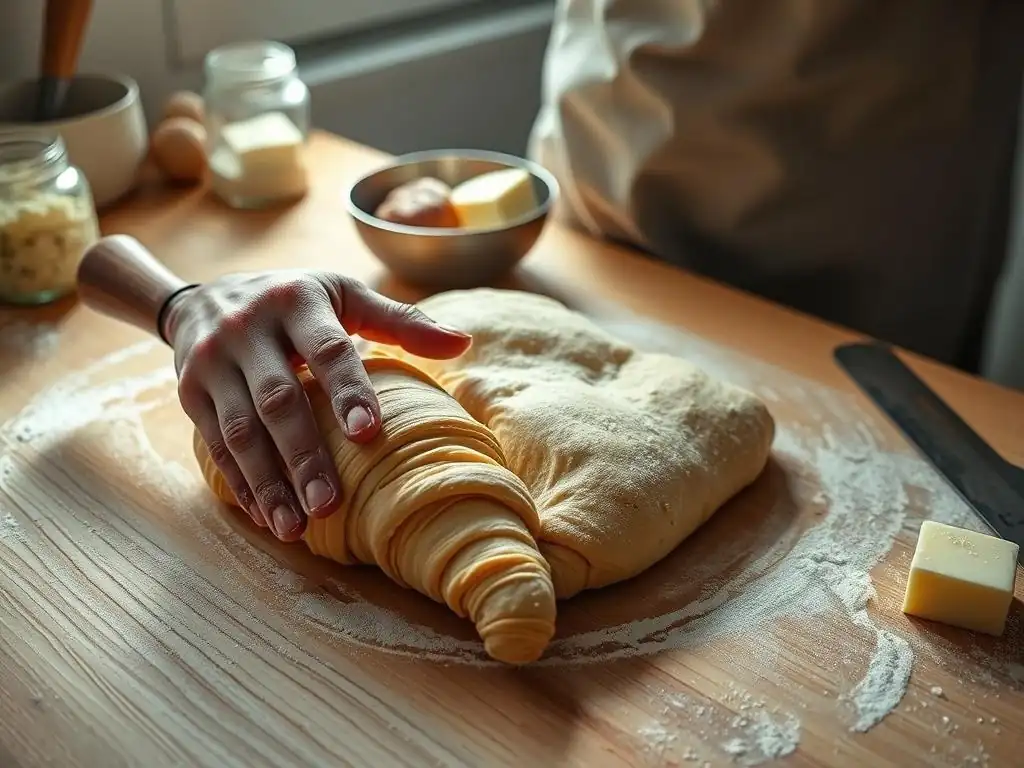
Lamination, the process of repeatedly folding butter into dough, is what creates the numerous flaky layers in sourdough croissants. The success of lamination hinges on the butter block being the correct consistency: firm but pliable. You'll need a block of high-quality butter (ideally European-style with high butterfat) that is cold but not brittle. Typically, 8-10 ounces (approx. 225-280g) of butter is used for a standard batch of dough.
To prepare the butter block, place the cold butter between two sheets of parchment paper. Using a rolling pin, gently pound the butter to soften it slightly and then roll it into a rectangle of the size specified in your recipe (often around 6x8 or 7x9 inches, about 15x20 or 18x23 cm). The goal is a uniform thickness throughout the block.
Once rolled, chill the butter block in the refrigerator until it reaches the same temperature and consistency as your cold dough – typically around 50-55°F (10-13°C). This synchronicity in temperature is vital for successful lamination when baking sourdough croissants at home.
The Lamination Process: Simple and Double Book Folds
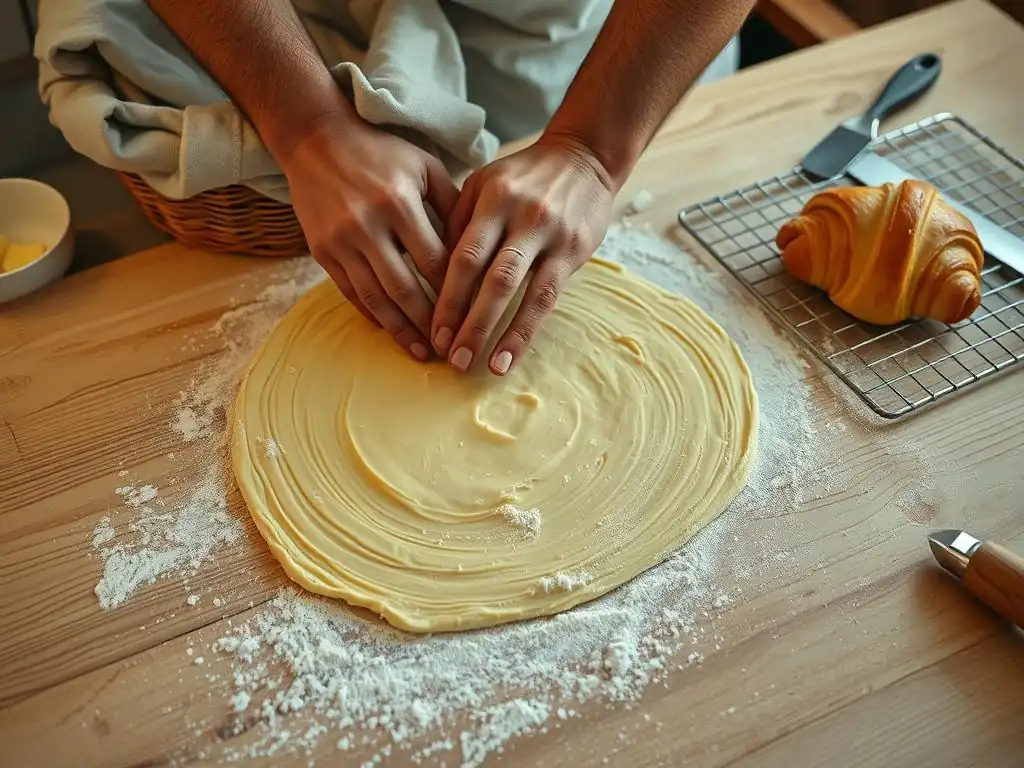
Lamination involves enclosing the chilled butter block within the cold dough and then rolling and folding the dough multiple times. There are two primary folding techniques: the simple fold (or single fold) and the double book fold. A simple fold involves folding the dough like a letter in three, creating three layers of dough and two layers of butter. A double book fold involves folding the edges of the dough towards the center, then folding the dough in half like a book, creating four layers of dough and three layers of butter.
A typical lamination schedule for sourdough croissants involves a series of folds with resting periods in between. For instance, you might perform one double book fold, rest the dough for 30-60 minutes in the refrigerator, then perform another double book fold, rest again, and finally perform a simple fold. This sequence results in a high number of butter and dough layers (e.g., 3x4x4 = 48 layers of dough after three folds), which separate during baking to create flakiness. Precise rolling and sharp folds are essential to maintain distinct layers and prevent the butter from breaking through the dough.
Choosing a Folding Technique: Impact on Layering
The choice between simple and double book folds, and the sequence in which they are performed, impacts the final number of layers and can subtly affect the crumb structure. Using more double book folds results in a higher number of layers more quickly. For example, three simple folds yield 27 layers (3^3), while two double book folds followed by one simple fold yield 48 layers (4 43). More layers generally contribute to a finer, more delicate flake.
Many recipes for baking sourdough croissants at home specify a combination of folds to achieve a balance of layers and ease of handling. Double book folds are efficient but require careful execution to ensure the edges meet neatly in the center. Simple folds are perhaps slightly easier to manage but require more repetitions to build up layers. The specific technique chosen also depends on the dough's strength and extensibility; a very strong dough might handle more intensive folding patterns. Ultimately, consistency in rolling and folding, regardless of the technique, is the most important factor for successful lamination.
Controlling Dough Temperature: Essential for Success
Maintaining the correct dough temperature is paramount throughout the lamination process. The dough and the butter block must be cold and firm (around 50-55°F or 10-13°C) to prevent the butter from melting into the dough. If the dough or butter becomes too warm, the butter will soften, potentially squeezing out during rolling or merging with the dough, preventing the formation of distinct layers.
After each fold, the dough must be rested and chilled in the refrigerator for 30-60 minutes (or sometimes longer) to allow the gluten to relax and the butter to firm up again. This rest period is non-negotiable. Attempting to roll dough that is too warm or has not rested sufficiently will lead to tears, uneven layers, and a sticky mess. Using a thermometer to check the dough temperature periodically can be helpful. Working in a cool kitchen environment also significantly aids in controlling the dough temperature when baking sourdough croissants at home.
Lamination Troubleshooting: Tears, Soft Butter, and Uneven Layers
Troubleshooting is a common part of the learning curve when baking sourdough croissants at home, especially during lamination. Tears in the dough are a frequent issue, often caused by rolling the dough too thin too quickly, the dough being too cold and stiff, or insufficient gluten development. If a small tear occurs, you can often patch it by pressing the dough back together or using a tiny piece of dough to cover it before chilling. Larger tears can make successful lamination very difficult.
Soft or melting butter is another major challenge, typically resulting from the dough or butter being too warm, or the kitchen environment being too hot. If the butter starts to ooze out during rolling, immediately stop, wrap the dough, and return it to the refrigerator until it is firm again. Uneven layers can result from inconsistent rolling, where one part of the dough is thicker than another, or from uneven folding. Striving for a uniform thickness when rolling and making sharp, precise folds are key to preventing these issues and ensuring beautifully flaky sourdough croissants.
Shaping and Proofing Your Naturally Leavened Croissants
Shaping Techniques: Consistent and Tight Rolls
Proper shaping is crucial for achieving the classic croissant appearance and ensuring even baking. The laminated dough, after its final rest, is typically rolled out into a large rectangle, about 1/8 to 1/16 inch (3-4 mm) thick. This rectangle is then cut into triangles. For traditional croissants, these triangles are usually isosceles, with a base of about 3.5-4 inches (9-10 cm) and a height of around 8-10 inches (20-25 cm).
The technique for rolling involves making a small notch or slit in the center of the base of the triangle. Then, starting from the base, roll the triangle up towards the point. The key is to roll tightly but without stretching the dough excessively. Stretching too much can compromise the layers. The point of the triangle should end up tucked neatly underneath the croissant. Consistent rolling ensures that all your sourdough croissants bake evenly and have a similar structure.
Shaping Naturally Leavened Croissants: Step-by-Step Instructions
- Roll the Dough: On a lightly floured surface, roll the chilled, laminated dough into a large rectangle of the specified thickness (e.g., 1/8 inch or 3mm). Ensure the edges are as straight as possible.
- Trim and Cut: Trim the edges of the rectangle using a sharp knife or pizza cutter to expose the layers. Then, cut the rectangle into uniform triangles. For classic croissants, use the base measurement (e.g., 3.5 inches) along one long edge and cut diagonally across to create the triangles.
- Notch the Base: Make a small, approximately 1/2-inch (1 cm) slit in the center of the base of each triangle. This helps the base open up slightly during rolling.
- Roll the Croissant: Starting from the notched base, gently but firmly roll the triangle up towards the point. Use both hands to guide the dough, keeping the roll tight.
- Secure the Tip: Ensure the tip of the triangle is tucked securely underneath the finished roll. Curve the ends inwards slightly to create the classic crescent shape if desired. Place shaped croissants on baking sheets lined with parchment paper.
Following these steps consistently is vital for successful sourdough croissants baking at home.
Proofing Naturally Leavened Croissants: A Delicate Balance
Proofing is arguably the most critical and often trickiest stage when baking sourdough croissants at home, especially with natural leaven. It's during proofing that the shaped croissants rise and develop their final airy structure. Unlike commercial yeast, sourdough provides a slower, more gradual rise, which requires patience and careful observation. The ideal proofing environment is warm and humid, typically around 75-80°F (24-27°C). A proofing box, a warm oven with the light on, or a steamy room can help create this environment.
The balance is delicate: under-proofed croissants will be dense and heavy with poor oven spring, while over-proofed croissants will collapse, lose their shape, and potentially leak butter during baking. Optimal proofing for sourdough croissants can take anywhere from 3 to 6 hours, sometimes even longer, depending on the strength of your levain, the dough temperature, and the ambient proofing conditions. This long proof develops flavor further but increases the risk of over-proofing.
Recognizing Optimal Proof: The Jiggle Test
Determining when your sourdough croissants are perfectly proofed requires observation and practice. They should have visibly increased in size, looking puffy and airy, but not stretched taut. The layers should still be discernible, not blurred together. One common test is the "jiggle test": gently shake the baking sheet; the croissants should jiggle noticeably, indicating a very delicate internal structure.
Another reliable method is the poke test. Gently press the side of a croissant with a lightly floured finger. If the indentation springs back immediately, it is under-proofed. If it springs back very slowly, leaving a slight indentation, it is likely optimally proofed. If the indentation remains completely and the dough feels fragile and deflates slightly, it is over-proofed. Mastering the poke test is crucial for success in baking sourdough croissants at home.
Baking Naturally Leavened Croissants to Perfection
Oven Temperature and Baking Time: Achieving Optimal Rise and Color
Baking sourdough croissants requires a hot oven to achieve maximum oven spring and develop a beautiful, golden-brown crust. A common starting temperature is around 400-425°F (200-220°C). Often, the oven temperature is slightly higher initially to encourage a rapid rise, and then reduced partway through the bake to ensure the interior cooks through without the exterior burning.
The total baking time for sourdough croissants typically ranges from 15 to 25 minutes, depending on their size and your oven's characteristics. Smaller croissants will bake faster than larger ones. You'll know they are done when they are deeply golden brown all over, including the sides and bottom, and feel light when lifted. Under-baking can result in a doughy interior, especially near the center. It's better to bake them until they are quite dark rather than risk an undercooked interior when baking sourdough croissants at home.
The Importance of Steam: Creating a Crispy Exterior
Introducing steam into the oven at the beginning of the bake is a vital step for creating that desirable thin, crispy crust on your sourdough croissants. Steam keeps the surface of the dough pliable initially, allowing the croissants to expand fully without the crust setting too early. This maximizes oven spring and contributes to a more open interior structure. As the baking progresses and the steam dissipates, the crust dries out and becomes wonderfully crisp and flaky.
There are several ways to create steam in a home oven. One common method is to place a baking tray or cast iron pan on the bottom rack while the oven preheats. Just before loading the croissants, carefully pour a cup of hot water into the hot tray to generate steam. Be cautious of the hot steam. Some ovens have a steam function. The steam is typically needed only for the first 5-10 minutes of the bake.
Achieving a Deep, Golden-Brown Color: Egg Wash Application
Applying an egg wash before baking is essential for giving your sourdough croissants a beautiful, glossy, deep golden-brown color and a slightly richer crust. A standard egg wash is made by whisking one whole egg with a tablespoon or two of milk or water. Some bakers prefer just the egg yolk mixed with liquid for a darker, richer finish.
The egg wash should be applied gently and evenly to the surface of the proofed croissants using a soft pastry brush. Be careful not to let the wash pool in the layers or drip down the sides, as this can glue the layers together and inhibit flaking. A single, careful layer is usually sufficient. Apply the wash just before placing the croissants in the oven. This step is the final touch before the heat transforms the delicate dough into magnificent, golden sourdough croissants, a proud moment in your sourdough croissants baking at home journey.
Troubleshooting Naturally Leavened Croissant Baking
Dense or Underbaked Croissants: Causes and Solutions
Experiencing dense or underbaked croissants after putting in all the effort of sourdough croissants baking at home can be disheartening, but it's a common issue with identifiable causes. Density often stems from insufficient proofing. If the croissants didn't rise enough before hitting the oven, they won't achieve the desired airy structure. Ensure your proofing environment is warm and humid and that you're accurately using the jiggle or poke test to determine readiness. Under-proofing is perhaps the most frequent culprit.
Underbaking, on the other hand, means the interior hasn't cooked through, leaving it doughy. This is usually a matter of not baking long enough or at a high enough temperature. While the exterior might look done, the inside isn't. Don't be afraid to bake your croissants until they are a deep, rich brown. Using an instant-read thermometer can help; the internal temperature should reach around 200-210°F (93-99°C). If the outside is browning too fast, tent the croissants loosely with foil for the remainder of the baking time.
Lack of Flakiness: Addressing Lamination Issues
A lack of flakiness in your sourdough croissants almost always points back to problems during the lamination process. This could be due to several factors. First, the butter might have been too soft during rolling, causing it to melt into the dough instead of remaining in distinct layers. Ensure both your dough and butter block are at the correct temperature (around 50-55°F or 10-13°C) and work quickly.
Second, the dough might not have been rested sufficiently between folds, leading to tears or uneven rolling which disrupts the layers. Allowing adequate rest time in the refrigerator is crucial for the gluten to relax and the butter to firm up. Third, insufficient or inconsistent rolling can also lead to poor layer development. Practice rolling the dough to a uniform thickness. Lastly, over-proofing can cause the delicate layers to merge or collapse before baking. Paying close attention to temperature control during lamination and proofing is key to achieving those coveted flaky layers when baking sourdough croissants at home.
Overly Sour Croissants: Managing Levain Acidity
If your sourdough croissants turn out excessively sour, it typically indicates that the levain used was too acidic. This can happen if the levain was fermented for too long at room temperature, or if it wasn't fed recently before being used. The bacteria in the starter, which produce lactic and acetic acids, become more dominant over time, especially in warmer conditions or when food (flour) is depleted.
To mitigate excessive sourness, ensure you are using an active, recently fed levain that is at its peak or slightly before its peak when you mix the dough. Building a stiff levain (lower hydration) can also help, as stiffer starters tend to produce more lactic acid (milder) relative to acetic acid (sharper, vinegary). Using colder temperatures for the long bulk fermentation and proofing phases will also slow down acid production. By managing your levain's feeding schedule and fermentation temperatures, you can control the level of tanginess in your sourdough croissants baked at home.
Serving and Storing Your Homemade Croissants

Enjoying Freshly Baked Croissants: Serving Suggestions
The absolute best way to enjoy your homemade sourdough croissants is fresh out of the oven, ideally after they've had a few minutes to cool slightly on a wire rack. This allows the butter to set just enough while the layers are still incredibly crisp and the interior is warm and soft. Serving them warm enhances their rich flavor and flaky texture.
Classic pairings include simply enjoying them plain to savor the nuanced sourdough flavor and buttery layers. Alternatively, serve them with high-quality butter, your favorite jam, or preserves. For a more decadent treat, slice one horizontally and fill it with chocolate ganache, pastry cream, or a dollop of whipped cream and fresh berries. The slightly tangy profile of sourdough croissants also pairs wonderfully with savory fillings like ham and cheese, though these are typically added before baking. Sharing your successful sourdough croissants baking at home project with friends and family is part of the reward!
Storing Croissants: Maintaining Crispness
Storing croissants properly is essential for preserving their texture, although it's challenging to maintain that fresh-from-the-oven crispness for long. The enemy of crispness is moisture. Once completely cooled, store croissants at room temperature in a paper bag to allow air circulation and prevent moisture buildup. Avoid plastic bags or airtight containers, as these will trap moisture and make the croissants soft and rubbery within hours.
While a paper bag helps, even perfectly stored croissants will lose their initial crispness by the next day. For longer storage, cooled croissants can be frozen. Wrap individual croissants tightly in plastic wrap, then place them in a freezer-safe bag or container. Frozen croissants can be stored for up to a month.
Reheating Croissants: Reviving Texture and Flavor
Fortunately, you can revive the texture and flavor of stored or frozen sourdough croissants. The best method for reheating is in a preheated oven or toaster oven. For croissants stored at room temperature, place them directly on a baking sheet and warm at 350°F (175°C) for 5-10 minutes, or until heated through and the exterior is crisp again.
For frozen croissants, you can either thaw them overnight at room temperature (in a paper bag) and then reheat as above, or bake them directly from frozen. To bake from frozen, place them on a baking sheet and bake at a slightly lower temperature, such as 325°F (160°C), for 15-20 minutes, or until golden and heated through. Reheating is a great way to recapture some of the magic of baking sourdough croissants at home, even days later.
Advanced Techniques and Variations
Exploring Different Flour Combinations: Whole Wheat and Spelt
Once you've mastered the basic sourdough croissants baking at home technique with bread flour, you might want to explore different flour combinations to alter the flavor and texture. Incorporating a percentage of whole wheat flour (e.g., 10-20%) will add nutty flavor notes and increase the fiber content, resulting in a slightly denser but more nutritious croissant. Whole wheat requires more hydration and careful handling due to the bran interfering with gluten development.
Spelt flour is another interesting option. It has a unique, slightly sweet and nutty flavor. Spelt develops gluten differently than modern wheat and can be more extensible but also more fragile. Using a portion of spelt (e.g., 20-30% blended with bread flour) can yield tender croissants with a distinct taste. Experimenting with these flours requires adjustments to hydration and potentially fermentation times, adding another layer of challenge and discovery to your sourdough croissants journey.
Adding Flavors and Fillings: Pain au Chocolat, Almond Croissants
Beyond the classic shape, the laminated sourdough dough can be transformed into various pastries by adding flavors and fillings. Pain au chocolat, or chocolate croissants, are a popular variation. Simply place one or two batons of dark chocolate at the base of the dough triangle before rolling. As they bake, the chocolate melts into a delicious filling.
Almond croissants are another favorite, often made from day-old croissants. They are typically dipped in a sugar syrup, filled with frangipane (almond cream), topped with more frangipane and sliced almonds, and then baked again until golden. Other possibilities include filling with pastry cream, fruit compotes, or savory ingredients before shaping or baking. These variations allow you to leverage your sourdough croissants baking at home skills to create a wider repertoire of pastries.
Experimenting with Lamination: Inverted Puff Pastry Technique
For the truly adventurous sourdough baker, experimenting with advanced lamination techniques can yield even more spectacular results. One such technique is the inverted puff pastry method, also known as pâte feuilletée inversée. In this technique, the butter block is outside the dough, essentially enclosing the dough block within the butter before the rolling and folding begins.
This method requires a more pliable butter block (often mixed with a small amount of flour) and a firmer dough. The benefit is that the butter is less likely to break through the dough during rolling, potentially leading to more distinct and numerous layers and an even flakier result. While more complex to execute, mastering the inverted lamination technique can elevate your sourdough croissants baking at home to a professional level, resulting in pastries with an unparalleled crispness and rise.
Conclusion: The Satisfaction of Baking Naturally Leavened Croissants
Frequently Asked Questions
What makes sourdough croissants different from regular croissants?
Sourdough croissants use a sourdough starter instead of commercial yeast, which provides a tangier flavor and a more complex aroma. The fermentation process also impacts the texture and rise.
Is baking sourdough croissants at home difficult?
Yes, it can be challenging! It requires patience, precision, and understanding of sourdough fermentation. However, with practice and BakeWithEase's guides, it's achievable.
What are the key ingredients needed for sourdough croissants?
Besides standard croissant ingredients like flour, butter, and water, you'll need an active sourdough starter. High-quality butter is also crucial for achieving flaky layers.
How long does it take to bake sourdough croissants at home?
The entire process, including fermentation and lamination, can take 2-3 days. This includes time for proofing and resting the dough.
What are some common mistakes when baking sourdough croissants?
Common mistakes include using an inactive starter, not chilling the dough properly, and over-proofing. Temperature control is vital throughout the process.
Final Reflection: The Unexpected Joys of Sourdough Croissant Alchemy
The pursuit of the perfect sourdough croissant at home is more than just a baking challenge; it's a journey of patience, precision, and unexpected reward. The seemingly insurmountable task of combining the tangy complexity of sourdough with the delicate, flaky layers of a croissant reveals a deeper truth: true mastery lies not just in the result, but in the process itself. This article has explored the intricacies of this ambitious undertaking, from starter management to lamination techniques, highlighting the importance of meticulous attention to detail at every stage.
The impact of sourdough baking, in general, on the home cooking landscape is undeniable. It's a testament to our growing desire for connection to our food, a yearning for authenticity and a deeper understanding of the craft. Bread is the staff of life,
they say, and in the case of sourdough croissants, that staff is imbued with an extra layer of complexity and satisfaction. The process itself, demanding as it is, fosters a sense of accomplishment and connection to a tradition that spans centuries. It's a meditative practice, a quiet rebellion against the fast-paced, convenience-driven world we inhabit.
Now, I invite you to consider your own baking journey. Will you accept the challenge? Perhaps you've already begun, your kitchen filled with the intoxicating aroma of fermenting sourdough. Or maybe this article has sparked a newfound curiosity, a desire to explore the depths of this rewarding culinary art.
Regardless of your experience level, remember that the journey is as important as the destination. Embrace the setbacks, celebrate the small victories, and savor the incredible taste of a perfectly crafted sourdough croissant – a testament to your patience, skill, and unwavering dedication. The reward? A taste of pure, handcrafted magic.
Unleash Your Inner Boulanger: Craft Your Dream Croissants!
Thanks for joining us on this delicious journey into the world of sourdough croissants! We hope you gained a newfound appreciation for the art and patience involved in creating these flaky masterpieces. Now it's time to put your knowledge to the test.
- Bake your own sourdough croissants! We know it might seem daunting, but trust us – with a little practice, and the techniques outlined above, you'll be amazed at the results. This is your chance to truly master the art.
- Share your creations! Post a picture of your finished croissants on social media and tag us – we’d love to see your baking triumphs! Use #BakeWithEaseSourdough.
- Explore our other sourdough recipes: Discover new ways to use your sourdough starter and expand your baking horizons on BakeWithEase.com.
Ready to transform your kitchen into a Parisian patisserie? What unique twist will you add to your sourdough croissant recipe?