
Substituting Spices: Your Easy Baking Swap Guide


Welcome to BakeWithEase, your kitchen companion for unlocking the joy of baking! Ever wondered how to rescue a recipe when you're out of a key spice? Dive into our latest article, "Substituting Spices: Your Easy Baking Swap Guide," where we unravel the secrets of easy spice substitution baking. Discover how to adapt, improvise, and create delicious treats even when your pantry isn't fully stocked. What flavors await when you swap cinnamon for nutmeg, or ginger for allspice? Let's explore!
- Spice Substitutions for Baking: A Comprehensive Guide | Bake Like a Pro
- Introduction to Spice Substitution in Baking
- Spice Substitutions: A Practical Guide
- Spice Flavor Profiles and Baking Applications
- Tips for Successful Spice Swaps
- Spice Substitution Chart: Quick Reference
- Conclusion: Unleash Your Baking Creativity
-
Frequently Asked Questions
- What is the primary benefit of using spice substitutions in baking?
- Can all spices be substituted equally in baking?
- Where can I find reliable information on common spice substitutions for baking?
- How does the type of baked good influence spice substitution choices?
- What are some common "easy spice substitutions" for baking that a beginner can try?
- Final Reflection: The Sweet Symphony of Spice Substitution
- Unlock Flavor: Spice Up Your Baking!
Spice Substitutions for Baking: A Comprehensive Guide | Bake Like a Pro
Introduction to Spice Substitution in Baking
Why Substitute Spices?
Sometimes, you're halfway through mixing a batch of cookies or a cake, only to discover you're missing a crucial spice like cinnamon or nutmeg. This is where understanding easy spice substitution baking becomes a real lifesaver!
Whether you're out of an ingredient, trying to tailor a recipe to dietary needs (like allergies or sensitivities to certain spices), or simply want to experiment with different flavor combinations, knowing how to swap spices effectively is a key skill for any home baker. It allows you to adapt recipes on the fly and ensure your baking plans aren't derailed by a missing jar from the spice rack.
Furthermore, exploring spice alternatives can open up a world of new flavors and aromas in your baking. Perhaps a recipe calls for cardamom, but you find its unique floral-citrus notes a bit too intense; a successful substitution can lead to a more enjoyable result for your palate.
Or maybe you want to replicate the warmth of ginger in gingerbread but prefer a milder profile; knowing suitable swaps lets you achieve a similar effect with less intensity. Mastering easy spice substitution baking not only solves ingredient shortages but also empowers you to customize flavors and personalize your baked goods to perfection.
Understanding Spice Flavor Profiles
Spices aren't just about heat or sweetness; they contribute complex layers of aroma and taste that define a baked good's character. Understanding the basic flavor profile of common baking spices is fundamental to making successful substitutions. Spices can be broadly categorized by their dominant notes: warm (like cinnamon, nutmeg, clove), earthy (like ginger, cardamom, allspice), sweet (like vanilla bean, sometimes cinnamon depending on context), or even pungent (like black pepper, though less common in sweet baking). Cinnamon offers sweet warmth, nutmeg brings nutty depth, ginger provides spicy heat, and cardamom lends aromatic complexity.
When considering an easy spice substitution baking scenario, think about what the missing spice contributes to the overall flavor profile. If you need to replace cinnamon, you're looking for something that offers warmth and sweetness, perhaps nutmeg or allspice.
If it's ginger you're missing from a gingerbread recipe, you need a spice that provides a similar kind of heat and earthiness, perhaps a blend of cinnamon and nutmeg. By identifying the primary role of the spice in the recipe – whether it's providing warmth, heat, earthiness, or sweetness – you can select a substitute that offers a similar contribution, making your easy spice substitution baking efforts much more likely to succeed.
Key Considerations Before Substituting
Before you dive into swapping spices, there are a few critical factors to keep in mind to ensure your easy spice substitution baking goes smoothly. The most important is potency. Not all spices are created equal in terms of strength. Cloves, for instance, are significantly more potent than cinnamon. Substituting 1:1 is often not advisable and can overwhelm your recipe. A common guideline is to start with half the amount of the substitute spice that the recipe calls for of the original, especially if the substitute is known to be stronger (like using clove for cinnamon).
Another crucial consideration is the form of the spice – ground versus whole or fresh. A recipe calling for fresh ginger will have a different flavor and moisture contribution than one calling for ground ginger. Similarly, freshly grated nutmeg has a more vibrant, nuanced flavor than pre-ground nutmeg.
When making an easy spice substitution baking swap between forms, you'll need to adjust the quantity significantly. For example, you might need about 1/4 teaspoon of ground ginger to replace 1 tablespoon of fresh grated ginger. Always consider the impact on both flavor intensity and any minor textural or moisture changes the substitution might introduce.
Spice Substitutions: A Practical Guide
Cinnamon Substitutions
Ground Cinnamon Alternatives: Nutmeg, Allspice
If you're out of ground cinnamon, nutmeg and allspice are excellent candidates for an easy spice substitution baking swap. Nutmeg offers a warm, slightly nutty flavor that complements many recipes where cinnamon is used, such as apple pies or spice cakes. However, nutmeg is generally more potent than cinnamon, so a good starting point is to use about half the amount of nutmeg called for cinnamon. For example, if a recipe requires 1 teaspoon of ground cinnamon, try using 1/2 teaspoon of ground nutmeg initially and adjust if needed.
Allspice is another fantastic alternative, as its name suggests, it tastes like a blend of cinnamon, nutmeg, and cloves. This makes it a very versatile substitute for cinnamon, especially in recipes like pumpkin pie or spiced muffins. Like nutmeg, allspice can be more intense than cinnamon, so again, start with a smaller amount – perhaps 3/4 teaspoon of allspice for every 1 teaspoon of cinnamon. This easy spice substitution baking trick works well because allspice already contains flavor notes similar to cinnamon, ensuring a familiar yet slightly different warmth in your baked goods.
Cinnamon Extract Alternatives: Maple Extract, Vanilla Extract (with a pinch of other warm spice)
Replacing cinnamon extract, which provides a concentrated cinnamon flavor without the bulk of ground spice, requires substitutes that offer similar aromatic depth. Maple extract is a wonderful option for an easy spice substitution baking swap, especially in recipes like pancakes, waffles, or baked goods where maple flavor is complementary. It provides a different kind of warmth and sweetness that can stand in for cinnamon extract quite effectively. Use a 1:1 ratio as a starting point, but taste and adjust as extracts can vary in strength.
Another effective alternative is a combination of vanilla extract with a tiny pinch of another warm spice, like ground nutmeg or allspice. Vanilla extract provides a foundational sweet aroma that is often paired with cinnamon. By adding just a hint of nutmeg or allspice (literally a pinch or two for a teaspoon of extract), you introduce the warm spice notes that cinnamon extract would provide. This easy spice substitution baking method allows you to mimic the complexity of cinnamon extract using common pantry staples, ensuring your baked goods still have that comforting depth of flavor.
Nutmeg Substitutions
Ground Nutmeg Alternatives: Cinnamon, Allspice
Ground nutmeg provides a warm, nutty, slightly sweet flavor that is essential in many baked goods, from custards to spice cookies. If you need an easy spice substitution baking option for ground nutmeg, ground cinnamon is a readily available alternative. While cinnamon is sweeter and lacks the distinct nutty note of nutmeg, it provides a similar warmth that can work well in recipes where nutmeg is not the dominant flavor. Use about 1:1 as a starting ratio, but be aware the final flavor will be different.
Allspice is arguably a better substitute for ground nutmeg in many cases, as it contains flavor notes of nutmeg, cinnamon, and clove. This blend makes it a closer match to nutmeg's complex profile than cinnamon alone. For an easy spice substitution baking swap using allspice for nutmeg, start with a 1:1 ratio. Allspice provides the necessary warmth and depth, making it suitable for pies, cakes, and spiced breads where nutmeg is called for.
Fresh Nutmeg Alternatives: Use ground nutmeg; adjust quantity to 1/4 tsp per whole nutmeg.
Recipes sometimes call for freshly grated nutmeg for its superior aroma and flavor intensity compared to pre-ground. If you don't have whole nutmeg but have ground nutmeg, you can absolutely use it as an easy spice substitution baking solution. The key is adjusting the quantity because fresh nutmeg is much more potent and fragrant.
A general guideline for this easy spice substitution baking is to use about 1/4 teaspoon of ground nutmeg for every whole nutmeg specified in the recipe. A whole nutmeg is roughly equivalent to 1.5 to 2 teaspoons of freshly grated nutmeg, which then reduces to about 1/4 teaspoon of pre-ground nutmeg due to the loss of volatile oils over time in the ground form. Always start with the lower estimate (1/4 tsp ground per whole) and taste the batter or dough if possible before baking to ensure the flavor is not overwhelming.
Ginger Substitutions
Ground Ginger Alternatives: Allspice, Cinnamon
Ground ginger offers a unique spicy heat and earthy warmth to baked goods like gingerbread and ginger snaps. Finding an easy spice substitution baking option for ground ginger can be tricky because its heat is distinct. However, allspice can provide a similar warmth and a hint of spiciness, making it a decent substitute, particularly in recipes where ginger is part of a spice blend rather than the primary flavor. Use a 1:1 ratio as a starting point.
Cinnamon, while lacking ginger's heat, offers a complementary warmth that can work in some easy spice substitution baking scenarios. It's best used as part of a blend when replacing ginger, perhaps combined with a tiny pinch of black pepper or clove to introduce a different kind of heat. For example, in a recipe calling for 1 teaspoon of ground ginger, you might try 1/2 teaspoon of cinnamon mixed with 1/4 teaspoon of allspice or a tiny pinch of black pepper.
Fresh Ginger Alternatives: Ground ginger; use 1/4 tsp ground per 1 tbsp fresh grated.
Fresh ginger has a vibrant, pungent, and slightly citrusy heat compared to the more mellow, earthy heat of ground ginger. If a recipe specifically calls for fresh grated ginger and you only have ground, you can use ground ginger as an easy spice substitution baking option, but you must adjust the quantity significantly.
Because ground ginger is much more concentrated than fresh, you need only a small amount. A widely accepted ratio for this easy spice substitution baking is to use about 1/4 teaspoon of ground ginger for every 1 tablespoon of fresh grated ginger required. Note that this substitution will alter the flavor profile slightly, as you'll lose the fresh, zesty notes of the raw ginger, but you will still retain the characteristic ginger warmth and heat.
Allspice Substitutions
Ground Allspice Alternatives: Cinnamon + Clove + Nutmeg, Nutmeg + Ginger
Allspice is unique because its flavor profile naturally mimics a blend of other spices. This makes finding an easy spice substitution baking option relatively straightforward. The best substitute for ground allspice is a combination of cinnamon, clove, and nutmeg, which are the flavors allspice resembles. A common ratio for this blend is 1/2 teaspoon cinnamon, 1/4 teaspoon nutmeg, and 1/8 teaspoon ground clove to replace 1 teaspoon of allspice. This combination closely replicates the complex warmth and spiciness of allspice.
Another viable easy spice substitution baking option for allspice is a blend of nutmeg and ginger. While it won't replicate the clove notes, this combination provides warmth and a hint of spice that works well in many recipes where allspice is used, such as fruit pies or spiced cookies. Try a blend of 1/2 teaspoon nutmeg and 1/2 teaspoon ground ginger to replace 1 teaspoon of allspice. This provides a different but still complementary flavor profile.
Clove Substitutions
Ground Clove Alternatives: Allspice, Cinnamon + Nutmeg
Ground cloves are incredibly potent and have a strong, pungent, sweet-spicy flavor. When looking for an easy spice substitution baking option, it's crucial to use a spice that offers similar intensity and warmth but perhaps with less sharpness. Allspice is an excellent substitute for ground cloves because it contains clove notes along with cinnamon and nutmeg. Since allspice is generally less potent than pure clove, you can often use a 1:1 ratio, or slightly more allspice than clove, depending on how prominent the clove flavor is meant to be.
Alternatively, a combination of cinnamon and nutmeg can serve as an easy spice substitution baking for cloves, though it will lack the characteristic strong clove flavor. This blend provides warmth and sweetness. Use a smaller amount of this mixture than the recipe calls for cloves, perhaps 3/4 teaspoon of a cinnamon-nutmeg blend (like 1/2 tsp cinnamon, 1/4 tsp nutmeg) for every 1/2 teaspoon of ground cloves. This substitution works best in recipes where clove is part of a larger spice mix, rather than the primary flavor.
Cardamom Substitutions
Ground Cardamom Alternatives: Ginger + Cinnamon, Nutmeg + Ginger
Ground cardamom has a unique, aromatic flavor profile that is slightly floral, citrusy, and spicy. Finding a perfect easy spice substitution baking match is difficult, but you can approximate its qualities using other spices. A blend of ground ginger and cinnamon can provide a similar warmth and subtle spice. Use equal parts ginger and cinnamon, totaling the amount of cardamom called for. For example, if the recipe needs 1 teaspoon of cardamom, use 1/2 teaspoon ginger and 1/2 teaspoon cinnamon.
Another effective easy spice substitution baking option for cardamom is a mix of nutmeg and ginger. Nutmeg brings some of the earthy, slightly sweet notes, while ginger adds warmth and a hint of spice. Try a ratio of 1/2 teaspoon nutmeg and 1/2 teaspoon ground ginger for every 1 teaspoon of cardamom. This blend works well in spiced breads, cakes, and pastries where cardamom contributes to the overall warm spice profile.
Spice Flavor Profiles and Baking Applications
Warm Spices: Creating Comforting Flavors
Warm spices are the backbone of many comforting baked goods, especially during cooler months. Cinnamon, nutmeg, cloves, and allspice fall into this category, bringing a sense of coziness and sweetness without being overly sugary. Cinnamon is perhaps the most ubiquitous, found in everything from apple pies and snickerdoodles to spiced lattes and cinnamon rolls. Its sweet and woody notes pair beautifully with fruits like apples, pears, and pumpkin.
Nutmeg adds a nutty depth and subtle sweetness, essential in cream-based desserts like custards and eggnog, as well as in spice cakes and muffins. Cloves, with their intense, pungent sweetness, are often used sparingly in spice blends for gingerbread, pumpkin pie, and fruitcakes, providing a powerful aromatic punch. Allspice, tasting like a combination of these, is versatile in pies, cakes, and cookies, offering a balanced warmth. Mastering easy spice substitution baking within this category allows you to maintain that comforting warmth even if a specific spice is missing.
Earthy Spices: Adding Depth and Complexity
Earthy spices like ginger and cardamom add a layer of depth and complexity that goes beyond simple sweetness. Ginger provides a distinct spicy heat and earthy undertones that are crucial for recipes like gingerbread, ginger snaps, and certain curries (though less common in sweet baking). Its warmth can be both invigorating and comforting, pairing well with molasses, brown sugar, and citrus.
Cardamom, often described as aromatic, floral, slightly citrusy, and spicy, is a staple in Scandinavian and Middle Eastern baking. It brings a sophisticated depth to pastries, buns, and coffee cakes. While its flavor is unique, understanding its earthy and aromatic qualities helps in making easy spice substitution baking choices, focusing on spices or blends that offer similar complexity rather than just warmth or sweetness.
Sweet Spices: Enhancing Sweetness and Aroma
While many spices have inherent sweetness (like cinnamon), some are primarily used to enhance the perception of sweetness and add aroma without contributing significant heat or earthiness. Vanilla is the prime example of a "sweet" spice, though technically derived from an orchid. Its rich, creamy aroma and flavor amplify other sweet notes in a recipe and provide a foundational sweetness. Though not a direct easy spice substitution baking swap for typical warm spices, vanilla is often used alongside them and can sometimes help bridge a flavor gap if a warm spice is substituted with something less sweet.
Cinnamon itself often falls into this category due to its natural sweetness. While it provides warmth, its primary role in many recipes is to contribute a sweet aroma and flavor that complements sugars and fruits. Understanding which spices primarily contribute sweetness and aroma versus heat and earthiness is key to making informed easy spice substitution baking decisions that maintain the intended flavor balance of the original recipe.
Tips for Successful Spice Swaps
Start with Small Amounts
When performing an easy spice substitution baking, especially if you are unfamiliar with the potency of the substitute spice or how it interacts in that specific recipe, it is always best practice to start with a smaller amount than the recipe calls for of the original spice. Spices, particularly ground ones, can be very powerful, and it's much easier to add more flavor than to take it away.
For instance, if a recipe calls for 1 teaspoon of nutmeg and you're using clove as a substitute, you might start with just 1/4 teaspoon of ground clove, as it's significantly stronger.
Once you've added the initial small amount, if possible (e.g., in a batter or dough that doesn't rely on immediate chemical reactions), taste the mixture. If the flavor is too subtle, gradually add more of the substitute spice, perhaps in increments of 1/8 or 1/4 teaspoon, mixing well after each addition, until you reach the desired intensity. This cautious approach to easy spice substitution baking prevents you from accidentally overwhelming your baked goods with an unintended flavor profile.
Consider the Recipe's Spice Balance
Think about how the spice you are substituting fits into the overall flavor profile of the recipe. Is it the dominant spice, or is it part of a complex blend? In a recipe like gingerbread, ginger is the star, and substituting it entirely with something like cinnamon will drastically change the outcome. However, in a mixed spice cake where cinnamon, nutmeg, and clove are all used, substituting one of them might have a less dramatic impact on the overall flavor. This understanding is crucial for successful easy spice substitution baking.
Also, consider what other ingredients are present. Certain spices pair better with specific flavors. Cinnamon and nutmeg are classic partners for apple and pumpkin. Cardamom complements citrus and rich doughs. When making an easy spice substitution baking swap, choose a substitute that harmonizes with the other flavors in the recipe. For example, substituting nutmeg in an apple pie with allspice works well because allspice contains notes that are already complementary to apples and the other typical pie spices like cinnamon.
Taste and Adjust as Needed
The most important tip for any easy spice substitution baking is to taste and adjust the seasoning before baking, if the recipe allows. For batters and doughs that don't contain raw eggs or require immediate baking (like quick breads or cookie dough), take a tiny sample and taste it. Does it have enough warmth? Is it too pungent? Is the flavor balanced?
Based on your taste test, you can add more of the substitute spice if the flavor is too weak, or if it's too strong, you might consider adding a pinch of a complementary spice or ingredient (like a tiny bit more sugar or vanilla) to help balance the flavors. For recipes like custards or sauces, you can taste and adjust while they are cooking. This iterative process of tasting and adjusting is key to perfecting easy spice substitution baking and ensuring your finished product is delicious.
Spice Substitution Chart: Quick Reference
Spice Substitution Table
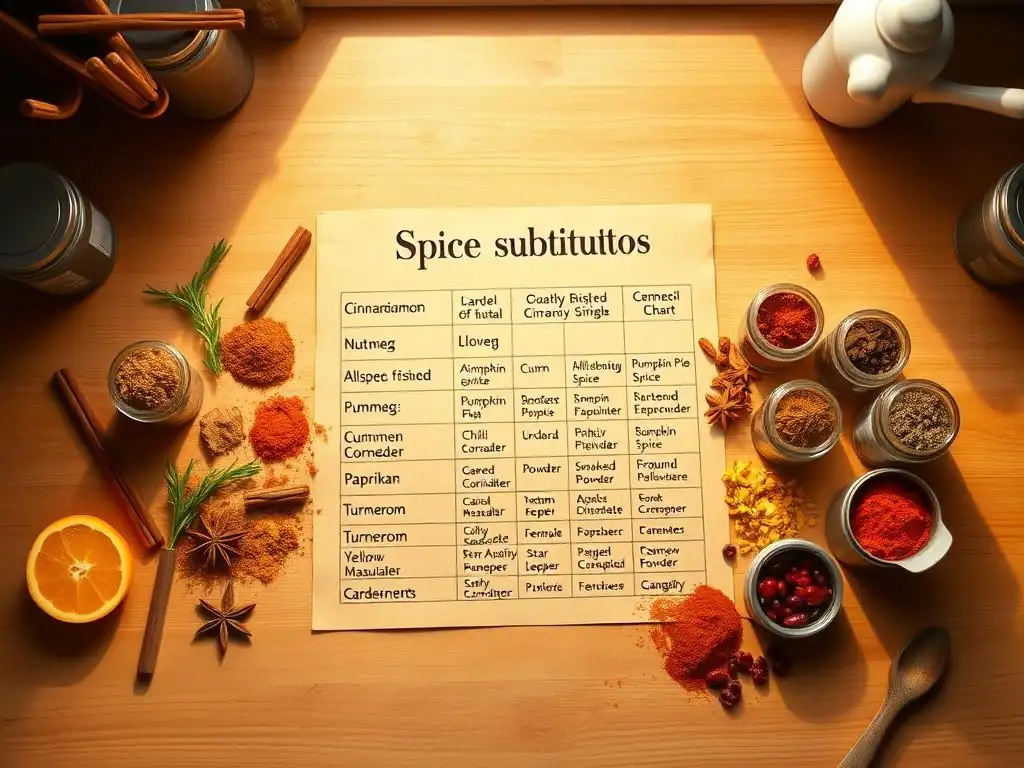
Here is a quick reference guide for easy spice substitution baking using common alternatives:
- If you need: Ground Cinnamon
- Try: Ground Nutmeg (start with 1/2 the amount) or Ground Allspice (start with 3/4 the amount)
- If you need: Cinnamon Extract
- Try: Maple Extract (start with 1:1) or Vanilla Extract + pinch warm spice (start with 1:1 extract + pinch)
- If you need: Ground Nutmeg
- Try: Ground Cinnamon (start with 1:1) or Ground Allspice (start with 1:1)
- If you need: Whole Nutmeg
- Try: Ground Nutmeg (use ~1/4 tsp ground per whole nutmeg)
- If you need: Ground Ginger
- Try: Ground Allspice (start with 1:1) or Ground Cinnamon + pinch Clove/Black Pepper (start with 1:1 mix)
- If you need: Fresh Ginger (grated)
- Try: Ground Ginger (use ~1/4 tsp ground per 1 tbsp fresh)
- If you need: Ground Allspice
- Try: Cinnamon + Clove + Nutmeg (use 1/2 tsp Cin + 1/4 tsp Nut + 1/8 tsp Clove for 1 tsp Allspice) or Nutmeg + Ginger (use 1/2 tsp Nut + 1/2 tsp Ginger for 1 tsp Allspice)
- If you need: Ground Clove
- Try: Ground Allspice (start with 1:1 or slightly more Allspice) or Cinnamon + Nutmeg (start with 3/4 tsp mix for 1/2 tsp Clove)
- If you need: Ground Cardamom
- Try: Ginger + Cinnamon (use 1:1 mix for 1:1 Cardamom) or Nutmeg + Ginger (use 1:1 mix for 1:1 Cardamom)
Note: These are starting points. Always taste and adjust.
Conclusion: Unleash Your Baking Creativity
Experiment with Confidence
Don't let a missing spice bottle stand between you and a delicious baked treat! Armed with this guide to easy spice substitution baking, you can approach your recipes with greater confidence. Substitution isn't just about crisis management; it's also a fantastic way to experiment and develop your own signature twists on classic recipes. Try swapping nutmeg for allspice in your next batch of sugar cookies or adding a pinch of cardamom where you might typically use cinnamon in a scone recipe.
The key is to understand the basic flavor profiles and potencies of the spices involved. Start small, taste your doughs or batters when possible, and don't be afraid if the result is slightly different from the original. Every successful easy spice substitution baking swap is a step towards becoming a more intuitive and adaptable baker. Embrace the opportunity to learn how different spice combinations play together and discover new favorites.
Elevate Your Baking with Flavorful Spices
Understanding easy spice substitution baking ultimately allows you to elevate your baking game. It means you're not limited by specific ingredient lists but can work with what you have on hand, ensuring that your baked goods are always full of vibrant, delicious flavor. A well-spiced cake or cookie is a delight, and knowing how to maintain or even enhance that spice balance through smart substitutions is a valuable skill.
So, the next time you're in the kitchen and realize you're missing a spice, don't despair! Consult your easy spice substitution baking guide, pick a suitable alternative, and proceed with confidence. You might just discover a new favorite flavor combination or technique that you'll use in all your future baking adventures. Happy baking, and enjoy exploring the wonderful world of spice substitutions!
Frequently Asked Questions
What is the primary benefit of using spice substitutions in baking?
The primary benefit is maintaining flavor profiles when you lack a specific spice. It allows you to still bake delicious treats by using readily available ingredients and avoiding unnecessary trips to the store.
Can all spices be substituted equally in baking?
No, not all spices are created equal. Some have stronger flavors than others, so the substitution ratio may vary. Understanding flavor intensity is crucial for successful swaps.
Where can I find reliable information on common spice substitutions for baking?
Resources like BakeWithEase.com provide substitution charts and detailed guides. These often explain the best flavor matches and appropriate quantities.
How does the type of baked good influence spice substitution choices?
The recipe matters! A delicate cake might require subtle spice blends, while a robust gingerbread can handle stronger substitutions. Consider the overall flavor profile.
What are some common "easy spice substitutions" for baking that a beginner can try?
A simple swap is using nutmeg for mace or cinnamon for allspice. These are often readily available and offer similar warmth and depth of flavor, making baking effortless and enjoyable.
Final Reflection: The Sweet Symphony of Spice Substitution
The art of baking, once perceived as a precise science, is now blossoming into a more flexible and creative endeavor. Mastering spice substitutions isn't just about achieving a similar flavor profile; it's about unlocking a world of culinary experimentation and resourcefulness in the kitchen. This newfound freedom allows bakers of all levels to confidently navigate ingredient shortages, explore unique flavor combinations, and ultimately, create truly personalized baked goods.
The impact of readily available information on spice substitutions is undeniable. It's democratized baking, empowering home cooks to confidently adapt recipes and overcome challenges. The best bakers are those who are not afraid to experiment and adapt.
This sentiment perfectly encapsulates the spirit of this guide, encouraging a playful approach to baking rather than rigid adherence to strict recipes. The ability to swap spices opens up exciting possibilities, transforming familiar treats into exciting new creations.
Now, it's your turn. Don't be afraid to experiment! Grab your spice rack, consult your pantry, and let your creativity guide you. The next time you're faced with a missing ingredient, remember the power of substitution. Embrace the unexpected flavor combinations, and most importantly, enjoy the journey of creating something delicious and uniquely your own. The world of baking awaits your personalized touch.
Unlock Flavor: Spice Up Your Baking!
Thanks for joining us on this flavorful journey into spice substitutions! We hope you now feel confident tackling any baking challenge with the spices you have on hand. Ready to put your new knowledge to the test?
- Experiment with a new recipe: Try substituting a spice you learned about today in your favorite cookie or cake recipe. Share your results!
- Share your spice swap successes (or failures – we learn from those too!): Post a picture of your creation and tag #BakeWithEaseSpiceSwap on social media!
- Challenge yourself to bake something entirely new: Use your newfound confidence to explore an unfamiliar recipe that utilizes some of the spice substitutions discussed.
What surprising flavor combinations will you create with your newfound spice expertise?