
Leavening Agents Explained for Beginner Cookies

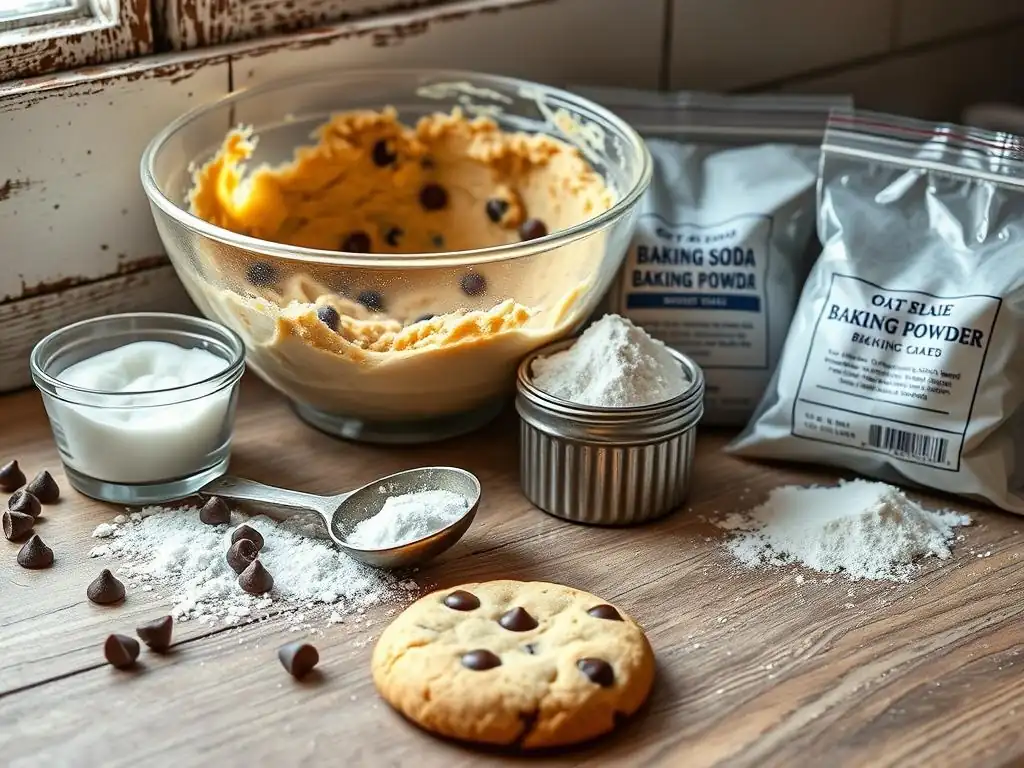
Welcome to BakeWithEase, your kitchen companion for unlocking baking brilliance! Ever wondered about the magic behind that perfect rise in your cookies? This week, we're demystifying leavening agents, starting with a deep dive into how to use baking soda effectively. Discover the secrets to achieving light, fluffy, and irresistibly delicious cookies, no matter your experience level. Ready to banish flat, dense cookies forever? Let's get baking!
- Leavening Agents Explained for Cookie Baking: The Sweet Success Guide
- Understanding Leavening Agents in Cookie Baking
- Baking Soda: The Cookie Baker's Powerhouse
- How to Use Baking Soda: A Practical Guide for Cookie Bakers
- Baking Powder: The Versatile Leavening Agent
- Troubleshooting Common Cookie Baking Issues Related to Leavening
- Baking Soda Substitutions and Alternatives for Cookies
- The Importance of Freshness for Baking Soda and Baking Powder
- Mastering Cookie Leavening: Tips and Tricks for Sweet Success
- Conclusion: Confidently Baking Cookies with Baking Soda and Baking Powder
-
Frequently Asked Questions
- How does baking soda work as a leavening agent in cookies?
- What happens if I use too much baking soda in my cookie recipe?
- Can I substitute baking soda for baking powder in my cookie recipe?
- How should I store baking soda to maintain its effectiveness?
- How can I test if my baking soda is still active?
- Final Reflection: The Humble Rise of Baking Soda
- Unlock Your Baking Potential: Master the Art of Leavening!
Understanding the science behind baking is key to creating delicious results. When it comes to cookies, achieving that perfect texture – whether it's chewy, crispy, or soft – often hinges on the leavening agents you use. These humble ingredients are the unsung heroes that provide the lift and spread needed to transform simple dough into delightful treats. For beginner bakers diving into the world of cookies, getting a grip on how leavening works is a fundamental step towards consistent success.
This guide will break down the most common leavening agents used in cookies, focusing particularly on baking soda and how to master its use. We'll explore their chemical reactions, their impact on texture, and offer practical tips to help you confidently bake your next batch. By understanding these basic principles, you'll be well on your way to baking cookies that not only look great but taste even better.
Leavening agents are substances added to dough or batter that cause it to rise or expand. This expansion happens by releasing gases, which are then trapped within the mixture's structure. Think of it like tiny balloons inflating inside your cookie dough as it bakes. This process is crucial because it lightens the texture, creates air pockets, and contributes significantly to the final shape and crumb of your cookies.
Without leavening, cookies would be flat, dense, and hard – more like crackers than the soft, chewy, or crisp delights we love. Different leavening agents produce different results, making the choice of leavener a critical decision in any cookie recipe. Mastering their use is essential for any beginner aiming for baking perfection.
The right leavening agent, used in the correct amount, is the secret ingredient that dictates whether your cookie is thin and crispy or thick and soft. For instance, a cookie recipe relying heavily on baking soda will typically spread more and result in a thinner, crispier cookie due to the quick, strong reaction it provides, especially in the presence of acidic ingredients like brown sugar or molasses.
Conversely, a recipe using baking powder might yield a puffier, cake-like cookie because baking powder offers a more controlled, often two-stage lift. Understanding these nuances helps you not just follow a recipe but predict and even influence the outcome. It's about controlling the structure and density, transforming simple ingredients into a delightful baked good.
Leavening agents directly impact both the rise (how tall or flat the cookie is) and the texture (how chewy, crispy, or soft it feels). As gases expand during baking, they create internal structure, forming the airy pockets that contribute to a cookie's crumb. The type and amount of leavener, combined with other ingredients like fats and sugars, influence how much the dough spreads and how the internal structure sets.
For example, baking soda promotes spread by quickly releasing gas as soon as it encounters moisture and acid, often resulting in a flatter cookie with a chewier center and crispier edge. Baking powder, with its typically slower, more sustained release of gas, helps the cookie hold its shape more, often resulting in a thicker, softer cookie. The interplay between leavening and other ingredients is a fascinating part of cookie chemistry.
Baking soda, chemically known as sodium bicarbonate, is a single-acting leavening agent. This means it requires an acid and moisture to activate and produce carbon dioxide gas. In many cookie recipes, ingredients like brown sugar, molasses, buttermilk, yogurt, sour cream, honey, or even natural cocoa powder provide the necessary acidity.
When baking soda reacts with these acidic components in the presence of liquid, it immediately releases carbon dioxide bubbles. This quick burst of gas is what provides lift and, importantly for cookies, promotes spread. It's a potent leavener, about three to four times stronger than baking powder, so only small amounts are typically needed.
The magic of baking soda in cookie dough begins the moment it's mixed with the wet ingredients, provided there's an acid present. The chemical reaction starts, producing tiny carbon dioxide bubbles. As the cookies bake and the temperature rises, this gas expands, causing the dough to rise and spread outwards. The presence of baking soda also affects the pH level of the dough, making it more alkaline.
This alkalinity has a significant impact on texture and color. It weakens the gluten structure slightly, contributing to tenderness and chewiness, and also promotes browning through the Maillard reaction, giving cookies those desirable golden-brown edges and depth of flavor. This quick, alkaline reaction is why baking soda is indispensable in many classic cookie recipes like chocolate chip cookies.
Chemical Reaction: Acid + Baking Soda = Carbon Dioxide!
The fundamental chemical reaction that makes baking soda work is simple:
Acid + NaHCO₃ (Baking Soda) → Salt + H₂O (Water) + CO₂ (Carbon Dioxide)
For instance, if you have lactic acid from buttermilk (a common acidic ingredient in baking) reacting with baking soda, you get sodium lactate (a salt), water, and carbon dioxide gas. This gas is what creates the bubbles. The reaction happens relatively quickly once the ingredients are combined and moistened.
This rapid gas production is why recipes using baking soda are often baked immediately after mixing; letting the dough sit for too long can result in lost leavening power. Understanding this chemical reaction is key to successfully using baking soda and predicting its effect on your cookie dough.
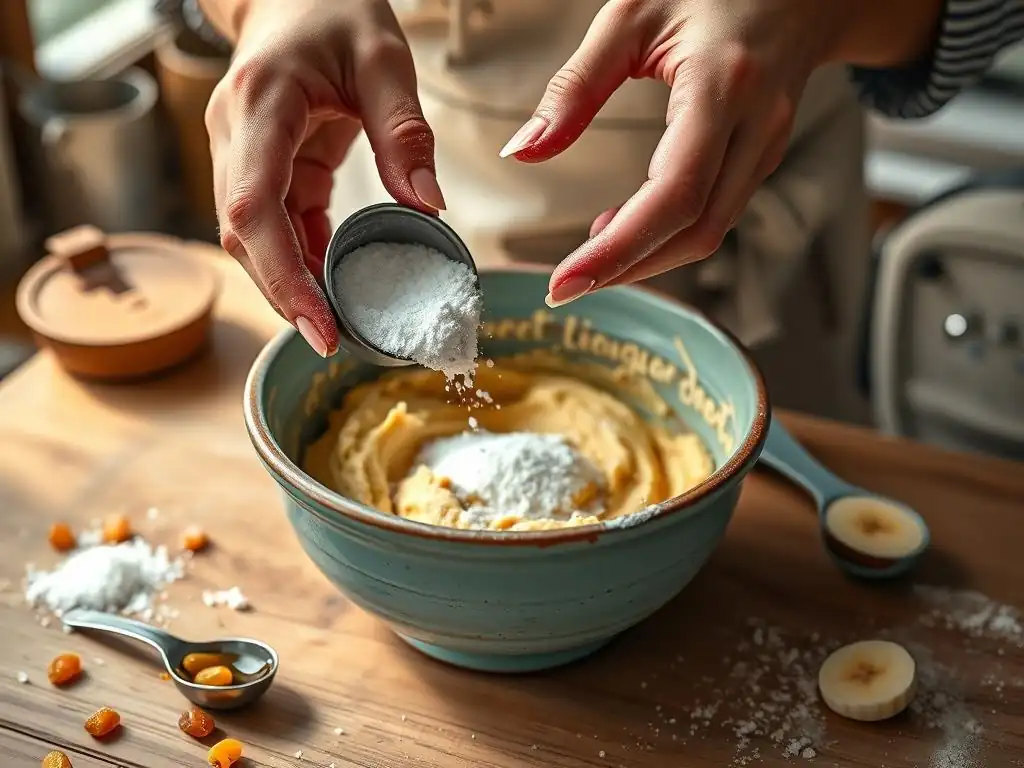
Knowing how to use baking soda correctly is fundamental for achieving the desired cookie outcome. It's not just about adding it to the mix; it's about understanding its interaction with other ingredients and ensuring its potency. Precision in measuring and combining is crucial because even a small excess or deficiency can drastically alter the texture and flavor of your cookies.
Using baking soda effectively involves careful consideration of the recipe's other components, particularly the acidic ones. A recipe designed for baking soda will almost always include an acidic ingredient to ensure the reaction occurs. Without sufficient acid, baking soda will not fully react, potentially leaving an unpleasant soapy or metallic aftertaste and resulting in a dense, flat cookie.
Step 1: Measuring Baking Soda Accurately
Accurate measurement is paramount when learning how to use baking soda. Because it is so potent, even a slight over-measurement can lead to a soapy flavor and excessive spread, while too little can result in dense, flat cookies that don't rise properly. Always use standard measuring spoons and level off the top with a straight edge, like the back of a knife. Don't scoop directly from the box with the measuring spoon, as this can compact the powder and lead to over-measuring.
For example, if a recipe calls for 1/2 teaspoon of baking soda, measure it precisely. Using a full, rounded teaspoon might add 50% more than needed, drastically changing the outcome. Precision ensures the correct balance of ingredients for the intended chemical reaction and texture.
Step 2: Combining Baking Soda with Dry Ingredients
Most recipes instruct you to whisk or sift baking soda together with the flour, salt, and any other dry ingredients before adding them to the wet ingredients. This step is crucial for ensuring that the baking soda is evenly distributed throughout the dough. If it's not mixed thoroughly, you can end up with pockets of concentrated baking soda, leading to uneven leavening, spots with a metallic taste, and inconsistent texture within the batch.
Proper distribution ensures that when the baking soda encounters the acidic wet ingredients, the reaction happens uniformly throughout the dough. This leads to consistent lift and spread for all your cookies, rather than some being perfectly shaped while others are lopsided or flat.
Step 3: Understanding Acidic Ingredients That Activate Baking Soda [Examples: Lemon Juice, Buttermilk]
Baking soda requires an acid to react fully. Many common cookie ingredients provide this acidity. Examples include:
- Brown Sugar: Contains molasses, which is acidic. Recipes with more brown sugar than white sugar often rely on baking soda for leavening and spread.
- Buttermilk: A fermented dairy product with significant acidity. Often used in softer, cake-like cookies or biscuits.
- Yogurt and Sour Cream: Similar to buttermilk, these provide acidity and richness.
- Molasses: Highly acidic and a primary component of brown sugar. Essential in gingerbread and certain types of chocolate chip cookies.
- Honey: Contains some acidity, though less than molasses.
- Natural Cocoa Powder: (as opposed to Dutch-processed cocoa) is acidic. Recipes using natural cocoa powder often pair it with baking soda.
- Fruit Juices or Purees: Such as lemon juice, applesauce, or mashed banana, can provide acidity.
Knowing these ingredients helps you understand how to use baking soda effectively within a recipe's context. If a recipe uses baking soda but lacks a significant acidic component, it might be flawed or relying on a very subtle acidity, which could lead to less consistent results.
Baking Powder: The Versatile Leavening Agent
Baking powder is a complete leavening system in itself. It's a mixture of an alkali (usually baking soda), one or more solid acids (like cream of tartar or sodium aluminum sulfate), and a starch (like cornstarch) to keep the acids and alkali from reacting prematurely and to absorb moisture. Unlike baking soda, it doesn't strictly require an additional acidic ingredient in the recipe to work, although acids can enhance its action.
Baking powder is often used when a recipe doesn't contain sufficient acidic ingredients to activate baking soda alone, or when a more controlled, often two-stage lift is desired. It's a reliable leavener for achieving a softer, puffier texture in cookies, cakes, and muffins.
Baking Powder vs. Baking Soda: Key Differences
The primary difference lies in their composition and activation. Baking soda is just sodium bicarbonate and needs an added acid to react. It provides a quick, strong burst of CO₂ and makes the dough more alkaline, affecting spread and browning. Baking powder is a mix of alkali, acid(s), and starch. It contains everything needed for a reaction and often provides a more sustained lift.
| Feature | Baking Soda | Baking Powder |
|---|---|---|
| Composition | Sodium Bicarbonate (Alkali) | Alkali, Acid(s), Starch |
| Activation | Needs added Acid + Moisture | Needs only Moisture (Single-Acting) or needs Moisture + Heat (Double-Acting) |
| Reaction Speed | Rapid, single reaction | Can be Single (fast) or Double (initial + heat) |
| Potency | Approx. 3-4x stronger than BP | Less potent than BS |
| Impact on pH | Increases alkalinity | More neutral pH impact |
| Common Cookie Result | More spread, thinner, chewier edges | Less spread, puffier, cake-like |
Understanding these differences helps you predict how each leavener will behave in your cookie dough and why a recipe might call for one, the other, or a combination of both.
Types of Baking Powder: Single-Acting vs. Double-Acting
There are two main types of baking powder:
- Single-Acting Baking Powder: Contains only one acid that reacts rapidly with the baking soda as soon as it is moistened. This means the dough or batter must be baked immediately after mixing to capture the gas before it dissipates. This type is less common in home baking today.
- Double-Acting Baking Powder: Contains two different acids. One acid reacts with the baking soda when it is moistened (the first "action"), and the second acid reacts when it is heated in the oven (the second "action"). This provides a more sustained and reliable lift, making it much more forgiving if there's a delay between mixing and baking. Nearly all baking powder sold in supermarkets today is double-acting.
Most cookie recipes written today assume you are using double-acting baking powder. Its two-stage reaction provides a consistent rise and is less sensitive to minor delays in getting the cookies into the oven.
Baking powder is typically used in cookie recipes when:
- The recipe does not contain enough acidic ingredients to activate baking soda on its own (e.g., recipes using only white sugar, butter, and flour with no acidic additions).
- A puffier, softer, or more cake-like texture is desired rather than significant spread and chewiness.
- A more reliable and sustained lift is needed, especially in recipes where the dough might sit for a short time before baking.
Recipes for shortbread, some sugar cookies, and certain types of drop cookies that aim for a thicker, softer profile often rely primarily on baking powder, sometimes in combination with a small amount of baking soda if there are some acidic ingredients present.
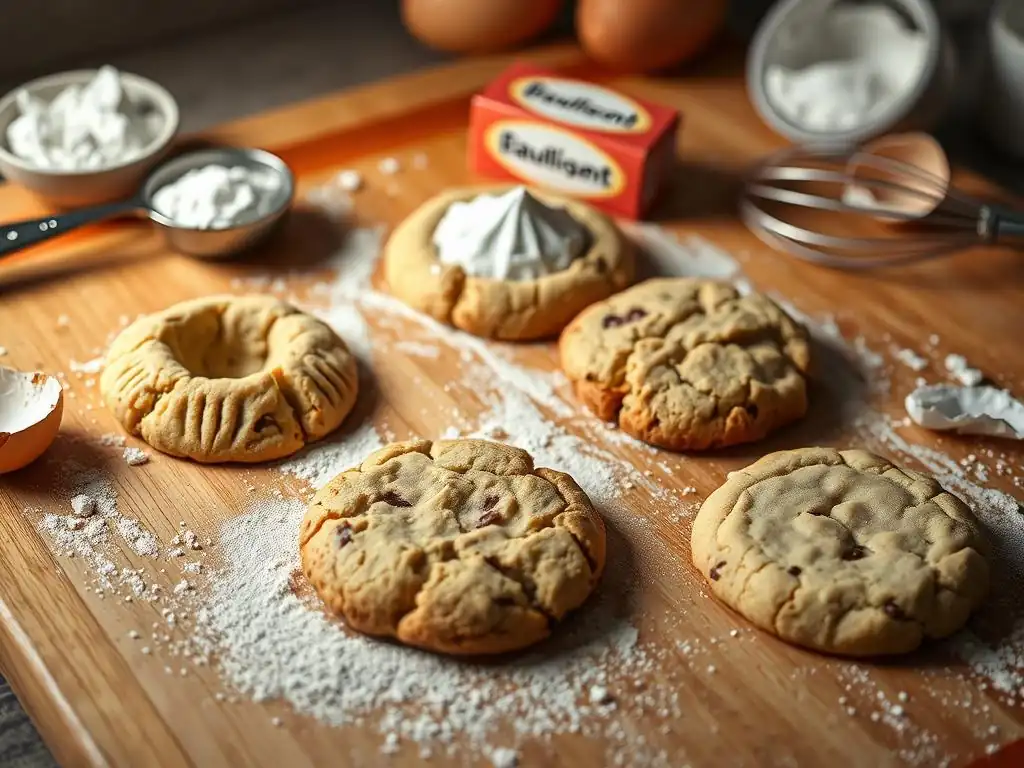
Even with the best recipe, sometimes cookies don't turn out as expected. Often, the culprit is related to your leavening agent. Understanding how baking soda and baking powder behave can help you diagnose and fix common issues like cookies that spread too much or too little, or have an undesirable texture.
It's frustrating when your cookies look nothing like the picture! By examining their appearance and texture, you can often pinpoint whether the problem stems from the type, amount, or freshness of your leavening agents. A little detective work can save your next batch.
If your cookies spread excessively thin and don't rise at all, a common cause is inactive leavening. When you're trying to figure out how to use baking soda effectively, you must ensure it's fresh. Expired baking soda won't produce the necessary gas. Other factors could be too little flour, too much butter (especially melted), or the oven not being hot enough, but inactive baking soda is a prime suspect for a complete lack of lift.
To test your baking soda, mix a teaspoon with a few tablespoons of white vinegar or lemon juice. It should immediately bubble vigorously. If it doesn't, it's time to replace it. Similarly, flat cookies can result if baking powder is expired and has lost its potency.
If your cookies are too thick, don't spread much, and have a crumbly, cake-like texture, you might have used too much leavening agent, particularly baking powder. An excess of leavener creates too much gas, causing the cookie to rise upwards excessively rather than spreading outwards before setting.
Cakey cookies can also result from using baking powder when baking soda was needed (especially in recipes with acid), using too much flour, or creaming the butter and sugar for too long, incorporating too much air. But an overabundance of baking powder is a frequent cause of this texture issue.
On the flip side, if your cookies are heavy, hard, and lack any airiness or rise, the issue is likely insufficient leavening or completely inactive leavening. This happens if you didn't add enough baking soda or baking powder as specified in the recipe, or if the leavener you used was expired and didn't react.
Dense cookies can also be caused by overmixing the dough once the flour is added, developing too much gluten, or by incorrect oven temperature (too low can prevent proper leavening action). But the first things to check are your measurements and the freshness of your baking soda or baking powder.
Sometimes you might run out of a specific leavener, or a recipe might call for an alternative. While substituting leavening agents isn't always a direct swap due to their different properties, it's possible in some cases, especially when substituting baking powder for baking soda. However, understanding the implications for texture and flavor is key.
Knowing how substitutes behave helps you adapt recipes or troubleshoot when ingredients are missing. It's important to remember that the best results usually come from using the specific leavener a recipe calls for, as the proportions and other ingredients are balanced around its properties.
Using Baking Powder as a Baking Soda Substitute [Ratios and Flavor Impact]
You can substitute baking powder for baking soda, but you'll need a larger quantity, and the results will differ. A common guideline is to use about 3 times the amount of baking powder as the baking soda called for. For example, if a recipe requires 1 teaspoon of baking soda, use about 3 teaspoons of baking powder.
However, this substitution is best in recipes that already contain some acidic ingredients to activate the baking soda, as baking powder provides its own acid. Using baking powder will likely result in a puffier, less spread-out cookie with a slightly different flavor profile, as you're adding more of the acidic component from the baking powder. Also, the alkalinity effect of baking soda (which promotes browning and chewiness) will be absent. This substitution works better in recipes needing less spread and more rise.
While less common in standard home baking recipes today, other leavening agents exist. One historical and still sometimes used leavener for very crisp, thin cookies is ammonium bicarbonate (also known as baker's ammonia or hartshorn).
Ammonium bicarbonate decomposes into ammonia gas, carbon dioxide, and water when heated. The ammonia gas provides significant lift and helps create a very crisp texture, making it ideal for snap cookies or crackers. However, the ammonia gas needs to escape during baking, so it's only suitable for thin items with a large surface area. In thicker baked goods, the ammonia can get trapped, leaving an unpleasant odor and taste. You typically wouldn't substitute this for baking soda or baking powder in a standard drop cookie recipe.
The Importance of Freshness for Baking Soda and Baking Powder
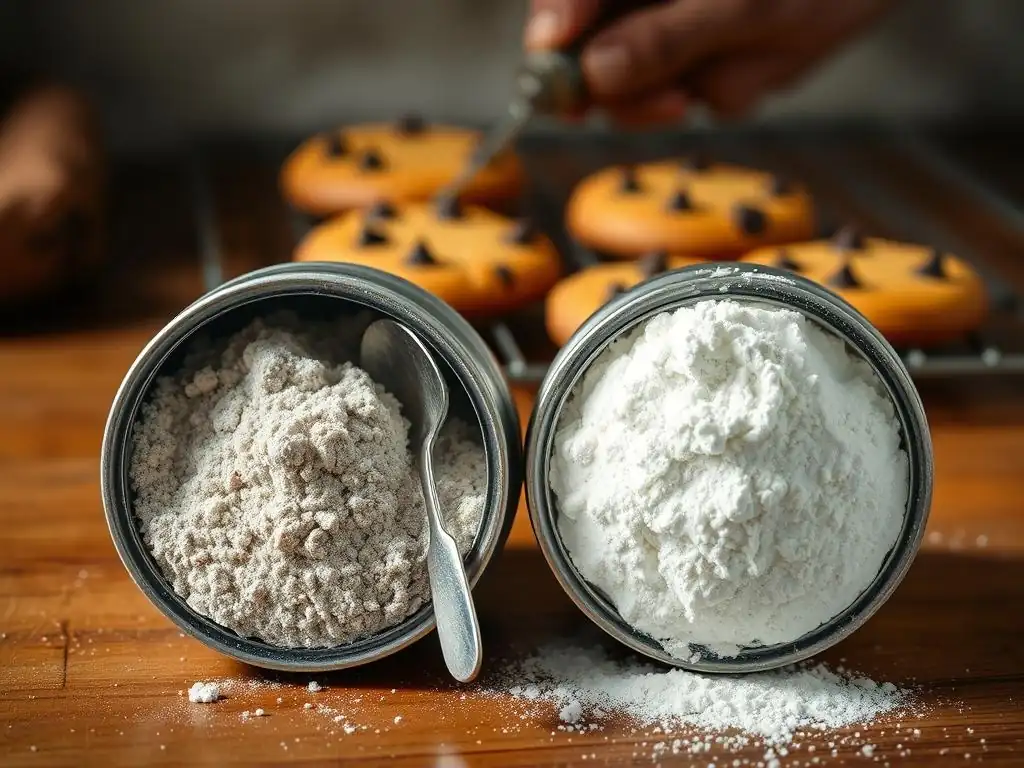
Leavening agents don't last forever. Over time, they can absorb moisture from the air or react prematurely, losing their ability to produce gas. Using stale baking soda or baking powder is a primary reason for baking failures like flat or dense cookies.
Checking the freshness of your leaveners before you begin baking is a simple but critical step that can prevent disappointment. Proper storage also plays a key role in maintaining their potency for as long as possible.
How to Test Baking Soda and Baking Powder for Potency
Testing your leaveners is easy:
- Baking Soda: Place 1 teaspoon of baking soda in a small bowl. Pour 2-3 tablespoons of white vinegar or lemon juice over it. It should bubble up immediately and vigorously. If the reaction is weak or non-existent, it's time for a new box.
- Baking Powder: Place 1 teaspoon of baking powder in a small bowl. Pour 2-3 tablespoons of hot tap water over it. It should fizz and bubble noticeably. If the reaction is weak, replace it.
Perform these simple tests if you're unsure how old your leaveners are or if you've had issues with cookies not rising. It takes seconds and can save your entire baking project.
Proper Storage for Optimal Leavening Power
To keep your baking soda and baking powder fresh and potent, store them in a cool, dry place, such as a pantry or cupboard, away from heat and moisture. Always keep them in their original airtight container or transfer them to a tightly sealed jar or container.
Avoid storing them in the refrigerator, as this can expose them to moisture and odors, leading to premature reaction and flavor absorption. While expiration dates on packages are a good guideline (typically 6-12 months after opening for baking soda, 6 months for baking powder), testing their potency is the most reliable method.
Becoming proficient in cookie baking involves more than just following a recipe; it's about understanding the ingredients and how they interact. Mastering the use of leavening agents, especially how to use baking soda and baking powder effectively, is a key skill that allows you to consistently achieve your desired cookie texture.
With practice and attention to detail, you'll learn to anticipate how different leaveners will behave in various doughs and even how to adjust them slightly to fine-tune your results.
The choice of leavening agent is paramount for texture. For chewy cookies with good spread and slightly crisp edges (like many classic chocolate chip cookies), baking soda is often the star, usually paired with brown sugar for acidity. For soft, thick, or cakey cookies (like some sugar cookies or snickerdoodles), baking powder is frequently used, either alone or in combination with baking soda.
Some recipes even use both baking soda and baking powder. In this case, the baking soda reacts with acidic ingredients to promote spread and browning, while the baking powder provides additional lift upwards, resulting in a cookie that is both chewy/crisp on the edges and soft/puffy in the center.
Once you understand the basics, you can start experimenting. Want a thinner, crispier chocolate chip cookie? Try slightly increasing the baking soda (ensure there's enough acid like brown sugar) and possibly melting the butter instead of creaming it. Want a puffier sugar cookie? Ensure you're using baking powder and cream the butter and sugar well to incorporate air.
Remember, changing leavening is just one variable. Other factors like the ratio of sugar to flour, the type of fat, the amount of moisture, and baking temperature all play a significant role. But adjusting the leavener is a powerful tool for dialing in your preferred cookie texture.
Advanced Techniques: Adjusting Leavening for High Altitude
Baking at high altitudes (typically above 3,000 feet or about 900 meters) presents unique challenges due to lower atmospheric pressure. This lower pressure causes leavening gases to expand more rapidly and excessively, which can lead to baked goods rising too quickly, collapsing, or drying out.
To compensate for this in cookies, you might need to slightly decrease the amount of baking soda and/or baking powder called for in a standard recipe. You might also need to increase liquid slightly and potentially increase the oven temperature by about 15-25°F (8-14°C) to help set the structure before the leavening expands too much. High-altitude baking often requires experimentation to find the perfect balance for your specific location and recipe.
Mastering the use of leavening agents is a fundamental skill for any beginner cookie baker. Understanding how to use baking soda and baking powder, how they differ, and how they interact with other ingredients empowers you to bake consistently delicious cookies. From achieving the perfect spread and chewiness with baking soda to getting that soft, puffy lift with baking powder, these ingredients are key players in cookie chemistry.
By paying attention to accurate measurements, ensuring your leaveners are fresh, and understanding the role of acidic ingredients, you can troubleshoot common issues and confidently approach any cookie recipe. So grab your measuring spoons, check your baking soda's freshness, and get ready to bake some sweet success!
Frequently Asked Questions
Baking soda is a chemical leavening agent that reacts with an acidic ingredient, such as brown sugar or molasses, to produce carbon dioxide gas. This gas creates air pockets in the dough, causing the cookies to rise.
Using too much baking soda can result in cookies that have a bitter or soapy taste. They may also spread too thin and have an unpleasant texture.
Substituting baking soda for baking powder requires careful adjustment. Baking soda needs an acidic ingredient to activate; baking powder already contains it. Without proper adjustment, your cookies may not rise properly or have an off flavor.
How should I store baking soda to maintain its effectiveness?
Baking soda should be stored in an airtight container in a cool, dry place. Moisture and air can cause it to lose its potency, reducing its ability to leaven baked goods effectively.
How can I test if my baking soda is still active?
To test if your baking soda is still active, mix a teaspoon of baking soda with a few tablespoons of vinegar. If it fizzes vigorously, it's still good to use. If there's little to no reaction, it's time to replace it.
Final Reflection: The Humble Rise of Baking Soda
Understanding the power of leavening agents, specifically baking soda, is not just about perfectly fluffy cookies; it's about mastering the fundamental chemistry of baking. A seemingly simple ingredient holds the key to unlocking countless culinary creations, from delicate cakes to hearty breads. Ignoring its nuances can lead to disappointing results, highlighting the importance of understanding even the most basic elements of baking.
The impact of baking soda extends far beyond the kitchen; it represents a gateway to understanding the scientific principles behind everyday cooking. It's a reminder that even the simplest acts can be enriched by a deeper understanding of their underlying processes. The best things in life are simple, but not easy.
This quote perfectly encapsulates the challenge and reward of mastering baking soda's subtle power. The journey from flat, dense cookies to light, airy delights is a testament to the transformative potential of knowledge and careful execution.
Now, consider your own baking journey. Have you ever experienced the frustration of a collapsed cake or a tough cookie? Perhaps this article has provided you with the tools to avoid those pitfalls in the future. I encourage you to experiment, to embrace the science behind baking, and to discover the joy of creating perfectly textured treats. The next time you reach for a box of baking soda, remember the potential it holds – not just for delicious cookies, but for a deeper appreciation of the culinary arts.
Unlock Your Baking Potential: Master the Art of Leavening!
Thanks for taking the time to explore the wonderful world of leavening agents! You've now got the knowledge to bake amazing cookies. Ready to put your newfound expertise into practice?
- Bake a batch of perfect cookies today! Use your new understanding to experiment with different leavening combinations and see the results firsthand. Which recipe will you try first?
- Share your baking triumphs (or funny fails!) with our BakeWithEase community on social media. Let's inspire each other!
- Explore our other baking guides to further elevate your skills – from frosting techniques to cake decorating, we have it all!
Ready to unleash your inner baking star? What's the first cookie recipe you'll be tackling?