
Step Up Your Baking: Mastering Choux Creations Easily

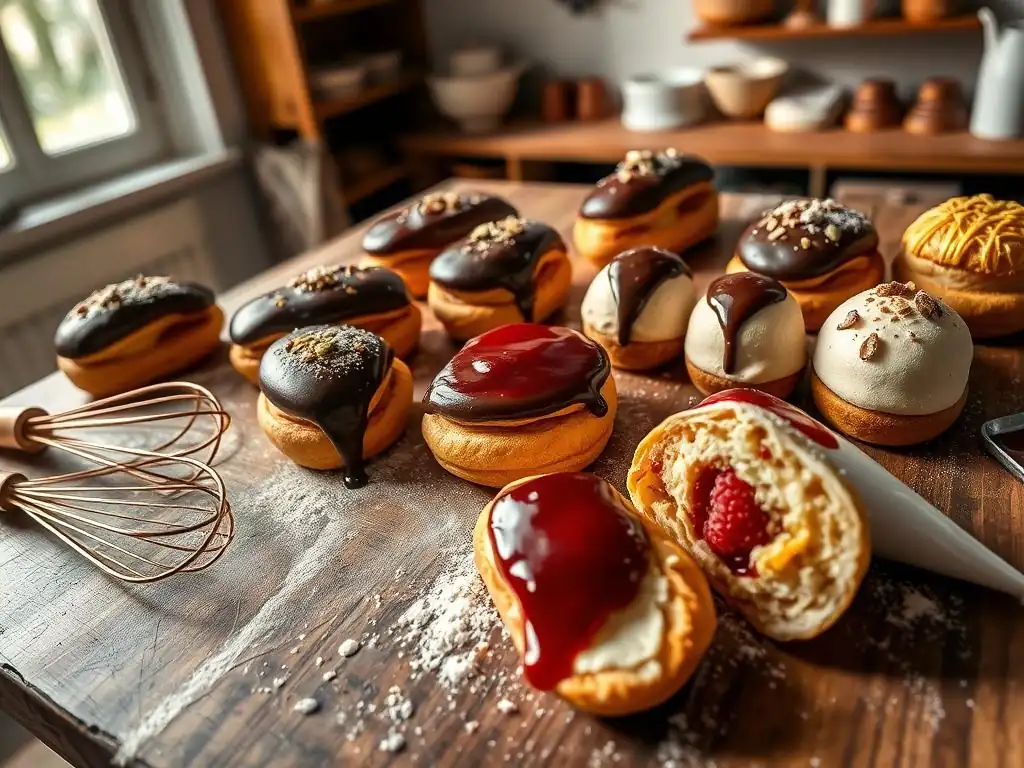
Welcome to BakeWithEase, where even the most ambitious baking dreams become delightfully achievable! Ever wondered how to create those ethereal, light-as-air pastries that seem reserved for professional bakers? Well, wonder no more. This week, we're demystifying the art of choux pastry. Prepare to unlock a world of possibilities with our easy choux pastry recipes, and discover how simple it can be to create stunning éclairs, profiteroles, and more. Get ready to impress – your baking journey starts now!
- Mastering Choux Pastry: From Éclairs to Gougères
- Choux Pastry Basics: Understanding the Science and Technique
- Step-by-Step: Creating Perfect Choux Pastry Dough
- Mastering Piping Techniques: Shapes and Sizes
- Baking Your Choux Pastry: Achieving Golden Perfection
- Choux Pastry Recipe Variations: Sweet and Savory
- Troubleshooting Common Choux Pastry Problems
- Storing Choux Pastry: Maintaining Freshness and Texture
- Elevate Your Baking: Advanced Techniques
- Final Thoughts: Unleashing Your Creativity
-
Frequently Asked Questions
- What exactly is choux pastry, and why is it considered "easy" on BakeWithEase?
- What are some common mistakes people make when attempting easy choux pastry recipes, and how can I avoid them using BakeWithEase's instructions?
- Does BakeWithEase offer variations on basic choux pastry, like gluten-free or flavored options?
- What essential equipment do I need to successfully execute an easy choux pastry recipe from BakeWithEase?
- How does BakeWithEase ensure its choux pastry recipes are truly "easy" for beginners to follow?
- Final Reflection: The Sweet Symphony of Effortless Choux
- Unlock Your Inner Pastry Chef: Master Choux Today!
Mastering Choux Pastry: From Éclairs to Gougères
Making choux pastry might seem intimidating at first glance, but with a solid understanding of the basics and a few key techniques, you can unlock a world of delicious possibilities, from elegant éclairs to savory gougères. This guide breaks down the process, making even complex choux pastry recipes feel accessible and enjoyable. Get ready to elevate your baking game!
Choux Pastry Basics: Understanding the Science and Technique
Choux pastry, or pâte à choux in French, is a light, airy dough used to make a variety of pastries. Unlike most doughs, it doesn't rely on chemical leaveners like baking soda or powder, nor does it use yeast. Instead, it uses steam generated during baking to puff up and create a hollow center, perfect for filling. Mastering this steam-leavening process is fundamental to successful choux pastry recipes.
Understanding the science behind choux is key to consistent results. When the dough hits the hot oven, the water in the dough turns to steam. This steam expands rapidly against the relatively rigid gluten structure developed during the cooking process on the stovetop. The eggs added later provide structure and richness, helping the pastry hold its shape as it expands and sets. It's a delicate balance of moisture, fat, flour, and heat that makes choux pastry so unique and versatile.
What is Choux Pastry and Why is it So Versatile?
Choux pastry is a cooked dough made from water, butter, flour, and eggs. Its unique characteristic is the reliance on steam for leavening, resulting in a hollow interior once baked. This makes it incredibly versatile, serving as a base for both sweet and savory applications. Think of classic French pastries like éclairs and cream puffs, or savory appetizers like cheesy gougères.
The versatility stems directly from that hollow cavity. It's a perfect vessel for countless fillings – from rich chocolate pastry cream and light chantilly cream to savory cheese fillings or even ice cream. Once baked, the neutral flavor of the choux shell pairs beautifully with almost anything, making it a staple in patisseries worldwide and a fantastic skill for anyone looking to expand their repertoire of easy choux pastry recipes.
Essential Ingredients: Flour, Butter, Eggs, and Liquids
The foundation of choux pastry is built upon just four essential ingredients: liquid (water or milk, or a mix), butter, flour, and eggs. Each plays a crucial role in the final texture and structure. The liquid and butter are heated together, creating the base for the dough.
All-purpose flour is typically used, providing the necessary gluten structure. The flour is added to the hot liquid/butter mixture and cooked, a process called panada, which develops the gluten and gelatinizes the starches. Finally, eggs are incorporated one by one, adding richness, moisture, and crucial protein that helps the dough puff and set.
The precise ratio and handling of these ingredients are what differentiate a successful choux from a flat, sad disc. A common starting point by weight is roughly equal parts liquid and butter, slightly more than double the amount of flour, and then adjusting eggs until the right consistency is reached (often around four times the weight of butter/liquid combined, but this varies).
Key Equipment: Stand Mixer, Piping Bags, and Baking Sheets
While you can make choux pastry by hand, certain equipment makes the process significantly easier and more consistent. A heavy-bottomed saucepan is essential for cooking the panada evenly. A sturdy wooden spoon or heat-resistant spatula is needed for stirring.
A stand mixer fitted with a paddle attachment is highly recommended for incorporating the eggs. This step requires vigorous mixing to emulsify the eggs into the cooked dough and cool the mixture slightly; a stand mixer handles this effortlessly. Piping bags and various piping tips (like a large round or star tip) are indispensable for shaping the dough neatly onto baking sheets, ensuring uniform size and shape for even baking. Parchment paper or silicone baking mats lining the baking sheets prevent sticking and make cleanup easy.
Step-by-Step: Creating Perfect Choux Pastry Dough
Creating the dough is the most critical phase in making choux pastry. It involves cooking the flour mixture on the stovetop before incorporating the eggs. Following these steps meticulously will set you up for success with any easy choux pastry recipe.
Measuring Ingredients Accurately for Consistent Results
Precision in measuring ingredients is paramount in baking, and especially so for choux pastry. Unlike some recipes where slight variations might be forgiven, the ratio of wet to dry ingredients in choux is delicate. Too much liquid or egg, and the dough will be too loose and won't hold its shape or puff properly; too little, and it will be too stiff and dry.
Using a digital kitchen scale to weigh your ingredients is the most accurate method. For example, a reliable ratio might call for 100g water, 100g unsalted butter, 120g all-purpose flour, and 4-5 large eggs (weighing the eggs is best, aiming for around 200-250g total, adjusted based on dough consistency). Volume measurements (cups, tablespoons) are less precise and can lead to inconsistent results, making it harder to master easy choux pastry recipes.
The Boiling Method: Developing the Gluten Structure
The process begins by combining the liquid (water, milk, or a mix) and butter in a saucepan. This mixture is brought to a rolling boil over medium heat. It's important to ensure the butter is fully melted before the water boils to prevent excessive evaporation of the liquid.
Once boiling, the flour is added all at once. The mixture is then vigorously stirred with a wooden spoon or spatula over medium heat. This cooking step, known as the panada, gelatinizes the starch in the flour and cooks off excess moisture. You should cook and stir continuously until the dough comes together into a ball and a thin film forms on the bottom of the pan, typically taking 1-3 minutes depending on the heat and batch size. This process develops the necessary gluten structure that will support the pastry as it puffs.
Incorporating Eggs: Achieving the Right Dough Consistency
After cooking the panada, the dough needs to cool slightly before adding the eggs, otherwise, the heat will scramble them. Transfer the dough to a stand mixer bowl or let it cool in the pan for a few minutes, stirring occasionally. The temperature should drop to around 140°F (60°C) or cool enough that you can comfortably touch it.
Eggs are then added one at a time, mixing thoroughly after each addition until fully incorporated. The dough will initially look like it's separating or curdling, but keep mixing; it will come back together into a smooth, shiny paste. The number of eggs needed can vary depending on the size of the eggs and how much moisture evaporated during the cooking phase. This is why adding eggs gradually and checking the consistency is crucial, rather than adding all the eggs at once as some easy choux pastry recipes might suggest.
Testing the Dough: The Finger Test and Ribbon Stage
Determining the correct dough consistency is perhaps the trickiest part, but there are reliable tests. The dough should be smooth, glossy, and thick enough to hold its shape, but soft enough to pipe.
A common test is the "finger test": drag your finger through the dough in the bowl. The furrow should hold its shape without collapsing immediately, but the sides should slowly flow back towards the center. Another key indicator is the "ribbon stage": lift the paddle (or spoon) out of the dough.
The dough should hang from the paddle in a thick ribbon or V-shape, breaking cleanly after a few inches. If it breaks too quickly, it's too dry and needs more egg; if it's too runny, it's too wet (unfortunately, there's no easy fix for overly wet dough besides starting over or using it for a different application). Getting this consistency right ensures your choux pastry will puff correctly during baking.
Mastering Piping Techniques: Shapes and Sizes
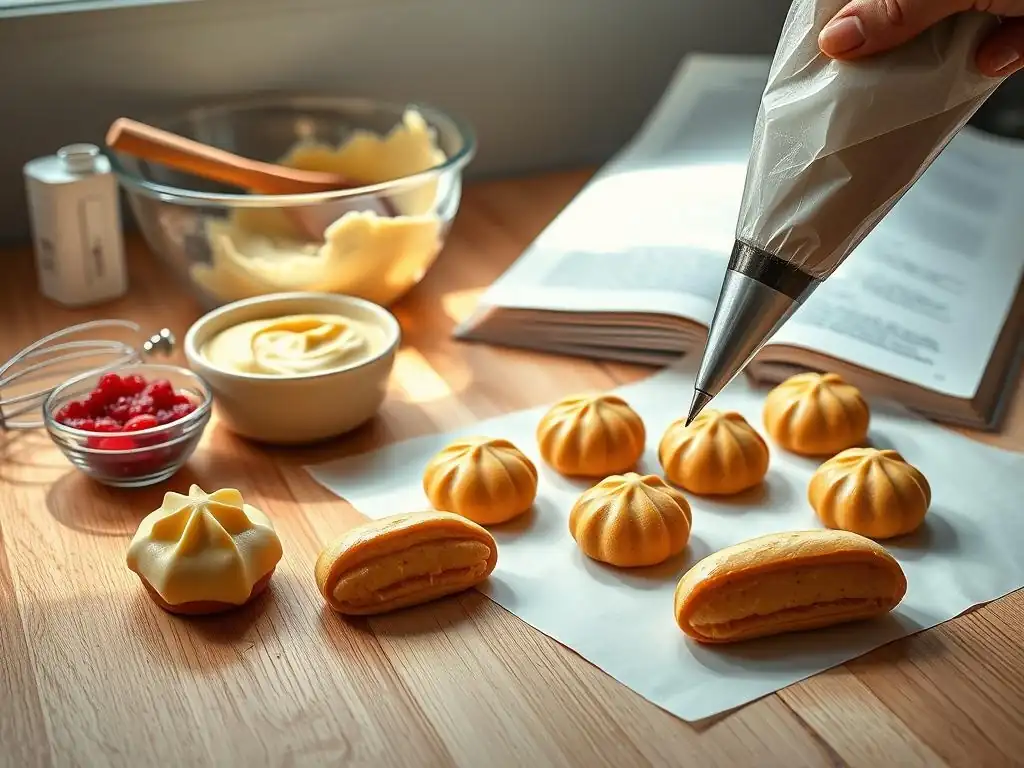
Once your choux pastry dough is perfect, piping is the next step. Proper piping technique ensures uniform shapes and sizes, which is vital for even baking and professional-looking results. This is where your investment in piping bags and tips pays off, making even simple choux pastry recipes look impressive.
Choosing the Right Nozzle: Round, Star, and French Tips
The type of piping tip you choose depends on the shape you want to create. For classic cream puffs and gougères, a large plain round tip (like Ateco #806 or #808) is ideal. This allows you to pipe smooth, uniform mounds of dough.
For éclairs, a large round tip (#808 or #809) can also be used for smooth shells, but a large star tip (like Ateco #826 or #828) or French star tip (like Ateco #869) creates ridges that give the éclairs a slightly different texture and appearance, often preferred as the ridges can help guide the glaze later. Having a few different large tips on hand gives you flexibility for various easy choux pastry recipes.
Piping Éclairs: Straight Lines and Consistent Pressure
Piping éclairs requires a steady hand and consistent pressure. Fit your piping bag with the chosen tip and fill it with the dough, twisting the top to seal. Hold the bag at a slight angle above the prepared baking sheet.
Apply even pressure to the bag and pipe straight lines of dough, lifting the bag vertically at the end to break the stream cleanly. Aim for lengths of typically 4-5 inches (10-12 cm). Leave ample space between éclairs as they will expand significantly during baking, potentially doubling in size. Piping on a template drawn on the underside of the parchment paper can help ensure uniform lengths, making your batch of éclair choux pastry recipes bake more evenly.
Piping Cream Puffs: Uniform Rounds for Even Baking
Cream puffs (or profiteroles) are typically piped as simple rounds. Use a large round tip for this. Hold the piping bag vertically, perpendicular to the baking sheet.
Apply steady, even pressure to the bag, allowing the dough to flow out into a mound. Stop applying pressure and lift the bag straight up to break the stream. Aim for rounds about 1.5 to 2 inches (4-5 cm) in diameter.
You can smooth down any peaks left by lifting the bag by dipping your finger in a little water and gently pressing them down. Again, leave plenty of space between each puff, about 2 inches (5 cm) in all directions, to allow for expansion. Uniform size is crucial for consistent baking times across your batch of easy choux pastry recipes.
Piping Gougères: Adding Cheese Directly to the Dough
Gougères are savory cheese puffs made by incorporating grated cheese and sometimes herbs directly into the choux dough after the eggs have been added. This adds flavor and structure.
Use a large round tip to pipe gougères, similar to cream puffs. Pipe mounds of dough about 1.5 to 2 inches (4-5 cm) in diameter onto the baking sheet. The cheese in the dough will create a slightly different texture and appearance compared to plain choux. For extra flavor and visual appeal, you can sprinkle a little more grated cheese (like Gruyère or Parmesan) on top of each piped mound before baking. This simple addition elevates the basic choux pastry recipe into a delicious savory treat.
Baking Your Choux Pastry: Achieving Golden Perfection
Baking is the magical step where the steam does its work and the choux pastry puffs up. It's crucial to bake them correctly to ensure they are fully cooked, hollow, and don't collapse.
Oven Temperature and Timing: High Heat Initially, Then Lower
Most choux pastry recipes call for baking at a relatively high temperature initially, followed by a lower temperature. A common approach is to start at 425°F (220°C) for the first 10-15 minutes. This high heat creates a burst of steam, causing the pastry to puff rapidly.
After this initial phase, the temperature is typically reduced to 375°F (190°C) for the remaining 20-30 minutes (timing varies greatly depending on size and oven). The lower temperature allows the pastry to cook through and dry out the interior without burning the exterior. The total baking time for medium-sized cream puffs or éclairs can range from 25 to 40 minutes. The goal is a deeply golden brown exterior that feels light and hollow when lifted.
Avoiding Common Baking Mistakes: Proper Dough Consistency and Oven Temperature
Two major factors can lead to baking issues: incorrect dough consistency and improper oven temperature/timing. If the dough is too wet, it may spread excessively and fail to hold its shape or puff properly. If it's too dry, it won't expand fully.
Overcrowding the baking sheet is another mistake; this inhibits air circulation and steam development. Ensure there's adequate space between each piece. Crucially, do not open the oven door during the first 15-20 minutes of baking. Opening the door releases the steam and drops the temperature, which can cause the pastries to deflate before their structure is set. Consistent oven temperature and leaving the door closed are key to achieving that perfect puff and making your easy choux pastry recipes successful.
Achieving a Hollow Center: Allowing Steam to Escape
The hollow center is the hallmark of good choux pastry, making it perfect for filling. This is achieved through the steam leavening during baking. As the steam expands, it pushes the dough outwards, creating the cavity.
To ensure the interior dries out and the pastry doesn't collapse, many recipes recommend piercing the finished choux pastry with a small knife tip or skewer as soon as they come out of the oven. This allows any remaining steam to escape, preventing condensation inside the shell which can make it soggy or cause it to deflate as it cools.
Some bakers even return them to the turned-off oven for a few minutes after piercing to help them dry further. This step is vital for creating a sturdy shell that can hold generous amounts of filling, whether you're making éclairs from a simple choux pastry recipe or elaborate croquembouche components.
Choux Pastry Recipe Variations: Sweet and Savory
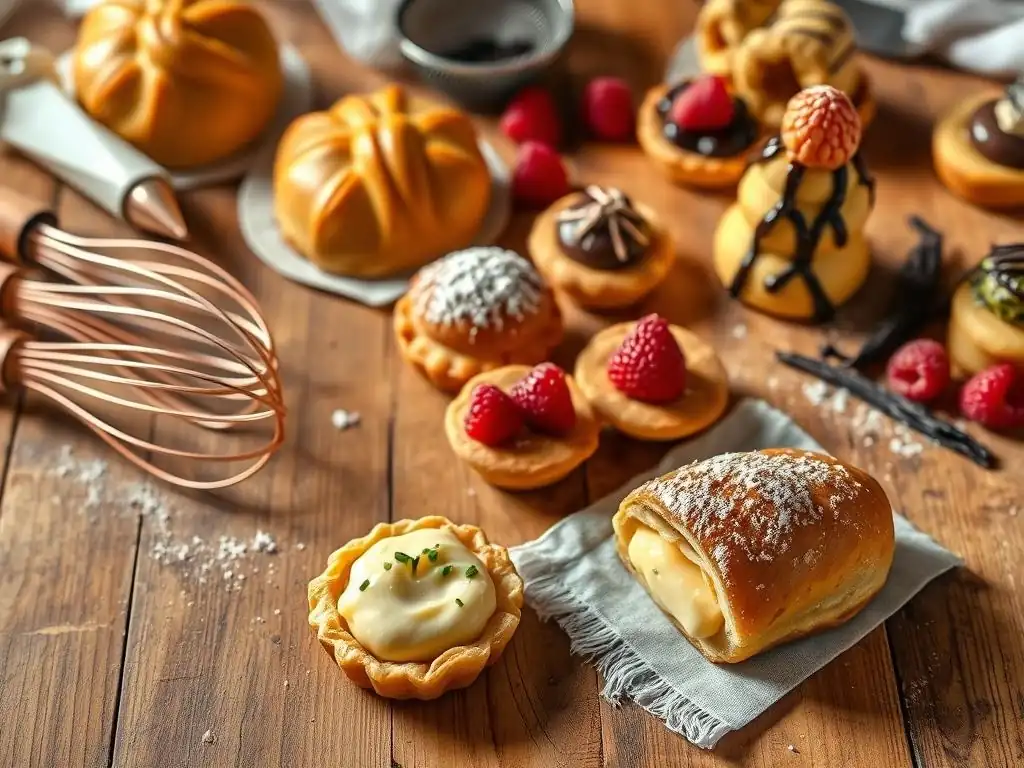
The beauty of mastering the basic choux pastry dough is that it opens the door to an incredible array of variations. From classic French pastries to simple savory bites, the possibilities are nearly endless. Here are a few popular examples that build upon the fundamental easy choux pastry recipe.
Classic Éclairs with Chocolate Pastry Cream: A Step-by-Step Guide
Éclairs are perhaps the most iconic choux pastry creation. Start by piping the dough into 4-5 inch logs as described earlier. Bake until deeply golden brown and hollow.
Once cooled, fill them generously with chocolate pastry cream ( crème pâtissière). This rich, cooked custard is typically made with milk, sugar, egg yolks, cornstarch (or flour), vanilla, and melted chocolate or cocoa powder. You can pipe the cream into the éclairs from the ends using a small piping tip, or slice them horizontally and fill them. Finish by dipping or spreading a smooth chocolate glaze (often a simple ganache or fondant glaze) over the tops. This classic combination is a perennial favorite, demonstrating the elegance achievable with a foundational choux pastry recipe.
Cream Puffs with Vanilla Bean Crème Pâtissière: A Delightful Treat
Cream puffs, or profiteroles, are delightful spheres of choux pastry, typically filled with pastry cream or whipped cream. After baking and cooling the round choux shells, the most common filling is a classic vanilla bean crème pâtissière.
This custard is similar to chocolate pastry cream but flavored simply with vanilla bean seeds or extract. The cooled cream puffs can be filled by making a small hole in the bottom or side and piping the cream inside, or by slicing them in half and spooning/piping the cream into the base before replacing the top. Often served dusted with powdered sugar or drizzled with chocolate sauce, these are a testament to the simple pleasure found in easy choux pastry recipes.
Savory Gougères with Gruyère and Thyme: An Appetizing Snack
Gougères are a fantastic savory application of choux pastry, perfect as an appetizer or snack. As mentioned, grated cheese (traditionally Gruyère or Comté) and often fresh herbs like thyme or chives are folded into the dough before piping.
The cheesy dough is then piped into small rounds and baked until puffed and golden brown. The cheese melts within the pastry, creating pockets of flavor, while the exterior becomes delightfully crisp. Serve them warm straight from the oven for the best texture and taste. This is a simple yet sophisticated use of the basic choux pastry recipe, proving its savory potential.
Paris-Brest: Hazelnut Praline Cream Filled Choux Wheel
The Paris-Brest is a more advanced choux pastry creation, traditionally made in the shape of a wheel to commemorate the Paris-Brest cycling race. It involves piping the choux dough into a large ring shape.
The baked and cooled ring is typically sliced horizontally and filled with a rich, nutty cream, most famously crème mousseline flavored with praline paste (caramelized nuts, often hazelnuts or almonds, ground into a paste). The top is often dusted with powdered sugar and sometimes topped with sliced almonds. While slightly more complex due to the shape and filling, the base is still the reliable choux pastry recipe, showcasing how foundational skills can lead to impressive results.
Troubleshooting Common Choux Pastry Problems
Even experienced bakers encounter issues with choux pastry sometimes. Understanding the potential pitfalls and how to address them can save a batch and build confidence.
Why is My Choux Pastry Flat? Underbaked or Too Much Liquid
Flat choux pastry is a common frustration. The primary culprits are usually either the dough being too wet or the pastries being underbaked. If the dough has too much liquid or egg, it will be too soft to hold the steam and structure during baking, resulting in a flat spread rather than a puff.
Underbaking is also a major reason. If the pastries are removed from the oven too soon, before the internal structure is fully set and dried out, they will collapse as they cool. They should be deeply golden brown and feel light and hollow. If they are pale or feel heavy, they likely need more baking time, even if they look puffed initially. Ensure your oven temperature is accurate and bake until the desired color is achieved. This is a crucial step in mastering easy choux pastry recipes.
Why is My Choux Pastry Dough Too Wet? Incorrect Liquid Ratio
If your dough is too wet, it will be very slack and runny, not holding the ribbon shape when lifted. This usually indicates too much liquid (water/milk) was used in the initial boiling stage or, more commonly, too much egg was added.
Unfortunately, there's no easy fix for overly wet dough once the eggs are incorporated. Adding more flour at this stage won't integrate properly and will result in a lumpy texture. Your best bet is often to discard the batch and start over, being more precise with measurements, especially the eggs, adding them gradually and stopping once the correct consistency is achieved using the ribbon and finger tests. Accurate measurement is the foundation of successful easy choux pastry recipes.
Why is My Choux Pastry Dough Too Dry? Overcooked or Not Enough Liquid
Dough that is too dry will be stiff, difficult to pipe, and may not puff well in the oven. This can happen if too much moisture evaporated during the panada cooking phase (either cooked for too long or over too high heat), or if not enough liquid was used initially, or if not enough egg was incorporated.
If the dough is only slightly too dry (perhaps you stopped adding egg too soon), you might be able to beat in a tiny bit more egg, but be very cautious. If the panada was significantly overcooked and dried out, it's difficult to salvage the batch. Proper cooking time for the panada (just until a film forms) and careful egg incorporation are key preventative measures for achieving the right dough consistency for easy choux pastry recipes.
Why Did My Choux Pastry Deflate After Baking? Opening the Oven Too Early
Deflation after baking is a heartbreaking issue, and it's almost always caused by removing the pastries from the oven too soon or opening the oven door during baking. The internal steam needs time to create a stable, set structure.
If the oven door is opened during the first 15-20 minutes, the sudden drop in temperature and release of steam causes the fragile structure to collapse before it has set. If they are removed after baking but are still undercooked inside, the residual steam will condense and the weakened structure will buckle as they cool. Ensure the pastries are baked until deeply golden and feel light, and resist the urge to check on them too early. Piercing them immediately upon removal helps release steam and prevents condensation-induced deflation. Patience is a virtue when baking choux pastry recipes!
Storing Choux Pastry: Maintaining Freshness and Texture
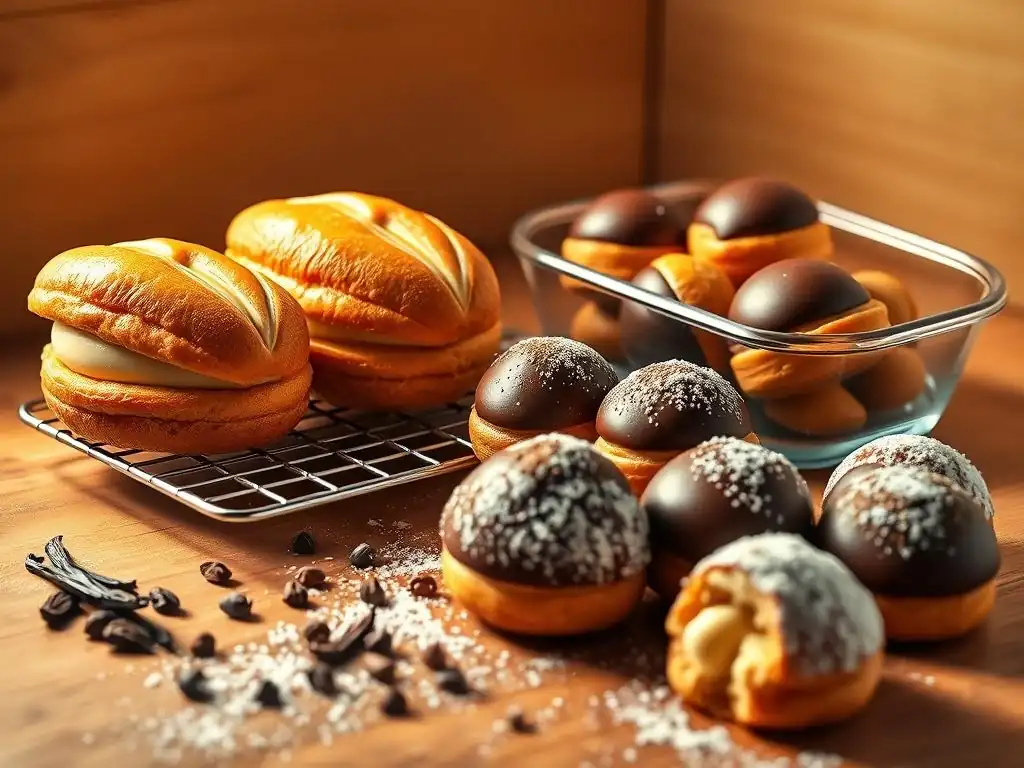
Proper storage is essential to keep your choux pastry creations fresh and maintain their delicate texture, whether filled or unfilled.
Best Practices for Storing Unfilled Choux Pastry: Airtight Container
Unfilled choux pastry shells are best stored at room temperature in an airtight container once they are completely cooled. Storing them this way helps prevent them from becoming stale too quickly.
They will typically keep well for 1-2 days at room temperature. For longer storage, unfilled choux shells freeze exceptionally well. Place the cooled shells in a single layer on a baking sheet and freeze until solid, then transfer them to a freezer-safe bag or container. They can be frozen for up to 2-3 months. To refresh, bake frozen shells in a preheated oven at 350°F (175°C) for 5-10 minutes until crisp again. This makes prepping ahead for future easy choux pastry recipes very convenient.
Storing Filled Choux Pastry: Refrigeration is Essential
Once choux pastry is filled with cream, custard, or other perishable fillings, it must be stored in the refrigerator. The moisture from the filling will gradually soften the choux shell over time.
Filled choux pastries are best enjoyed within 1-2 days of being filled. Store them in a single layer in an airtight container in the refrigerator. While the shell will soften, they will still be delicious. Freezing filled choux is generally not recommended, as the texture of the filling and the pastry can degrade significantly upon thawing, making it less appealing than a freshly filled pastry from an easy choux pastry recipe.
Elevate Your Baking: Advanced Techniques
Once you've mastered the basic choux pastry recipe and techniques, you can explore ways to enhance your creations with additional elements and fillings.
Craquelin Topping: Adding a Sweet and Crunchy Layer
Craquelin is a simple sweet topping that adds a delightful crunch and visual appeal to choux pastry. It's essentially a crisp cookie dough that is rolled thinly and placed on top of the piped choux dough before baking.
To make craquelin, cream together equal parts (by weight) softened butter and sugar (often brown sugar for flavor and color). Beat in a slightly larger amount of flour until a dough forms. Roll the dough thinly (about 1/16 to 1/8 inch or 2-3 mm thick) between two sheets of parchment paper.
Cut out circles or squares slightly larger than your piped choux mounds/logs and place one piece on top of each before baking. As the choux bakes and expands, the craquelin bakes into a perfectly fitted, crunchy cap. This simple addition elevates basic easy choux pastry recipes into something special.
Using Different Fillings: Coffee Cream, Salted Caramel, Lemon Curd
Beyond classic pastry cream, the hollow nature of choux pastry invites experimentation with a wide variety of fillings. Coffee-flavored pastry cream or whipped cream is a popular alternative, offering a pleasant bitterness that complements the richness of the pastry.
Salted caramel is another fantastic option, whether used as a filling mixed with cream or piped directly into the shell. Its sweet and salty notes provide a sophisticated flavor profile. For a brighter, tangier option, lemon curd can be piped into choux shells, offering a refreshing contrast to the rich dough. Exploring different fillings allows you to customize easy choux pastry recipes to suit any taste or occasion.
Final Thoughts: Unleashing Your Creativity
Mastering choux pastry is a rewarding journey that opens up a world of delicious possibilities. Starting with an easy choux pastry recipe and focusing on the fundamental techniques – accurate measurement, proper panada cooking, correct egg incorporation, precise piping, and attentive baking – will build a strong foundation.
Don't be discouraged by initial setbacks; like any baking skill, practice makes perfect. With a little patience and attention to detail, you'll soon be creating impressive éclairs, delightful cream puffs, and savory gougères with confidence. So grab your ingredients, preheat your oven, and start piping – your next favorite pastry is just a batch of choux away!
Frequently Asked Questions
What exactly is choux pastry, and why is it considered "easy" on BakeWithEase?
Choux pastry is a light, airy pastry dough used for items like éclairs and profiteroles. BakeWithEase makes it "easy" by providing simple, step-by-step recipes and guidance for beginners.
What are some common mistakes people make when attempting easy choux pastry recipes, and how can I avoid them using BakeWithEase's instructions?
Common mistakes include not cooking the dough enough and opening the oven too early. BakeWithEase offers tips on visual cues and oven temperature control to prevent these issues.
Does BakeWithEase offer variations on basic choux pastry, like gluten-free or flavored options?
While the focus is on easy recipes, BakeWithEase may feature variations. Check the site for gluten-free alternatives or flavor additions like herbs or chocolate.
What essential equipment do I need to successfully execute an easy choux pastry recipe from BakeWithEase?
You'll likely need mixing bowls, a saucepan, a baking sheet, and a piping bag. Specific requirements will be detailed in each recipe on BakeWithEase.
How does BakeWithEase ensure its choux pastry recipes are truly "easy" for beginners to follow?
BakeWithEase uses clear language, detailed photos, and step-by-step instructions to break down complex processes into manageable tasks for beginner bakers.
Final Reflection: The Sweet Symphony of Effortless Choux
Mastering choux pastry doesn't have to be a culinary Everest; it's a surprisingly accessible peak with a breathtaking view. This article has explored simple techniques and demystified the often-intimidating process of creating delicate éclairs, airy profiteroles, and delightful cream puffs. The ease with which you can now craft these elegant pastries is a testament to the power of understanding fundamental principles, not just rote memorization of recipes.
The enduring appeal of choux pastry lies not just in its delightful taste, but in its versatility and the joy it brings to both baker and eater. It's a canvas for creativity, allowing for endless flavor combinations and decorative flourishes. From classic vanilla cream to bold chocolate ganache, the possibilities are as limitless as your imagination. As Julia Child wisely said, Find something you're passionate about and keep tremendously interested in it.
And for many, that passion lies in the art of baking, particularly the satisfying challenge and rewarding outcome of mastering choux.
Now, it's your turn to step into the kitchen and orchestrate your own choux symphony. Don't be afraid to experiment, to tweak the recipes, and to discover your own unique style. Embrace the occasional mishap – they're often the best learning experiences. Remember the joy of creating something beautiful and delicious with your own hands. The journey of mastering choux pastry is as rewarding as the delectable results, so roll up your sleeves, gather your ingredients, and let the baking begin!
Unlock Your Inner Pastry Chef: Master Choux Today!
Thanks for joining us on this delicious journey into the world of choux pastry! We hope you gained valuable insights and feel empowered to create amazing éclairs, profiteroles, and more. Ready to put your newfound knowledge into action?
- Whip up your first batch of choux paste! Use the recipe and tips from the article as your guide – you'll be surprised how easy it is.
- Share your choux creations with us on social media using #BakeWithEaseChoux – let's inspire each other!
- Try a surprising choux twist: experiment with different fillings and toppings to personalize your pastries. Think savory fillings or unexpected flavor combinations!
What unique choux creation will you bake first?