
Cookie Pricing Secrets: Selling Dozens for Profit

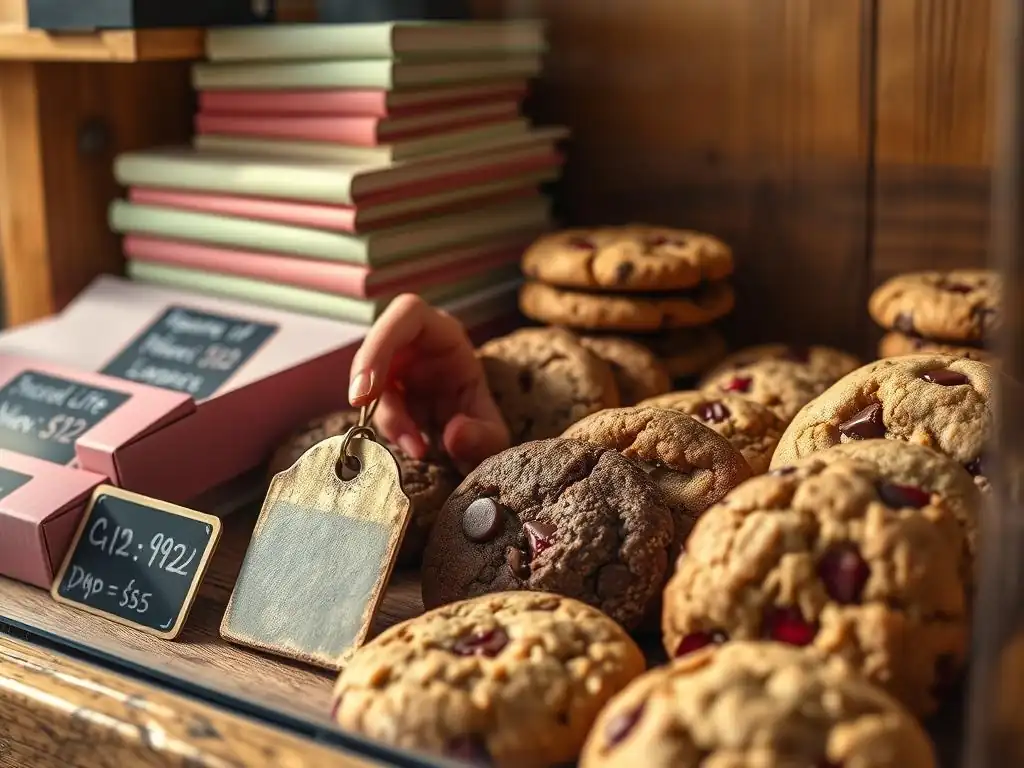
Welcome to BakeWithEase, your partner in creating delectable baked goods! Ever wondered about the secrets to pricing your cookies for profit? This guide, " Cookie Pricing Secrets: Selling Dozens for Profit," dives deep into the world of home baking business, offering practical strategies to ensure your delicious creations are as profitable as they are satisfying. Let's unlock the secrets to successful cookie sales together!
- Cookie Pricing Secrets: Selling Dozens for Profit - Sweet Success Bakery
- Understanding Cookie Pricing for Profit: A Sweet Success Bakery Guide
- Determining Your Cookie Costs: Essential for Pricing Success
- How Much Should Cookies Sell? Pricing Strategies for Profitability
- Maximizing Cookie Profit Margins: Tips and Tricks
- Pricing Your Cookie Boxes: Selling Dozens for Maximum Return
- Real-World Cookie Pricing Examples: Sweet Success Bakery Case Studies
- Legal Considerations for Selling Cookies: Sweet Success Bakery Advice
- Beyond the Price Tag: Building Customer Loyalty
-
Frequently Asked Questions
- How do I determine the cost of ingredients for my cookies?
- What other costs besides ingredients should I factor into my cookie price?
- What is a good profit margin to aim for when selling cookies?
- Should I adjust my prices based on the type of cookie I'm selling?
- How can I research competitor pricing for cookies in my area?
- Final Reflection: The Sweet Science of Pricing
- Unlock Your Baking Empire: Price Your Cookies Like a Pro!
Welcome, fellow bakers! You've mastered making delicious cookies, but now comes the crucial step for turning your passion into a thriving home business: figuring out how much should cookies sell for. Pricing isn't just about covering costs; it's about valuing your time, skill, and creating a sustainable income stream. Many new bakers underestimate their expenses, leading to burnout and minimal profit. Our goal at BakeWithEase is to help you price your delightful dozens strategically, ensuring sweet success.
Effective cookie pricing requires a blend of understanding your internal costs, evaluating the market, and considering the perceived value of your baked goods. It's not a one-size-fits-all formula, as ingredient quality, complexity of decoration, packaging, and your local market all play significant roles. By breaking down each component, you can confidently set prices that reflect the quality of your work and appeal to your target customers, answering the fundamental question: how much should cookies sell to make a profit?
Before you can decide how much should cookies sell, you absolutely must know how much they cost you to make. This involves a detailed breakdown of all expenses incurred during the baking process. Ignoring any cost component means you're effectively paying out of your own pocket without realizing it, which is a recipe for financial loss, not sweet success. Let's dive into the specifics of calculating these essential costs.
Accurately tracking ingredient costs is the foundation of profitable cookie pricing. Start by breaking down your recipes to determine the exact quantity of each ingredient used per batch. For example, if a recipe calls for 1 cup (2 sticks) of butter, and a pound (4 sticks) costs $5.00, the butter cost for that batch is $2.50. Do this for every ingredient – flour, sugar, eggs (if a dozen eggs cost $3.60, one egg is $0.30), vanilla extract, chocolate chips, etc. Use the purchase price of your bulk ingredients, not just the price per small container.
Once you have the total ingredient cost for one batch, divide it by the number of cookies that batch yields. This gives you the ingredient cost per cookie. For instance, if a batch costing $8.00 in ingredients yields 24 cookies, the ingredient cost per cookie is $0.33. This figure is critical for determining the baseline how much should cookies sell at the individual level, which then scales up for dozens or larger orders. Remember to account for variations in ingredient prices over time due to seasonality or market fluctuations.
Factoring in Labor Costs: Your Time is Valuable
Your time and skill are valuable assets, and they must be included in your pricing. Don't fall into the trap of thinking your labor is "free" because you enjoy baking. Calculate an hourly rate for yourself – consider what you would pay a skilled baker to perform the tasks involved, or at least minimum wage plus a bit for your expertise. Let's say you value your time at $15 per hour.
Track the time it takes to complete a batch from start to finish, including measuring, mixing, baking, cooling, and basic packaging (like bagging individual cookies). If a batch of 24 cookies takes you 30 minutes (0.5 hours) of active work, the labor cost for that batch is $15/hour * 0.5 hours = $7.50. Divided by 24 cookies, that's $0.31 per cookie. This labor cost, combined with ingredient costs, brings you closer to understanding the true cost baseline before you even consider how much should cookies sell to cover everything.
Accounting for Overhead Expenses: Beyond Ingredients
Overhead costs are the indirect expenses required to run your baking business that aren't directly tied to a specific batch of cookies. These include utilities (electricity for your oven, gas), water, parchment paper, baking cups, cleaning supplies, equipment depreciation (your mixer, oven), internet, phone, and potentially rent if you operate from a dedicated space. While harder to track per batch, they are very real costs.
A common method is to estimate your total monthly overhead and divide it by the number of batches or dozens you produce in a month to get an overhead cost per batch or dozen. Alternatively, you can calculate overhead as a percentage of your total ingredient and labor costs. For example, if your monthly ingredient and labor costs average $500, and your monthly overhead is $100, your overhead is 20% of your direct costs.
You would then add 20% of the ingredient and labor cost to each batch's cost. This ensures these hidden costs are factored in when deciding how much should cookies sell to ensure overall business health.
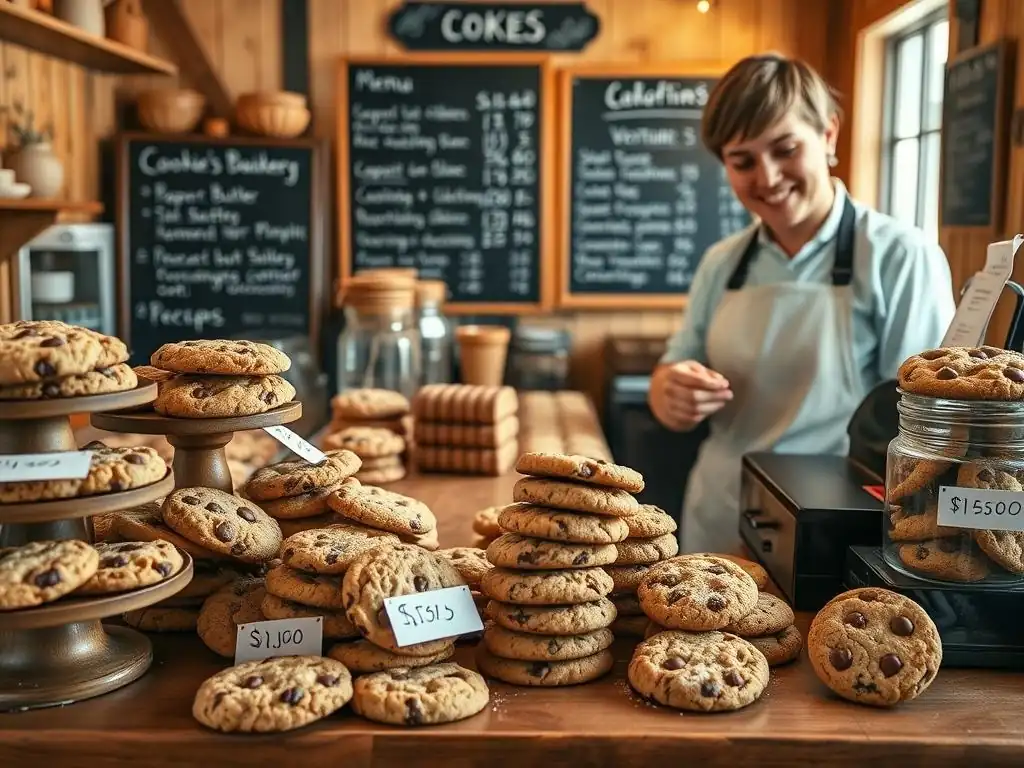
Once you know your true costs, you can start exploring pricing strategies. The question how much should cookies sell is less about a single magic number and more about choosing a method that aligns with your business goals and market position. Here are a few common strategies home bakers use to determine their selling prices.
The Cost-Plus Pricing Method: A Simple Approach
Cost-plus pricing is one of the most straightforward methods. You calculate your total cost per cookie (ingredients + labor + overhead) and then add a desired profit margin percentage. For instance, if your total cost per cookie is $0.75, and you want a 50% profit margin, you would add 50% of $0.75 ($0.375) to the cost, resulting in a selling price of $1.125 per cookie. This is often rounded up to $1.15 or $1.20.
The advantage of this method is its simplicity and guaranteed profit margin if you can sell at that price. The challenge lies in setting the right profit percentage – too low and you don't make enough, too high and you might price yourself out of the market. However, it provides a clear baseline for how much should cookies sell to ensure you cover all expenses and achieve a specific profitability goal on every sale.
Value-Based Pricing: Setting Prices Based on Perceived Value
Value-based pricing shifts the focus from your costs to what the customer perceives the cookies are worth. This strategy is particularly effective for premium, custom-decorated, or gourmet cookies made with high-quality ingredients. Customers buying these often prioritize uniqueness, taste, and aesthetics over finding the lowest price. If your cookies are seen as artisanal, high-end, or perfect for a special occasion, you can often command higher prices than your direct costs might suggest.
To use this method, research what similar high-value baked goods sell for, consider the complexity and artistry of your work, and understand your target customer's willingness to pay for quality and convenience. While your costs still provide a floor below which you cannot price sustainably, the ceiling is determined by the value you create and communicate. This approach directly influences how much should cookies sell by emphasizing the unique benefits and quality you offer.
Competitive pricing involves researching what your competitors are charging for similar cookies in your local area or online. This gives you a benchmark for how much should cookies sell based on the current market landscape. You might choose to price slightly below competitors to attract price-sensitive customers, price similarly to fit in, or price higher if you offer a clearly superior product or service (like unique flavors, better ingredients, or exceptional packaging).
Gather data from local bakeries, farmers markets, and online sellers offering comparable items. Note their prices for individual cookies, half dozens, and dozens. While competitive pricing is essential for understanding market expectations, be cautious not to base your prices solely on what others charge without considering your own costs. Your cost structure might be different, and blindly following competitor pricing could lead to losses if their operations are more efficient or their quality standards are lower.
Knowing how much should cookies sell to cover costs is step one; maximizing the profit you make on each sale is step two. Small adjustments in sourcing, process, and presentation can significantly impact your bottom line. Here are some practical tips for increasing your profitability without compromising the quality that keeps customers coming back.
Reducing Ingredient Costs Without Sacrificing Quality
Bulk purchasing is a baker's best friend for reducing ingredient costs. Buying flour, sugar, butter, and chocolate chips in larger quantities often results in a lower price per unit. Look for sales at grocery stores or consider restaurant supply stores. However, never compromise on quality for the sake of a lower price if it affects the taste or texture of your cookies – your reputation is built on quality.
Explore different suppliers. Compare prices from various sources, including local farms for eggs or specialty stores for unique extracts. Sometimes, a slightly higher price for a key ingredient (like premium chocolate) can justify a higher selling price, ultimately increasing your profit margin because customers are willing to pay more for superior taste. Smart sourcing directly impacts how much should cookies sell while maintaining customer satisfaction.
Streamlining the Baking Process for Efficiency
Time is money, especially in a home baking business. Look for ways to make your baking process more efficient. Can you prep ingredients ahead of time? Can you bake multiple trays or batches simultaneously? Are there any steps that consistently take too long? Investing in reliable equipment, like a good stand mixer or multiple baking sheets, can also speed up production.
Developing standardized recipes and procedures reduces errors and wasted time. Practice makes perfect, and as you become more experienced, your speed and efficiency will naturally increase. Reducing the time spent per batch lowers your labor cost per cookie, directly improving your profit margin without needing to increase how much should cookies sell.
Effective Marketing and Branding to Justify Higher Prices
Strong branding and effective marketing can elevate the perceived value of your cookies, allowing you to justify higher prices even compared to competitors with similar products. High-quality photos of your cookies, a compelling brand story, and engaging social media content build desire and trust. Highlight what makes your cookies special – is it a secret family recipe, locally sourced ingredients, or unique flavor combinations?
Invest in attractive packaging that protects your cookies and enhances their presentation. A beautifully packaged box feels more premium than a plain plastic container. By clearly communicating the quality and care that goes into your cookies, you convince customers that they are worth a premium price, making the answer to how much should cookies sell lean towards the higher end of the market.
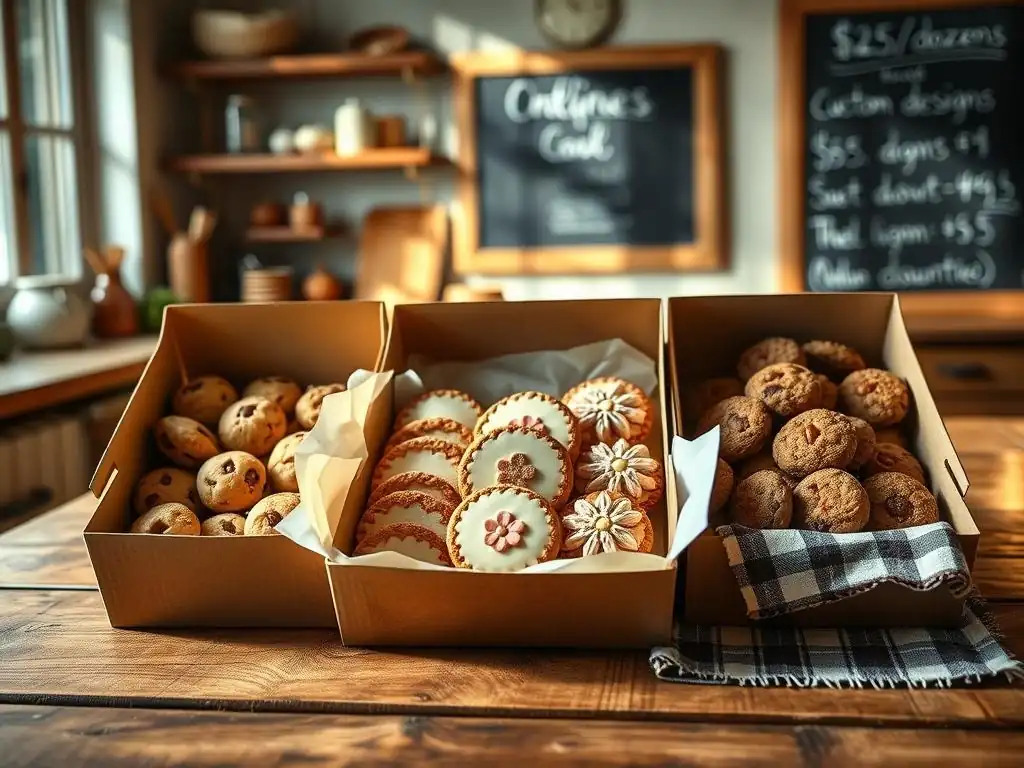
Selling cookies by the dozen or in curated boxes is often more efficient and profitable than selling individually. Customers appreciate the convenience, and it allows you to move product in larger quantities. Structuring your pricing for these bulk options requires careful consideration to ensure you're maximizing your return.
While a "dozen" traditionally means twelve, you can offer boxes in various sizes (e.g., half dozen, dozen, two dozen) or curated mixed boxes with a set number of cookies. Consider the size and richness of your cookies when deciding the count. A box of six large, decadent cookies might feel more substantial than a box of twelve smaller, simpler ones. Test different quantities to see what resonates best with your customers and what is most efficient for you to produce and package.
Offering variety within a box, like a "Sampler Dozen" with multiple flavors, can increase perceived value and allow you to use up partial batches. The key is to offer options that meet different customer needs and price points while being mindful of the cost and labor involved in assembling each type of box. The chosen count impacts the final calculation of how much should cookies sell per box.
Packaging Considerations: Enhancing Perceived Value
Packaging is a critical component of selling cookie boxes. Attractive, sturdy boxes not only protect your delicate baked goods during transport but also significantly enhance their perceived value. Consider food-safe boxes with windows, tissue paper liners, ribbons, or custom stickers with your logo. The cost of these materials must be factored into the price of the box.
While plain containers are cheaper, they can make your cookies look homemade in a less desirable way. Investing a bit more in packaging can allow you to charge a premium, more than covering the extra cost. A beautiful presentation tells the customer that what's inside is high quality and made with care, influencing their perception of how much should cookies sell for the entire box.
When pricing cookie boxes, you generally price them at a slight discount compared to buying the cookies individually. This encourages larger purchases. For example, if a single cookie sells for $3.00, a dozen might be priced at $30-$32 (instead of $36). The slight discount incentivizes the customer while you benefit from selling more volume in a single transaction.
Consider offering tiered pricing or bundles. A half dozen might be $18, a dozen $32, and two dozen $60. This encourages customers to buy more for a better per-cookie price. Offering curated gift boxes for holidays or special occasions at a premium price can also boost sales and profitability. These strategies directly influence how much should cookies sell when sold in larger quantities, aiming for a balance between customer appeal and profit margin.
Let's look at some hypothetical examples based on common scenarios for a home bakery like Sweet Success Bakery to illustrate how these principles apply in practice and answer the question how much should cookies sell in different contexts.
Case Study: Sweet Success Bakery's Classic Chocolate Chip
Costs:
- Ingredient Cost per cookie: $0.40 (using quality butter and chocolate chips)
- Labor Cost per cookie: $0.30 (efficient process, $18/hr rate)
- Overhead Cost per cookie: $0.15 (allocated utilities, supplies)
- Total Cost per cookie: $0.85
Pricing Strategy: Competitive & Cost-Plus
Analysis: Local market research shows similar sized, good quality chocolate chip cookies sell for $2.50 - $3.50 individually, and $28 - $35 per dozen. Sweet Success decides to aim for a 60% profit margin on cost for individual cookies: $0.85 * 1.60 = $1.36. Pricing individual cookies at $2.50 would yield over 190% profit on cost, but might be too high for the market. Pricing at $1.50 yields about 76% profit on cost. Let's aim for a blend.
For dozens, the total cost is $0.85 * 12 = $10.20. A 60% profit margin on cost for the dozen would be $10.20 * 1.60 = $16.32. Selling at $28 yields $17.80 profit, over 170%. Selling at $20 yields $9.80 profit, about 96%.
Decision: Price individual cookies at $2.00. Price a dozen at $22.00 ($1.83 per cookie). This offers a slight discount for buying a dozen and is competitive within the $20-$35 range, while still providing a solid profit margin (around 135% on cost for individual, over 115% on cost for a dozen) allowing for volume sales. This is how much should cookies sell for this specific product in this market.
Case Study: Sweet Success Bakery's Custom Sugar Cookies
Costs (significantly higher due to complexity and materials):
- Ingredient Cost per cookie: $0.60 (specialty flour, butter, meringue powder for icing)
- Labor Cost per cookie: $2.50 (detailed decorating, $20/hr rate, takes longer)
- Overhead Cost per cookie: $0.30 (more supplies, drying time)
- Total Cost per cookie: $3.40
Pricing Strategy: Value-Based
Analysis: Custom decorated cookies are a premium product for special occasions (birthdays, weddings, corporate events). Customers are paying for artistry, customization, and a unique centerpiece. Market research shows prices range from $4-$8+ per cookie depending on complexity and local demand. Sweet Success knows these take significant time and skill. Pricing based purely on a simple cost-plus might undervalue the artistry. They decide to price based on complexity tiers (simple, medium, intricate decoration). Decision:
- Simple design (1-2 colors, basic shapes): $5.00 per cookie. (Profit: $1.60 / 47% on cost)
- Medium design (3-4 colors, moderate detail): $6.50 per cookie. (Profit: $3.10 / 91% on cost)
- Intricate design (many colors, fine detail, airbrushing): $8.00+ per cookie. (Profit: $4.60+ / 135%+ on cost)
Minimum order quantity (e.g., 1-2 dozen) is also set to ensure efficiency. This tiered, value-based approach answers how much should cookies sell for this labor-intensive, premium product.
Case Study: Sweet Success Bakery's Monthly Cookie Club Box
Costs:
- Average Ingredient Cost per cookie: $0.50 (mix of basic & specialty flavors)
- Average Labor Cost per cookie: $0.40 (some efficiency from volume)
- Average Overhead Cost per cookie: $0.20
- Special Packaging & Inserts Cost per box (1 dozen): $4.00
- Total Cost per cookie (excl. special box): $1.10
- Total Cost per 12-cookie box (incl. special box): ($1.10 * 12) + $4.00 = $13.20 + $4.00 = $17.20
Pricing Strategy: Value-Based & Subscription Model
Analysis: Subscription boxes offer recurring revenue and convenience. The value is in the curated selection, exclusivity (sometimes), and regular delivery/pickup. Customers expect a slight per-cookie discount compared to buying individual premium cookies, but pay for the overall experience and convenience. Market rates for gourmet cookie subscriptions vary widely but often fall in the $30-$50 range for a dozen. Sweet Success wants to offer a premium experience with unique monthly flavors.
Decision: Price the monthly subscription box at $38.00 for a dozen assorted gourmet cookies. This price point covers the $17.20 cost per box and provides a significant profit margin ($20.80 profit / over 120% on cost). Offering a discount for 3-month ($108 / $36 per box) or 6-month ($204 / $34 per box) subscriptions encourages longer commitments. This strategy defines how much should cookies sell when bundled into a recurring service.
Beyond pricing, running a home baking business involves important legal considerations. Ensuring you comply with local regulations protects you and your customers. Ignoring these aspects can lead to fines or even shutting down your business.
Food Safety Regulations and Labeling Requirements
Food safety is paramount. You must adhere to safe food handling practices in your home kitchen. This includes proper hygiene, temperature control, preventing cross-contamination, and storing ingredients correctly. Many areas require home bakers to follow specific guidelines similar to commercial kitchens.
Proper labeling is also crucial. Labels should include the name of your product, your business name and address, a list of all ingredients (especially common allergens like wheat, dairy, eggs, nuts), and a clear statement that the product was made in a home kitchen (often required by cottage food laws). Accurate labeling informs customers and is a legal requirement. This doesn't directly influence how much should cookies sell, but it is a non-negotiable cost of doing business.
Cottage Food Laws and Business Permits: What You Need to Know
Most states and localities have "cottage food laws" that allow individuals to produce and sell certain food items made in their home kitchens. These laws vary significantly regarding what is allowed (e.g., non-perishable baked goods are common), sales limits (maximum annual revenue), where you can sell (farmers markets, online, direct from home), and specific requirements (kitchen inspections, training).
Before you start selling, research your local and state cottage food laws. You may need to register your business, obtain a permit, or take a food safety course. Operating legally is essential for the long-term viability of your business. Understanding these requirements is part of the foundation for deciding how much should cookies sell legally and safely.
Insurance and Liability: Protecting Your Baking Business
While cottage food laws often provide some protection, carrying business liability insurance is highly recommended. Accidents can happen – a customer could have an allergic reaction (even with proper labeling), or someone could get sick. Liability insurance can protect your personal assets in case of a lawsuit.
Consider product liability insurance specifically for food businesses. The cost is part of your overhead and should be factored into your overall business expenses when calculating costs, which indirectly influences how much should cookies sell to cover all operational aspects, including protection. Consult with an insurance agent familiar with home-based food businesses.
Beyond the Price Tag: Building Customer Loyalty
While getting the price right is vital for profitability, long-term success in a home baking business hinges on building a loyal customer base. Happy customers not only provide repeat business but also become your most effective marketing channel through word-of-mouth referrals.
Exceptional Customer Service: Creating a Positive Experience
Make every customer interaction a positive one. Be responsive to inquiries, friendly and professional during pickups or deliveries, and handle any issues or complaints gracefully. Go the extra mile – perhaps include a small sample of a new flavor or a handwritten thank-you note.
Customers remember how they were treated. Excellent service makes people feel valued and encourages them to choose you again, even if your prices are slightly higher than competitors. This positive experience adds intangible value that makes customers feel your cookies are worth how much should cookies sell for them.
Building a Brand Story: Connecting with Your Audience
Share your passion! Tell the story behind your baking – why you started, what inspires you, the care you put into your ingredients. Connect with your audience on a personal level through social media. Share behind-the-scenes glimpses of your baking process (while maintaining a professional appearance).
A strong brand identity and story create an emotional connection with customers. They aren't just buying cookies; they're supporting your dream and enjoying something made with love. This connection fosters loyalty and makes customers feel good about their purchase, reinforcing the value proposition of how much should cookies sell.
Repeat Business and Referrals: The Power of Word-of-Mouth
Satisfied, loyal customers are the engine of growth for many home businesses. Encourage repeat orders through loyalty programs (e.g., buy 9 dozen, get the 10th free – carefully costing this discount!) or email lists announcing new flavors or promotions.
Actively encourage referrals. Ask happy customers to spread the word to friends and family. Offer a small incentive for referrals that result in a new order (e.g., a discount on their next purchase). Word-of-mouth is incredibly powerful and costs you nothing in advertising dollars, contributing significantly to your business's sustainability and helping you consistently answer how much should cookies sell by having a steady stream of customers willing to pay your prices.
Frequently Asked Questions
Carefully track the cost of all ingredients used in your cookie recipe. Include everything from flour and sugar to chocolate chips and vanilla extract. Ensure accuracy for accurate pricing.
Consider overhead costs like electricity, gas, and packaging materials. Also, factor in your labor time and any marketing or advertising expenses to ensure profitability.
A good starting point is aiming for a profit margin of 30-50%. This allows you to cover costs and generate a reasonable profit for your time and effort.
Yes, more complex or premium cookies using higher-quality ingredients should be priced higher. Consider the value proposition and perceived worth when setting prices.
Check local bakeries, farmers' markets, and online platforms to understand prevailing market prices. This helps you position your cookies competitively while maintaining profitability and value.
Final Reflection: The Sweet Science of Pricing
The art of pricing baked goods, particularly cookies, is far more than just adding up costs; it's a delicate dance between production, perception, and profit. Understanding the nuances of this process, as explored in this article, is crucial not only for aspiring bakers but also for anyone navigating the complexities of the modern marketplace. The principles discussed here – from factoring in ingredient costs and labor to understanding market demand and competitive pricing – are universally applicable, extending far beyond the simple act of selling cookies.
The impact of thoughtful pricing extends beyond the immediate transaction; it shapes consumer perception, influences brand loyalty, and ultimately determines the long-term success of any venture. The price is not what you ask, but what the customer is willing to pay.
This quote highlights the importance of understanding your target audience and their willingness to pay for a quality product. My own experience in testing different pricing strategies underscored this truth; a slight increase in price, coupled with a clear articulation of value (e.g., high-quality ingredients, unique recipes), often led to increased sales and a more positive customer perception.
Now, it's your turn. Consider the pricing strategies discussed within this article and apply them to your own endeavors, whether it's baking cookies, selling crafts, or even pricing your services. Don't be afraid to experiment, analyze your results, and adjust your approach based on what you learn. The journey to mastering pricing is an ongoing process of learning, adapting, and ultimately, finding the sweet spot between profitability and customer satisfaction. Remember, the secrets to successful pricing are not hidden; they are waiting to be discovered through careful observation, strategic planning, and a dash of entrepreneurial spirit.
Thanks for diving into the world of profitable cookie pricing! You've now got the knowledge to bake and sell your delicious creations with confidence. Ready to turn your passion into a thriving business?
- Master your cookie costs: Download our free Cookie Cost Calculator spreadsheet (link to hypothetical spreadsheet on bakewithease.com) to accurately price your goods and maximize your profit margin. This is your single most impactful next step!
- Share your cookie pricing journey: Tell us about your biggest pricing hurdle and how you overcame it in the comments below – let's learn from each other!
- Explore our community: Join our BakeWithEase Facebook group (link to hypothetical facebook group) to connect with other bakers and share your pricing strategies and baking successes.
What unique ingredient or selling strategy will you use to elevate your cookie business above the rest?