
Unlock the Secret to Perfect, Easy Croissants at Home

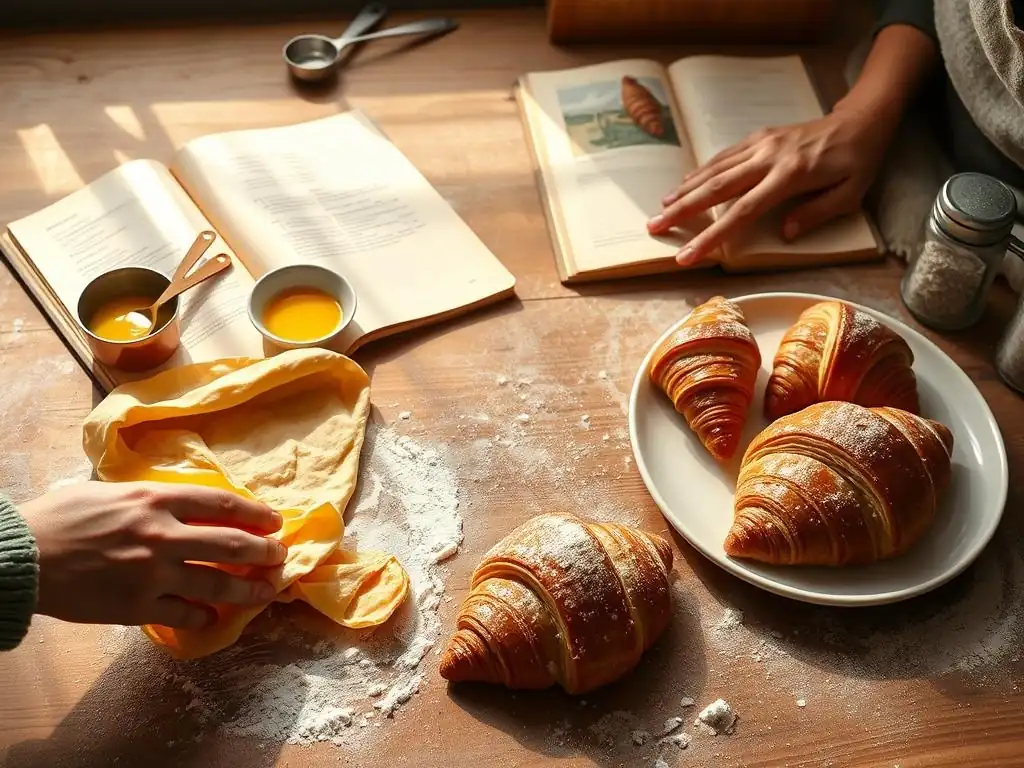
Welcome to BakeWithEase, your trusted guide to the delightful world of baking! Ever dreamt of pulling flaky, buttery croissants fresh from your own oven? Then you're in the right place. Join us as we unlock the secret to a surprisingly easy homemade croissants recipe, demystifying this classic pastry and making it achievable for bakers of every skill level. Intrigued? Let's embark on a delicious journey into the heart of Regional & Cultural Baking and discover the joy of crafting perfect croissants at home!
- Essential Ingredients for the Perfect Easy Croissant Recipe
-
Frequently Asked Questions
- How difficult is it to make croissants at home using an easy homemade croissants recipe?
- What are the key ingredients needed for this easy homemade croissants recipe?
- How long does it take to make croissants using your easy homemade croissants recipe from start to finish?
- What makes your easy homemade croissants recipe different from other croissant recipes?
- Can I freeze the croissants after making them using your easy homemade croissants recipe?
- Final Reflection: The Joy of Effortless Elegance
- Unleash Your Inner Baker: Craft Exquisite Croissants Today!
Essential Ingredients for the Perfect Easy Croissant Recipe
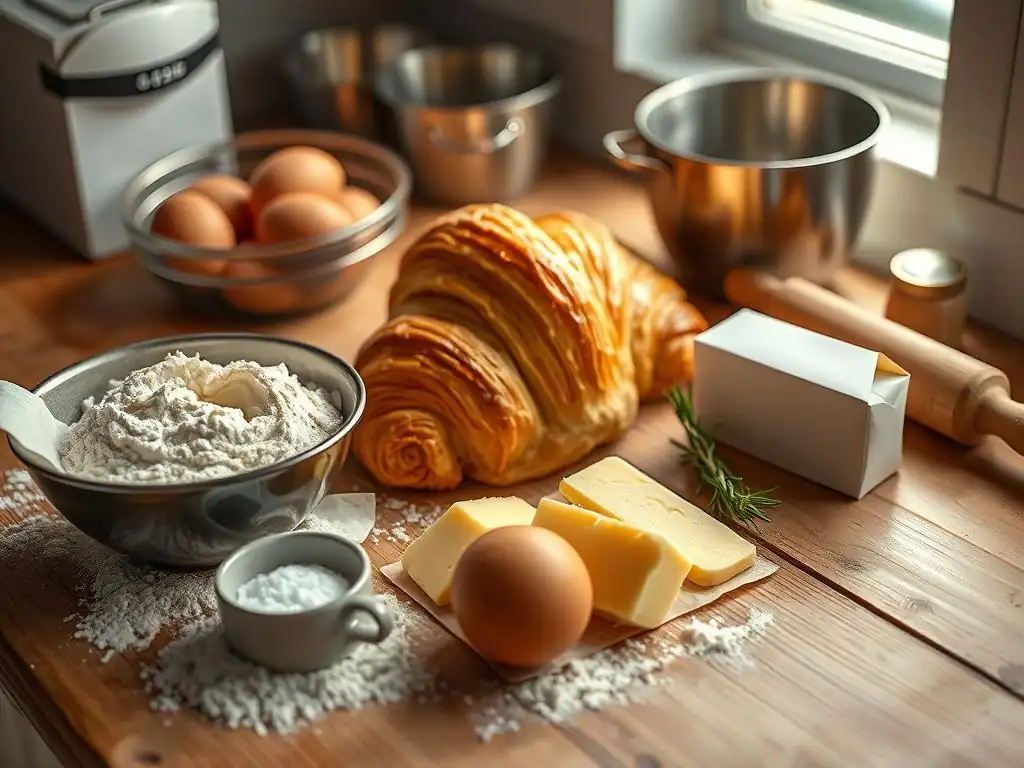
Creating truly exceptional croissants at home, even with an easy homemade croissants recipe, starts with selecting the right foundational ingredients. Think of these not just as items on a list, but as the building blocks that will determine the flakiness, richness, and overall success of your pastry. While the technique is crucial, using quality ingredients makes the process smoother and the final result undeniably better.
Having the correct ingredients measured precisely is paramount when tackling a simple croissant recipe. Unlike some more forgiving bakes, the hydration level, fat content, and protein structure are finely tuned for optimal lamination and rise. Using subpar flour or butter, or simply eyeballing measurements, can lead to frustrations down the line, resulting in dense or greasy croissants rather than the light, airy ones you envision.
High-Protein Flour: The Foundation of Flaky Croissants
The type of flour you choose is perhaps the most critical factor in achieving that signature flaky texture in your easy homemade croissants recipe. High-protein flour, specifically bread flour, is recommended because it contains a higher percentage of protein, typically ranging from 12% to 13%. This higher protein content is essential for developing strong gluten networks during mixing and kneading.
A robust gluten structure is what gives the dough elasticity and strength, allowing it to be rolled out thinly without tearing and providing the framework that traps steam during baking. This trapped steam is what forces the layers apart, creating the beautiful, airy pockets characteristic of a perfect croissant. Using a lower protein flour, like all-purpose flour (often 10-11.5% protein), can result in a weaker dough that is harder to laminate and may yield a less defined, softer crumb rather than distinct, crisp layers.
European-Style Butter: Achieving Richness and Flavor
Butter is not just an ingredient in an easy croissant recipe; it is arguably the star. For authentic flavor and superior flakiness, European-style butter is the gold standard. The key difference lies in its higher fat content, which is typically around 82% to 84%, compared to most American butters that hover around 80%. This extra percentage of fat means less water content in the butter.
The higher fat content contributes significantly to both the texture and taste of your homemade croissants. During the lamination process, sheets of cold butter are encased within layers of dough. As the croissants bake, the water in the butter turns to steam, puffing up the dough layers. The higher fat content ensures more distinct layers and a richer, more buttery flavor throughout the pastry. Using high-quality, cold European-style butter is indispensable for achieving that sought-after crisp exterior and tender, buttery interior when baking croissants at home.
Precise Measurements: The Key to Consistent Results
Baking, especially intricate pastries like croissants, is often described as a science, and precision in measurement is your laboratory standard. While many home cooks are accustomed to using volume measurements (cups and spoons), weight measurements using a digital kitchen scale are far more accurate and consistent. For an easy homemade croissants recipe, this accuracy is crucial because even minor variations in flour or liquid can significantly alter the dough's hydration and consistency.
Consider this: a cup of flour can weigh anywhere from 120 grams to 150 grams depending on how it's scooped and leveled. This 20-25% difference can dramatically impact how the dough handles, its ability to develop gluten, and ultimately, how well it laminates. Using a scale to measure ingredients in grams ensures you are working with the exact ratios intended by the recipe developer, leading to predictable and successful results every time you attempt this simple croissant recipe.
Frequently Asked Questions
How difficult is it to make croissants at home using an easy homemade croissants recipe?
While traditionally considered challenging, our easy homemade croissants recipe focuses on simplified techniques and clear instructions, making it achievable for bakers with basic baking experience. The process involves several steps but is broken down into manageable parts.
What are the key ingredients needed for this easy homemade croissants recipe?
The essential ingredients include high-quality flour, cold unsalted butter, yeast, sugar, salt, and water. The quality of the butter significantly impacts the flakiness of the croissants.
How long does it take to make croissants using your easy homemade croissants recipe from start to finish?
The entire process, including dough preparation, lamination, proofing, and baking, can take several hours, typically 6-8 hours. Most of this time is dedicated to chilling the dough for optimal lamination.
What makes your easy homemade croissants recipe different from other croissant recipes?
Our recipe emphasizes simplified techniques like using fewer folds and a straightforward dough-making process. We also provide detailed step-by-step photos and videos for visual guidance.
Can I freeze the croissants after making them using your easy homemade croissants recipe?
Yes, you can freeze unbaked croissants after shaping. Freeze them individually on a baking sheet, then transfer them to a freezer bag. When ready to bake, proof them until doubled in size, then bake as directed for freshly made croissants for a freshly baked treat.
Final Reflection: The Joy of Effortless Elegance
The pursuit of the perfect croissant, once a culinary Everest, is now surprisingly accessible. This article has demonstrated that with the right techniques and a touch of patience, the flaky, buttery delight of a homemade croissant can grace your breakfast table without the overwhelming complexity often associated with it. No longer a symbol of unattainable pastry perfection, the croissant is now within reach for every home baker.
The journey of mastering this recipe has been a personal revelation, highlighting the surprising simplicity hidden within seemingly intricate processes. It's a testament to the power of breaking down complex tasks into manageable steps, a lesson applicable far beyond the kitchen. The satisfaction of biting into a golden, layered croissant, crafted entirely by your own hands, is an unparalleled reward. The best things in life are simple, but not always easy.
This quote perfectly encapsulates the essence of this culinary adventure. The process requires dedication, but the result is pure, unadulterated joy.
Now, I invite you to embark on your own croissant journey. Don't be intimidated by the seemingly daunting task; embrace the challenge and discover the satisfaction of creating something beautiful and delicious. Remember the techniques shared within this article, and let the aroma of freshly baked croissants fill your home, a testament to your newfound culinary prowess. The perfect, easy croissant awaits – are you ready to unlock its secret?
Unleash Your Inner Baker: Craft Exquisite Croissants Today!
Thanks for joining us on this delicious journey into the world of croissant baking! We hope you gained valuable insights and feel empowered to tackle this seemingly daunting treat. Ready to take your baking skills to the next level?
- Master the art of croissant making: Start by practicing the techniques discussed in the article. Remember, patience and precision are key!
- Share your croissant creations: Post a photo of your beautiful (and delicious!) results on social media and tag #BakeWithEaseCroissants – let's inspire each other!
- Explore more advanced baking techniques: Dive deeper into our recipe archive and discover new ways to elevate your pastry game.
Now, tell us: What's the first step you'll take to bake your perfect croissants?