
The Vegan Baker's Essential: Why AgarAgar is Your Best Friend

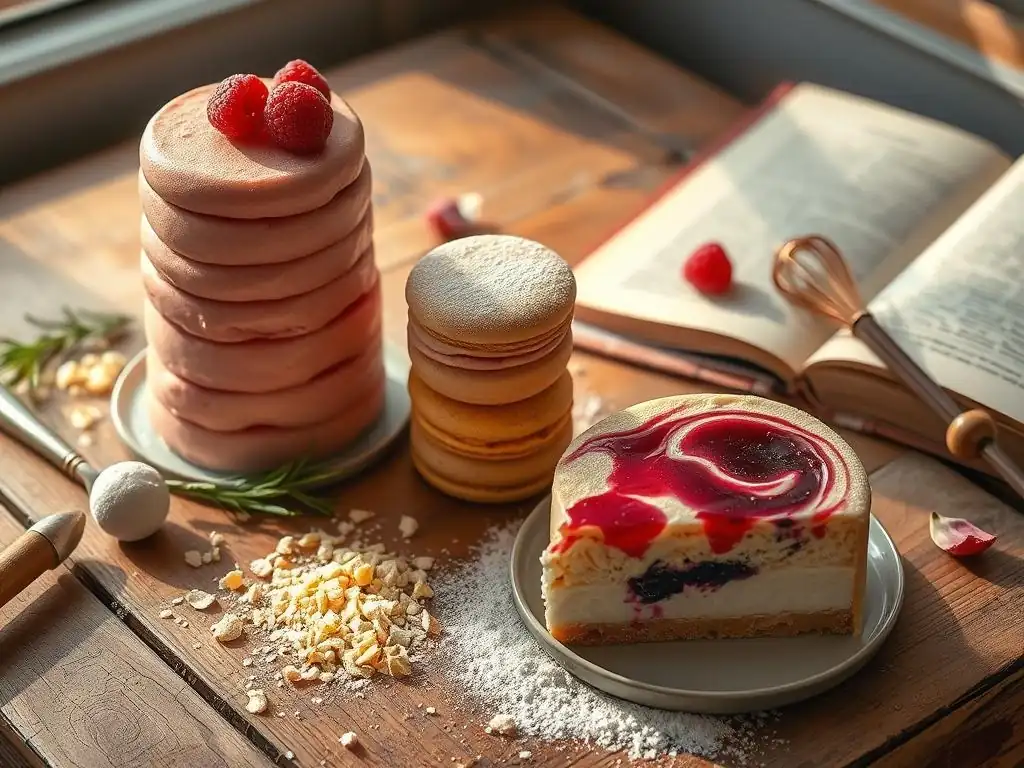
Welcome to BakeWithEase, your haven for baking mastery! Ever wondered how to achieve that perfect vegan bake with a flawless texture? Prepare to unlock a whole new world of possibilities. Dive into our exploration of Vegan agar agar recipes and discover why this secret ingredient is becoming the vegan baker's best friend. Intrigued? Let's explore the science and artistry behind this versatile ingredient and elevate your baking game!
- Introduction to Agar-Agar in Vegan Baking
- Understanding Agar-Agar: Properties and Uses
- Mastering Agar-Agar: A Step-by-Step Guide for Vegan Bakers
- Vegan Agar-Agar Recipes: Unleash Your Creativity
- Troubleshooting Common Agar-Agar Baking Issues
- Agar-Agar vs. Gelatin: A Comparative Analysis
- Storing Agar-Agar and Agar-Agar Based Desserts
- Conclusion: Embracing Agar-Agar for Effortless Vegan Baking
- Frequently Asked Questions
- Final Reflection: Agar-Agar: A Culinary Revolution in the Making
- Unleash Your Inner Vegan Pastry Chef!
Introduction to Agar-Agar in Vegan Baking
Discover the Power of Agar-Agar: A Vegan Gelatin Alternative
For many traditional bakers, gelatin has long been the go-to ingredient for achieving that perfect set in everything from mousses and pies to jellies and cheesecakes. However, for those embracing a plant-based lifestyle, gelatin, derived from animal collagen, is not an option. This is where agar-agar steps onto the stage, offering a powerful and versatile solution that allows vegan bakers to create desserts and savory dishes with the same, if not better, texture and structure. Agar-agar is a game-changer, opening up a world of possibilities for delicious vegan agar agar recipes.
Its ability to create a firm, stable gel makes it indispensable in the vegan kitchen. Unlike gelatin, which requires refrigeration to set and can melt at room temperature, agar-agar sets reliably at room temperature and remains stable even in warmer conditions, making it ideal for layered desserts or dishes that need to hold their shape outside the fridge for a while. This stability is a significant advantage when developing intricate vegan agar agar recipes for special occasions or simply perfecting your everyday bakes.
Why Choose Agar-Agar for Your Vegan Recipes?
Choosing agar-agar goes beyond just replacing gelatin; it brings unique properties that can enhance your plant-based baking. One key advantage is its setting power. Agar-agar typically has a much stronger gelling ability than gelatin, often requiring significantly less product to achieve the desired firmness. A common comparison shows that agar-agar powder is roughly 8-10 times stronger than gelatin powder, meaning you use only a fraction of the amount you would with gelatin. This potency makes it very cost-effective in the long run for frequent vegan baking.
Furthermore, agar-agar provides a clean, neutral taste and color, ensuring that the true flavors and appearance of your ingredients shine through in your vegan agar agar recipes. It doesn't cloud liquids like some other thickeners might, making it perfect for crystal-clear jellies or glossy glazes. Its plant-based nature makes it suitable for a wide range of dietary needs and ethical considerations, solidifying its place as an essential ingredient for any baker exploring the world of vegan, plant-based creations.
Understanding Agar-Agar: Properties and Uses
What is Agar-Agar? A Deep Dive into its Origin and Composition
Agar-agar is a natural hydrocolloid derived from specific types of red algae, primarily Gracilaria and Gelidium species. These sea vegetables are harvested, processed, dried, and ground into the various forms we see in stores. Chemically, agar-agar is a complex polysaccharide, predominantly composed of agarose and agaropectin. Agarose is the main gelling component, forming a strong, stable gel network when hydrated and cooled.
Historically, agar-agar was first isolated in Japan in the 17th century and has been used extensively in Asian cuisine for centuries before gaining popularity worldwide, especially in vegetarian and vegan cooking and baking. Its unique molecular structure allows it to absorb and hold large amounts of water, creating a firm gel even at relatively low concentrations. This natural origin and powerful gelling capability make it a cornerstone for developing successful vegan agar agar recipes.
Different Forms of Agar-Agar: Powder, Flakes, and Bars
Agar-agar is available in several forms, each requiring slightly different handling and yielding varying strengths of gel. The most common form is agar-agar powder, which is finely ground and dissolves relatively easily when heated. It is the most concentrated form, and recipes using powder typically require the smallest amount. For example, you might use just 1 teaspoon of powder to set 1 cup of liquid firmly.
Flakes are another popular form, which are less dense and require a larger quantity compared to the powder to achieve the same gelling strength. A general rule of thumb is that you need about 1 tablespoon of agar-agar flakes for every 1 teaspoon of agar-agar powder. Flakes also need a bit longer to dissolve completely.
Agar-agar bars, the least processed form, are dried strips that need to be broken up and soaked before boiling for an extended period to dissolve. They are the least common for home baking but are potent. Understanding these different forms is crucial for accurately converting vegan agar agar recipes or substituting between forms.
How Agar-Agar Works as a Gelling Agent in Vegan Baking
The magic of agar-agar lies in its unique thermal properties. When agar-agar (in any form) is heated in a liquid, its molecules disperse and hydrate. As the mixture reaches a boil (around 100°C or 212°F), the agar-agar fully dissolves. Upon cooling, typically below 40-45°C (104-113°F), the agar-agar molecules form a strong, stable gel network by cross-linking. This gel is thermoreversible, meaning it can be heated back up to liquid form and will re-set upon cooling, although repeated heating can slightly weaken its gelling power.
This process differs significantly from gelatin, which sets at cooler temperatures (around 15-20°C or 59-68°F) and melts at body temperature. Agar-agar's higher setting and melting points make it ideal for creating gels that hold their shape firmly, even at room temperature. However, its texture can be slightly firmer or more brittle than gelatin's springy set if the ratio is too high. Mastering the correct ratios and heating process is key to successful vegan agar agar recipes.
Mastering Agar-Agar: A Step-by-Step Guide for Vegan Bakers
Preparing Agar-Agar: Ratios and Hydration Techniques
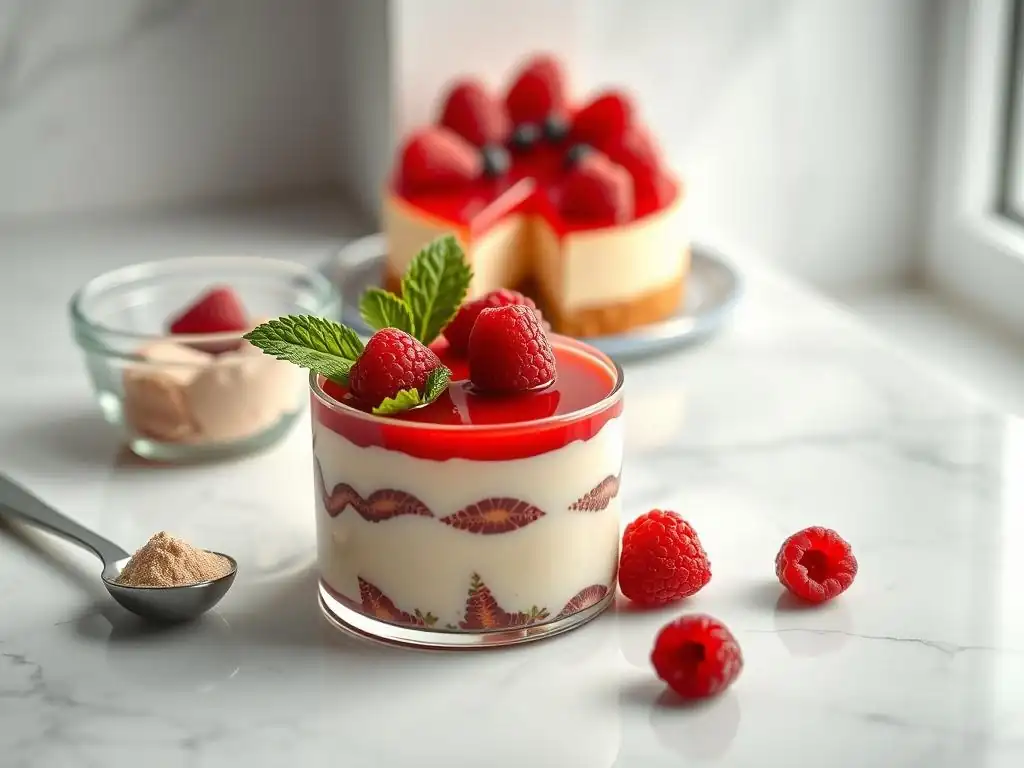
Getting the ratio right is the most critical step when working with agar-agar. As a general guideline for a moderately firm gel (like for panna cotta or jelly), use about 1 teaspoon of agar-agar powder or 1 tablespoon of agar-agar flakes per cup (240ml) of liquid. For a softer set, like for a mousse or creamy filling, you might reduce the powder to 1/2 teaspoon per cup. For very firm gels, like for sliceable vegan cheese, you might increase it to 1.5 to 2 teaspoons per cup.
Unlike gelatin, agar-agar doesn't require pre-blooming in cold water, but hydrating it by whisking it into the cold liquid before heating is crucial. This prevents clumping and ensures the agar-agar dissolves evenly when heated. Simply sprinkle the powder or flakes over the cold liquid in a saucepan and whisk thoroughly to combine. Let it sit for a few minutes if using flakes to allow them to start softening slightly before heating.
Dissolving Agar-Agar: Achieving the Perfect Consistency
For agar-agar to activate its gelling properties, it must be brought to a boil and simmered. After whisking the agar-agar into the cold liquid, place the saucepan over medium-high heat, stirring constantly as it heats up. Once the mixture reaches a rolling boil, reduce the heat to a simmer.
Simmer the mixture for the recommended time based on the form you are using:
- Agar-agar powder: Simmer for 1-2 minutes, stirring constantly, to ensure it's fully dissolved.
- Agar-agar flakes: Simmer for 5-7 minutes, stirring frequently, as flakes take longer to dissolve completely.
- Agar-agar bars: Need to be pre-soaked (often for 15-30 minutes) then simmered for 10-15 minutes or until fully dissolved.
Stirring is essential during the simmering process to prevent the agar-agar from sticking to the bottom of the pan and burning. You'll know it's dissolved when you can no longer feel any gritty particles when rubbing a small amount between your fingers (be careful, it's hot!). This step is non-negotiable for successful vegan agar agar recipes.
Setting Time and Temperature: Tips for Optimal Gelling
Agar-agar begins to set as it cools, typically starting to gel below 45°C (113°F). It sets much faster than gelatin, often becoming firm enough to unmold or slice within 30-60 minutes at room temperature. While it sets at room temperature, chilling in the refrigerator will speed up the process and result in a firmer gel. Most vegan agar agar recipes will recommend chilling for at least 1-2 hours for the best results.
Avoid moving or disturbing the mixture while it is setting to ensure a smooth, even gel. If you need to layer different colors or flavors, allow the first layer to set partially in the refrigerator until it is firm enough to support the next layer without mixing, but not so firm that the layers won't adhere. Over-chilling before adding the next layer can sometimes cause separation. The speed at which agar-agar sets is a distinct advantage for busy bakers working on multi-layered vegan agar agar recipes.
Vegan Agar-Agar Recipes: Unleash Your Creativity
Classic Vegan Desserts Made with Agar-Agar
Agar-agar is perfect for recreating classic desserts that traditionally rely on gelatin, giving bakers a reliable tool for crafting delightful vegan agar agar recipes. Its clean flavor profile and firm set make it adaptable to a wide array of sweet treats. From vibrant fruit jellies to creamy layered desserts, agar-agar provides the necessary structure without any animal products.
Consider the possibilities for plant-based puddings, mousses, and parfaits. Agar-agar can lend a smooth, stable texture to these desserts, allowing them to hold their shape beautifully when served. Experimenting with different liquids like plant milk, fruit juices, or coconut cream opens up endless flavor combinations for your vegan agar agar recipes.
Vegan Panna Cotta with Agar-Agar: A Silky Delight
Vegan Panna Cotta is a prime example of how agar-agar excels in plant-based adaptations. Traditionally made with cream, sugar, and gelatin, the vegan version substitutes dairy cream with coconut cream or a blend of plant milks and cashews, and gelatin with agar-agar. A typical recipe might use 1.5 teaspoons of agar-agar powder for about 2 cups of liquid base (e.g., 1 can full-fat coconut milk + 1 cup plant milk + sweetener).
The process involves heating the liquid base with sweetener and vanilla, whisking in the hydrated agar-agar powder, bringing it to a boil, and simmering for 1-2 minutes until fully dissolved. The mixture is then poured into ramekins or molds and chilled for at least 2 hours. The result is a remarkably smooth, yet firm, dessert that holds its shape perfectly when inverted, offering a delightful canvas for fruit coulis or fresh berries. This is one of the most popular vegan agar agar recipes to master.
Vegan Jelly and Jellies with Agar-Agar: Fruity and Fun
Creating vibrant, clear vegan jellies is incredibly simple with agar-agar. Using fruit juice, sweetened with a little sugar or agave, and agar-agar powder results in a wobbly, fruity treat. A common ratio is 1 teaspoon of agar-agar powder per cup of fruit juice.
Heat the fruit juice (such as apple, grape, or cranberry) in a saucepan. Whisk in the agar-agar powder until combined. Bring the mixture to a boil, then reduce heat and simmer for 1-2 minutes, stirring, until the agar-agar is completely dissolved. Pour into molds or a dish and chill until set, usually about 1-2 hours. You can embed fruit pieces before chilling for extra fun. These simple vegan agar agar recipes are great for kids and adults alike.
Savory Vegan Dishes Featuring Agar-Agar
While often associated with sweets, agar-agar is also a valuable tool in savory vegan cooking, adding structure and stability to various dishes. It can be used to create firm layers, stabilize terrines, or even replicate the texture of certain animal-based products. Exploring savory vegan agar agar recipes can elevate your plant-based culinary skills.
Consider its use in vegetable terrines, where layers of cooked vegetables are suspended in a savory gel, or in firm, sliceable vegan cheeses. Agar-agar's neutral flavor means it won't interfere with the savory profiles you're building.
Vegan Cheese with Agar-Agar: A Creamy Alternative
Agar-agar is frequently used in vegan cheese recipes, particularly those aiming for a firm, sliceable, or spreadable texture. Ingredients often include cashews, nutritional yeast (for cheesy flavor), lemon juice, garlic powder, and plant milk, blended into a smooth paste. Agar-agar provides the necessary structure. For a sliceable block, you might use 1.5 to 2 teaspoons of agar-agar powder per cup of liquid components in the cheese base.
The process typically involves blending the base ingredients, then heating a portion of the liquid with the agar-agar until it boils and dissolves, and finally combining this with the main cheese mixture. This is then poured into molds and chilled for several hours until very firm. The result is a versatile vegan cheese that can be sliced for platters or melted slightly. Many innovative vegan agar agar recipes focus on recreating dairy textures.
Vegan Aspic with Agar-Agar: Elegant and Flavorful
Aspic, a savory jelly often used to encase meats or vegetables, can be elegantly recreated using agar-agar for a plant-based version. A savory liquid base, such as vegetable broth, is flavored with herbs, spices, and sometimes a splash of vinegar or wine. For a clear aspic, the broth might be strained multiple times.
The ratio of agar-agar depends on the desired firmness, but around 1 to 1.5 teaspoons of powder per cup of savory liquid is common. The agar-agar is whisked into the cold broth, brought to a boil, simmered for 1-2 minutes, and then poured over arranged cooked vegetables or other elements in a mold. Chilling sets the aspic, creating an elegant and flavorful layered dish. These types of vegan agar agar recipes showcase its versatility beyond desserts.
Troubleshooting Common Agar-Agar Baking Issues
Agar-Agar Not Setting: Common Mistakes and Solutions
One of the most frustrating issues is when your agar-agar mixture fails to set. This is almost always due to incomplete dissolution of the agar-agar. Remember, it must reach a boil and simmer for the required time (1-2 mins for powder, 5-7 mins for flakes) to activate its gelling properties. Simply heating it until warm or just below boiling is not sufficient.
Other factors can inhibit setting:
- Acidity: Highly acidic ingredients like citrus juice or vinegar can weaken agar-agar's gelling power. If using acidic liquids, you may need to increase the amount of agar-agar slightly (e.g., by 1/4 to 1/2 teaspoon per cup) to compensate.
- Enzymes in fresh fruit: Certain fresh fruits, particularly tropical ones like kiwi, pineapple, papaya, and mango, contain enzymes (like bromelain in pineapple) that can break down agar-agar's gel structure. Cooking these fruits first (canning or boiling for a few minutes) deactivates these enzymes.
- Incorrect Ratio: Using too little agar-agar for the amount of liquid is a common culprit. Double-check the recommended ratio for your form (powder vs. flakes) and the desired firmness.
If your mixture hasn't set after chilling for a few hours, you can often fix it. Gently reheat the mixture in a saucepan, bringing it back to a boil while whisking constantly. If you suspect acidity or insufficient agar-agar, you can whisk in a small additional amount of pre-hydrated agar-agar powder (e.g., 1/4 tsp mixed with a tablespoon of cold liquid) before boiling again. Simmer for the required time, then re-pour and chill.
Achieving the Right Texture: Avoiding Rubberiness or Graininess
Agar-agar can result in textures that differ from gelatin. Using too much agar-agar will produce a very firm, sometimes brittle or rubbery, texture rather than a delicate wobble. This is a common pitfall when first experimenting with vegan agar agar recipes. If your set mixture is too firm, you can reheat it, add more liquid (calculated to dilute the agar-agar concentration), bring it back to a boil to dissolve, and re-set.
Graininess usually indicates that the agar-agar did not fully dissolve. Ensure you bring the mixture to a full boil and simmer for the correct duration, stirring constantly. If you used flakes or bars, ensure they were completely dissolved before removing from the heat. Straining the mixture through a fine-mesh sieve after simmering can help remove any undissolved particles before pouring into molds.
Adjusting Agar-Agar Ratios for Different Recipes
The ideal agar-agar ratio isn't one-size-fits-all; it depends on the desired consistency and the other ingredients in your vegan agar agar recipes.
- Soft Set (like a delicate mousse or soft pudding): Use roughly 0.5 - 0.75 tsp agar powder per cup of liquid.
- Medium Set (like panna cotta or firm pudding): Use roughly 1 tsp agar powder per cup of liquid.
- Firm Set (like sliceable jelly or firm vegan cheese): Use roughly 1.25 - 1.5 tsp agar powder per cup of liquid.
- Very Firm Set (like very firm cheese or aspic): Use roughly 1.5 - 2 tsp agar powder per cup of liquid.
Remember that creamy or fatty ingredients (like coconut milk or nut butter) can sometimes slightly inhibit gelling, while sugary liquids can sometimes enhance it. Always test a small amount if you're unsure about a new recipe or ingredient combination. You can do a quick test: after simmering the agar mixture for a minute or two, place a spoonful on a cold plate and pop it in the freezer for 1-2 minutes. It should set into a firm gel; if it doesn't, add a pinch more agar-agar, re-boil, and test again.
Agar-Agar vs. Gelatin: A Comparative Analysis
Vegan Agar-Agar Recipes vs. Gelatin-Based Recipes
When comparing vegan agar agar recipes to their gelatin-based counterparts, the most notable difference is the texture. Gelatin typically produces a smooth, melt-in-your-mouth texture that is elastic and jiggly, melting at body temperature. Agar-agar, on the other hand, creates a firmer, more brittle gel with a cleaner break. It holds its shape well at room temperature and has a higher melting point.
This textural difference means that while agar-agar is an excellent substitute in many applications like jellies, puddings, and firm fillings, it might not perfectly replicate the exact mouthfeel of some gelatin-set desserts like very airy mousses or marshmallows, which often rely on gelatin's specific elastic properties. However, for the vast majority of solid or semi-solid gels in vegan agar agar recipes, it performs admirably and often offers superior stability.
Health Benefits of Agar-Agar Compared to Gelatin
Agar-agar offers several health advantages over gelatin. Derived from seaweed, it is a good source of dietary fiber, which can aid digestion. It contains trace minerals absorbed from the sea, such as calcium, magnesium, and iron, though the amounts are relatively small per serving used in baking. Agar-agar is calorie-free and carbohydrate-free, making it suitable for various dietary plans.
Gelatin, being an animal product, is a source of protein (collagen peptides), but it lacks fiber and minerals found in agar-agar. For those following vegan, vegetarian, or specific religious diets (like kosher or halal), agar-agar is the only option as gelatin is an animal derivative. Its plant-based origin and fiber content make agar-agar a slightly healthier choice for creating plant-based recipes using agar-agar.
The Versatility of Agar-Agar in Plant-Based Baking
The versatility of agar-agar in plant-based baking is truly remarkable. It can be used to set liquids ranging from water and fruit juice to plant milks, coconut cream, and savory broths. This allows for an incredible variety of vegan agar agar recipes, from simple fruit jellies and layered parfaits to complex vegan cheesecakes, panna cottas, and savory aspics.
Its stability at room temperature is a significant advantage for layered desserts or items that need to be transported or displayed. Furthermore, its neutral flavor profile means it doesn't interfere with the delicate tastes of fruits, spices, or other ingredients. This adaptability makes agar-agar an indispensable ingredient for any vegan baker looking to expand their repertoire and master plant-based recipes using agar-agar.
Storing Agar-Agar and Agar-Agar Based Desserts
Best Practices for Storing Agar-Agar Powder and Flakes
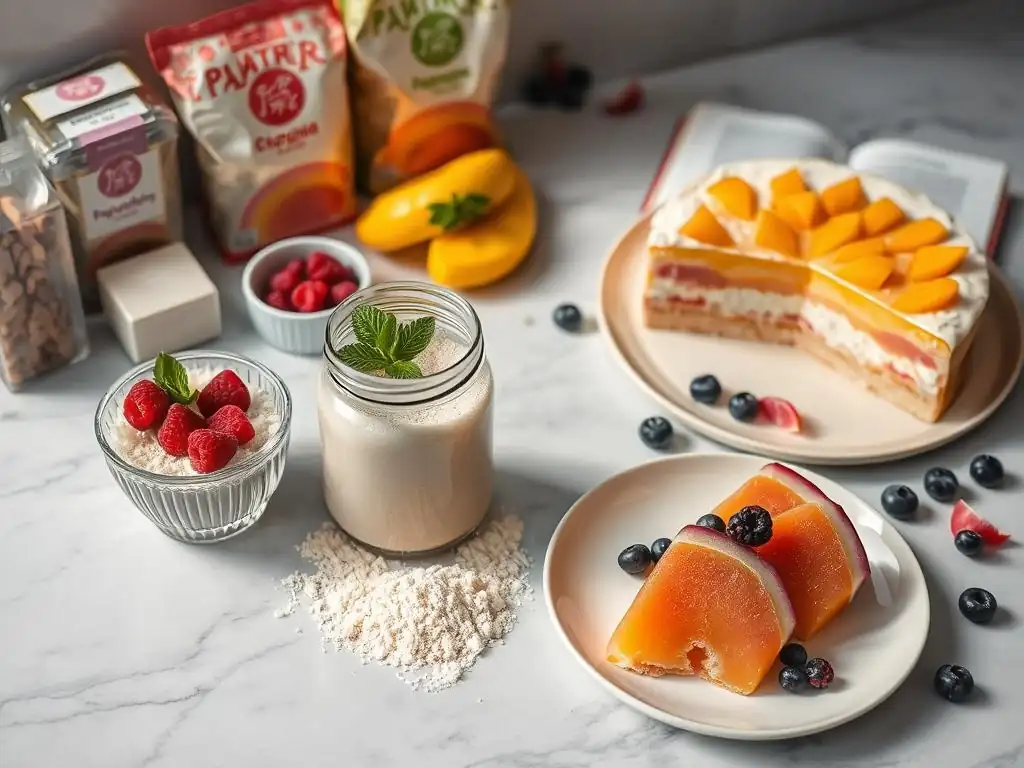
Proper storage is key to maintaining the potency of your agar-agar. Both powder and flakes should be stored in a cool, dry place, away from direct sunlight and moisture. An airtight container is ideal to prevent humidity from affecting the product, which can cause clumping and potentially reduce its gelling strength over time.
Stored correctly, agar-agar powder and flakes have a very long shelf life, often lasting for several years (check the best by date on the package, but it frequently remains effective well beyond that if kept dry). Avoid storing it near heat sources like ovens or stoves. Ensuring your agar-agar is stored properly means it will be ready whenever inspiration strikes for your next batch of vegan agar agar recipes.
How to Properly Store Vegan Desserts Made with Agar-Agar
Vegan desserts made with agar-agar should be stored in the refrigerator. While agar-agar gels are stable at room temperature for a period, chilling helps maintain freshness, especially if the dessert contains perishable ingredients like plant milk, fruit, or coconut cream.
Store the desserts in airtight containers or covered tightly with plastic wrap to prevent them from drying out or absorbing odors from the refrigerator. Most agar-agar based desserts will keep well in the fridge for 3-5 days, depending on the ingredients used. Freezing is generally not recommended for agar-agar gels, as the expansion of ice crystals can break down the gel structure upon thawing, resulting in a watery or spongy texture. Enjoying your vegan agar agar recipes fresh from the fridge is usually best!
Conclusion: Embracing Agar-Agar for Effortless Vegan Baking
The Future of Vegan Baking: Innovation with Agar-Agar
As plant-based eating continues to grow in popularity, ingredients like agar-agar are becoming increasingly vital in the culinary world. Its unique properties offer exciting avenues for innovation in vegan baking and cooking. We can expect to see agar-agar used in even more creative ways, from structured vegan cheeses and charcuterie alternatives to stable dessert components in complex pastries.
Research into optimizing plant-based texturizers is ongoing, and agar-agar, with its natural origin and reliable performance, is at the forefront. Its ability to create firm gels that hold at room temperature opens doors for commercial vegan products that require stability during transport and display. The future promises even more diverse and exciting vegan agar agar recipes as chefs and home bakers continue to explore its potential.
Elevate Your Vegan Baking Skills with Agar-Agar
Mastering agar-agar is an essential step for any baker looking to confidently explore the world of vegan desserts and savory dishes. It provides the structure and stability needed to recreate classic favorites and invent entirely new plant-based creations. By understanding its properties, proper preparation techniques, and common troubleshooting tips, you can unlock a vast array of possibilities in your kitchen.
So, grab your agar-agar – whether powder or flakes – and start experimenting! From silky vegan panna cotta to vibrant fruit jellies and savory vegan cheeses, the world of vegan agar agar recipes is waiting for you to explore. Embrace this powerful plant-based gelling agent and elevate your baking skills to new, delicious heights, creating stunning and satisfying vegan treats with ease.
Frequently Asked Questions
What exactly is agar agar and why is it so important for vegan baking?
Agar agar is a vegan gelling agent derived from seaweed. It's important because it replaces gelatin, a common animal-derived ingredient, allowing you to create vegan versions of traditionally non-vegan desserts.
Can I use agar agar interchangeably with gelatin in any recipe?
While agar agar is a gelatin alternative, it's not a direct 1:1 substitute. You'll need to adjust the amount used and the cooking method, as agar agar sets more firmly and at a higher temperature than gelatin. Refer to specific vegan agar agar recipes for best results.
How do I properly prepare agar agar for baking?
Agar agar typically needs to be dissolved in liquid and then brought to a boil to activate its gelling properties. The powder form is generally easier to use than the flakes, but both require careful dissolution to prevent clumping.
What types of desserts are best suited for agar agar?
Agar agar is excellent for setting vegan custards, puddings, jellies, and mousses. It also works well in cheesecakes and as a stabilizer in vegan ice cream, providing structure and firmness without animal products.
Where can I find reliable vegan agar agar recipes?
BakeWithEase.com offers a variety of vegan agar agar recipes with detailed instructions. Look for recipes specifically designed for agar agar to ensure optimal results and delicious, cruelty-free desserts.
Final Reflection: Agar-Agar: A Culinary Revolution in the Making
The rise of plant-based eating is undeniable, and agar-agar, a versatile and powerful ingredient, is at the forefront of this culinary revolution. Its ability to create textures previously unattainable in vegan baking—from silky smooth mousses to firm, jiggly jellies—is transforming the landscape of vegan desserts and beyond. This isn't just a trend; it's a sustainable and delicious solution to a growing demand for cruelty-free, plant-based alternatives.
The journey of exploring agar-agar's potential has been a fascinating one, revealing not only its incredible versatility but also its surprisingly rich history and cultural significance. It's more than just a gelling agent; it's a bridge connecting traditional culinary practices with modern vegan innovation. The best things in life are simple,
a phrase often used, rings especially true when considering the transformative power of this humble seaweed derivative. Its ability to elevate simple ingredients into extraordinary creations speaks volumes about its potential to inspire creativity and redefine what's possible in the kitchen.
Now, it's your turn to explore the world of agar-agar. Don't be intimidated by its seemingly technical nature; embrace its potential! Experiment with the recipes outlined in this article, and let your creativity run wild. Imagine the possibilities: ethically sourced, delicious vegan desserts that are not only satisfying but also contribute to a more sustainable and compassionate food system. The future of vegan baking is here, and it's deliciously jiggly.
Unleash Your Inner Vegan Pastry Chef!
Thanks for diving into the wonderful world of agar-agar with us! We hope you now feel empowered to create incredible vegan treats. Ready to take your baking to the next level?
- Experiment with agar-agar in your next recipe: Try substituting it for gelatin in your favorite dessert – you might be surprised by the results! Think creamy vegan cheesecakes and light-as-air mousses!
- Share your agar-agar creations: Show us your masterpieces on social media using #BakeWithEaseAgar! We’d love to see what you come up with.
- Explore our other vegan baking guides: Dive deeper into the BakeWithEase universe for more tips and tricks on creating delicious plant-based desserts.
What innovative vegan recipe will you conquer with agar-agar next?