
Mastering Bread Dough: Top Stand Mixers Built for Serious Kneading Power

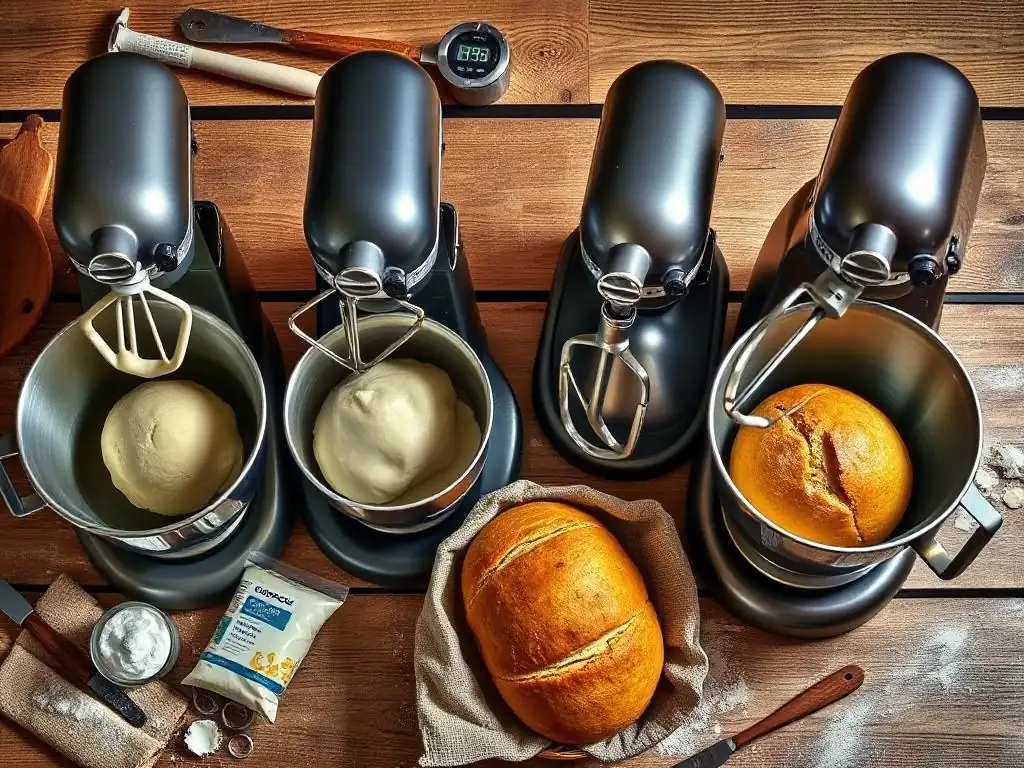
Welcome to BakeWithEase, your kitchen companion for all things baking! Ever wondered which stand mixer can truly handle the rigors of bread dough? You're in the right place. Dive into our comprehensive guide to discover the best stand mixer for bread, unlocking the secrets to effortlessly perfect loaves and unleashing your inner artisan baker. Let's get kneading!
- Mastering Bread Dough: Top Stand Mixers for Serious Kneading
- Finding the Best Stand Mixer for Bread Dough: An Overview
- Top Stand Mixers for Bread Dough: A Comparative Review
- Choosing the Right Stand Mixer for Your Bread Baking Needs: A Buying Guide
- Expert Tips for Kneading Bread Dough with a Stand Mixer
- Maintaining Your Stand Mixer for Bread Dough: Ensuring Longevity
- Recommended Bread Baking Accessories for Stand Mixers
- Conclusion: The Best Stand Mixer for Bread: Which One is Right for You?
-
Frequently Asked Questions
- What makes a stand mixer suitable for kneading bread dough?
- What are the key features to look for in a stand mixer for bread making?
- Are all stand mixers equally good at kneading bread dough?
- How does bowl capacity affect my bread baking?
- What is the difference between a spiral dough hook and a C-shaped dough hook, and which is better for bread?
- Final Reflection: The Flour Power of the Perfect Knead
- Unleash Your Inner Baker: Knead to Upgrade?
Mastering Bread Dough: Top Stand Mixers for Serious Kneading
Finding the Best Stand Mixer for Bread Dough: An Overview
Why a Powerful Stand Mixer is Essential for Bread Baking
Kneading bread dough by hand is a time-honored tradition, but it's also physically demanding and time-consuming, especially for enriched doughs or large batches. A powerful stand mixer transforms this process, handling the repetitive work of developing gluten structure efficiently and consistently. This allows bakers to achieve the ideal dough elasticity and strength required for well-risen, airy loaves without the fatigue associated with manual kneading. Investing in the best stand mixer for bread means less effort for you and more consistent results in your baking.
Beyond simply saving labor, a stand mixer's consistent speed and action ensure uniform gluten development throughout the dough. This is crucial for achieving the desired crumb structure in various bread types, from rustic sourdough to soft sandwich loaves. While a less powerful mixer might struggle or overheat with stiff doughs like whole wheat or bagels, a mixer designed for heavy-duty kneading can handle these challenges with ease, making the entire bread-making process more predictable and enjoyable.
Understanding Stand Mixer Capacity for Different Bread Recipes
Stand mixer capacity is measured primarily by bowl size, typically in quarts (qt) or liters. This capacity dictates the maximum amount of flour or total dough weight a mixer can handle effectively.
For home bakers tackling standard recipes like a single loaf of white bread (often using around 3-4 cups of flour, yielding about 2 lbs of dough), a 5-qt or 5.5-qt mixer is often sufficient. However, if you plan to bake larger loaves, double batches, or recipes with a high hydration percentage (which can be stickier and heavier), a larger capacity mixer, such as 6-qt, 6.5-qt, or even 8-qt models, becomes highly beneficial.
It's important to check the manufacturer's specifications for the maximum flour capacity or maximum dough yield for any mixer you consider. For example, a 5-qt mixer might handle up to 6-7 cups of all-purpose flour, while a 6.5-qt mixer could manage 10-14 cups or more, equating to significantly larger dough batches (perhaps 4-6 lbs or even more).
Using a mixer beyond its recommended capacity, especially with stiff doughs, can strain the motor, lead to poor kneading results, and potentially shorten the appliance's lifespan. Selecting a stand mixer for bread with adequate capacity for your typical baking needs is a key factor in performance and durability.
Top Stand Mixers for Bread Dough: A Comparative Review
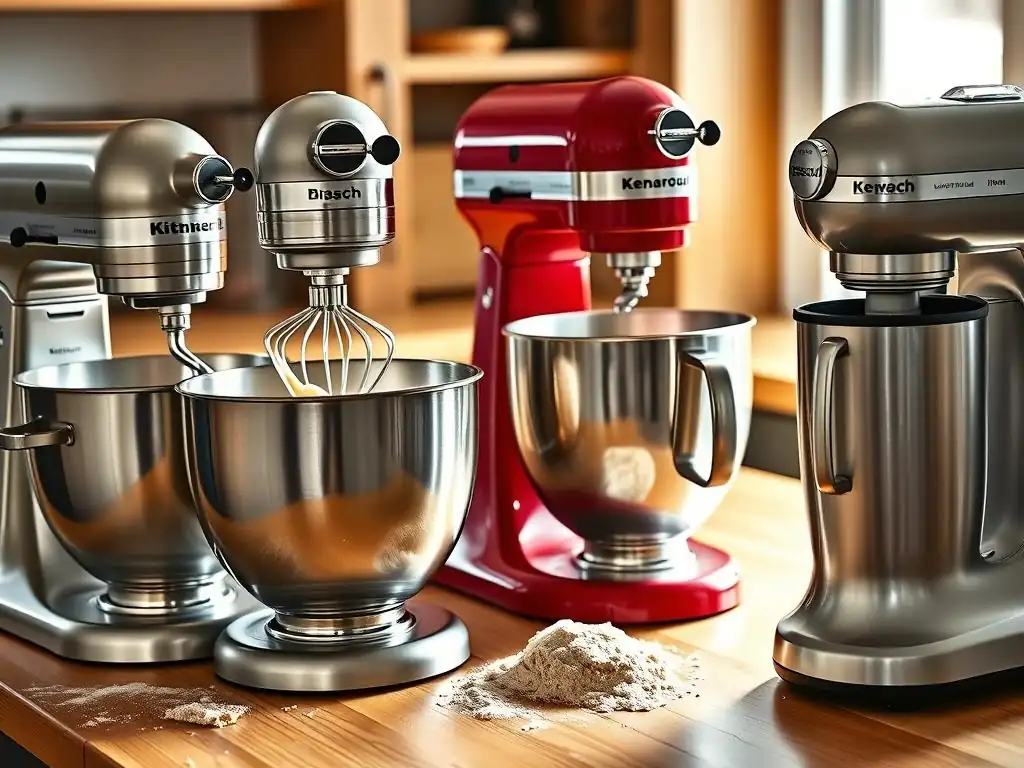
KitchenAid Artisan Series: A Popular Choice for Bread Making?
The KitchenAid Artisan series is perhaps the most recognizable stand mixer in home kitchens, known for its iconic design and wide range of colors. While incredibly popular for general baking tasks like mixing cake batter or whipping cream, its performance specifically with bread dough warrants a closer look. Many home bakers successfully use their Artisan mixers for bread, particularly for smaller batches or enriched doughs that are less stiff.
However, when it comes to kneading dense, low-hydration doughs or tackling large quantities, the Artisan series (typically featuring a 5-qt bowl and a motor often rated around 325 watts, though some newer models are higher) can sometimes struggle. Users report the head rocking significantly with stiff doughs, and the motor can become warm during extended kneading sessions required for proper gluten development in certain bread types. It's capable, but understanding its limitations for heavy-duty bread work is key.
KitchenAid Artisan: Key Features and Benefits for Bread Dough
The KitchenAid Artisan offers several features beneficial for home bread bakers. Its planetary mixing action ensures that the dough hook reaches all parts of the bowl, contributing to relatively even kneading. The typical 5-quart stainless steel bowl is a good size for single loaves of standard white or enriched bread, using around 3-4 cups of flour. The included dough hook attachment is designed specifically for kneading.
Furthermore, the Artisan's multiple speed settings allow for starting the kneading process slowly (speed 2 is typically recommended for kneading) and gradually increasing if needed, although high speeds are generally not required or recommended for kneading bread. The tilt-head design makes it easy to add ingredients to the bowl and scrape down the sides during the initial mixing phase before kneading begins. Its widespread availability and the vast ecosystem of attachments for other kitchen tasks also make it a versatile appliance.
KitchenAid Artisan: Potential Drawbacks When Kneading Stiff Doughs
While versatile, the KitchenAid Artisan does have limitations when faced with stiff bread doughs. The motor wattage, while sufficient for many tasks, can be underpowered for consistently handling very dense doughs like those for bagels, pretzels, or 100% whole wheat bread, especially in larger quantities. This can lead to the motor straining, potentially shortening its lifespan over time if frequently pushed to its limits.
Another common observation is the "head wobble" or rocking motion of the tilt-head mechanism when kneading stiff dough. While often normal to some extent, excessive movement can be concerning. The tilt-head design, while convenient for adding ingredients, can sometimes be less stable than a bowl-lift design under the stress of kneading heavy dough. For bakers frequently making large batches of very stiff dough, the Artisan might not be the absolute best stand mixer for bread in terms of long-term durability and effortless performance under heavy load.
KitchenAid Artisan: Ideal Bread Recipes & Recommended Attachments
The KitchenAid Artisan is well-suited for a variety of popular home bread recipes. It excels with enriched doughs like brioche, challah, and cinnamon rolls, where the dough is softer due to the addition of butter, eggs, and sugar. It also handles standard white sandwich bread, pizza dough, and softer dinner rolls effectively. Recipes using up to about 4-5 cups of flour are generally within its comfortable working range for bread.
The primary attachment for bread baking is the C-shaped dough hook, which comes standard with the mixer. For optimal kneading, ensure the hook is attached correctly and that you are using the recommended speed setting (usually speed 2). While other attachments are available for the KitchenAid, the dough hook is the only one necessary for the kneading process itself.
Ankarsrum Original Stand Mixer: The Bread Baker's Workhorse?
Often cited as a top contender for the title of best stand mixer for bread, the Ankarsrum Original (formerly known as Electrolux Assistent) boasts a unique design and a reputation for handling large, heavy doughs with ease. Unlike traditional stand mixers where the attachment spins in a stationary bowl, the Ankarsrum features a rotating bowl driven by a powerful motor located beneath it. Kneading is performed by a roller and scraper arm.
This distinct design, combined with a robust motor (typically 600 watts or more) and a large capacity bowl (around 7-8 liters, capable of handling up to 11-12 lbs of dough), makes it exceptionally effective for bread. The motor doesn't strain because the bowl does the work of bringing the dough to the stationary roller. This design minimizes vibration and stress on the motor, allowing it to handle even the stiffest doughs for extended periods without overheating.
Ankarsrum Original: Key Features and Benefits for Bread Dough
The Ankarsrum Original's design provides significant benefits for bread making. The rotating bowl and stationary roller/scraper mimic hand kneading action, gently yet effectively developing gluten. The powerful motor is specifically designed for continuous, heavy-duty use. Its large stainless steel bowl (often around 7.5 liters or 8 quarts) can accommodate very large batches, making it ideal for baking multiple loaves at once or preparing dough for family gatherings.
The mixer also features a variable speed control, allowing for precise adjustment of the kneading speed. The open-top design makes it incredibly easy to add ingredients while the mixer is running and to monitor the dough's progress. The roller and scraper are adjustable, allowing you to fine-tune their position based on the dough volume and consistency. This combination of power, capacity, and unique design positions it as a premier stand mixer for serious bread bakers.
Ankarsrum Original: Potential Drawbacks and Considerations
Despite its strengths, the Ankarsrum Original has a few considerations. Its unique design means there's a learning curve compared to conventional stand mixers. Getting used to the roller and scraper mechanism and understanding how to adjust them for different doughs takes some practice. It also has a larger footprint on the counter than some other mixers.
The price point for the Ankarsrum is typically higher than many other home stand mixers, representing a significant investment. While it comes with attachments for other tasks, the primary focus and strength are clearly on dough making (bread, pasta, etc.). For bakers who primarily need a mixer for light tasks like whipping cream or mixing cake batter, and only occasionally make small batches of bread, the Ankarsrum might be more machine than necessary, and its initial cost might be prohibitive.
Ankarsrum Original: Ideal Bread Recipes & Recommended Attachments
The Ankarsrum Original excels with virtually all types of bread dough, from light brioche to dense rye and stiff bagel doughs. Its large capacity makes it perfect for baking multiple loaves of sourdough, whole wheat bread, or large batches of pizza dough. It handles high-hydration doughs equally well, as the scraper helps keep the sticky dough moving around the roller.
The standard attachments for bread making are the dough roller and the dough scraper. These work in tandem to knead the dough against the side of the rotating bowl. The roller does the primary kneading, while the scraper prevents the dough from climbing up the roller and ensures it stays in the path of the kneading action. The arm holding these attachments is adjustable to accommodate different dough sizes.
Bosch Universal Plus Stand Mixer: High Capacity for Large Bread Batches
The Bosch Universal Plus is another highly regarded stand mixer, particularly among bread bakers who need to handle large volumes of dough. Like the Ankarsrum, it features a motor located beneath the bowl, driving a central post to which the attachments connect. However, it uses traditional dough hooks (usually a set of twin hooks) in a large, open-top bowl.
Known for its powerful motor (often 800 watts or more) and substantial capacity (typically 6.5 quarts), the Bosch Universal Plus can effortlessly knead very large quantities of dough – often up to 14 lbs! Its design keeps the mixer stable even under heavy load, and the motor is built for demanding tasks. For families or individuals who bake multiple loaves frequently, the Bosch Universal Plus is a strong contender for the best stand mixer for bread due to its sheer capacity and power.
Bosch Universal Plus: Key Features and Benefits for Bread Dough
The key benefits of the Bosch Universal Plus for bread making are its powerful motor and exceptionally large capacity. The 800W+ motor provides ample power to handle stiff doughs and large batches without straining or overheating. The 6.5-quart bowl is made of durable plastic and is designed to handle significant dough volumes, allowing bakers to easily make dough for 4-6 standard loaves or more at once.
The unique twin dough hooks are designed to work together, pulling and stretching the dough effectively from the center post. The open-top bowl is easy to access for adding ingredients and observing the dough's development. The mixer is also known for its stability during operation, with minimal movement even when kneading heavy dough loads. Its multiple speed settings provide control over the kneading process.
Bosch Universal Plus: Potential Drawbacks and Considerations
One potential drawback of the Bosch Universal Plus for some users is the plastic bowl, which, while durable and lighter than stainless steel, is not preferred by everyone. The central drive shaft in the bowl can also make scraping down the sides a little less convenient than with a completely open bowl.
While the twin dough hooks are effective, some bakers accustomed to the single hook of other mixers might find the action slightly different. The overall design is also less aesthetically traditional than mixers like the KitchenAid, although its focus is clearly on function and performance. Like the Ankarsrum, the Bosch Universal Plus typically comes at a higher price point than entry-level or mid-range mixers, reflecting its heavy-duty capabilities.
Bosch Universal Plus: Ideal Bread Recipes & Recommended Attachments
The Bosch Universal Plus is ideal for any bread recipe where you need to make a large quantity of dough. It handles everything from light, enriched doughs to dense, whole-grain loaves and stiff pizza or bagel doughs with ease, limited primarily by its generous capacity. It's a favorite for bulk baking, making dough for large gatherings, or preparing dough for freezing.
The standard twin dough hooks are the primary attachment for kneading bread dough. They are specifically designed for the Bosch's central drive system and work efficiently to develop gluten in large volumes. Ensure they are correctly attached to the central post before starting the mixer.
Cuisinart SM-50 Stand Mixer: A Mid-Range Option for Bread Bakers
For home bakers seeking a capable stand mixer for bread that doesn't break the bank, the Cuisinart SM-50 series offers a compelling mid-range option. Positioned as a versatile mixer for various kitchen tasks, it provides more power and capacity than many entry-level models, making it suitable for moderate bread baking.
Featuring a motor typically rated around 500 watts and a 5.5-quart stainless steel bowl, the Cuisinart SM-50 can handle standard bread recipes using up to about 4-5 cups of flour comfortably. It's a step up in power from basic mixers and can be a good choice for bakers who make bread regularly but not necessarily in very large quantities or exclusively stiff doughs.
Cuisinart SM-50: Key Features and Benefits for Bread Dough
The Cuisinart SM-50 offers a good balance of features for its price point. The 500-watt motor provides sufficient power for kneading most standard bread doughs. The 5.5-quart stainless steel bowl is a practical size for single or slightly larger-than-single batches of bread. It uses a planetary mixing action similar to KitchenAid, ensuring good coverage of the bowl.
The mixer comes with a dough hook attachment designed for kneading. It also features multiple speed settings, including a low speed suitable for starting the kneading process without flour flying everywhere. The tilt-head design allows for easy access to the bowl. Its more accessible price point makes it a popular choice for home bakers looking for a reliable stand mixer for bread without investing in the heavy-duty, higher-end models.
Cuisinart SM-50: Potential Drawbacks and Considerations
While capable, the Cuisinart SM-50 might face limitations with very stiff or very large bread dough batches. The 500-watt motor, while decent, may strain or heat up during prolonged kneading of dense doughs like stiff rye or whole wheat. The tilt-head design can exhibit some movement with heavier loads, similar to other tilt-head mixers.
Compared to the Ankarsrum or Bosch, its maximum capacity for flour/dough is lower. If you frequently bake multiple large loaves or exceptionally dense breads, you might find yourself needing to split recipes into smaller batches, which can be less efficient. For occasional bread baking and general kitchen tasks, it's a solid performer, but for serious, high-volume, or very stiff dough bread making, it might eventually feel underpowered.
Cuisinart SM-50: Ideal Bread Recipes & Recommended Attachments
The Cuisinart SM-50 is well-suited for everyday bread baking needs. It performs well with standard white bread recipes, enriched doughs like challah or brioche (in moderate quantities), pizza dough, and softer roll doughs. Recipes calling for up to around 4-5 cups of flour are typically within its comfort zone for kneading.
The standard Cuisinart dough hook attachment is the key accessory for bread making. Ensure it is properly attached and that you use a low speed setting (e.g., Speed 2 or 3) for kneading to prevent strain on the motor and ensure proper dough development without overheating.
Choosing the Right Stand Mixer for Your Bread Baking Needs: A Buying Guide
Selecting the best stand mixer for bread depends heavily on your specific baking habits, needs, and budget. Considering factors beyond just the price tag will help you find a mixer that will be a reliable partner in your bread-making journey for years to come. Think about the types and quantities of bread you plan to bake most often.
This section will guide you through the essential features and specifications to compare when deciding which stand mixer is the best fit for your bread baking aspirations. From motor power to bowl capacity and design type, understanding these elements is crucial for making an informed decision.
Key Considerations When Selecting a Stand Mixer for Bread
Motor Power: Ensuring Sufficient Strength for Kneading
Motor power, often measured in watts, is a critical factor for kneading bread dough. Stiff doughs put a significant strain on a mixer's motor. While wattage isn't the only indicator of power (design and gearing also play a role), a higher wattage motor generally correlates with a greater ability to handle heavier loads without stalling or overheating.
For occasional bread baking of standard doughs, a motor in the 300-500 watt range might suffice. However, if you plan to bake frequently, make large batches, or work with dense doughs like whole wheat, rye, or bagel dough, aiming for a mixer with a motor of 500 watts or more is highly recommended. Heavy-duty mixers designed specifically for bread often feature motors in the 600-800+ watt range, built for sustained, high-torque operation.
Bowl Capacity: Matching the Mixer to Your Bread Recipe Volume
The size of the mixer bowl dictates how much dough you can make at once. Bowl capacity is typically measured in quarts (qt). Common sizes for home stand mixers range from 4.5 qt to 8 qt.
- 4.5 - 5.5 qt: Suitable for single loaves or smaller batches (e.g., using 3-5 cups of flour, yielding 1-2.5 lbs of dough). Good for individuals or small households.
- 6 - 6.5 qt: A versatile size for most families, allowing for double batches or larger single loaves (e.g., using 6-10 cups of flour, yielding 3-5 lbs of dough).
- 7 qt and up: Ideal for serious bakers, large families, or those who bake multiple loaves frequently (e.g., using 10+ cups of flour, yielding 5+ lbs of dough). Mixers like the Ankarsrum (approx. 8 qt/7.5 L) or Bosch Universal Plus (6.5 qt but designed for large volume) excel in this category.
Choosing a capacity that matches your typical baking volume prevents overloading smaller mixers or having dough spread too thinly in an oversized bowl.
Kneading Speed Settings: Optimizing Dough Development
Most stand mixers offer multiple speed settings. For kneading bread dough, a low speed setting (often speed 1 or 2) is generally recommended. Starting slowly helps to incorporate ingredients without making a mess and allows the dough to begin developing gluten gently.
Higher speeds are typically used for whipping or beating, not kneading. Using too high a speed for kneading can overwork the dough, generate excessive heat (which can negatively impact yeast activity and gluten structure), and put unnecessary strain on the mixer's motor. Look for a mixer that offers a stable, consistent low speed specifically suitable for the slow, steady work of kneading. Some advanced mixers offer a very slow "stir" speed which can be useful for initial ingredient mixing.
Attachments & Accessories: Expanding Your Bread Baking Capabilities
While the dough hook is the primary attachment for kneading bread, the quality and design of the hook itself can vary and impact performance. Some mixers come with a C-shaped hook, while others use a spiral hook (often preferred for its efficiency in pulling dough off the bottom of the bowl). Heavy-duty mixers like the Bosch use twin hooks.
Beyond the hook, consider the availability and cost of additional accessories if you plan to expand your baking repertoire. While not directly related to kneading, attachments like pasta makers, grain mills (for milling your own flour), or meat grinders can add significant value to a stand mixer and are often available for popular models like KitchenAid, Ankarsrum, and Bosch. However, for the core task of kneading bread, the quality of the dough hook and the mixer's power are paramount.
Durability and Build Quality: Investing in a Long-Lasting Mixer
A stand mixer is an investment, and for the demanding task of kneading bread, durability is key. Mixers designed for heavy-duty use often feature robust construction, including metal gears instead of plastic ones (though some modern plastic components are very durable) and powerful motors built for sustained operation.
Look for mixers with stable bases that don't wobble excessively under load. Read reviews focusing on long-term use and how well the mixer holds up to frequent kneading of stiff doughs. While a lower price point might be attractive, investing in a well-built machine designed for the task will likely save you money and frustration in the long run compared to repeatedly replacing or repairing a less durable model. The best stand mixer for bread is one that can handle the work consistently over time.
Comparing Stand Mixer Features for Bread Dough Performance
Direct Drive vs. Belt Driven Mixers: Impact on Kneading Efficiency
Stand mixers typically use either a direct drive or a belt-driven motor system.
- Direct Drive: The motor is located near the attachment shaft, transmitting power directly. This design is generally considered very efficient and durable, often found in heavy-duty, bowl-lift mixers like KitchenAid Professional series (though Artisan is gear-driven from the head) and some high-end models. Direct drive can offer more torque at lower speeds, which is beneficial for kneading stiff dough.
- Belt Driven: The motor is located elsewhere in the mixer, and power is transmitted via a belt. This can potentially absorb some shock and might be quieter, but belts can wear out over time (though this is less common in modern, quality mixers). Some tilt-head mixers might use a belt drive system.
For kneading bread, a system that delivers consistent torque without excessive strain on the motor is preferred. Heavy-duty mixers designed for bread often feature robust gear systems (whether direct or gear-driven) optimized for high-torque, low-speed operation.
Bowl Lift vs. Tilt-Head Mixers: Which is Best for Bread?
The design of the mixer head can impact stability, particularly when kneading heavy dough.
- Tilt-Head: The mixer head tilts back to allow access to the bowl. This is convenient for adding ingredients and scraping. However, with very stiff or large dough volumes, the hinge mechanism can sometimes exhibit noticeable movement or wobble under the stress of kneading. Models like the KitchenAid Artisan and Cuisinart SM-50 are typically tilt-head.
- Bowl Lift: The mixer head is fixed, and the bowl is raised or lowered into position using a lever. This design is generally considered more stable and robust for handling heavy loads, as the weight and stress are better distributed. Many heavy-duty and professional-style mixers, including some KitchenAid Professional models, the Ankarsrum Original, and the Bosch Universal Plus, utilize a bowl-lift (or similar fixed-head with moving bowl) design, making them often the preferred choice for serious bread bakers.
For stability during intense kneading, bowl-lift designs often have an edge, which is why they are frequently found on mixers marketed towards heavy-duty use and large capacity.
Noise Level During Kneading: Finding a Quieter Option
Kneading bread dough is a mechanical process, and some noise is inevitable. However, the noise level can vary significantly between mixers. Mixers that strain under load, or those with less robust gearing, might be considerably louder, producing grinding or whining noises.
Heavy-duty mixers designed for bread, while powerful, are often engineered to operate more smoothly even under heavy loads. The Ankarsrum, for example, is often noted for being relatively quiet during kneading compared to some conventional mixers struggling with stiff dough. Reading reviews or watching videos of mixers in action can give you an idea of their typical operating noise level during kneading. If you bake frequently or in an open living space, a quieter mixer can significantly improve the baking experience.
Expert Tips for Kneading Bread Dough with a Stand Mixer
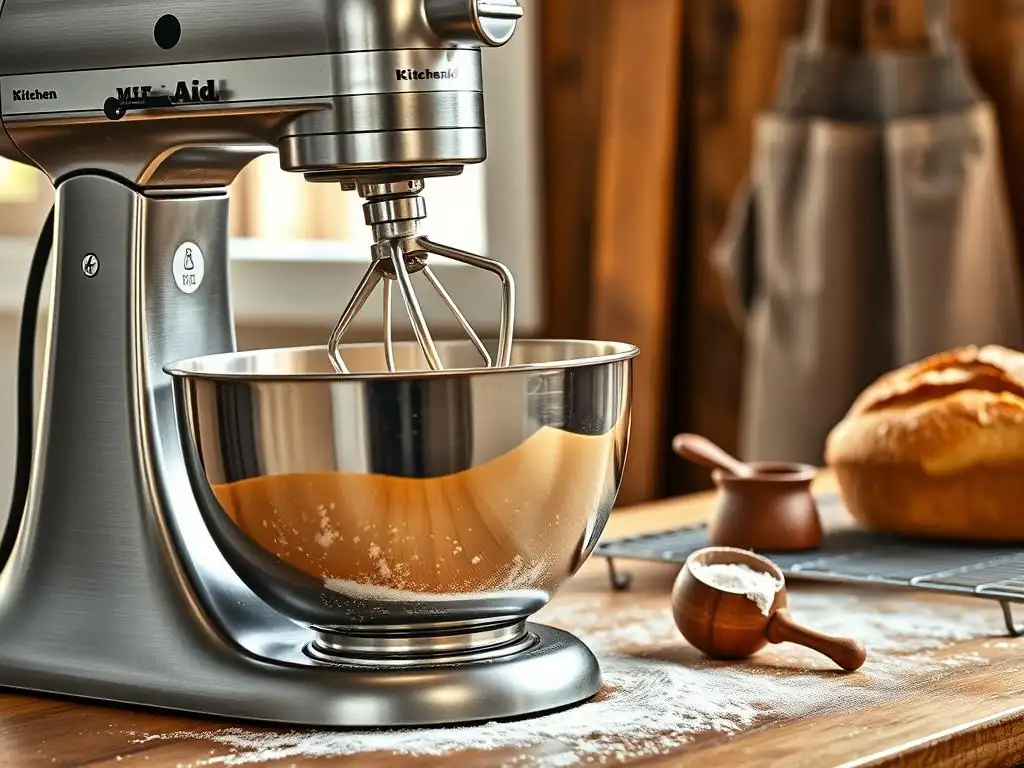
Using a stand mixer effectively for bread dough involves more than just attaching the hook and turning it on. Understanding how to work with your mixer can help you achieve perfectly kneaded dough consistently, regardless of which model you choose as your best stand mixer for bread.
These tips cover monitoring dough development, preventing common issues like overheating, and optimizing the kneading time to get the best results for your loaves.
Achieving the Perfect Dough Consistency: Mastering the Windowpane Test
One of the most reliable indicators that your bread dough is properly kneaded is the "windowpane test." This test assesses the gluten development. To perform it:
- Carefully pull off a small piece of dough (about the size of a golf ball).
- Gently stretch and pull the dough between your fingers.
- Try to stretch it into a thin, translucent membrane without tearing.
If you can stretch the dough thin enough to see light pass through it (like a windowpane) without it tearing, the gluten is well-developed, and the dough is sufficiently kneaded. If it tears easily, it needs more kneading time. A stand mixer allows you to easily stop, perform this test, and continue kneading as needed.
Preventing Overheating: Techniques for Continuous Kneading
Extended kneading, especially with stiff doughs, can cause the mixer's motor to heat up and the dough itself to warm. Excessive heat in the dough can negatively affect yeast activity and gluten structure.
- Use Recommended Speeds: Stick to the low speed settings (usually 1 or 2) recommended for kneading. High speeds generate more friction and heat.
- Monitor Mixer Temperature: Feel the top or sides of your mixer. If it feels excessively hot, give the mixer a short break (5-10 minutes) to cool down before resuming. Heavy-duty mixers are better at managing heat than lighter-duty ones.
- Monitor Dough Temperature: You can use an instant-read thermometer to check the dough temperature. Aim for a final dough temperature generally between 75°F and 80°F (24°C - 27°C) after kneading. If it's getting too warm, chilling your water or flour slightly can help, or give the dough a rest period.
- Know Your Mixer's Limits: Understand how much dough your specific mixer can handle for how long. Don't try to push a smaller mixer to knead a massive, stiff batch for 15-20 minutes straight.
Optimizing Kneading Time: Balancing Strength and Development
The ideal kneading time varies depending on the mixer, the dough hydration, the type of flour, and the recipe. There's no single magic number. Over-kneading can be just as detrimental as under-kneading, potentially leading to a tough or dense crumb.
Start by following recipe guidelines, but use visual and tactile cues, especially the windowpane test, to determine when the dough is ready. Typically, kneading in a stand mixer takes anywhere from 6 to 15 minutes for most bread doughs.
- Observe the dough: It should become smooth, elastic, and pull away cleanly from the sides of the bowl (though very wet doughs may stick).
- Listen to the mixer: If your mixer sounds like it's straining or the motor note changes significantly, the dough might be too stiff or the batch too large.
- Perform the windowpane test: This is your best indicator of gluten development. Stop kneading as soon as the dough passes the test.
Maintaining Your Stand Mixer for Bread Dough: Ensuring Longevity
Proper care and maintenance are crucial to ensure your best stand mixer for bread continues to perform optimally for years, especially given the stress that kneading dough can put on the machine. Simple steps after each use and occasional checks can prevent issues and prolong the life of your appliance.
Proper Cleaning Techniques for Dough Residue
Dough can be sticky and gets everywhere! Cleaning your mixer immediately after use is the best way to prevent dough from drying and hardening onto the bowl, hook, and mixer head.
- Unplug the Mixer: Always unplug the mixer before cleaning.
- Remove Attachments and Bowl: Detach the dough hook and bowl. These are usually dishwasher safe, but check your manual. Washing by hand with warm, soapy water and a non-abrasive sponge is also effective.
- Clean the Mixer Body: Use a damp cloth (not wet!) to wipe down the mixer head and base. Pay attention to the attachment shaft and any crevices where dough might have accumulated. Never immerse the mixer body in water.
- Remove Dried Dough: If dough has dried onto the mixer, use a plastic scraper or a soft brush to gently loosen it before wiping. Avoid using metal tools that could scratch the finish.
Regular Maintenance Schedule: Keeping Your Mixer in Top Condition
Beyond cleaning, a few periodic maintenance steps can keep your stand mixer running smoothly.
- Check Attachments: Inspect your dough hook for any damage or bending. A bent hook can affect kneading performance and potentially damage the mixer.
- Lubrication (if applicable): Some older or commercial-style mixers may require periodic lubrication of gears. Consult your user manual. Most modern home mixers are sealed and do not require user lubrication.
- Check Ventilation: Ensure the air vents on the mixer body are not blocked by dust or debris. These vents are crucial for motor cooling during operation.
- Listen for Unusual Noises: Pay attention to any new grinding, whining, or clicking sounds during kneading. These could indicate an issue with the motor or gears that might require professional service.
Troubleshooting Common Issues: Addressing Kneading Problems
Even with the best stand mixer for bread, you might occasionally encounter issues.
- Dough Climbing the Hook: This is common with stickier doughs. Stop the mixer, scrape the dough down, and continue kneading. Sometimes slightly adjusting the hydration or adding a tiny bit more flour can help, but don't overcompensate. For mixers like the Ankarsrum, ensure the scraper is properly adjusted.
- Mixer Straining/Overheating: This indicates the dough is too stiff, the batch is too large, or you're kneading for too long. Reduce the batch size, check your recipe hydration, or give the mixer short breaks. This is less likely with heavy-duty mixers designed for bread.
- Dough Not Coming Together: Ensure you've added enough liquid and kneaded for long enough. Sometimes dough takes a few minutes in the mixer to form a cohesive mass. If after several minutes it's still crumbly, check your measurements.
Recommended Bread Baking Accessories for Stand Mixers
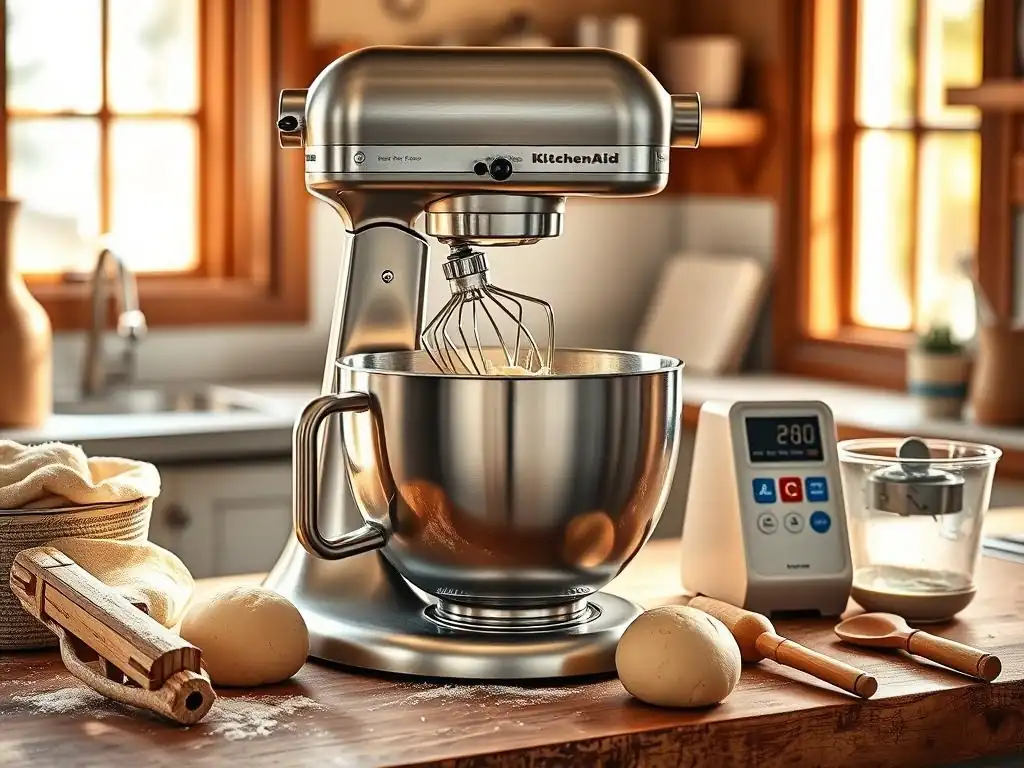
While your stand mixer and its dough hook are the stars of the show for kneading, a few other accessories can complement your stand mixer and elevate your bread baking results.
Dough Hooks: Selecting the Right Hook for Your Mixer and Dough Type
Most stand mixers come with one standard dough hook. However, the design can vary (C-shaped vs. spiral), and for some mixers, alternative hooks might be available. Ensure you are using the correct hook designed for your specific mixer model. The spiral hook is often considered more efficient for pulling dough off the bottom of the bowl and is standard on many higher-capacity or heavy-duty mixers. The C-shaped hook is common on tilt-head models. While you typically use the hook provided, understanding the type can help you understand how the dough interacts with it.
Bread Pans: Choosing the Best Pans for Optimal Baking
Once your dough is kneaded and proofed, the right bread pan makes a difference in the final loaf shape and crust development.
- Loaf Pans: Standard metal loaf pans (like 9x5 inch) are common for sandwich bread. Darker pans absorb more heat, leading to a darker crust; lighter pans result in a lighter crust. Non-stick coatings are convenient but can affect crust.
- Cast Iron or Ceramic: These materials provide excellent heat retention, promoting a great crust, especially for artisan loaves baked in Dutch ovens or cloches.
- Baking Sheets: For freeform loaves like baguettes or rustic rounds, a sturdy baking sheet (often lined with parchment paper or a silicone mat) is essential.
Digital Kitchen Scales: Precise Measurement for Consistent Results
While not an accessory for the mixer, a digital kitchen scale is arguably the most important tool alongside your mixer for consistent bread baking. Measuring ingredients, especially flour and water, by weight rather than volume is far more accurate. Small variations in volume measurements can significantly impact dough hydration and, consequently, the kneading process and final loaf quality. Using a scale ensures your recipe is followed precisely, leading to more predictable and successful outcomes with your stand mixer for bread.
Conclusion: The Best Stand Mixer for Bread: Which One is Right for You?
Choosing the best stand mixer for bread involves weighing your needs against the capabilities and cost of different models. There isn't a single "best" mixer for everyone; the ideal choice depends on the volume and type of bread you bake and your budget.
Recapping the Top Stand Mixer Choices for Bread Bakers
We've explored some of the leading contenders:
- KitchenAid Artisan Series: A popular, versatile choice for general baking and moderate bread making (single loaves, enriched doughs). May struggle with very stiff or large batches.
- Ankarsrum Original: A heavy-duty workhorse with a unique design, exceptional capacity, and power for handling large volumes and stiff doughs effortlessly. Higher price point and learning curve.
- Bosch Universal Plus: Another high-capacity, powerful mixer ideal for large batches and stiff doughs, featuring a unique bottom-drive and twin hook system. Durable and stable, though comes with a plastic bowl and higher cost.
- Cuisinart SM-50: A solid mid-range option offering more power than entry-level mixers, suitable for regular home bread baking of standard recipes in moderate quantities. Good value.
Final Recommendations Based on Budget and Baking Style
- For the Casual Baker or Beginner: If you bake bread occasionally or stick to single loaves of standard or enriched doughs, the KitchenAid Artisan or Cuisinart SM-50 are excellent, versatile choices that also handle other baking tasks well and fit common budgets.
- For the Frequent Baker or Large Families: If you regularly bake multiple loaves or large batches, or work with stiffer doughs like whole wheat or rye, investing in a heavy-duty mixer like the Bosch Universal Plus or Ankarsrum Original is highly recommended. Their power and capacity will make the process much easier and yield more consistent results with less strain on the machine. The Bosch is great for sheer volume, while the Ankarsrum is praised for its gentle, effective kneading action on all dough types.
- For the Artisan/Sourdough Enthusiast: Both the Ankarsrum Original and Bosch Universal Plus are favored by serious artisan and sourdough bakers due to their ability to handle high-hydration doughs and large starter-based batches effectively over longer kneading times.
Elevate Your Bread Baking with the Right Stand Mixer
Ultimately, selecting the best stand mixer for bread is about finding a tool that empowers you to bake more confidently and consistently. A powerful, capable mixer takes the hard work out of kneading, allowing you to focus on the craft and joy of creating delicious bread. Whether you choose a versatile all-rounder or a dedicated bread-making machine, the right stand mixer will be an invaluable asset in your kitchen, helping you master the art of bread dough and bake beautiful loaves with ease.
Frequently Asked Questions
What makes a stand mixer suitable for kneading bread dough?
A stand mixer suitable for bread kneading needs a powerful motor to handle the thick dough, and a sturdy build to withstand the strain.
What are the key features to look for in a stand mixer for bread making?
Consider motor power, bowl capacity, and the type of dough hook attachment. Also, look for a stable base to prevent movement during kneading.
Are all stand mixers equally good at kneading bread dough?
No, cheaper models often lack the necessary power and durability to effectively knead bread dough, potentially overheating or breaking.
How does bowl capacity affect my bread baking?
Larger bowl capacities allow for larger batches of dough, which is useful for baking multiple loaves or for families. Smaller bowls are better for smaller batches.
What is the difference between a spiral dough hook and a C-shaped dough hook, and which is better for bread?
A spiral dough hook is generally considered superior for bread making because it mimics hand-kneading, ensuring even mixing and gluten development.
Final Reflection: The Flour Power of the Perfect Knead
The quest for the perfect loaf begins with the perfect tool, and that tool, for many serious bakers, is a stand mixer. Choosing the right machine isn't just about convenience; it's about unlocking the potential within each grain of flour, transforming simple ingredients into a masterpiece of texture and flavor. The right stand mixer empowers you to achieve consistent, professional-quality results, elevating your baking journey to new heights.
The impact of superior baking equipment extends far beyond the kitchen table. It fosters a connection to the ancient art of bread making, a tradition that has sustained cultures for millennia. Bread is the staff of life,
a simple phrase that speaks volumes about its fundamental importance. This article's exploration of high-powered stand mixers highlights the evolution of this tradition, showcasing how technology can enhance and preserve a timeless craft. The ability to easily and reliably create delicious bread connects us to our culinary heritage and allows us to share this joy with others.
So, as you consider your next baking project, remember the power held within a well-chosen stand mixer. Don't just bake a loaf; craft a loaf. Consider the nuances of dough development, the satisfaction of a perfectly formed gluten structure, and the sheer joy of sharing the fruits of your labor. Take the time to research, to choose wisely, and to embrace the transformative power of the perfect knead. Your taste buds – and your soul – will thank you.
Unleash Your Inner Baker: Knead to Upgrade?
Thanks for taking the time to explore the world of stand mixers with us! We hope you now feel confident in choosing the perfect machine for your bread-baking adventures. Ready to take the next step?
- Invest in your dream mixer: Use our guide to find the ideal stand mixer for your needs and baking style. It's time to experience the joy of effortless kneading!
- Share your baking journey: Tell us which mixer you choose (or already own!) and what you'll be baking first. We’d love to hear from you!
- Try a new bread recipe: Challenge yourself with a recipe you've always wanted to tackle – a sourdough, a brioche, or even a crusty baguette. Your new mixer is waiting!
What delicious bread will you create first?