
Unlock Authentic Italian Focaccia at Home

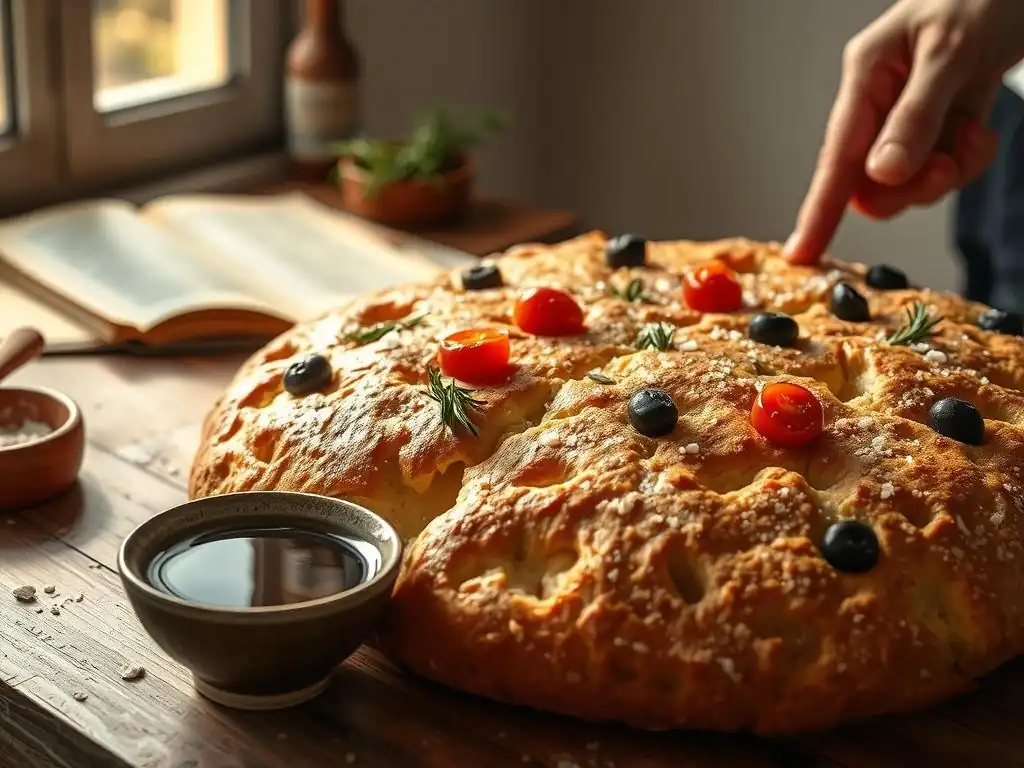
Welcome to BakeWithEase, your passport to a world of delicious homemade baking! Are you ready to unlock the secrets to creating a truly authentic Italian masterpiece? Dive into our easy homemade Italian focaccia recipe and discover how simple it is to bake a flavorful, golden-crusted bread that will impress your friends and family. But that's just the beginning... What other delectable breads and pastries are waiting to be unveiled? Continue exploring and let's bake something amazing together!
- Unlock Authentic Italian Focaccia at Home: An Easy Homemade Focaccia Recipe
- Bake Authentic Italian Focaccia with Ease: A Beginner's Guide
- What is Focaccia and Why Bake it at Home?
- Mastering the Easy Homemade Italian Focaccia Recipe: Step-by-Step
- The Focaccia Dough Recipe: Achieving the Perfect Texture
- Shaping and Dimpling Your Homemade Focaccia
- Baking Your Italian Focaccia to Golden Perfection
- Tips and Tricks for the Best Easy Homemade Italian Focaccia
- Troubleshooting Common Focaccia Baking Problems
- Storing and Reheating Your Italian Focaccia
- Variations on the Classic Easy Homemade Italian Focaccia Recipe
- Enjoy Your Homemade Italian Focaccia!
-
Frequently Asked Questions
- What makes this focaccia recipe considered "easy"?
- How does this recipe help me achieve an authentic Italian focaccia?
- Can I customize this focaccia recipe with different toppings?
- What if I don't have a stand mixer? Can I still make this focaccia?
- How can I ensure my focaccia has that characteristic dimpled surface?
- Final Reflection: The Simple Joy of Authentic Focaccia
- Unleash Your Inner Pizzaiolo: Bake Authentic Focaccia Tonight!
Unlock Authentic Italian Focaccia at Home: An Easy Homemade Focaccia Recipe
Bake Authentic Italian Focaccia with Ease: A Beginner's Guide
Welcome to the delightful world of baking authentic Italian focaccia right in your own kitchen! This guide is designed to demystify the process, making it accessible for even the most novice baker. We'll walk you through every step, from understanding the basic ingredients to achieving that perfect golden crust and fluffy interior that defines traditional Italian focaccia. Get ready to discover just how simple and rewarding baking this classic bread can be.
Baking an easy homemade Italian focaccia recipe is more than just following steps; it's about creating something truly special with your hands. Imagine pulling a warm, fragrant sheet of focaccia from your oven, its surface glistening with olive oil and perhaps studded with herbs or vegetables. This guide provides the foundational knowledge and practical steps needed to confidently bake delicious focaccia, turning your home into a little Italian bakery.
What is Focaccia and Why Bake it at Home?
Exploring the Origins of Italian Focaccia Bread
Focaccia is a flat oven-baked Italian bread, similar in style and texture to pizza dough. Its history stretches back centuries, originating in areas like Liguria, where it was traditionally baked on hearths ('focus' in Latin, from which the name likely derives). Early versions were simple, often just flour, water, yeast, and salt, baked directly on hot stones or in the embers of a fire.
Over time, focaccia evolved, becoming a beloved staple across Italy with regional variations. The characteristic dimpled surface, which holds olive oil and toppings, became a hallmark. While simple in its core components, the quality of ingredients, particularly olive oil, and the technique of handling the dough are crucial to achieving the authentic taste and texture that makes Italian focaccia so universally loved. Baking an easy homemade Italian focaccia recipe connects you to this rich culinary history.
The Benefits of Baking Your Own Focaccia: Taste, Texture, and Satisfaction
Baking your own focaccia at home offers unparalleled benefits compared to store-bought options. Firstly, the taste is simply superior. Freshly baked bread has a depth of flavor that diminishes quickly after cooling. You control the quality of ingredients, using good olive oil and fresh herbs, which significantly impacts the final product's aroma and taste.
Secondly, you achieve the perfect texture. Authentic focaccia should have a crispy, slightly chewy crust and a soft, airy interior. This specific texture is often lost in mass-produced versions. Finally, there's immense satisfaction in creating something delicious from scratch. The process of mixing, kneading, rising, and baking your own easy homemade Italian focaccia recipe is incredibly rewarding, filling your home with wonderful aromas and providing a sense of accomplishment.
Mastering the Easy Homemade Italian Focaccia Recipe: Step-by-Step
Gathering Your Ingredients for Perfect Focaccia
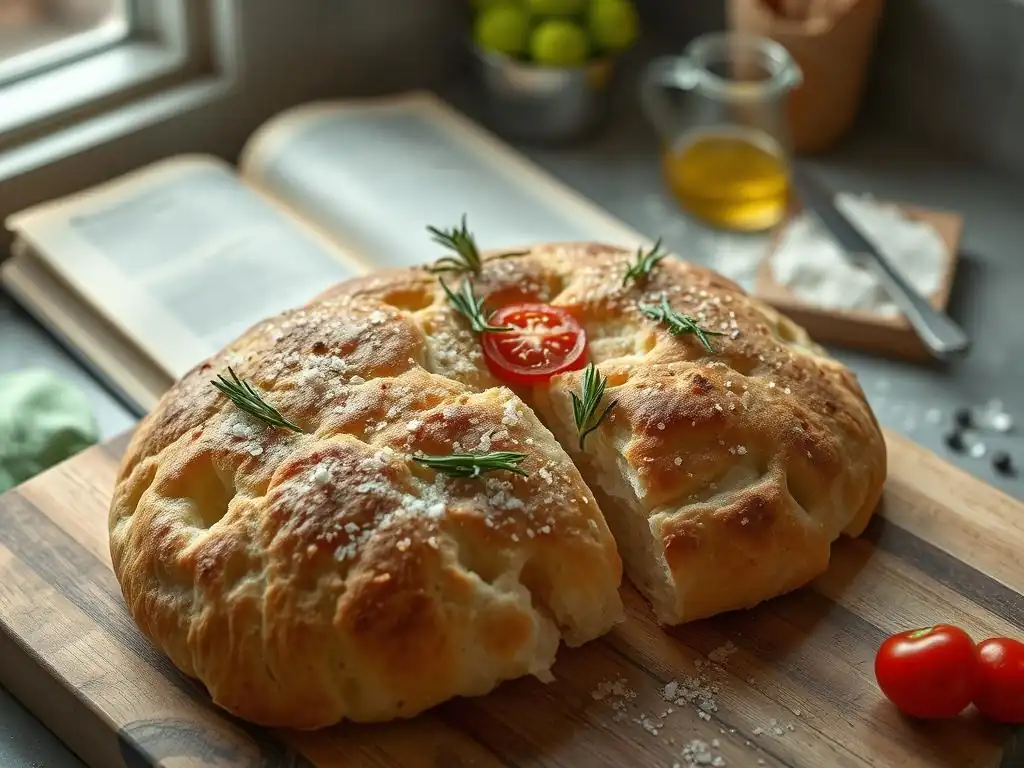
To embark on your journey to baking delicious Italian focaccia, you'll need a few key ingredients. The quality of these components is paramount, as the simplicity of focaccia means each element shines through. You'll need:
- Active dry yeast: Approximately 2 ¼ teaspoons (one standard packet)
- Warm water: Around 1 ½ cups (between 105-115°F or 40-46°C)
- All-purpose flour or bread flour: Approximately 3 ¾ to 4 cups
- Fine sea salt or kosher salt: About 2 teaspoons for the dough
- Extra virgin olive oil: Generous amounts for the dough, pan, and topping (at least ¼ cup + more for drizzling)
- Optional toppings: Flaky sea salt, fresh rosemary, cherry tomatoes, olives, etc.
Using good quality extra virgin olive oil is non-negotiable for an authentic easy homemade Italian focaccia recipe. It contributes significantly to the flavor, moisture, and characteristic richness of the bread. While all-purpose flour works well, bread flour offers slightly more gluten, which can contribute to a chewier texture, preferred by some. Ensure your yeast is active for a proper rise.
Essential Equipment for Baking Focaccia at Home
Baking focaccia doesn't require a lot of fancy equipment, making this easy homemade Italian focaccia recipe accessible. You'll need:
- Large mixing bowl: For combining ingredients and the first rise.
- Measuring cups and spoons: For accurate ingredient quantities.
- Kitchen scale (optional but recommended): For precise flour measurement.
- Whisk or fork: To activate the yeast.
- Plastic wrap or a clean kitchen towel: To cover the dough during rising.
- Standard 9x13 inch (or similar size) baking pan: A metal pan is ideal for even heating and browning the bottom crust. A darker pan will result in a crispier bottom.
- Oven mitts: For safety!
While a stand mixer with a dough hook can simplify the kneading process, it's absolutely not necessary. This easy homemade Italian focaccia recipe can be mixed and kneaded entirely by hand, which many bakers find a therapeutic part of the process. Ensure your baking pan is the correct size to achieve the desired thickness for your focaccia.
The Focaccia Dough Recipe: Achieving the Perfect Texture
Step 1: Activating the Yeast for Focaccia Dough
The first crucial step in your easy homemade Italian focaccia recipe is activating the yeast. In your large mixing bowl, pour 1 ½ cups of warm water (ensure it's between 105-115°F or 40-46°C – too hot will kill the yeast, too cool won't activate it properly). Sprinkle 2 ¼ teaspoons of active dry yeast over the water. Add a pinch of sugar (optional, but it helps feed the yeast).
Let the mixture sit for about 5-10 minutes. You'll know the yeast is active when it becomes foamy and bubbly on the surface. This foam indicates that the yeast is alive and ready to leaven your dough. If you don't see this activity, your yeast might be old or the water temperature was off, and you should start this step again with fresh yeast.
Step 2: Combining the Ingredients: Flour, Water, and Olive Oil
Once your yeast is bubbly and active, it's time to combine the main ingredients for your easy homemade Italian focaccia recipe dough. To the yeast mixture in the bowl, add 3 ¾ cups of flour (start with this amount, you may need slightly more), 2 teaspoons of salt, and about 2 tablespoons of extra virgin olive oil.
Use a sturdy spoon or your hands to mix the ingredients together until a shaggy, wet dough forms. At this stage, the dough will be quite sticky and not smooth – this is expected and desirable for a moist focaccia. Ensure all the flour is incorporated, scraping the sides of the bowl as needed.
Step 3: The Importance of Kneading: Developing Gluten for Chewy Focaccia
Kneading is vital for developing gluten, which provides the structure and characteristic chewiness of focaccia. For this easy homemade Italian focaccia recipe, you can knead by hand or mixer. If kneading by hand, turn the dough out onto a lightly floured surface. Knead for about 8-10 minutes, pushing and folding the dough until it becomes smooth and elastic. It will still be a bit sticky, but manageable.
If using a stand mixer, attach the dough hook. Mix on low speed for about 3-5 minutes, scraping down the sides of the bowl if necessary. The dough should pull away from the sides of the bowl but still stick slightly to the bottom. A properly kneaded dough will pass the 'windowpane test' – you should be able to stretch a small piece thinly enough to see light through it without it tearing immediately.
Step 4: First Rise: Letting the Dough Double in Size
After kneading, lightly oil your large mixing bowl with olive oil. Place the dough in the bowl, turning it to coat all sides with oil. Cover the bowl tightly with plastic wrap or a damp kitchen towel. Place the bowl in a warm, draft-free spot for the first rise.
The dough needs to rise until it has doubled in size, which typically takes about 1 to 1.5 hours at room temperature (around 70-75°F or 21-24°C). If your kitchen is cooler, it may take longer. You can also place it in a slightly warmed oven (turned off) or microwave for a boost. This slow rise is crucial for developing flavor and achieving a light, airy crumb in your easy homemade Italian focaccia recipe.
Shaping and Dimpling Your Homemade Focaccia
Preparing the Baking Sheet: Olive Oil is Key
A generous amount of olive oil in the baking pan is fundamental to achieving the signature crispy bottom crust of authentic Italian focaccia. Pour a substantial amount of extra virgin olive oil, at least ¼ cup, into your 9x13 inch baking pan. Use your hands or a brush to spread the oil evenly across the bottom and up the sides of the pan. Don't be shy with the oil here; it prevents sticking and contributes significantly to the flavor and texture.
Ensure the entire surface the dough will touch is well-coated. This creates a layer of oil that essentially fries the bottom of the dough as it bakes, resulting in that desirable crispiness. This step is non-negotiable for a successful easy homemade Italian focaccia recipe.
Gently Stretching and Shaping the Focaccia Dough
Once your dough has completed its first rise and doubled in size, it's time to transfer it to the prepared baking pan. Gently deflate the dough by punching it down lightly. Turn the dough out into the generously oiled pan.
Now, gently start stretching the dough towards the edges of the pan. Focaccia dough is quite extensible, so you can stretch it gradually. If the dough resists stretching and springs back, cover the pan and let it rest for 10-15 minutes. This allows the gluten to relax, making it easier to stretch further. Repeat this resting and stretching process until the dough fills the entire pan. This gentle handling helps maintain the airy structure developed during the first rise for your easy homemade Italian focaccia recipe.
The Art of Dimpling: Creating Those Signature Focaccia Indentations
The characteristic dimpled surface of focaccia is not just for aesthetics; it serves the purpose of holding the toppings and, importantly, allows the olive oil to pool, ensuring moisture and flavor in every bite. Once the dough is stretched to fill the pan, drizzle more olive oil generously over the surface.
Using your fingertips (dip them in olive oil if the dough is sticky), press down firmly into the dough all over the surface, creating deep indentations. Try not to poke all the way through the dough. Space the dimples about an inch or two apart. This process is quite satisfying and is a hallmark of baking an easy homemade Italian focaccia recipe.
Adding Your Favorite Toppings: From Herbs to Vegetables
With the dough dimpled, it's time to add your chosen toppings before the second rise. Classic toppings include flaky sea salt and fresh rosemary needles scattered over the surface. For more substantial toppings, consider halved cherry tomatoes pressed into the dimples, sliced olives, thinly sliced onions, or even roasted garlic.
Distribute your toppings evenly across the surface. The dimples will help hold them in place. Be creative with your toppings, but remember that simple, high-quality ingredients often work best with this easy homemade Italian focaccia recipe, allowing the flavor of the bread and olive oil to shine.
Baking Your Italian Focaccia to Golden Perfection
Oven Temperature and Baking Time for Focaccia
Preheating your oven properly is essential for achieving the perfect bake. Preheat your oven to a high temperature, typically between 400°F and 425°F (200°C and 220°C). The high heat helps create a crispy crust while ensuring the interior cooks through without becoming dry.
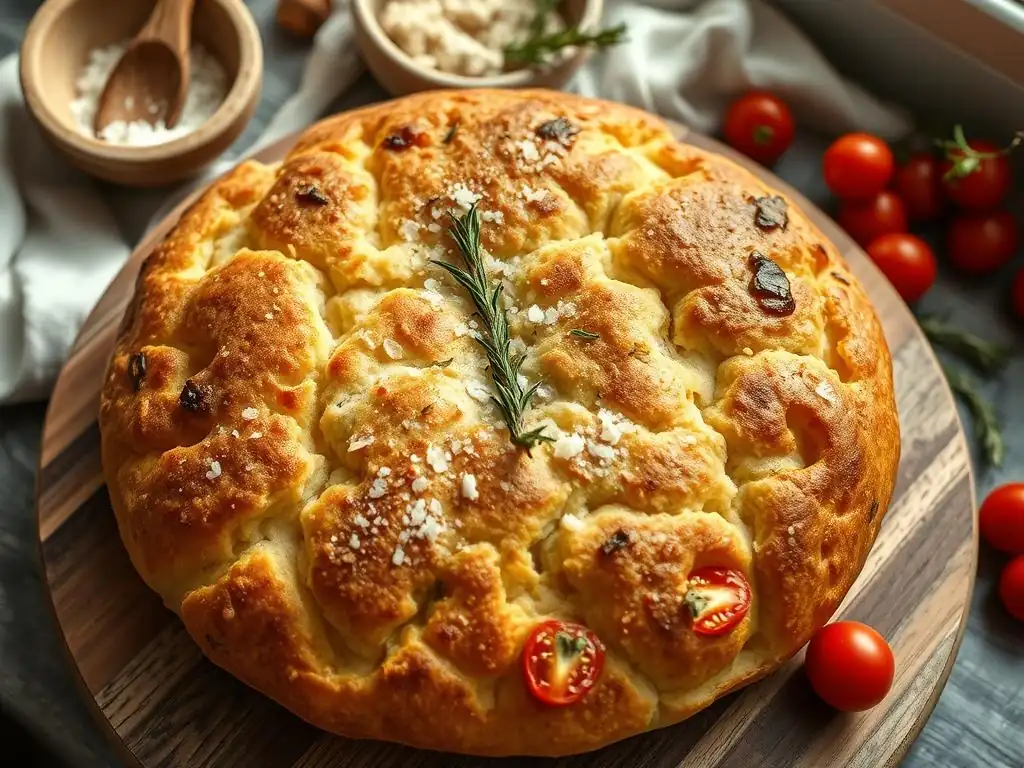
Baking time for a 9x13 inch pan of focaccia is usually between 20 to 30 minutes. The exact time will vary depending on your oven and the thickness of your focaccia. You'll know your easy homemade Italian focaccia recipe is done when the top is golden brown and the bottom crust is a deep golden brown and feels firm when tapped. You can carefully lift an edge with a spatula to check the bottom color.
Achieving a Crispy Crust and Soft Interior
The key to the ideal focaccia texture – a crispy exterior and soft, airy interior – lies in the combination of high heat, sufficient olive oil, and proper dough development. The generous layer of olive oil in the pan helps fry the bottom, creating a wonderfully crispy base. The high oven temperature ensures the top browns quickly, while the well-developed gluten and the hydration level of the dough contribute to a moist and airy crumb.
Avoid opening the oven door too frequently during the first 15-20 minutes of baking, as this can cause temperature fluctuations that affect the rise and crust development. Trust the process; the visual cues of golden color are your best indicator that your easy homemade Italian focaccia recipe has achieved its perfect texture.
Cooling and Serving Your Freshly Baked Focaccia
Once your Italian focaccia is baked to a beautiful golden color, carefully remove the pan from the oven using oven mitts. It's tempting to slice into it immediately, but allowing it to cool slightly is important.
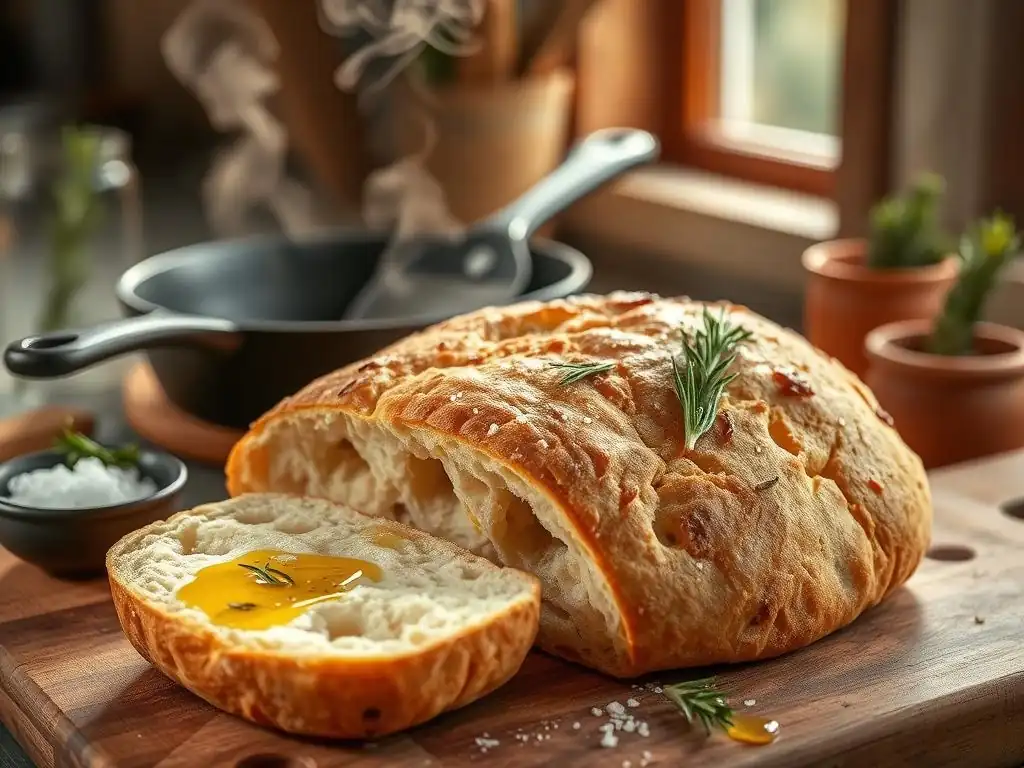
Transfer the focaccia from the hot pan to a wire rack within a few minutes of coming out of the oven. This prevents the bottom crust from becoming soggy from residual heat and steam. Let it cool on the rack for at least 10-15 minutes before slicing. Serve warm, perhaps with extra olive oil for dipping, or as an accompaniment to meals. Enjoying your easy homemade Italian focaccia recipe fresh is the best way to experience its full flavor and texture.
Tips and Tricks for the Best Easy Homemade Italian Focaccia
Choosing the Right Flour for Authentic Focaccia
The type of flour you use can subtly influence the final texture of your easy homemade Italian focaccia recipe. While standard all-purpose flour works well and is readily available, using bread flour can enhance the chewiness. Bread flour has a higher protein content (typically 12-14%) compared to all-purpose (10-12%), which means it develops more gluten during kneading.
More gluten results in a stronger dough structure, capable of trapping more air during the rise and baking, leading to a chewier crumb. However, don't hesitate to use all-purpose flour; you will still achieve a delicious result, perhaps slightly softer. Some traditional recipes even use a mix of flours or specific Italian 'Tipo 00' flour, but for an easy homemade Italian focaccia recipe, all-purpose or bread flour is perfectly suitable.
The Role of Olive Oil in Focaccia Flavor and Texture
Olive oil is not just an ingredient in focaccia; it's arguably the most important ingredient. It's used in the dough, generously coats the pan, is drizzled over the top before baking, and is often served alongside for dipping. Using high-quality extra virgin olive oil is crucial for the authentic taste.
The oil contributes moisture to the dough, keeping the interior tender. When pooled in the dimples and coating the bottom of the pan, it helps create that desirable crispy crust while infusing the bread with its distinct fruity, sometimes peppery, flavor. Don't substitute olive oil with other fats for this easy homemade Italian focaccia recipe; the result simply won't be the same.
Mastering the Art of the Second Rise: Achieving a Light and Airy Focaccia
After stretching and dimpling the dough in the pan, your focaccia needs a second rise before baking. Cover the pan again with plastic wrap or a towel and let it rest in a warm spot for another 20-30 minutes. During this time, the dough will puff up slightly and become airy.
This second, shorter rise is essential for achieving a light and airy texture in your baked focaccia. It allows the yeast to produce more gas, expanding the dough within the confines of the pan. Skipping or shortening this rise can result in a denser focaccia. You'll see the dough look visibly plumper and the dimples become less pronounced but still present. This prepares the dough perfectly for its final transformation in the hot oven.
Experimenting with Different Topping Combinations
One of the joys of baking an easy homemade Italian focaccia recipe is the opportunity to customize it with various toppings. While rosemary and sea salt are classic, the possibilities are vast and depend on your preference and what's in season.
Consider simple combinations like thinly sliced red onion and olives, or cherry tomatoes and basil (add basil after baking). For something richer, try caramelized onions, roasted red peppers, or even thinly sliced potatoes and Parmesan cheese. Just remember not to overload the focaccia, as too many wet toppings can prevent the top from crisping properly. A light hand often yields the best results, allowing the delicious bread base to remain the star.
Troubleshooting Common Focaccia Baking Problems
Focaccia Dough Not Rising? Here's What to Do
If your focaccia dough isn't rising as expected during the first or second rise, the most common culprit is inactive yeast. Ensure your yeast is fresh and that the water temperature used for activation was correct (105-115°F or 40-46°C). Water that is too hot will kill the yeast, while water that is too cold won't activate it effectively.
Another factor could be a cold environment. Dough rises best in a warm, draft-free place. If your kitchen is cool, try placing the covered bowl or pan in a slightly warmed (then turned off) oven or microwave, or near a sunny window. Give the dough more time; sometimes, a slow rise just needs patience. If after several hours there's still no significant activity, your yeast is likely dead, and you may need to start again with fresh yeast.
Focaccia Too Dense? Adjusting Your Technique
A dense focaccia can be disappointing after following an easy homemade Italian focaccia recipe. This is often caused by insufficient kneading, not enough rising time, or using too much flour. Ensure you kneaded the dough long enough to develop sufficient gluten (remember the windowpane test! ).
Allowing the dough to complete both the first and second rises fully is crucial for an airy texture. If your dough feels very stiff during mixing, you might have added too much flour. Focaccia dough should be quite wet and sticky. Next time, measure flour carefully, perhaps using a scale for accuracy, and resist the urge to add too much extra flour during kneading. Proper hydration and adequate rising time are key to a light crumb.
Preventing a Soggy Focaccia Bottom: Baking Tips
A soggy bottom crust is usually due to either not using enough olive oil in the pan or not baking the focaccia long enough at a high enough temperature. Ensure you generously coat the bottom and sides of your baking pan with a substantial amount of extra virgin olive oil before adding the dough. This oil helps the bottom crisp up beautifully.
Make sure your oven is fully preheated to the correct high temperature (400-425°F or 200-220°C). If the top is browning quickly but the bottom is still pale, you might need to extend the baking time slightly or consider placing the pan on a lower rack in your oven to get more direct heat to the bottom. Using a darker metal pan can also help achieve a crispier bottom crust compared to lighter pans or glass dishes.
Storing and Reheating Your Italian Focaccia
Best Practices for Storing Focaccia to Maintain Freshness
Freshly baked focaccia is best enjoyed the day it's made, ideally still warm from the oven. However, if you have leftovers from your easy homemade Italian focaccia recipe, store them properly to maintain quality. Once completely cooled, wrap the focaccia tightly in plastic wrap or aluminum foil, or place it in an airtight container.
Store at room temperature for up to 2-3 days. Avoid refrigerating focaccia, as this can dry it out and make it stale faster. For longer storage, focaccia freezes well. Wrap individual pieces or the entire loaf tightly in plastic wrap, then in aluminum foil or a freezer bag. It can be frozen for up to 2-3 months.
Reheating Focaccia: Restoring its Crispy Texture
To bring leftover focaccia back to its glorious state, reheating is recommended. If it was stored at room temperature, you can briefly warm slices in a toaster oven or under the broiler for a few minutes until heated through and the crust crisps up again.
From frozen, thaw the focaccia at room temperature. Then, place it on a baking sheet and reheat in a preheated oven at around 350°F (175°C) for 5-10 minutes, or until warmed through and the crust is revitalized. Avoid microwaving focaccia, as this will make it soft and chewy rather than restoring its desired crispy texture. Proper reheating helps recapture the magic of your easy homemade Italian focaccia recipe.
Variations on the Classic Easy Homemade Italian Focaccia Recipe
Rosemary and Sea Salt Focaccia: A Timeless Classic
The rosemary and sea salt variation is arguably the most iconic and beloved style of Italian focaccia, and a perfect enhancement for your easy homemade Italian focaccia recipe. After dimpling the dough and drizzling with olive oil, simply scatter fresh rosemary needles generously over the surface.
Finally, sprinkle flaky sea salt over the dough. Flaky salt provides bursts of salty flavor and a pleasant crunch that regular table salt doesn't. As the focaccia bakes, the rosemary becomes fragrant, and the salt enhances the rich flavor of the bread and olive oil. This simple yet powerful combination is a testament to the beauty of minimal, high-quality ingredients.
Tomato and Olive Focaccia: A Mediterranean Delight
Adding cherry tomatoes and olives transforms your easy homemade Italian focaccia recipe into a vibrant taste of the Mediterranean. After dimpling and oiling the dough, gently press halved cherry tomatoes and pitted olives (such as Kalamata or Gaeta) into the indentations.
The tomatoes burst slightly as they bake, releasing their sweet juices, while the olives add a briny depth of flavor. You can also add a sprinkle of dried oregano or Italian herbs at this stage. This variation is visually appealing and offers a wonderful balance of flavors and textures.
Caramelized Onion and Balsamic Glaze Focaccia: A Sweet and Savory Treat
For a more sophisticated flavor profile, try a caramelized onion and balsamic glaze topping on your easy homemade Italian focaccia recipe. Slowly cook sliced onions in olive oil over low heat until deeply golden and sweet. Drizzle the dimpled dough with olive oil, spread the caramelized onions over the top, and sprinkle with a little salt.
After the focaccia is baked and still warm, drizzle a balsamic glaze (reduced balsamic vinegar) over the top. The sweet and savory onions combined with the tangy glaze create a complex and incredibly delicious focaccia variation that's perfect for serving as an appetizer or alongside a meal.
Enjoy Your Homemade Italian Focaccia!
Frequently Asked Questions
What makes this focaccia recipe considered "easy"?
This recipe focuses on simplified steps and readily available ingredients, making it accessible to bakers of all skill levels. You don't need specialized equipment or advanced techniques.
How does this recipe help me achieve an authentic Italian focaccia?
The recipe emphasizes traditional ingredients like olive oil and sea salt and uses a simple kneading method to develop flavor and texture reminiscent of authentic Italian focaccia.
Can I customize this focaccia recipe with different toppings?
Absolutely! While the recipe provides a base, you can easily customize it with herbs, vegetables (like tomatoes or onions), or cheeses to suit your preferences.
What if I don't have a stand mixer? Can I still make this focaccia?
Yes, you can! The recipe can be adapted for hand kneading. Just be prepared to knead for a slightly longer time to develop the gluten properly.
How can I ensure my focaccia has that characteristic dimpled surface?
The key is to generously drizzle the dough with olive oil and then use your fingertips to create deep dimples before baking. This creates those lovely crisp pockets.
Final Reflection: The Simple Joy of Authentic Focaccia
The pursuit of authentic Italian focaccia isn't just about a recipe; it's about connecting with a culinary tradition and finding joy in the process. This seemingly simple bread, with its rustic charm and intensely flavorful crust, offers a surprisingly profound experience. Mastering even a basic focaccia recipe unlocks a gateway to understanding Italian culinary heritage and the satisfaction of creating something delicious from scratch.
The enduring appeal of homemade focaccia lies in its ability to transcend mere sustenance; it becomes a symbol of home, of sharing, and of the simple pleasures in life. It's a dish that effortlessly bridges generations, connecting us to the traditions of our ancestors and fostering a sense of community around a shared meal. As the Italian proverb says, A tavola non s'invecchia,
which translates to "One doesn't grow old at the table." This sentiment perfectly encapsulates the timeless and unifying power of food, particularly something as comforting and delicious as focaccia.
Now, I invite you to take what you've learned and embark on your own focaccia journey. Don't be afraid to experiment, to adjust the recipe to your taste, and to share the results with loved ones. The true magic of focaccia lies not just in the perfect recipe, but in the love and care you put into its creation. So, gather your ingredients, preheat your oven, and unlock the simple joy of authentic Italian focaccia in your own kitchen. The experience, I promise, will be far more rewarding than you might imagine.
Unleash Your Inner Pizzaiolo: Bake Authentic Focaccia Tonight!
Thanks for joining us on this focaccia journey! We hope you’ve gained the confidence to create truly delicious, authentic Italian bread at home. Now it’s time to put your newfound skills to the test.
- Bake your own focaccia: Grab those ingredients, follow your favorite recipe (or ours! ), and experience the incredible satisfaction of creating homemade focaccia. Don't be afraid to experiment with toppings!
- Share your creation: Snap a picture of your masterpiece and share it on social media using #BakeWithEaseFocaccia – let’s inspire each other!
- Explore our other recipes: Dive deeper into the world of Italian baking with our extensive collection of bread recipes. You might discover your new favorite!
What unique topping will you add to your next focaccia adventure? Let us know in the comments below!