
The Crucial Role of Salt in Advanced Pizza Dough Fermentation

Welcome to BakeWithEase, where the magic of baking comes to life! Ever wonder why that perfect pizza crust eludes you? Dive in to uncover the surprising secret – how salt enhances pizza dough fermentation in ways you never imagined. Discover the science behind the perfect rise and unlock the key to truly exceptional homemade pizza. Get ready to elevate your bread baking game!
- The Crucial Role of Salt in Pizza Dough Fermentation
- Understanding Salt's Impact on Pizza Dough: Beyond Flavor
- Salt's Influence on Gluten Development in Pizza Dough Recipes
- Salt and Pizza Dough Fermentation: A Delicate Balance
- The Effects of Different Types of Salt on Pizza Dough Fermentation
- Troubleshooting Pizza Dough Fermentation Issues: The Salt Connection
- Salt Percentage Calculations for Pizza Dough Recipes
- Best Practices for Incorporating Salt into Your Pizza Dough
- Recipes Showcasing Salt's Impact on Pizza Dough Fermentation
- Pizza Dough Techniques and Salt Optimization
- Achieving Pizza Perfection: Mastering Salt's Role in Fermentation
- Frequently Asked Questions
- Final Reflection: The Unsung Hero of Pizza Dough Fermentation
- Unleash Your Inner Pizzaiolo: Master Salt's Magic!
The Crucial Role of Salt in Pizza Dough Fermentation
Understanding Salt's Impact on Pizza Dough: Beyond Flavor
Salt's Multifaceted Function in Pizza Dough
While often perceived primarily as a flavor enhancer, salt plays several critical roles in pizza dough development, far exceeding its contribution to taste. It is a fundamental ingredient, typically used at 1.5% to 3% of the flour weight, that significantly influences dough structure, handling, and the final crust characteristics. Beyond flavor, salt enhances pizza dough fermentation by providing essential control over yeast activity, which is crucial for achieving the desired rise and texture. It also strengthens the gluten network, making the dough more manageable and contributing to a better crumb structure in the baked crust.
The impact of salt extends to the dough's appearance and feel. Dough mixed with the correct amount of salt is smoother, less sticky, and easier to stretch compared to dough lacking salt. During baking, salt contributes to crust browning, reacting with sugars in the dough to create desirable Maillard reactions and caramelization.
This multifaceted influence underscores why precise salt measurement is non-negotiable for serious pizza makers aiming for consistent and high-quality results. The way salt enhances pizza dough fermentation is just one piece of its vital contribution, but a piece that directly impacts the entire process from mixing to baking.
How Salt Controls Yeast Activity in Pizza Dough
Salt acts as a fermentation regulator, significantly slowing down the activity of yeast. This control is primarily achieved through osmosis. Yeast cells contain water, and when surrounded by a higher concentration of salt in the dough environment, water is drawn out of the yeast cells. This osmotic pressure inhibits the yeast's metabolic processes, including the production of carbon dioxide gas, which is responsible for dough rise. Without salt, yeast ferments rapidly and uncontrollably, leading to dough that rises too quickly and lacks structural integrity.
Consider a typical pizza dough recipe fermented at room temperature (around 22°C / 72°F). A dough with 2% salt might take 2-3 hours to double in size. A dough made with the same ingredients but no salt could potentially double in size in under an hour, becoming difficult to handle and prone to collapse due to weak structure.
This demonstrates how salt enhances pizza dough fermentation by pacing it, allowing for longer fermentation times that develop more complex flavors and aromas. The controlled environment created by salt enables bakers to manage the fermentation process effectively, preventing over-proofing and ensuring the dough is ready for shaping and baking at the optimal time.
Salt's Influence on Gluten Development in Pizza Dough Recipes
Strengthening Gluten Networks with Salt for a Chewier Crust
Salt is a crucial ally in developing a strong gluten network, which is the foundation of a great pizza crust's structure and chewiness. Gluten forms when the proteins in flour, glutenin and gliadin, combine with water and are developed through mixing and kneading. Salt interacts with these proteins, helping to tighten and strengthen the gluten strands. It neutralizes some of the negative charges on the protein chains, allowing them to link more effectively and form a more robust, elastic network.
This strengthening effect is noticeable when comparing dough mixed with and without salt. Dough without salt tends to be slack, sticky, and tears easily when stretched because the gluten network is underdeveloped and weak. Dough with salt, however, feels firmer, smoother, and can be stretched into thin rounds without tearing, characteristic of dough suitable for Neapolitan or New York-style pizzas.
The presence of salt enhances pizza dough fermentation indirectly by building a structure strong enough to hold the gases produced by the yeast, resulting in a well-risen crust with desirable chew. A typical pizza dough with 2% salt will develop significantly more tensile strength than a salt-free version under the same mixing conditions.
Salt's Role in Gluten Hydration and Dough Elasticity
Beyond strengthening, salt also influences how gluten hydrates and, consequently, the dough's elasticity. While salt initially competes with flour for water, slightly slowing down the initial hydration rate, its presence over time leads to more even and complete hydration of the gluten proteins. This slower, more controlled hydration allows the gluten network to develop more uniformly throughout the dough mass.
The result is a dough that is not only stronger but also more extensible and elastic. Extensibility refers to the dough's ability to be stretched without breaking, while elasticity is its tendency to spring back to its original shape. A dough with good elasticity, facilitated by salt's interaction with gluten and controlled hydration, is essential for forming pizza crusts.
It allows the dough to hold its shape during proofing and baking and contributes to the oven spring and the final texture. This balanced hydration and strengthened network, enabled by salt, is fundamental to how salt enhances pizza dough fermentation outcomes, ensuring the dough can capture and retain the gases needed for a light yet chewy crust.
Salt and Pizza Dough Fermentation: A Delicate Balance
Slowing Down Fermentation: Salt as a Fermentation Regulator
As discussed earlier, salt acts as a primary regulator of yeast activity through osmosis, effectively slowing down fermentation. This inhibitory effect is not just a side effect; it's a crucial tool for bakers. By controlling the fermentation rate, salt allows for longer proofing periods, which are essential for developing the complex flavors and aromas characteristic of slow-fermented pizza doughs. Without salt, fermentation would proceed too quickly, potentially leading to over-proofing, a sour off-flavor, and a dough that collapses rather than expands gracefully in the oven.
A slight increase or decrease in salt percentage within the typical range (1.5% to 3%) can significantly alter fermentation speed. For instance, increasing salt from 2% to 2.5% in a recipe might extend a 2-hour room-temperature bulk ferment to 2.5 or even 3 hours, depending on other factors like temperature and yeast quantity. This highlights how salt enhances pizza dough fermentation by providing the baker with control over the process timeline.
This control is particularly valuable in advanced techniques like cold fermentation, where dough is proofed in the refrigerator for 24-72 hours or longer. The salt's inhibitory effect, combined with the cold temperature, slows yeast activity dramatically, allowing for flavor development without the dough becoming over-proofed too quickly.
Optimizing Fermentation Time with Precise Salt Levels
Achieving the perfect pizza crust often depends on optimizing the fermentation time, which is directly influenced by the precise level of salt used. The 'optimal' fermentation time varies depending on the desired crust type, ambient temperature, yeast amount, and hydration level. Salt provides a critical lever for fine-tuning this process. A baker aiming for a specific fermentation schedule – perhaps an 8-hour room-temperature ferment or a 48-hour cold ferment – will carefully calculate the salt percentage needed alongside yeast quantity and water temperature to hit that target.
For example, a recipe designed for a rapid 4-hour room-temperature ferment might use a higher yeast percentage and a salt level towards the lower end of the spectrum, say 1.8%. Conversely, a recipe intended for a multi-day cold ferment might use a very small amount of yeast (perhaps 0.1-0.2% instant dry yeast) combined with a standard salt level of 2-2.5%.
The salt's role in slowing down the yeast is indispensable in these long, slow fermentations, allowing the dough to develop strength and flavor over an extended period without becoming gassy and weak. Thus, optimizing fermentation time is intrinsically linked to using precise salt levels, demonstrating how salt enhances pizza dough fermentation for specific outcomes.
The Effects of Different Types of Salt on Pizza Dough Fermentation
Table Salt vs. Sea Salt vs. Kosher Salt: A Fermentation Comparison
While the amount of salt is the most significant factor influencing pizza dough fermentation, the type of salt can have subtle differences, primarily related to crystal size, mineral content, and the presence of anti-caking agents or iodine. Standard table salt (often iodized and with anti-caking agents) has very fine crystals that dissolve quickly and evenly in dough water.
Kosher salt typically has larger, flakier crystals and usually contains no iodine or anti-caking agents; it dissolves slower than table salt but still readily in dough. Sea salt varies widely in crystal size and mineral composition depending on its source; fine sea salt dissolves quickly, while coarser varieties take longer.
From a fermentation perspective, the speed at which salt dissolves and disperses is key. If salt is not evenly distributed, it can create pockets of high salt concentration that severely inhibit yeast locally, leading to uneven fermentation. Fine salts dissolve and distribute most easily, reducing this risk.
While iodine in table salt has sometimes been rumored to affect yeast, the concentration is generally too low to have a significant impact in standard baking quantities. The primary difference between these types of salt in dough making boils down to how they are measured (weight is always best, especially with varying crystal sizes), how quickly they dissolve, and minor differences in mineral content. Regardless of type, the fundamental way salt enhances pizza dough fermentation by controlling yeast and strengthening gluten remains consistent.
Mineral Content and its Impact on Yeast Activity in Pizza Dough
Some types of salt, particularly unrefined sea salts, contain trace minerals like magnesium, calcium, and potassium. These minerals can, in theory, provide trace nutrients for yeast and potentially affect water hardness, which in turn can influence gluten development. However, the impact of these trace minerals on yeast activity and fermentation speed in pizza dough is generally considered negligible compared to the overwhelming inhibitory effect of sodium chloride itself. The osmotic pressure exerted by salt's main components is the dominant factor in slowing down yeast metabolism.
While some bakers prefer using mineral-rich sea salts for perceived flavor benefits or for purist reasons, they should be aware that the primary way salt enhances pizza dough fermentation is through its sodium chloride content. Any effect from trace minerals is minor and difficult to quantify in a home or even most professional baking environments.
Consistency in the amount of salt used, measured accurately by weight, is far more important for achieving predictable fermentation results and consistent dough quality than the subtle differences introduced by mineral content in different salt types. The key takeaway is that while salt type matters for flavor and potentially texture, its role in regulating fermentation is overwhelmingly driven by the amount of sodium chloride present.
Troubleshooting Pizza Dough Fermentation Issues: The Salt Connection
Over-Fermented Dough: Correcting Salt Imbalances
Over-fermentation is a common issue characterized by dough that has risen too much, too quickly, often becoming slack, sticky, and having a strong, sometimes unpleasant, alcoholic or sour smell. This can happen if the dough is left to ferment for too long at a given temperature, or if the yeast activity is higher than anticipated. Crucially, under-salting a dough is a primary cause of over-fermentation. When there isn't enough salt present (e.g., below 1.5% of flour weight, or even less if a mistake was made), the yeast activity is not sufficiently inhibited.
If you find your dough consistently over-fermenting prematurely, check your salt measurement carefully. Are you weighing your salt, or measuring by volume? Volume measurements, especially with different salt types, can be highly inaccurate. Ensure you are adding the correct percentage of salt relative to your flour weight, typically between 1.8% and 2.5% for most pizza doughs. Increasing the salt percentage slightly (e.g., from 1.8% to 2%) can effectively slow down yeast activity and prevent the dough from over-proofing too quickly, allowing for a more controlled and longer fermentation that enhances pizza dough fermentation outcomes.
Under-Fermented Dough: Adjusting Salt for Optimal Rise
Conversely, under-fermentation occurs when the dough does not rise sufficiently within the expected timeframe. The dough remains dense, lacks volume, and results in a flat, dense crust. While many factors can cause under-fermentation (cold temperature, inactive yeast, insufficient yeast), using too much salt is a common culprit. Excess salt (e.g., above 3% of flour weight) can severely inhibit or even kill yeast due to the high osmotic pressure, preventing the dough from rising properly.
If your dough is consistently under-fermenting, first verify your yeast is active and your fermentation temperature is appropriate. Then, double-check your salt measurement. Are you accidentally adding too much salt? Ensure you are weighing your salt accurately. If your recipe calls for a high salt percentage (which is uncommon for pizza dough), consider reducing it slightly to see if that improves fermentation. Remember that salt enhances pizza dough fermentation by controlling yeast, but too much control becomes inhibition. Finding the right balance is key, and adjusting salt levels based on observed fermentation speed is a critical troubleshooting step.
Salt Percentage Calculations for Pizza Dough Recipes
Accurately Measuring Salt for Consistent Fermentation Results
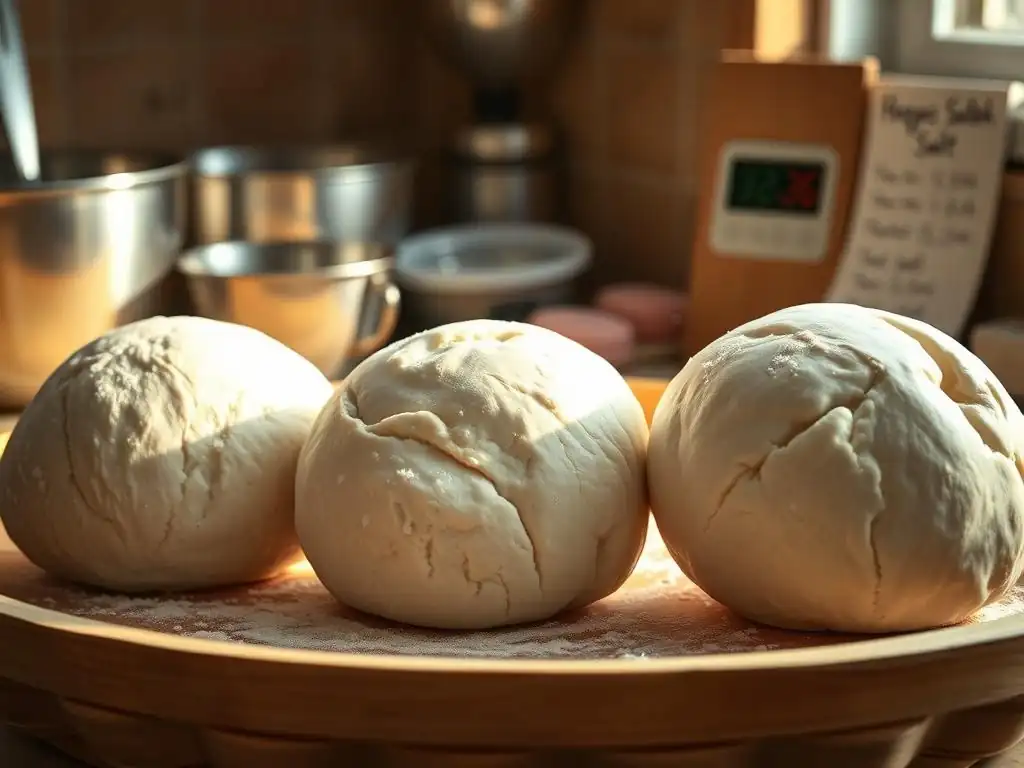
Achieving consistent and predictable pizza dough fermentation relies heavily on accurate ingredient measurements, especially salt. Because different types of salt have vastly different crystal sizes and densities, measuring by volume (like teaspoons or tablespoons) is highly unreliable. For instance, a tablespoon of fine table salt weighs significantly more than a tablespoon of coarse kosher salt. Using volume measurements can lead to inconsistent salt percentages, directly impacting fermentation speed and gluten development.
The only reliable way to measure salt for baking is by weight, using a digital kitchen scale. Most pizza recipes, particularly those aimed at advanced techniques, specify salt as a percentage of the flour weight (Baker's Percentage). This method ensures that regardless of the type of salt used, the amount of salt relative to the flour is constant, leading to reproducible results.
For example, if a recipe calls for 2% salt and you are using 500 grams of flour, you need precisely 10 grams of salt (500g * 0.02 = 10g). Accurate weighing ensures that salt enhances pizza dough fermentation in a predictable manner every time you make dough.
Baker's Percentage and Salt: A Key to Pizza Dough Success
Baker's Percentage is a standard system used in baking where each ingredient's weight is expressed as a percentage of the flour weight, which is always considered 100%. This system is invaluable for understanding and scaling recipes, and it is particularly useful for managing critical ingredients like salt and yeast that heavily influence fermentation. A typical pizza dough recipe might be expressed as: Flour 100%, Water 60-65%, Salt 1.8-2.5%, Yeast 0.2-1% (depending on type and fermentation time).
Using Baker's Percentage for salt allows bakers to easily adjust recipes while maintaining the correct ratios. If you want to make a larger batch of dough, say with 1500 grams of flour, and your recipe calls for 2% salt, you simply calculate 2% of 1500 grams (1500g * 0.02 = 30g salt). This ensures that the balance between flour, water, salt, and yeast is maintained, guaranteeing that salt enhances pizza dough fermentation proportionally regardless of batch size. Mastering Baker's Percentage, especially for salt, is a key step towards consistently achieving high-quality pizza dough.
Best Practices for Incorporating Salt into Your Pizza Dough
When to Add Salt: Early vs. Late Addition Techniques
There are two primary approaches to adding salt to pizza dough: adding it early with the dry ingredients (flour and yeast) or adding it later, after the initial mixing phase or even after an autolyse period. The traditional and most common method is early addition. Salt is whisked together with the flour and yeast before water is added. This ensures the salt is evenly distributed from the beginning of the mixing process. This method is simple, reliable, and suitable for most pizza dough recipes.
A less common technique involves adding salt later, often after the flour and water have been mixed and allowed to rest (autolyse) or after some initial mixing has occurred. The theory behind adding salt later, particularly after an autolyse (a resting period of 20-60 minutes after mixing just flour and water), is that it allows the flour to hydrate and gluten development to begin without the initial inhibitory effects of salt on hydration and yeast. However, when adding salt later, it is crucial to mix the dough thoroughly to ensure the salt is fully dissolved and evenly distributed.
Uneven distribution can lead to patches of dough with poor gluten development and inconsistent fermentation. For most home bakers, the early addition method is recommended for its simplicity and reliability in ensuring salt enhances pizza dough fermentation uniformly.
Even Salt Distribution for Uniform Fermentation
Regardless of when salt is added, ensuring it is evenly distributed throughout the dough is paramount for uniform fermentation and consistent gluten development. If salt is not properly mixed in, concentrated pockets of salt can severely inhibit yeast activity in those areas, while other areas with less salt will ferment too quickly. This leads to uneven rising, inconsistent crumb structure, and potentially weak spots in the dough that tear during shaping.
When adding salt with dry ingredients, whisk it thoroughly with the flour and yeast before adding water. If adding salt later, dissolve it in a small amount of the recipe's water or ensure it is fully incorporated into the dough through sufficient mixing or kneading. For instance, if using coarse salt, dissolving it first might be beneficial.
For machine mixing, ensure the dough is mixed long enough after salt is added (typically a few minutes) for it to be fully incorporated. Manual kneading also requires attention to ensure the salt is worked evenly into the dough mass. Proper distribution is key to ensuring salt enhances pizza dough fermentation across the entire dough batch, leading to predictable and desirable results.
Recipes Showcasing Salt's Impact on Pizza Dough Fermentation
Neapolitan Pizza Dough: Illustrating the Effect of 3% Salt
Authentic Neapolitan pizza dough, as defined by the Associazione Verace Pizza Napoletana (AVPN), typically uses a relatively high salt percentage, often around 2.5% to 3% of the flour weight. This level of salt, combined with specific flour types (Italian "00"), high hydration (60-65%), minimal yeast, and often a relatively short room-temperature bulk fermentation followed by balling and a final proof, produces a dough with specific characteristics. The higher salt content significantly controls the rapid fermentation that would otherwise occur with the high hydration and room temperature.
The 3% salt level contributes to the dough's strength and elasticity, allowing it to be stretched paper-thin while still holding together. During the very high-temperature bake (450-500°C / 850-930°F) in a wood-fired oven, this dough develops a light, airy, and open crumb structure with a characteristic slightly chewy crust (the 'cornicione'). The higher salt level also enhances the flavor and promotes desirable browning of the crust edges. This specific application clearly demonstrates how salt enhances pizza dough fermentation by managing yeast activity and building structure under conditions that would otherwise lead to uncontrolled, rapid rise.
New York Style Pizza Dough: Highlighting Salt's Role in Long Fermentation
New York Style pizza dough often uses a slightly lower salt percentage compared to Neapolitan, typically ranging from 1.8% to 2.2% of the flour weight. This dough is often made with bread flour (higher protein than Italian "00"), slightly lower hydration (58-62%), and is famously subjected to a long, cold fermentation period, often 2 to 4 days in the refrigerator. The salt level, though slightly lower than Neapolitan, is still crucial here.
In this context, the salt enhances pizza dough fermentation by working in conjunction with the cold temperature to dramatically slow down yeast activity. This extended, slow fermentation allows for significant flavor development through the breakdown of starches and proteins by enzymes. The salt's presence ensures that the dough ferments slowly and predictably over several days without becoming over-proofed or developing excessive acidity. The resulting dough is strong, elastic, and yields a crust that is chewier and less airy than Neapolitan, with a more developed, complex flavor profile – a direct result of the controlled, salt-moderated long fermentation.
Pizza Dough Techniques and Salt Optimization
Salt's Interaction with Poolish and Biga
When using preferments like poolish or biga (a portion of the flour, water, and yeast mixed ahead of time), salt is typically not included in the preferment itself. Preferments are designed to encourage rapid yeast activity to build flavor and microbial complexity. Adding salt would inhibit this initial rapid fermentation. Salt is only added to the final dough mix when the preferment is combined with the remaining ingredients.
Once added to the final dough, the salt then performs its usual functions: controlling the fermentation of the remaining yeast (both from the preferment and any added to the final dough), strengthening the gluten network, and contributing to flavor. The timing of salt addition in preferment-based doughs highlights its role as a fermentation regulator for the main dough phase, rather than a component of the initial, rapid preferment build. This method allows the baker to leverage the benefits of both rapid initial fermentation (in the preferment) and controlled, slower fermentation (in the final dough).
Understanding Salt in Sourdough Pizza Dough Fermentation
In sourdough pizza dough, salt plays the same vital structural and fermentation-controlling roles as it does in dough made with commercial yeast. Sourdough starter contains wild yeast and lactic acid bacteria, which work together to ferment the dough. Like commercial yeast, the activity of these microorganisms is sensitive to salt concentration. Salt enhances pizza dough fermentation in sourdough by tempering the activity of both the wild yeast and the bacteria.
A typical sourdough pizza dough recipe might use a salt percentage of 2% to 2.5%. This level slows down the wild yeast, preventing the dough from rising too quickly, especially during longer fermentation periods (often 8-12 hours at room temperature or 24-72 hours cold). It also influences the balance of flavors produced by the lactic acid bacteria, contributing to the characteristic tang of sourdough.
Without salt, sourdough dough would ferment uncontrollably, become excessively sour, and lack the necessary structure to create a good crust. The salt is essential for managing the complex microbial activity in sourdough, ensuring a controlled rise, desirable texture, and balanced flavor profile.
Achieving Pizza Perfection: Mastering Salt's Role in Fermentation
Fine-Tuning Salt Levels for Your Desired Crust Characteristics
Mastering the role of salt in pizza dough fermentation is a key step towards achieving your desired crust characteristics. By understanding how salt influences yeast activity, gluten development, and dough handling, you gain the ability to fine-tune your recipes. A slightly higher salt percentage (e.g., 2.5% vs. 2%) will result in a slower fermentation, potentially allowing for longer proofing times and more complex flavor development, while also contributing to a slightly tighter crumb structure and potentially crisper crust edges due to enhanced browning.
Conversely, a slightly lower salt percentage (e.g., 1.8% vs. 2%) will lead to a faster fermentation, which might be desirable for shorter proofing times, but requires careful temperature management to prevent over-proofing. It can also result in a more open crumb structure, provided the gluten is sufficiently developed.
Experimenting with small adjustments in salt percentage (starting with 0.1% or 0.2% increments) while keeping other variables constant allows you to observe the direct impact on your dough's fermentation speed, handling, and the final baked crust texture and flavor. This iterative process of adjustment and observation is how experienced bakers leverage the power of salt enhances pizza dough fermentation to consistently produce exceptional results tailored to their preferences.
Frequently Asked Questions
What exactly is the role of salt in pizza dough fermentation?
Salt plays a crucial role in controlling the speed of fermentation. It slows down the activity of yeast and enzymes, allowing for a more controlled rise and better flavor development. It strengthens the gluten structure.
How does salt specifically enhance flavor in pizza dough?
Salt doesn't just make the dough taste salty; it actually enhances the complex flavors produced during fermentation. It balances the sweetness and acidity, resulting in a more well-rounded and nuanced flavor profile. This is due to the complex chemical reactions during fermentation.
What happens if I use too much salt in my pizza dough?
Too much salt can inhibit yeast activity, leading to a slow or incomplete rise. The dough can become tough and dense, and the final product may be overly salty and unpleasant to eat.
Too little salt can cause the dough to rise too quickly, resulting in a weak gluten structure and a potentially flat, flavorless pizza. The dough might also become sticky and difficult to handle.
Can I use different types of salt in my pizza dough, and does it matter?
Yes, you can! While table salt is common, sea salt or kosher salt are often preferred by bakers. The key difference is in their crystal size and purity, which can affect the dissolution rate and flavor intensity.
Final Reflection: The Unsung Hero of Pizza Dough Fermentation
The careful management of salt in pizza dough isn't just a detail; it's the cornerstone of achieving optimal fermentation and, ultimately, the perfect pizza. Ignoring its crucial role leads to unpredictable results, from gummy textures to bland flavors. Understanding the multifaceted impact of salt unlocks a deeper appreciation for the artistry of pizza making.
The influence of salt extends far beyond simple taste; it's a fundamental element shaping the entire fermentation process. It controls yeast activity, influencing the rate and character of fermentation, and impacting the final dough structure. As the renowned pizzaiolo, Tony Gemignani, once said, Salt is the conductor of the orchestra; it brings harmony to the dough.
This quote perfectly encapsulates the subtle yet profound impact of this often-overlooked ingredient. My own experimentation has repeatedly underscored this truth, revealing the delicate balance required to achieve the desired outcome.
Now, consider your own pizza-making journey. Are you ready to elevate your dough game? Experiment with different salt concentrations, observe the changes in fermentation, and taste the difference. Don't just follow recipes blindly; understand the why behind each ingredient. By embracing the science and artistry of salt's role, you'll unlock a new level of understanding and control, paving the way for consistently exceptional pizza.
Unleash Your Inner Pizzaiolo: Master Salt's Magic!
Thanks for diving deep into the world of pizza dough fermentation with us! We hope you now have a newfound appreciation for salt's crucial role in creating that perfect crust. Ready to put your new knowledge to the test?
- Bake the perfect pizza: Try adjusting your salt levels in your next dough recipe based on what you've learned – the results might surprise you! Pay close attention to the texture and taste.
- Share your dough-making journey: Show us your creations! Tag us on social media with your pizza-making triumphs and challenges. Let's learn together.
- Explore advanced fermentation techniques: Research different types of salt and their impact on dough. What other experiments will you try?
So, what unique flavor profile will your next masterpiece showcase? Let's hear your pizza plans in the comments!