
Bake Rustic Vegan Ciabatta Easily at Home

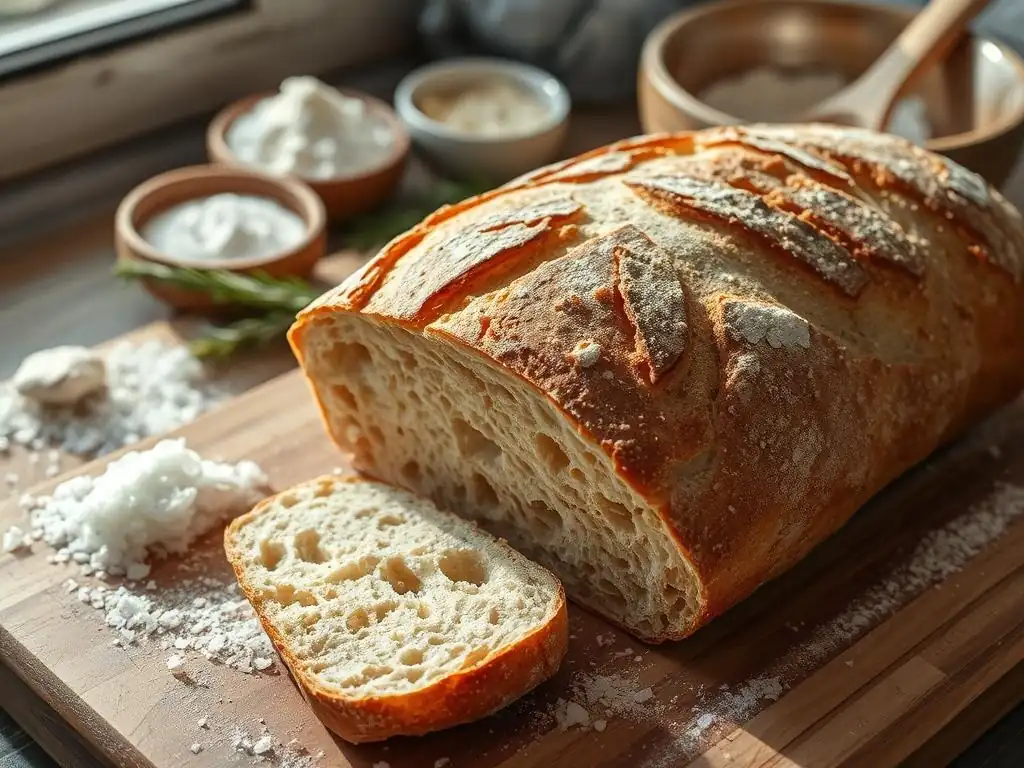
Welcome to BakeWithEase, your trusted companion on your baking journey! Ever dreamed of sinking your teeth into a perfectly crusty, airy ciabatta, but thought it was too complicated? Prepare to be amazed! We're diving into the secrets of crafting an Easy Vegan Ciabatta Recipe that’s surprisingly simple to master. Discover how to create this rustic Italian bread in your own kitchen and unlock a world of flavorful possibilities – what's the key to that signature open crumb? Read on to find out!
- Bake Rustic Vegan Ciabatta Easily at Home with BakeWithEase
- Introduction: Discover the Joy of Homemade Vegan Ciabatta
- Easy Vegan Ciabatta Recipe: The Ingredients You'll Need
-
Step-by-Step Guide to Baking Perfect Vegan Ciabatta
- Step 1: Preparing the Vegan Ciabatta Starter (Poolish)
- Step 2: Mixing the Dough for Light and Airy Texture
- Step 3: The Importance of the First Rise (Bulk Fermentation)
- Step 4: Shaping the Rustic Ciabatta Loaves
- Step 5: The Second Rise: Achieving Perfect Air Pockets
- Step 6: Baking Your Vegan Ciabatta to Golden Perfection
- Tips and Tricks for Baking the Best Vegan Ciabatta
- Vegan Ciabatta Variations: Customize Your Bake
- Storing and Serving Your Homemade Vegan Ciabatta
- Troubleshooting Common Vegan Ciabatta Baking Problems
- Conclusion: Enjoy Your Effortlessly Baked Vegan Ciabatta
- Frequently Asked Questions
- Final Reflection: The Humble Loaf, a Gateway to Vegan Baking
- Unleash Your Inner Baker: Craft the Perfect Ciabatta!
Bake Rustic Vegan Ciabatta Easily at Home with BakeWithEase
Introduction: Discover the Joy of Homemade Vegan Ciabatta
Why Bake Your Own Vegan Ciabatta?
Baking your own bread offers a unique sense of accomplishment, and when it comes to an easy vegan ciabatta recipe, the rewards are even greater. Store-bought vegan options can be limited, expensive, or contain unwanted additives. By baking at home, you gain complete control over the ingredients, ensuring a pure, wholesome loaf free from animal products.
You also get to experience the incredible aroma that fills your kitchen as the bread bakes – a simple pleasure that store-bought bread just can't replicate. Furthermore, mastering an easy vegan ciabatta recipe means you can enjoy this versatile bread fresh out of the oven whenever the craving strikes, offering a superior texture and flavor compared to loaves that have traveled miles to reach the shelf.
Beyond the personal satisfaction and ingredient control, baking vegan ciabatta at home is surprisingly cost-effective in the long run. A single bag of flour, some yeast, salt, and water are the primary components, which are significantly cheaper than purchasing artisanal loaves repeatedly. The process, while requiring patience for rising times, is not overly complex, especially with a guided easy vegan ciabatta recipe. It’s a rewarding activity that connects you to the food you eat and provides a delicious, healthy staple for your table, perfect for sandwiches, dipping in olive oil, or serving alongside your favorite vegan dishes.
BakeWithEase: Your Guide to Simple Vegan Bread Baking
At BakeWithEase, we believe that everyone can bake delicious bread, including fantastic vegan options. Our mission is to demystify the process, providing clear, step-by-step instructions that make even seemingly complex recipes, like an easy vegan ciabatta recipe, accessible to bakers of all skill levels. We focus on simple techniques and readily available ingredients, stripping away the intimidation often associated with bread making. Whether you're a complete beginner or looking to refine your skills, our guides are designed to build your confidence and help you achieve consistently great results.
We understand that navigating vegan baking can sometimes feel challenging due to the absence of traditional ingredients like eggs and dairy. However, for an easy vegan ciabatta recipe, these aren't necessary in the first place! Ciabatta traditionally relies on flour, water, yeast, and salt – all naturally vegan.
Our approach focuses on the fundamentals of hydration, fermentation, and handling wet dough, specifically tailored to ensure success with plant-based ingredients where needed in other recipes. We provide the knowledge and encouragement you need to bake beautiful, crusty, and airy vegan ciabatta loaves right in your own kitchen, proving that baking delicious vegan bread can indeed be easy and incredibly rewarding.
Easy Vegan Ciabatta Recipe: The Ingredients You'll Need
Essential Ingredients for Authentic Ciabatta Flavor
To bake an authentic and easy vegan ciabatta recipe, you'll need just a few core ingredients. The foundation is high-quality bread flour. Bread flour has a higher protein content (around 12-14%) compared to all-purpose flour (typically 10-12%), which is crucial for developing the strong gluten network needed to trap the gases produced by the yeast, resulting in ciabatta's characteristic open, airy crumb structure. You'll need approximately 400-500 grams of bread flour for a standard loaf or two smaller ones.
Active dry yeast or instant yeast is essential for leavening. About 1 to 2 teaspoons is usually sufficient for an easy vegan ciabatta recipe, depending on the type and ambient temperature. Warm water (around 105-115°F or 40-46°C for active dry yeast) activates the yeast and provides the necessary hydration.
Ciabatta is known for its high hydration, often using water equal to 75-85% of the flour weight. Finally, fine sea salt or kosher salt is vital for enhancing flavor and controlling yeast activity; roughly 8-10 grams (about 1.5-2 teaspoons) per standard loaf is a good starting point. These simple components, when combined and handled correctly, create the complex flavor and texture of true ciabatta.
Gluten-Free Flour Blend Substitution Options
While traditional ciabatta relies heavily on gluten for its structure, it is possible to create a gluten-free version, though the texture will differ slightly from the classic. For an easy vegan ciabatta recipe adaptation that is gluten-free, you will need a high-quality gluten-free bread flour blend. Look for blends that contain a mix of starches (like tapioca or potato starch) and protein-rich flours (like brown rice flour, sorghum flour, or millet flour), often with added xanthan gum or psyllium husk powder, which help mimic the binding properties of gluten.
When substituting, a direct 1:1 replacement by weight is often the best approach, but you may need to adjust the water slightly as gluten-free blends can absorb liquid differently. A good starting point is to use the same amount of water as the original recipe and add more gradually if the dough feels too dry.
Including a binder like psyllium husk (around 5-10 grams per 500 grams of flour blend) soaked in some of the water for 5-10 minutes before mixing can significantly improve the structure and elasticity of a gluten-free easy vegan ciabatta recipe, helping to achieve a more open crumb. Remember that gluten-free doughs often require less handling than wheat-based doughs.
Step-by-Step Guide to Baking Perfect Vegan Ciabatta
Step 1: Preparing the Vegan Ciabatta Starter (Poolish)
A poolish is a simple type of pre-ferment used in many traditional bread recipes, including this easy vegan ciabatta recipe. It's typically made by mixing equal parts flour and water (by weight) with a small amount of yeast. For instance, you might use 100 grams of bread flour, 100 grams of warm water, and just a pinch (about 0.1-0.2 grams or 1/8 teaspoon) of active dry yeast. This mixture is left to ferment at room temperature for several hours, often 8 to 16 hours, or even longer in a cooler environment.
During this long, slow fermentation, the yeast develops complex flavors and aromas that contribute significantly to the final bread's taste and texture. The poolish will become bubbly and slightly acidic, indicating it's active and ready to be incorporated into the main dough. Preparing the poolish is a foundational step that, while requiring patience, is relatively hands-off and crucial for achieving the characteristic depth of flavor and open crumb of a classic easy vegan ciabatta recipe.
Step 2: Mixing the Dough for Light and Airy Texture
The main dough for an easy vegan ciabatta recipe is typically very wet, which is key to its airy texture. Start by combining the prepared poolish with the remaining water and yeast (if using a small amount in the final dough). Then, add the rest of the bread flour and the salt. Mix these ingredients until just combined – there's no need for extensive kneading at this stage. The dough will be shaggy and sticky, which is exactly what you want for an easy vegan ciabatta recipe.
Unlike many other bread types, ciabatta dough develops its gluten structure through a series of folds rather than vigorous kneading. After the initial mix, let the dough rest for 20-30 minutes. This rest period, known as autolyse, allows the flour to fully hydrate and gluten development to begin naturally. Following the rest, you'll perform several sets of stretch-and-folds over the next couple of hours, which gently strengthen the dough without overworking it, essential for that light and airy texture.
Step 3: The Importance of the First Rise (Bulk Fermentation)
The first rise, or bulk fermentation, is a critical stage in this easy vegan ciabatta recipe where the dough develops flavor and gas. After mixing and performing the stretch-and-folds (typically 3-4 sets spaced 20-30 minutes apart), the dough is left undisturbed in a lightly oiled container, covered, at room temperature. The duration of this rise can vary significantly depending on the ambient temperature and the amount of yeast used, but it often takes 2-4 hours.
During bulk fermentation, the yeast produces carbon dioxide gas, causing the dough to expand. More importantly, enzymatic activity breaks down starches into sugars, and fermentation byproducts contribute to the bread's complex flavor profile. The dough should approximately double in size and become visibly bubbly. A good indicator that the bulk fermentation is complete for your easy vegan ciabatta recipe is when the dough appears lively and has a domed surface.
Step 4: Shaping the Rustic Ciabatta Loaves
Shaping ciabatta is different from shaping a boule or batard because you want to preserve as much of the gas created during bulk fermentation as possible to ensure an open crumb in your easy vegan ciabatta recipe. Instead of traditional kneading and shaping, ciabatta dough is gently handled. First, lightly flour your work surface generously – this wet dough will stick. Gently turn the dough out of its container onto the floured surface, being careful not to deflate it.
Using a bench scraper, divide the dough into your desired number of loaves (typically 1 or 2 larger ones, or 3-4 smaller rolls). Gently stretch each piece into a rough rectangle or square shape. Avoid folding or rolling the dough tightly. The goal is to create a rustic, elongated shape with minimal handling. The edges can be gently tucked under or left as they are; the characteristic shape comes from this simple handling and the final rise.
Step 5: The Second Rise: Achieving Perfect Air Pockets
The second rise, also known as the final proof or proofing, is where the shaped loaves expand and develop their structure before baking. Because ciabatta dough is so wet and needs support during this phase of your easy vegan ciabatta recipe, it's traditionally proofed on a heavily floured linen couche or a baking sheet lined with parchment paper, using folds in the fabric or crumpled parchment to support the sides of the loaves and prevent them from spreading too much.
Dust the surface of the shaped loaves lightly with flour. Cover them loosely with plastic wrap or a light kitchen towel to prevent drying out. Let the loaves proof at room temperature for 45-90 minutes. They should increase in size by about 50-75% and feel light and airy. Be careful not to overproof, as this can cause the loaves to collapse in the oven. Gentle handling is key when transferring the proofed loaves to the baking surface.
Step 6: Baking Your Vegan Ciabatta to Golden Perfection
Baking ciabatta at a high temperature in a preheated oven is crucial for achieving a crisp crust and maximizing oven spring. Preheat your oven to a high temperature, typically 450-475°F (230-245°C), with a baking stone or steel inside if you have one. It's also highly recommended to create steam in the oven during the initial baking phase. This keeps the surface of the dough moist, allowing it to expand fully before the crust sets, which helps achieve those signature large holes in your easy vegan ciabatta recipe.
Carefully transfer the proofed loaves to the hot baking stone or steel. A common method for creating steam is to pour about a cup of hot water into a preheated pan placed on the bottom rack of the oven just before loading the bread. Bake the ciabatta for 20-30 minutes, or until the crust is deep golden brown and the internal temperature reaches around 205-210°F (96-99°C). Let the loaves cool completely on a wire rack before slicing to allow the internal structure to set.
Tips and Tricks for Baking the Best Vegan Ciabatta
Achieving the Signature Ciabatta Holes
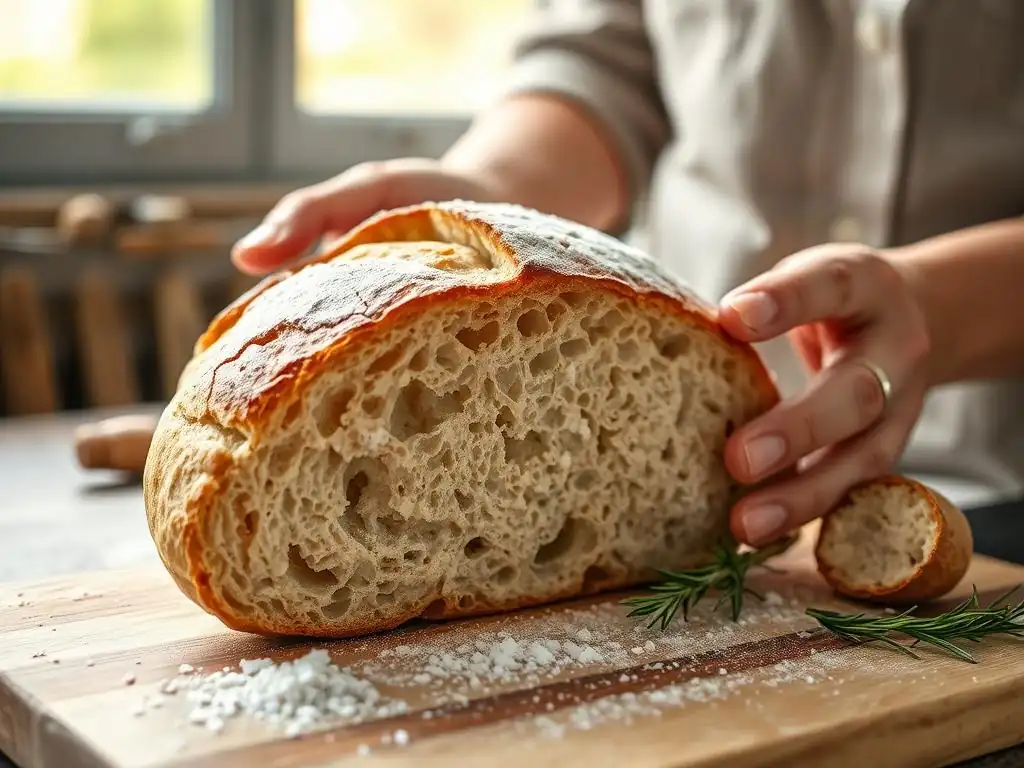
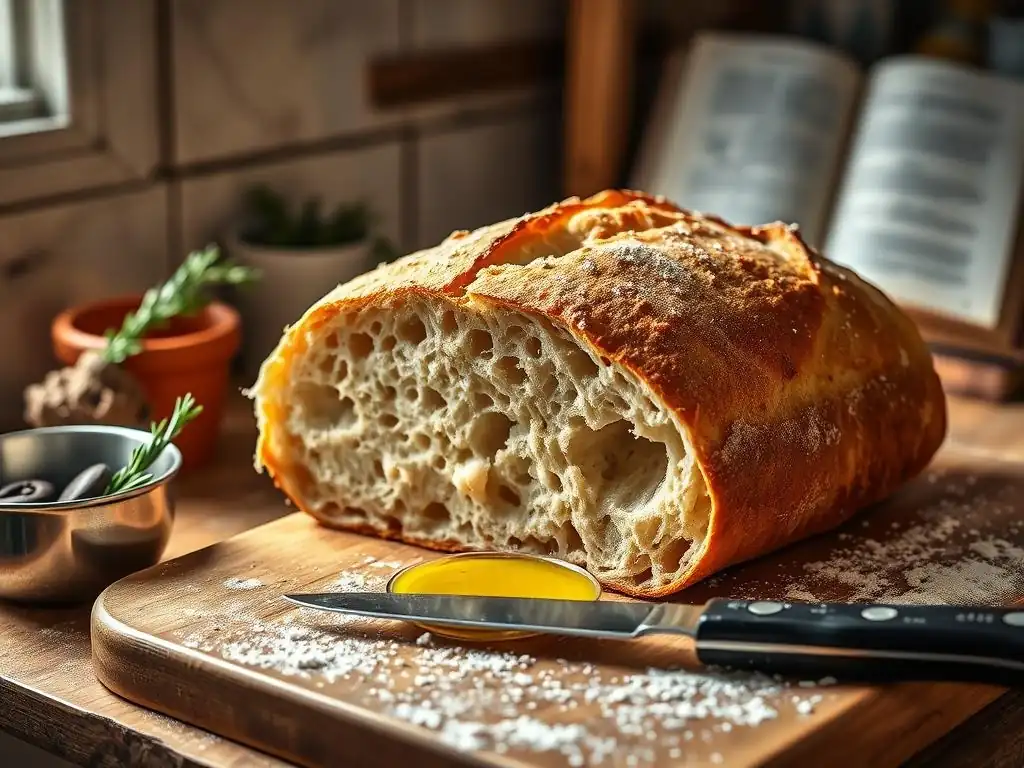
The open, holey structure (known as the alveoli) is the hallmark of great ciabatta and a key goal when following an easy vegan ciabatta recipe. This characteristic crumb is primarily achieved through high hydration, gentle handling, and proper fermentation. Using a poolish or other pre-ferment contributes to a stronger gluten network capable of trapping gas. The high water content (often 75-85% hydration relative to flour weight) makes the dough very loose, allowing large bubbles to form.
Crucially, avoid deflating the dough during shaping and transfer. Instead of aggressive kneading, rely on stretch-and-folds during the bulk fermentation to build strength gently while preserving the gas pockets. Proofing the shaped loaves on a floured surface or couche, allowing them to spread naturally without being constrained by a loaf pan, also encourages the formation of large, irregular holes. Finally, baking at a high temperature with steam ensures maximum oven spring before the crust hardens, locking in those beautiful air pockets.
Mastering the Wet Dough Technique
Working with wet dough, as required for this easy vegan ciabatta recipe, can feel intimidating at first, but mastering it is essential for that coveted airy texture. The key is to embrace the stickiness and use techniques that minimize direct contact with your hands. Think of the dough as a very thick batter rather than a traditional kneadable dough. A bench scraper is your best friend for manipulating and dividing the dough without it welding itself to your fingers.
During stretch-and-folds, wet your hands slightly with water to prevent sticking. Instead of grabbing and pulling, gently lift a section of the dough from the side, stretch it upwards, and fold it over the center. Rotate the bowl and repeat. Performing these folds over time develops the gluten structure without needing to knead. For shaping, generously flour your work surface and the top of the dough, then use the bench scraper to guide and lift the dough. Remember, the stickiness is a sign you're on the right track for a truly easy vegan ciabatta recipe with a fantastic crumb.
How to Handle Sticky Dough Like a Pro
Sticky dough is par for the course with an easy vegan ciabatta recipe, but it doesn't have to be a struggle. The most effective way to handle this high-hydration dough is to use tools and techniques that reduce friction and sticking. A plastic or metal bench scraper is indispensable for scraping the dough from the bowl, dividing it, and lifting it on your work surface. Keep it clean and slightly wet or floured as you work.
Before turning the dough out, generously flour your work surface. Use bread flour, rice flour, or a mix for dusting, as these are less likely to be absorbed quickly by the wet dough. You can also lightly flour your hands, but avoid adding excessive flour to the dough itself, as this can affect the hydration balance. When performing stretch-and-folds, wetting your hands with water is often more effective than flouring them. Practice patience and gentle movements; fighting the stickiness aggressively will only make it worse and risk deflating the dough.
Adjusting Hydration for Humid Climates
Baking in different climates, especially humid ones, requires slight adjustments to your easy vegan ciabatta recipe to achieve consistent results. High humidity means there's already more moisture in the air, which can be absorbed by the flour and dough. If you use the exact same amount of water in a humid environment as you would in a dry one, your dough might end up excessively sticky and slack, making it very difficult to handle and potentially leading to a denser crumb.
A good strategy is to hold back a small amount of the water initially – perhaps 20-30 grams per 500 grams of flour. Mix the dough and see how it feels. If it seems too stiff or not wet enough for a ciabatta dough, gradually add the reserved water until the desired consistency is reached. Conversely, in very dry climates, you might need to add a little extra water. Paying attention to the dough's feel rather than strictly adhering to the recipe's water quantity is key for adapting your easy vegan ciabatta recipe to your specific environment.
Vegan Ciabatta Variations: Customize Your Bake
Adding Herbs and Spices for Extra Flavor
An easy vegan ciabatta recipe provides a wonderful base for incorporating additional flavors. Herbs and spices can elevate the taste profile significantly. Dried herbs like rosemary, thyme, or oregano are classic additions. You can mix 1-2 tablespoons of dried herbs directly into the flour before adding the water, or gently fold them into the dough during the last set of stretch-and-folds. Fresh herbs can also be used, but they should be chopped finely and added towards the end of mixing to prevent them from breaking down too much.
Spices such as garlic powder, onion powder, or a pinch of red pepper flakes can also add depth. For a subtle garlic flavor, you can add a teaspoon of garlic powder to the dry ingredients. Another technique is to infuse the water used in the recipe with roasted garlic or herbs, straining the solids before adding the liquid to the flour. Experiment with different combinations to find your favorite way to enhance your easy vegan ciabatta recipe.
Vegan Ciabatta with Olives and Sun-Dried Tomatoes
Adding mix-ins like olives and sun-dried tomatoes creates a delicious, savory version of your easy vegan ciabatta recipe. For a standard loaf using about 500 grams of flour, you can incorporate roughly 50-70 grams of pitted, chopped olives (such as Kalamata or green olives) and 30-50 grams of oil-packed sun-dried tomatoes, drained and roughly chopped.
These additions should be gently folded into the dough during the last set of stretch-and-folds or just before the start of the bulk fermentation. Be careful not to overmix, as this can tear the gluten structure. The moisture and salt from the olives and tomatoes will slightly affect the dough's hydration and fermentation, but generally, no major adjustments are needed for an easy vegan ciabatta recipe. The result is a flavorful loaf perfect for enjoying on its own or as part of a meal.
Vegan Ciabatta Rolls for Sandwiches
Transforming your easy vegan ciabatta recipe into individual rolls is simple and creates perfect portions for sandwiches. Instead of shaping the dough into large loaves, gently divide the dough into smaller, roughly equal portions after the bulk fermentation. For rolls, aim for pieces weighing around 100-150 grams each.
Shape each piece into a rustic rectangle or square, similar to the larger loaves but on a smaller scale. Proof the rolls on a floured surface or baking sheet, separated by folds of parchment or cloth to maintain their shape. Baking time will be shorter than for a large loaf, typically 15-20 minutes at the same high temperature. This variation of the easy vegan ciabatta recipe is ideal for packing lunches or serving alongside soup.
Storing and Serving Your Homemade Vegan Ciabatta
Keeping Your Ciabatta Fresh and Crusty
Homemade vegan ciabatta is best enjoyed the day it's baked, especially if you love that super crispy crust. However, you can store it to maintain quality for a couple of days. Once completely cool, store the loaf at room temperature in a paper bag. The paper bag allows the crust to breathe, helping to keep it from becoming soft and rubbery, which happens if stored in plastic. Avoid airtight containers or plastic wrap, as these trap moisture and ruin the crust.
For longer storage, your easy vegan ciabatta recipe loaves or rolls freeze beautifully. Once completely cool, wrap them tightly in plastic wrap, then in aluminum foil or place them in a freezer-safe bag. They can be stored in the freezer for up to 2-3 months. To reheat, thaw the bread at room temperature, then refresh it in a preheated oven at 350°F (175°C) for 5-10 minutes until the crust is crisp again.
Delicious Ways to Enjoy Your Vegan Ciabatta
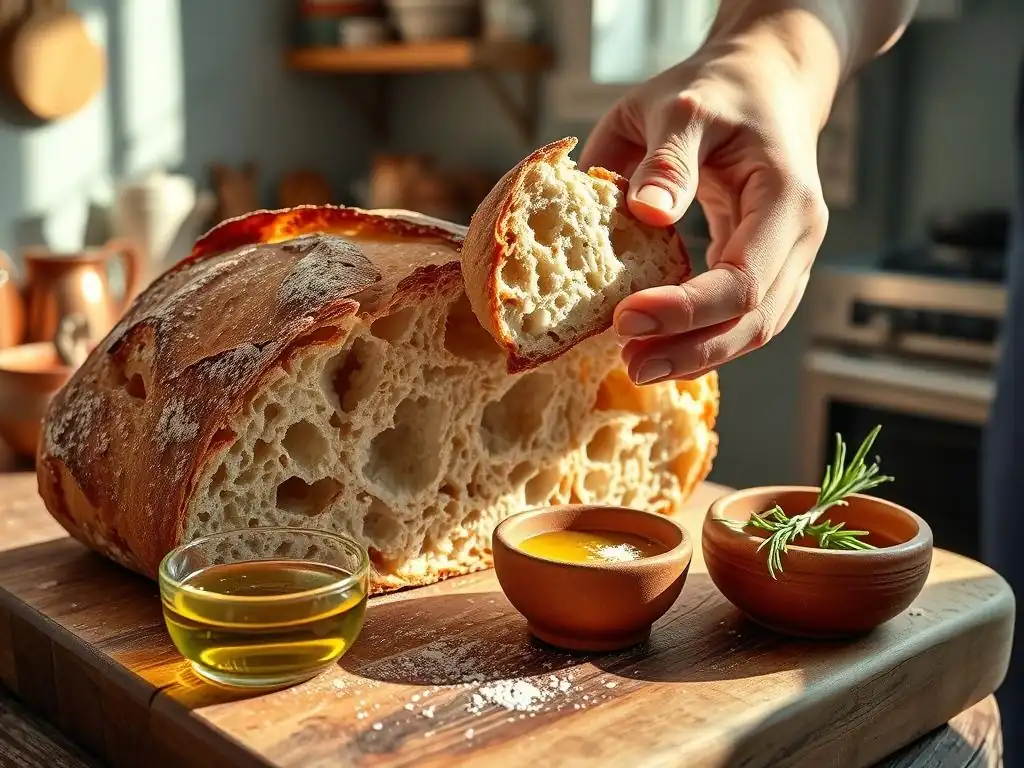
Your freshly baked easy vegan ciabatta recipe loaf is incredibly versatile and delicious in many ways. Its open crumb and sturdy crust make it perfect for dipping. Serve slices with high-quality olive oil and balsamic vinegar, or with a bowl of your favorite vegan soup or stew.
It's also the ideal bread for building hearty sandwiches. Fill it with grilled vegetables, vegan cheeses, hummus, or plant-based deli slices. Toasting slices turns the crust even crispier and the interior soft, making it a fantastic base for bruschetta topped with fresh tomatoes, basil, and garlic. Or, simply enjoy warm slices with a spread of vegan butter or a drizzle of olive oil – sometimes, the simplest ways are the best to appreciate your homemade easy vegan ciabatta recipe.
Troubleshooting Common Vegan Ciabatta Baking Problems
My Ciabatta Dough is Too Sticky!
A sticky dough is expected with an easy vegan ciabatta recipe due to its high hydration, but if it's unmanageably sticky, there are a few potential causes and solutions. First, double-check your measurements, especially the flour and water weights. Even small errors can significantly impact hydration. Ensure you're using bread flour, as its higher protein content provides better structure for wet doughs.
If the dough is still too difficult to handle after the initial mix and rest, try performing an extra set or two of stretch-and-folds during the bulk fermentation. This helps build gluten strength, which makes the dough more cohesive and slightly less sticky over time. Ensure you are using enough flour on your work surface and bench scraper during shaping, and consider wetting your hands instead of flouring them during folds. If it's excessively sticky, you can knead in a tablespoon or two of flour during the first set of folds, but avoid adding too much.
My Ciabatta Didn't Rise Enough!
Insufficient rise during either bulk fermentation or proofing can lead to a dense loaf from your easy vegan ciabatta recipe. This is often related to yeast activity or dough temperature. Check the expiration date on your yeast; old or inactive yeast is a common culprit. Ensure the water temperature used to activate active dry yeast is within the recommended range (around 105-115°F or 40-46°C); water that's too hot can kill the yeast, while water that's too cold won't activate it properly.
The ambient temperature of your kitchen also plays a significant role. Yeast is more active in warmer environments (75-80°F or 24-27°C). If your kitchen is cool, the rise times will be much longer than specified in the recipe. You can try placing the dough in a slightly warmer spot, such as inside a turned-off oven with the light on, or near a warm appliance. Ensure the dough is properly covered during rises to prevent a skin from forming, which can inhibit expansion.
My Ciabatta is Too Dense!
A dense crumb without the characteristic large holes is a common issue when baking an easy vegan ciabatta recipe. This often stems from insufficient gluten development, improper handling, or under-proofng/over-proofing. If the gluten isn't strong enough, it can't trap the gas produced by the yeast effectively. Ensure you are using bread flour and performing the recommended sets of stretch-and-folds during bulk fermentation to build strength gently.
Handling the dough too roughly during shaping or transfer can deflate the precious air pockets developed during fermentation. Be as gentle as possible when dividing and shaping the dough. Under-proofing means the dough hasn't had enough time to develop sufficient gas before baking, while over-proofing can cause the gluten structure to weaken and collapse.
Pay attention to the visual cues for readiness: the dough should be significantly increased in volume and feel light and airy, but not so fragile that it tears easily. Baking at too low a temperature or without steam can also hinder oven spring, contributing to a denser loaf.
Conclusion: Enjoy Your Effortlessly Baked Vegan Ciabatta
Celebrate the Simplicity of Homemade Vegan Bread
You've just completed the journey of baking an easy vegan ciabatta recipe from scratch! Take a moment to appreciate the process and the incredible result. From activating the yeast in the poolish to gently shaping the wet dough and finally watching it transform in the hot oven, each step contributes to the magic of bread making. This easy vegan ciabatta recipe proves that baking delicious, artisanal-quality bread doesn't require animal products or complex techniques. It's about understanding a few key principles and trusting the process.
Bringing a warm, crusty loaf of homemade vegan ciabatta to your table is a rewarding experience. The aroma, the texture, and the taste are miles apart from anything you'd buy at the store. By following this easy vegan ciabatta recipe, you've created something wonderful with just a few simple ingredients. Celebrate your baking success by sharing your loaf with friends and family, or simply savoring a slice yourself. This accomplishment is a testament to the simplicity and joy that baking, especially vegan bread baking, can bring into your home.
Frequently Asked Questions
What is a ciabatta bread?
Ciabatta is an Italian bread known for its crispy crust and airy, open crumb. It’s a versatile bread that pairs well with various toppings and is perfect for sandwiches.
How is a vegan ciabatta different from traditional ciabatta?
A vegan ciabatta replaces traditional ingredients like milk and butter with plant-based alternatives, making it suitable for those following a vegan diet while maintaining the same delicious texture.
What makes the Easy Vegan Ciabatta Recipe stand out?
Our Easy Vegan Ciabatta Recipe focuses on using simple ingredients and straightforward techniques, ensuring that even beginners can produce a rustic loaf without extensive baking experience.
How long does it take to make vegan ciabatta?
The total time for our vegan ciabatta recipe, including rising and baking, is approximately 3-4 hours. However, much of this time is hands-off, allowing the dough to develop flavor.
Can I customize my vegan ciabatta?
Absolutely! Feel free to add herbs, olives, or sun-dried tomatoes to enhance the flavor of your vegan ciabatta. Just incorporate them during the mixing process for a delicious twist!
Final Reflection: The Humble Loaf, a Gateway to Vegan Baking
The ease of crafting a rustic vegan ciabatta at home, once considered a culinary feat, is now within everyone's reach. This accessibility opens doors not just to delicious bread, but to a deeper connection with food, sustainability, and the simple joys of baking. The seemingly complex process, demystified throughout this article, empowers individuals to create something beautiful and nourishing from humble ingredients.
The journey of making this bread, from mixing the dough to the satisfying crusty crackle, is a meditative process. It's a reminder that even seemingly complicated tasks can be broken down into manageable steps, leading to rewarding results. This resonates deeply with the growing movement towards mindful consumption and self-sufficiency. Bread is the staff of life,
a simple phrase, yet it encapsulates the profound significance of this staple food in our cultures and histories. The ability to bake your own, vegan or otherwise, adds a layer of personal connection to this fundamental element of sustenance.
Now, I invite you to roll up your sleeves, gather your ingredients, and embark on your own ciabatta adventure. Don't be intimidated by the seemingly complex process; embrace the journey. The satisfaction of creating a warm, crusty loaf from scratch, knowing exactly what went into it, is an experience that transcends mere culinary accomplishment. It's a testament to your capabilities and a delicious reward for your efforts. Let the aroma of freshly baked vegan ciabatta fill your home, and savor the taste of accomplishment alongside every bite.
Unleash Your Inner Baker: Craft the Perfect Ciabatta!
Thanks for joining us on this rustic vegan ciabatta journey! We hope you now feel empowered to tackle this seemingly complex bread with confidence. Ready to transform your kitchen into a fragrant bakery?
- Bake your own ciabatta: The recipe is right there, waiting to be brought to life! Let the kneading and baking begin!
- Share your creation: Tag us on social media (@BakeWithEase) with a picture of your masterpiece – we’d love to see your rustic vegan ciabatta!
- Experiment with flavors: What exciting additions will you try next? Think herbs, olives, or even sun-dried tomatoes!
What unique twist will you add to your next ciabatta baking adventure?