
The Benefits of Long Fermentation for Ciabatta Flavor

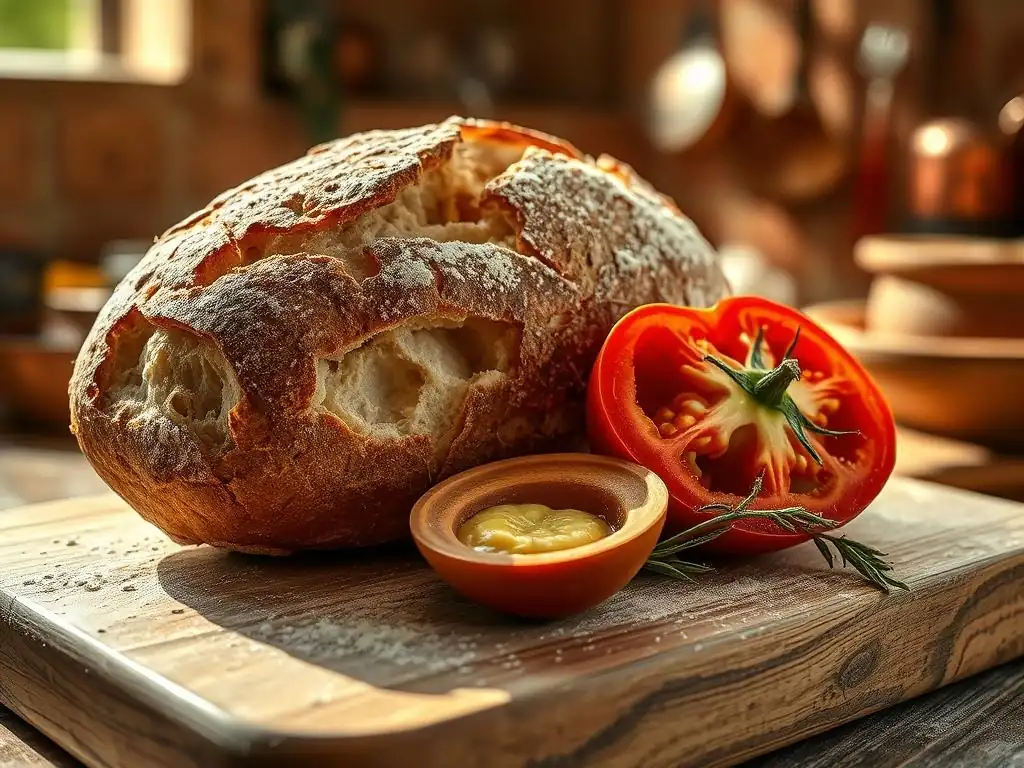
Welcome to BakeWithEase, your culinary companion for all things baking! Ever wondered how to unlock the true potential of your ciabatta? Our latest article delves into the fascinating world of long fermentation ciabatta flavor benefits, revealing how patience and time can transform a simple dough into a symphony of taste. Discover the secrets to achieving unparalleled depth and complexity in your bread – are you ready to elevate your baking game?
- The Benefits of Long Fermentation for Ciabatta Flavor: Unlock the Secret to Authentic Taste
- Introduction: Elevating Ciabatta Flavor Through Long Fermentation
- Understanding Fermentation: The Science Behind the Flavor
- The Unique Flavor Profile of Long Fermented Ciabatta
- Long Fermentation Ciabatta Flavor Benefits: A Detailed Look
- Long Fermentation Techniques for Ciabatta: Achieving Optimal Results
- Troubleshooting Long Fermentation Ciabatta: Common Issues and Solutions
- Recipe Adaptation: Converting Existing Ciabatta Recipes to Long Fermentation
- Expert Tips for Mastering Long Fermented Ciabatta
- Conclusion: Embrace Long Fermentation for Unparalleled Ciabatta Flavor
- Frequently Asked Questions
- Final Reflection: Unveiling the Depth of Flavor in Long-Fermented Ciabatta
- Unleash Your Inner Ciabatta Artisan!
The Benefits of Long Fermentation for Ciabatta Flavor: Unlock the Secret to Authentic Taste
Introduction: Elevating Ciabatta Flavor Through Long Fermentation
Baking ciabatta is a rewarding experience, resulting in a bread known for its open crumb, chewy texture, and rustic charm. While many quick recipes exist, embracing the process of long fermentation is arguably the most impactful step you can take to unlock the true potential of your homemade ciabatta. It's the difference between a good loaf and an extraordinary one, deeply rooted in traditional baking methods.
This article will explore the fascinating world of long fermentation and its profound impact on the flavor, texture, and overall quality of ciabatta. We'll delve into the science behind the process, uncover the specific long fermentation ciabatta flavor benefits, and provide practical tips to help you incorporate this technique into your baking routine. Get ready to transform your ciabatta from simple bread to a masterpiece of taste and aroma.
Why Long Fermentation Matters for Ciabatta
Long fermentation is not just a trend; it's a time-honored technique that dramatically enhances the characteristics of bread dough, particularly for high-hydration doughs like ciabatta. This extended period allows for complex biochemical reactions that simply don't occur in quick-rise recipes.
The primary reason long fermentation is crucial for ciabatta lies in flavor development. Over many hours, often 12 to 24 or even longer, yeast and beneficial bacteria (if present, like in a sourdough culture or naturally occurring in flour) work slowly on the dough's sugars.
This slow process produces a wider array of organic acids and flavor compounds compared to a rapid fermentation, resulting in a more nuanced, complex, and deeply satisfying taste profile. The benefits of long fermentation for ciabatta flavor are undeniable, moving beyond simple yeasty notes to include subtle tangs, nutty undertones, and a richer overall bread character.
Brief Overview of Traditional Ciabatta Baking
Traditionally, ciabatta, meaning "slipper" in Italian, is characterized by its high hydration (often 70-80% or more water relative to flour), minimal kneading (or gentle folding), and a long, slow fermentation period. This approach contrasts sharply with many commercial or quick home recipes that prioritize speed using larger amounts of yeast.
Authentic ciabatta relies on time to develop both flavor and structure. Historically, bakers might have used a small amount of leftover dough (a 'starter') from a previous batch or a preferment like a biga or poolish, which itself undergoes a long fermentation before being added to the final dough. This commitment to time allows the dough to develop strength naturally through enzymatic activity and gentle handling, leading to the characteristic open, irregular crumb and delightful chew that defines great ciabatta. Understanding this traditional context helps appreciate why long fermentation ciabatta flavor benefits are so highly valued.
Understanding Fermentation: The Science Behind the Flavor
Fermentation is a biological process fundamental to bread making. It's what makes dough rise and, more importantly, contributes significantly to its flavor and aroma.
What is Fermentation and How Does it Work?
At its core, fermentation in bread dough is the metabolic process carried out by yeast (and sometimes lactic acid bacteria). Yeast consumes simple sugars present in the flour (which are broken down from complex starches by enzymes like amylase) and converts them into ethanol (alcohol) and carbon dioxide (CO2). The CO2 gas is trapped within the gluten network of the dough, causing it to expand and rise.
Beyond gas production, fermentation also involves the breakdown of proteins and starches, making the dough more extensible and easier to handle. Crucially, yeast and bacteria also produce a variety of organic acids (like lactic and acetic acid) and other volatile compounds. These byproducts are the primary source of the complex flavors and aromas we associate with well-fermented bread.
A longer fermentation time allows for a greater accumulation and variety of these flavor-contributing compounds, directly impacting the long fermentation ciabatta flavor benefits. For example, a 24-hour cold fermentation can produce significantly more acetic acid than a 2-hour warm fermentation, resulting in a tangier flavor.
The Role of Yeast in Ciabatta Fermentation
Yeast, typically Saccharomyces cerevisiae (baker's yeast) or wild yeasts present in sourdough starters, is the engine of fermentation. In ciabatta, especially when aiming for long fermentation, the amount of yeast used is often significantly smaller than in quick recipes. For instance, a recipe designed for a 12-18 hour cold fermentation might use as little as 0.1% to 0.5% active dry yeast relative to the flour weight, whereas a quick recipe might use 1-2%.
This reduced yeast quantity forces a slower, more controlled fermentation. With less competition for sugars, the yeast works gradually, giving enzymes more time to break down starches into fermentable sugars. More importantly for flavor, a slower fermentation provides ample time for the production of secondary metabolites – those complex flavor compounds beyond just CO2 and alcohol. In recipes incorporating preferments like a poolish or biga, these preferments are essentially mini-fermentations that build a strong yeast culture and begin flavor development before the final dough is mixed, amplifying the positive long fermentation ciabatta flavor benefits.
How Long Fermentation Differs from Short Fermentation
The key difference lies in time and temperature, which directly influence the biochemical processes occurring in the dough. Short fermentation, often done at warmer temperatures (e.g., 1-3 hours at room temperature around 75-80°F or 24-26°C), relies on a larger quantity of yeast to produce gas rapidly. This results in a quick rise but limits the time available for complex flavor compounds to develop. The flavor tends to be simpler, primarily yeasty.
Long fermentation, conversely, typically involves a smaller amount of yeast and is often conducted at cooler temperatures (e.g., 12-48 hours at refrigerator temperature around 38-45°F or 3-7°C, or a shorter time at cool room temperature). This extended period allows enzymes to work more thoroughly, breaking down more complex carbohydrates and proteins. It also provides ample time for the slow production of a wider spectrum of volatile organic compounds and acids by yeast and bacteria.
The result is a dough with enhanced structure, better digestibility, and significantly deeper, more complex flavor profiles – the core long fermentation ciabatta flavor benefits. A dough fermented for 24 hours will have a much more developed gluten network and a tangier, nuttier flavor than one fermented for 2 hours, assuming similar hydration.
The Unique Flavor Profile of Long Fermented Ciabatta
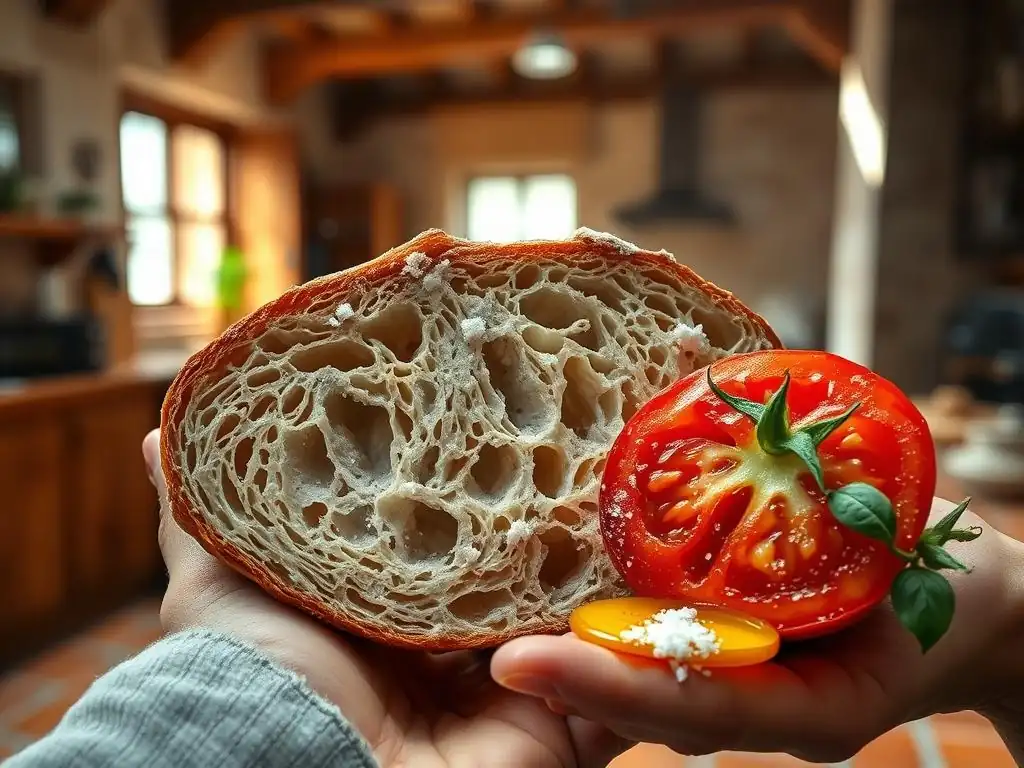
The most celebrated outcome of employing long fermentation techniques is the development of a truly unique and superior flavor profile in ciabatta. This goes far beyond the simple taste of flour and yeast found in quickly made bread.
Enhanced Complexity: Developing Deeper Flavor Notes
Long fermentation allows for the slow and steady production of a multitude of flavor compounds. As enzymes break down starches and proteins over many hours, yeast and potentially lactic acid bacteria (especially if a preferment is used or the fermentation is very long) convert these into a complex mix of organic acids, esters, aldehydes, and ketones.
These compounds contribute layers of flavor that are absent in short-fermented bread. You might detect subtle notes that are slightly tangy, nutty, malty, or even faintly cheesy. For instance, acetic acid contributes a sharper tang, while lactic acid provides a softer, rounder sourness. Esters can contribute fruity or floral notes. This intricate interplay of flavors creates a depth and richness that makes each bite of long fermented ciabatta a far more satisfying experience, showcasing the powerful long fermentation ciabatta flavor benefits. The flavor profile is not just stronger, but significantly more nuanced and interesting.
Improved Aroma: The Alluring Scent of Authentic Ciabatta
Flavor and aroma are intrinsically linked, and long fermentation significantly enhances both. The same volatile compounds produced during the extended fermentation period contribute powerfully to the bread's scent as it bakes and cools.
Think about the difference in aroma between a quickly risen loaf and a sourdough bread or a traditionally made ciabatta. The latter fills the kitchen with a rich, complex perfume that is warm, inviting, and deeply 'bread-like.' This alluring scent comes from the evaporation of those accumulated volatile organic compounds during baking.
A ciabatta that has undergone a long, slow fermentation will release a much more intense and complex aroma compared to one made quickly, making the anticipation of eating it almost as enjoyable as the first bite. The benefits of long fermentation for ciabatta flavor extend clearly to its captivating aroma.
The Importance of Acidity in Long Fermented Dough
Acidity plays a crucial role in the flavor, structure, and keeping qualities of long-fermented dough. As yeast and lactic acid bacteria ferment sugars, they produce organic acids, primarily lactic acid and acetic acid.
These acids contribute directly to the tangy notes often found in traditional ciabatta, balancing the sweetness of the cooked starches. Beyond flavor, acidity strengthens the gluten network, helping the dough hold its structure and trap gas more effectively, which is vital for ciabatta's open crumb. A pH drop from around 5.5-6 in fresh dough to below 5 in a long-fermented dough strengthens the gluten and inhibits undesirable enzymatic activity.
The presence of these acids also acts as a natural preservative, contributing to a longer shelf life. Thus, the controlled development of acidity is one of the key long fermentation ciabatta flavor benefits.
Long Fermentation Ciabatta Flavor Benefits: A Detailed Look
Let's break down the specific advantages you gain by choosing long fermentation for your ciabatta. These benefits contribute to a superior loaf in multiple ways, not just flavor.
Benefit 1: Increased Dough Development and Gluten Strength
Long fermentation provides ample time for enzymes naturally present in flour (proteases) to partially break down proteins, making the gluten network more extensible and manageable, especially in high-hydration doughs like ciabatta. Simultaneously, the gentle, slow rise allows the gluten strands to align and strengthen without the stress of rapid expansion.
Instead of intense kneading, which can be difficult with wet ciabatta dough, the gluten develops through time and periodic gentle folding. Over 12-24 hours, even with minimal initial mixing, the dough transforms from a shaggy, sticky mass into a smooth, elastic network capable of trapping large pockets of gas.
This enzymatic action and slow gluten alignment result in significantly increased dough strength and extensibility, which is essential for achieving the characteristic large, irregular holes in the ciabatta crumb. This improved structure is a direct benefit of long fermentation, impacting both texture and supporting the desired long fermentation ciabatta flavor benefits by allowing for better gas retention and oven spring.
Benefit 2: Enhanced Digestibility of Long Fermented Ciabatta
Many people find long-fermented bread easier to digest, and this is a significant benefit of the process. During extended fermentation, enzymes and microbial activity begin to break down complex carbohydrates and proteins in the flour, including some of the gluten.
Fructans, which are types of carbohydrates that can cause digestive discomfort for some individuals, are significantly reduced during long fermentation. Studies have shown that fructan levels can decrease by 80-90% or more during an overnight fermentation compared to a short one. While long fermentation doesn't make the bread gluten-free, the partial breakdown of gluten proteins can also make it more tolerable for some people with mild sensitivities. This increased digestibility is a practical and health-related benefit that goes hand-in-hand with the superior long fermentation ciabatta flavor benefits.
Benefit 3: Superior Texture: Open Crumb and Chewy Crust
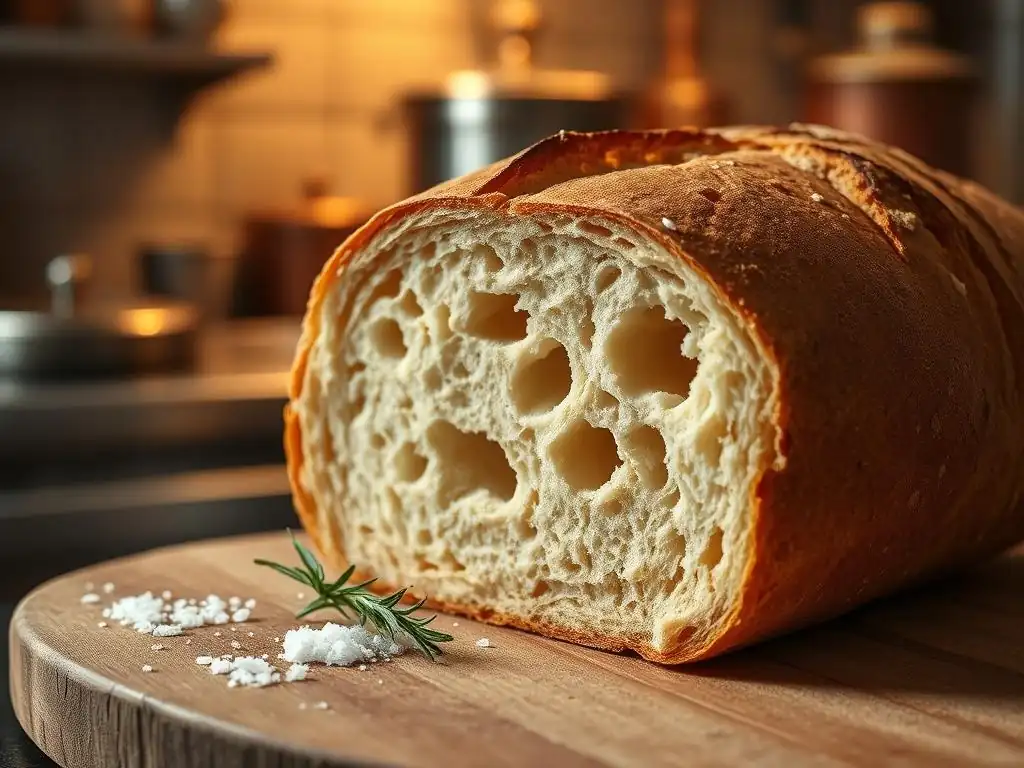
The hallmark of great ciabatta is its incredibly open, airy crumb dotted with large, irregular holes, encased in a thin, crisp, and chewy crust. Long fermentation is absolutely key to achieving this texture.
The extended time allows for the slow, consistent production of CO2 gas by a small amount of yeast. As the gluten network is also strengthening over this period (as discussed in Benefit 1), it becomes robust enough to trap these gas bubbles effectively. The slow pace allows the bubbles to coalesce into larger pockets rather than producing a uniform, fine crumb.
Furthermore, the organic acids produced during fermentation contribute to gluten strength, which helps the dough hold its structure during baking and achieve excellent oven spring. This results in the desired open crumb. The high hydration, combined with a hot bake and the developed structure from long fermentation, contributes to the wonderfully crisp yet chewy crust, completing the textural profile that complements the long fermentation ciabatta flavor benefits.
Benefit 4: Better Shelf Life: Keeping Your Ciabatta Fresh Longer
Long-fermented bread tends to stay fresh longer than bread made with a quick fermentation. This is primarily due to the production of organic acids during the extended fermentation period.
Lactic acid and acetic acid, byproducts of fermentation, lower the pH of the dough. This lower pH environment inhibits the growth of mold and other spoilage-causing microorganisms. While commercial bread relies on added preservatives, long fermentation offers a natural way to extend the bread's shelf life. A ciabatta loaf fermented for 24 hours will typically remain fresh and palatable for several days, compared to a quickly made loaf which might become stale within a day or two. This practical benefit means you can enjoy the delicious long fermentation ciabatta flavor benefits for a longer period after baking.
Long Fermentation Techniques for Ciabatta: Achieving Optimal Results
Implementing long fermentation requires a slightly different approach than quick baking, but the techniques are straightforward and highly rewarding.
Autolyse: Preparing the Dough for Long Fermentation
Autolyse is a simple yet powerful technique that significantly benefits high-hydration doughs destined for long fermentation. It involves mixing just the flour and water from the recipe and letting it rest for a period, typically 20 minutes to an hour, before adding the yeast and salt.
During this rest period, the flour fully hydrates, and enzymes (proteases and amylases) become active. Proteases begin to break down some of the protein bonds, making the dough more extensible and easier to mix and develop gluten later. Amylases start converting complex starches into simpler sugars, which will serve as food for the yeast during the long fermentation.
This initial step helps reduce the amount of mechanical work (kneading or folding) needed and kickstarts the enzymatic processes that are crucial for both gluten development and flavor precursors, laying a strong foundation for the long fermentation ciabatta flavor benefits. For ciabatta, a 30-minute autolyse is often sufficient and makes the very wet dough much easier to handle.
Using a Poolish or Biga for Enhanced Flavor
Incorporating a preferment like a poolish (equal parts flour and water by weight, plus a tiny amount of yeast, fermented for several hours) or a biga (stiffer dough, typically 50-60% hydration, fermented for many hours) is a traditional method to boost flavor and structure in ciabatta.
These preferments undergo a mini-fermentation before being added to the final dough. This allows for a head start in developing complex flavor compounds and cultivating active yeast colonies. A poolish, being wetter, develops more lactic acid, contributing a milder tang and creamy texture.
A biga, being stiffer, tends to develop more acetic acid, adding a sharper tang and contributing to a chewier texture. Using a preferment (often 20-40% of the total flour) significantly enhances the depth and complexity of the final bread's flavor, amplifying the long fermentation ciabatta flavor benefits beyond what can be achieved with direct addition of yeast to the final dough. A typical poolish might ferment at room temperature for 12-16 hours until bubbly and slightly collapsed.
Bulk Fermentation: The Key to Flavor Development
Bulk fermentation (also called first rise) is the period after mixing the dough (and preferment, if used) but before dividing and shaping. This is where the magic of long fermentation truly happens.
For ciabatta, bulk fermentation is often extended significantly, ranging from 4 hours at cool room temperature (around 65-70°F or 18-21°C) up to 12-18 hours or even longer in the refrigerator (around 40°F or 4°C). During this time, the dough expands, and periodic gentle folds (typically 2-4 sets in the first couple of hours) are used to build strength without deflating the delicate structure. The slow activity of yeast and bacteria at lower temperatures allows for the maximum production of flavor compounds.
The dough should increase significantly in volume, often doubling or more, but the key indicator for readiness is often gas development visible as bubbles on the surface and sides, and a jiggly, aerated texture. This slow process is fundamental to achieving the deep long fermentation ciabatta flavor benefits.
Proofing: Final Rise for Optimal Texture
After bulk fermentation, the dough is typically divided (very gently, often by pouring or cutting) and shaped into ciabatta loaves. These shaped loaves then undergo a final proofing period before baking.
Ciabatta is often proofed relatively briefly compared to bulk fermentation, typically 1-2 hours at room temperature, or sometimes shorter if the bulk fermentation was very long or done at room temperature. The goal is for the loaves to become visibly airy and slightly increased in size, but not fully doubled, as they will experience significant oven spring. Overproofing ciabatta can lead to a weaker structure and flatter loaves.
Proper proofing ensures the dough has enough gas for a beautiful open crumb and contributes to the overall texture that complements the long fermentation ciabatta flavor benefits. The dough should feel light and airy when gently poked.
Troubleshooting Long Fermentation Ciabatta: Common Issues and Solutions
While long fermentation offers incredible benefits, it can also present challenges. Knowing how to identify and address common issues is key to success.
Over-Fermentation: Identifying and Preventing Sour Dough
Over-fermentation occurs when the dough ferments for too long or at too warm a temperature for the amount of yeast used. The yeast and bacteria exhaust their food supply, and acidic byproducts accumulate excessively.
Signs of over-fermentation include a very slack, overly extensible dough that tears easily, a strong alcoholic or overly sour smell (sometimes described as vinegary), and potentially a greyish color. If baked, the bread may have a dense crumb, poor oven spring, and an intensely sour, unpleasant flavor, often lacking the desirable long fermentation ciabatta flavor benefits. To prevent this, use a very small amount of yeast for long, cold fermentations.
Monitor the dough – if it's expanding much faster than expected in the refrigerator, your fridge might be too warm, or you might have used too much yeast. If you suspect over-fermentation is starting, you can try baking the dough immediately, even if it's not perfectly proofed, to salvage it.
Under-Fermentation: Recognizing and Correcting the Problem
Under-fermentation means the dough has not had enough time to develop sufficiently, either in terms of flavor or structure. This is common if fermentation time is too short or the temperature is too low for the yeast activity.
An under-fermented dough will feel dense and tight, lacking extensibility. It won't have doubled much in volume during bulk fermentation and will feel heavy. The baked bread will have a dense, tight crumb structure with small, uniform holes, a pale crust, and a bland, yeasty flavor lacking the complexity and depth expected from the long fermentation ciabatta flavor benefits. The aroma might be faint or primarily of raw flour.
To correct this, simply extend the fermentation time. If the dough is cold, allow it to warm up at room temperature for a few hours to encourage yeast activity. Ensure your yeast is active before starting.
Temperature Control: Maintaining Optimal Fermentation Conditions
Temperature is perhaps the single most critical factor in controlling the rate of fermentation and thus achieving the desired long fermentation ciabatta flavor benefits. Yeast activity is highly sensitive to temperature.
A few degrees difference can dramatically alter fermentation speed. For long fermentation (12+ hours), cooler temperatures are essential. Room temperature fermentation for this duration typically requires a tiny amount of yeast and a cool environment (65-70°F or 18-21°C). Refrigeration (38-45°F or 3-7°C) slows yeast activity significantly, allowing for fermentations spanning 24-48 hours or even longer, which maximizes enzymatic action and flavor development.
Using a kitchen thermometer to check your ambient temperature or the temperature inside your refrigerator is highly recommended. Consistency in temperature helps ensure consistent results and predictable fermentation times. For example, a dough fermented for 18 hours at 40°F will develop very differently from the same dough fermented for 18 hours at 50°F.
Recipe Adaptation: Converting Existing Ciabatta Recipes to Long Fermentation
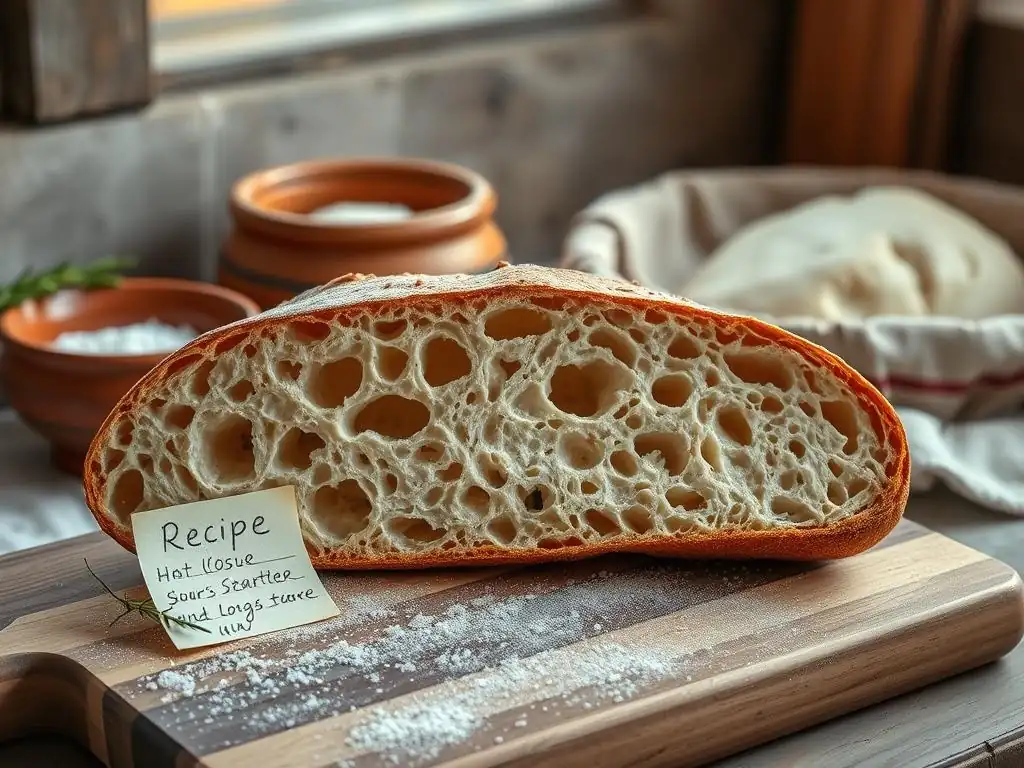
Many standard ciabatta recipes are designed for quicker fermentation. Adapting them for a long fermentation ciabatta flavor benefits requires a few key adjustments.
Adjusting Yeast Amounts for Long Fermentation
The most significant change when converting a recipe to long fermentation is drastically reducing the amount of instant or active dry yeast. A recipe calling for 1-2% yeast for a 2-3 hour rise might need only 0.1-0.5% yeast for an overnight or 24-hour cold fermentation.
If you are using fresh yeast, you would use approximately three times the weight of instant dry yeast (e.g., 0.3-1.5% fresh yeast). The goal is to slow down the gas production considerably to allow the other beneficial processes (flavor development, gluten maturation, enzymatic breakdown) time to occur. Using too much yeast will cause the dough to over-ferment before sufficient flavor has developed or structure has built. Start with a very small amount, perhaps a quarter or less of the original yeast quantity, and adjust in future bakes based on how your dough behaves.
Modifying Hydration Levels for Optimal Dough Consistency
Ciabatta is inherently high-hydration bread, often 75-85% or even higher. When adapting a recipe for long fermentation, you might find that a slightly higher hydration works well, as the longer fermentation helps develop the gluten strength needed to handle very wet dough.
However, consistency is key. If the original recipe already has a high hydration, you may not need to change it significantly. The extended time allows for better water absorption by the flour.
Ensure the dough is wet and sticky, as is characteristic of ciabatta, but not so slack that it cannot develop any structure with folding. Sometimes, adding just an extra 5-10% water can make a noticeable difference in the final crumb openness, provided the long fermentation allows the gluten to handle it. Monitor the dough's feel after the initial mix; it should be very wet but capable of forming some structure with folds.
Monitoring Dough Development During Long Fermentation
Unlike quick fermentation where you primarily watch for doubling, monitoring long fermentation requires paying attention to multiple cues over an extended period.
Observe the dough's volume increase, but also look for signs of activity like bubbles appearing on the surface. Feel the dough's texture during periodic folds; it should become smoother and more elastic over time. Note the aroma – it should develop a pleasant, slightly tangy or complex scent, not an overpowering yeasty or alcoholic smell.
Refrigerated dough will rise much slower; expect perhaps a 50-100% increase in volume over 12-24 hours, depending on the temperature. Room temperature long fermentation will show more significant volume increase but requires careful timing to avoid over-fermentation. Learn to judge readiness by feel and appearance rather than just a clock, as environmental factors (like slight fridge temperature variations) can influence the pace.
Expert Tips for Mastering Long Fermented Ciabatta
Putting these techniques into practice can transform your ciabatta baking. Here are a few expert tips to help you succeed.
Using High-Quality Flour for Best Results
The quality of your flour has a significant impact on the outcome of long-fermented ciabatta. Look for bread flour with a relatively high protein content (typically 12-14%).
Higher protein means more gluten-forming proteins, which are essential for developing the strong, extensible network needed to support ciabatta's high hydration and trap the large gas bubbles created during long fermentation. Artisan bread flours are often milled in a way that preserves more of the wheat germ and bran (though these are sometimes sifted out for white ciabatta), contributing more enzymes and flavor precursors.
While you can make ciabatta with all-purpose flour, achieving the desired open crumb and chew is significantly easier and more reliable with a good quality bread flour capable of handling high hydration and extended fermentation times. The benefits of long fermentation for ciabatta flavor and texture are best realized with a flour that can support the process.
The Importance of Patience in Long Fermentation
Long fermentation is not a process to be rushed. Patience is perhaps the most important ingredient. Resist the urge to add more yeast to speed things up or to cut the fermentation time short.
The magic happens over hours, often while you are sleeping or busy with other things. Trust the process. Understand that variations in room or refrigerator temperature will affect the timing. Instead of sticking rigidly to a clock, learn to read the dough – its volume, texture, and aroma. If the recipe says 18 hours but your kitchen is cooler, it might take 20 or 22 hours. If your fridge is slightly warmer, it might be ready in 16. Embracing this slower pace is key to unlocking the full long fermentation ciabatta flavor benefits and achieving the desired structure.
Gentle Handling for Optimal Air Retention
Ciabatta's characteristic open crumb relies on trapping the gas produced during fermentation. Once the dough has undergone its long fermentation and developed its airy structure, it's crucial to handle it very gently.
Avoid aggressive kneading or punching down. When dividing the dough, use a bench scraper and try to disturb the air pockets as little as possible. Shape the loaves by gently coaxing them into shape or simply cutting the dough and allowing gravity to do the work during proofing.
Transferring the proofed loaves to the oven should also be done carefully. Excessive handling will degas the dough, resulting in a denser crumb and negating the structural benefits built during the long fermentation. Gentle handling preserves the delicate network of gas bubbles, ensuring a beautiful open crumb that showcases the long fermentation ciabatta flavor benefits.
Conclusion: Embrace Long Fermentation for Unparalleled Ciabatta Flavor
Exploring the world of long fermentation for your ciabatta baking is a journey well worth taking. It's a return to traditional methods that prioritize time and patience to develop flavor and structure in a way that quick baking simply cannot replicate.
Recap of the Benefits of Long Fermentation
We've seen how long fermentation delivers a multitude of benefits:
- Enhanced flavor complexity with deeper, more nuanced notes.
- Improved aroma that is rich and inviting.
- Better dough development and gluten strength with minimal effort.
- Increased digestibility due to the breakdown of complex compounds.
- Superior texture characterized by an open crumb and chewy crust.
- Extended shelf life thanks to the natural preservation from organic acids.
These long fermentation ciabatta flavor benefits, combined with the textural improvements, result in a bread that is truly exceptional.
Encouragement to Experiment with Long Fermentation Techniques
Don't be intimidated by the longer timeline. Start with a simple overnight cold fermentation recipe. Pay attention to how the dough feels and behaves. Adjust the yeast amount slightly in your next bake based on your results.
Try incorporating a preferment like a poolish to see how it changes the flavor profile. Experiment with slightly different hydration levels once you are comfortable with the basic technique. Baking is an ongoing learning process, and experimenting with fermentation times and temperatures is one of the most rewarding ways to improve your bread. The path to mastering the long fermentation ciabatta flavor benefits is paved with practice and observation.
Final Thoughts on Baking Authentic Ciabatta at Home
Baking authentic ciabatta with its characteristic open crumb and incredible flavor is a testament to the power of time and simple ingredients. By embracing long fermentation, you are not just following a recipe; you are engaging with the natural processes that have been used by bakers for centuries.
The results speak for themselves – a loaf with unparalleled taste, aroma, and texture that elevates any meal. So, set aside the quick recipes, embrace the patience required for long fermentation, and unlock the secret to truly spectacular homemade ciabatta. The journey is rewarding, and the delicious long fermentation ciabatta flavor benefits are the ultimate reward.
Frequently Asked Questions
What is long fermentation in baking ciabatta?
Long fermentation refers to allowing the dough to rise for an extended period, often several hours or overnight. This process enhances the flavor and texture of the ciabatta.
How does long fermentation improve ciabatta flavor?
During long fermentation, the yeast and bacteria break down sugars, producing complex flavors and enhancing the aroma of the bread. This results in a more robust and satisfying taste.
Can beginners try long fermentation for ciabatta?
Absolutely! Long fermentation is suitable for bakers of all levels. It may require some patience, but the results are well worth the wait, making it an excellent technique for beginners to learn.
What ingredients are necessary for long fermentation ciabatta?
The basic ingredients include flour, water, salt, and yeast. Using high-quality flour can further enhance the end product during the long fermentation process.
Are there any downsides to long fermentation?
While long fermentation can enhance flavor, it requires careful timing. If left too long, the dough may become over-fermented, leading to a weaker structure. Monitoring the process is crucial for success.
Final Reflection: Unveiling the Depth of Flavor in Long-Fermented Ciabatta
The subtle art of long fermentation isn't just a technique; it's a transformative journey that unlocks the full potential of ciabatta's flavor profile. This process, often overlooked in the pursuit of speed, is the key to achieving a bread that transcends mere sustenance, becoming a truly sensory experience. The nuanced complexity achieved through extended fermentation is a testament to the power of patience and precision in baking.
The impact of long fermentation extends beyond the individual loaf; it speaks to a broader cultural shift towards appreciating the slow-food movement and the inherent value of artisanal craftsmanship. We've explored the scientific reasons behind the enhanced flavor – the development of complex esters and acids, the breakdown of starches, and the creation of a more digestible bread – but the true magic lies in the sensory experience. The best things in life are worth waiting for,
a sentiment perfectly encapsulating the rewards of this patient approach to baking. This philosophy resonates deeply with me, reminding me that true quality often requires time and dedication.
Now, consider your own baking journey. Will you embrace the challenge of long fermentation, allowing time to unlock the hidden depths of flavor in your ciabatta? I encourage you to experiment, to savor the process, and to appreciate the profound difference that a little patience can make. The reward? A loaf of bread that not only nourishes the body but also delights the soul, a testament to the artistry and dedication poured into its creation.
Unleash Your Inner Ciabatta Artisan!
Thanks for exploring the magic of long fermentation with us! You've now unlocked the secrets to creating truly exceptional ciabatta, bursting with flavor and texture. Ready to put your new knowledge into practice?
- Bake your own masterpiece: Try our recommended long fermentation recipe (details available on our recipe page—search "Ciabatta" on bakewithease.com) and experience the difference! This is your chance to truly impress yourself (and your friends!).
- Share your ciabatta journey: Post a picture of your creation on social media using #BakeWithEaseCiabatta and inspire others to bake their own delicious loaves!
- Dive deeper into sourdough: Explore our extensive collection of articles on sourdough baking to unlock even more bread-making expertise. (Search “sourdough” on bakewithease.com)
So, what unique ingredient will you experiment with in your next long-fermented ciabatta? Let's hear about it in the comments!