
Scoring Like a Pro: Bread Lame Essentials for Beautiful Loaves

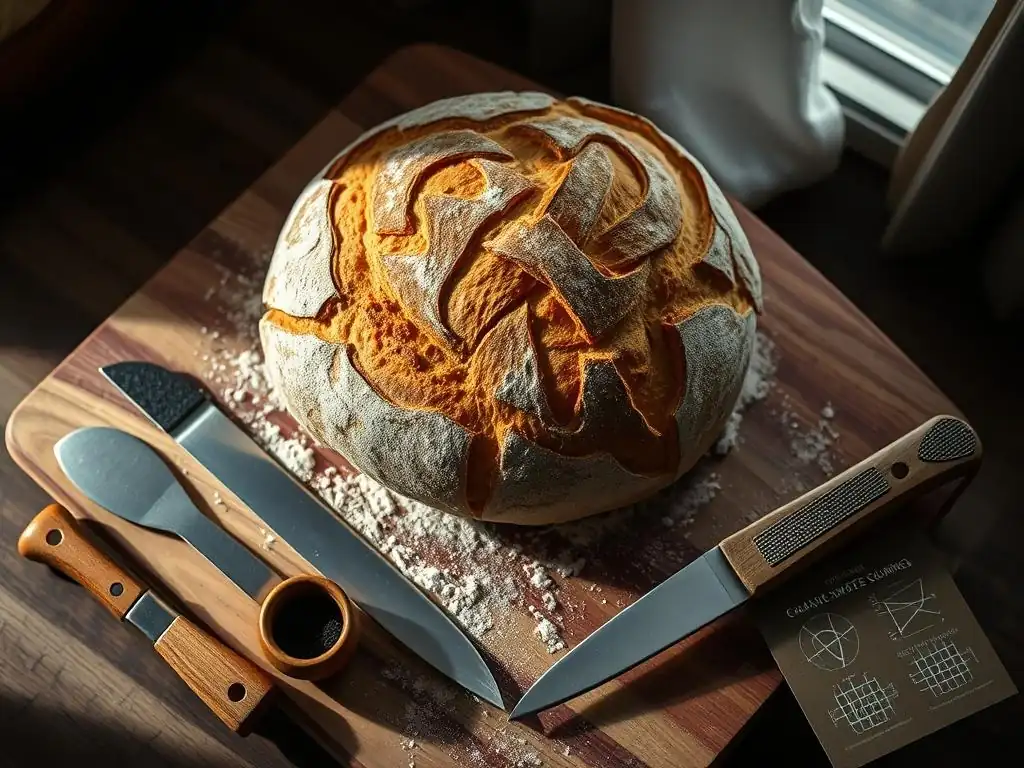
Welcome to BakeWithEase, where even the most ambitious baking projects become delightfully achievable! Ever wondered how those bakery-worthy loaves achieve their stunning, artistic designs? This article unveils the secrets behind creating breathtaking bread scoring patterns. Unlock the power of the bread lame and transform your homemade bread from simple to spectacular. Are you ready to elevate your baking game? Dive in and let's get scoring!
- Mastering Sourdough Scoring: Essential Techniques for Beautiful Loaves
- The Art of Sourdough Scoring: A Comprehensive Guide
- Understanding the Importance of Sourdough Scoring
- Bread Lames: Your Essential Sourdough Scoring Tool
- Choosing the Right Bread Lame for Your Baking Needs
- Mastering Basic Sourdough Scoring Techniques
- Sourdough Scoring Patterns Tutorial: Step-by-Step Guide
- Troubleshooting Common Sourdough Scoring Issues
- Maintaining Your Bread Lame for Longevity
- Elevate Your Baking: Sourdough Scoring Inspiration and Ideas
- Conclusion: Unlock Your Sourdough Potential Through Scoring
- Frequently Asked Questions
- Final Reflection: The Art and Science of Scoring, Unleashed
- Unleash Your Inner Baker: Craft Stunning Loaves Today!
Mastering Sourdough Scoring: Essential Techniques for Beautiful Loaves
The Art of Sourdough Scoring: A Comprehensive Guide
Scoring your sourdough loaf is one of the most satisfying steps in the baking process. It's the final touch before your dough meets the heat of the oven, and it dramatically influences the final appearance and texture of your bread. Think of it as giving your loaf permission to expand exactly where you want it to. Beyond aesthetics, proper scoring is a crucial technical step that ensures an even bake and optimal oven spring. It allows the gases trapped inside the dough to escape in a controlled manner, preventing blowouts and creating that sought-after crust and crumb structure.
This guide will walk you through the essentials of sourdough scoring, from understanding its fundamental importance to mastering the tools and techniques needed to create stunning loaves. Whether you're aiming for a simple, elegant slash or an intricate design, learning how to score effectively is a key skill in the journey to becoming a confident sourdough baker. We'll cover everything from choosing the right bread lame to executing various bread scoring patterns, ensuring your next bake is your best one yet.
Understanding the Importance of Sourdough Scoring
Why Score Sourdough? Controlling Expansion and Preventing Cracks
Scoring sourdough isn't just for making pretty patterns; it serves a vital functional purpose. During baking, the rapid heat causes a sudden expansion of gases and steam within the dough, a phenomenon known as oven spring. Without controlled scoring, this pressure would build up and inevitably burst through the weakest points in the crust, often resulting in uneven cracks or a lopsided loaf. By making deliberate cuts, you create weakened points on the surface, directing the dough's expansion along these lines.
This controlled expansion is essential for achieving a well-shaped loaf with a desirable structure. It allows the interior crumb to develop properly and ensures the crust forms uniformly without uncontrolled tearing. For example, a common issue for beginner bakers is loaves that burst randomly on the side or bottom; this is almost always due to insufficient or incorrect scoring that didn't adequately relieve the internal pressure during oven spring. Proper scoring is your way of telling the dough exactly where and how to grow.
The Science Behind Scoring: Manipulating Gluten and Gas Release
The science of scoring lies in manipulating the dough's structure, specifically the developed gluten network and the trapped fermentation gases. Sourdough fermentation produces carbon dioxide gas, which is held within the elastic gluten matrix. When the dough hits the hot oven, this gas expands rapidly, and moisture turns into steam, further increasing internal pressure. Scoring breaks the surface tension of the dough along the cuts.
The cuts are made through the taut outer skin, allowing the more elastic interior dough to expand outwards through these openings. The angle and depth of the score influence how the dough expands. A shallow, angled cut, for instance, encourages the dough to peel back along the cut, creating a 'grigne' or 'ear' – a desirable crispy flap of crust. Deeper, more vertical cuts allow for more direct upward or outward expansion. Mastering this interplay between surface tension, gluten elasticity, and directed gas release is fundamental to achieving predictable and beautiful results with various bread scoring patterns.
Bread Lames: Your Essential Sourdough Scoring Tool
What is a Bread Lame? A Baker's Precision Blade
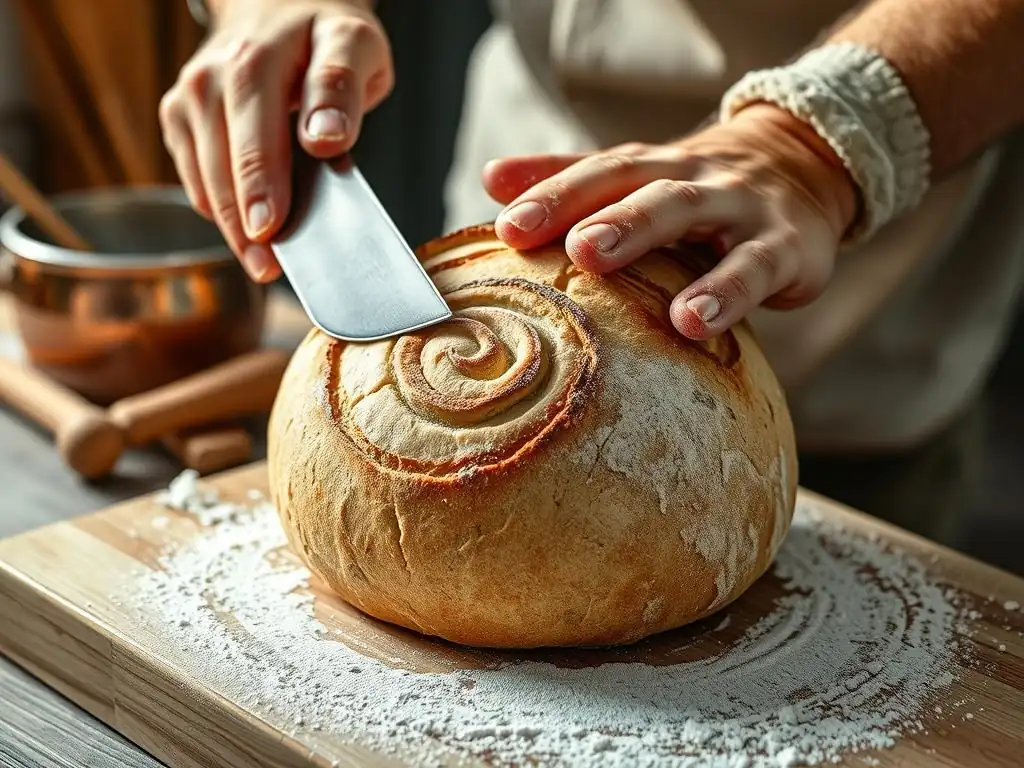
A bread lame (pronounced "lahm") is a specialized tool used by bakers to score dough before baking. At its core, it's simply a handle holding a very sharp blade, typically a standard double-edged razor blade. Unlike a knife, which can drag or tear the delicate dough surface, a lame uses a razor-sharp edge to make clean, swift cuts. This precision is crucial because a clean cut encourages the dough to open up beautifully during oven spring, whereas a jagged or hesitant cut can lead to uneven expansion or a less pronounced 'ear'.
Using a dedicated bread lame allows for better control over the depth, angle, and curvature of your scores. While some might attempt to use a sharp knife, the thinness and sharpness of a razor blade held securely in a lame provide unparalleled performance for gliding through the dough's surface tension without sticking or dragging. It truly is an indispensable tool for achieving professional-looking results and executing intricate bread scoring patterns tutorial examples.
Types of Bread Lames: Straight, Curved, and Replaceable Blade
Bread lames come in various forms, primarily distinguished by the shape of the blade holder and whether the blade is fixed or replaceable. Understanding these types helps you choose the best tool for your desired scoring effects.
Straight Lames: Precision for Detailed Designs
Straight lames hold the razor blade flat and straight, much like a traditional knife blade but with razor sharpness. These are excellent for making straight cuts, crosshatch patterns, or intricate, detailed designs that require precise, linear control. They are often preferred for geometric patterns or when making multiple shallow scores close together.
They offer stability and a clear line of sight for the cut, making them ideal for careful, deliberate scoring work. While they can be angled slightly, they are less suited for creating the deep, curved cuts necessary for prominent 'ears' compared to their curved counterparts.
Curved Lames: Achieving Deep Arcs and Ears
Curved lames hold the razor blade with a slight curve. This curvature is specifically designed to facilitate the creation of the 'grigne' or 'ear' on a loaf. By holding the curved blade at a shallow angle (typically 15-30 degrees) to the dough surface and making a swift, arcing cut, the curved lame allows one edge of the cut to lift and form that desirable crispy flap as the dough expands.
These are arguably the most popular type of lame for sourdough bakers focused on achieving a prominent ear. The curved blade naturally guides the hand through the necessary motion for an angled, overlapping cut that defines many classic sourdough bread scoring patterns.
Replaceable Blade Lames: Ensuring Consistent Sharpness
Most modern bread lames are designed to use standard double-edged razor blades, which are inexpensive and readily available. Replaceable blade lames are highly practical because a dull blade is useless for scoring. A sharp blade is paramount for clean cuts that don't tear the dough.
Being able to swap out a dull blade for a fresh one ensures you always have the sharpest possible edge, which is critical for consistent results, especially when attempting complex bread scoring patterns tutorial designs. Some lames have simple clip mechanisms, while others use screws to secure the blade.
Choosing the Right Bread Lame for Your Baking Needs
Factors to Consider When Selecting a Bread Lame
Choosing the right bread lame depends on your baking style, the types of scores you want to make, and personal preference regarding grip and feel.
Blade Material and Sharpness: Carbon Steel vs. Stainless Steel
Razor blades are typically made from carbon steel or stainless steel. Carbon steel blades are known for their extreme sharpness and ability to take a very fine edge, often preferred by professionals for their initial cutting performance. However, they are prone to rust if not dried immediately after cleaning.
Stainless steel blades are more resistant to rust and corrosion, making them easier to maintain. While they might not achieve quite the same initial edge as carbon steel, they remain sharp for a reasonable number of scores and are often the practical choice for home bakers. For scoring, sharpness is king, so either material works well as long as the blade is fresh.
Handle Material and Grip: Wood, Plastic, and Ergonomics
Bread lame handles come in various materials, including wood, plastic, and sometimes metal. The material affects the feel, weight, and durability of the lame. Wooden handles are often favored for their classic look and comfortable, warm grip. Plastic handles are typically lighter and more durable, often designed with ergonomic shapes for a secure hold.
Consider how the lame feels in your hand. A good grip is essential for making confident, controlled cuts. Some lames are designed like a straight knife handle, while others are curved or have specialized grips.
Blade Angle and Adjustability: Customizing for Different Doughs
Some advanced lames offer adjustable blade angles or come with both straight and curved attachments. The angle at which the blade is held against the dough surface significantly impacts the outcome of the score. A shallow angle (around 15-30 degrees) is used to create an ear, while a steeper angle (closer to 90 degrees) is used for cuts that encourage upward or outward expansion without creating a prominent flap.
While many basic lames offer a fixed angle or curvature, understanding how angle affects the score is key to improving your technique, regardless of the lame type. For a comprehensive bread scoring patterns tutorial, practicing different angles is crucial.
Mastering Basic Sourdough Scoring Techniques
Simple Scoring Patterns for Beginners: Single Slash, Simple Cross
Starting with simple scoring patterns is the best way to build confidence and control with your bread lame.
- Single Slash: The simplest pattern is a single, confident slash across the top of a round loaf (batard) or lengthwise down the center of an oval loaf (boule).
- For a boule, a slightly curved slash across about 2/3 of the loaf is common.
- For a batard, a straight slash down the middle is typical.
- Hold the lame at a shallow angle (around 20-30 degrees) for an ear, or steeper for simple expansion.
- Make the cut swiftly and decisively, aiming for a depth of about 1/2 inch.
- Simple Cross: A basic cross pattern is excellent for round loaves.
- Make one cut across the loaf, then a second cut perpendicular to the first, crossing in the center.
- These cuts are often made more vertically (closer to 90 degrees) to encourage the four sections to open outwards evenly rather than forming a single ear.
- Aim for a consistent depth, perhaps 1/4 to 1/2 inch, depending on the loaf size.
- This pattern provides balanced expansion and a classic look.
Advanced Sourdough Scoring Designs: Unleash Your Creativity
Once comfortable with basic cuts, you can explore more complex and decorative bread scoring patterns tutorial designs. These often involve multiple overlapping or intersecting cuts.
Wheat Stalk Design: A Classic and Elegant Choice
The wheat stalk pattern is a popular decorative score that mimics the look of a wheat head.
- Start with a single main cut down the center of the loaf (usually lengthwise on a batard). This can be slightly curved.
- Then, make a series of short, angled cuts branching off from the central line. Alternate the angle on each side, creating a herringbone effect.
- Keep these side cuts relatively shallow (1/4 inch) and consistent in length and spacing.
- The angled cuts cause the dough to peel back slightly, enhancing the visual effect as the loaf expands.
Leaf Pattern Design: Adding a Natural Touch to Your Loaf
The leaf pattern is another beautiful design, often applied to oval or round loaves.
- Make a single, slightly curved cut down the center of the loaf, mimicking the main vein of a leaf.
- Then, make a series of short, curved cuts branching off from the central line, similar to the veins of a leaf. These cuts should be made at a shallow angle (around 20 degrees) towards the center line.
- Alternate the side from which the cuts originate, creating a symmetrical leaf shape.
- Consistency in the angle, depth, and spacing of the 'vein' cuts is key to a successful leaf pattern.
Sourdough Scoring Patterns Tutorial: Step-by-Step Guide
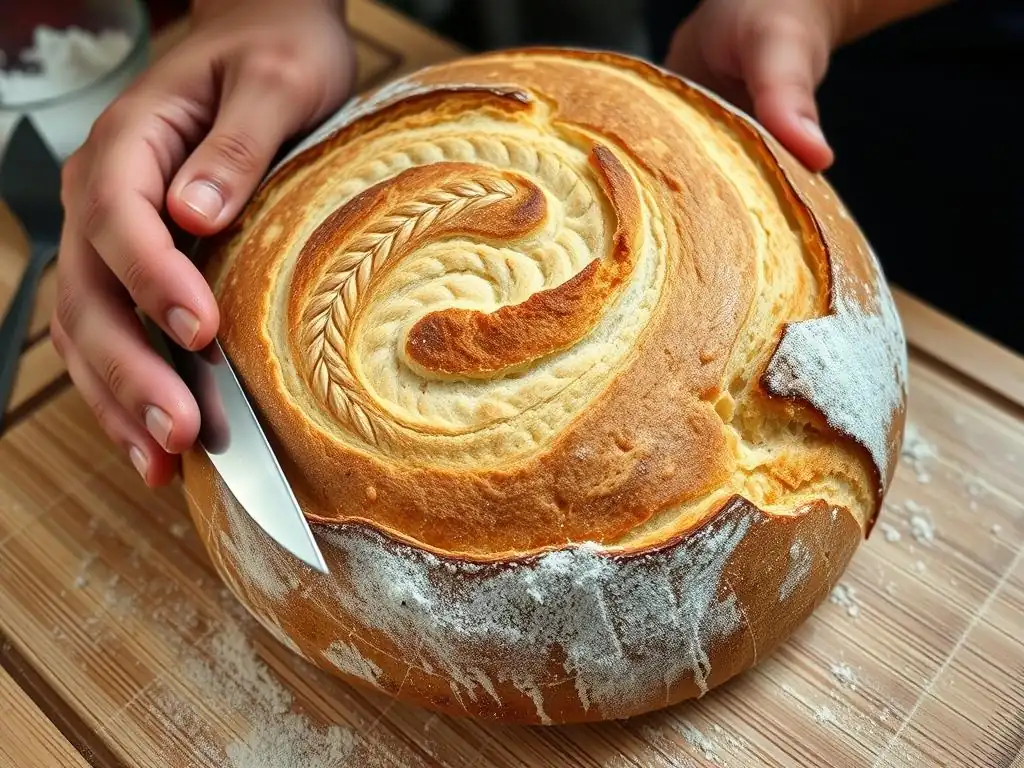
This section provides a step-by-step guide focusing on the process behind executing various bread scoring patterns.
Preparing Your Dough for Scoring: Cold Proofing and Surface Tension
Optimal dough preparation is crucial for successful scoring. Dough that is properly proofed and has good surface tension is easier to score cleanly. Cold-proofing your dough in the refrigerator for 12-18 hours (or even up to 48 hours) is highly recommended before scoring. The cold dough is firmer and less sticky, allowing the blade to glide through without dragging.
Ensure your loaf has a taut surface. This is typically achieved during the final shaping process. A well-shaped loaf with good surface tension provides a firm canvas for your scoring blade, preventing the dough from collapsing or distorting as you cut. If the dough feels too slack or sticky, it might be slightly over-proofed or lack sufficient surface tension.
Holding the Lame Correctly: Maintaining a Consistent Angle
The way you hold your lame significantly impacts your score. For most cuts, especially those designed to create an ear, you'll want to hold the lame at a shallow angle to the dough surface, typically between 15 and 30 degrees. This angle allows one side of the cut to lift and form the grigne.
For more vertical cuts used in patterns like crosses or geometric designs, hold the lame closer to a 90-degree angle relative to the surface. Practice holding the lame at different angles to feel the difference and understand how it affects the cut. Maintaining a consistent angle throughout a single cut or pattern is vital for uniform expansion.
Executing the Scoring Pattern: Swift and Confident Cuts
Confidence is key when scoring. Hesitant or slow cuts are more likely to drag the dough, resulting in jagged edges and poor expansion. Think of it like slicing through butter – you want a smooth, continuous motion.
Once you've decided on your pattern and angle, take a breath, position the lame, and make the cut in one fluid, swift motion. Aim for a consistent depth across the entire length of the cut. For simple patterns, one pass should be sufficient. For more complex designs, plan your cuts in advance and execute them systematically.
Avoiding Common Sourdough Scoring Mistakes: Hesitation, Shallow Cuts
Several common mistakes can hinder your scoring success. Hesitation is perhaps the most frequent; pausing mid-cut or making tentative scratches rather than decisive cuts leads to tearing. Another common issue is making cuts that are too shallow. If cuts aren't deep enough (generally 1/4 to 1/2 inch, depending on the loaf size and pattern), they may not effectively relieve internal pressure, leading to uncontrolled bursting elsewhere.
Conversely, making cuts that are too deep can cause the loaf to spread excessively rather than spring upwards. Using a dull blade is also a major pitfall; it will inevitably drag the dough. Finally, trying to score dough that is too warm or under-proofed can be challenging as it lacks the necessary structure to hold the score shape.
Troubleshooting Common Sourdough Scoring Issues
Dough Sticking to the Lame: Coating with Oil or Water
If your dough is sticking to the lame blade, making clean cuts difficult, try coating the blade. A common trick is to dip the lame blade in water just before scoring. The thin film of water helps the blade glide through the dough surface.
Alternatively, you can lightly coat the blade with a neutral oil, like vegetable or canola oil. This creates a slick surface that reduces friction. Ensure you wipe off any excess, so it doesn't drip onto the dough. A very cold dough is also less likely to stick.
Uneven Scoring: Using Consistent Pressure and Depth
Uneven scoring often results from inconsistent pressure, angle, or depth. If one side of a cut is deeper or at a different angle than the other, the loaf will expand unevenly.
Practice making cuts on scrap dough or even paper to develop a feel for maintaining consistent pressure and depth. When scoring your loaf, move your hand smoothly and try to keep the lame at the same angle relative to the dough surface throughout the cut. Using visual cues on the loaf can help guide your hand.
Lack of Oven Spring Despite Scoring: Insufficient Proofing
If your loaf doesn't open up along the score lines and lacks oven spring, scoring might not be the primary issue. While proper scoring directs expansion, there must be sufficient gas production and dough strength for expansion to occur.
Lack of oven spring, even with scoring, often points to insufficient proofing. If the dough hasn't fermented enough, there isn't enough trapped gas to cause significant expansion in the oven. Ensure your starter is active and your bulk fermentation and final proofing times are adequate for your environment and recipe. Over-proofing can also lead to poor spring, as the gluten structure may have degraded too much to hold the expanding gases.
Maintaining Your Bread Lame for Longevity
Cleaning Your Bread Lame: Immediate Cleaning and Drying
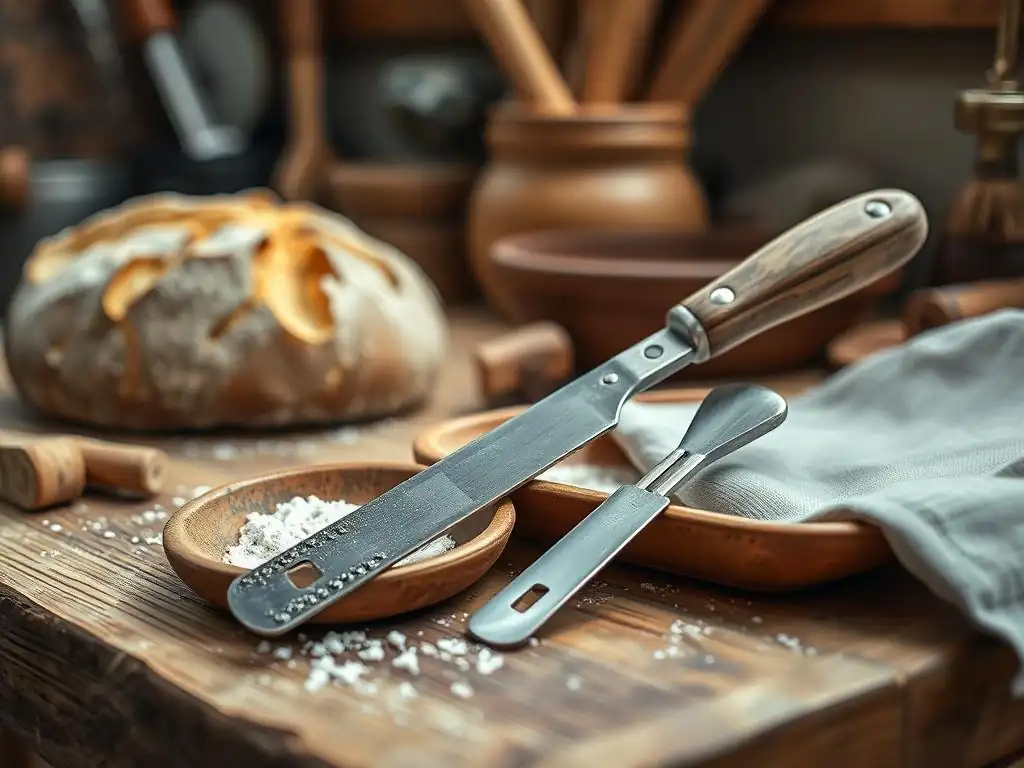
Proper maintenance ensures your bread lame remains sharp and hygienic. After each scoring session, immediately clean the blade. Dough residue, especially sticky sourdough, can dry and harden, making it difficult to remove later and potentially harboring bacteria.
Carefully wipe the blade clean with a damp cloth or sponge. If dough is stuck, a small brush can help. Always be extremely cautious when handling the sharp blade. Once clean, it is crucial to dry the blade thoroughly, especially if it is carbon steel, to prevent rust. Use a clean, dry cloth.
Storing Your Bread Lame Safely: Blade Cover or Protective Case
A razor blade is incredibly sharp and poses a safety hazard if not stored correctly. Most bread lames come with a protective cover or case for the blade. Always use this cover when the lame is not in use.
Store the lame in a secure place where the blade is protected, and you won't accidentally reach for it unprotected. Some bakers store their lames in a dedicated drawer or container to keep them separate from other kitchen tools.
Replacing Blades: Recognizing Dullness and Nicks
Razor blades are disposable and should be replaced regularly. A dull blade is ineffective for scoring and can ruin your loaf. You'll know a blade is dull if it starts dragging the dough instead of slicing cleanly, or if you have to apply excessive pressure.
Inspect the blade for any visible nicks or damage. A damaged blade will not produce a clean cut. Generally, a single razor blade can score anywhere from a few loaves to maybe 10-15 loaves before its performance starts to degrade, depending on the dough type and the blade material. It's better to replace the blade slightly too early than struggle with a dull one.
Elevate Your Baking: Sourdough Scoring Inspiration and Ideas
Exploring Different Scoring Styles: Geometric, Floral
Scoring offers a vast canvas for creativity. Beyond the basic patterns, bakers explore numerous styles. Geometric patterns involve precise, often intersecting lines creating shapes like squares, diamonds, or abstract designs. These require careful planning and execution.
Floral patterns mimic flowers, leaves, and vines, often involving multiple layers of overlapping cuts. Stenciling before scoring can also help guide complex designs. Watching bread scoring patterns tutorial videos online can provide endless inspiration for new designs to try.
Incorporating Rice Flour Dusting for Visual Appeal: Creating Contrast
Dusting your loaf with a fine layer of rice flour before scoring is a simple technique that dramatically enhances the visual impact of your scores. Rice flour is preferred over wheat flour because it doesn't absorb into the dough surface during proofing and baking, maintaining its white color.
When you score through the rice flour, the darker dough underneath is revealed, creating a beautiful contrast that highlights the pattern. This technique makes intricate bread scoring patterns tutorial designs pop beautifully. You can apply the flour with a fine-mesh sieve or a specialized flour duster.
Conclusion: Unlock Your Sourdough Potential Through Scoring
Mastering Sourdough Scoring: A Continuous Learning Process
Scoring your sourdough is a skill that improves with practice. It's a blend of technique, understanding dough behavior, and artistic expression. Don't be discouraged if your first attempts aren't perfect. Each loaf is an opportunity to learn how your dough behaves and how different cuts affect its expansion.
Experiment with different lames, angles, depths, and bread scoring patterns. Pay attention to how your dough's hydration level and proofing time influence its readiness for scoring. By consistently practicing and observing the results, you'll gain confidence and control, transforming plain dough into stunning, well-baked loaves. Embrace the process, enjoy the creative outlet, and soon you'll be scoring like a pro, creating beautiful bread every time.
Frequently Asked Questions
What is bread scoring and why is it important?
Bread scoring, also known as lame cutting, involves making strategic cuts on the surface of your dough before baking. This allows the bread to expand properly in the oven and creates an attractive crust.
What is a bread lame and what are its different types?
A bread lame is a specialized razor blade tool used for scoring dough. Types include straight lames, curved lames, and those with interchangeable blades, each offering a different scoring style.
What are some basic bread scoring patterns I can start with?
Beginner-friendly patterns include a single slash, a simple cross, or parallel lines. These are easy to execute and allow for controlled expansion during baking.
What factors affect the appearance of bread scoring patterns?
Factors include the depth and angle of the cut, the hydration level of the dough, and the oven temperature. Experimentation is key to achieving desired results.
Where can I find a detailed bread scoring patterns tutorial for beginners?
BakeWithEase.com offers a comprehensive "Bread Scoring Patterns Tutorial" covering essential techniques, tools, and step-by-step instructions for beautiful loaves.
Final Reflection: The Art and Science of Scoring, Unleashed
The seemingly simple act of scoring bread is, in reality, a crucial step in achieving a beautifully risen, perfectly textured loaf. Mastering bread scoring isn't just about aesthetics; it directly impacts the oven spring, crust development, and overall flavor profile of your bake. This understanding elevates bread making from a simple recipe to a true craft.
The exploration of various scoring patterns, from the classic ear cuts to the more intricate designs, has revealed a fascinating intersection of artistry and scientific precision. It's a testament to the enduring power of tradition, yet also a canvas for personal expression. As I've delved deeper into this topic, I've been reminded of the words of renowned baker, Chad Robertson: Bread baking is a journey of discovery, a constant learning process where each loaf teaches you something new.
This sentiment perfectly encapsulates the ongoing evolution of my own bread-making journey, and hopefully, yours as well.
Now, it's your turn to experiment. Don't be afraid to try different patterns, to push your creative boundaries, and to learn from each loaf you bake. Embrace the imperfections, celebrate the successes, and most importantly, enjoy the process. The journey of mastering bread scoring is a rewarding one, filled with the satisfying aroma of freshly baked bread and the pride of creating something beautiful and delicious with your own hands. So, grab your lame, choose your pattern, and let the scoring begin!
Unleash Your Inner Baker: Craft Stunning Loaves Today!
Thanks for joining us on this bread-baking adventure! You've just unlocked the secrets to achieving those picture-perfect loaves with the right lame technique. Now it's time to put your newfound knowledge into practice.
- Master the Lame: Practice your scoring techniques on a few test loaves. Experiment with different patterns and depths to find your perfect style. This is key to achieving amazing oven spring.
- Share Your Success: Show off your beautifully scored creations! Post a picture of your masterpiece on social media and tag us – we'd love to see your baking journey.
- Explore Lame Variations: Go beyond the basics! Research different lame designs and materials to expand your bread-scoring artistry.
Ready to transform your bread baking? What unique scoring pattern will you try first?