
Is a Bread Machine Worth It? Pros and Cons Explored

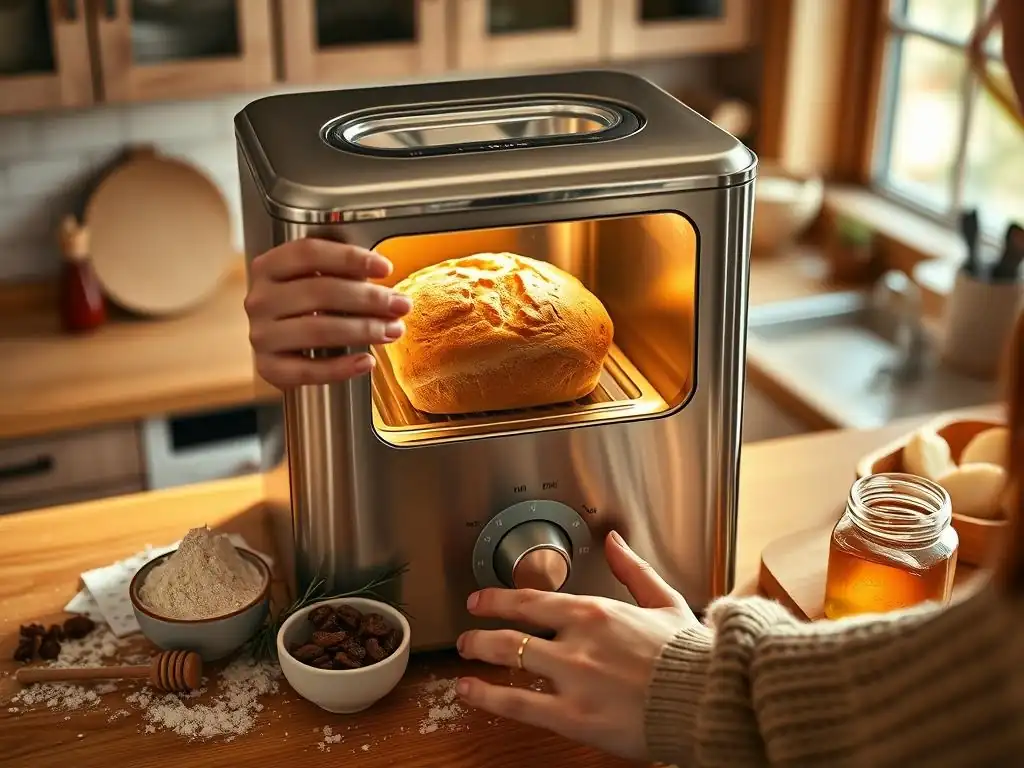
Welcome to BakeWithEase, your partner in creating delicious baked goods! Are you curious about simplifying your bread-making journey? Then you're in the right place. This article dives deep into the world of bread machine benefits for beginners, exploring whether these handy appliances are truly worth the investment. Discover the pros and cons and unlock the secrets to effortlessly baking fresh, homemade bread. Let's find out if a bread machine is the missing ingredient in your baking adventures!
- Is a Stand Mixer Worth It? Pros and Cons Explored
- Introduction: Discovering the Stand Mixer - BakeWithEase
- Understanding Stand Mixer Benefits for Home Bakers
- The Pros of Owning a Stand Mixer: Power and Versatility
- The Cons of Owning a Stand Mixer: Considerations Before You Buy
- Stand Mixer Benefits for Home Bakers: A Detailed Look
- Choosing the Right Stand Mixer: Factors to Consider
- Alternatives to a Stand Mixer: Exploring Other Mixing Options
- Is a Stand Mixer Right for You? A Final Assessment
- Conclusion: Embracing Baking Possibilities with or Without a Stand Mixer - BakeWithEase
-
Frequently Asked Questions
- Is a bread machine a good investment for someone new to baking?
- What are some of the biggest advantages of using a bread machine?
- Are there any downsides to using a bread machine compared to traditional baking methods?
- What types of bread can I make in a bread machine?
- How much does a decent bread machine typically cost?
- Final Reflection: The Knead for Consideration: Bread Machines and the Modern Kitchen
- Unleash Your Inner Baker: Take the Next Step!
Is a Stand Mixer Worth It? Pros and Cons Explored
Introduction: Discovering the Stand Mixer - BakeWithEase
Welcome to BakeWithEase, where we explore the tools that make baking simpler and more enjoyable. Today, we're diving into the world of stand mixers, a kitchen appliance often seen as the cornerstone of a serious baker's toolkit. For many home bakers, the stand mixer represents a significant investment and a step up in their culinary journey. But is it truly worth the counter space and the cost?
This article aims to provide a comprehensive look at stand mixers, examining their benefits, drawbacks, and whether they align with your personal baking needs and goals. Whether you're a beginner just starting to explore the joys of baking or someone looking to upgrade their equipment, understanding what a stand mixer offers is crucial. We'll break down its functions, compare it to other mixers, and discuss what to consider before making a purchase. Let's find out if a stand mixer is the right addition to your kitchen.
Understanding Stand Mixer Benefits for Home Bakers
What is a Stand Mixer and How Does It Simplify Baking?
A stand mixer is a powerful kitchen appliance designed for automated mixing, beating, whisking, and kneading. Unlike a hand mixer that you hold and guide, a stand mixer sits on your counter and features a motor that drives a mixing attachment (like a whisk, paddle, or dough hook) rotating within a stationary bowl. This design allows for continuous, consistent mixing without manual effort.
The primary way a stand mixer simplifies baking is by taking over the strenuous and time-consuming tasks. Kneading dough for bread, for instance, can require 10-15 minutes of vigorous hand work. A stand mixer with a dough hook can achieve the same result in often half the time or less, with minimal effort from the baker.
Similarly, whipping egg whites to stiff peaks or creaming butter and sugar thoroughly is significantly faster and more reliable with a stand mixer compared to doing it by hand or with a less powerful appliance. This automation frees up the baker to focus on other steps of the recipe, streamlining the entire process.
Stand Mixer vs. Hand Mixer: A Quick Comparison
The choice between a stand mixer and a hand mixer often comes down to frequency of use, type of baking, and budget. A hand mixer is a portable, handheld device where the beaters are attached directly to the motor unit. It's excellent for occasional use, smaller batches, and lighter tasks like whipping cream, mixing cake batter, or mashing potatoes. Hand mixers are significantly more affordable, easier to store, and quicker to clean than stand mixers.
In contrast, a stand mixer is a more robust and powerful machine built for heavier tasks and larger volumes. Its hands-free operation and consistent power make it indispensable for kneading stiff doughs, mixing dense batters, and handling large quantities of ingredients. While more expensive and requiring dedicated counter or storage space, a stand mixer excels in providing superior results for complex recipes and frequent baking. For beginners interested in tackling recipes like sourdough bread or elaborate cakes, a stand mixer offers capabilities a hand mixer simply cannot match effectively.
The Pros of Owning a Stand Mixer: Power and Versatility
Hands-Free Mixing: The Convenience of Automated Mixing
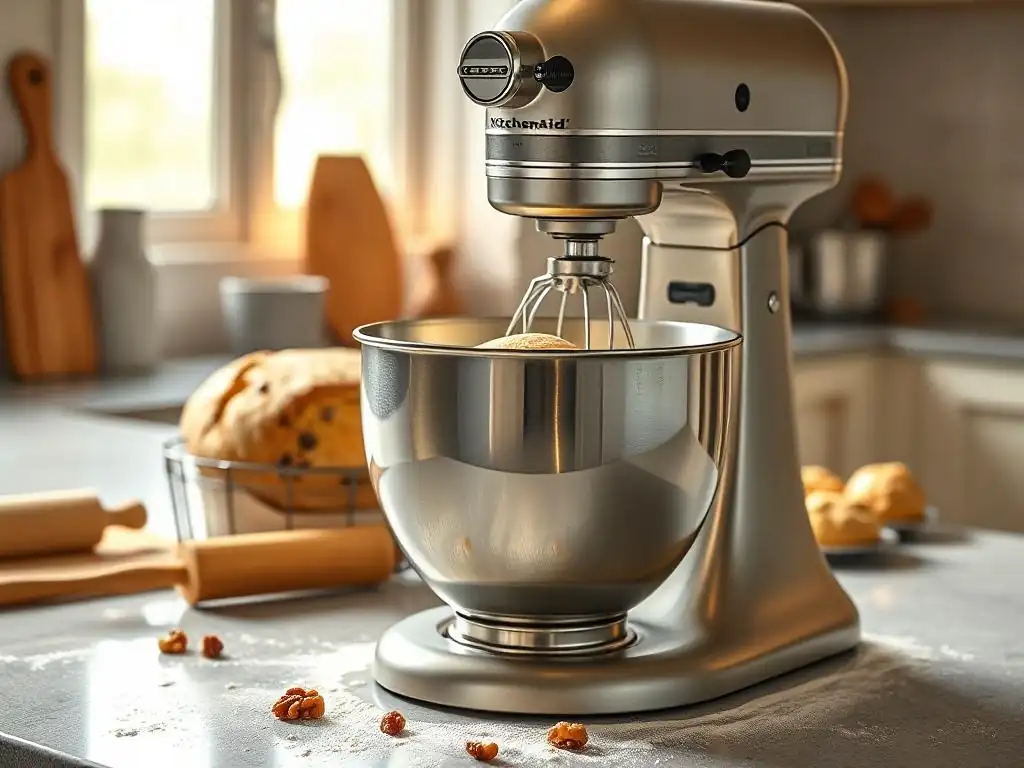
One of the most significant advantages of a stand mixer is its hands-free operation. Once you've added your ingredients to the bowl and selected the appropriate speed and attachment, the machine does the work for you. This is particularly beneficial for tasks that require extended mixing times, such as kneading bread dough or whipping meringue.
Imagine kneading dough for a rustic loaf, a process that traditionally requires 10-12 minutes of continuous, physical effort. With a stand mixer fitted with a dough hook, you can simply turn it on and let it work the dough while you measure out other ingredients, prepare baking pans, or even clean up a bit. This not only saves physical strain but also allows for greater efficiency in the kitchen, making baking less daunting, especially for beginners experimenting with yeasted doughs.
Consistent Results: Achieving Uniform Batters and Doughs
Stand mixers are renowned for their ability to produce consistent and uniform results. The powerful motor and planetary mixing action (where the attachment rotates on its axis while also orbiting around the bowl) ensure that all ingredients are thoroughly incorporated and evenly mixed. This consistency is crucial for baking success, particularly in recipes where proper aeration or gluten development is key.
For example, creaming butter and sugar for cookies or cakes requires beating until the mixture is light and fluffy, a process that can take several minutes. A stand mixer maintains a steady speed and thorough mixing pattern, resulting in a perfectly creamed base every time. Similarly, achieving the right gluten structure in bread dough depends on consistent, even kneading. A stand mixer's dough hook provides this uniformity, leading to better dough development and, ultimately, a better loaf with an improved crumb structure compared to inconsistent hand kneading.
Versatility Beyond Baking: Exploring Attachments and Functions
While primarily known for baking, many stand mixers offer incredible versatility through a wide array of available attachments. These attachments extend the mixer's functionality far beyond cakes and cookies, transforming it into a multi-purpose kitchen workhorse.
Popular attachments include pasta makers for fresh spaghetti or fettuccine, meat grinders for homemade burgers or sausages, vegetable spiralizers, and even ice cream makers. Some models also offer juicers, slicers, shredders, and grain mills. While these attachments are typically sold separately, they allow a single appliance to handle a surprising number of food preparation tasks, potentially reducing the need for other single-use gadgets and making the stand mixer a valuable investment for general cooking as well as baking.
Time-Saving in the Kitchen: Efficiency in Food Preparation
The ability of a stand mixer to handle labor-intensive tasks autonomously translates directly into significant time savings in the kitchen. Tasks that might take 15-20 minutes of active manual work can often be completed in half the time or less by a stand mixer, requiring only initial setup and monitoring.
Consider making a batch of dinner rolls. The total time might include mixing, kneading, rising, shaping, and baking. The mixing and kneading steps, which are physically demanding by hand, become almost passive when using a stand mixer. This efficiency allows bakers to tackle more complex recipes within a reasonable timeframe or simply free up time for other activities while the mixer is working. For busy individuals who love to bake, this saved time is a major benefit.
Durable and Long-Lasting: A Kitchen Appliance Investment
Stand mixers, particularly those from reputable brands with robust construction, are built to last. Many higher-end models feature durable metal construction and powerful motors designed to handle heavy loads like stiff doughs repeatedly over many years.
While the initial cost can be substantial, a stand mixer is often viewed as a long-term investment in your kitchen. It's not uncommon for quality stand mixers to function reliably for 10, 15, or even 20+ years with proper care. This longevity and durability mean that the cost per use over its lifespan can be quite low, making it a more economical choice in the long run compared to replacing less durable appliances more frequently.
The Cons of Owning a Stand Mixer: Considerations Before You Buy
Initial Investment: The Cost of a Stand Mixer
One of the most significant barriers to owning a stand mixer is the upfront cost. Entry-level models from well-known brands typically start in the range of $200-$300 USD, while more powerful or larger capacity professional-style mixers can easily cost $500-$800 USD or even more. This is a considerably higher price point than most hand mixers, which can be purchased for $30-$60 USD.
This substantial initial investment requires careful consideration of your budget and how frequently you anticipate using the mixer. For someone who bakes only occasionally or primarily sticks to simple recipes like boxed cake mixes, the cost might be difficult to justify. However, for avid bakers or those planning to explore more complex recipes regularly, the cost might be seen as a worthwhile investment over time.
Counter Space: Stand Mixer Size and Storage
Stand mixers are relatively large and heavy kitchen appliances. Even compact models require a dedicated footprint on your kitchen counter, and larger models can take up significant real estate. The typical dimensions of a popular model might be around 14 inches high, 9 inches wide, and 14 inches deep, plus the space needed to tilt the head or place the bowl.
For kitchens with limited counter space, finding a permanent home for a stand mixer can be challenging. While some bakers choose to store their mixer when not in use, their weight (often 20-30 pounds or more) makes them cumbersome to move in and out of cabinets frequently. This necessity for dedicated space is a practical consideration that should be evaluated based on your kitchen layout and storage availability.
Cleaning and Maintenance: A Necessary Chore
While stand mixers automate the mixing process, they do require cleaning after each use, which can sometimes be more involved than cleaning a hand mixer. The bowl, attachments (whisk, paddle, dough hook), and often the head of the mixer itself need to be wiped down to remove splatters and residue.
The mixing bowl and attachments are typically dishwasher safe, but the mixer head and base must be cleaned manually with a damp cloth. Dough can sometimes creep up the dough hook and into the mixer's mechanics if the bowl is too full or the dough is too stiff. While not overly difficult, this cleaning process adds a step to your post-baking routine that is less involved with smaller appliances.
Weight and Portability: Limited Movement of the Appliance
As mentioned, stand mixers are heavy. Their weight contributes to their stability during operation, preventing them from vibrating or walking across the counter when mixing heavy doughs. However, this weight also makes them less portable than hand mixers.
If you need to move your mixer frequently – perhaps from a storage cabinet to the counter, or even just to a different spot on the counter – their substantial weight can be inconvenient. They are designed to be relatively stationary appliances, and their lack of portability is a drawback if your baking setup requires flexibility in appliance placement.
Noise Level: Operation Volume During Mixing
Stand mixers, especially when working with thick batters or stiff doughs at higher speeds, can be quite noisy. The motor's hum, combined with the sound of the attachments working the ingredients, can create a significant amount of noise in the kitchen.
While the noise level varies between brands and models, it's generally higher than that of a hand mixer or manual mixing. For bakers who prefer a quiet kitchen environment or live in shared spaces where noise might be a concern, the operational volume of a stand mixer is something to consider. It's not typically disruptive enough to prevent conversation, but it is a noticeable presence during mixing tasks.
Stand Mixer Benefits for Home Bakers: A Detailed Look
Simplified Baking Process: Ideal for Complex Recipes
For home bakers looking to tackle more challenging recipes, a stand mixer significantly simplifies the process. Recipes like brioche, croissants, or artisan bread often involve precise mixing times, specific dough hydration levels, and extensive kneading to develop gluten properly. Achieving these results manually requires significant skill, strength, and endurance.
A stand mixer automates these steps, ensuring consistent mixing speeds and thorough incorporation of ingredients. This reliability reduces the margin for error, making complex recipes more approachable for beginners. The hands-free operation also allows the baker to prepare other components of the recipe simultaneously, improving overall efficiency and making daunting baking projects feel more manageable.
Reduced Effort: Less Strain on Hands and Arms
Baking, especially kneading dough or whipping dense batters, can be physically demanding. Tasks like kneading bread dough for 10 minutes can strain wrists and arms. Whipping large quantities of cream or egg whites by hand is also an arduous task requiring sustained effort.
A stand mixer completely eliminates this physical strain. The powerful motor and sturdy attachments do all the heavy lifting and rapid whisking. This is a major benefit for anyone who bakes frequently, makes large batches, or experiences discomfort or fatigue from manual mixing. It makes baking more accessible and enjoyable, preventing it from feeling like a workout.
Consistent Dough Development: Achieving Optimal Gluten Formation
Developing gluten is critical for the structure and texture of many baked goods, particularly bread. Gluten is formed when proteins in flour are hydrated and kneaded, creating an elastic network that traps gases and allows bread to rise. Optimal gluten development requires consistent, sustained kneading.
Stand mixers with a dough hook excel at this task. They provide steady, powerful kneading action that develops the gluten network more efficiently and consistently than hand kneading. This leads to doughs with the perfect balance of elasticity and extensibility, resulting in bread with a better rise, finer crumb structure, and more satisfying chew. Achieving this level of consistency manually is challenging, making the stand mixer a valuable tool for serious bread bakers.
Experimenting with Recipes: Expanding Baking Possibilities
Owning a stand mixer opens up a world of baking possibilities that might otherwise seem too difficult or labor-intensive. Many advanced recipes in books and online resources are written with the assumption that a stand mixer will be used for mixing and kneading steps.
With a stand mixer, you can confidently attempt recipes for enriched doughs like challah or cinnamon rolls, delicate meringues and macarons, or large batches of cookie dough. The ability to handle these tasks with ease encourages bakers to step outside their comfort zone and experiment with a wider variety of techniques and ingredients, ultimately expanding their baking repertoire.
Choosing the Right Stand Mixer: Factors to Consider
Bowl Size and Capacity: Matching Your Baking Volume
Stand mixers come with bowls of various sizes, typically measured in quarts. Common sizes range from 4.5 quarts to 6 quarts or even larger for professional models. The bowl size dictates how much dough or batter the mixer can handle at once.
For a single person or small family who bakes occasionally, a 4.5-quart mixer is often sufficient for standard recipes. If you bake large batches of cookies, regularly make multiple loaves of bread, or entertain frequently, a 5-quart or 6-quart mixer might be a better fit. Consider the typical volume of your baking projects to choose a bowl capacity that meets your needs without being excessively large or too small.
Power and Speed Settings: Exploring Different Mixing Capabilities
The power of a stand mixer's motor, usually measured in watts, indicates its ability to handle tougher mixing tasks. Mixers with higher wattage motors (e.g., 500-600+ watts) are generally better equipped to handle stiff bread doughs or large quantities of batter without straining or overheating.
Speed settings are also important. Most stand mixers offer multiple speeds, from a very slow stir for incorporating dry ingredients without making a mess, to high speeds for whipping cream or egg whites. Some models feature a "soft start" function to prevent splattering. Consider the types of recipes you plan to make; if bread making is a priority, look for a mixer with sufficient power and a dedicated slow speed for kneading.
Budget and Brand: Finding the Best Value for Your Needs
Stand mixers represent a significant investment, so establishing a budget is a crucial first step. Prices vary widely based on brand, size, power, and features. Researching different brands known for quality and durability (like KitchenAid, Cuisinart, or Breville) is recommended.
While it might be tempting to opt for the cheapest model available, consider the long-term value. A slightly more expensive mixer from a reputable brand with a good warranty might prove more durable and reliable over time than a less expensive, lower-quality model. Read reviews and compare features within your budget range to find the best balance of cost, performance, and expected lifespan.
User Reviews and Ratings: Learning from Other Bakers' Experiences
Before making a final decision, take the time to read reviews and ratings from other users. Websites like Amazon, retailer sites, and dedicated baking forums often feature detailed feedback from people who have used the mixers in real-world home baking scenarios.
Pay attention to comments regarding the mixer's performance with different types of doughs (especially bread dough if that's a focus), ease of cleaning, noise level, durability, and customer service experiences. While individual experiences can vary, a pattern of positive or negative feedback across multiple reviews can provide valuable insight into a mixer's strengths and weaknesses and help you make a more informed choice.
Alternatives to a Stand Mixer: Exploring Other Mixing Options
Hand Mixer: A Compact and Affordable Option
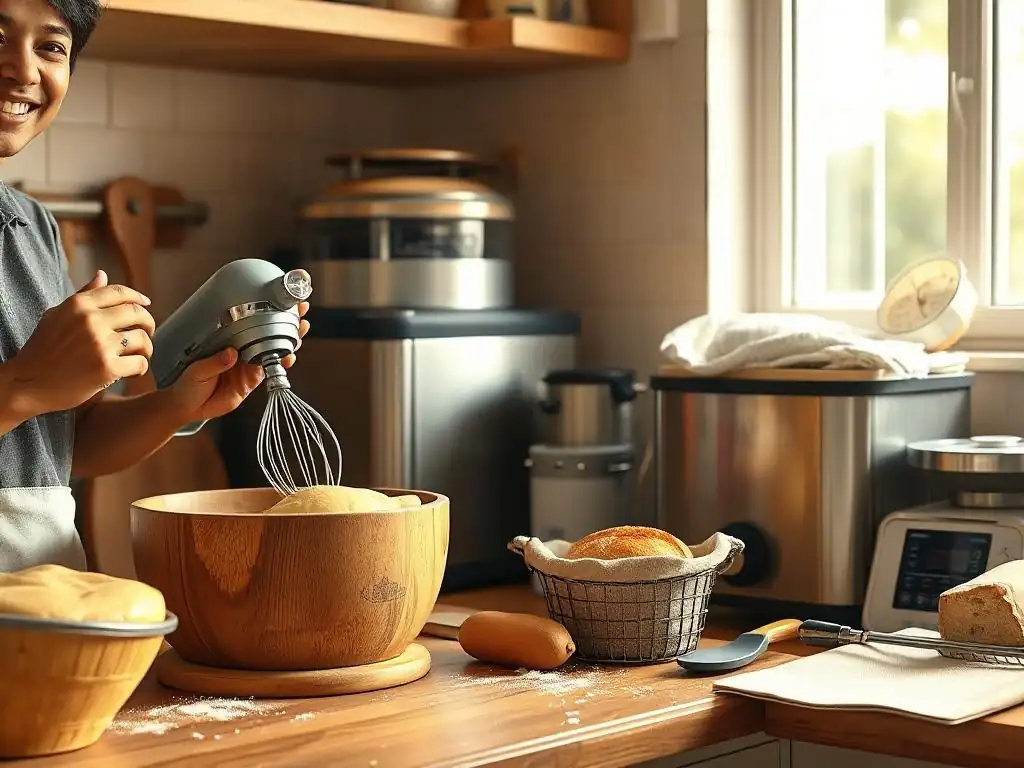
For bakers who don't have the budget, space, or need for a stand mixer, a hand mixer is an excellent alternative. Hand mixers are significantly smaller, lighter, and less expensive than stand mixers. They are easy to store in a drawer or cabinet and quick to pull out for simple tasks.
A good quality hand mixer is perfectly capable of handling most common baking tasks like mixing cake batter, whipping cream, beating eggs, and making frosting. They are less effective and can struggle with very thick batters or stiff doughs, and they require you to hold the mixer throughout the process. However, for occasional bakers or those with limited space, a hand mixer is a practical and cost-effective tool.
Food Processor: A Versatile Kitchen Appliance
While not designed specifically for mixing batters or kneading dough in the same way as a stand mixer, a food processor can perform some related tasks. With a dough blade attachment, many food processors can quickly mix and knead certain types of dough, particularly pastry dough or some bread doughs.
However, food processors are generally better suited for tasks like chopping, slicing, shredding, and pureeing. They typically don't have the same range of speed control or specialized attachments for whipping and beating as stand mixers. While versatile for general food prep, a food processor is not a direct substitute if your primary need is hands-free, consistent mixing and kneading for a wide variety of baking recipes.
Manual Mixing: The Traditional Approach
Of course, before the advent of electric mixers, all baking was done by hand. Manual mixing using whisks, spatulas, and wooden spoons, and hand kneading dough, remains a perfectly valid way to bake. It requires no special equipment beyond basic kitchen tools and your own physical effort.
Baking by hand can be a very rewarding and tactile experience, allowing you to feel the texture of the dough develop. It is, however, the most labor-intensive method, especially for tasks like kneading bread dough or whipping large quantities. While certainly possible to achieve excellent results manually, it requires more time, effort, and skill compared to using a stand mixer. For beginners, mastering techniques like hand kneading can be challenging.
Is a Stand Mixer Right for You? A Final Assessment
Weighing the Pros and Cons: Making an Informed Decision
Deciding whether a stand mixer is worth it comes down to carefully weighing the advantages against the disadvantages in the context of your own baking habits and kitchen setup. The benefits of hands-free operation, consistent results, versatility, and time-saving are significant, especially for those who bake frequently or tackle complex recipes.
However, the high initial cost, the need for dedicated counter space, and the cleaning requirements are real drawbacks. Consider how often you bake, the types of recipes you enjoy or want to learn, your budget, and the space available in your kitchen. For some, the investment will pay off handsomely in saved time and improved results; for others, a hand mixer or manual methods might be perfectly adequate.
Considering Your Baking Habits and Lifestyle
Your personal baking habits and lifestyle are the most important factors in this decision. Are you someone who bakes multiple times a week, experimenting with different types of bread, cakes, and pastries? Or do you bake occasionally for special events, sticking to simpler recipes?
If baking is a passion you pursue regularly, a stand mixer can genuinely enhance your experience, making it easier, faster, and more enjoyable to create a wider variety of baked goods. If you're a beginner eager to learn techniques like bread making or challenging cake decorating, a stand mixer can be a powerful tool to help you succeed. If baking is just an occasional hobby, the investment might not be justified.
Stand Mixer: A Worthwhile Investment for Avid Bakers, Not for All
Ultimately, a stand mixer is a worthwhile investment for avid bakers, serious hobbyists, and those who plan to delve into more complex or large-volume baking. It provides power, consistency, and convenience that significantly elevate the baking experience and results. For beginners who are serious about learning and growing their baking skills, especially in areas like bread, it offers substantial benefits in terms of simplified process and reduced effort.
However, it is not a necessity for everyone. Excellent baked goods can be made with hand mixers or even entirely by hand. For casual bakers, those with limited space or budget, or those who primarily make simple items, a stand mixer might be an unnecessary luxury. Evaluate your needs honestly to determine if this powerful appliance is the right tool for your baking journey.
Conclusion: Embracing Baking Possibilities with or Without a Stand Mixer - BakeWithEase
At BakeWithEase, we believe that the joy of baking comes from the process itself and the delicious results, regardless of the tools you use. A stand mixer can be an incredible asset, simplifying complex tasks and opening doors to new recipes, making it particularly beneficial for beginners eager to explore areas like bread making. Its power and consistency can lead to impressive results and save valuable time and effort in the kitchen.
However, don't feel pressured to buy a stand mixer if it doesn't fit your budget, space, or baking style. A simple hand mixer or even just your hands and basic tools are perfectly capable of creating wonderful baked goods. The most important ingredients are enthusiasm, practice, and a love for creating something delicious from scratch. Whether you choose to invest in a stand mixer or stick to simpler methods, happy baking!
Frequently Asked Questions
Is a bread machine a good investment for someone new to baking?
Yes, a bread machine can be a great investment for beginners. It simplifies the baking process, automating the mixing, kneading, and baking stages. This allows new bakers to gain confidence with minimal effort.
What are some of the biggest advantages of using a bread machine?
The biggest advantages include convenience and consistency. You simply add the ingredients, select a program, and the machine does the rest. This results in reliably baked bread every time.
Are there any downsides to using a bread machine compared to traditional baking methods?
One downside is the limited control over the baking process. You can't adjust kneading time or baking temperature as precisely as you could with a traditional oven. Bread machines also produce loaves with a distinct shape and crust.
What types of bread can I make in a bread machine?
Bread machines are versatile and can make a wide variety of breads, including white bread, whole wheat bread, sourdough, and even sweet breads. Many machines also have settings for making dough for pizza or pasta.
How much does a decent bread machine typically cost?
A decent bread machine can range in price, but you can expect to spend anywhere from $75 to $200 for a model with basic features. More advanced machines with specialized settings and features can cost more.
Final Reflection: The Knead for Consideration: Bread Machines and the Modern Kitchen
The convenience of a bread machine is undeniable, but its true value lies not just in perfectly risen loaves, but in the empowerment it offers beginner bakers. In a world increasingly focused on instant gratification, the ability to create something wholesome and delicious from scratch, even with the assistance of technology, is a powerful antidote to processed foods and a valuable life skill.
The impact of readily available, mass-produced bread has undeniably shaped our culinary landscape, often at the expense of understanding the simple joy and satisfaction of baking. The bread machine, while a tool, represents a bridge between convenience and connection to the process. The best things in life are homemade.
This sentiment, while cliché, rings true when considering the tangible rewards of baking your own bread, even with the help of a machine. The aroma alone transforms the kitchen into a comforting haven.
So, consider this: Is a bread machine worth it for you? The answer, as this exploration has shown, is nuanced. But beyond the pros and cons, the real question is: Are you ready to embrace the journey of creating something beautiful and delicious with your own hands, even if it's with a little technological assistance? Take the time to weigh the benefits against your lifestyle and baking aspirations. The reward, a warm, crusty loaf made with your own effort, is well worth the consideration.
Unleash Your Inner Baker: Take the Next Step!
Thanks for exploring the world of bread machines with us! We hope you now have a clearer understanding of whether one fits your baking journey. Ready to move forward?
- Dive into bread machine recipes: We have a whole library of delicious recipes waiting for you on our site. Find your next baking adventure!
- Share your thoughts: Tell us your biggest takeaway from this article – did we convince you, or do you have lingering questions? Let's discuss in the comments below!
- Consider your baking style: Think about how much time you have and what kind of bread you love. Which bread machine features are most important to you now?
What's your biggest baking goal for the next month? Let's make it happen!